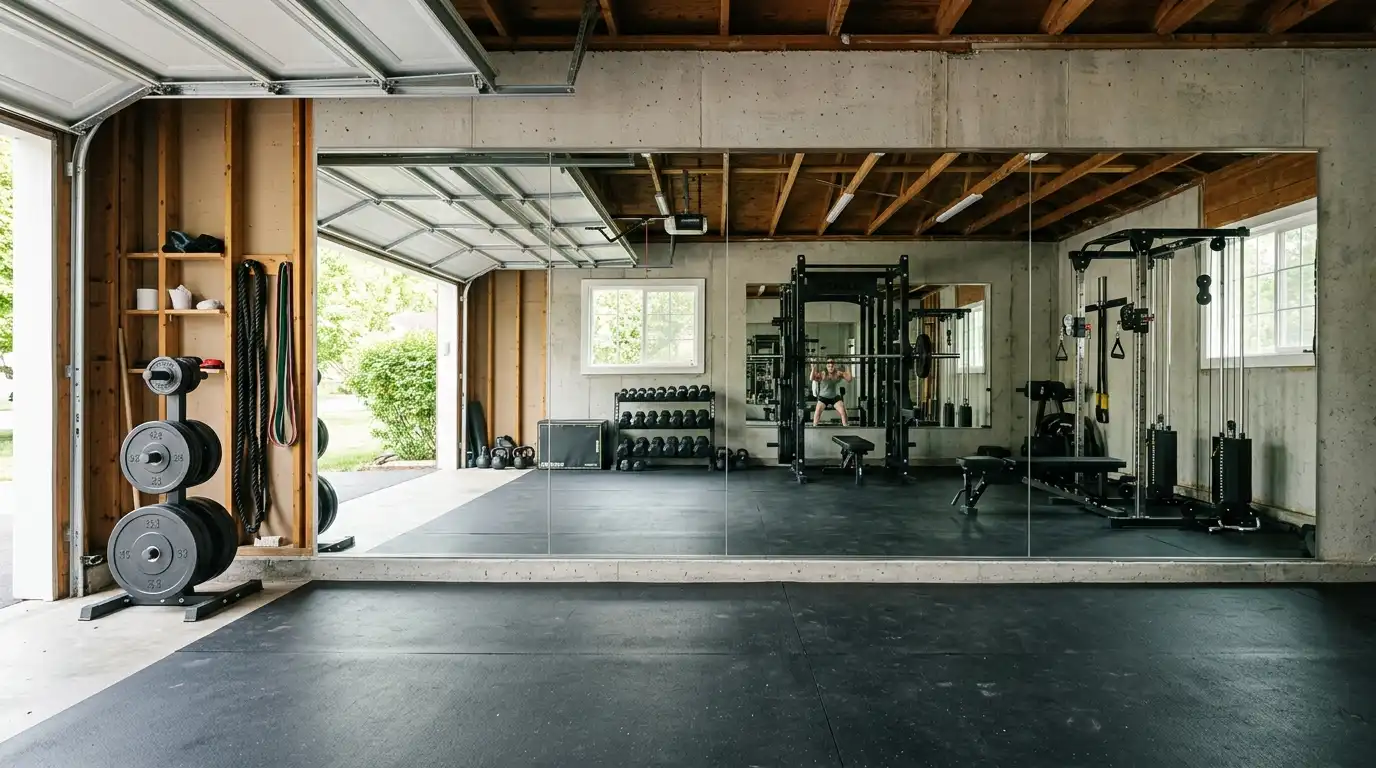
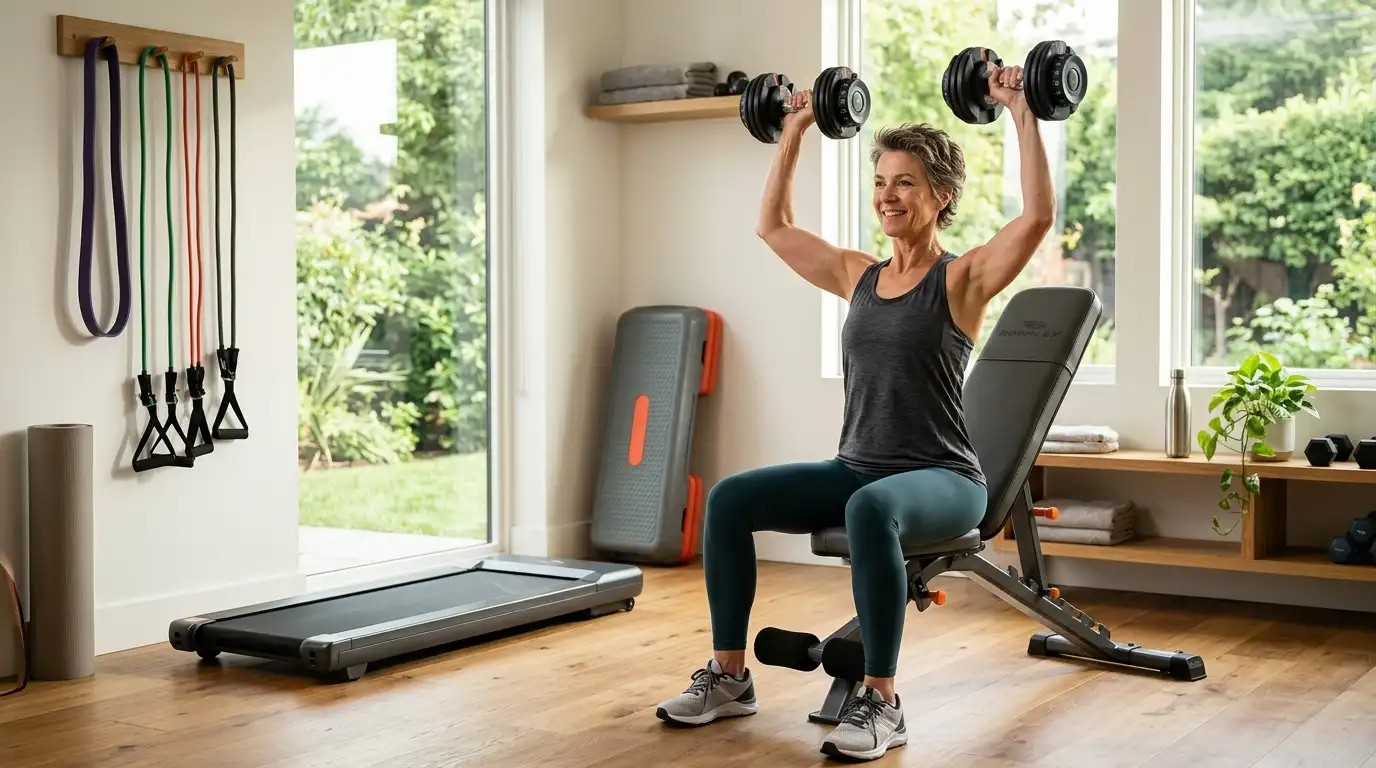
Staying active after 50 can play an important role in maintaining strength, balance, mobility, and healthy bones. While you don’t need an elaborate home gym to stay fit, choosing the right equipment can make strength and weight-bearing exercise easier to perform consistently.
For adults interested in bone health after 50, the best home gym equipment isn’t necessarily the biggest or most expensive. The goal is to choose versatile, stable equipment that supports progressive strength training, weight-bearing activity, and balance-focused workouts.
Equipment such as adjustable dumbbells, resistance bands, exercise benches, step platforms, and treadmills can help create an effective home workout environment without taking up an entire room.
In this guide, we’ll look at the best home gym equipment for bone health after 50, how to use each option, and what to consider before buying.
Important: If you have osteoporosis, osteopenia, a previous fracture, significant balance problems, or another medical condition, speak with a qualified healthcare professional or physical therapist before starting a new exercise program.
Table of Contents
Why Home Exercise Matters for Bone Health After 50
Bones are living tissue that responds to physical demands. Regular weight-bearing activity and resistance training can help support bone strength while also improving the muscles and physical abilities needed for everyday movement.
Exercise can also help improve:
- Muscle strength
- Balance
- Coordination
- Mobility
- Posture
- Functional fitness
- Confidence during everyday activities
These benefits are particularly valuable as we age because maintaining muscle and balance can help support independence and reduce the risk of falls.
A home gym makes regular exercise more convenient. Instead of driving to a fitness center, you can complete a short workout whenever it fits your schedule.
1. Adjustable Dumbbells
Best for: Strength training and progressive resistance
Adjustable dumbbells are one of the most versatile pieces of equipment for a home gym.
Instead of purchasing an entire rack of weights, you can use one adjustable pair and change the resistance according to the exercise and your fitness level.
They can be used for movements such as:
- Squats
- Rows
- Lunges
- Deadlift variations
- Calf raises
- Chest presses
- Shoulder exercises when appropriate
For adults over 50, the ability to start with a manageable weight and gradually progress can be particularly useful.
What to look for
Choose dumbbells with:
- Secure locking mechanisms
- Easy-to-read weight settings
- Comfortable handles
- Stable storage
- A weight range appropriate for your current and future training needs
If you’re new to resistance training, there’s no advantage to starting with very heavy weights. Technique and gradual progression should come first.
2. Resistance Bands
Best for: Beginners, small spaces, and versatile workouts
Resistance bands are inexpensive, lightweight, and easy to store, making them ideal for smaller home gyms.
They can provide resistance for both upper- and lower-body exercises without requiring bulky equipment.
Common exercises include:
- Band rows
- Chest presses
- Glute exercises
- Leg extensions
- Lateral walks
- Shoulder exercises
- Assisted mobility movements
Resistance bands are also useful for people who travel because they can fit into a small bag.
Buying tip
Consider purchasing a set containing multiple resistance levels rather than a single band. This allows you to adjust the challenge as your strength changes.
Always inspect bands for cracks, tears, or other damage before use.
3. Adjustable Weight Bench
Best for: Expanding your strength-training options
An adjustable weight bench can turn a small collection of dumbbells into a much more versatile home gym.
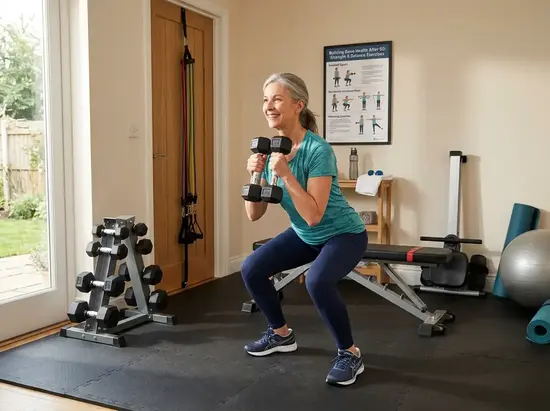
Depending on the design, you can use it for:
- Seated dumbbell exercises
- Chest presses
- Supported rows
- Step-up variations
- Seated strength exercises
- Core exercises
A stable bench can also provide a convenient surface for certain exercises and modifications.
What to look for
For adults over 50, stability should be a priority.
Look for:
- A wide, stable base
- Secure adjustment points
- Comfortable padding
- Appropriate weight capacity
- A design that doesn’t wobble during movement
Avoid using ordinary household furniture as an exercise bench.
4. Step Platform
Best for: Lower-body strength and weight-bearing exercise
A dedicated exercise step can be a useful addition to a home gym.
Step-ups work the legs while requiring you to control your body as you move onto and off the platform.
This can make the step platform useful for combining strength, coordination, and functional movement.
How to choose one
A good exercise step should:
- Have a non-slip surface
- Sit securely on the floor
- Have an appropriate height
- Support your body weight safely
- Be easy to step onto and off
Start with a lower height if you’re new to step exercises or have balance concerns.
5. Treadmill
Best for: Convenient indoor walking
Walking is a simple way to incorporate weight-bearing activity into a regular fitness routine.
A treadmill can make walking more convenient, particularly when weather, neighborhood conditions, or time constraints make outdoor exercise difficult.
When shopping for a treadmill after 50, consider more than maximum speed.
Useful features include:
- Stable handrails
- Easy controls
- Emergency safety stop
- Low starting speed
- Comfortable walking surface
- Good shock absorption
- Appropriate deck size
You don’t need a treadmill designed for sprinting if your primary goal is walking.
A reliable walking-focused treadmill can be a better choice for many home users.
6. Walking Pad
Best for: Small apartments and compact home gyms
If you don’t have enough space for a full-size treadmill, a walking pad can be an alternative.
Walking pads are designed primarily for walking and generally have a smaller footprint than traditional treadmills.
They’re useful for people who want to add more movement throughout the day without dedicating an entire room to exercise equipment.
However, if you have significant balance concerns, pay close attention to stability and safety features when choosing a compact walking machine.
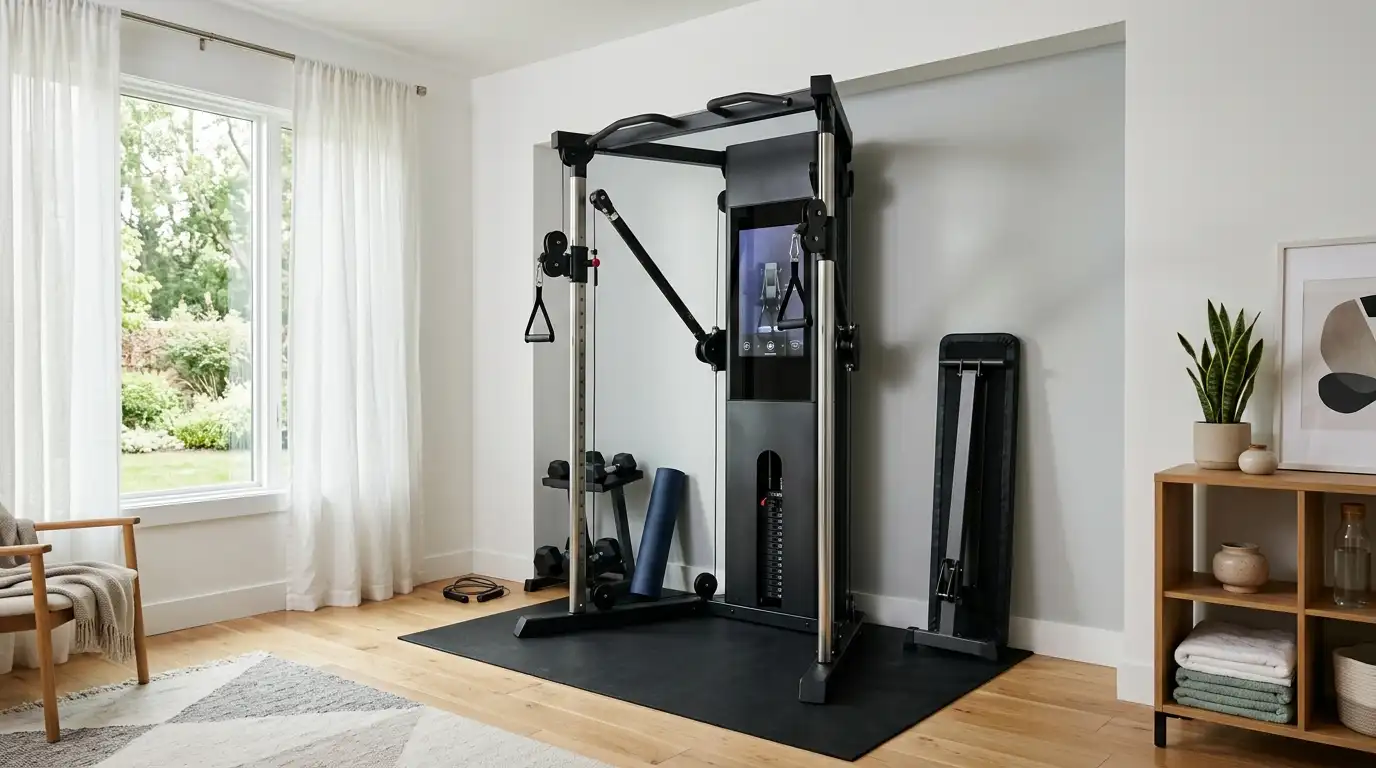
7. Cable Resistance Machine
Best for: Full-body resistance training
A compact cable machine can provide a wide range of strength exercises from one piece of equipment.
Depending on the model, you may be able to perform:
- Rows
- Chest presses
- Pulldowns
- Squats
- Triceps exercises
- Biceps exercises
- Glute exercises
Cable systems allow you to change resistance and exercise angles, making them useful for progressive strength training.
Considerations
Cable machines can be more expensive and require more space than dumbbells or resistance bands.
For a small home gym, they may not be necessary. But for someone who regularly strength trains and has sufficient space, a cable system can become the centerpiece of a home workout area.
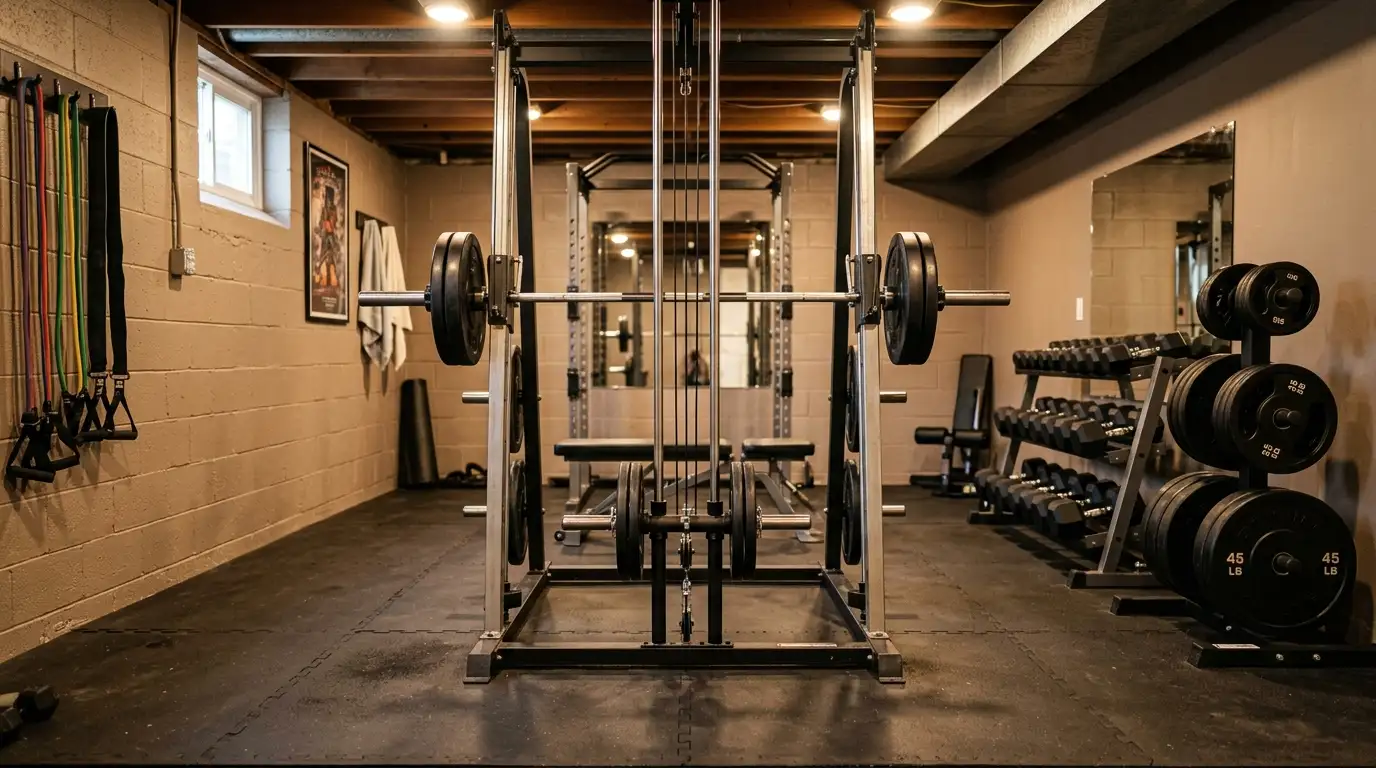
8. Compact Squat Rack
Best for: More advanced home strength training
A squat rack or power rack can support a wide range of barbell exercises.
It can be useful for people who already have strength-training experience and want to build a more complete home gym.
However, racks and barbells require more knowledge, space, and attention to safety than resistance bands or light dumbbells.
If you’re new to strength training, you don’t need a squat rack to get started.
For experienced users, look for:
- Strong construction
- Secure safety arms
- Appropriate height
- Stable base
- Suitable weight capacity
- Adequate clearance around the rack
Use a spotter or appropriate safety equipment when performing exercises that require it.
9. Elliptical Trainer
Best for: Low-impact cardio and full-body movement
An elliptical trainer provides a cardiovascular workout while reducing some of the impact associated with running.
It can be useful for people who want to improve cardiovascular fitness while incorporating regular movement into their home routine.
However, not every person with osteoporosis should automatically choose the same type of cardio equipment.
If bone density is a concern, ask a healthcare professional which activities are appropriate for your individual situation.
10. Balance Training Equipment
Best for: Stability and fall-prevention-focused fitness
Balance training deserves a place in many fitness routines after 50.
However, you don’t necessarily need expensive equipment.
A sturdy support surface, such as a countertop or stable rail, can be enough for many basic balance exercises.
More advanced balance equipment includes:
- Balance pads
- Stability trainers
- Balance boards
These aren’t essential for beginners.
If you have poor balance or a history of falls, start with simple supported exercises rather than immediately using unstable equipment.
Best Home Gym Setup for Bone Health
You don’t need to purchase all 10 pieces of equipment.
For most people, a simple setup can provide plenty of exercise options.
Budget setup
A basic setup could include:
- Resistance bands
- Light-to-moderate dumbbells
- Exercise mat
- Stable exercise step
This combination requires relatively little space.
Intermediate setup
For a more versatile home gym, consider:
- Adjustable dumbbells
- Resistance bands
- Adjustable bench
- Exercise step
- Treadmill or walking pad
This setup provides options for both strength training and walking.
Advanced setup
A larger home gym could include:
- Adjustable dumbbells
- Adjustable bench
- Cable machine
- Squat rack
- Barbell and weight plates
- Treadmill
- Balance equipment
This is more appropriate for experienced exercisers who have enough space and understand proper lifting techniques.
How to Choose Home Gym Equipment After 50
Buying fitness equipment should be based on your actual needs rather than the number of features a machine offers.
Prioritize stability
Equipment should feel secure during use.
A wobbly bench, unstable step, or poorly designed resistance system can make exercise unnecessarily difficult.
Choose adjustable equipment
Adjustability allows you to modify resistance as your fitness changes.
Adjustable dumbbells and resistance bands are particularly useful because one set can accommodate multiple exercises and training levels.
Consider available space
Measure your workout area before buying large equipment.
Remember to leave enough clearance around machines and racks for safe movement.
Think about storage
If your equipment stays buried in a closet, you’re less likely to use it.
Choose equipment that can be stored conveniently and accessed easily.
Don’t buy more than you need
A simple collection of versatile equipment can often provide more value than a room full of specialized machines.
For many people, dumbbells, resistance bands, a bench, and walking equipment are enough to create an effective home workout routine.
How Strength Training Supports Bone Health
Resistance exercise places controlled demands on muscles and the skeletal system.
Over time, progressive strength training can help improve muscular strength and physical function. It can also complement other forms of weight-bearing activity.
The key is progressive and appropriate resistance, not simply lifting the heaviest weight possible.
For beginners, this may mean starting with bodyweight exercises or light resistance bands.
As strength improves, you may gradually increase resistance while maintaining good technique.
What About Osteoporosis?
If you already have osteoporosis, exercise can still be an important part of staying physically active, but your program may need to be modified.
Certain movements can be inappropriate for people with significant bone loss, especially exercises involving forceful spinal flexion, twisting, or high-impact activity.
For example, someone with vertebral fractures may require different exercise modifications than someone with normal bone density.
That’s why a diagnosis of osteoporosis should not be treated as a simple equipment-buying decision.
Before starting a new program, ask your healthcare professional or physical therapist which exercises and equipment are appropriate for you.
Home Gym Equipment for Osteoporosis Prevention
For people interested in osteoporosis prevention, a home gym can provide a convenient environment for regular strength and weight-bearing exercise.
A practical combination might include:
For strength: Adjustable dumbbells and resistance bands
For lower-body training: Exercise step and dumbbells
For walking: Treadmill or walking pad
For supported strength exercises: Adjustable bench
For balance: Stable support surface or appropriate balance equipment
The ideal combination depends on your age, fitness level, available space, and health history.
A Simple Home Workout for Adults Over 50
If you’re just starting, keep your workout straightforward.
Warm-up
Spend 5–10 minutes walking or performing gentle movements.
Strength circuit
Perform controlled sets of:
- Sit-to-stands
- Resistance-band rows
- Bodyweight or light dumbbell squats
- Wall push-ups
- Calf raises
- Step-ups
Rest between exercises as needed.
Finish with walking
If appropriate for your fitness level, finish with 10–20 minutes of comfortable walking on a treadmill or outdoors.
As your fitness improves, you can gradually increase resistance, repetitions, or workout duration.
Common Home Gym Mistakes After 50
Buying heavy weights too soon
More weight doesn’t automatically mean better results.
Start at a level that allows you to maintain proper form.
Ignoring balance
Strength is important, but balance and coordination are also valuable components of healthy aging.
Choosing equipment based only on price
The cheapest equipment isn’t always the best value. Look for stability, durability, usability, and appropriate safety features.
Trying too many exercises
You don’t need a complicated routine.
A few well-chosen exercises performed consistently can be more useful than constantly changing workouts.
Exercising through significant pain
Muscle fatigue can be normal, but persistent or severe pain should not simply be ignored.
Stop and seek appropriate professional advice when necessary.
Final Thoughts
The best home gym equipment for bone health after 50 doesn’t have to be complicated.
A pair of adjustable dumbbells, resistance bands, a stable bench, an exercise step, and suitable walking equipment can provide a strong foundation for a home fitness routine.
The bigger goal is to stay active consistently while gradually building strength, maintaining mobility, and supporting balance.
If you’re concerned about osteoporosis or bone loss, don’t rely on equipment alone. Combine exercise with appropriate nutrition, healthy lifestyle habits, regular medical care, and professional guidance when needed.
A well-designed home gym can make staying active easier—but consistency is ultimately more important than having the biggest collection of equipment.
Frequently Asked Questions
What is the best home gym equipment for bone health after 50?
Adjustable dumbbells, resistance bands, exercise steps, benches, and appropriate walking equipment are among the most versatile options. The best choice depends on your fitness level, health status, and workout goals.
Is strength training good for bone health after 50?
Appropriately performed resistance training can be an important part of maintaining strength and supporting bone health. Beginners should start gradually and focus on proper technique.
Can walking help support bone health?
Walking is a weight-bearing activity that can be a useful component of an active lifestyle. However, the amount and type of exercise needed for bone health varies from person to person.
What equipment is best for seniors at home?
Resistance bands, adjustable dumbbells, stable exercise benches, and walking equipment can be practical options. Beginners should prioritize equipment that is easy to use and stable.
Can you exercise at home if you have osteoporosis?
Many people with osteoporosis can remain physically active, but exercises may need to be modified based on bone density, fracture history, and other individual factors. Professional guidance is recommended before starting a new routine.