


The best home gym flooring mats do more than protect your floors. They help create a stable workout surface, protect against equipment damage, make cleanup easier, and give your home gym a more finished look.
But the right flooring depends on how you train. A thick rubber mat that works beneath dumbbells and a weight bench may be unnecessary for yoga. Lightweight foam tiles can feel comfortable during bodyweight exercises but may compress under heavy equipment. And if you’re setting up a treadmill in an upstairs apartment, vibration and floor compatibility deserve special attention.
In this guide, we’ll compare eight home gym flooring options and explain what to look for before buying. Whether you’re building a garage gym, protecting hardwood floors, or creating a compact workout corner, you’ll learn how to choose flooring that suits your equipment, space, and budget.
Table of Contents
Quick Answer: What Is the Best Home Gym Flooring?
For most strength-focused home gyms, dense rubber flooring is a practical starting point because it provides a durable surface for weights and equipment. Interlocking rubber tiles work well for modular setups, while rubber rolls can cover larger areas with fewer seams.
Foam exercise mats are often better suited to stretching, yoga, Pilates, and light bodyweight workouts. Dedicated equipment mats can be a convenient choice for treadmills, stationary bikes, and similar machines.
Here’s a quick comparison.
Flooring option
Best use
Main limitation
Interlocking rubber tiles
Apartment strength-training zones and modular coverage
Seams may separate or collect debris
Low-profile rubber rolls
Larger areas needing fewer seams
Cutting and installation require planning
EVA foam tiles
Stretching, yoga, and light workouts
Can compress under heavy equipment
Cardio equipment mat
Treadmills, walking pads, and stationary bikes
Must match the machine and floor
Dense rubber equipment mats
Heavy cardio equipment and compatible strength machines
Load capacity varies by product
Rogue Crash Cushions
Specialized lifting and impact-management zones
| Flooring option | Best use | Main limitation |
|---|---|---|
| Interlocking rubber tiles | Apartment strength-training zones and modular coverage | Seams may separate or collect debris |
| Low-profile rubber rolls | Larger areas needing fewer seams | Cutting and installation require planning |
| EVA foam tiles | Stretching, yoga, and light workouts | Can compress under heavy equipment |
| Cardio equipment mat | Treadmills, walking pads, and stationary bikes | Must match the machine and floor |
| Dense rubber equipment mats | Heavy cardio equipment and compatible strength machines | Load capacity varies by product |
| Rogue Crash Cushions | Specialized lifting and impact-management zones | Not full-floor apartment flooring |
Our general recommendation: choose rubber for heavy equipment and regular strength training, foam for low-impact floor exercises, and a dedicated equipment mat when you only need to protect the area beneath a cardio machine.
The 7 Best Home Gym Flooring Mats to Consider
The following options cover different budgets, materials, and workout needs. Product availability, dimensions, prices, and specifications can change, so verify the current manufacturer’s listing before purchasing.
1. Gorilla Mats: Best for General Home Workouts
Gorilla Mats is worth considering if you want a large exercise surface without installing permanent flooring across an entire room.
A large exercise mat can work well for stretching, Pilates, mobility routines, bodyweight training, and light fitness sessions. It also creates a defined workout area in a bedroom or multipurpose room.
Why consider it
- Provides a dedicated surface for floor-based exercise.
- Can be more convenient than installing tiles across an entire room.
- Works well for workouts that require frequent changes in position.
What to consider
A large exercise mat isn’t automatically suitable for heavy dumbbells, loaded racks, or repeated weight drops. Check the specific model’s construction, dimensions, grip, and intended use before placing equipment on it.
Best for: people who want a convenient exercise area for general fitness and floor workouts.
2. ProsourceFit Foam Tiles: Best for Budget-Friendly Workout Spaces
ProsourceFit offers foam flooring products that may suit beginners who want to create an affordable workout area.
Interlocking foam tiles are especially useful when you need to cover an irregular space or want the option to expand your workout area later.
Why consider it
- Lightweight pieces are relatively easy to move.
- Modular construction makes it possible to cover selected areas.
- Cushioned surfaces can feel comfortable for stretching and bodyweight exercises.
What to consider
Foam isn’t the best default choice beneath heavy racks or concentrated equipment loads. It can compress, and interlocking sections may separate during vigorous movement.
Check the material thickness, density, tile dimensions, and manufacturer’s weight-use recommendations rather than choosing by thickness alone.
Best for: beginners, mobility workouts, stretching, and light home fitness.
3. Rubber-Cal Rubber Flooring: Best for Rubber Flooring Projects

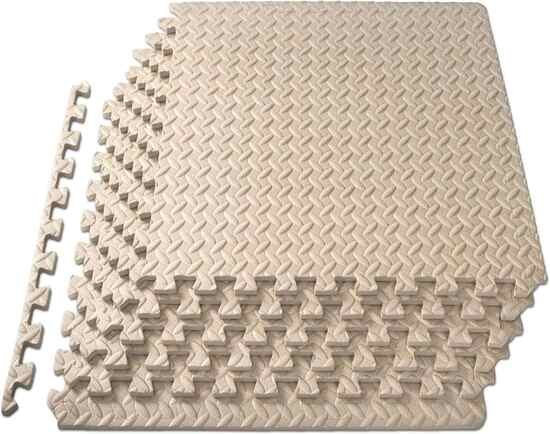
Rubber-Cal offers rubber flooring products worth considering when you need a more durable surface than lightweight foam.
Depending on the product, rubber flooring may be available in different thicknesses, formats, and material compositions. That makes it important to select the actual product suited to your room rather than assuming every rubber mat offers the same protection.
Why consider it
- Rubber can provide a practical surface for regular gym use.
- Roll or sheet formats may suit larger areas.
- Different product types allow you to compare coverage and installation needs.
What to consider
Check whether the selected product is designed for exercise flooring, its intended load, and whether it is compatible with your existing floor. Rubber products can also have a noticeable initial odor.
Best for: people planning a more permanent gym flooring installation.
4. BalanceFrom Foam Mats: Best for Light Home Fitness

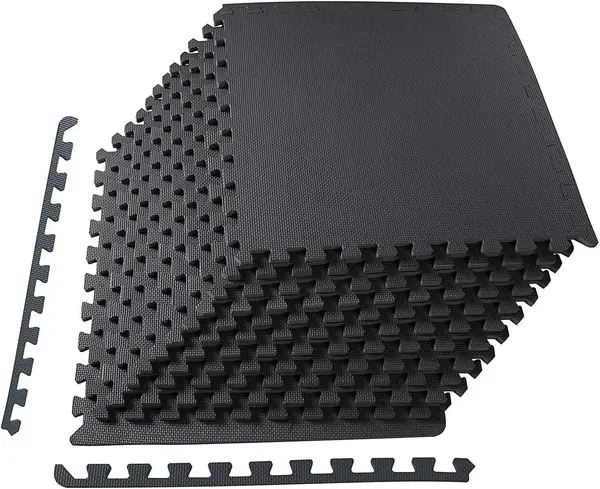
BalanceFrom foam mats are another option to investigate if you want a budget-conscious surface for basic workouts.
Foam flooring can be useful in rooms that serve several purposes because individual tiles can be assembled, removed, and stored more easily than a permanent floor covering.
Why consider it
- Useful for light exercise and stretching.
- Can provide a softer surface than bare hard flooring.
- Modular pieces can make coverage flexible.
What to consider
Foam mats can move or separate during exercises involving lateral movement. They’re also less suitable for concentrated loads from heavy gym equipment.
Before buying, compare the specific model’s dimensions, material density, texture, and cleaning instructions.
Best for: light exercise, beginner workouts, and multipurpose rooms.
5. Rogue Fitness Rubber Flooring: Best for Strength-Focused Home Gyms
Rogue Fitness is worth considering when your home gym centers on barbells, dumbbells, benches, and strength equipment.
For these setups, flooring needs to do more than feel comfortable underfoot. It must provide a suitable surface beneath equipment while protecting the underlying floor from ordinary contact and wear.
Why consider it
- Rubber flooring is practical for many strength-training environments.
- It can help create a defined equipment area.
- Different flooring formats may suit different room layouts.
What to consider
Confirm the exact flooring product’s thickness, dimensions, material, and installation requirements. Heavy lifting and dropped weights place different demands on flooring, so don’t assume any rubber tile is sufficient for every lifting style.
Also check the condition and load capacity of the underlying floor before installing a heavy rack or lifting platform.
Best for: dedicated home gyms with free weights and strength equipment.
6. IncStores Gym Flooring: Best for Comparing Coverage Options
IncStores is another supplier to consider when comparing gym flooring for larger or more specialized spaces.
Rather than choosing solely by appearance, compare the actual cost of covering your workout area. A product with a lower price per piece may not be the cheapest option once you account for the number of pieces needed, shipping, cutting, and installation.
Why consider it
- Useful for comparing flooring formats and coverage.
- May suit projects that require more than one or two small mats.
- Lets you evaluate different solutions for a dedicated workout space.
What to consider
Check the exact material, intended use, dimensions, and installation method. If you need to cover a large room, compare the total installed cost rather than the price of a single tile or roll.
Best for: people comparing flooring solutions for larger home gyms.
7. Amazon Basics Exercise Mats: Best for Simple Workout Protection

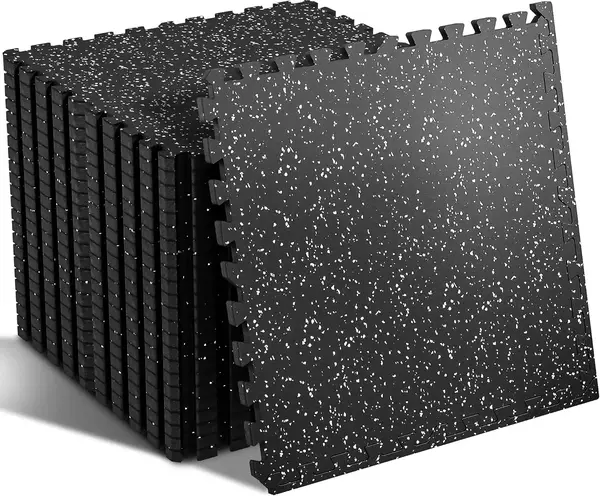
Amazon Basics exercise mats are worth considering for straightforward workout setups where you need a designated surface for floor exercises or compatible fitness equipment.
The main benefit of an exercise mat is convenience. You can create a workout zone without committing to an entire room of flooring.
Why consider it
- Simple solution for limited workout areas.
- Can suit light exercise when the selected model matches the activity.
- Often easier to move than permanent flooring.
What to consider
Check the product’s exact intended use. A thin exercise mat isn’t interchangeable with a heavy-duty rubber equipment mat, and neither should automatically be treated as a lifting platform.
Best for: people who need a simple mat for light exercise and general fitness.
Rubber vs. Foam Gym Flooring: Which Should You Choose?
Rubber and foam are two common home gym flooring choices, but they solve different problems.
| Feature | Rubber flooring | Foam flooring |
|---|---|---|
| Heavy equipment | Usually the more suitable starting point | Can compress under concentrated loads |
| Yoga and stretching | Works, but may feel firm | Often more comfortable |
| Durability | Depends on material and construction; generally suitable for demanding gym use | Best matched to lighter use |
| Installation | Tiles, rolls, or sheets | Often lightweight interlocking tiles |
| Cleaning | Follow the product’s cleaning instructions | Avoid cleaners that damage the foam |
| Cost | Varies by material, thickness, and coverage | Often budget-friendly |
| Best application | Strength areas and equipment zones | Light workouts and floor exercises |
When rubber is the better choice
Choose suitable rubber flooring if you regularly lift weights, use a bench or rack, or want a more durable surface for a dedicated gym.
For heavy lifting, consider the weight and footprint of the equipment, the possibility of dropped weights, and the condition of the subfloor. The appropriate solution may require a purpose-built lifting platform rather than ordinary mats.
When foam is the better choice
Foam is useful when comfort, portability, and price matter more than supporting heavy loads.
It’s a reasonable option for stretching, Pilates, mobility, and many bodyweight exercises. Just make sure the surface provides adequate grip and doesn’t separate or slide during movement.
Can you combine rubber and foam?
Yes. A mixed-material setup can make sense.
For example, use suitable rubber flooring beneath strength equipment and a separate exercise mat for stretching. This gives each area a surface suited to its primary purpose without requiring the same flooring everywhere.
What Thickness of Home Gym Flooring Do You Need?
There’s no single thickness that’s right for every home gym. Material density, construction, equipment weight, and the activity you perform all affect how a mat performs.
Use these guidelines as a starting point, then check the product manufacturer’s recommendations.
| Workout | What to look for |
|---|---|
| Yoga and stretching | A comfortable exercise mat with suitable grip |
| Bodyweight workouts | A stable mat or foam surface that resists shifting |
| Treadmills and exercise bikes | An equipment-compatible mat with suitable dimensions |
| Dumbbells and weight benches | Dense rubber flooring appropriate for the equipment load |
| Heavy strength training | Flooring or a lifting platform specifically suitable for the expected loads and impacts |
| Garage gym | Durable flooring compatible with the concrete and moisture conditions |
Don’t choose flooring by thickness alone. A thick, soft foam tile may compress more under a heavy rack than a thinner, denser rubber product.
If you plan to lift heavy weights, check the manufacturer’s load guidance and consider whether your floor needs additional structural assessment. Flooring protects surfaces, but it doesn’t increase the structural capacity of a weak floor.
How to Reduce Noise and Vibration in an Apartment Gym
Reducing noise in an apartment gym starts with identifying the source. Footsteps, jumping, treadmill use, moving equipment, and dropped weights create different types of sound and vibration, so a single mat may not solve every problem.
Start by placing compatible rubber or equipment-specific mats beneath cardio machines and other equipment that contacts the floor. Ensure the machine sits level and does not rock during use. Check that the mat is large enough to support the equipment properly and that its material is suitable for the machine’s weight.
Next, adjust the workout itself. Walking instead of running, avoiding jumps, using controlled movements, and setting weights down carefully can reduce some impact noise. Avoid dropping heavy weights, particularly in upstairs rooms or buildings with unknown floor construction.
Inspect the machine for loose components and follow its maintenance instructions. A poorly maintained treadmill or bike can produce avoidable noise. Also consider the time of day and your building’s quiet-hour rules.
Important: Gym flooring can help reduce some vibration and protect the floor, but it does not soundproof a room or guarantee that neighbors will not hear your workout. Heavy equipment may require additional precautions, and the structural capacity of the floor should not be assumed.
Best Home Gym Flooring for Different Spaces
Best flooring for a garage gym
A garage gym often needs flooring that can handle strength equipment, foot traffic, and regular cleaning.
Rubber tiles or rolls are practical options for many setups. Before installation, inspect the concrete for moisture, unevenness, and damage.
Don’t cover a damp floor without addressing the underlying moisture issue. Trapped moisture can create problems beneath certain flooring materials, so follow the flooring manufacturer’s guidance for concrete installations.
If your setup includes heavy barbells, consider a dedicated lifting area with appropriate impact protection.
Best flooring for hardwood floors
Hardwood can be vulnerable to scratches, dents, trapped moisture, and discoloration from incompatible materials.
Choose a mat specifically suitable for use over your floor finish. Check whether the product’s backing can stain or react with the surface, and follow the flooring and mat manufacturers’ instructions.
Keep the area clean and dry. Sweat or moisture trapped beneath a mat can damage some floor finishes even when the mat itself appears protective.
For a stationary bike, an equipment mat may be sufficient. For dumbbells and strength training, you may need a more substantial protective surface.
Best Gym Flooring for Apartments
The best gym flooring for apartments needs to balance floor protection, equipment stability, and noise management without taking up unnecessary space. For many apartment workouts, interlocking rubber tiles, low-profile rubber rolls, or a compact equipment mat are more practical than bulky lifting cushions.
Interlocking rubber tiles are worth considering if you want modular coverage beneath a bench, dumbbells, or a small strength-training area. They can be expanded or rearranged as your setup changes. Low-profile rubber rolls may be a better fit when you want a continuous surface with fewer seams, provided the product is compatible with your existing floor.
EVA foam tiles can suit stretching, yoga, and light bodyweight exercises, but they may compress beneath heavy equipment. For treadmills and walking pads, choose an equipment-specific mat that fits the machine and is approved for the intended floor surface.
Before buying, check the flooring’s dimensions, density, backing material, and compatibility with your existing floor. If you rent, confirm that the flooring can be removed without leaving residue or discoloration. Remember that mats can reduce some vibration but cannot guarantee soundproofing between apartments.
Best Renter-Friendly Gym Flooring
Renter-friendly gym flooring should protect the existing surface while remaining practical to remove when you move. Loose-lay rubber mats, compatible interlocking tiles, and removable equipment mats are useful options because they can often be installed without permanent adhesives.
For light workouts, removable exercise mats or EVA foam tiles may provide enough coverage for stretching and bodyweight training. For weights and cardio machines, consider denser rubber flooring designed for the expected load. The right choice depends on your equipment, the floor finish, and the manufacturer’s installation guidance.
Pay attention to the underside of the mat. Some backing materials may react with certain finishes or leave marks, particularly if moisture becomes trapped underneath. Before covering a large area, check compatibility with both the flooring and mat manufacturers and, where practical, test a small inconspicuous section.
Avoid assuming that every interlocking tile is safe on every surface. Tiles can separate or shift during dynamic exercise, while soft carpet can make equipment less stable. If you rent, check your lease or ask your landlord before making changes that could affect the floor.
See our renter-friendly home gym essentials for more ideas on protecting your space without making permanent changes.
Best flooring for a small home gym
You don’t necessarily need to cover the entire room.
Measure the footprint of your equipment and identify the areas where you’ll stretch, lift, or perform bodyweight exercises. You may be able to combine a dedicated equipment mat with a separate exercise mat.
For more layout ideas, explore our small home gym layout guide.
Best Flooring for Different Equipment
Best Flooring Under a Treadmill or Walking Pad
A treadmill or walking pad needs a stable, appropriately sized mat that protects the underlying floor and helps manage some of the vibration generated during use. A dedicated cardio equipment mat is usually the simplest starting point, especially when the machine sits on hardwood, laminate, tile, or another finished surface.
Measure the machine’s footprint and check the manufacturer’s recommended mat dimensions. The mat should support the machine securely without creating raised edges that could become a trip hazard. Look for a material that resists shifting and is compatible with the floor underneath.
For a walking pad in a small apartment, a low-profile mat may be preferable because it takes up less space and is easier to accommodate in a multipurpose room. A larger treadmill may require a wider or longer mat, depending on the equipment’s dimensions and movement during operation.
A mat is not a substitute for proper machine placement or maintenance. Follow the treadmill manufacturer’s instructions, check that the equipment remains level, and inspect the mat periodically for compression or movement. If noise is a concern, walking speed, footwear, machine condition, and the building’s construction can also affect how much sound reaches neighboring rooms.
Best Mats for Heavy Cardio Equipment
Heavy cardio machines such as treadmills, elliptical trainers, and large stationary bikes place different demands on gym flooring than lightweight exercise equipment. Their weight, footprint, and repeated movement make stability and load suitability especially important.
For these setups, start by comparing dense rubber equipment mats designed for the type and weight of your machine. Check the manufacturer’s load guidance, mat dimensions, surface grip, and compatibility with the existing floor. A mat that is too small may fail to protect the surrounding area, while a soft or unstable surface can allow equipment to rock or shift.
Consider the machine’s feet as well as its overall footprint. Concentrated loads can compress unsuitable foam, even when the material initially feels thick and cushioned. If the equipment manufacturer specifies a particular mat type or installation arrangement, follow that guidance.
For a home gym containing several machines, you may prefer rubber rolls or tiles across the main workout area, with individual equipment mats where additional floor protection is needed. Compare the total cost and installation requirements rather than choosing solely by price per mat.
How Much Home Gym Flooring Do You Need?
Start by measuring the length and width of the area you want to cover.
For a rectangular room:
Floor area = length × width
For example, a workout zone measuring 8 feet by 10 feet has an area of 80 square feet.
If you’re covering only part of a room, measure that section instead of the entire room. For irregular spaces, divide the area into smaller rectangles, calculate each one, and add the results.
When buying tiles, divide the total coverage area by the usable coverage of each tile. For rolls, compare the roll’s width and length with the dimensions of your space.
Allow for a reasonable amount of extra material to accommodate cuts and layout adjustments. The amount depends on the shape of the room and the flooring format.
Before ordering, confirm whether the stated dimensions represent one tile, one package, or the entire roll. This prevents mistakes when comparing prices.
How to Install and Maintain Home Gym Flooring
Good installation begins before the first tile goes down.
1. Prepare the floor
Remove dirt, dust, and debris. Check that the surface is dry, stable, and reasonably level.
Address cracks, uneven areas, or moisture issues before covering the floor. Follow the manufacturer’s instructions for any required underlayment or moisture protection.
2. Measure and plan the layout
Measure the workout area and mark where equipment will sit.
Consider doors, wall edges, storage areas, and the direction in which tiles or rolls will be installed. Plan cuts before making them, especially if you’re working around corners or fixed equipment.
3. Install the flooring according to the product instructions
Interlocking tiles may require a different installation approach from rubber rolls or loose exercise mats.
Use only adhesives, tapes, underlayments, or cleaning products approved for the material and the underlying floor. Avoid assuming that a product can be installed directly over every type of flooring.
4. Check stability before exercising
Walk across the surface and check for raised edges, loose tiles, or unexpected movement.
Position equipment according to its manufacturer’s instructions. Confirm that racks, benches, and cardio machines sit securely on the selected surface.
5. Clean the floor regularly
Remove dust and loose debris, wipe up sweat, and allow surfaces to dry.
Use cleaning products appropriate for the specific flooring material. Strong solvents or incompatible cleaners can damage some surfaces, while excessive water can create problems beneath flooring.
Inspect the area occasionally for separating seams, damaged edges, or compressed sections.
Final Verdict: Which Home Gym Flooring Mat Is Best?
The best home gym flooring mat is the one that matches your workout, equipment, room, and existing floor.
For strength training, start by comparing suitable rubber flooring options. For stretching and bodyweight workouts, consider a comfortable, stable exercise mat or foam tiles. For cardio machines, a compatible equipment mat may provide enough protection without covering the entire room.
Before buying, measure your space, check material specifications, review installation requirements, and consider how the flooring will perform beneath your heaviest equipment.
If you’re building a complete workout space, our complete home gym equipment guide can help you plan the rest of your setup.
Choose flooring for the way you actually train, and you’ll have a more practical foundation for consistent workouts at home.
Frequently Asked Questions
Are home gym flooring mats worth it?
They can be. Suitable flooring helps protect the underlying surface from equipment contact, makes cleanup easier, and provides a more appropriate workout area. The benefits depend on the mat’s material, the floor beneath it, and how you train.
Can I put gym mats directly on concrete?
Often, yes, if the flooring product is designed for that use and the concrete is suitable. Check for moisture, unevenness, and damage first. Follow the manufacturer’s installation instructions rather than covering a damp or unsuitable surface.
Can I put gym mats on carpet?
Some mats can be used over low-pile carpet, but stability depends on the carpet, underlay, mat, and equipment. Soft or thick carpet can allow mats and machines to shift. Check compatibility and test stability before exercising.
Do gym mats reduce noise?
They can reduce some vibration and impact, but results vary. A mat doesn’t make heavy weight drops or jumping silent, especially in apartments or upstairs rooms. Flooring should be combined with appropriate exercise choices and equipment use.
Are thicker gym mats always better?
No. Thickness is only one factor. Material density, construction, stability, and load capacity also matter. A softer, thicker mat may be less suitable beneath heavy equipment than a denser product.
Do rubber gym mats smell?
Some rubber products have a noticeable odor when new. The intensity and duration vary by material and product. Follow the manufacturer’s guidance on ventilation and cleaning, and allow the flooring to air out if recommended.
How do I stop gym mats from sliding?
Start with a clean, suitable floor and choose a mat designed for the surface and activity. Interlocking tiles or other manufacturer-approved installation methods may help keep flooring in place. Don’t use adhesives that could damage your floor or mat.
How often should I replace home gym flooring?
There isn’t a universal replacement schedule. Inspect the flooring for cracks, persistent movement, damaged edges, excessive compression, and loss of grip. Replace damaged sections or the flooring itself when it no longer provides a stable surface suitable for your workouts.