


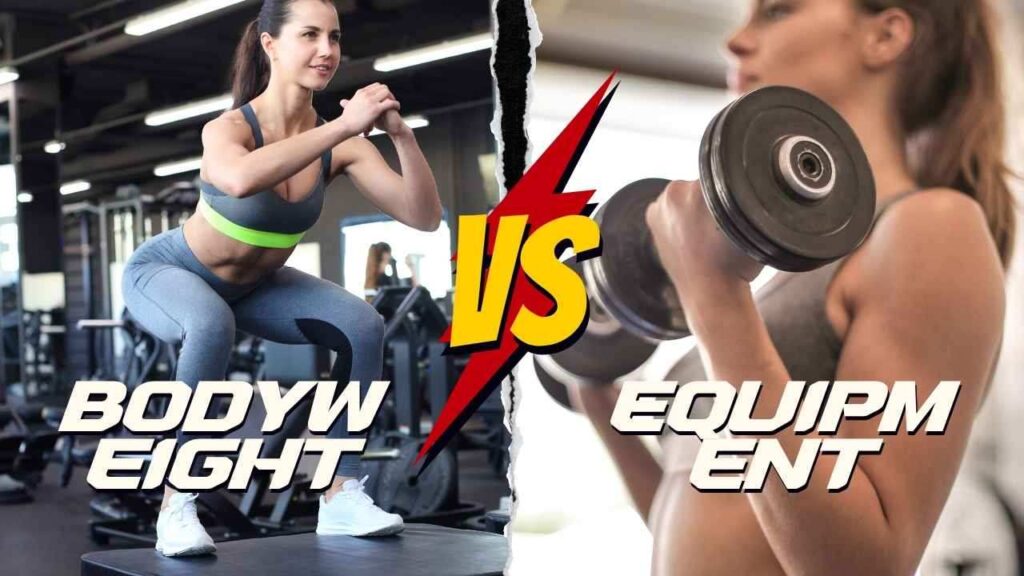
When planning a fitness routine, one of the most critical decisions is choosing between Bodyweight vs Equipment Workouts:. Each method has unique advantages, and the best choice depends on your goals, environment, and fitness level.
In this comprehensive guide, we will compare both approaches to help you make the most informed and effective decision for your fitness journey.
Table of Contents
What Are Bodyweight Workouts?
Bodyweight workouts are exercises that use your own body mass as resistance. They require no equipment and are easily accessible to anyone, anywhere.
Popular Bodyweight Exercises Include:
- Push-ups
- Squats
- Lunges
- Planks
- Burpees
- Mountain climbers
These movements can be modified for any level, making them ideal for beginners and seasoned athletes alike.
Benefits of Bodyweight Training


- Convenience and Accessibility
You can perform bodyweight exercises anywhere — at home, in the park, or while traveling — eliminating the excuse of “no gym.” - Improved Functional Strength
Bodyweight movements mimic natural motion, helping improve balance, coordination, and agility. - Minimal Risk of Injury
Without external loads, bodyweight training reduces the likelihood of strain or overuse injuries, particularly for beginners. - Scalability and Progression
Exercises can be made harder or easier by adjusting tempo, range of motion, or leverage. For example, elevate your feet to make push-ups more challenging. - Cost-Effective
No need for gym memberships or expensive gear — bodyweight training is free.
What Are Equipment-Based Workouts?
Equipment workouts involve external resistance tools such as dumbbells, kettlebells, resistance bands, barbells, and gym machines to perform a wide variety of strength and conditioning exercises.
Popular Equipment Types:
- Free weights (dumbbells, barbells)
- Resistance machines
- Cable machines
- Smith machines
- Leg press, lat pulldown, and rowing machines
Benefits of Equipment Training
- Progressive Overload and Muscle Growth
Using adjustable resistance allows for systematic strength development and hypertrophy by increasing load over time. - Targeted Muscle Isolation
Machines and specific tools enable focused training on specific muscle groups — ideal for rehab or aesthetic goals. - Greater Resistance Variety
You can work with heavier weights, which accelerates muscle growth and strength gains. - Faster Results for Strength Training
With proper form, equipment allows more efficient overload, resulting in rapid performance improvements. - Adaptable for Injury Recovery
Machines provide stabilization and support, helping individuals safely rebuild strength post-injury.
Muscle Activation: Bodyweight vs Equipment Workouts
Bodyweight Training
- Activates stabilizing muscles due to lack of external support.
- Promotes core engagement in nearly all exercises.
- Often recruits multiple muscle groups simultaneously, offering compound benefits.
Equipment Training
- Allows isolation of target muscles with precision.
- Machines offer less stabilization demand, ideal for beginners or those focusing on hypertrophy.
- Provides more overload, facilitating faster muscle fatigue and growth.
Calorie Burn and Fat Loss
Bodyweight Workouts
- Typically involve full-body, high-intensity movements.
- Incorporating HIIT Workouts (High-Intensity Interval Training) methods like burpees and jumping jacks increases metabolic rate post-exercise.
- Best for cardiovascular endurance and fat burning.
Equipment Workouts


- Burns fewer calories during slow, heavy lifting sessions.
- However, increases resting metabolic rate due to lean muscle gain, enhancing long-term fat loss.
Flexibility and Mobility
Bodyweight exercises naturally enhance range of motion, as they require full-body coordination and control.
In contrast, gym machines often restrict movement patterns, potentially reducing mobility over time if used exclusively. Free weights, however, allow more natural movement and can complement mobility work when used correctly.
Training Goals: Which to Choose?
| Goal | Recommended Method |
|---|---|
| Fat Loss & Cardio | Bodyweight (HIIT, circuits) |
| Muscle Building (Hypertrophy) | Equipment (resistance machines, free weights) |
| Functional Fitness | Bodyweight |
| Strength Gain | Equipment (progressive overload) |
| Rehabilitation | Equipment (controlled motion, lower risk) |
| Travel-Friendly Workouts | Bodyweight |
How to Gain Upper Body Strength
Whether you choose bodyweight training or equipment workouts, building upper body strength requires consistency, proper form, and progressive overload.
Best Bodyweight Moves for Upper Body:
- Push-ups (standard, diamond, archer)
- Dips
- Handstand holds or push-ups
- Plank-to-push-up transitions
Top Equipment-Based Moves:
- Overhead press (dumbbells or barbells)
- Bench press
- Lat pulldown
- Cable chest fly
- Barbell rows
To effectively gain upper body strength, combine pressing, pulling, and stabilizing movements across various angles. Focus on compound exercises and increase resistance progressively.
Why Hybrid Workout Plans Are the Future
For most people, Hybrid Workout Plans — combining bodyweight and equipment training — produce the most balanced, sustainable results.
Advantages of Hybrid Workout Plans:
- Maximize muscle engagement through diverse movements.
- Boost metabolic rate by mixing strength and cardio.
- Offer training variety to prevent boredom and plateaus.
- Improve functional fitness alongside strength and aesthetics.
Sample Hybrid Weekly Plan:
| Day | Workout Type |
|---|---|
| Monday | Full-body strength (equipment + bodyweight) |
| Tuesday | HIIT (bodyweight focused) |
| Wednesday | Mobility + core (equipment optional) |
| Thursday | Upper-body strength (equipment + push-up variations) |
| Friday | Conditioning (bodyweight circuits) |
| Saturday | Lower-body resistance (free weights + lunges/squats) |
| Sunday | Active recovery or light yoga |
Cost and Space Considerations
- Bodyweight: Zero cost, minimal space needed. Ideal for small apartments, dorms, or travel.
- Equipment: Can be expensive and requires dedicated space, but yields faster strength results when used consistently.
- Hybrid setups can be achieved with a few essentials like resistance bands, dumbbells, or a pull-up bar, keeping things affordable and effective.
Which Is Better: Bodyweight vs Equipment Workouts
There’s no one-size-fits-all answer. The best approach depends on your fitness goals, environment, and experience level.
- Choose bodyweight workouts for versatility, functional strength, and fat loss.
- Opt for equipment-based workouts if you want muscle hypertrophy, strength gains, and precision training.
- Embrace Hybrid Workout Plans to harness the benefits of both, offering a well-rounded, dynamic, and sustainable fitness routine.