
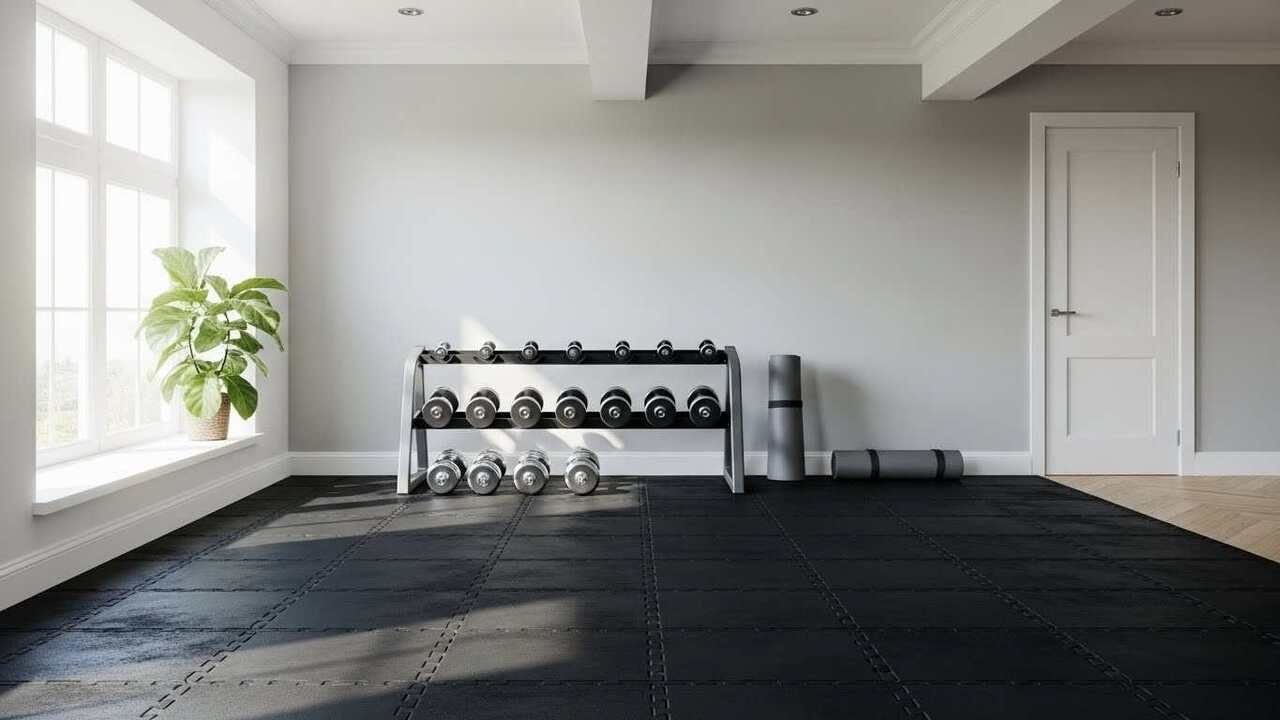
If you’re building a home gym, one of the smartest investments you can make isn’t a fancy treadmill or the heaviest dumbbell—it’s your flooring. The right home workout room flooring does way more than just look good. It protects your joints, saves your subfloor from dents and cracks, cuts down on noise (a must if you live in an apartment or have family below you), and even keeps you from slipping during sweaty sessions.
But with so many options out there—foam tiles, rubber mats, interlocking systems—it’s easy to feel overwhelmed. Don’t worry. We’ve tested, researched, and compared the top choices to help you find the best exercise flooring for your home gym.
Table of Contents
Why Your Home Gym Needs Special Flooring
Most people don’t think about flooring until after they’ve dropped a 50-pound dumbbell on their hardwood and left a permanent crater. Standard home flooring just isn’t built for the demands of fitness. Whether you’re doing burpees, deadlifts, or yoga flows, your surface needs to handle impact, moisture, and movement—without falling apart or hurting your knees.
Good gym flooring gives you cushioning where you need it, stability where you don’t, and peace of mind that your space is safe, quiet, and built to last.
Rubber Tiles: The Gold Standard for Serious Home Gyms
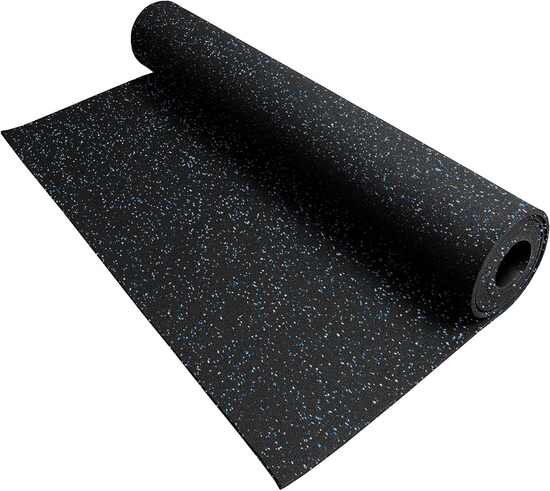
If you’re lifting weights, doing CrossFit-style workouts, or using heavy equipment, interlocking rubber tiles are your best bet. They’re tough, shock-absorbent, and won’t budge under pressure. Most come in thicknesses from 8mm to 24mm, with 10mm (about 3/8 inch) being ideal for general use and 12mm+ for serious weightlifting zones.
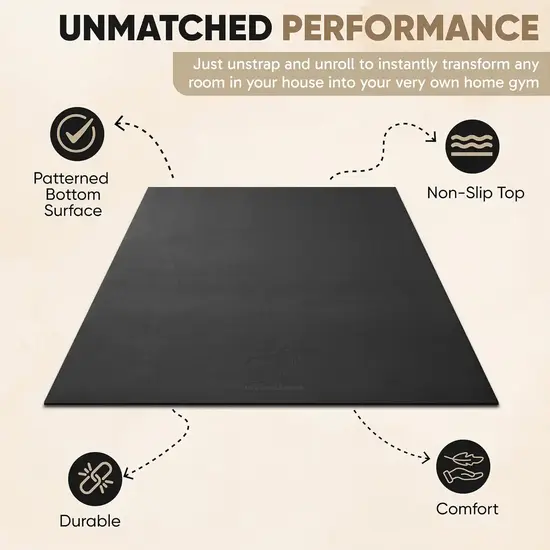
Rubber tiles protect your floor from dropped weights, resist moisture and odors, and are surprisingly easy to install—no glue, no mess. Just snap them together like puzzle pieces. Yes, they cost more than foam (typically $2–$6 per square foot), but they’ll last for years, even with daily use.
One thing to note: lower-quality recycled rubber can have a strong smell at first, but it usually fades within a week if you air it out. Look for “low-odor” or “virgin rubber” options if you’re sensitive.
Foam Tiles: Soft, Affordable, and Perfect for Low-Impact Workouts
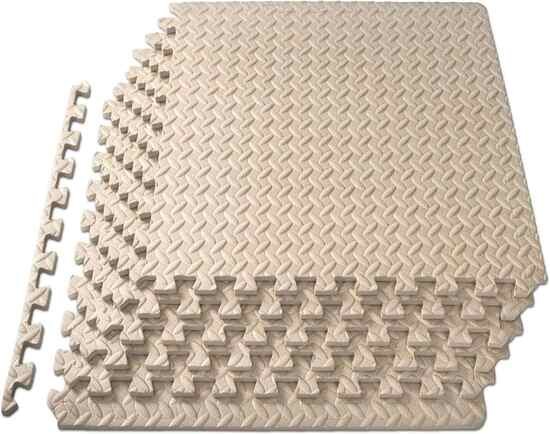
If your routine leans more toward yoga, Pilates, bodyweight circuits, or stretching, high-density EVA foam tiles are a comfortable and budget-friendly choice. They’re soft underfoot, easy to cut to size, and start as low as $1 per square foot.
Just keep in mind: foam isn’t built for heavy weights. Dropping a kettlebell on it can tear the surface or leave permanent dents. It’s also more prone to absorbing sweat and odors over time, so regular cleaning is a must.
That said, for apartment dwellers, beginners, or anyone using a corner of their living room as a workout nook, foam tiles offer great comfort without breaking the bank.
Roll-Out Mats: Quick, Temporary, and Great for Spot Protection
Need something fast and simple? Roll-out rubber flooring mats are a solid option—especially if you’re renting or just protecting the area under a treadmill or weight bench. They unroll in seconds, provide decent cushioning, and are easy to store or move.
But they’re not ideal for full-room workouts. Edges can curl, and they don’t offer the same joint support or durability as interlocking systems. Think of them as a “good enough” solution for small or temporary setups.
What About Carpet or Turf Home Gym Flooring?
Some people try using regular carpet—but it’s not recommended. It compresses unevenly, traps sweat and bacteria, and offers zero protection for dropped weights. There are carpet-style gym tiles with rubber backing that look nicer in multi-use rooms, but again, they’re only suitable for very light activity.
Artificial turf is a niche option. It’s great if you’re doing sled pushes, agility drills, or sport-specific training, but it’s expensive, harder to clean, and overkill for most home users.
How to Choose Home Gym Flooring Based on Your Needs
Ask yourself a few key questions:
- What kind of workouts will I do most? Heavy lifting = rubber. Yoga or stretching = foam.
- What’s my subfloor? Concrete? You’re good. Wood or tile? You’ll want solid protection underneath.
- Do I rent? Go for removable, non-permanent options like interlocking tiles.
- Am I in an apartment? Thicker flooring + underlayment = happier downstairs neighbors.
- What’s my budget? Foam is cheapest upfront, but rubber lasts longer and may save you money over time.
Installation Tips That Actually Help
You don’t need to be a contractor to install home gym flooring. Most systems are DIY-friendly. Just make sure your floor is clean, dry, and level before you start. If you’re laying rubber over concrete in a basement, consider a vapor barrier to prevent moisture issues. Leave a small gap (about ¼ inch) around the walls to let the material expand in temperature changes. And if you hate seeing seams collect dust, you can tape them down for easier cleaning.
Our Top Home Gym Flooring Picks for 2025
For most people building a serious home gym, interlocking rubber tiles are the clear winner. Brands like Rogue Fitness, Titan Fitness, and Garage Gym Builder offer durable, low-odor options that stand up to daily abuse.
If you’re on a tight budget or mostly do low-impact workouts, ProSource Fit or BalanceFrom EVA foam tiles give you excellent cushioning and value.
Final Thoughts
Your home gym should feel like a place you want to be—not a room you avoid because it’s noisy, uncomfortable, or damaging your floors. Investing in the right flooring isn’t just about protection; it’s about creating a space that supports your fitness journey safely and sustainably.
So before you buy that shiny new barbell, take a good look at what’s under your feet. Chances are, your knees—and your floor—will thank you.





Leave a Reply