
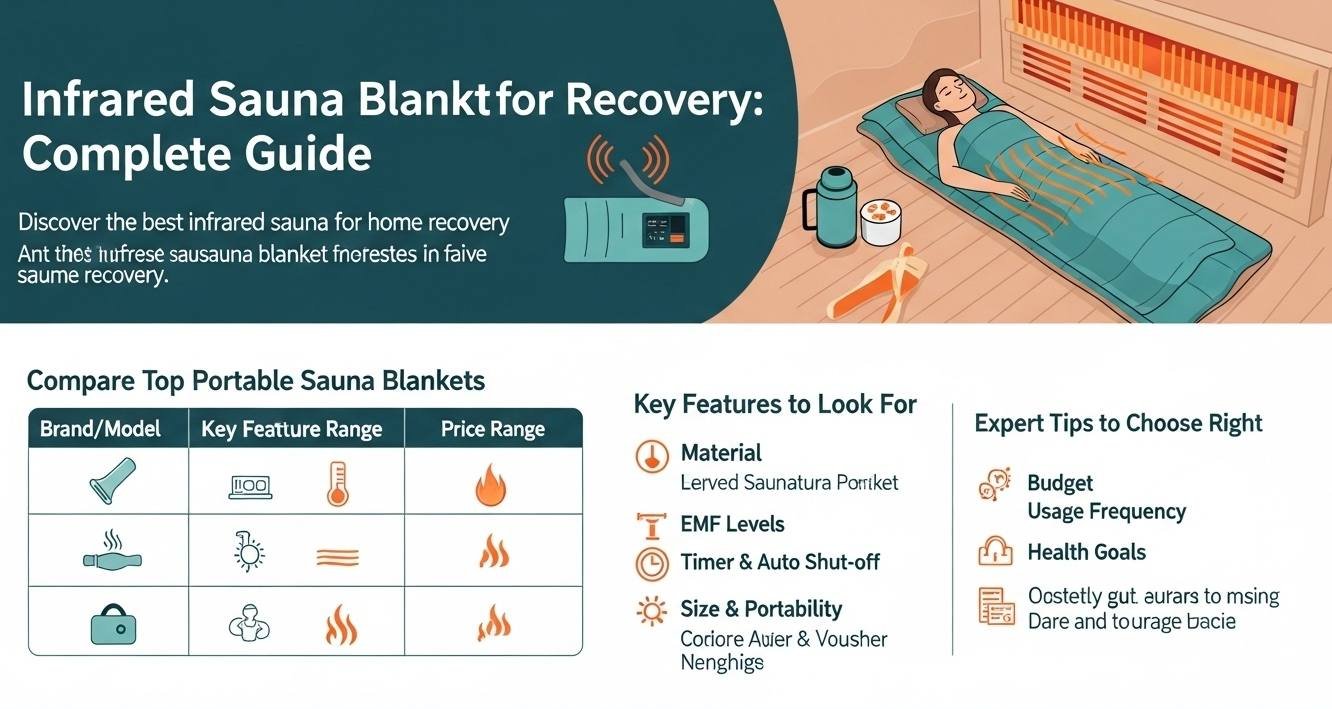
If you spend serious money on training, nutrition, or health optimization, your recovery tools deserve the same attention. Infrared sauna blankets have quietly moved from niche biohacker gadget to mainstream home wellness essential — and for good reason.
The idea is simple. You zip yourself into a blanket that uses far-infrared heat to warm your body from the inside out, not just the surface. Your core temperature rises, your heart rate climbs, and your body responds much the same way it does inside a traditional sauna cabin — but at a fraction of the cost and in the comfort of your home.
Still, the market is noisy. Prices range from under $150 to over $700. Claims vary wildly. And not every product earns the premium it charges.
This guide cuts through the noise. You will learn what infrared sauna blankets actually do, what separates a quality blanket from a mediocre one, and which features genuinely matter for recovery. By the end, you will know exactly what to look for before you spend a dollar.
Table of Contents
What Is an Infrared Sauna Blanket and How Does It Work?
A traditional sauna heats the air around you to very high temperatures — often above 80°C. Your body absorbs that ambient heat and sweats in response. It works, but it requires a dedicated room, significant infrastructure, and a lot of energy.
An infrared sauna blanket skips the air entirely. It uses far-infrared (FIR) radiation — a wavelength of light that sits just beyond visible red on the spectrum — to penetrate several centimetres beneath your skin and generate heat within your tissue directly. Your body heats up without the surrounding air needing to reach extreme temperatures.
This is why infrared blankets can operate at lower ambient temperatures while still producing a significant sweat response and the cardiovascular effects associated with sauna use. The heat source is more targeted, and the experience is more contained.
| 📝 Note: Far-infrared is not the same as UV radiation and is not associated with skin damage. It is also the same type of warmth you feel from sunlight on a cool day, minus the ultraviolet component. |
[IMAGE PROMPT: Close-up diagram or infographic showing far-infrared wavelength penetrating skin layers, clean scientific illustration style with warm tones]
How a Session Actually Feels
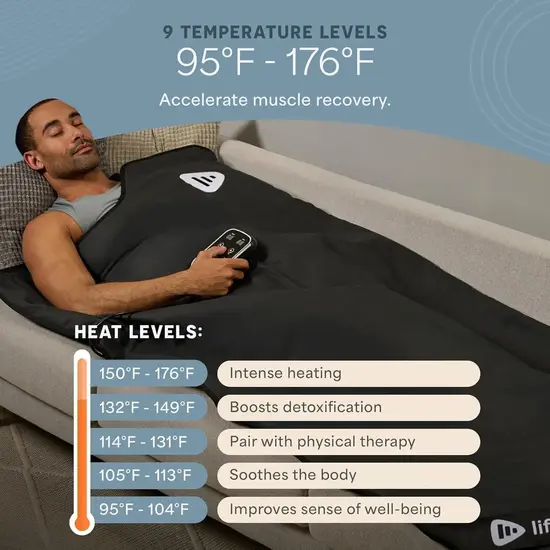
Most users describe the first 10 to 15 minutes as a gradual, pleasant warmth — similar to lying under a heating blanket but deeper. Around the 20-minute mark, sweating begins in earnest. By 30 to 45 minutes, the experience is genuinely intense. Your heart rate will be elevated, you will be sweating heavily, and you will feel the familiar post-sauna relaxation starting to set in.
The key difference from a traditional sauna is that your head remains outside the blanket. This makes the experience more comfortable for people who find enclosed saunas claustrophobic, and it keeps breathing easy throughout.
Realistic Benefits for Recovery-Focused Users
Before we talk about what to buy, it helps to understand what the research and user experience actually support. Infrared sauna blankets are not magic. But used consistently, they offer a set of benefits that genuinely complement a high-performance lifestyle.
Muscle Recovery and Reduced Soreness
Heat therapy is one of the oldest recovery tools in existence. Warmth increases blood flow to muscle tissue, which helps clear metabolic waste products like lactic acid and deliver fresh oxygen and nutrients. For people dealing with delayed onset muscle soreness (DOMS) after training, a 30 to 45-minute infrared blanket session can meaningfully reduce the time it takes to feel ready for the next session.
Cardiovascular Conditioning
A session in an infrared blanket elevates your heart rate to a range comparable to moderate aerobic exercise. For active users, this is a useful tool on rest days when you want cardiovascular stimulus without adding mechanical stress to muscles and joints. For those recovering from injury or managing chronic conditions, it provides a passive form of cardiovascular engagement.
Deep Sleep Improvement
Body temperature plays a direct role in sleep onset and quality. After a sauna session, core temperature drops — and that drop is one of the body’s primary triggers for deep sleep. Many users report significantly improved sleep when they schedule infrared blanket sessions one to two hours before bed. This is one of the most consistent quality-of-life benefits reported across long-term users.
Skin Health
Sweating deeply and consistently clears the skin in ways that topical products cannot easily replicate. Regular infrared blanket users often notice improved skin texture and clarity after several weeks of consistent use. This benefit, while cosmetic, is a welcome side effect for an audience that invests in their appearance alongside their health.
Stress and Cortisol Reduction
Heat exposure promotes the release of endorphins and encourages a parasympathetic (rest and recovery) nervous system state. For high-performers managing demanding schedules, a daily infrared session can serve as a structured wind-down that supports mental health as much as physical recovery.
| “I started using my infrared blanket after hard training blocks. It shortened my recovery window noticeably. But the sleep improvement is what kept me coming back every day.” — Elite triathlete, age 38, using infrared blanket for 14 months |
What to Look For: Key Features That Actually Matter
[IMAGE PROMPT: Flat lay of an infrared sauna blanket unzipped and laid open on a clean floor, showing inner surface material and zipper construction, product photography style]
Not all infrared sauna blankets are built the same. The market includes everything from well-engineered products with medical-grade components to cheaply made blankets that barely justify their price tags. Here is what to evaluate before committing to a purchase.
EMF Levels
Electromagnetic fields (EMF) are emitted by all electrical devices, and infrared blankets are no exception. High-quality blankets are engineered with low-EMF heating elements that fall well below international safety guidelines. Look for products that have been independently tested and display specific EMF readings — ideally below 3 milligauss (mG) at the surface.
Brands that simply say ‘low EMF’ without publishing test data are worth treating with scepticism. Transparency here is a marker of quality across the board.
Materials and Inner Lining
You are spending extended time in direct contact with the blanket’s interior surface. The material matters for both safety and comfort. Look for non-toxic materials — many quality blankets use PU (polyurethane) leather or food-grade materials on the inner surface. Avoid blankets with strong chemical smells when new, as this can indicate off-gassing from lower-grade plastics.
Some higher-end blankets incorporate layers of amethyst, tourmaline, or jade crystals as the heating surface. These natural stones emit far-infrared when heated and add a layer of ion-generating benefit. Whether you prioritise the crystal layer or not, the far-infrared emission quality matters more than the branding.
Temperature Range and Control
A good infrared sauna blanket should offer a broad temperature range — typically between 25°C and 80°C — with precise incremental control. Beginners benefit from starting at lower settings, while experienced users may want to work into higher ranges for more intense sessions.
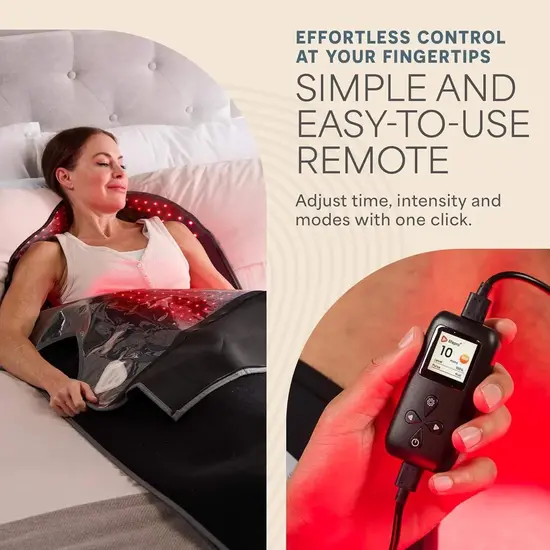
Dual-zone control is a worthwhile feature on higher-end models. It lets you set a different temperature for the upper body versus the lower body, which can be useful when you want more heat through the legs and hips without overheating the torso and arms.
Timer and Auto-Shutoff
A built-in timer with automatic shutoff is not optional — it is a safety essential. Sessions lasting longer than 60 minutes can lead to dehydration and overheating. A quality blanket will shut off automatically, and the best models include alarms at preset intervals so you stay aware of session duration.
Sizing and Build Quality
Most blankets are designed for a single user and accommodate heights up to around 6 feet 2 inches comfortably. If you are taller, check the actual internal dimensions. The zipper quality, stitching, and build of the controller unit all speak to the product’s durability. A blanket used four or five times a week needs to last.
Infrared Sauna Blanket Feature Comparison Guide
Use this table to evaluate any blanket you are considering against the features that matter most for home recovery use.
| Feature | Entry Level | Mid-Range | Premium |
| EMF Rating | Often unspecified | Low EMF, some testing | Ultra-low EMF, third-party tested |
| Inner Material | Basic PVC | PU leather or non-toxic lining | Natural crystal layer (amethyst/jade) |
| Temperature Range | 25–65°C | 25–75°C | 25–80°C with dual-zone control |
| Timer / Auto-Shutoff | Basic timer | 60-min timer with shutoff | Customisable timer, alerts, auto-off |
| Controller Quality | Simple dial | Digital display | LCD panel, app integration (some) |
| Warranty | 6–12 months | 1–2 years | 2–3 years or more |
| Session Duration | Up to 45 min recommended | Up to 60 min | Up to 60 min with safety monitoring |
| Price Range | $150–$250 | $300–$500 | $500–$750+ |
| 📝 Note: Price alone does not predict quality. A mid-range blanket from a reputable brand with published EMF data will outperform a premium-priced blanket from an unknown manufacturer with vague specifications every time. |
How to Use an Infrared Sauna Blanket for Best Results
[IMAGE PROMPT: Person in athletic wear about to use an infrared sauna blanket, glass of water nearby, phone showing timer, clean minimalist home setting]
Owning a quality blanket is only half the equation. How you use it determines how much benefit you actually get. These guidelines are built around what experienced users and recovery professionals recommend most consistently.
Before Your Session
- Hydrate well. Drink at least 500ml of water in the 30 minutes before you start.
- Wear light, breathable clothing inside the blanket — thin cotton or moisture-wicking fabric. Some users prefer to go without clothing, in which case lay a cotton sheet or towel inside.
- Place the blanket on a flat, stable surface — a bed, yoga mat, or sofa all work. Avoid surfaces that retain heat beneath the blanket.
- Pre-heat the blanket for 5 to 10 minutes before getting in. This ensures even heat distribution when your session starts.
- Keep water and a towel within reach before you zip in.
During Your Session
- Start your first few sessions at a lower temperature setting — around 45 to 55°C — and build up gradually over several weeks.
- A 30 to 45-minute session is appropriate for most recovery goals. You do not need to push past 60 minutes.
- If you feel dizzy, lightheaded, or uncomfortable at any point, open the blanket and cool down. This is not a test of endurance.
- Listening to a podcast, audiobook, or calm music makes sessions easier and more enjoyable.
After Your Session
- Rehydrate with at least 500ml of water or an electrolyte drink immediately after.
- Allow your body to cool naturally before showering — ideally 10 to 15 minutes.
- Wipe down the interior of the blanket with a damp cloth and leave it open to air before storing.
How Often Should You Use It?
For recovery-focused use, two to four sessions per week is a well-supported starting point. Daily use is practised by many long-term users without adverse effects, but it requires consistent hydration and listening to how your body responds.
For sleep improvement, scheduling sessions two to three hours before bed tends to produce the best results. For post-training recovery, a session within four to six hours of a hard workout helps the most. For stress management, any time of day works — whatever fits your schedule consistently.
| “Consistency matters far more than frequency. Four sessions a week for three months will outperform daily use for two weeks followed by the blanket sitting in a closet.” — Certified strength and conditioning specialist, wellness practice owner |
Portable Sauna Blanket vs. Traditional Sauna: An Honest Comparison
Infrared sauna blankets are not a perfect replacement for a full sauna cabin. Understanding the actual trade-offs helps you decide whether a blanket fits your life and goals.
| Factor | Infrared Sauna Blanket | Traditional Sauna Cabin |
| Cost | $150–$750 one-time | $3,000–$15,000+ installed |
| Space Required | Fits in a cupboard | Dedicated room or outdoor space |
| Setup Time | 5–10 minutes | Permanent installation |
| Heat Experience | Body-targeted, head uncovered | Full-body immersion, high ambient heat |
| Portability | Fully portable, travel-friendly | Fixed location |
| Social Use | Solo use only | Can accommodate 2–4 people |
| Maintenance | Wipe-down after use | Cleaning, wood care, element upkeep |
| Recovery Effectiveness | Comparable for most goals | Slight edge for intense heat protocols |
For the vast majority of home users — especially those in apartments, shared houses, or simply without space for a cabin — the infrared blanket offers 80 to 90 percent of the recovery benefit at a fraction of the cost and complexity. It is the most practical entry point into regular heat therapy, full stop.
Who Should Be Cautious
Infrared sauna blankets are safe for most healthy adults. However, there are specific groups who should consult a doctor before use.
- Pregnant women — heat exposure affects foetal development and is not recommended.
- People with cardiovascular conditions, including hypertension, arrhythmias, or recent cardiac events.
- Those taking medications that affect thermoregulation, such as certain antidepressants, diuretics, or blood pressure medications.
- Anyone with active skin conditions, open wounds, or significant inflammatory skin disorders.
- People with implanted medical devices such as pacemakers or insulin pumps.
| 📝 Note: When in doubt, a five-minute conversation with your GP or physician is all it takes to clarify whether infrared sauna use is appropriate for your health situation. Do not skip this step if any of the above applies to you. |
What Makes a Portable Sauna Blanket Worth the Investment
Portability is one of the most underrated advantages of the blanket format. A good infrared sauna blanket folds down to roughly the size of a large sleeping bag. It fits in a carry-on luggage piece, travels on work trips, and stores under a bed without taking up meaningful space.
For people who travel frequently — whether for business or sport — this means access to a reliable recovery tool regardless of whether the hotel has a spa or the host city has an infrared studio. That consistency is worth a lot to anyone who takes recovery seriously.
The portability factor also removes friction from daily use. The easier a wellness tool is to access, the more consistently it gets used. A blanket that lives under your bed gets used. A sauna cabin that requires a drive across town gets skipped.
Maintenance and Longevity
A quality infrared sauna blanket, properly maintained, should last three to five years or more with regular use. Maintenance is genuinely simple — wipe the interior with a damp cloth after each session, allow it to air dry before storing, and avoid folding it tightly when wet. Keep the controller unit away from moisture and store the blanket loosely rolled rather than compressed.
The heating elements are the component most likely to degrade over time. Blankets from reputable brands will show consistent heat distribution throughout their lifespan. If you notice cold spots or uneven heating after 12 to 18 months of regular use, contact the manufacturer — most quality brands will address this under warranty.
Your Infrared Sauna Blanket Buying Checklist
Before you purchase, run through this checklist to make sure the product you are considering meets the standard of a genuine recovery investment.
- EMF levels are published, third-party tested, and below 3 milligauss at surface contact.
- Inner materials are listed clearly — PU leather, non-toxic lining, or natural stone layer.
- Temperature range covers at least 25°C to 75°C with incremental control.
- A built-in timer with automatic shutoff is included, not optional.
- The controller is digital with a clear display — analogue dials are a quality signal.
- The brand publishes its warranty terms clearly — aim for 12 months minimum, 24 preferred.
- Customer reviews mention durability after 12+ months of consistent use, not just first impressions.
- The blanket dimensions accommodate your height with room to move comfortably inside.
- The brand has accessible customer support — email, phone, or live chat.
| 📝 Note: The best infrared sauna blanket is the one you will use consistently. Prioritise build quality, safety certifications, and ease of use over headline features you will never actually activate. |
The Bottom Line
Infrared sauna blankets occupy a genuinely useful space in the recovery toolkit. They are not miracle devices and they will not replace foundational habits like sleep, nutrition, and training. But used consistently, they deliver real heat therapy benefits — improved recovery, better sleep, cardiovascular stimulus, and deep relaxation — in a format that fits modern, space-conscious lifestyles.
The portable sauna blanket market has matured considerably. Quality products exist at multiple price points, and the gap between a $300 mid-range blanket and a $600 premium one is narrower than most brands would have you believe. What matters most is safety data, materials transparency, and build quality — not the premium you pay for a name.
If you approach infrared sauna blanket use with realistic expectations, good hydration, and a consistent schedule, you will notice genuine improvement in how you recover, sleep, and feel. That is the honest case for making one part of your home recovery setup.
Frequently Asked Questions
How long does an infrared sauna blanket session need to be to see benefits?
Thirty minutes is enough for most recovery goals. You do not need to push to 60 minutes in every session. Consistency across weeks matters more than session length.
Can I use an infrared sauna blanket every day?
Many long-term users do. Provided you stay well-hydrated and listen to your body’s response, daily use is considered safe for healthy adults. Start with three to four sessions per week and adjust based on how you feel.
Do infrared sauna blankets actually help with weight loss?
The weight lost during a session is almost entirely water weight from sweating, which is recovered when you rehydrate. Infrared blankets support metabolism and cardiovascular health over time, but they are not a fat-loss tool on their own. Be sceptical of any brand that leads with weight loss claims.
How do I clean my infrared sauna blanket?
Wipe the interior surface with a lightly dampened cloth after each session. Allow it to air fully before folding or storing. Do not machine wash, submerge in water, or use chemical cleaners on the inner surface.
Is it safe to fall asleep in an infrared sauna blanket?
No. Even with an auto-shutoff timer, falling asleep in the blanket is not safe. Extended exposure during sleep can lead to dehydration and overheating. Always use the timer and stay awake during sessions.




Leave a Reply