
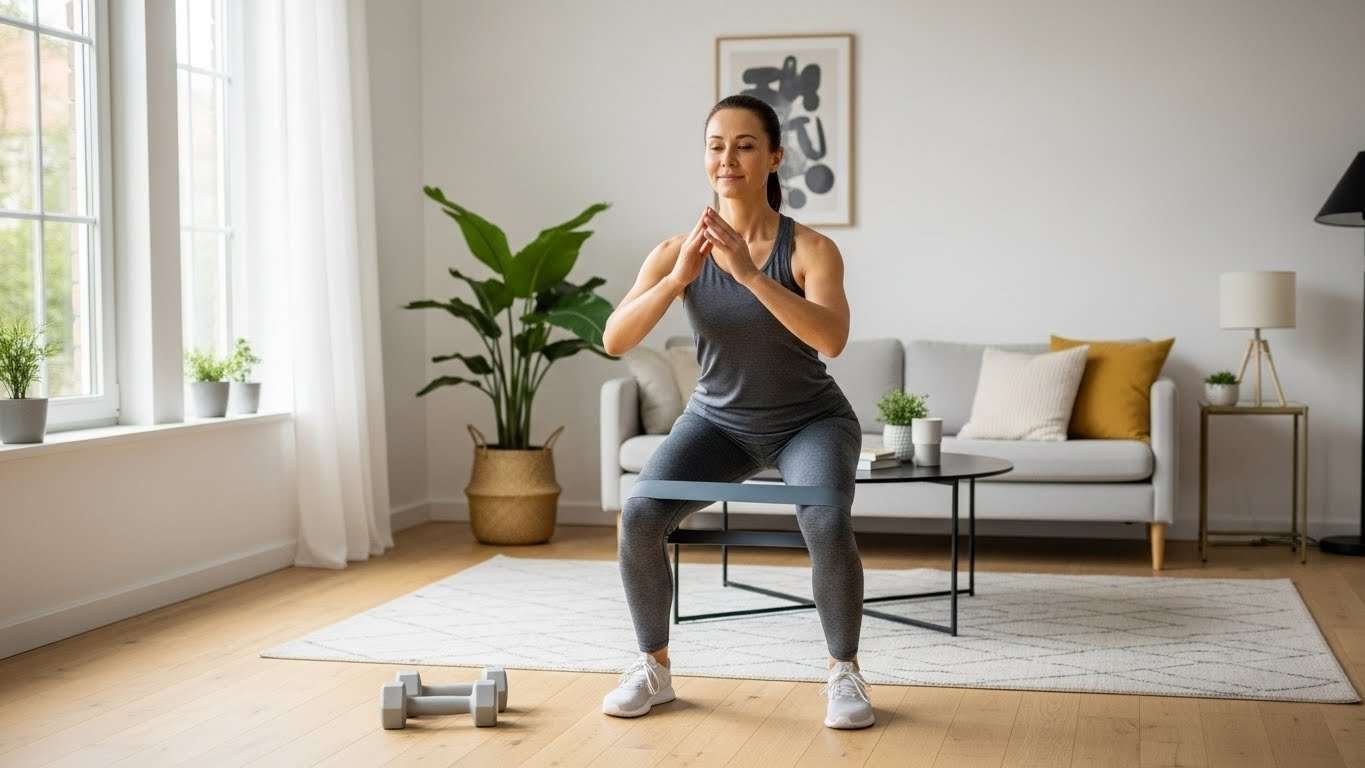
Low impact strength training at home for weight loss is a highly effective, sustainable approach to improving body composition while protecting joints and supporting long-term health. We focus on controlled movements, progressive resistance, and consistency—principles that drive results without excessive strain.
This comprehensive guide delivers a complete framework to help build lean muscle, increase metabolic efficiency, and promote steady fat loss from the comfort of home.
Table of Contents
Why Low Impact Strength Training Works for Weight Loss
Low impact strength training emphasizes muscle engagement over momentum, reducing stress on joints while maximizing caloric efficiency. Muscle tissue is metabolically active, meaning it increases resting energy expenditure. By strengthening large muscle groups with controlled resistance, we create a favorable environment for fat loss without high-impact stress.
Key advantages include:
- Joint-friendly movements suitable for all fitness levels
- Improved metabolic rate through lean muscle development
- Reduced injury risk compared to high-impact routines
- Sustainable adherence, which is critical for lasting results
Essential Principles for At-Home Low Impact Training
Consistency, progression, and control form the foundation of effective low impact training.
- Consistency: Regular sessions (3–5 times weekly) maintain metabolic momentum.
- Progression: Gradually increase resistance, time under tension, or repetitions.
- Control: Slow, deliberate movements ensure optimal muscle activation.
By adhering to these principles, we ensure measurable progress without unnecessary strain.
Equipment-Free and Minimal-Equipment Options
Low impact strength training at home for weight loss requires minimal tools. We can achieve excellent results with:
- Bodyweight resistance (squats, push-ups, glute bridges)
- Resistance bands for scalable tension
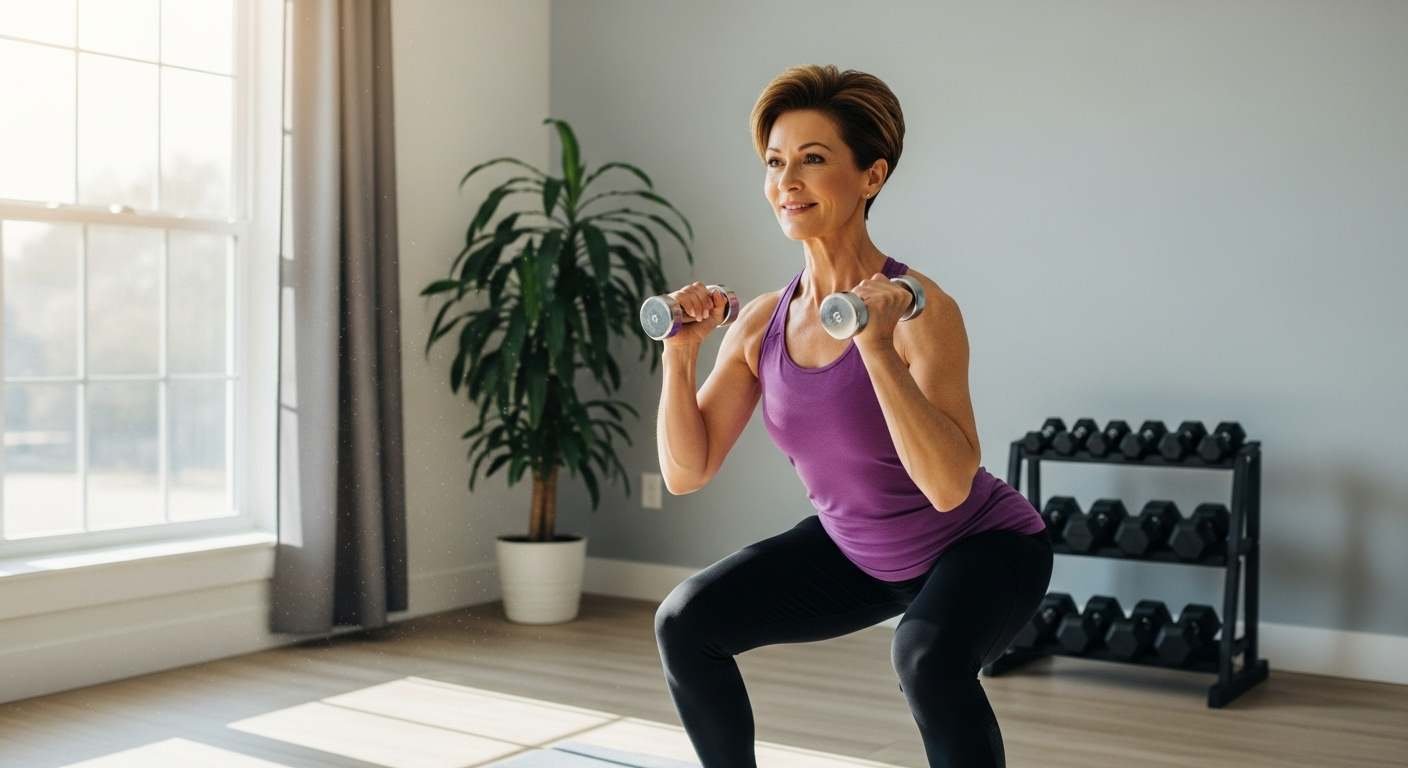
- Light dumbbells or kettlebells for progressive overload
- Stability tools like chairs or walls for balance support
This flexibility removes barriers and supports consistent training.
Full-Body Low Impact Strength Exercises
Lower Body Focus
- Chair Squats: Strengthen quads and glutes while reinforcing proper form.
- Glute Bridges: Activate posterior chain muscles to support metabolic health.
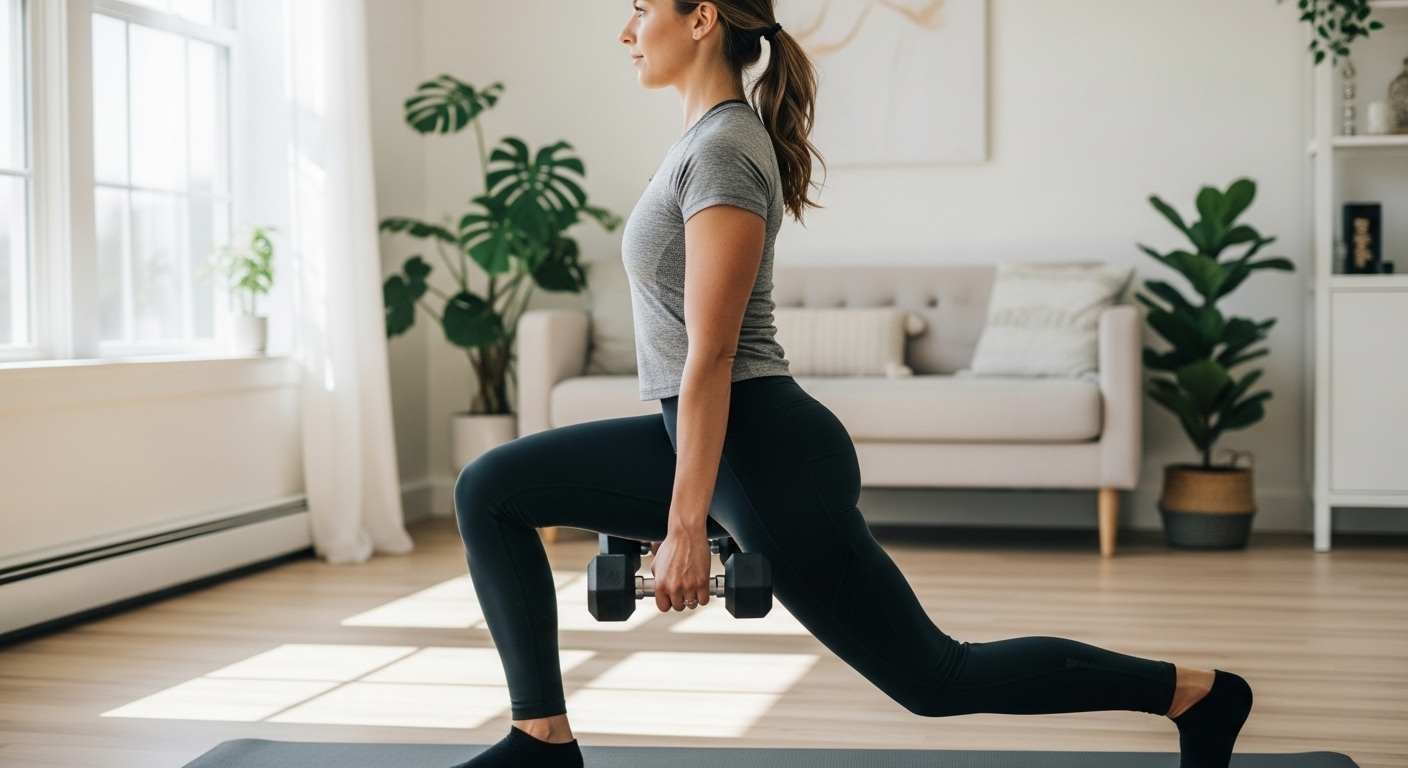
- Step-Back Lunges: Reduce knee stress while improving balance and strength.
Upper Body Focus
- Wall Push-Ups: Build chest and arm strength with reduced joint load.
- Resistance Band Rows: Enhance back strength and posture.
- Overhead Press (Light Weights): Develop shoulders with controlled motion.
Core Stability
- Dead Bugs: Improve core coordination without spinal strain.
- Standing Pallof Press: Build anti-rotation strength for functional fitness.
- Modified Planks: Strengthen the core while maintaining alignment.
Structuring an Effective At-Home Workout
A balanced session follows a strategic sequence:
- Warm-Up (8–10 minutes)
Dynamic mobility drills and light activation exercises. - Strength Circuit (30–40 minutes)
Full-body movements performed in controlled circuits. - Metabolic Finisher (5–10 minutes)
Low impact intervals such as marching, step taps, or band work. - Cool Down (5 minutes)
Stretching to enhance recovery and flexibility.
This structure supports fat loss while preserving energy and form.
Weekly Training Schedule for Fat Loss
A sample week for low impact strength training at home for weight loss:
- Monday: Full-Body Strength
- Tuesday: Active Recovery or Mobility
- Wednesday: Lower Body + Core
- Thursday: Rest or Light Movement
- Friday: Upper Body Strength
- Saturday: Full-Body Circuit
- Sunday: Rest
This schedule balances stimulus and recovery to maintain progress.
Nutrition Strategies to Support Training
Strength training and nutrition work together. We emphasize:
- Adequate protein intake to support muscle maintenance
- Whole, nutrient-dense foods for sustained energy
- Balanced meals with complex carbohydrates and healthy fats
- Hydration to optimize performance and recovery
Consistency in nutrition reinforces training adaptations and supports weight loss.
Recovery and Injury Prevention
Low impact does not mean low importance. Recovery accelerates results.
- Sleep: Prioritize quality rest to regulate hormones.
- Mobility work: Maintain joint range of motion.
- Active recovery: Light walking or stretching enhances circulation.
These practices ensure longevity and continuous improvement.
Tracking Progress Without Obsession
Effective tracking focuses on performance, energy, and consistency rather than scale fluctuations alone. We monitor:
- Strength improvements
- Endurance gains
- Body composition changes over time
- Daily energy levels
This approach supports motivation and sustainable habits.
Long-Term Benefits Beyond Weight Loss
Low-impact strength exercises delivers outcomes that extend beyond fat loss:
- Improved posture and balance
- Enhanced joint stability
- Greater confidence and functional strength
- Sustainable lifestyle integration
By prioritizing controlled strength work, we invest in lifelong health.
Final Thoughts on Low Impact Strength Training at Home for Weight Loss
Low impact strength training at home for weight loss is a powerful, accessible, and sustainable strategy. By combining structured workouts, progressive resistance, supportive nutrition, and proper recovery, we create an approach that delivers consistent results while protecting the body. This method supports not only weight management but also long-term strength, resilience, and well-being.




Leave a Reply