

Boxing is a dynamic sport that combines explosive power, speed, endurance, and precision. Training without a gym membership does not limit your potential to achieve these attributes. With structured routines, proper technique, and progressive overload, home boxing workouts can deliver real results that rival gym-based training.
This guide outlines everything needed to maximize your performance at home, from equipment essentials to weekly programming and recovery strategies.
Table of Contents
Why a Home Boxing Workout Is So Effective
Home boxing workouts provide a full-body training solution that develops cardiovascular fitness, muscular endurance, coordination, and mental sharpness. Unlike conventional cardio routines, boxing engages fast-twitch muscle fibers through explosive punching, lateral movement, and defensive maneuvers.
Shadowboxing, bodyweight circuits, and optional equipment-based exercises simulate gym conditions while improving core stability, reaction time, and functional strength.
Structured home boxing workouts emphasize round-based training, interval intensity, and skill mastery, ensuring that every session contributes to measurable progress.

Essential Home Boxing Equipment (Optional but Recommended)
While home boxing training can be effective with minimal equipment, having a few tools enhances performance and safety:
- Hand Wraps and Gloves: Protect wrists and knuckles during heavy bag work or sparring simulations.
- Jump Rope: Boosts foot speed, coordination, and aerobic conditioning.
- Heavy Bag or Freestanding Bag: Enables power development and realistic combination practice.
- Resistance Bands: Add resistance to punches and defensive drills, enhancing strength and endurance.
- Timer App: Replicates authentic boxing rounds with accurate work-to-rest ratios.
Even without equipment, shadowboxing, footwork drills, and bodyweight circuits remain highly effective in building technique, stamina, and power.
Proper Boxing Stance and Guard
A strong foundation begins with stance and guard. Improper posture reduces punch effectiveness and increases injury risk.
- Feet: Shoulder-width apart, lead foot forward, rear heel slightly raised.
- Knees: Soft and slightly bent for mobility.
- Hands: Chin tucked, elbows close to ribs, hands protecting the jawline.
- Core: Braced to transfer power efficiently from the lower body through the torso into punches.
Mastering stance and guard allows smooth footwork, defensive coverage, and efficient energy transfer, critical for any home boxing workout.
Warm-Up: Prime the Body (8–10 Minutes)
An effective warm-up prepares muscles, joints, and the cardiovascular system while reducing injury risk:
- Jump Rope or Jog in Place (3 minutes): Elevates heart rate and primes leg muscles.
- Dynamic Mobility (2 minutes): Arm circles, hip rotations, ankle mobility drills.
- Dynamic Shadowboxing (3–5 minutes): Practice basic punches and footwork at 50% intensity to activate neuromuscular coordination.
Core Home Boxing Workout (30–45 Minutes)
A typical session follows a round-based structure, emulating professional boxing routines.
Round Structure:
- Rounds: 6–10
- Work: 3 minutes per round
- Rest: 60 seconds between rounds
Rounds 1–2: Shadowboxing Fundamentals
- Focus on jab, cross, hook, and uppercut combinations.
- Prioritize proper technique, breathing, and head movement.
- Integrate footwork drills, pivoting, and lateral movement.
Rounds 3–4: Footwork and Defensive Drills
- Shuffle steps, pivots, slips, rolls, and retreats.
- Include light counters following defensive movements.
- Emphasize balance, agility, and spatial awareness.
Rounds 5–6: Power Development
- Heavy bag or resistance band punches.
- 30-second power combinations, alternating with 30 seconds of active movement.
- Maintain form over raw force to prevent injury.
Rounds 7–8: Conditioning Circuit
Perform each exercise for 30 seconds, repeat twice per round:
- Push-ups
- Squats
- Mountain climbers
- Plank punches
This circuit targets full-body endurance, explosive strength, and core stability, replicating the intensity of boxing rounds.
Optional Rounds 9–10: Speed Finisher
- Rapid-fire jabs, alternating hooks, and punch-out intervals.
- Focus on reaction speed, cardiovascular output, and mental toughness.
Cooldown and Recovery (5–8 Minutes)
- Shoulder and hip stretches: Maintain flexibility and prevent soreness.
- Deep breathing: Reduce heart rate and improve parasympathetic recovery.
- Light shadowboxing: Flush lactic acid from muscles while reinforcing technique.
Weekly Training Plan for Home Boxing
A consistent schedule ensures balanced skill development, recovery, and conditioning:
| Day | Focus |
|---|---|
| Monday | Technique + Conditioning |
| Tuesday | Footwork + Core |
| Wednesday | Active Recovery (Mobility or Yoga) |
| Thursday | Power + Bag Work |
| Friday | Speed + Endurance |
| Weekend | Optional Skills or Rest |
Progressive training ensures consistent improvement in power, speed, and endurance.
Progression for Long-Term Results
To maximize long-term gains:
- Gradually increase rounds or duration.
- Incorporate resistance or tempo variations.
- Track punch combinations, speed, and accuracy.
- Maintain strict rest intervals to replicate fight conditions.
Consistency and incremental overload are more effective than sporadic high-intensity sessions.
Common Home Boxing Mistakes to Avoid
- Over-tensing shoulders or fists, which reduces efficiency and increases strain.
- Neglecting footwork, limiting mobility and defensive capability.
- Skipping warm-ups, raising the risk of injury.
- Training without a round structure, which reduces focus and measurable progress.
Maintaining clean technique, structured sessions, and proper recovery protects joints while improving performance.
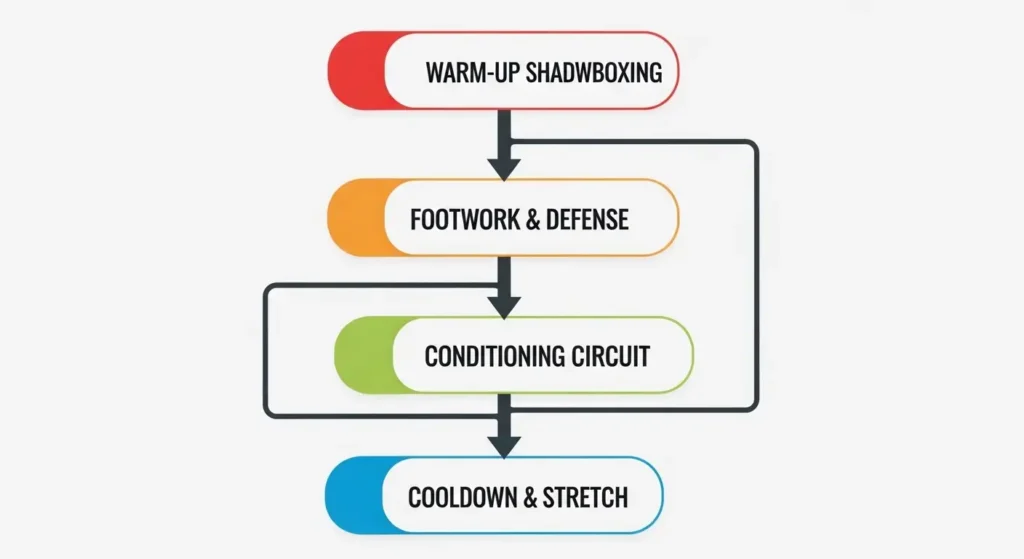
Training Flow for Optimal Home Boxing
- Begin with stance and guard mastery.
- Transition to shadowboxing and footwork drills.
- Integrate bag work or resistance exercises for power.
- Follow with conditioning circuits for endurance.
- Conclude with cooldown, stretching, and mental focus exercises.
This progression ensures each session is purposeful, structured, and results-driven.
Final Thoughts
Home boxing training without a gym membership offers unmatched flexibility, accessibility, and effectiveness. With structured rounds, attention to technique, and deliberate progression, athletes can build strength, endurance, and confidence entirely from home. Shadowboxing, bodyweight conditioning, and optional equipment-based drills provide championship-level results in minimal space.
By adhering to this comprehensive guide, consistent home training transforms living rooms into high-performance boxing studios, making gym memberships optional for serious fighters and fitness enthusiasts alike.




Leave a Reply