
A home gym office combo gives you one room that works twice as hard: a productive workspace during the day and a practical workout area whenever you have time to train. The trick is separating work and exercise zones without making the room feel cramped.
With the right desk, compact fitness equipment, storage, flooring, lighting, and layout, even a spare bedroom or small corner can become a comfortable office and functional home gym.
Table of Contents
What Is a Home Gym Office Combo?
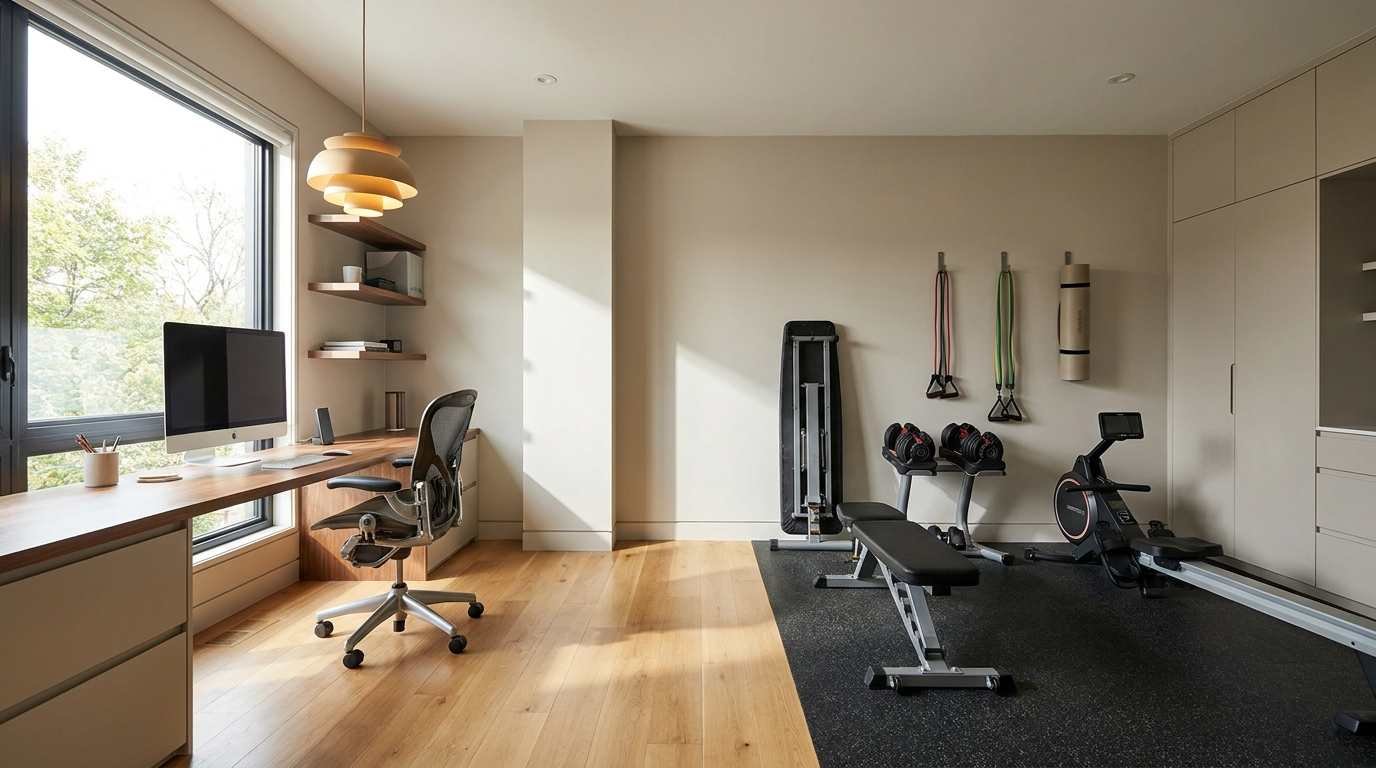
A home gym office combo is a room or designated area that combines a work-from-home setup with exercise equipment. The layout usually includes a desk and chair in one zone, while another section holds equipment such as dumbbells, resistance bands, a treadmill, exercise bike, yoga mat, or compact rack.
The best setup lets you switch between work and training quickly.
For example, you might spend the morning working at a desk, move a chair aside during lunch, and complete a 30-minute strength or cardio session without leaving the room.
Best layout at a glance
| Room size | Office setup | Gym setup | Best equipment |
|---|---|---|---|
| Small | Compact desk | Floor workout zone | Bands, adjustable dumbbells, mat |
| Medium | Desk + storage | Dedicated training corner | Dumbbells, bench, bike |
| Large | Full workstation | Defined gym area | Rack, bench, cardio equipment |
| Spare bedroom | Desk against wall | Open central floor | Folding equipment |
| Garage | Wall-mounted desk | Full gym area | Rack, plates, treadmill |
The goal is simple: give every piece of equipment a defined home while preserving enough open floor space to move comfortably.
How to Plan a Home Gym Office Combo
Start with the room itself.
Measure the length and width, then mark doors, windows, closets, outlets, heating vents, and permanent furniture. This gives you a realistic picture of the usable floor area.
A simple sketch on paper can save you from buying equipment that later blocks a door or leaves your desk wedged into a corner.
1. Create separate work and workout zones
The easiest arrangement is to divide the room into two functional areas.
Place the desk against a wall and reserve the opposite side for training. In a larger room, you can use a rug, open shelving unit, cabinet, or low storage bench as a visual divider.
You don’t necessarily need a physical wall.
A clear transition between the two areas makes the room easier to use. When you’re working, the gym equipment stays out of your immediate workspace. When you’re training, you have a defined area ready to go.
2. Keep the center of the room open
Open floor space is one of the most valuable features in a combined room.
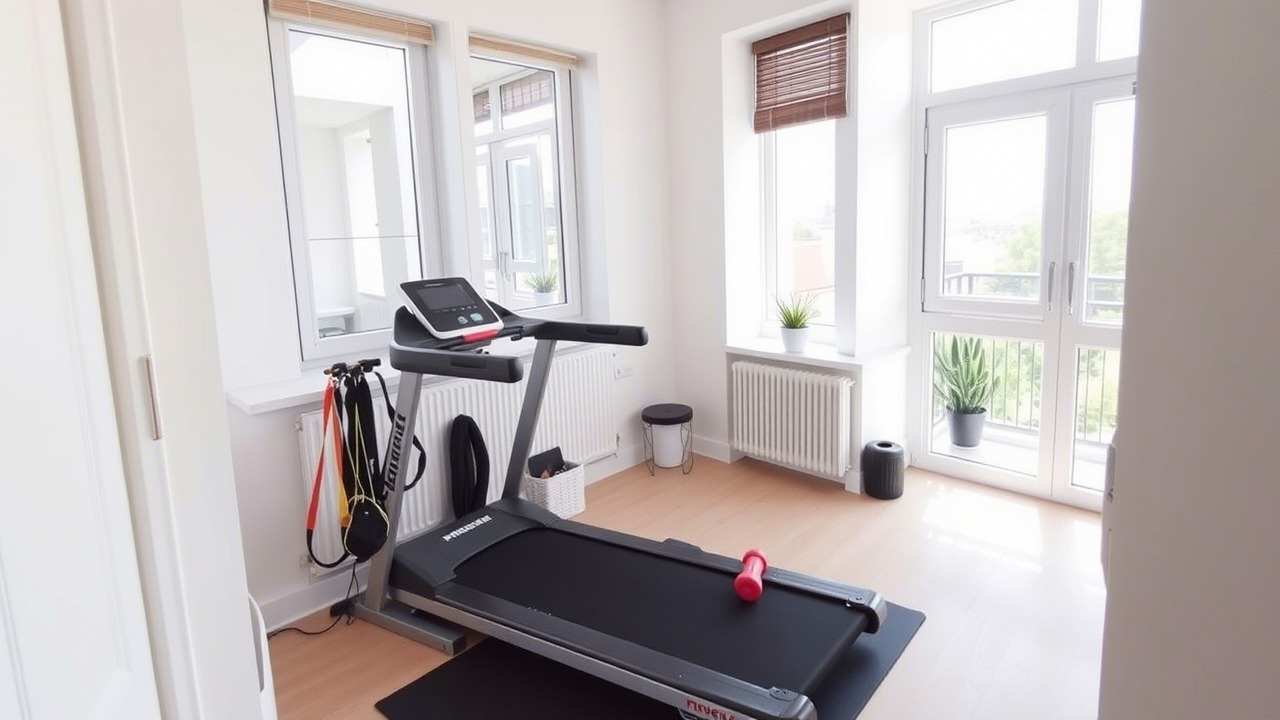
A desk can sit against a wall. Dumbbells can live on a vertical rack. Resistance bands can hang from hooks. The middle of the room can remain available for stretching, bodyweight exercises, mobility work, and strength training.
This arrangement works particularly well in smaller bedrooms.
3. Measure equipment before buying it
Product dimensions matter more in a dual-purpose room than they do in a dedicated gym.
A treadmill may fit perfectly on paper but make the room difficult to walk through once it’s installed. A power rack can consume much more visual and physical space than expected.
Measure:
- Equipment length
- Equipment width
- Equipment height
- Storage clearance
- Door clearance
- Walking paths
- Exercise clearance
- Ceiling height
Leave enough room around equipment for safe movement and access.
The Best Equipment for a Home Gym Office Combo
Compact equipment usually works best because your room has to support two activities.
Adjustable dumbbells
Adjustable dumbbells can replace several pairs of traditional dumbbells while taking up far less floor space.
They’re especially useful for:
- Squats
- Rows
- Lunges
- Shoulder presses
- Chest presses
- Romanian deadlifts
- Biceps curls
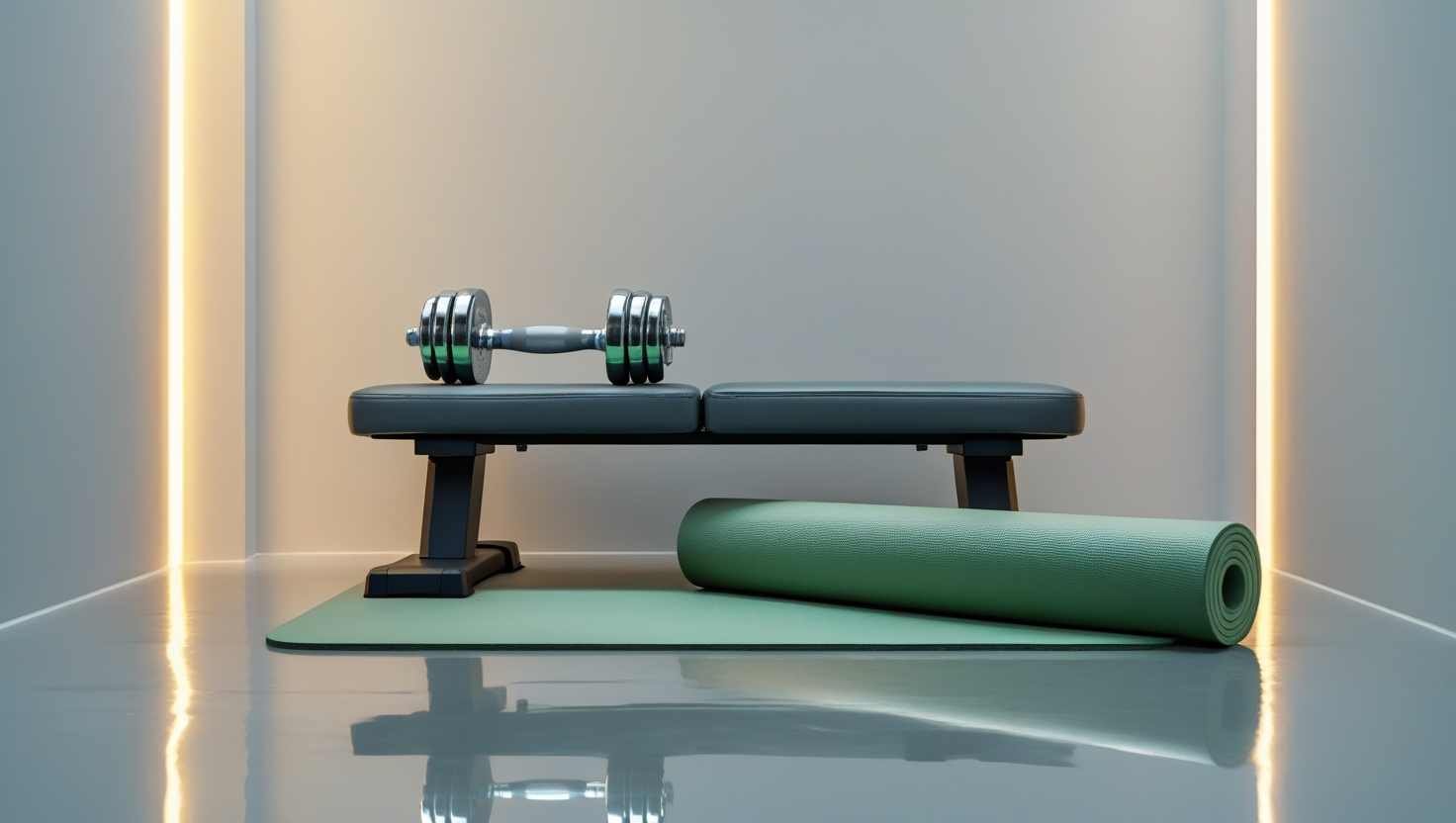
Store them beside or underneath a bench when they’re not being used.
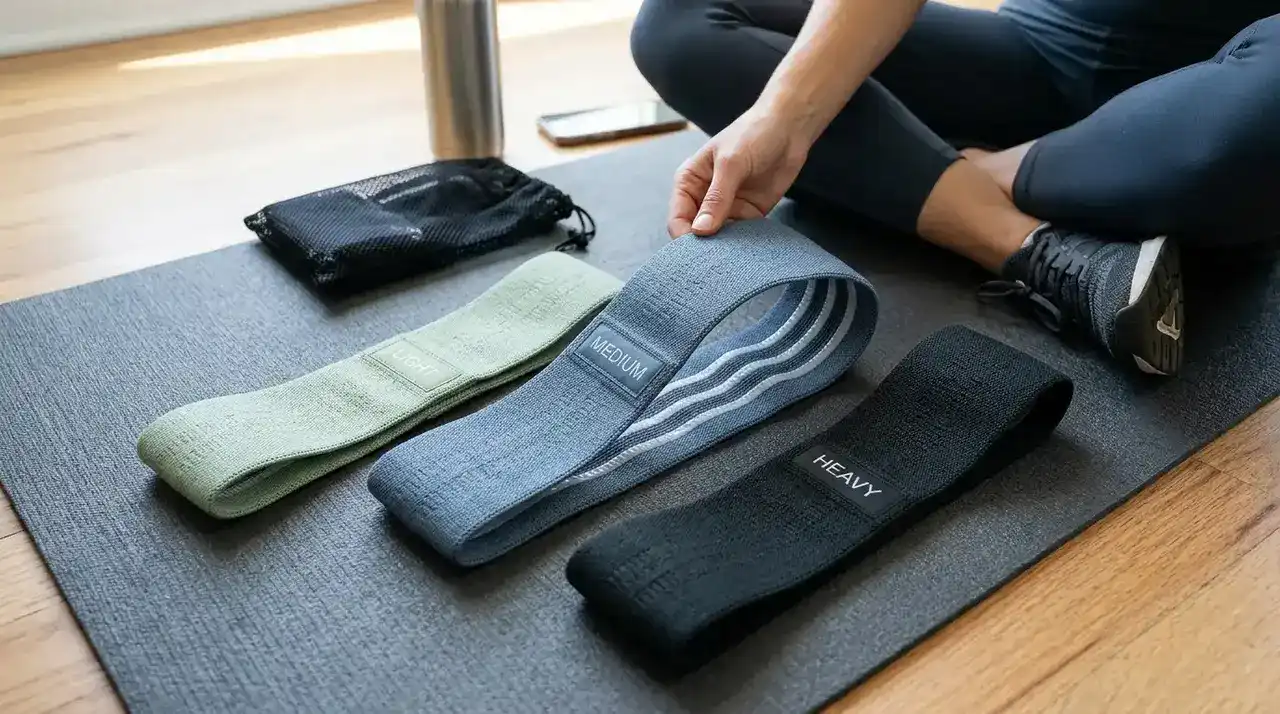
Resistance bands
Resistance bands are one of the easiest additions to a shared office and gym.
A small collection can support upper-body, lower-body, mobility, and warm-up exercises. They also fit inside a drawer, basket, or wall-mounted storage container.
That makes them particularly useful when your available floor space is limited.
Folding workout bench
A folding bench gives you more exercise options without permanently occupying a large section of the room.
You can use it for presses, rows, step-ups, split squats, and seated exercises. Once training is finished, fold it and move it against a wall if the design allows.
Under-desk treadmill
An under-desk treadmill can serve two functions in a home office.
You can use it for walking while performing suitable computer tasks, then move it away from the desk for dedicated walking sessions.
Before buying one, check its dimensions, noise level, maximum user weight, speed range, storage method, and whether its height works with your desk.
Walking while working also depends heavily on the task. Reading or listening to a meeting may be easier than typing detailed documents while moving.
Compact exercise bike
An exercise bike can be a good choice when you want cardio without dedicating an entire room to a treadmill.
Place it along a wall or in a corner where it won’t interfere with the office chair.
If the bike has transport wheels, moving it between zones becomes easier.
Yoga mat
A quality exercise mat creates an instant workout surface.
Roll it up after training and store it vertically in a basket, cabinet, or dedicated mat holder.
For many people, a mat, adjustable dumbbells, resistance bands, and a bench can provide enough variety for a surprisingly complete home workout.
Choosing the Right Desk
Your desk is just as important as your gym equipment because you’ll probably spend more hours working than exercising in the room.
A compact desk with built-in drawers or shelving can reduce the need for additional furniture.
Consider a standing desk
A height-adjustable standing desk can make a particularly useful addition to a home gym office combo.
You can alternate between sitting and standing during your workday. If you also use an under-desk treadmill, check that the desk has enough height adjustment and clearance.
Keep cables organized beneath the desk so the treadmill or other equipment doesn’t catch them when moved.
Choose a compact office chair
An oversized executive chair may look impressive but consume valuable floor space.
A comfortable ergonomic chair with a relatively compact footprint can leave more room for exercise.
If your chair has wheels, make sure your flooring allows it to move smoothly without damaging the surface.
Flooring for a Combined Office and Gym
Flooring deserves more attention than it usually receives.
Your office chair needs a stable, smooth surface. Your gym equipment benefits from a surface that protects the existing floor and provides traction.
A practical solution is to combine flooring types.
For example:
- Hard flooring for the desk zone
- Rubber gym flooring for the training zone
- A protective mat beneath rolling office equipment
- A separate exercise mat for floor workouts
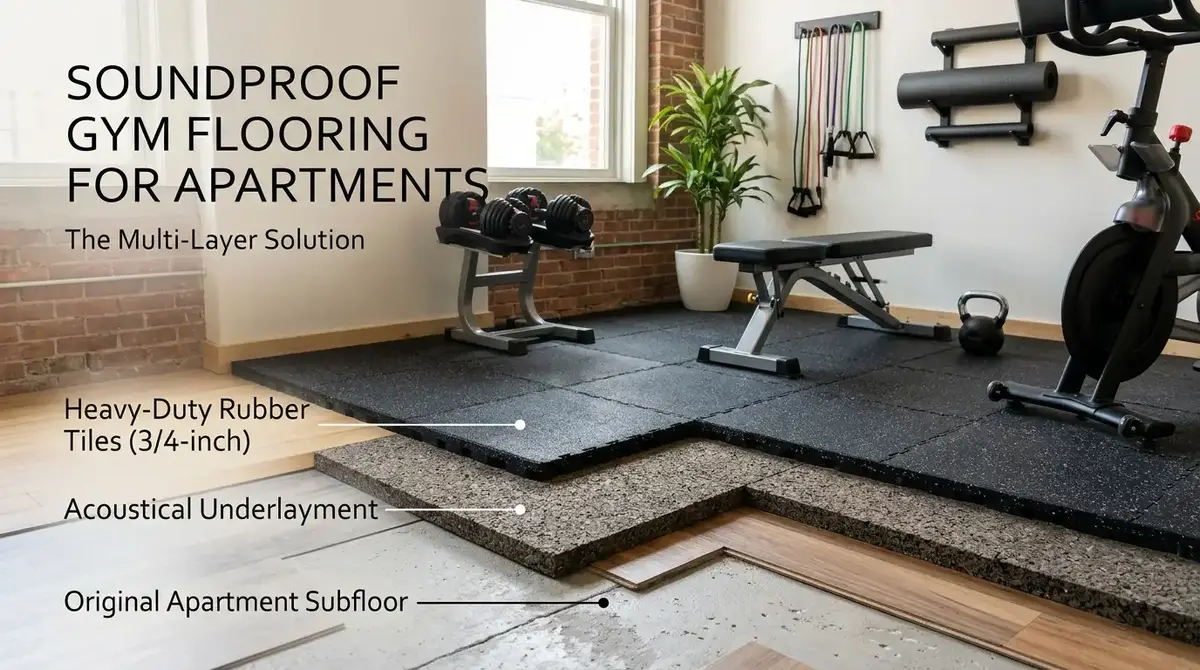
Rubber tiles or rolls can help protect flooring from dumbbells and other equipment.
For apartment or upstairs setups, flooring can also help reduce vibration and impact. Heavy lifting, jumping, and dropping weights create far more noise than controlled exercises.
Storage Ideas for a Home Gym Office Combo
Storage determines whether your room feels organized or permanently cluttered.
Use vertical space whenever possible.
Wall-mounted storage
Wall-mounted hooks can hold resistance bands, jump ropes, yoga straps, and other lightweight equipment.
Shelves can store smaller accessories.
A wall-mounted solution keeps the floor clear, which makes the room feel larger.
Under-desk storage
The area beneath your desk can hold more than paperwork.
Depending on the equipment, you can store:
- Resistance bands
- Small dumbbells
- Massage balls
- Yoga blocks
- Exercise sliders
- Workout accessories
Keep heavier equipment positioned so it doesn’t interfere with your legs or chair.
Closed cabinets
A cabinet is useful when you want the room to look like an office while you’re working.
Close the doors and your equipment disappears visually.
This can be especially useful if the room also serves as a guest bedroom, study, or general-purpose space.
How to Arrange a Small Home Gym Office Combo
Small rooms require stricter prioritization.
Start with the desk because your work requirements determine its size and location. Then establish a workout rectangle in the remaining open floor area.
A useful small-room arrangement looks like this:
Wall 1: Desk and monitor
Wall 2: Vertical gym storage
Wall 3: Compact cardio equipment
Center: Exercise mat and free movement area
Corner: Folding bench or adjustable dumbbells
Avoid filling every available corner.
Leaving some empty space makes the room easier to navigate and gives you somewhere to perform exercises.
Small-space equipment priorities
If your room is tight, prioritize equipment based on how many exercises it supports.
A strong starting combination could be:
- Adjustable dumbbells
- Resistance bands
- Exercise mat
- Folding bench
- Compact cardio machine
You can add equipment later after you’ve learned how the room actually functions.
How to Arrange a Large Home Gym Office Combo
A larger room gives you more freedom.
You can create a dedicated office wall and a dedicated gym wall, leaving a central walking path between them.
For example, put the desk near a window if natural light helps you work. Place strength equipment against a solid wall and keep cardio equipment along another wall.
A larger room may also accommodate a power rack, but check ceiling height and the equipment’s footprint before buying.
If you regularly lift heavy weights, consider putting the strength area on appropriate flooring rather than directly beside delicate office furniture.
Lighting Matters More Than You Think
The same lighting setup doesn’t always work for both work and exercise.
Your desk needs enough light to reduce eye strain and illuminate paperwork or your keyboard. Your workout area needs even illumination so you can see your surroundings clearly.
Natural light is excellent for an office, while layered artificial lighting gives you control after dark.
Consider:
- Desk lighting
- Ceiling lighting
- Indirect room lighting
- Task lighting
- Bright, even lighting around the workout area
Keep computer screens positioned so windows don’t create distracting glare.
Cable Management in a Home Gym Office
Cables become a safety issue when office equipment and gym equipment share a room.
Run computer cables along the wall or beneath the desk. Keep extension cords away from walking paths.
If you use a treadmill or bike with a power cable, give that cable its own route.
Before each workout, quickly check the floor.
A loose charging cable near a dumbbell or exercise mat is an unnecessary trip hazard.
Noise Considerations
A home gym office combo needs to remain comfortable for work.
Choose quieter equipment if you take video calls or share walls with other rooms.
Magnetic-resistance cardio equipment tends to produce less mechanical noise than some older designs. Resistance bands and controlled dumbbell exercises can also create less noise than jumping or dropping weights.
If you’re working above another occupied room, avoid high-impact movements unless the flooring and building allow them.
Quieter exercise choices
For a work-friendly room, consider:
- Walking
- Stationary cycling
- Resistance-band workouts
- Yoga
- Mobility exercises
- Controlled dumbbell training
- Bodyweight strength exercises
Save jumping and heavy weight drops for a more suitable space.
Make the Room Easy to Switch Between Work and Exercise
A dual-purpose room works best when the transition takes minutes rather than half an hour.
Keep frequently used gym equipment accessible.
For example, you might keep resistance bands on a wall hook and adjustable dumbbells beside the training mat. A folding bench can sit against the wall until you need it.
The goal is a simple routine:
Finish work → clear desk area → roll out mat → train → store equipment → return to work mode.
That small amount of preparation can make it much easier to exercise consistently.
Common Home Gym Office Mistakes
Buying too much equipment
More equipment doesn’t automatically create a better gym.
Every machine occupies physical space. Start with equipment that supports the exercises you actually perform.
Ignoring storage
A dumbbell left beside the desk becomes an obstacle.
Give everything a home before buying additional equipment.
Blocking natural light
A large rack or storage cabinet placed directly in front of a window can make an otherwise pleasant office feel dark.
Use the room’s windows as part of your layout plan.
Forgetting ceiling height
Some racks, cable systems, and overhead exercises require more vertical clearance than you might expect.
Measure from the floor to the ceiling before ordering tall equipment.
Using fragile office furniture in the training zone
A glass desk, lightweight shelf, or delicate cabinet shouldn’t sit beside equipment that could be knocked over.
Keep the gym zone physically separated from fragile furniture whenever possible.
Can a Home Gym Office Combo Replace a Dedicated Gym?
For many people, yes.
A well-planned room can support strength training, cardio, mobility work, stretching, and everyday work without requiring a dedicated gym room.
The right setup depends on your training style.
Someone who primarily does bodyweight workouts needs very little equipment. A powerlifter or serious strength athlete needs substantially more space, storage, and flooring.
Your available room should determine the equipment list rather than the other way around.
How Much Space Do You Need?
There’s no single minimum size because the answer depends on your equipment and workouts.
A compact office combined with floor-based exercise can work in a relatively small room. Larger equipment requires additional clearance.
Think in zones rather than total square footage.
You need:
- A work zone
- A workout zone
- A storage zone
- A walking path
- Clearance around equipment
If those areas overlap too heavily, the room will feel difficult to use.
A smaller equipment selection can often produce a better result than filling the room with machines.
A Practical Home Gym Office Combo Setup
For a balanced setup, consider this basic configuration:
Office zone
- Compact height-adjustable desk
- Ergonomic chair
- Monitor
- Desk lamp
- Cable management
Gym zone
- Adjustable dumbbells
- Resistance bands
- Folding bench
- Exercise mat
- Compact cardio machine
Storage zone
- Vertical rack
- Wall hooks
- Small cabinet
- Equipment basket
Floor protection
- Rubber gym flooring
- Desk floor protector
- Exercise mat
This gives you enough flexibility for a broad range of workouts without turning your office into a commercial gym.
Key Takeaways
- A home gym office combo works best when work and workout zones have clear boundaries.
- Keep the center of the room open for movement whenever possible.
- Adjustable dumbbells and resistance bands provide substantial exercise variety with little storage space.
- Folding benches and compact cardio machines can make dual-purpose rooms more flexible.
- Use rubber flooring or protective mats in the workout area.
- Vertical storage helps keep equipment off the floor.
- Cable management matters because loose wires can become trip hazards.
- Choose quieter equipment if you work during meetings or share walls with other rooms.
- Measure equipment, clearance, doors, and ceiling height before purchasing.
- Start with the equipment you actually use, then expand your gym gradually.
Frequently Asked Questions
Is a home gym office combo a good idea?
Yes. A home gym office combo can make excellent use of a spare bedroom, office, garage, or large corner. The most effective layouts create separate work and exercise zones while keeping equipment easy to store.
What is the best equipment for a small home gym office?
Adjustable dumbbells, resistance bands, a folding bench, an exercise mat, and compact cardio equipment are strong choices. They provide many training options while using relatively little space.
Can I put a treadmill in my home office?
Yes. An under-desk treadmill or compact folding treadmill can work well in a home office. Check its dimensions, noise, power requirements, and clearance before purchasing.
How do I separate a home office from a gym?
Use furniture placement, flooring, shelving, rugs, lighting, or storage to define each zone. You can create a clear separation without building a permanent wall.
What flooring is best for a home gym office combo?
Rubber flooring works well for the workout zone because it protects the underlying floor and provides traction. A separate floor protector can help protect the office area from chair wheels.
How can I make a home gym office look professional?
Use matching storage, concealed cables, consistent furniture, adequate lighting, and a limited equipment selection. Keep loose accessories in drawers, cabinets, baskets, or wall-mounted storage.
Can I use a standing desk with a treadmill?
Yes. A height-adjustable standing desk can pair well with an under-desk treadmill. Make sure the desk reaches a comfortable height for both walking and computer work.
How do I keep gym equipment from cluttering my office?
Give every item a storage location. Wall hooks, vertical racks, cabinets, baskets, and folding equipment can keep the floor clear and make the room easier to reset after each workout.