
Slant boards and squat wedges are useful additions to a home gym, strength-training area, or mobility routine. By elevating the heels or placing the feet on an inclined surface, these fitness tools change the position of the ankles and lower legs during exercises such as squats, calf raises, and stretching drills. The right design can make lower-body training more comfortable, provide a stable platform for controlled movements, and help users work on ankle mobility and calf flexibility.
However, not every slant board serves the same purpose. Some models are designed for heel-elevated squats, while others provide a larger platform for standing calf stretches or adjustable incline exercises. Choosing between wooden boards, steel wedge blocks, and adjustable platforms depends on the movements we intend to perform, the available training space, and the stability requirements of our workouts.
In this guide, we compare popular slant board designs, explain their intended uses, and outline how to incorporate them into a general fitness routine safely.
Disclaimer: The content on FlexGear Insights is for informational and educational purposes only and does not constitute medical advice. Slant boards are fitness tools intended for exercise, stretching, and mobility work. Always consult a licensed physician or physical therapist before starting a new exercise routine or attempting to manage a knee or joint injury.
Table of Contents
What Is a Slant Board?
A slant board is an inclined platform that allows us to position our feet at an angle rather than on a flat surface. Depending on the model, the platform may be fixed at one incline or adjustable to several different angles. Some designs support both feet, while squat wedge blocks allow each foot to rest on an individual inclined surface.
The main purpose of a slant board is to change foot positioning during specific exercises. When we stand with our heels lower than our toes on an inclined board, we can stretch the calf muscles. When we elevate our heels during a squat, we change the ankle position and may find it easier to maintain an upright torso or achieve a comfortable squat depth.
Slant boards are available in several materials, including plywood, solid wood, molded plastic, and steel. Each material offers different advantages in terms of portability, durability, grip, and storage.
For home gym users, the most important features are platform stability, sufficient foot space, appropriate incline, and a reliable non-slip surface. An attractive design is useful, but it should never take priority over safe construction.
What Does a Slant Board Look Like? Pictures and Design Features
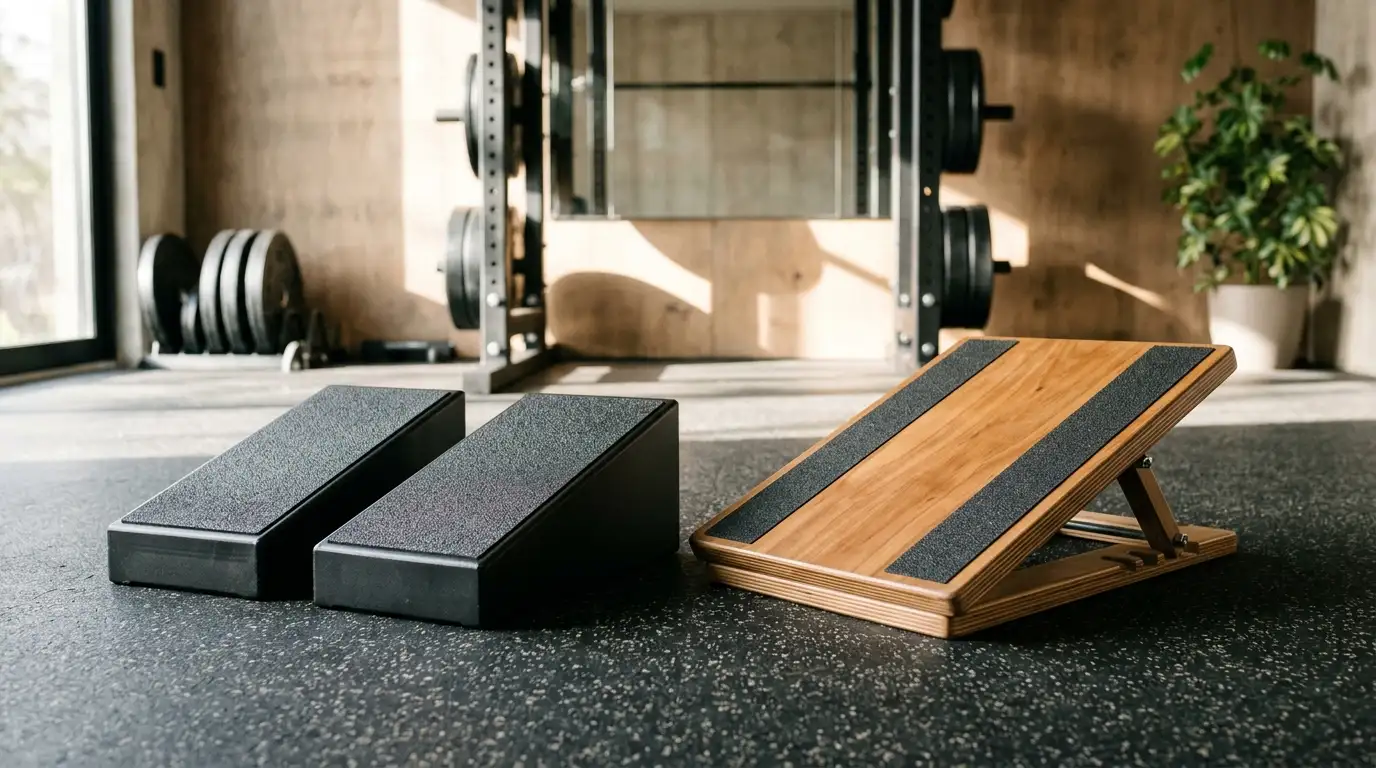
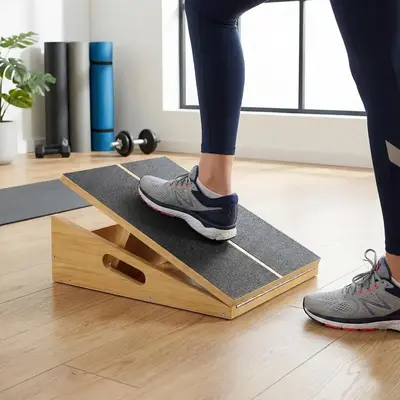
People searching for what does a slant board look like pictures will typically find a simple platform with one raised edge and one lower edge. The incline creates a sloped surface on which the feet can rest during stretching or exercise.
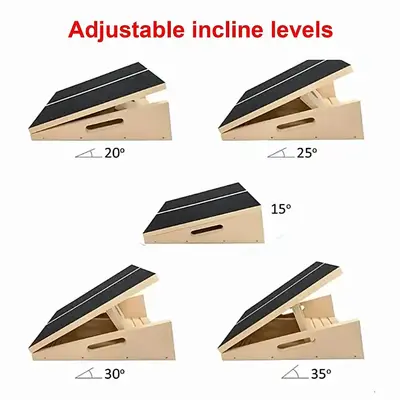
Although the basic shape is straightforward, different designs serve different training needs.
1. Full-Length Wooden Slant Boards
A full-length wooden slant board generally supports both feet on one broad platform. Some models use a fixed incline, while others feature adjustable supports that allow us to change the angle.
These boards are particularly practical for standing calf stretches, controlled ankle mobility drills, and exercises that require a wider standing surface. Wooden construction can also complement a home gym without looking like bulky commercial equipment.
Before purchasing, we should check the platform dimensions, maximum supported weight, surface texture, and whether the adjustment mechanism locks securely.
2. Individual Squat Wedge Blocks
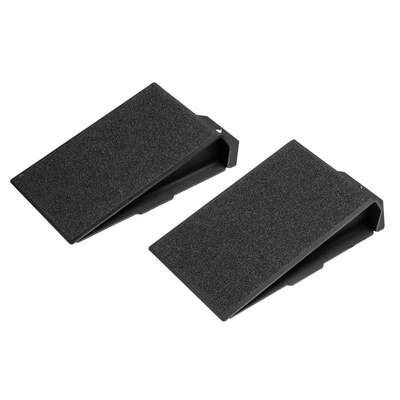
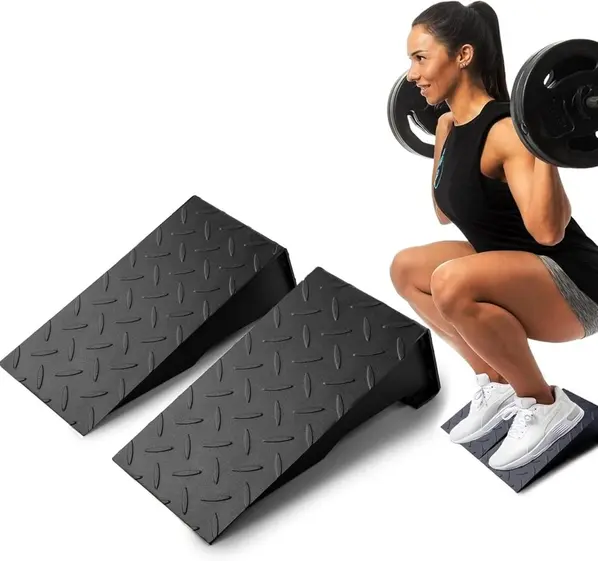
Squat wedges are smaller platforms that elevate the heels during strength exercises. They are commonly sold as a pair, allowing each foot to rest on a separate wedge.
This arrangement provides flexibility in foot positioning. We can adjust the distance between the wedges to suit our preferred squat stance, provided the blocks remain stable throughout the movement.
Steel wedge blocks are particularly appealing to strength-training enthusiasts who want a durable platform for repeated use. The key considerations are the incline angle, the width of each wedge, and the quality of the contact surface.
3. Adjustable Incline Boards
Adjustable slant boards allow us to select different incline angles. A lower angle may feel more manageable during introductory stretching sessions, while a steeper angle increases the range through which the ankle and calf muscles move.
An adjustable design can be useful when several people share the same home gym or when we want one piece of equipment for different exercises.
However, more adjustment options do not automatically make a board better. We should prioritize a secure locking system, a stable base, and clearly defined angle settings over the number of positions available.
How Does Incline Squatting Work?
A heel-elevated squat involves placing the heels on a raised or inclined surface while keeping the forefoot supported. This changes the starting position of the ankles and can make deeper squatting movements more accessible for some individuals.
During a conventional squat, the ankles need to move forward as the knees bend. This movement is known as ankle dorsiflexion. If our available ankle movement is limited, we may find it difficult to maintain our preferred squat depth without lifting the heels or changing our torso position.
Elevating the heels changes the ankle angle required to reach a given squat depth. As a result, some people find it easier to keep their torso more upright and move through a comfortable range of motion.
This does not mean that everyone needs squat wedges. Many people can squat comfortably on a flat floor, and individual differences in anatomy, technique, stance, and mobility influence how a squat feels.
A wedge should be treated as a training aid rather than a substitute for sound technique. We should use a stable platform, begin with bodyweight movements, and increase resistance only when we can maintain control throughout the exercise.
Benefits of Slant Boards for Squats, Calf Raises, and Mobility
Slant boards can support several common lower-body exercises. Their value depends on how we use them and whether the equipment matches our training goals.
Improved Exercise Positioning
Heel elevation can change the mechanics of a squat and may help some lifters reach a deeper position while maintaining balance and a more upright torso.
This can be useful during bodyweight squats, goblet squats, and selected strength-training variations. We should still choose a depth that feels controlled and comfortable rather than forcing our knees or ankles into an unfamiliar position.
Calf Stretching
A slant board can provide a consistent incline for standing calf stretches. With the heels positioned below the forefoot, the calf muscles are lengthened as the ankles move into dorsiflexion.
The stretch should feel controlled rather than sharp or painful. We can begin with a gentle incline and a short hold before gradually increasing the duration if the position remains comfortable.
Ankle Mobility Practice
Ankle dorsiflexion is important for many lower-body movements, including squats, lunges, and walking down stairs. Slant boards can provide a convenient surface for selected ankle mobility drills.
However, standing on a board does not automatically improve mobility. The result depends on the movement performed, the consistency of practice, and the individual’s starting point.
Convenient Home Gym Training
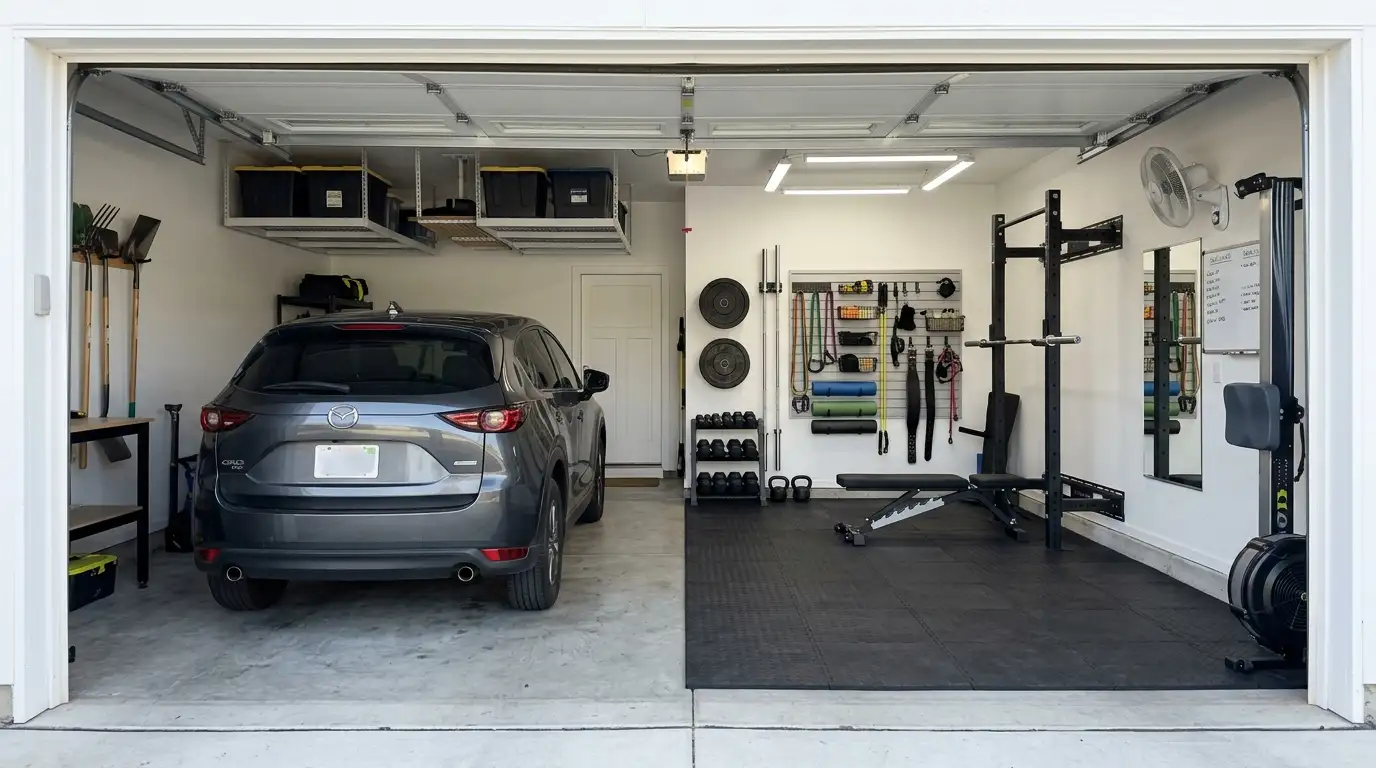
Slant boards require relatively little storage space compared with larger strength-training machines. A compact wedge set can fit beside a squat rack, while a folding or adjustable board may be stored against a wall when not in use.
This makes slant boards practical for apartment gyms, garage workouts, and compact training spaces.
Best Slant Boards and Squat Wedges to Consider
The following products represent three different approaches to incline training: compact wedge blocks, a wooden stretching board, and an adjustable steel platform. Product specifications, included accessories, weight ratings, and current availability should be confirmed on the manufacturer’s or retailer’s listing before purchasing.
1. StrongTek Squat Wedge Blocks
Best for heel-elevated strength training
StrongTek squat wedge blocks are worth considering for lifters who want to elevate their heels during squats without using a full-length stretching board. A pair of wedges provides independent foot placement, making it easier to position the feet according to the chosen exercise.
The steel construction and non-slip design described for this product category appeal to users who prioritize a sturdy platform for repeated workouts. Before buying, verify the actual construction, supported load, dimensions, and surface grip of the specific model.
2. Slant Board Guys Calf Stretcher
Best for dedicated stretching routines
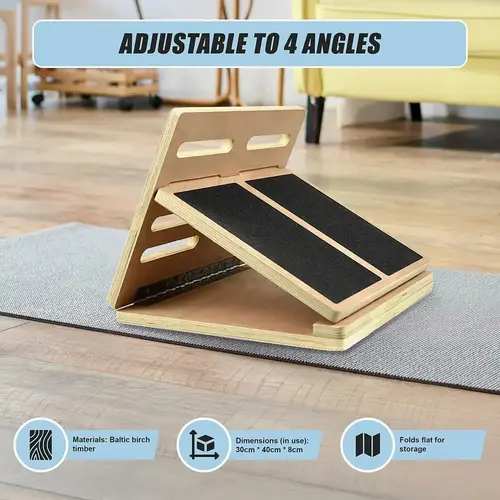
A wooden calf stretcher is a practical choice for users who want a broad platform for standing stretches and controlled mobility exercises. Wooden boards can offer a solid feel underfoot and suit home gyms where a simple, durable piece of equipment is preferred.
Check whether the selected model has adjustable angles, a textured surface, and sufficient room for both feet. We should also confirm its maximum weight capacity and whether the board is intended for static stretching only or for dynamic exercise.
3. Flybold Steel Slant Board Set
Best for adjustable incline training
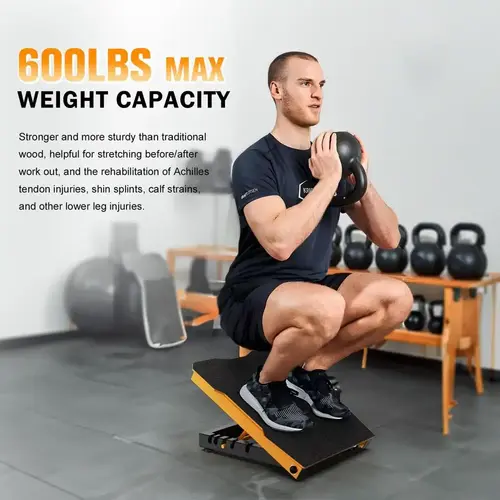
An adjustable steel slant board set can suit users who want to experiment with different incline positions during calf stretching and lower-body mobility work. Multiple settings offer flexibility for different exercises and comfort levels.
The most important details to verify are the available angles, locking mechanism, platform dimensions, and stability under load. If the primary purpose is heel-elevated squatting, we should also confirm that the particular model is explicitly designed to support dynamic strength exercises.
Slant Board Comparison: Which Design Fits Your Training?
| Feature | StrongTek Wedges | Slant Board Guys | Flybold Steel Set |
|---|---|---|---|
| Main design | Separate squat wedges | Wooden stretching board | Adjustable steel platform |
| Primary use | Heel-elevated squats | Calf stretching and mobility | Adjustable incline exercises |
| Foot positioning | Independent wedges | Shared platform | Depends on model |
| Best reason to consider | Flexible squat stance | Broad stretching surface | Multiple incline settings |
| Key check before buying | Grip and load rating | Angle and platform size | Locking system and stability |
The most suitable option depends on our intended use. For strength training, prioritize wedges designed for dynamic loading. For calf stretching, prioritize a comfortable, stable platform. For versatility, look for secure angle adjustments.
A stretching board should not be assumed safe for heavy squats simply because it supports standing body weight. Exercise-specific design and load ratings matter.
How to Perform Heel-Elevated Squats Safely
Heel-elevated squats are one of the most common reasons people purchase squat wedges. The goal is to perform a controlled squat with the heels supported throughout the movement.
- Position the wedges securely. Place them on a level, non-slip floor and position each wedge to match a comfortable stance.
- Check your balance. Stand on the wedges without weights first. Make sure the heels and forefeet have adequate support.
- Brace your torso. Keep your trunk controlled and your feet firmly connected to the platform.
- Lower gradually. Bend the knees and hips while allowing the knees to move forward naturally as you descend.
- Use a comfortable depth. Stop before balance, technique, or comfort deteriorates.
- Stand up under control. Press through the supported feet and return to standing without bouncing.
- Progress gradually. Begin with bodyweight repetitions. Add resistance only after you are comfortable with the movement and confident in the equipment’s stability.
We should not force a deeper squat simply because the heels are elevated. A controlled range of motion is more useful than an unnecessarily deep position that causes discomfort or compromises balance.
How to Use a Slant Board for Calf Raises
Calf raises strengthen the muscles responsible for moving the ankle and controlling the foot during everyday activity. A suitable incline platform can change the starting position and range of motion of the exercise.
However, a calf-stretching board is not automatically appropriate for dynamic calf raises. We should use only a model whose manufacturer permits the intended movement.
For a supported calf raise:
- Position the equipment on a firm, level surface.
- Hold a stable support if needed to maintain balance.
- Place the feet securely on the designated standing surface.
- Rise onto the balls of the feet in a smooth, controlled movement.
- Pause briefly at the top without bouncing.
- Lower slowly to the starting position.
- Stop if we experience pain, unusual discomfort, or loss of balance.
We should avoid adding heavy dumbbells or performing fast repetitions on a board that is designed only for static stretching.
How to Stretch Your Calves on a Slant Board
Calf stretching is another common use for inclined platforms. A gentle stretch can be incorporated into a warm-up or cooldown, depending on our training needs and comfort.
To begin, place the board on a stable surface and stand with both feet supported. Keep the knees comfortably extended without locking them forcefully, and allow the heels to settle into the inclined position. Maintain an upright posture and use a wall or rail for balance if necessary.
Hold the position for approximately 15–30 seconds if comfortable, then step off carefully. Repeat as appropriate for your routine, beginning with a shallow incline rather than immediately choosing the steepest setting.
Some people also use separate knee-bent and knee-straight calf stretches to emphasize different parts of the calf muscle group. These variations should be performed gently and without forcing the ankle into an uncomfortable position.
A stretch should create mild tension, not sharp pain, numbness, or a feeling of instability. Anyone managing an existing injury or recovering from a procedure should seek guidance from a qualified healthcare professional before using an incline board.
Are Slant Boards Worth It?
For many home gym users, slant boards are worth considering when they solve a specific training problem. They are relatively compact tools that can support heel-elevated squats, standing calf stretches, and selected ankle mobility drills.
Their value is less obvious if we already squat comfortably on a flat surface, have sufficient ankle mobility for our chosen exercises, and rarely perform calf stretches. In that situation, purchasing a board may add equipment without meaningfully improving the training routine.
We should consider three questions before buying:
- Will we use it regularly? Equipment that supports exercises already included in our weekly routine is more likely to justify its cost.
- Does the design match the exercise? Squat wedges, full-length stretching boards, and adjustable platforms have different strengths.
- Is the platform stable and appropriately rated? A non-slip surface, adequate foot support, and a suitable load rating are essential.
A basic wooden board may be sufficient for occasional stretching, while a durable pair of squat wedges may make more sense for frequent strength training. Adjustable designs can provide greater flexibility, but only when their mechanisms are secure and easy to use.
Slant boards are training accessories, not guaranteed solutions for pain or mobility limitations. Their benefits depend on the user’s needs, exercise selection, and technique.
What to Look for When Buying a Slant Board
Before selecting a model, we should evaluate the following features.
Incline Angle
A lower incline can provide a more manageable starting point for stretching. Steeper settings increase the angle of the feet and change the demands of the exercise. Adjustable models should have clearly defined settings that lock securely into position.
Weight Capacity
The listed weight capacity should be appropriate for the intended activity. If we plan to perform weighted squats, we must confirm that the equipment is designed for dynamic loading and can support the combined load of the user and any additional resistance according to its instructions.
Surface Grip
A non-slip surface helps keep the feet in position, while rubberized feet or another suitable base treatment can reduce movement on the floor. Neither feature eliminates the need to inspect the surface before training.
Dimensions and Foot Support
The board should accommodate our feet without forcing an awkward stance. A full-length platform may suit stretching, while separate wedges offer more freedom to position the feet independently.
Materials and Storage
Wooden boards can provide a solid platform with a simple appearance. Steel models may appeal to users who want a rigid structure, while compact plastic designs can be easier to move and store. Material alone does not determine quality; construction, stability, and finish remain important.
Price and Warranty
Compare the final price, delivery costs, warranty terms, and replacement-part availability. Product names and specifications can vary between retailers, so we should verify the exact model before ordering.
Final Verdict: Choosing the Right Slant Board for Your Home Gym
Slant boards and squat wedges offer a practical way to vary lower-body exercise positioning without adding a large machine to our training space. The best choice depends on whether we prioritize heel-elevated squats, calf stretching, or adjustable incline work.
The StrongTek squat wedge blocks are worth investigating for strength-training applications, the Slant Board Guys wooden calf stretcher is a candidate for dedicated stretching routines, and the Flybold steel slant board set may suit users who want adjustable incline positions. Before purchasing any of these options, we should confirm current specifications, load ratings, safety features, and intended uses.
For most users, the best investment is not necessarily the most expensive or adjustable board. It is the model that supports the intended exercises, fits the available space, and remains stable throughout each movement.
By prioritizing appropriate equipment, controlled technique, and gradual progression, we can make slant boards a useful part of a balanced home gym routine.
Suggested Reads: Slant Board: Benefits, Exercises & Buying Guide
Frequently Asked Questions About Slant Boards
What is a slant board used for?
A slant board is used for selected stretching, mobility, and fitness exercises. Common applications include standing calf stretches, ankle mobility drills, and certain heel-elevated squat variations. The exact intended use depends on the board’s design and manufacturer instructions.
Can beginners use slant boards?
Beginners can use an appropriate slant board for simple exercises when the platform is stable and the movement is comfortable. Starting with a shallow incline, bodyweight movements, and support for balance can make the first sessions easier to control.
Are squat wedges better than a full slant board?
Neither design is universally better. Squat wedges allow independent foot positioning and are convenient for heel-elevated strength training. A full slant board provides a broader surface for many standing calf stretches. We should choose according to the exercise we intend to perform.
Can a slant board improve ankle mobility?
Slant boards can provide a surface for ankle mobility drills and calf stretches. Whether mobility improves depends on the exercises performed, consistency, individual factors, and the suitability of the routine. Standing on a board alone does not guarantee lasting changes.
Are slant boards suitable for knee rehabilitation?
A slant board may be incorporated into certain rehabilitation programs, but its suitability depends on the injury, stage of recovery, and individual needs. We should not use a board to self-treat knee pain or assume that a particular incline is appropriate for a tendon or joint condition. A licensed physician or physical therapist can advise on suitable exercises.
Can we use a slant board every day?
Some people include gentle stretching or mobility exercises in their daily routines. Frequency should depend on the exercise, comfort, training demands, and any professional guidance we have received. We should reduce or stop an activity that causes pain or unusual symptoms.