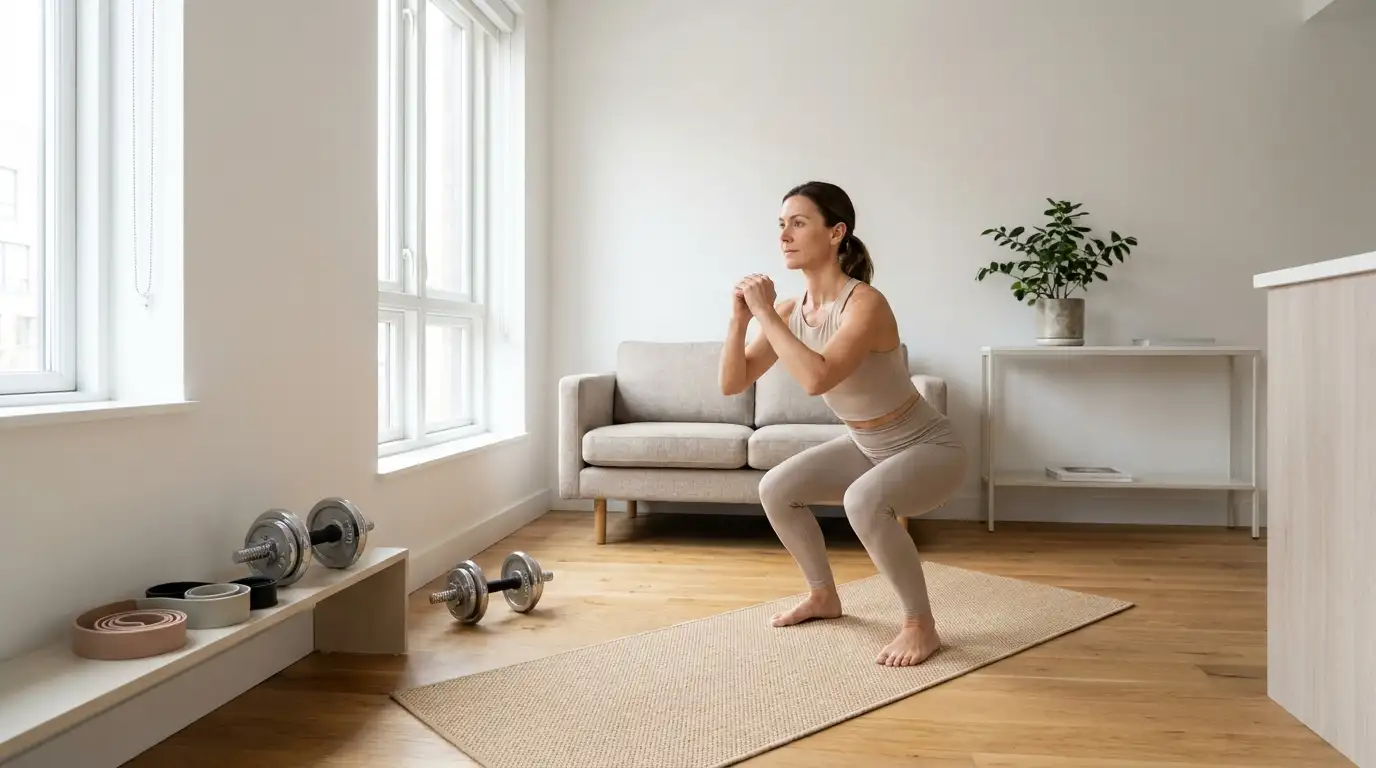

Staying active doesn’t require a spacious gym, expensive equipment, or a dedicated workout room. With the right exercises and a practical schedule, we can build strength, improve cardiovascular fitness, increase flexibility, and develop a consistent exercise habit without leaving home.
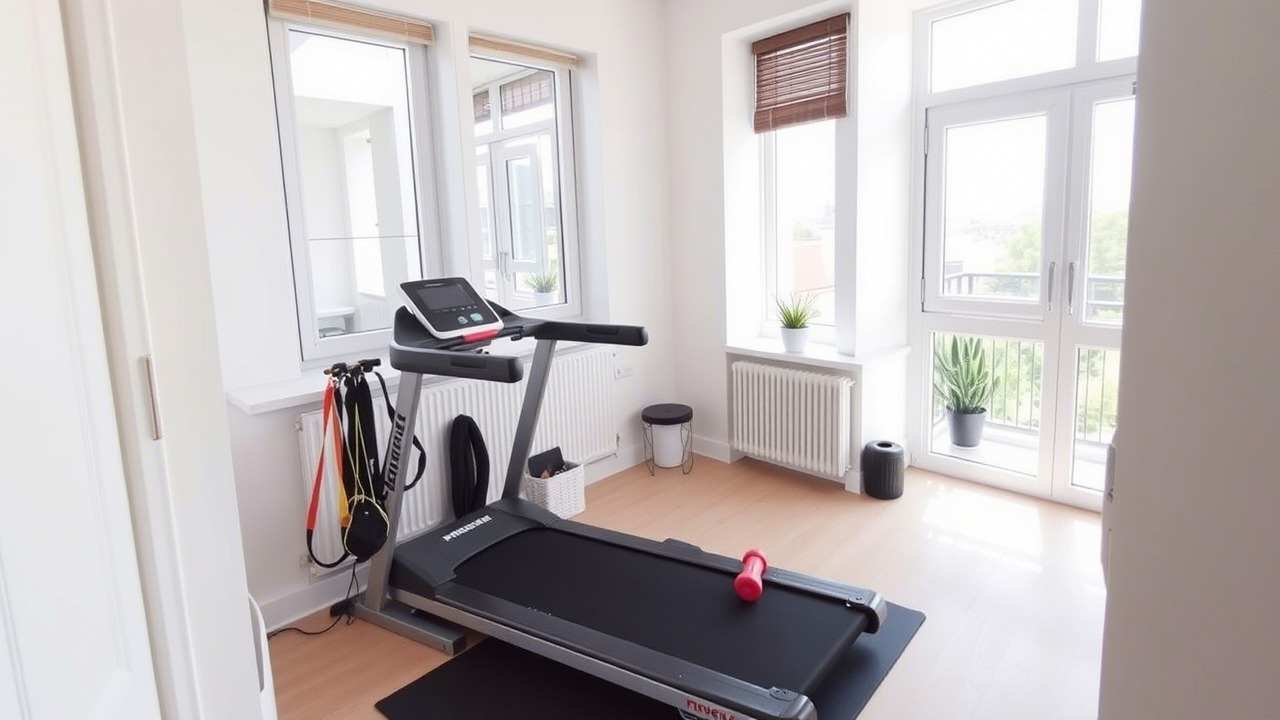
A beginner home workout routine for small spaces and apartments makes fitness more accessible, especially for people who have limited floor space, busy schedules, or no access to a gym. A small bedroom, living room, or even an open area beside a desk can provide enough room for an effective full-body workout.
The key is to choose exercises that require minimal movement across the room, use body weight for resistance, and can be performed safely without disturbing neighbors. By combining strength training, low-impact cardio, and mobility exercises, we can create a balanced fitness routine that fits comfortably into apartment living.
This guide covers a complete beginner workout plan, step-by-step exercise instructions, equipment recommendations, and practical tips for staying consistent in a small home.
Table of Contents
Why Home Workouts Are Ideal for Small Apartments
Home workouts offer several advantages for beginners. We don’t need to travel to a fitness center, wait for equipment, or pay for a monthly gym membership. Instead, we can exercise whenever our schedule allows.
For apartment residents, the biggest advantage is flexibility. Many effective exercises can be performed within an area of approximately 6 × 6 feet, making it possible to train without rearranging the entire room.
Other important benefits include:
- Convenience: Exercise before work, during a lunch break, or in the evening.
- Lower costs: Bodyweight exercises eliminate the need for expensive gym equipment.
- Privacy: Beginners can learn movements and develop confidence at their own pace.
- Space efficiency: Most exercises require only enough room for a workout mat.
- Consistency: Removing travel time makes it easier to maintain a regular schedule.
- Adaptability: We can adjust exercise intensity according to our fitness level.
Small-space workouts are also suitable for people who prefer low-impact movements. Exercises such as wall push-ups, glute bridges, standing knee raises, and controlled squats can improve overall fitness without requiring jumping or running.
What You Need for a Small-Space Home Workout
One of the biggest misconceptions about home fitness is that we need several machines and accessories to achieve meaningful results. In reality, beginners can build a strong foundation using bodyweight exercises alone.
However, a few compact accessories can make workouts more comfortable and provide additional resistance as strength improves.
1. Exercise Mat
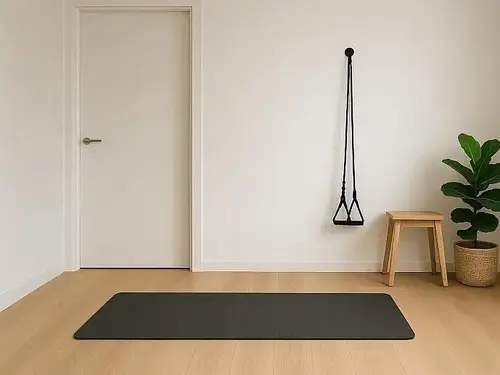
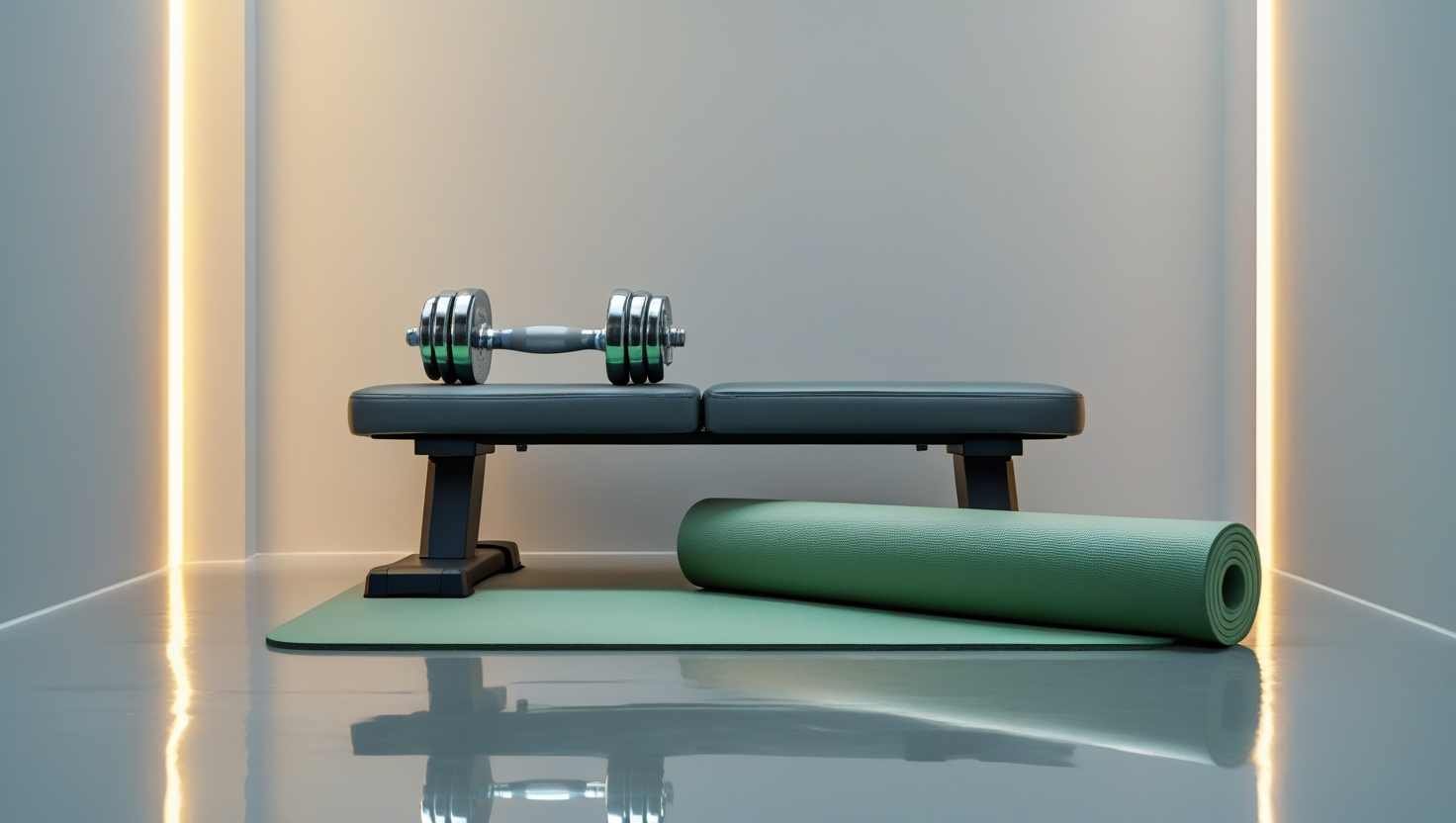
A non-slip exercise mat provides cushioning for floor exercises such as planks, glute bridges, abdominal movements, and stretching.
Choose a mat that offers enough padding for your knees and back while remaining easy to roll up and store. A standard fitness mat is generally sufficient for a small apartment workout area.
2. Resistance Bands
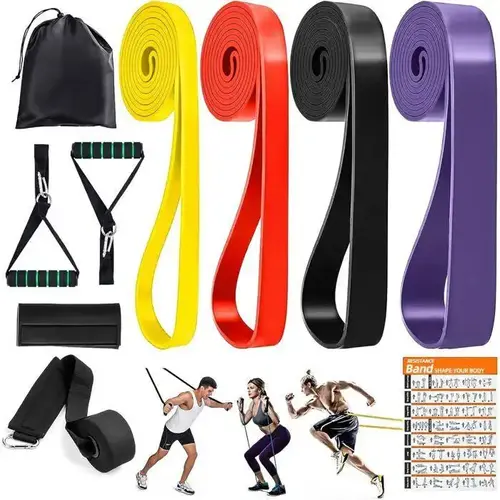
Resistance bands are among the most useful accessories for apartment fitness. They are lightweight, affordable, and easy to store in a drawer.
We can use them for:
- Glute bridges and lateral walks.
- Standing rows.
- Biceps curls.
- Shoulder exercises.
- Assisted stretching.
- Lower-body resistance training.
Different resistance levels allow beginners to increase exercise difficulty gradually.
3. Adjustable Dumbbells
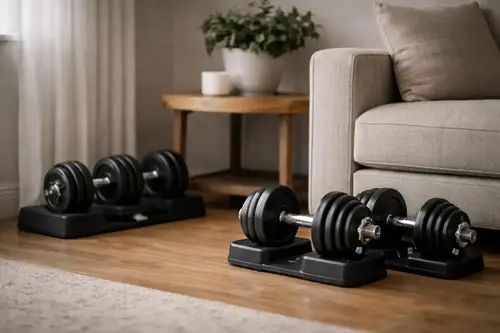
If we want to introduce strength training, adjustable dumbbells are a practical investment. Instead of storing several pairs of weights, one adjustable set can provide multiple resistance levels.
They are particularly useful for squats, shoulder presses, bent-over rows, and controlled upper-body exercises.
Beginners should start with manageable resistance and prioritize proper movement before increasing weight.
4. A Stable Chair
A sturdy chair can support several beginner-friendly exercises. Chair squats help develop lower-body strength, while seated knee extensions provide a simple way to activate the quadriceps.
Always use a stable chair without wheels, positioned on a nonslip surface.
The Best Beginner Home Workout Routine for Small Spaces
A balanced beginner routine should train the major muscle groups without creating unnecessary fatigue. We can achieve this with a combination of squats, push-ups, core exercises, glute movements, and low-impact cardio.
The following workout requires minimal equipment and can be completed in approximately 25–30 minutes.
Workout Overview
- TOTAL TIME: 25–30 minutes
- FITNESS LEVEL: Beginner
- EQUIPMENT: None required
- WORKOUT TYPE: Full body
| Exercise | Repetitions |
|---|---|
| Bodyweight squats | 10–12 |
| Wall push-ups | 10–12 |
| Glute bridges | 12–15 |
| Standing knee raises | 30 seconds |
| Bird dogs | 8–10 per side |
| Standing calf raises | 15 |
| Forearm plank | 15–20 seconds |
Complete 1–2 rounds, resting 30–60 seconds between exercises as needed.
1. Bodyweight Squats
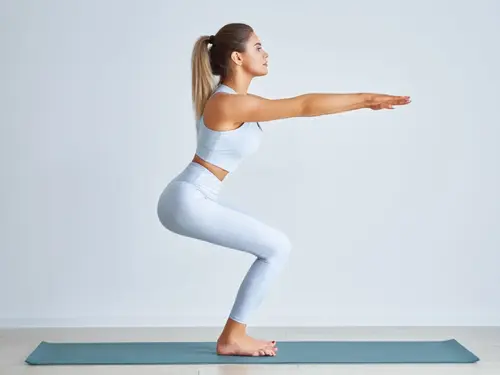
Target muscles: Quadriceps, glutes, hamstrings, and core.
Squats are one of the most effective beginner exercises because they strengthen the lower body without requiring equipment or much floor space.
How to perform:
- Stand with your feet approximately shoulder-width apart.
- Keep your chest lifted and your back in a neutral position.
- Slowly bend your knees and push your hips backward as if sitting on a chair.
- Lower yourself to a comfortable depth while keeping your heels on the floor.
- Push through your feet to return to standing.
Perform 10–12 repetitions.
Beginner modification: Use a sturdy chair behind you and practice sitting down and standing up slowly.
2. Wall Push-Ups
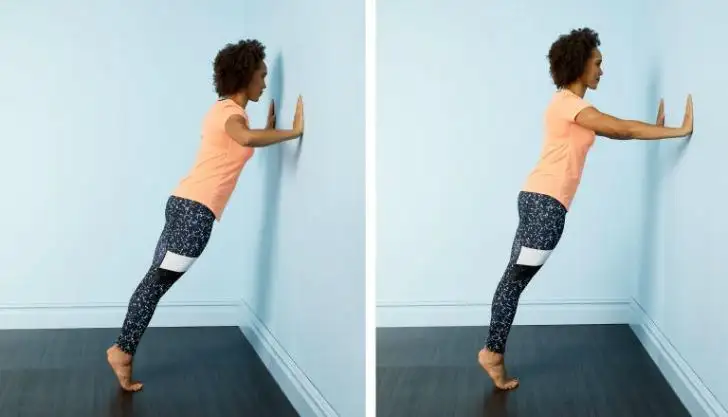
Target muscles: Chest, shoulders, triceps, and core.
Traditional push-ups can be challenging for beginners. Wall push-ups provide an easier alternative while developing upper-body strength.
How to perform:
- Stand facing a wall, approximately one arm’s length away.
- Place your palms against the wall slightly wider than shoulder-width.
- Keep your body straight from head to heels.
- Bend your elbows and slowly bring your chest toward the wall.
- Push against the wall until your arms are extended again.
Perform 10–12 repetitions.
Beginner modification: Stand closer to the wall to reduce resistance. As strength improves, move your feet farther away.
3. Glute Bridges
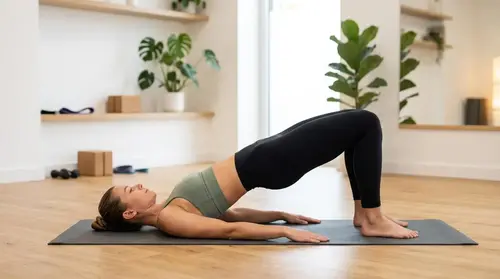
Target muscles: Glutes, hamstrings, and core.
Glute bridges are particularly useful for strengthening the posterior chain without standing, jumping, or making excessive noise.
How to perform:
- Lie on your back with your knees bent.
- Position your feet flat on the floor, approximately hip-width apart.
- Keep your arms beside your body.
- Tighten your abdominal muscles and squeeze your glutes.
- Lift your hips until your shoulders, hips, and knees form an approximately straight line.
- Pause briefly before lowering your hips slowly.
Perform 12–15 repetitions.
Beginner modification: Lift your hips only as high as you can comfortably control.
4. Standing Knee Raises
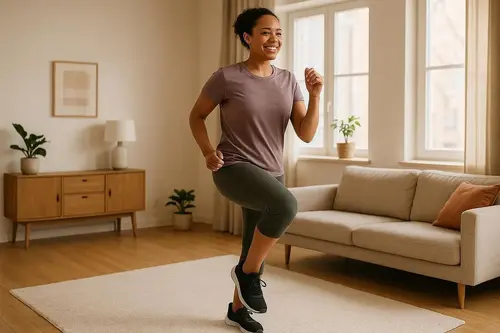
Target muscles: Hip flexors, abdominal muscles, and legs.
Standing knee raises are an excellent alternative to jumping jacks when we want to increase our heart rate without disturbing apartment neighbors.
How to perform:
- Stand upright with your feet hip-width apart.
- Lift your right knee toward your waist.
- Lower your foot gently.
- Repeat with your left knee.
- Continue alternating while moving your arms naturally.
Perform for 30 seconds.
Beginner modification: Hold the back of a stable chair for balance and lift your knees only as high as comfortable.
5. Bird Dogs
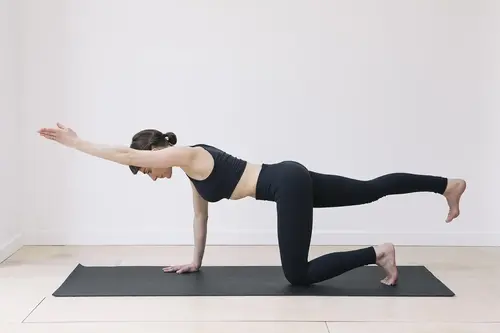
Target muscles: Core, lower back, glutes, and shoulders.
Bird dogs improve core stability and coordination while requiring very little space.
How to perform:
- Start on your hands and knees.
- Position your hands beneath your shoulders and knees beneath your hips.
- Extend your right arm forward while extending your left leg backward.
- Keep your hips level and avoid arching your lower back.
- Return to the starting position.
- Repeat with the opposite arm and leg.
Perform 8–10 repetitions per side.
Beginner modification: Extend only one arm or one leg at a time.
6. Standing Calf Raises
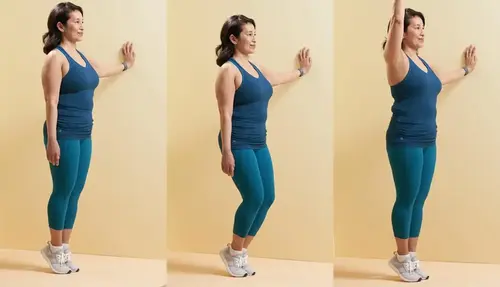
Target muscles: Calves and ankle stabilizing muscles.
Calf raises are simple, quiet, and ideal for small apartments. They strengthen the lower legs and can be performed beside a wall or sturdy chair.
How to perform:
- Stand with your feet hip-width apart.
- Keep your back straight.
- Slowly raise your heels until you are standing on your toes.
- Hold the position briefly.
- Lower your heels in a controlled movement.
Perform 15 repetitions.
7. Forearm Plank
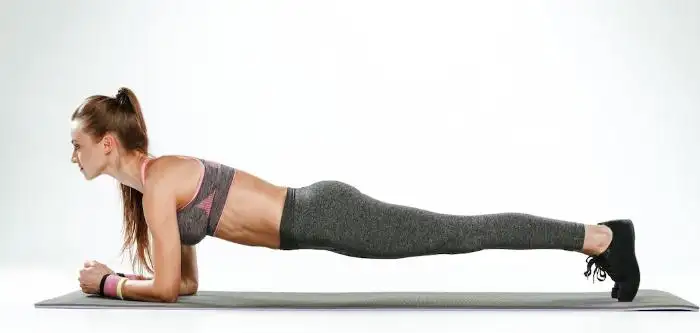
Target muscles: Abdominals, shoulders, and core stabilizing muscles.
Planks strengthen the muscles responsible for supporting the torso and maintaining body stability.
How to perform:
- Place your forearms on the exercise mat.
- Extend your legs behind you.
- Support your body using your forearms and toes.
- Keep your shoulders, hips, and heels aligned.
- Tighten your abdominal muscles and breathe normally.
- Hold the position for 15–20 seconds.
Beginner modification: Perform a knee plank with your knees resting on the mat.
Low-Impact Cardio Exercises for Apartments
Cardiovascular exercise is an important part of a balanced fitness routine. However, traditional cardio activities such as jumping jacks, burpees, and running in place may create unwanted noise in apartments.
Fortunately, we can improve cardiovascular fitness using quieter alternatives.
Step Jacks
Step one foot sideways while raising your arms, then return to the starting position and switch sides. This replaces jumping jacks without the impact.
30–45 seconds
Standing Shadow Boxing
Alternate controlled punches in front of your body while maintaining a comfortable stance. Keep your movements smooth and controlled.
30–45 seconds
Side Steps
Take small steps to the right and left while keeping your knees slightly bent. Avoid traveling across the room.
30–45 seconds
Alternating Heel Digs
Extend one foot forward and gently touch the heel to the floor. Alternate legs while moving your arms naturally.
30–45 seconds
These exercises are especially useful for apartment residents who want to avoid high-impact movements. They can also be combined into a short cardio circuit.
A 7-Day Beginner Home Workout Schedule
Following a weekly schedule makes it easier to develop consistency without training the same muscle groups intensely every day.
The following plan combines strength training, low-impact cardio, mobility, and recovery.
| Day | Workout | Duration |
|---|---|---|
| Monday | Full-body strength routine | 25–30 min |
| Tuesday | Low-impact cardio | 15–20 min |
| Wednesday | Full-body strength routine | 25–30 min |
| Thursday | Stretching and mobility | 15–20 min |
| Friday | Full-body strength routine | 25–30 min |
| Saturday | Walking or gentle cardio | 20–30 min |
| Sunday | Rest and recovery | — |
This schedule is a starting framework rather than a requirement to exercise every day. Beginners can reduce the number of sessions if they need more recovery time.
Strength training three times per week provides a practical foundation, while lighter activities help increase overall movement.
For broader health benefits, adults are generally encouraged to work toward at least 150 minutes of moderate-intensity aerobic activity each week and muscle-strengthening activities on at least two days. We can build toward these targets gradually rather than trying to achieve them immediately.
How to Warm Up Before a Small-Space Workout
A proper warm-up prepares the body for exercise and helps us transition gradually from inactivity to movement.
Spend approximately 5 minutes warming up before beginning the main routine.
A simple warm-up sequence includes:
- Marching in place: 60 seconds to gradually increase your heart rate.
- Arm circles: 30 seconds in each direction to mobilize your shoulders.
- Hip circles: 30 seconds to loosen your hips.
- Standing torso rotations: 30 seconds of gentle controlled movements.
- Bodyweight half squats: 10 slow repetitions to prepare your lower body.
After exercising, spend another 3–5 minutes cooling down with gentle movements and comfortable stretches.
How to Make Your Apartment Workout More Effective
A small workout area doesn’t have to limit progress. The most important factors are consistency, proper technique, progressive resistance, and sufficient recovery.
1. Increase Repetitions Gradually
Start with a manageable number of repetitions. Once an exercise becomes easier, add two or three repetitions while maintaining proper form.
For example, we can progress from 8 wall push-ups to 12 and eventually introduce more challenging variations.
2. Use Resistance Bands to Increase Difficulty
When bodyweight exercises become less challenging, resistance bands provide additional tension without requiring large equipment.
A resistance band can transform simple squats, glute bridges, and standing rows into more demanding strength exercises.
3. Slow Down Your Movements
Slower repetitions can make bodyweight exercises more challenging.
Instead of dropping quickly into a squat, lower yourself over three seconds, pause briefly, and return to standing with control.
This approach encourages better movement awareness and helps prevent unnecessary momentum.
4. Maintain a Consistent Workout Schedule
Consistency is more important than attempting an extremely difficult workout once a week.
Choose realistic training days and establish a routine that fits your daily schedule. Even a shorter session can help maintain the habit when time is limited.
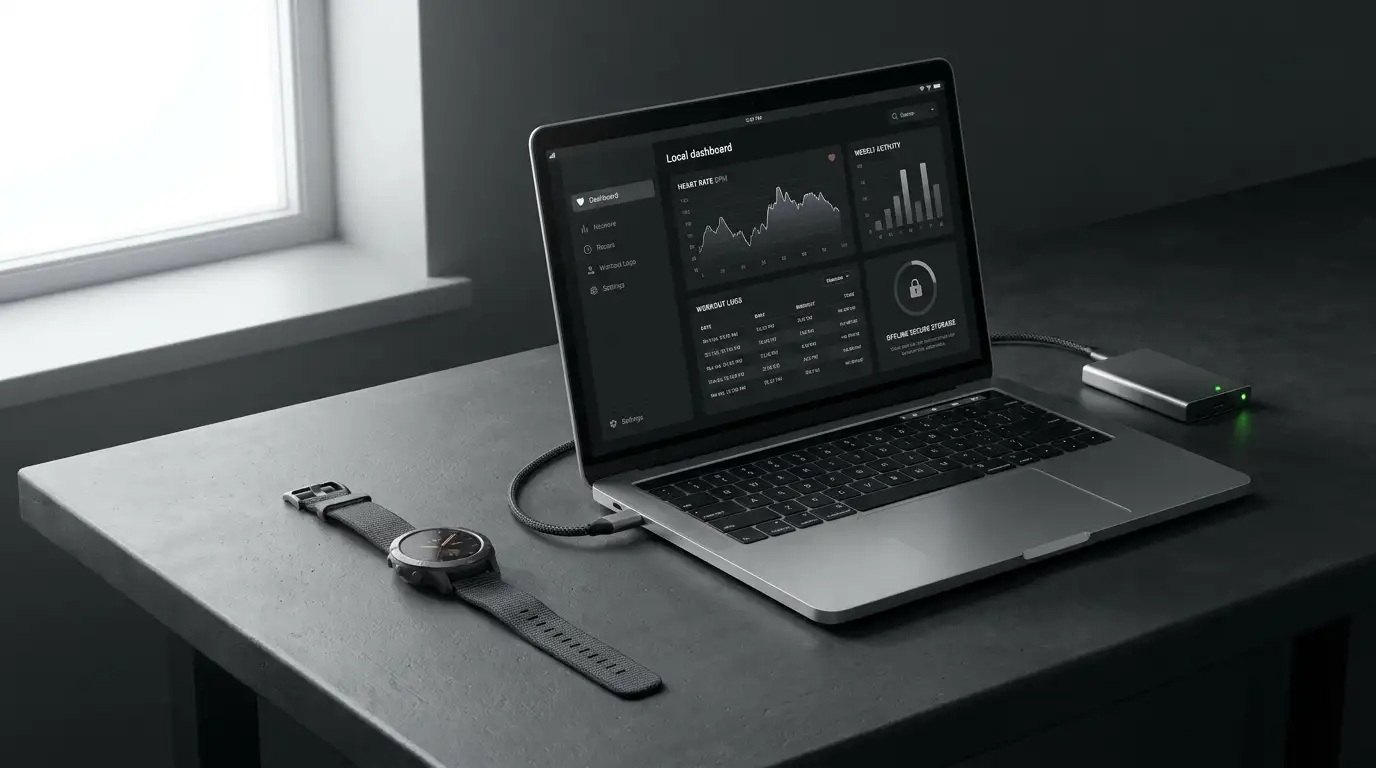
5. Track Your Progress
Keep a simple workout log to record:
- Exercises completed.
- Number of repetitions.
- Workout duration.
- Resistance band level or dumbbell weight.
- How challenging each session felt.
Tracking progress makes it easier to identify improvements and determine when an exercise can be made more challenging.
How to Exercise Quietly Without Disturbing Apartment Neighbors
Noise is one of the biggest concerns when exercising in shared residential buildings. Fortunately, we can build an effective workout without jumping, dropping weights, or making sudden movements.
Here are practical ways to keep workouts quieter.
- Choose low-impact movements. Replace burpees and jump squats with step jacks, controlled squats, and standing knee raises.
- Use a thick exercise mat. A quality mat provides cushioning and helps reduce some movement noise. It doesn’t guarantee soundproofing, particularly in apartments with thin floors.
- Avoid dropping equipment. Place dumbbells gently on the floor and use resistance bands when possible.
- Wear suitable footwear. Comfortable training shoes or supportive nonslip footwear can help maintain stability and reduce unnecessary foot movement.
- Schedule workouts considerately. Choose times that are less likely to disturb neighbors, particularly if your building has quiet-hour rules.
- Prioritize controlled movements. Slow, deliberate exercises are often more suitable for apartment living than explosive movements.
Common Beginner Home Workout Mistakes to Avoid
Starting a fitness routine is easier when we understand which mistakes can interfere with progress.
Skipping the Warm-Up
Beginning intense exercises immediately can place unnecessary stress on muscles and joints. A short warm-up prepares the body for movement.
Doing Too Much Too Soon
Trying to complete several intense workout rounds on the first day can cause excessive fatigue and make it difficult to maintain consistency.
Start with one round and increase the workload gradually.
Ignoring Proper Exercise Form
Correct technique matters more than the number of repetitions. Poor positioning during squats, push-ups, and planks can reduce exercise effectiveness and increase the risk of discomfort.
Training Without Rest Days
Muscles need time to recover after strength training. Allow adequate recovery between challenging sessions, especially when starting a new routine.
Expecting Immediate Results
Strength, endurance, and mobility improve through repeated effort. Focus on measurable progress rather than expecting dramatic physical changes after a few workouts.
Ignoring Everyday Movement
A 25-minute workout is useful, but remaining seated throughout the rest of the day limits overall activity.
Short walking breaks, household activities, and gentle movement throughout the day can complement structured exercise.
How to Progress From Beginner to Intermediate Home Workouts
Once the initial routine becomes comfortable, we can introduce more challenging exercises without purchasing large fitness machines.
Knee Push-Ups to Standard Push-Ups
Begin with wall push-ups, progress to knee push-ups, and eventually attempt standard push-ups when you can maintain proper alignment.
Bodyweight Squats to Reverse Lunges
Introduce reverse lunges to challenge balance and strengthen each leg individually.
Bodyweight Training to Resistance Band Rows
Add pulling movements to strengthen the upper back and improve the balance of your strength routine.
Knee Planks to Full Planks
Gradually increase plank duration and progress to a full plank once you can maintain a stable position.
Progress should depend on exercise quality rather than a fixed deadline. We should move to harder variations only when the current version feels controlled and comfortable.
Frequently Asked Questions About Home Workouts in Small Apartments
1. Can We Get Fit Working Out in a Small Apartment?
Yes. A small apartment provides enough space for numerous effective bodyweight exercises, including squats, push-ups, planks, glute bridges, and low-impact cardio.
With a consistent routine combining cardiovascular activity, strength training, and mobility work, we can improve overall fitness without using a traditional gym.
2. How Much Space Do We Need for a Home Workout?
Most beginner bodyweight workouts can be performed in an area approximately 6 × 6 feet. Some exercises require even less space.
A small cleared area with enough room to extend your arms and legs safely is generally sufficient.
3. Can We Build Muscle With Bodyweight Exercises?
Yes. Bodyweight exercises can develop strength and muscle, particularly for beginners.
Squats, push-up variations, lunges, and planks provide resistance using our own body weight. As strength improves, we can increase repetitions, use more challenging variations, or introduce resistance bands and dumbbells.
4. How Often Should Beginners Exercise at Home?
Beginners can start with two or three strength-training sessions per week, allowing recovery between challenging workouts.
Walking, gentle cardio, and mobility exercises can be incorporated on other days according to individual fitness levels and recovery needs.
5. What Is the Best Home Workout for Weight Loss in a Small Apartment?
A combination of full-body strength exercises and low-impact cardio is a practical option.
Bodyweight squats, wall push-ups, standing knee raises, step jacks, and resistance band exercises can help increase physical activity.
For weight management, regular exercise works best alongside sustainable eating habits and adequate sleep.
6. Can We Exercise Without Equipment?
Absolutely. A beginner home workout can be completed without purchasing anything.
Bodyweight squats, wall push-ups, bird dogs, glute bridges, and standing calf raises provide a useful starting routine. A mat and resistance bands are optional accessories rather than necessities.
7. How Can We Exercise Without Making Noise?
Choose low-impact movements that keep your feet on the floor. Standing knee raises, controlled squats, wall push-ups, glute bridges, and resistance band exercises are suitable alternatives to jumping movements.
Use a supportive exercise mat and avoid dropping weights or performing explosive exercises.
8. Is a 20-Minute Home Workout Enough for Beginners?
A 20-minute workout is a useful starting point, particularly for people with busy schedules.
A session combining a short warm-up, several full-body exercises, and a cool-down can provide meaningful physical activity. Over time, beginners can increase workout duration and weekly activity according to their goals.
Final Thoughts: Build a Consistent Fitness Routine in Any Space
A small apartment should never be a reason to abandon fitness goals. With a practical beginner home workout routine for small spaces and apartments, we can develop strength, improve endurance, and establish healthier daily habits without investing in a complete home gym.
Start with simple bodyweight exercises, introduce low-impact cardio, and gradually increase the difficulty as your fitness improves. A comfortable exercise mat, a few resistance bands, and a small area of clear floor space are enough to get started.
The most effective routine is one that fits naturally into everyday life. Rather than focusing on expensive equipment or complicated exercises, prioritize proper technique, realistic goals, and consistent effort.
Start small, stay consistent, and make your apartment a space where healthier habits can grow.
Exercise safety note: Beginners should adapt exercises to their abilities, stop if they experience pain, and seek medical guidance before starting a new exercise program if they have relevant health conditions or have been inactive for an extended period. American Heart Association+2
The recommendations for combining aerobic activity, strength training, flexibility, and balance are consistent with guidance from MedlinePlus. MedlinePlus+1