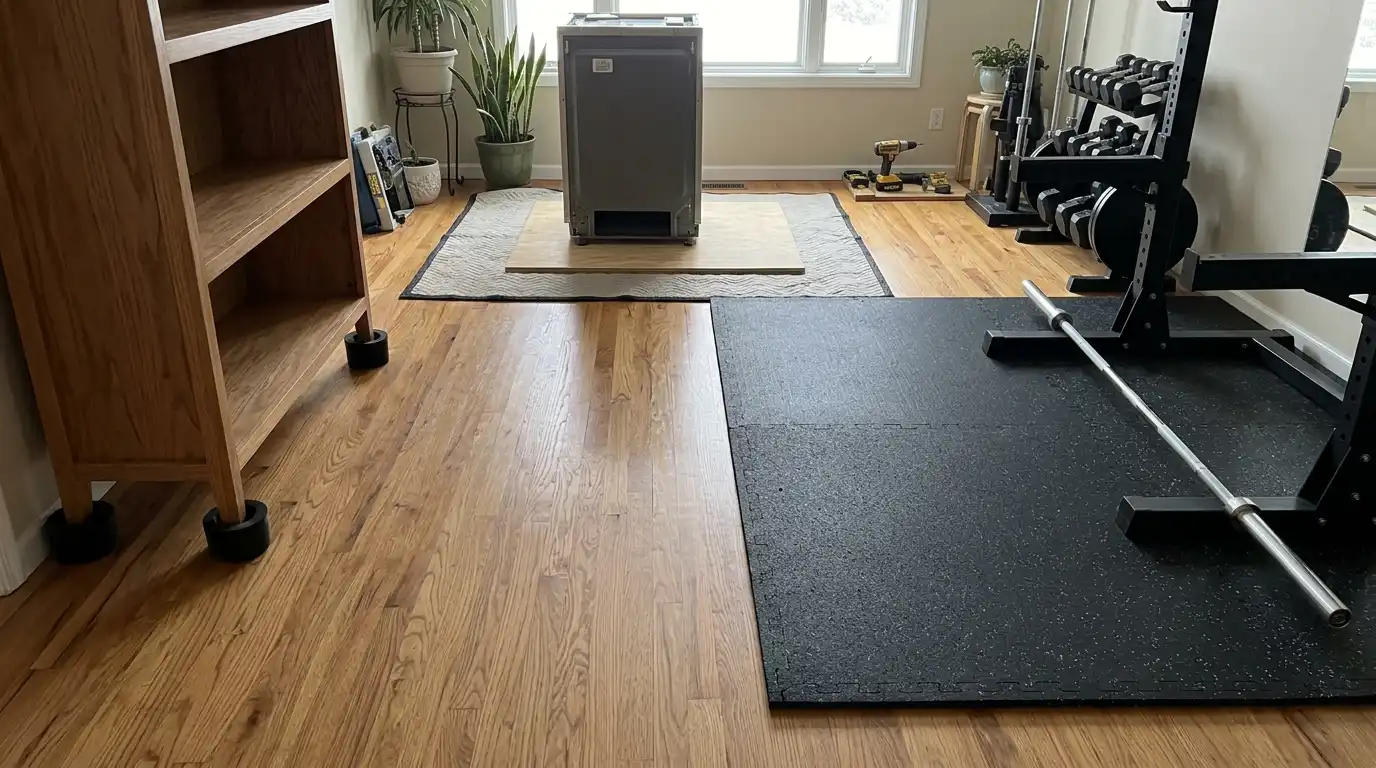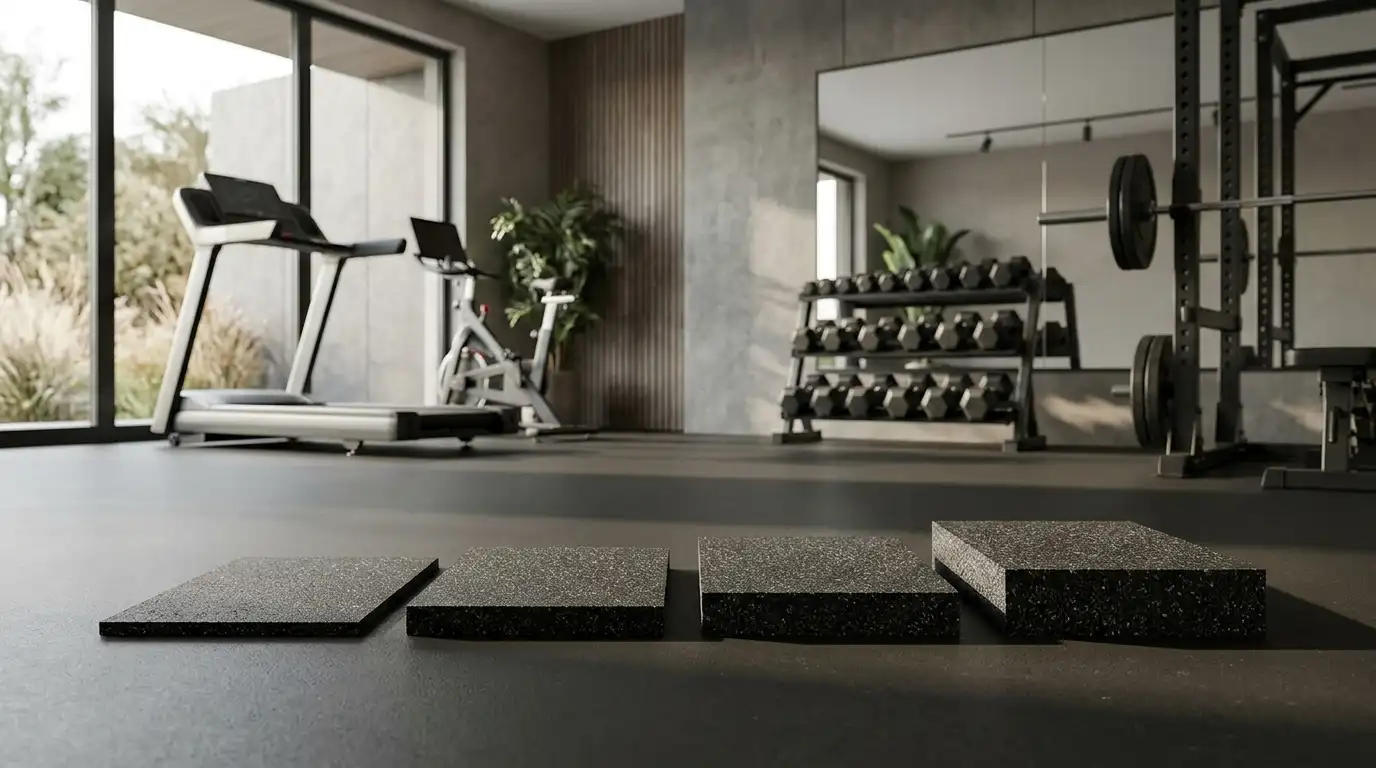

Choosing the right gym flooring is essential for creating a safe, comfortable, and durable workout environment. Whether we are designing a home gym, upgrading a commercial fitness facility, or building a dedicated strength-training area, the flooring underneath our equipment affects more than appearance. It influences shock absorption, noise reduction, equipment stability, floor protection, and long-term maintenance.
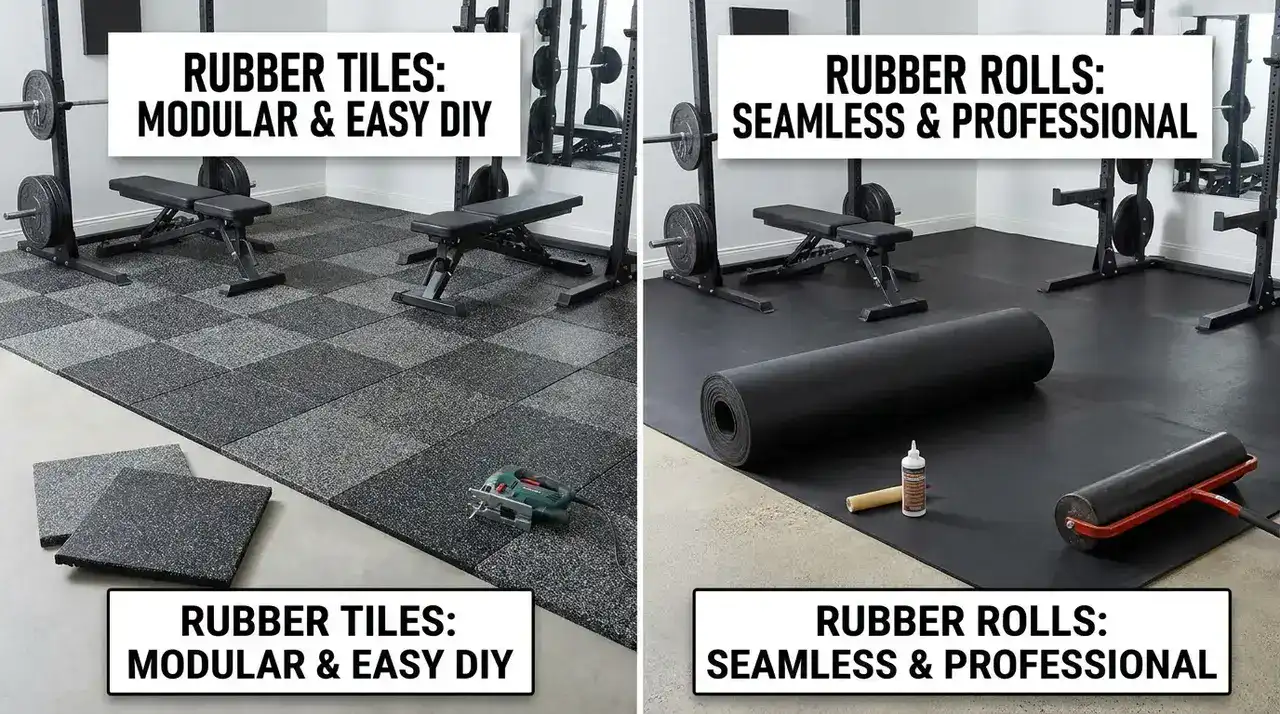
Two of the most popular options for fitness spaces are rubber gym flooring tiles and rubber flooring rolls. Both provide durable surfaces designed to withstand demanding workouts, protect subfloors, and improve training comfort. However, they differ considerably in installation, appearance, flexibility, cost, and suitability for different gym layouts.
So, when comparing rubber tiles vs. rolls for gym flooring, which option should we choose?
The answer depends on the size of our workout space, the type of exercise we perform, our equipment requirements, and whether we prioritize easy installation or a seamless finish.
Let’s examine both options in detail so we can make an informed decision.
Table of Contents
What Is Rubber Gym Flooring?
Rubber gym flooring is a protective surface manufactured from natural rubber, recycled rubber, or synthetic rubber compounds. It is specifically designed to handle the repeated impact, friction, and weight associated with physical exercise.
Unlike ordinary residential flooring, rubber flooring offers a combination of durability, traction, impact resistance, and sound absorption. These properties make it suitable for everything from small home workout rooms to professional weightlifting facilities.
Rubber gym flooring generally comes in two main formats:
- Rubber flooring tiles: Individual square or rectangular pieces that fit together to cover a floor.
- Rubber flooring rolls: Large, continuous sheets of rubber supplied in rolls and cut to fit the dimensions of a room.
Both options are available in different thicknesses, densities, textures, and colors. Some products feature interlocking edges, while others require adhesive or loose-lay installation.
Understanding these differences helps us select flooring that matches our training environment.
Rubber Gym Flooring Tiles: Features, Benefits, and Drawbacks
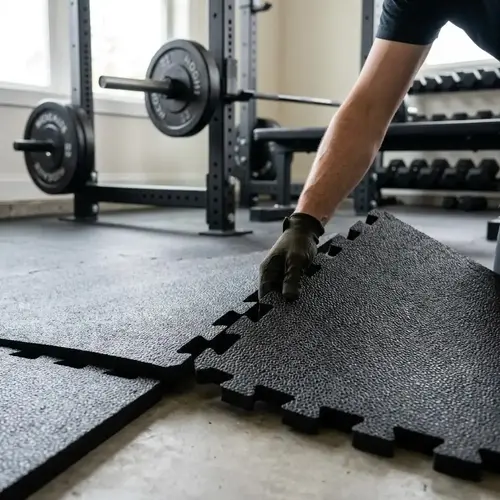
Rubber gym flooring tiles are individual sections designed to connect or sit alongside one another. They are particularly popular in home gyms because they offer flexibility during installation and make it relatively easy to replace damaged sections.
Most rubber tiles measure approximately 12, 18, or 24 inches per side, although larger formats are available. Interlocking designs use puzzle-shaped edges to hold adjacent tiles together, while straight-edge versions create a more traditional grid pattern.
Advantages of Rubber Gym Flooring Tiles
1. Easy Installation Without Professional Assistance
One of the biggest advantages of rubber flooring tiles is their straightforward installation.
Interlocking tiles can often be installed without specialized tools, adhesives, or professional contractors. We simply prepare the subfloor, measure the workout area, arrange the tiles, and connect the edges.
This makes them particularly attractive for homeowners who want to build a gym without undertaking a complicated renovation.
2. Convenient Replacement and Repairs
Individual tiles make maintenance easier when localized damage occurs.
For example, if a heavy dumbbell damages one section of flooring, we can remove the affected tile and replace it rather than removing an entire floor covering.
This modular design also makes tiles useful in gyms where equipment is frequently moved or workout areas are regularly reorganized.
3. Flexible Gym Layouts
Rubber tiles are available in different dimensions and thicknesses, allowing us to customize flooring around workout equipment, storage units, benches, and other obstacles.
We can also use different colors to distinguish training zones. A darker section might accommodate free weights, while another color identifies a stretching or cardio area.
4. Suitable for Small and Irregular Spaces
Home gyms rarely have perfectly rectangular layouts. They may include corners, support columns, doorways, or awkward spaces.
Individual tiles are easier to cut and arrange around these obstacles than large flooring rolls. This flexibility helps reduce unnecessary material waste when working with complicated room dimensions.
5. Easier Transportation and Handling
Because tiles are supplied as separate pieces, they are generally easier to transport and handle than heavy, full-length rubber rolls.
We can carry individual sections through narrow hallways, upstairs, or into smaller rooms without maneuvering a large roll through the building.
Disadvantages of Rubber Gym Flooring Tiles
Despite their advantages, rubber tiles also have limitations.
- Visible seams: The connections between tiles can create a grid-like appearance.
- Potential movement: Poorly fitted or lightweight tiles may separate or shift during demanding workouts.
- Dirt accumulation: Dust, moisture, and small debris can collect along tile edges.
- Installation time: Covering a large gym requires positioning many individual pieces.
- Uneven surfaces: Inconsistent subfloors or poorly connected tiles can create slight differences in surface height.
For a professional-looking installation, we should select high-quality tiles with secure connections and consistent thickness.
Rubber Flooring Rolls: Features, Benefits, and Drawbacks
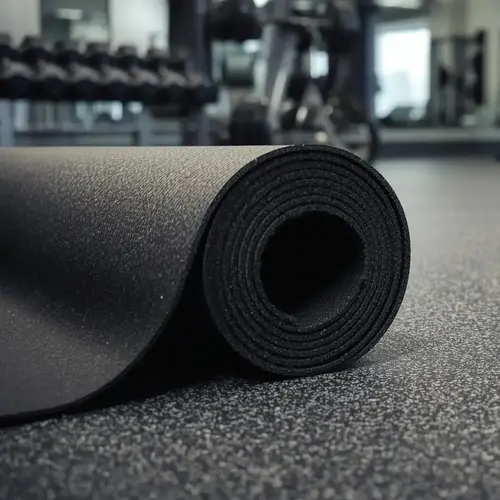
Rubber flooring rolls are large sheets of rubber manufactured for covering expansive floor areas with fewer visible joints.
They are commonly used in commercial fitness centers, home gyms, training studios, and multipurpose exercise rooms. Their continuous appearance creates a cleaner, more uniform surface than traditional individual tiles.
Rubber rolls are available in different widths, lengths, thicknesses, and densities. Depending on the product, installation may involve adhesive, double-sided flooring tape, or an appropriate loose-lay method.
Advantages of Rubber Flooring Rolls
1. Seamless and Professional Appearance
One of the strongest reasons to choose rubber rolls is their clean, continuous appearance.
Because fewer individual sections are required, the finished floor has fewer visible seams. This creates a more polished environment, especially in larger fitness spaces.
For commercial gyms and dedicated home workout rooms, this appearance can make the entire space feel more organized and professionally finished.
2. Faster Coverage for Large Areas
Rubber rolls are particularly efficient when covering large, rectangular rooms.
Instead of arranging dozens or hundreds of individual tiles, we can install a smaller number of large sheets. This reduces the number of connections and creates a more consistent surface.
However, cutting, positioning, and securing heavy rolls may require additional assistance.
3. Fewer Gaps for Dust and Debris
Every flooring connection creates a potential location for dust, dirt, and moisture to accumulate.
Since rubber rolls have fewer seams, there are generally fewer places where debris can collect. This makes routine cleaning more straightforward.
4. Stable Surface for General Fitness Activities
When properly installed, rubber rolls create a continuous training surface suitable for cardio machines, exercise benches, functional training, and general fitness equipment.
Their uniform construction also helps create a consistent floor beneath equipment placed across larger areas.
5. Excellent Coverage for Commercial Facilities
Commercial gyms often require flooring that can withstand frequent use throughout the day.
Rubber rolls offer an efficient way to cover expansive training areas while maintaining a consistent appearance. They are particularly useful in open-plan fitness studios and group exercise spaces.
Disadvantages of Rubber Flooring Rolls
Rubber rolls are not necessarily the best solution for every gym.
- More complicated installation: Large sheets can be heavy and difficult to position accurately.
- Professional installation may be necessary: Adhesive applications and precise cutting can require experience.
- Less convenient repairs: Damaged sections may require cutting and replacing a larger portion of flooring.
- Transportation difficulties: Large rolls can be challenging to move through narrow entrances and staircases.
- Subfloor preparation: Uneven surfaces can affect the final installation and appearance.
For these reasons, rubber rolls are generally more attractive when we have a relatively open workout area and want a uniform finish.
Rubber Tiles vs. Rolls: Key Differences Compared
When comparing rubber tiles vs. rolls, we should consider more than their initial appearance. Installation, durability, maintenance, performance, and overall value all influence the final decision.
| Comparison | Rubber Tiles | Rubber Rolls |
|---|---|---|
| Installation | Generally easier | More demanding |
| Appearance | Visible seams | Fewer visible seams |
| Repairs | Individual tiles replaceable | Section replacement may be needed |
| Customization | Highly flexible | Requires precise cutting |
| Large spaces | More individual pieces | Efficient coverage |
| Transportation | Easier in small quantities | More difficult |
| Cleaning | Debris can collect between tiles | Fewer seams to clean |
| Layout flexibility | Excellent | More limited |
| DIY suitability | Generally excellent | Depends on installation method |
| Commercial use | Suitable | Particularly suitable |
Neither format is universally superior. The best option depends on how we intend to use our gym and the characteristics of the room.
1. Installation: Which Gym Flooring Is Easier to Install?
Installation is one of the most important differences between rubber tiles and rolls.
Rubber tiles are generally easier to install without professional assistance. Their modular construction allows us to work in smaller sections, adjust the layout, and cut individual pieces where necessary.
Interlocking tiles are particularly convenient because they can often be installed without permanent adhesives. This can be beneficial in rented properties where we want to avoid making irreversible changes to the floor.
Rubber rolls require more careful planning. We must measure the room accurately, position the sheets correctly, trim the edges, and follow the manufacturer’s recommendations for securing the flooring.
Large rolls can also be difficult to handle without assistance.
Our recommendation: For a DIY home gym, rubber tiles are usually the more practical option. For larger open areas where a seamless appearance matters, rubber rolls are worth considering.
2. Durability: Which Option Lasts Longer?
Both rubber tiles and rubber rolls can offer excellent durability when manufactured from quality materials.
However, longevity depends on several factors:
- Rubber composition and density.
- Flooring thickness.
- Frequency and intensity of workouts.
- Equipment weight.
- Exposure to sunlight and moisture.
- Quality of installation.
- Cleaning and maintenance practices.
High-density rubber flooring is particularly useful in strength-training environments because it provides a durable surface capable of handling repeated equipment use.
Rubber tiles have one advantage when localized damage occurs: we can replace an individual section.
Rubber rolls, meanwhile, offer fewer seams and a continuous surface, but localized repairs may be more complicated.
It is important to remember that thicker flooring is not automatically better. Density and intended application matter just as much as thickness.
3. Shock Absorption and Weightlifting Performance
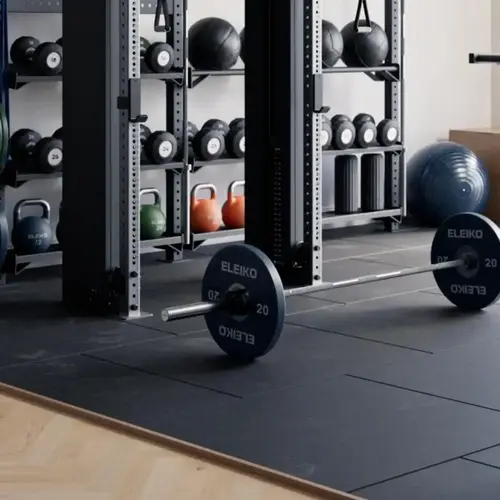
Shock absorption is particularly important in gyms where dumbbells, barbells, kettlebells, and other heavy equipment are used regularly.
Rubber flooring helps absorb some of the impact generated by dropped equipment, reducing direct contact with the underlying floor.
Both tiles and rolls can provide useful impact protection, but their performance depends on thickness, density, and construction.
For general exercise, moderate-thickness rubber flooring may be sufficient. For dedicated weightlifting areas, thicker and denser flooring or specialized lifting platforms may be more appropriate.
We should also consider the equipment being used. Heavy strength machines require a stable, supportive surface rather than an excessively soft floor that could compromise equipment positioning.
Best choice: Both formats can work well. We should prioritize the correct thickness and density rather than choosing based exclusively on whether the flooring comes in tiles or rolls.
4. Noise Reduction: Which Is Better for a Home Gym?
Noise is a major consideration when building a home gym, particularly in apartments or houses with multiple floors.
Rubber flooring helps reduce noise by absorbing some vibration and cushioning contact between exercise equipment and the floor.
However, rubber flooring does not completely eliminate sound transmission.
The actual performance depends on the flooring’s density, thickness, installation, subfloor construction, and type of noise.
For example, the sound produced by a treadmill is different from the impact generated when dropping a heavy dumbbell.
Rubber tiles can provide localized protection beneath equipment, while rubber rolls offer consistent coverage across a larger area.
For apartment gyms, we should also consider additional vibration-control measures, such as:
- Dedicated anti-vibration pads beneath treadmills.
- Appropriate equipment mats.
- Dense rubber flooring.
- A stable and level subfloor.
- Avoiding heavy equipment drops during quiet hours.
Neither tiles nor rolls automatically provide superior soundproofing. We should select flooring according to the specific noise problem we want to address.
5. Maintenance and Cleaning
Maintaining gym flooring is essential for preserving its appearance, hygiene, and performance.
Rubber tiles and rolls are relatively easy to maintain with regular sweeping, vacuuming using a suitable attachment, and occasional damp mopping.
However, their construction creates some differences.
Rubber tiles have individual connections where dust and debris can accumulate. We may occasionally need to inspect these areas, especially around free-weight stations and cardio equipment.
Rubber rolls have fewer seams, making them somewhat easier to clean across large surfaces.
For both options, we should:
- Remove loose dirt and dust regularly.
- Use a mild cleaning solution approved for the flooring material.
- Avoid harsh chemicals that could damage the rubber.
- Prevent excessive water from entering seams or remaining underneath the flooring.
- Allow the surface to dry properly before resuming workouts.
We should always follow the manufacturer’s maintenance instructions because rubber formulations and surface finishes vary.
6. Cost Comparison: Rubber Tiles vs. Rubber Rolls
Budget is another important factor when selecting gym flooring.
Rubber rolls are often more economical per square meter when covering large, straightforward areas. Their ability to cover extensive spaces with fewer individual pieces can reduce material costs and simplify the overall layout.
Rubber tiles may have a higher initial price per square meter, particularly when choosing thicker, high-density products. However, their modular construction can provide long-term savings when individual sections need replacement.
When comparing prices, we should consider more than the advertised cost.
Our total project budget should include:
- Flooring material and required accessories.
- Delivery and transportation.
- Adhesive or installation tape, if required.
- Subfloor preparation.
- Cutting and installation labor.
- Replacement materials for future repairs.
- Additional protective flooring for heavy equipment.
We should also compare products with similar thickness, density, rubber composition, and intended applications. Comparing a thin rubber roll with a thick weightlifting tile would not provide a meaningful price comparison.
Best value: Rubber rolls are often attractive for large, open spaces, while rubber tiles can provide better practical value for smaller gyms and specialized training zones.
7. Safety, Grip, and Stability
Gym flooring should provide a dependable surface for different movements and exercise routines.
Rubber generally offers good traction, helping reduce the risk of slipping during normal workouts. However, grip varies according to the product’s surface texture, rubber formulation, contamination, and moisture exposure.
Rubber tiles and rolls can both provide suitable traction when selected for the intended environment.
We should pay particular attention to the following:
- Surface texture: Choose a finish appropriate for the exercises being performed.
- Floor stability: Flooring should remain securely positioned during workouts.
- Seams and edges: Connections should be tight, flat, and properly finished.
- Moisture management: Sweat and cleaning water should not accumulate beneath the flooring.
- Equipment positioning: Heavy machines and racks should sit on a stable, level surface.
Interlocking tiles should fit securely together to minimize movement. Rubber rolls should have properly aligned seams and appropriate edge finishing.
For commercial environments, we should also check relevant slip-resistance documentation and applicable building requirements rather than assuming all rubber products perform identically.
8. Thickness Guide: How Thick Should Gym Flooring Be?
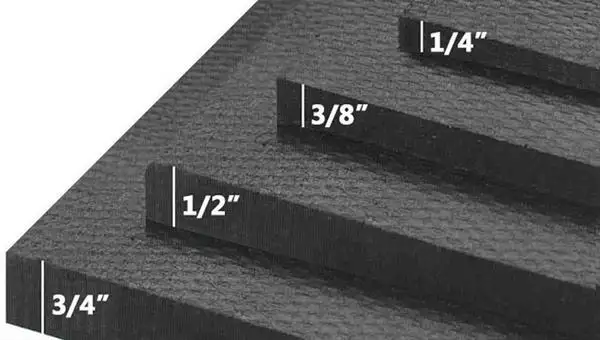
Thickness is one of the most important specifications when purchasing rubber gym flooring.
A suitable thickness depends on the weight of the equipment, the type of training, the expected impact, and the condition of the underlying floor.
The following ranges provide general starting points, not universal performance guarantees.
| Gym application | Flooring to consider |
|---|---|
| Yoga and stretching | 4–6 mm rolls |
| Light cardio equipment | 4–8 mm rolls |
| General home gym | 8–12 mm rubber |
| Dumbbells and free weights | 12–20 mm tiles |
| Heavy strength training | 15–30 mm tiles |
| Olympic weightlifting | Specialized lifting tiles or platforms |
For example, a treadmill does not create the same impact conditions as a barbell being dropped during deadlifts.
Similarly, a small home gym used for bodyweight exercises does not require the same flooring specifications as a commercial weightlifting facility.
We should also examine the product’s density and compression characteristics. A thicker but softer flooring product may not provide the stability required beneath heavy equipment.
Important: Always check the manufacturer’s recommended applications, tested load limits, and impact ratings before purchasing flooring for heavy lifting.
Suggested reads: What Thickness Should Home Gym Flooring Be?
9. Rubber Tiles vs. Rolls for Home Gyms
For most homeowners, the choice comes down to convenience, available space, and the type of workout equipment being used.
Rubber tiles are particularly practical for small home gyms because they can be installed gradually and arranged around existing furniture or equipment.
They are also useful when converting a spare bedroom, basement, garage, or unused corner into a workout area.
Rubber rolls are attractive when we have a dedicated rectangular gym room and want a cleaner, more continuous appearance.
Consider these scenarios:
- Small spare bedroom gym: Interlocking rubber tiles offer flexibility and straightforward installation.
- Garage workout space: Both formats can work, depending on whether the area is used for light cardio or heavy strength training.
- Basement gym: Rubber rolls provide continuous coverage, while tiles are convenient when the room has irregular dimensions.
- Dedicated weightlifting room: Thicker rubber tiles or specialized lifting platforms are worth considering.
- Apartment workout corner: Rubber tiles can be easier to transport and install, although we should pay particular attention to vibration transmission and the building’s floor structure.
For a typical home gym with adjustable dumbbells, a workout bench, resistance equipment, and a treadmill, we can often create an effective setup using a combination of flooring products.
10. Rubber Tiles vs. Rolls for Commercial Gyms
Commercial facilities have different requirements from residential workout rooms.
They must accommodate more users, heavier equipment, frequent cleaning, and continuous foot traffic.
Rubber rolls are particularly useful for large cardio areas, machine zones, and general training spaces where continuous coverage is desirable.
Rubber tiles are valuable in free-weight sections, strength-training areas, and locations where individual sections may experience concentrated wear or impact.
A commercial gym can also benefit from combining both formats.
For example:
- Cardio equipment areas can use suitable rubber rolls.
- General training spaces can use rolls or tiles depending on the activity.
- Free-weight zones can use thicker, impact-appropriate rubber tiles.
- Olympic lifting stations can use specialized platforms.
- Functional training lanes can use dedicated athletic flooring.
This zoning approach helps us avoid paying for unnecessarily thick flooring throughout the entire facility.
It also makes maintenance and future renovations easier because each area can be designed around its specific requirements.
11. Can We Combine Rubber Tiles and Rolls in One Gym?
Absolutely. In fact, combining rubber tiles and rolls can be one of the most practical approaches to designing a multipurpose fitness space.
Different activities place different demands on flooring. Instead of selecting one format for the entire room, we can choose materials according to the training zones.
A practical combination might look like this:
| Training zone | Recommended format | Main consideration |
|---|---|---|
| Treadmills and bikes | Rubber rolls | Consistent coverage |
| Weight machines | Rubber rolls or tiles | Equipment stability |
| Dumbbell stations | Thick rubber tiles | Local impact protection |
| Deadlift platforms | Specialized lifting platform | Heavy-load protection |
| Stretching areas | Suitable rubber flooring | Comfort and stability |
| Functional training | Tiles or rolls | Movement and surface grip |
The most important consideration is creating safe transitions between different flooring heights.
For example, if we install 6 mm rubber rolls beside 20 mm tiles, the difference in height needs to be addressed with suitable transition strips or properly designed edges.
We should also ensure that the products have compatible surface characteristics and installation requirements.
A mixed-flooring strategy allows us to combine the clean appearance of rolls with the flexibility and localized protection of tiles.
12. How to Choose the Right Rubber Gym Flooring
Before making a purchase, we should evaluate our gym according to several practical criteria.
1. Measure the Available Space
Start by measuring the length and width of the room. Include doorways, columns, corners, and any areas that require custom cutting.
Accurate measurements help us estimate material requirements and reduce unnecessary waste.
2. Identify the Main Workout Activities
Consider whether the gym will primarily be used for cardio, resistance training, bodyweight exercises, functional fitness, or heavy weightlifting.
The more demanding the activity, the more carefully we should assess the flooring’s impact and load specifications.
3. Examine the Subfloor
Rubber flooring performs best when installed over a clean, stable, level, and suitable substrate.
Concrete, plywood, and existing flooring surfaces may require different preparation methods.
We should also check for moisture problems before installing rubber, particularly in basements and garages.
4. Compare Material Quality
Look beyond appearance and advertised thickness.
Important specifications include:
- Rubber composition.
- Density.
- Hardness.
- Compression resistance.
- Surface texture.
- Dimensional stability.
- Relevant safety and emissions certifications.
5. Consider Installation Requirements
If we want a removable, DIY-friendly solution, interlocking tiles may be the better option.
If we are renovating a large, permanent fitness area, rubber rolls may provide a more appropriate finish.
6. Plan for Future Maintenance
Consider how easy it will be to clean, repair, or replace the flooring.
Keeping spare tiles or a small quantity of matching rubber material can make future repairs easier.
13. Common Mistakes to Avoid When Buying Gym Flooring
Even quality rubber flooring can become a poor investment when we select the wrong product for the intended application.
Here are some common mistakes worth avoiding.
Choosing Flooring Based Only on Price
Cheap flooring may look attractive initially, but low-quality rubber can wear prematurely or fail to provide the required stability.
We should compare specifications and expected service life rather than choosing the lowest advertised price.
Ignoring Thickness and Density
Thickness alone does not determine flooring performance.
We should consider density, material composition, compression resistance, and the manufacturer’s intended applications.
Using Thin Rolls for Heavy Weightlifting
Standard thin rubber rolls are not automatically suitable for repeated heavy barbell drops.
Dedicated lifting areas may require thicker tiles or specialized platforms.
Ignoring Subfloor Conditions
Installing flooring over an uneven or damp surface can create problems later.
Proper preparation is essential for both formats.
Failing to Secure the Flooring
Loose tiles, poorly aligned roll seams, and unsecured edges can create trip hazards.
We should follow the recommended installation method and inspect the finished surface before using the gym.
Forgetting About Equipment Movement
Heavy gym machines can damage flooring when dragged across the surface.
We should use appropriate moving equipment and protective measures when repositioning machines or racks.
14. Environmental Considerations and Rubber Flooring Materials
Rubber gym flooring is available in several material compositions, and understanding these differences can help us make a more informed purchase.
Recycled rubber is commonly manufactured using reclaimed rubber materials, including recycled tires. It is widely used in gym tiles and rolls because it provides a practical way to reuse existing materials.
Virgin rubber is manufactured from new rubber material and is available in different formulations. Depending on its construction, it may offer specific performance characteristics suited to demanding fitness environments.
EPDM rubber is another material frequently used in gym flooring, particularly for colored surfaces and decorative speckled finishes.
When comparing products, we should consider:
- Recycled versus virgin rubber composition.
- Indoor air quality and VOC emissions.
- Product certifications and testing documentation.
- Odor levels and ventilation requirements.
- Manufacturing quality and material consistency.
- Recycling and disposal options.
Some recycled rubber products have a noticeable rubber odor when newly installed. Adequate ventilation and following the manufacturer’s installation recommendations can help manage this issue.
We should also request relevant emissions documentation when installing flooring in enclosed residential spaces.
15. Frequently Asked Questions About Rubber Tiles vs. Rolls
Are rubber gym tiles better than rubber rolls?
Neither option is universally better. Rubber tiles are generally more convenient for small gyms, irregular layouts, and areas where individual replacement is important. Rubber rolls are often better for large, open spaces where fewer seams and continuous coverage are preferred.
Are rubber flooring rolls cheaper than tiles?
Rubber rolls are often less expensive per square meter for large installations. However, actual prices depend on thickness, rubber composition, density, shipping, and installation requirements. We should compare products with similar specifications before deciding.
Can we install rubber gym flooring over concrete?
Yes. Both rubber tiles and rolls can generally be installed over suitable concrete surfaces. The concrete should be clean, dry, stable, and sufficiently level. We should also check moisture conditions and follow the flooring manufacturer’s installation instructions.
Do rubber gym tiles move during workouts?
They can move if they are lightweight, poorly connected, or installed on an unsuitable surface. High-quality interlocking tiles with secure connections generally provide better stability. Permanent installations may require additional fixing depending on the product and application.
Are rubber rolls suitable for heavy weights?
They can be suitable for general strength-training areas, depending on their thickness and construction. However, thin rubber rolls should not automatically be considered suitable for repeated heavy-weight drops. Dedicated lifting zones may require thicker rubber tiles or specialized platforms.
Which option is better for reducing gym noise?
Both options can reduce some impact noise and vibration compared with an unprotected hard floor. However, the actual results depend on the rubber’s density, thickness, installation, and underlying floor construction. Additional vibration-isolation products may be necessary in apartments.
Can rubber gym flooring be removed?
Interlocking rubber tiles are generally easier to remove and reinstall, particularly when they have not been permanently bonded. Rubber rolls can also be removable when installed using an appropriate loose-lay method, although glued installations are more difficult to remove.
How long does rubber gym flooring last?
There is no universal lifespan. Quality, material composition, installation, maintenance, and workout intensity all influence longevity. Following the manufacturer’s recommendations and choosing flooring designed for the intended training activities can help extend its useful life.
Can we use rubber tiles and rolls over existing flooring?
In many cases, yes, provided the existing surface is suitable. It should be stable, clean, dry, and level. We should also check compatibility with the existing floor material and consider door clearance, transitions, and moisture conditions.
Do rubber gym tiles require adhesive?
Not always. Many interlocking rubber tiles are designed for floating installations without adhesive. Other tile formats may require connectors, adhesive, or additional edge restraint. The correct method depends on the manufacturer’s specifications and the installation environment.
Final Verdict: Rubber Tiles vs. Rolls – Which Gym Flooring Should We Choose?
When comparing rubber tiles vs. rolls, the best choice depends on our available space, workout intensity, installation preferences, and long-term maintenance requirements.
Rubber gym flooring tiles are the better starting point when:
- We are building a small home gym.
- We want a DIY-friendly installation.
- Our workout space has irregular dimensions.
- We need individual sections that can be replaced.
- We are creating a dedicated free-weight area.
- We want flexibility when reorganizing our gym.
Rubber flooring rolls are the better starting point when:
- We need to cover a large, open floor area.
- We prefer fewer visible seams.
- We want a uniform, professional appearance.
- We are installing flooring in a cardio or machine zone.
- We have a suitable permanent installation plan.
- We want efficient material coverage across a rectangular space.
For many multipurpose gyms, combining rubber tiles and rolls offers the most practical solution. We can use rolls throughout general training and cardio areas while installing thicker, impact-appropriate tiles in free-weight sections.
Ultimately, we should prioritize material quality, density, appropriate thickness, installation compatibility, and the specific demands of our workouts.
The right gym flooring is not simply the product that looks best or costs the least. It is the one that provides a stable, durable, and practical foundation for our training space over the long term.
Related Gym Flooring Guides for Better Floor Protection
Choosing the right rubber gym flooring is only one part of creating a safe and durable workout space. If you’re setting up a home gym in an apartment, explore our guide to soundproof gym flooring for apartments to discover practical ways to reduce workout noise and vibration. We also recommend reading How to Protect Hardwood Floors From Heavy Weights for tips on preventing scratches, dents, and impact damage while keeping your home gym floor in excellent condition.