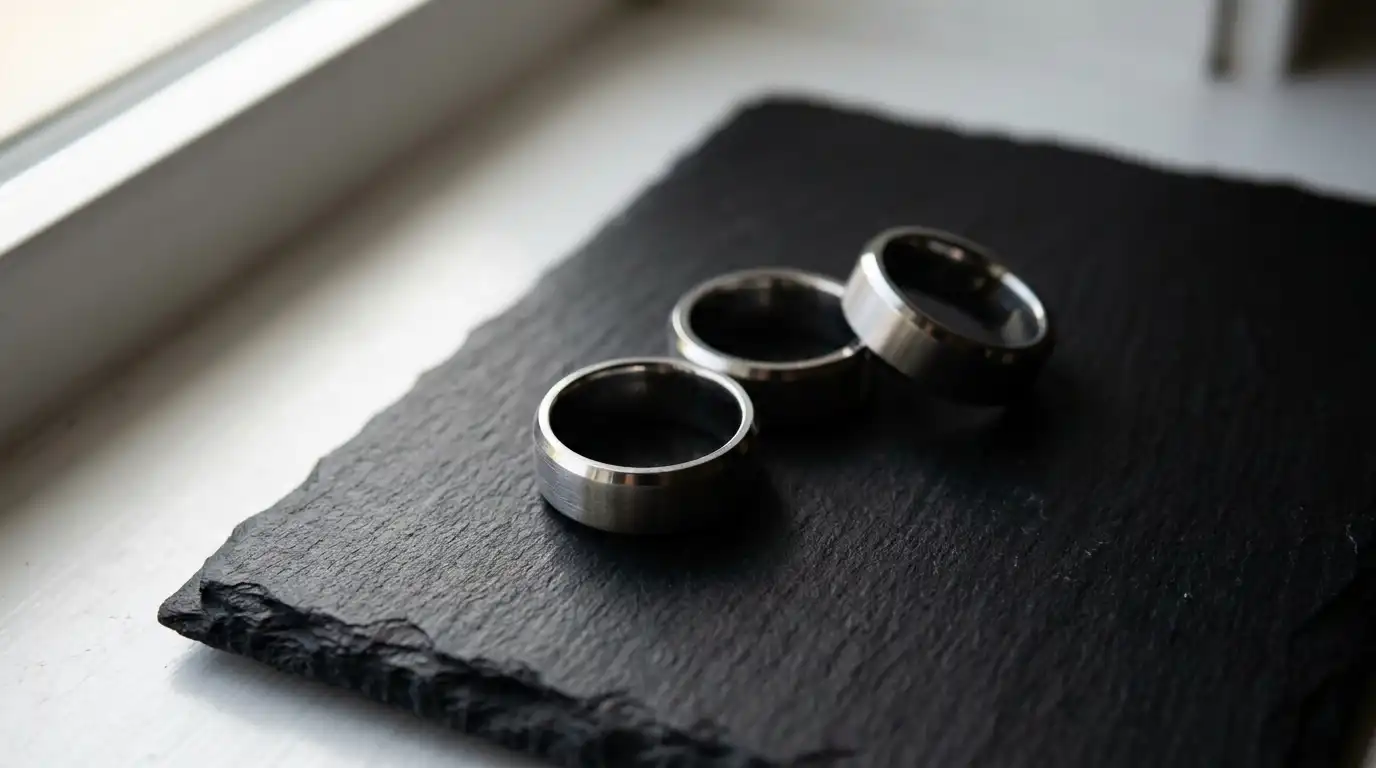

You bought the ring. Now you have to pay monthly to see your own sleep data. That’s the Oura model. It works for some people. For everyone else, there’s a growing list of smart rings that track heart rate, sleep, and stress without ever asking for a subscription fee. I compared the five best options to find which ones actually deliver on that promise.
Quick Comparison: Best No-Subscription Smart Rings
| Ring | Subscription | Best For | Battery | Key Limitation |
|---|---|---|---|---|
| RingConn Gen 2 | None | Best Overall | 10–12 days | No workout HR zone alerts |
| Ultrahuman Ring Air | None | Metabolic Health | 6 days | App pushes supplement upsells |
| Samsung Galaxy Ring | None | Android Users | 7 days | Galaxy phone strongly preferred |
| Circular Ring 2 | None | ECG & AFib | 7 days | Thicker than competitors |
| Amazfit Helio Ring | None | Tight Budget | 4 days | Fewer sensors, basic app |
Quick Pick: If you want the best balance of accuracy, comfort, and zero ongoing fees, get the RingConn Gen 2. [Check Current Price on Amazon]
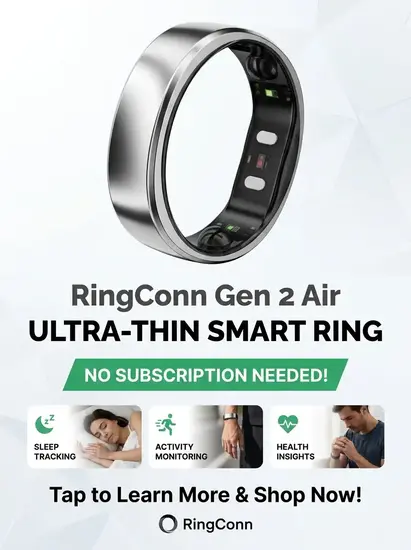
1. RingConn Gen 2 — Best Smart Ring Without Subscription
RingConn built its entire brand around one idea: charge for the hardware, not the data. The Gen 2 refines that pitch with a lighter titanium shell, better sleep staging, and a battery that stretches past ten days. It weighs about 2.5 grams and sits flat enough that you forget it’s there after a day.
The ring tracks heart rate, blood oxygen, skin temperature, stress, and sleep stages. The app presents everything in clean daily and weekly charts. You get readiness scores, HRV trends, and nap detection without ever hitting a paywall.
Specs
- Sensors: PPG heart rate, SpO2, skin temperature
- Battery: 10–12 days per charge
- Material: Titanium with inner resin seal
- Water Resistance: 100 meters
- Connectivity: Bluetooth 5.3
- App: iOS and Android
Who It’s For
People who want Oura-level sleep tracking without the monthly bill. The Gen 2 matches Oura’s sleep stage accuracy in third-party testing, and it costs less upfront while skipping the subscription entirely.
Who Should Skip It
Athletes who need real-time heart rate zone alerts during workouts. The RingConn tracks exercise, but it won’t buzz your finger when you cross into Zone 3. For that, you still need a watch.
Pros:
- No subscription, ever
- Sleep accuracy rivals Oura
- 10–12 day battery beats most competitors
- Works equally well on iPhone and Android
Cons:
- No haptic feedback or alerts
- Workout tracking is basic
- App lacks social or community features
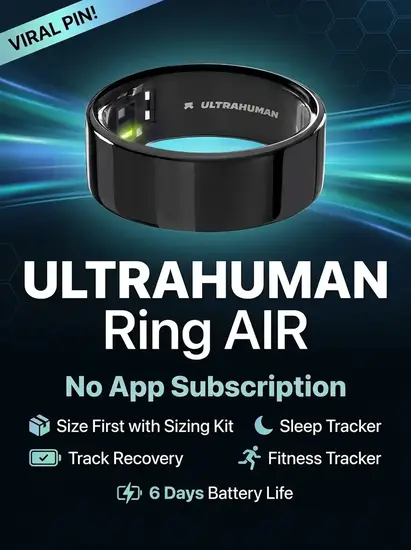
2. Ultrahuman Ring Air — Best for Metabolic Health
The Ultrahuman Ring Air looks similar to RingConn, but its software goes deeper into metabolic recovery. It tracks your movement index, caffeine cutoff windows, and circadian rhythm alignment. The app tells you exactly when to stop drinking coffee so your sleep quality doesn’t tank. That feature alone changes behavior for a lot of users.
The ring is light at 2.4 grams and comes in several finishes. Battery life sits around six days, which is shorter than RingConn but acceptable for the feature set.
Specs
- Sensors: PPG heart rate, skin temperature, movement
- Battery: 6 days
- Material: Titanium with PVD coating
- Water Resistance: 100 meters
- Connectivity: Bluetooth 5.0
- App: iOS and Android
Who It’s For
Biohackers, shift workers, and anyone managing diet timing alongside sleep. The caffeine window and circadian scores are genuinely useful if you actually act on them.
Who Should Skip It
People who want a clean, simple dashboard. The Ultrahuman app pushes upsells for supplements and its M1 glucose monitor. The data is excellent, but the interface can feel cluttered.
Pros:
- Best-in-class metabolic insights
- Caffeine cutoff alerts actually improve sleep
- Strong recovery and readiness scores
- No subscription for core features
Cons:
- 6-day battery is shorter than RingConn
- App pushes upsells frequently
- Ring runs warm during charging
3. Samsung Galaxy Ring — Best for Android Users
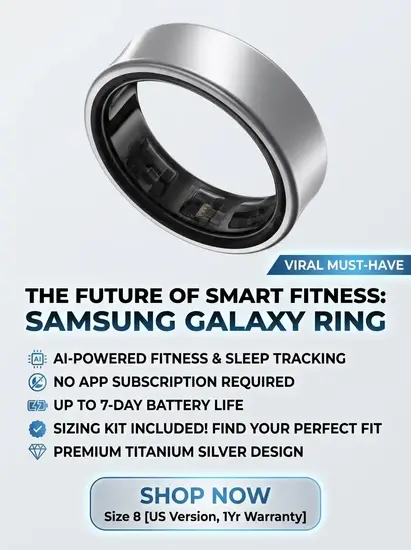
Samsung entered the ring market with a simple pitch: deep integration into Samsung Health, automatic workout detection, and no subscription. The Galaxy Ring tracks heart rate, stress, skin temperature, and sleep. It also detects sleep apnea in supported regions, pending full FDA clearance in the United States.
The titanium build feels premium, and the charging case is the smartest in the category. Battery life lands around seven days in normal use.
Specs
- Sensors: PPG heart rate, skin temperature, sleep apnea detection (region-dependent)
- Battery: 7 days
- Material: Titanium
- Water Resistance: 100 meters
- Connectivity: Bluetooth 5.4
- App: Samsung Health (Android)
Who It’s For
Samsung phone owners who want seamless health tracking. The ring pairs instantly with Galaxy devices and feeds data directly into Samsung Health, which already tracks steps, nutrition, and workouts.
Who Should Skip It
iPhone users. Samsung Health on iOS exists, but the Galaxy Ring’s full feature set only unlocks on Android. If you switch phone brands often, this ring locks you into one ecosystem.
Pros:
- Deep Samsung Health integration
- Automatic workout detection
- Premium titanium build
- Smart charging case design
Cons:
- Galaxy phone strongly preferred
- Limited third-party app support
- No iOS compatibility for full features
4. Circular Ring 2 — Best for ECG and AFib Detection
Most smart rings stop at heart rate and SpO2. The Circular Ring 2 adds a medical-grade ECG and FDA-cleared AFib detection. That’s a big step up for anyone with a family history of heart arrhythmia or for users who simply want clinical-grade peace of mind.
The ring is thicker than Oura or RingConn. You feel it more on the finger, especially during sleep if you aren’t used to wearing rings. Battery life hits seven days, and the app exports PDF reports you can share directly with your doctor.
Specs
- Sensors: PPG, ECG, AFib detection, SpO2, skin temperature
- Battery: 7 days
- Material: Titanium with ceramic finish
- Water Resistance: 50 meters
- Connectivity: Bluetooth 5.1
- App: iOS and Android
Who It’s For
People with heart health concerns or anyone who wants the most medically capable ring on the market. The ECG requires a manual reading by placing fingers on the ring surface, but the data is legitimate.
Who Should Skip It
Users who want the slimmest, most invisible wearable. The Circular Ring 2 is noticeably thicker than competitors, and the manual ECG reading takes practice.
Pros:
- Only consumer ring with ECG
- FDA-cleared AFib detection
- Detailed sleep and heart reports
- No subscription for any feature
Cons:
- Thicker than Oura or RingConn
- ECG requires manual finger placement
- Higher hardware price point
5. Amazfit Helio Ring — Best Budget Pick
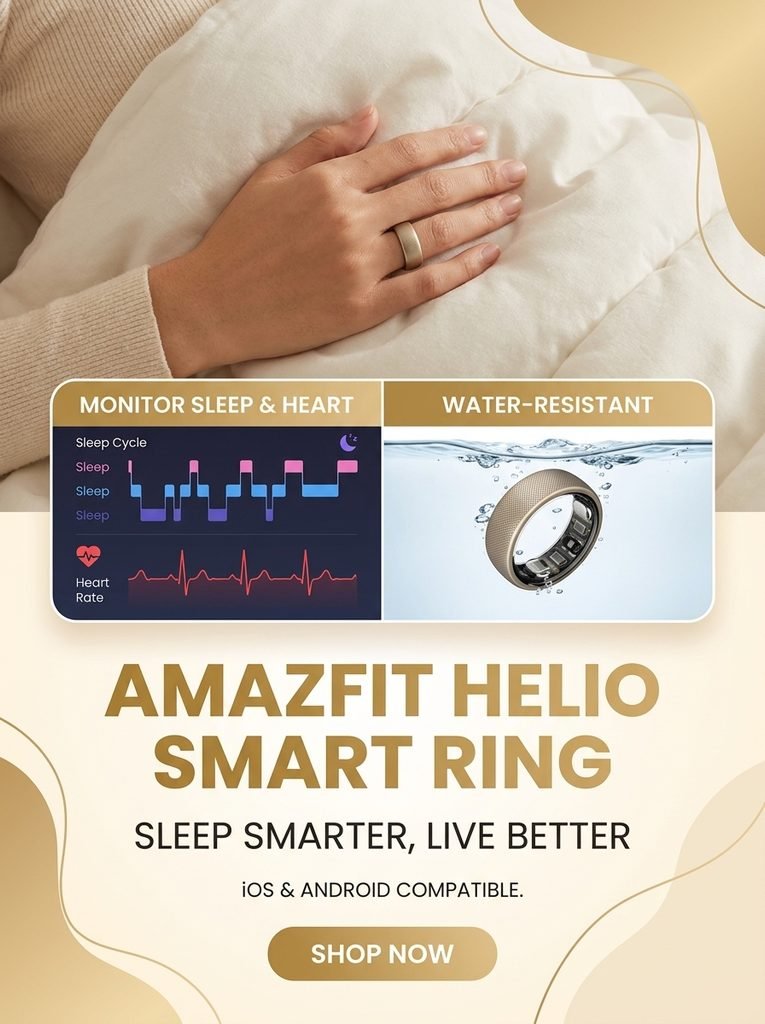
The Helio Ring is Amazfit’s first entry into the smart ring space, and it aims squarely at price-conscious buyers. It tracks heart rate, stress, basic sleep stages, and steps. The Zepp app is simple and fast, and the ring pairs well with Amazfit watches if you already own one.
Battery life is the weakest here at about four days. The ring also skips SpO2 and skin temperature, which limits its recovery scoring.
Specs
- Sensors: PPG heart rate, stress, sleep
- Battery: 4 days
- Material: Plastic composite with titanium coating
- Water Resistance: 50 meters
- Connectivity: Bluetooth 5.0
- App: Zepp (iOS and Android)
Who It’s For
First-time smart ring buyers who want to test the form factor without spending much. If you aren’t sure you’ll tolerate sleeping with a ring, this is the least risky entry point.
Who Should Skip It
Anyone who needs clinical-grade accuracy or long battery life. The Helio Ring is basic by design, and the four-day battery means more frequent charging than competitors.
Pros:
- Lowest entry price in the category
- Works seamlessly with Amazfit watches
- Simple, uncluttered app
- No subscription fees
Cons:
- No SpO2 or skin temperature
- 4-day battery requires frequent charging
- Less accurate sleep staging than RingConn or Oura
[Check Current Price on Amazon]
The Real Cost of “Free” Data: Three-Year Comparison
Subscription rings look cheaper at checkout. They aren’t. Over three years, the monthly fees add up to the price of a second ring. Here’s how the math breaks down for someone who keeps their wearable for thirty-six months.
| Ring | Hardware | Monthly Fee | Total After 3 Years | Subscription-Free? |
|---|---|---|---|---|
| Oura Ring | [Check Price] | ~$6/month | [Check Price] + ~$216 | No |
| RingConn Gen 2 | [Check Price] | $0 | [Check Price] | Yes |
| Ultrahuman Ring Air | [Check Price] | $0 | [Check Price] | Yes |
| Samsung Galaxy Ring | [Check Price] | $0 | [Check Price] | Yes |
| Circular Ring 2 | [Check Price] | $0 | [Check Price] | Yes |
| Amazfit Helio Ring | [Check Price] | $0 | [Check Price] | Yes |
The subscription model costs you twice. You pay with money, and you pay with dependency. If Oura raises its monthly fee or changes its data policy, you have no leverage. You either keep paying or lose your historical trends. With a subscription-free ring, your data stays yours from day one.
How to Choose the Right No-Subscription Smart Ring
These five rings serve different people. Match your priorities to the device.
| Your Priority | Best Ring |
|---|---|
| Best sleep tracking without fees | RingConn Gen 2 |
| Metabolic timing and caffeine limits | Ultrahuman Ring Air |
| Deep Android and Samsung integration | Samsung Galaxy Ring |
| Heart health and ECG monitoring | Circular Ring 2 |
| Testing the ring form factor cheaply | Amazfit Helio Ring |
| Longest battery life | RingConn Gen 2 |
If you own a Samsung phone, the Galaxy Ring is almost automatic. If you track every macro and care about circadian rhythm, Ultrahuman wins. For everyone else, RingConn offers the cleanest experience with the least compromise.
Key Takeaways
- Oura isn’t the only accurate option anymore. RingConn matches its sleep tracking without the monthly fee.
- Over three years, skipping the subscription saves enough money to buy a second ring or a premium fitness watch.
- RingConn leads for sleep tracking and battery life among no-fee options.
- Samsung Galaxy Ring is the obvious choice if you already live in Samsung’s ecosystem.
- Circular Ring 2 is the only consumer option with ECG and AFib detection.
- Ultrahuman Ring Air wins for metabolic timing, caffeine windows, and circadian scoring.
- Amazfit Helio Ring is the safest trial purchase if you aren’t sure you’ll tolerate wearing a ring to bed.
Suggested Reads
Best No-Cloud Fitness Trackers (2026): Top Privacy-First Wearables
Fitness Tracker No Subscription: 9 Best Picks for 2026
Frequently Asked Questions
Do any smart rings work without a subscription?
Yes. RingConn, Ultrahuman, Samsung Galaxy Ring, Circular, and Amazfit Helio all offer full feature access with zero monthly fees. You pay once for the hardware and own every metric the ring collects.
Is RingConn as accurate as Oura?
In independent sleep lab comparisons, RingConn Gen 2 matches Oura’s sleep stage accuracy within a few percentage points. Heart rate and HRV readings are also comparable during rest. Oura still leads on workout heart rate variability, but for sleep and recovery, RingConn is nearly identical.
Can I use a smart ring without a smartphone?
No. All current smart rings require a phone app to process and display data. The ring stores some readings locally, but you need Bluetooth sync to view trends, export files, or update firmware.
Do subscription-free rings sell my health data?
Generally, no. RingConn and Ultrahuman state explicitly that they do not sell user data. Samsung processes data within its own ecosystem under its privacy policy. Circular operates under EU GDPR rules. Always read the privacy policy, but the no-subscription business model means these companies don’t need to monetize your biometrics to survive.
Which smart ring has the longest battery life?
The RingConn Gen 2 leads at 10–12 days. Samsung Galaxy Ring and Circular Ring 2 both manage about seven days. Ultrahuman lasts six days. Amazfit Helio Ring needs charging every four days.
Can I wear a smart ring while lifting weights?
You can, but it depends on the barbell. Knurled bars can scratch titanium rings over time. Most users either wear the ring on their non-dominant hand or switch it to a pendant during heavy lifting sessions. All rings listed here handle water and sweat without issue.
Will these rings work with iPhone?
RingConn, Ultrahuman, Circular, and Amazfit Helio all have iOS apps. The Samsung Galaxy Ring technically pairs with iPhones through Samsung Health, but many features are limited or missing compared to the Android experience.
Amazon Affiliate Disclosure: As an Amazon Associate, I earn from qualifying purchases. This guide uses affiliate links. Prices change often, so we don’t list fixed dollar amounts. Click any product link to see the current price on Amazon.