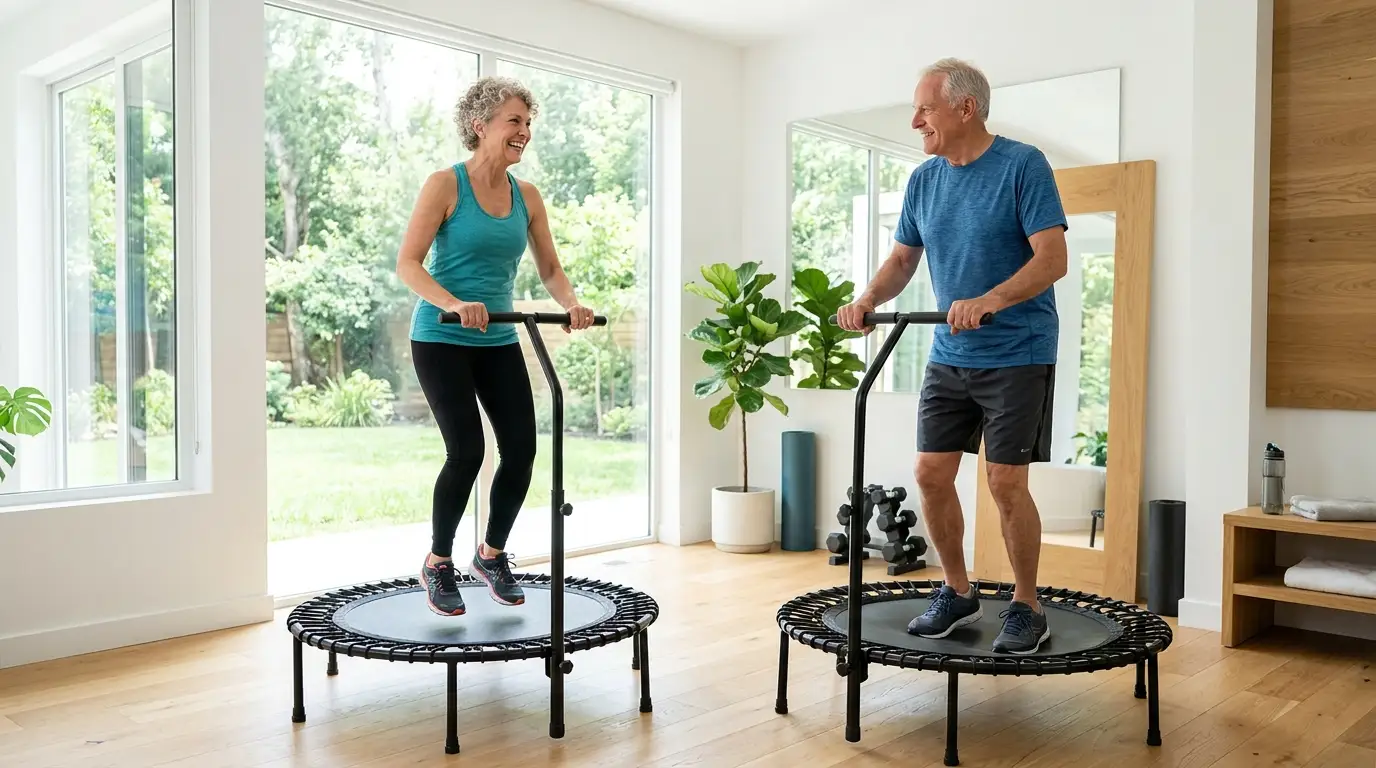
Staying active is one of the most effective ways to maintain independence, improve balance, and support overall well-being as we age. Mini trampoline workouts for seniors provide a gentle yet highly effective way to increase cardiovascular fitness, strengthen muscles, and improve mobility without placing excessive stress on the joints. A quality mini trampoline offers a cushioned surface that absorbs impact, making it an excellent choice for older adults looking for a fun and sustainable fitness routine.
This comprehensive guide covers everything you need to know about safe mini trampoline workouts, including their benefits, essential safety tips, beginner-friendly exercises, and how to build a complete weekly routine.
Table of Contents
Why Rebounder Exercises for Seniors Are So Effective
Unlike running or walking on hard pavement, rebounding uses a flexible jumping surface that significantly reduces impact on the knees, hips, and ankles. Every gentle bounce encourages movement throughout the entire body while minimizing joint stress.
Regular rebounder exercises for seniors may help improve:
- Balance and coordination
- Cardiovascular endurance
- Leg strength
- Core stability
- Bone health
- Circulation
- Lymphatic drainage
- Joint mobility
- Overall energy levels
Even gentle movements without leaving the trampoline surface can provide meaningful health benefits.
Benefits of Safe Mini Trampoline Workouts
1. Low-Impact Cardio
One of the biggest advantages of a rebounder is its ability to elevate heart rate without harsh impact. Seniors who experience discomfort from walking on concrete often find rebounding much more comfortable.
Gentle bouncing stimulates circulation while protecting sensitive joints.
2. Better Balance and Stability
Falls become a greater concern with age. Controlled trampoline exercises strengthen the muscles responsible for posture and balance.
Improved balance helps with:
- Walking confidently
- Climbing stairs
- Standing from a chair
- Preventing falls
3. Stronger Leg Muscles
Simple bouncing activates:
- Quadriceps
- Hamstrings
- Calves
- Glutes
These muscles are essential for maintaining independence during everyday activities.
4. Improved Bone Health
Weight-bearing exercise encourages healthy bones. Although rebounding is gentle, the changing gravitational forces help stimulate bone-supporting activity while remaining easier on joints than jogging.
5. Increased Core Strength
Maintaining stability on the trampoline naturally activates the abdominal muscles and lower back.
A stronger core improves posture and reduces the risk of injury.
Who Should Try Mini Trampoline Exercise?
Safe mini trampoline workouts can be an excellent option for seniors who:
- Want gentle cardio
- Need low-impact exercise
- Are recovering fitness after inactivity
- Want to improve balance
- Enjoy exercising indoors
- Need shorter workouts
Always consult a healthcare provider before beginning a new fitness program, especially after surgery, injury, or if you have heart or balance conditions.
Essential Safety Tips Before Starting
Safety should always come first.
Follow these guidelines:
- Use a high-quality rebounder
- Place it on a flat surface
- Wear supportive athletic shoes
- Exercise near a wall or sturdy support if needed
- Begin slowly
- Stay hydrated
- Stop immediately if you feel dizzy or unwell
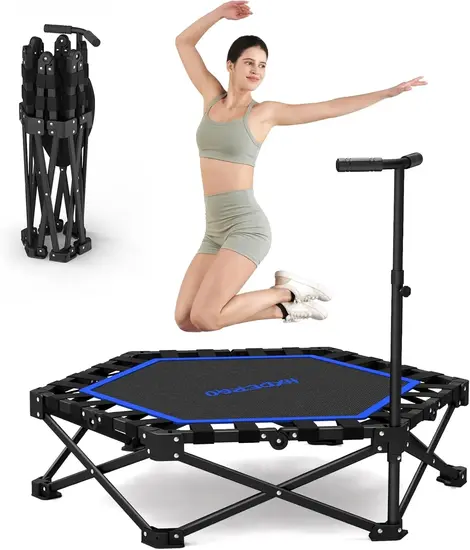
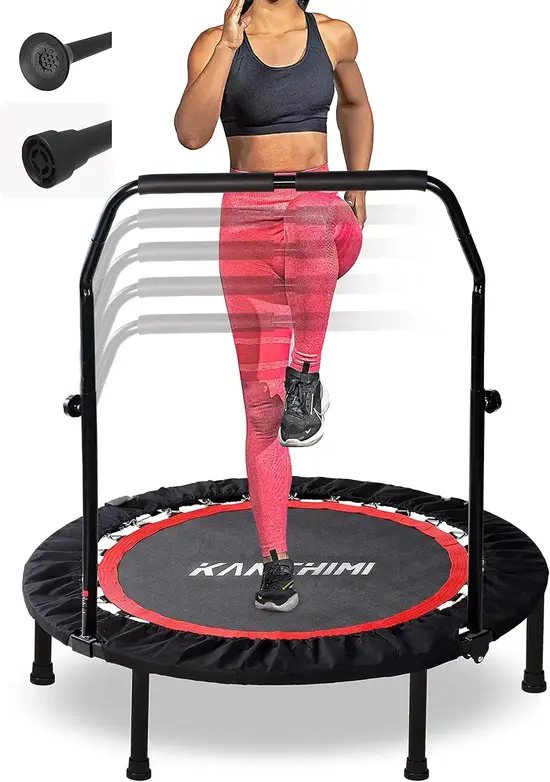
Many seniors prefer rebounders with support handlebars for added confidence.
For guidance on selecting the right equipment, explore our Mini Exercise Trampoline buying guide and Mini Workout Trampoline Secrets for helpful comparisons and expert recommendations.
Warm-Up Before Every Workout
Spend five minutes preparing your body.
March in Place
Lift knees gently.
Duration:
2 minutes
Shoulder Rolls
Roll shoulders forward and backward.
Repeat:
10 times each direction
Ankle Circles
Rotate each ankle.
Repeat:
10 circles each foot
Gentle Side Steps
Shift weight side to side.
Duration:
1 minute
Best Rebounder Exercises for Seniors
1. Health Bounce
This is the foundation of every rebounder workout.
Instead of jumping high, keep your feet lightly touching the trampoline while gently bouncing.
Duration:
- 2–5 minutes
Benefits:
- Improves circulation
- Warms muscles
- Activates lymphatic movement
2. Marching Bounce
Lift one knee at a time while maintaining a gentle bounce.
Repeat:
- 1–3 minutes
Improves:
- Coordination
- Hip mobility
- Balance
3. Side-to-Side Weight Shifts
Shift body weight from one foot to the other.
Benefits:
- Hip strength
- Balance
- Stability
4. Heel Digs
Extend one heel forward while keeping the other foot stable.
Alternate sides.
Duration:
- 2 minutes
Excellent for:
- Hamstrings
- Calves
- Knee mobility
5. Toe Taps
Tap one foot forward and return.
Alternate feet.
Benefits:
- Lower leg strength
- Coordination
- Improved circulation
6. Mini Squats
Stand with feet shoulder-width apart.
Lower only a few inches before returning upright.
Perform:
- 8–12 repetitions
Strengthens:
- Glutes
- Quadriceps
- Core
7. Arm Raises While Bouncing
Raise both arms overhead while gently bouncing.
Repeat:
- 15 repetitions
Benefits:
- Shoulder mobility
- Heart rate
- Coordination
8. Standing Knee Lifts
Lift knees one at a time while maintaining posture.
Repeat:
- 10 per side
Strengthens:
- Hip flexors
- Core
- Balance
9. Gentle Twist
Rotate the hips slightly while keeping shoulders relaxed.
Avoid sudden movements.
Duration:
- 1 minute
Improves spinal mobility.
10. Cool-Down Bounce
Finish every workout with slow, controlled bouncing.
Duration:
- 2–3 minutes
Sample 20-Minute Safe Mini Trampoline Workout
Warm-Up (5 Minutes)
- March in place
- Shoulder rolls
- Ankle circles
- Gentle side steps
Workout (12 Minutes)
- Health bounce – 2 minutes
- Marching bounce – 2 minutes
- Heel digs – 2 minutes
- Side-to-side shifts – 2 minutes
- Knee lifts – 2 minutes
- Arm raises – 2 minutes
Cool Down (3 Minutes)
- Slow bounce
- Deep breathing
- Gentle calf and hamstring stretches
How Often Should Seniors Rebound?
Most beginners benefit from:
- 3–4 sessions per week
- 15–20 minutes each
As endurance improves, sessions can gradually increase to:
- 30 minutes
- 5 days per week
Consistency delivers better long-term results than occasional intense workouts.
Combining Rebounding with Strength Training
While rebounding offers excellent cardiovascular and balance benefits, pairing it with resistance exercises creates a more complete fitness routine.
Adding light strength training supports:
- Muscle preservation
- Bone density
- Joint stability
- Daily functional movement
For a well-rounded home fitness plan, combine your trampoline sessions with our guides on Strength Training Equipment for Seniors and Low-Impact Strength Training at Home to safely build strength alongside your cardio routine.
Common Mistakes Seniors Should Avoid
Avoid these errors for a safer experience:
- Jumping too high
- Looking down constantly
- Exercising without warming up
- Holding your breath
- Using poor-quality trampolines
- Wearing slippery footwear
- Skipping recovery days
Small, controlled movements are more effective than aggressive bouncing.
Final Thoughts
Safe mini trampoline workouts offer an enjoyable and effective way for older adults to stay active without placing unnecessary strain on the joints. From improving cardiovascular health and balance to strengthening muscles and boosting confidence, rebounder exercises for seniors provide a practical solution for maintaining mobility and independence.
Starting with simple movements, using proper equipment, and progressing gradually can help create a sustainable fitness routine that supports healthy aging. Combined with sensible strength training and regular movement, a mini trampoline can become one of the most valuable tools for long-term wellness at home.
Conclusion
A consistent routine of rebounder exercises for seniors can transform everyday fitness into a safe, enjoyable habit. By focusing on controlled movement, proper technique, and gradual progression, safe mini trampoline workouts help improve balance, strength, endurance, and overall quality of life while remaining gentle on aging joints.
Whether you’re beginning your fitness journey or looking for a new low-impact exercise option, a rebounder offers a simple and effective way to stay active, confident, and independent for years to come.
Frequently Asked Questions
Is a Mini Trampoline Safe for Seniors?
Yes. When used properly, a quality rebounder provides a low-impact exercise option suitable for many older adults. Begin with gentle movements and use support when necessary.
Can Beginners Start Without Jumping?
Absolutely. Many effective rebounder exercises involve keeping both feet in contact with the mat while gently shifting weight.
How Long Should a Workout Last?
Beginners can start with 10–15 minutes and gradually build to 20–30 minutes as fitness improves.
Can Rebounding Help Improve Balance?
Yes. Regular practice strengthens stabilizing muscles and improves coordination, which may reduce the risk of falls.
Do Seniors Need a Handlebar?
Many older adults feel more confident using a support handle, especially during the first few weeks of training.