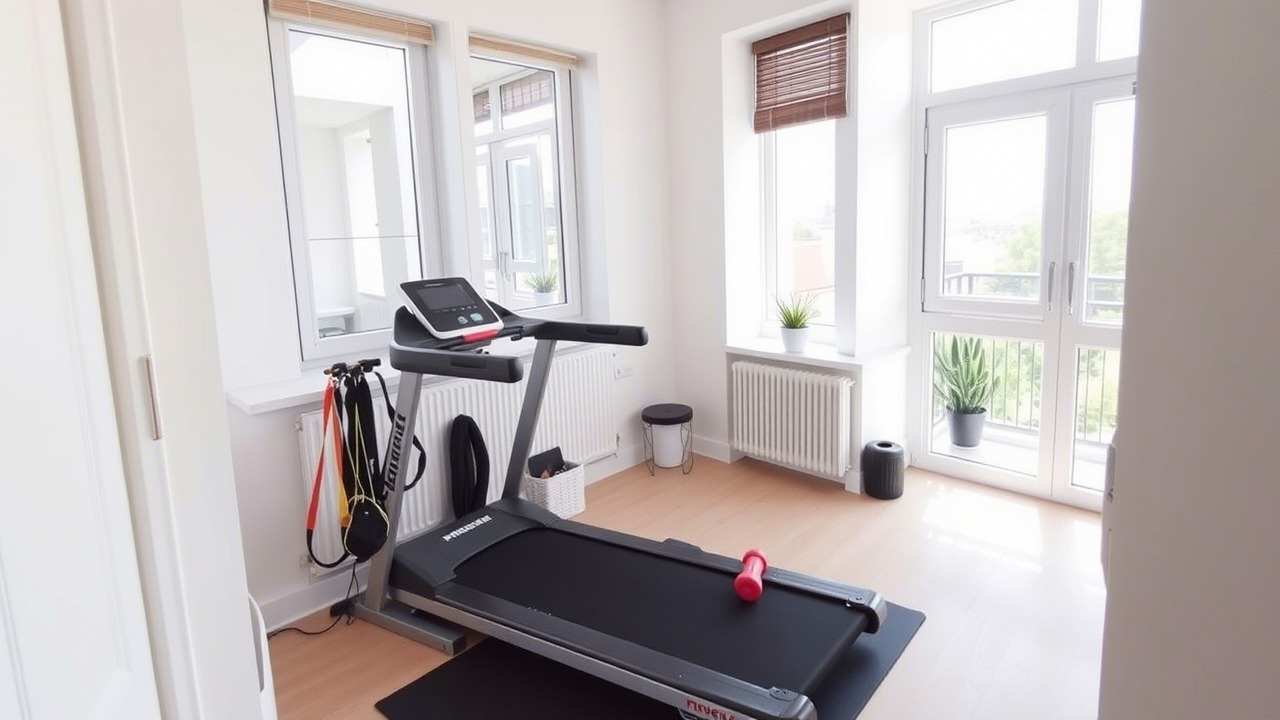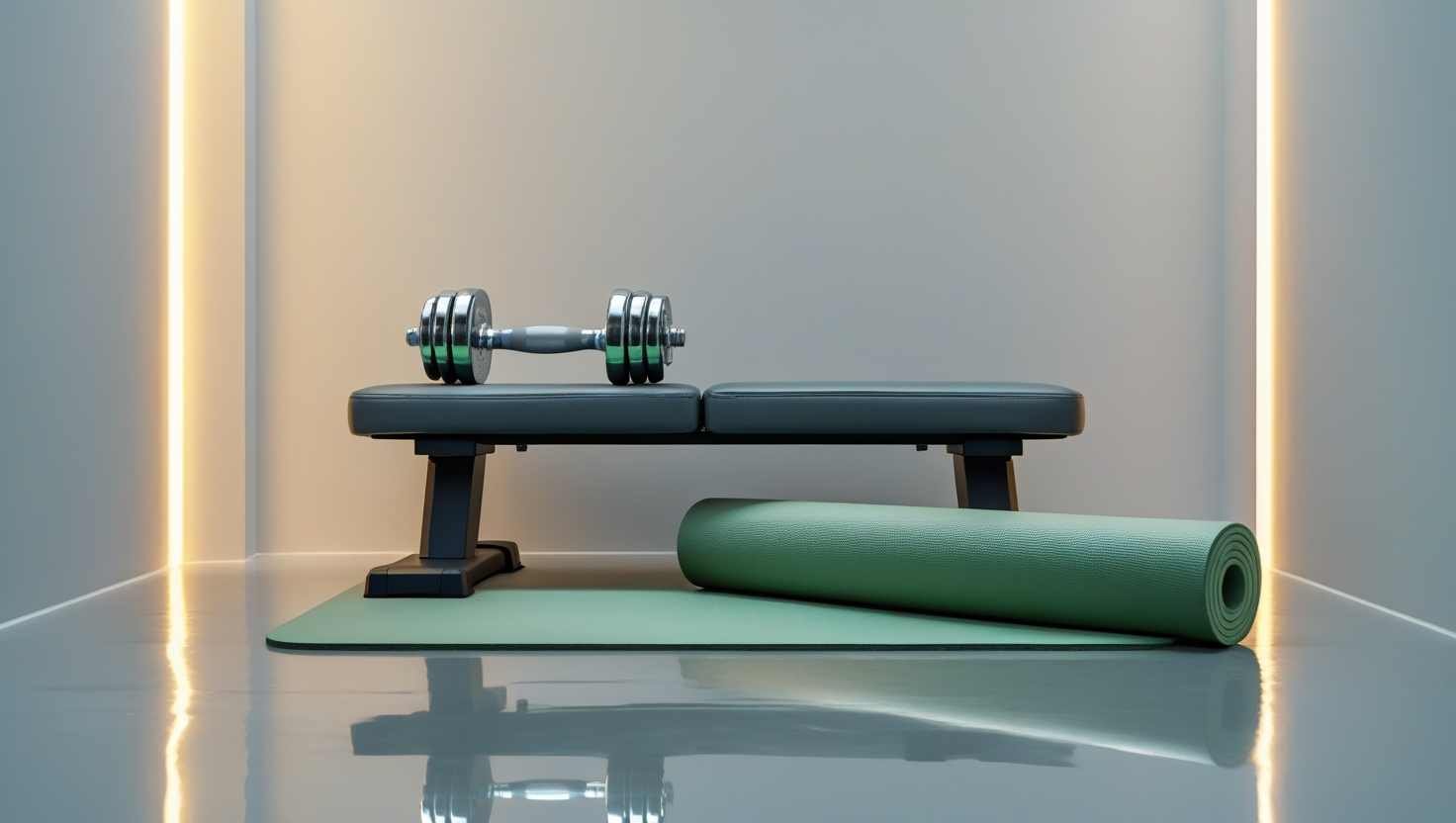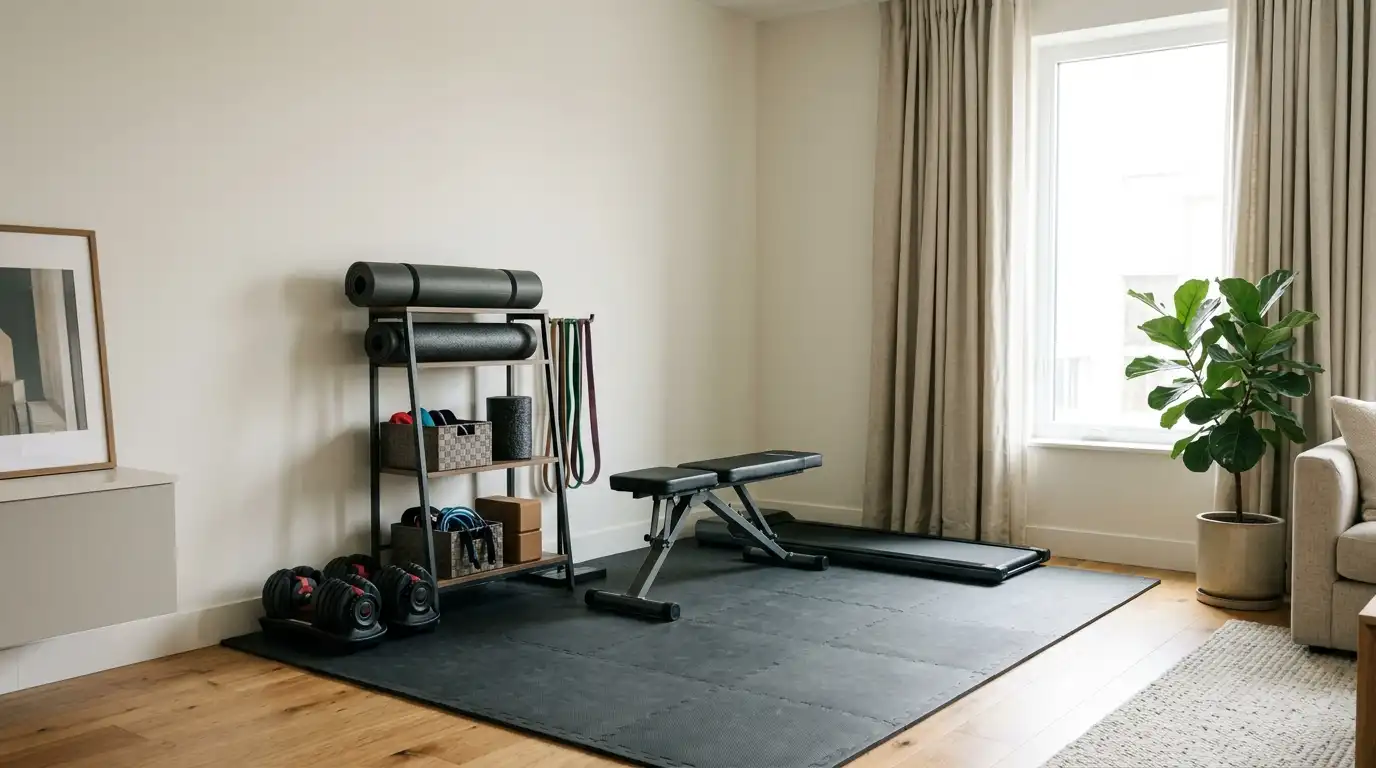

A backyard can give you enough room for a serious home gym without sacrificing half your house. The best outdoor gym ideas for backyards use the space you already have—whether that’s a narrow side yard, a covered patio, a garden corner, or a full-size shed.
The key is matching the setup to your training style, weather, available space, and storage needs. A simple strength station might need only a few square feet, while a complete outdoor gym can include a squat rack, adjustable bench, cardio equipment, storage, lighting, and weather protection.
Here are 15 backyard gym ideas worth considering, plus practical advice for flooring, equipment, shade, security, and year-round use.
Quick Answer: The best outdoor gym ideas for backyards include a covered strength-training station, converted gym shed, compact bodyweight area, outdoor yoga deck, functional fitness zone, and small cardio station. For most homes, start with weather-resistant flooring, a pull-up station, adjustable weights, a bench, resistance bands, and secure storage.
Table of Contents
1. Build a Dedicated Backyard Gym Shed
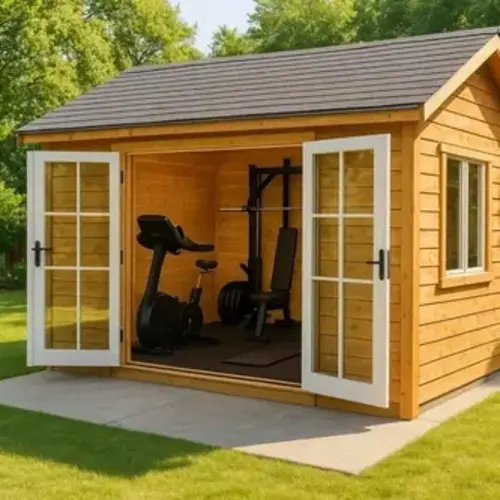
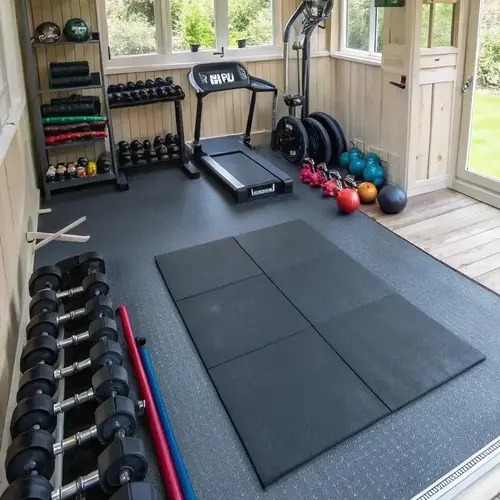
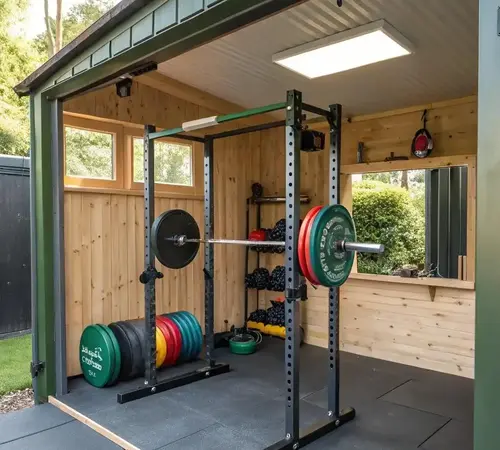
A shed can turn an unused corner of the backyard into a proper training room.
A gym shed backyard setup works particularly well when you want equipment protected from rain, direct sunlight, dust, and temperature swings. A standard garden shed can often be adapted with insulation, ventilation, electrical outlets, rubber flooring, lighting, and wall-mounted storage.
For a compact outdoor gym, prioritize vertical storage. A wall-mounted rack for resistance bands, jump ropes, plates, and small accessories keeps the floor open for training.
What to include
- Rubber or dense EVA flooring
- Adjustable dumbbells
- Foldable or compact bench
- Wall-mounted pull-up bar
- Resistance bands
- Full-length mirror
- Ventilation fan
- LED ceiling lighting
- Lockable storage
If you’re building from scratch, leave enough clearance around your main equipment. A squat rack that’s technically small can still feel cramped if the barbell has nowhere to move. For homeowners who want a more substantial enclosed training space without constructing a traditional room, a container gym can also be an interesting alternative to a conventional backyard gym shed.
2. Create a Covered Outdoor Strength Gym
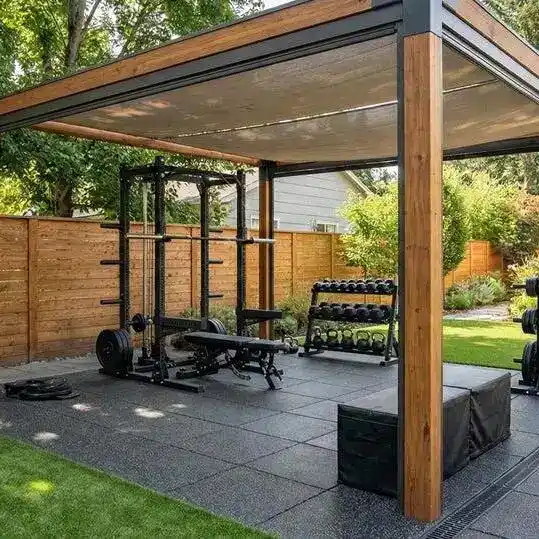
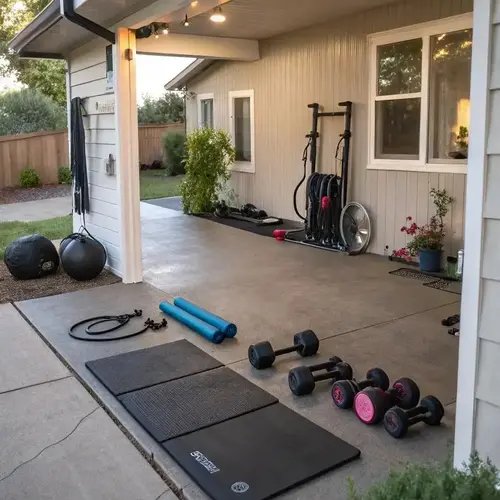
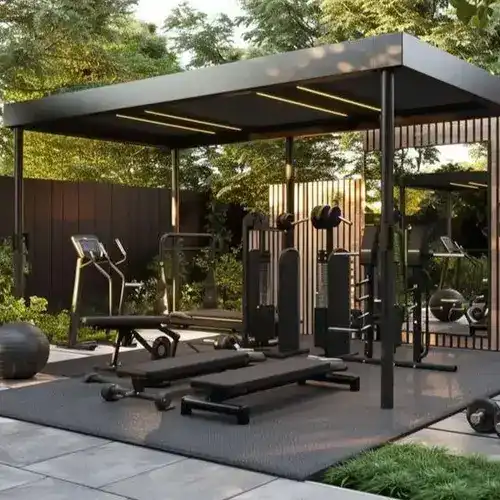
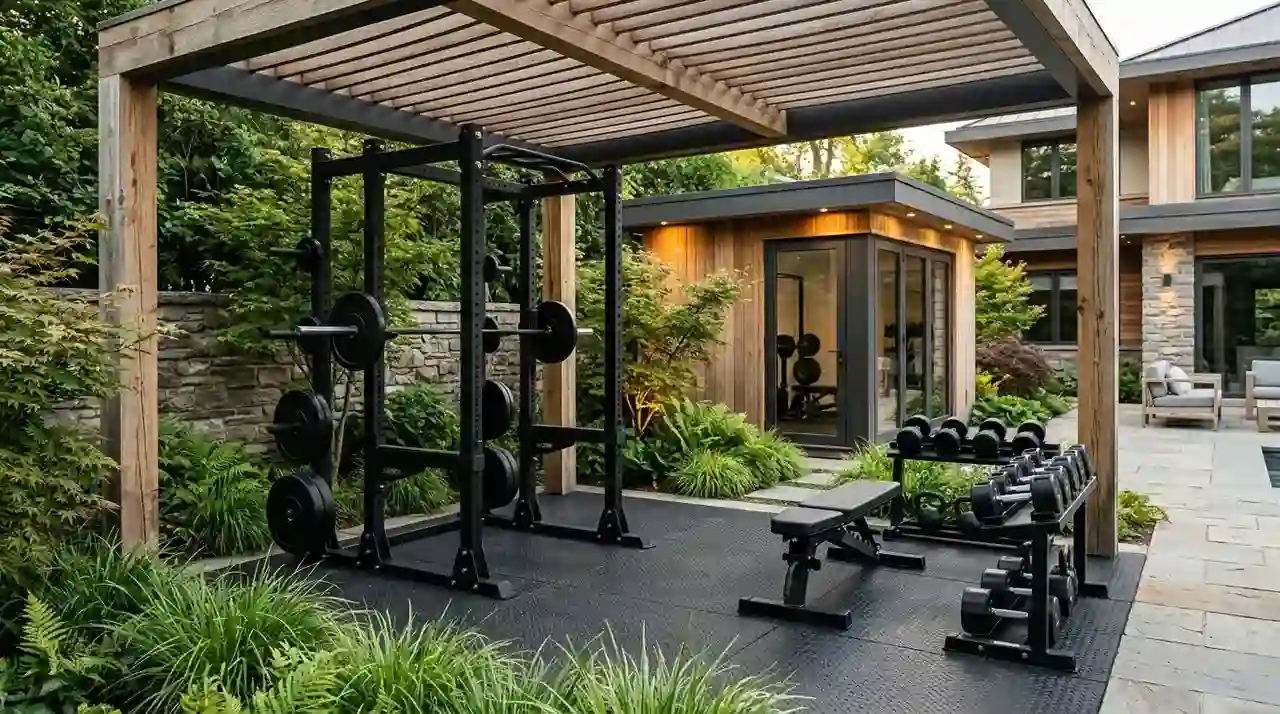
A covered patio, pergola, or roofed deck makes one of the most attractive outdoor gym ideas for backyards.
The roof protects you and your equipment from direct sun while keeping the space open and airy. You can install a squat rack, bench, cable trainer, or functional training rig underneath.
A covered setup also gives you more flexibility with flooring. Interlocking rubber tiles or outdoor-rated gym flooring can create a defined workout zone without requiring a permanent room.
Best for: strength training, functional fitness, kettlebells, mobility work, and workouts that benefit from fresh air.
3. Turn a Small Backyard Corner Into a Gym
You don’t need a large garden.
A 6-by-8-foot or similarly compact area can handle a surprisingly useful training setup when equipment has more than one purpose.
Start with:
- A compact adjustable bench
- Adjustable dumbbells
- Resistance bands
- A wall-mounted pull-up bar
- A small storage cabinet
- Rubber flooring
The bench becomes your main training platform for presses, rows, step-ups, split squats, and core work. Adjustable weights reduce the amount of equipment sitting around the yard.
For small backyards, vertical storage matters more than floor space.
4. Design a Backyard Calisthenics Station
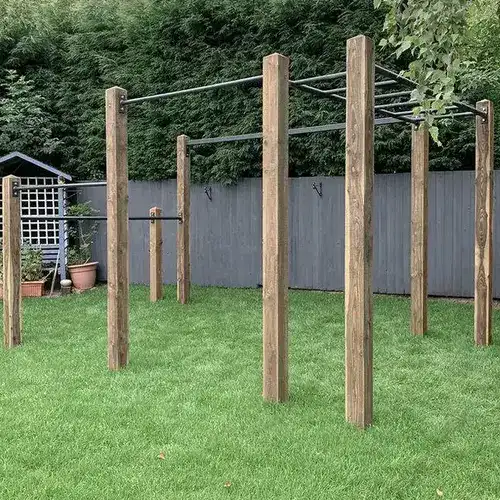
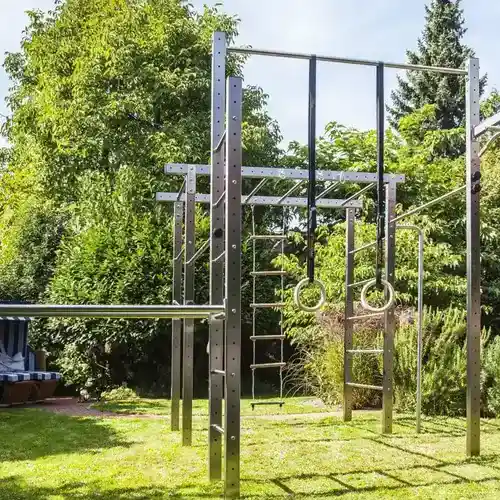
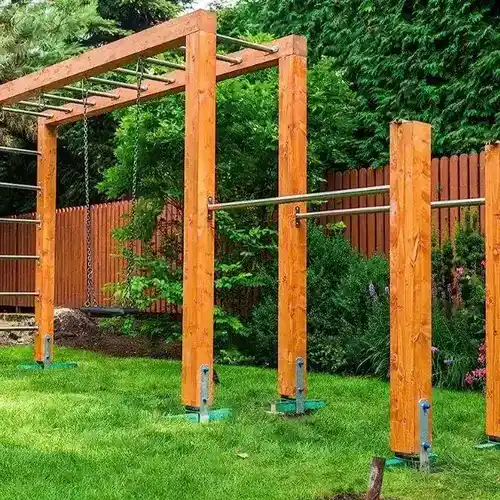
Bodyweight training can make a backyard gym incredibly simple.
A basic calisthenics station can include a pull-up bar, parallel bars, dip station, climbing rope, and a clear patch of flooring.
You can train pull-ups, dips, push-ups, hanging knee raises, inverted rows, squats, lunges, and many other movements with very little equipment.
This setup also works well for families because several people can use the same equipment for different workouts.
5. Add a Backyard Functional Fitness Zone
Functional training works beautifully outdoors because it requires open floor space.
Create a rectangular training zone with durable flooring and enough room for movements such as:
- Kettlebell swings
- Farmer carries
- Sled pushes
- Medicine-ball exercises
- Battle ropes
- Sandbag carries
- Box step-ups
- Jump rope
Keep heavier equipment close to the perimeter so the center remains clear.
If you use a sled, check the surface first. Rough concrete, artificial turf, rubber flooring, and grass can produce very different results.
6. Create an Outdoor Yoga and Mobility Deck
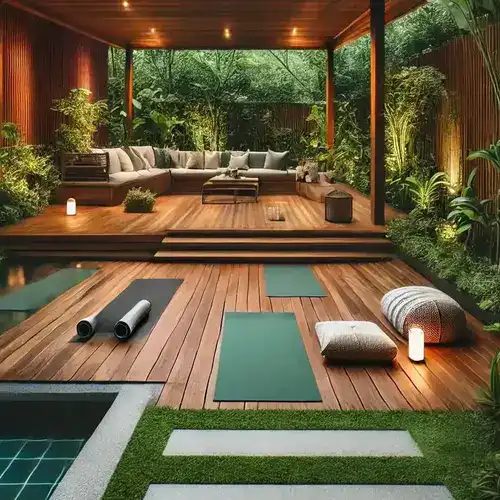
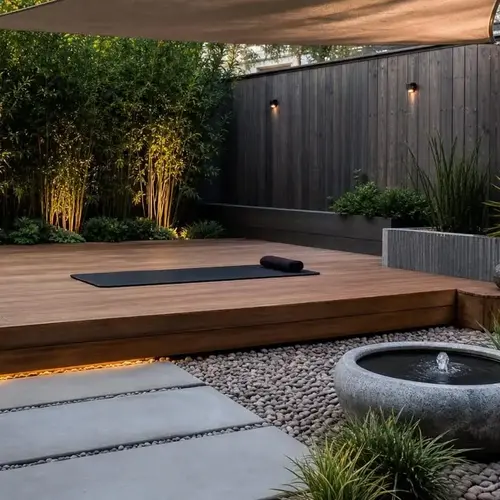
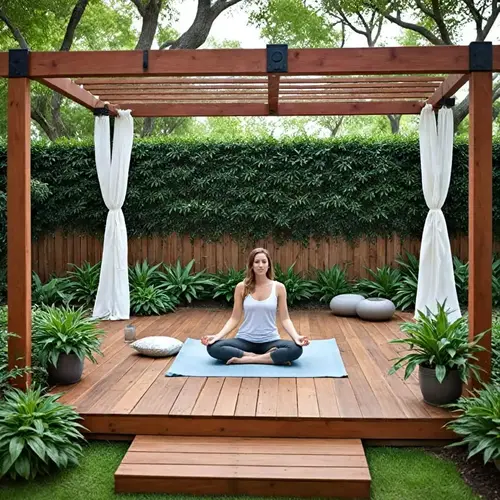
A backyard gym doesn’t have to revolve around weights.
A small timber or composite deck can become a peaceful yoga and mobility area. Add a weather-resistant storage bench for mats, blocks, straps, and blankets.
Position the deck where you get morning or late-afternoon shade if possible.
For a more polished look, use natural materials, simple outdoor lighting, and greenery around the perimeter.
7. Build a Backyard Gym Around a Power Rack
For serious strength training, a power rack can become the centerpiece of the entire gym.
A rack gives you a place for squats, presses, pull-ups, and other barbell movements. Add an adjustable bench, Olympic bar, bumper plates, and plate storage.
Outdoor placement requires extra care. Bare steel can develop surface corrosion when exposed to moisture, while bolts and hardware also need protection.
Choose equipment designed for outdoor use when possible, and cover or move equipment during harsh weather.
8. Use Artificial Turf for a Functional Training Area
Artificial turf can give an outdoor gym a dedicated training surface while visually separating it from the rest of the backyard.
It’s particularly useful for sled work, agility drills, carries, mobility exercises, and bodyweight workouts.
A turf strip can also run alongside a covered gym area. That gives you a simple indoor-outdoor arrangement:
Shed or covered gym → rubber flooring → turf training lane
This layout works especially well when you want both weight training and conditioning space.
9. Create a Poolside Fitness Area
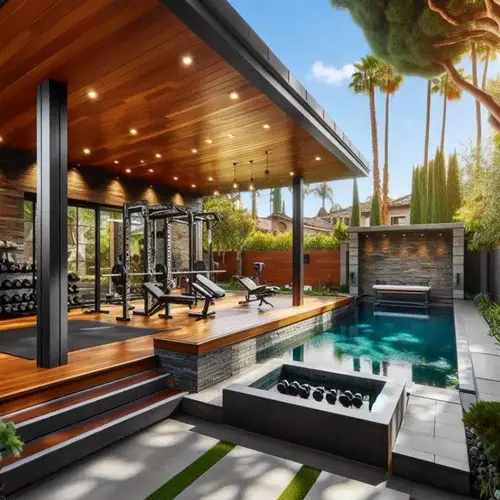
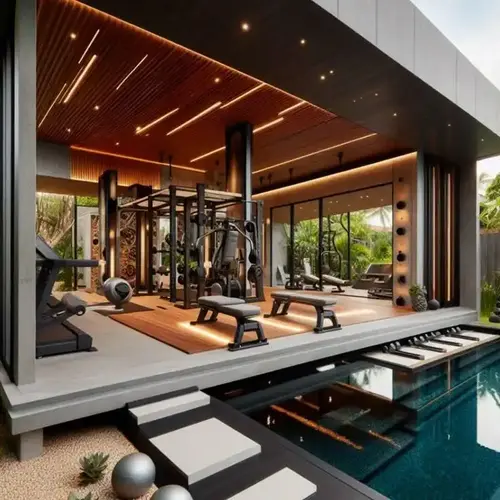
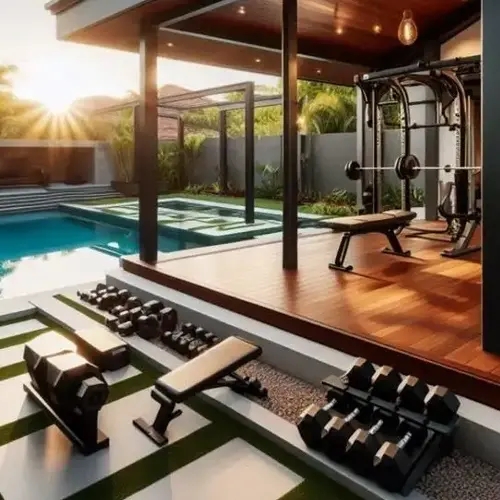
If you already have a pool, the surrounding space can become a natural fitness zone.
Keep the equipment simple and easy to store. Adjustable dumbbells, resistance bands, a compact bench, yoga mats, and kettlebells can cover a wide range of workouts.
Water-resistant storage is particularly useful here.
Leave plenty of clearance around the pool and keep loose equipment away from wet walking surfaces.
10. Make a Backyard Cardio Station
Cardio equipment requires more planning because many machines don’t appreciate constant outdoor exposure.
A covered enclosure is a better choice than leaving a treadmill or exercise bike in an open yard.
Good candidates for a protected backyard cardio station include:
- Exercise bike
- Air bike
- Rowing machine
- Compact elliptical
- Walking pad
- Stepper
A treadmill needs particular care because moisture, dust, heat, and uneven surfaces can shorten its useful life.
If cardio is your priority, a weather-protected shed or enclosed patio is usually the safer arrangement.
11. Install a Wall-Mounted Storage System
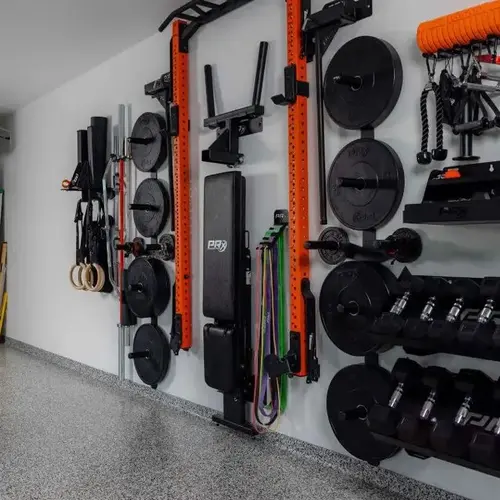
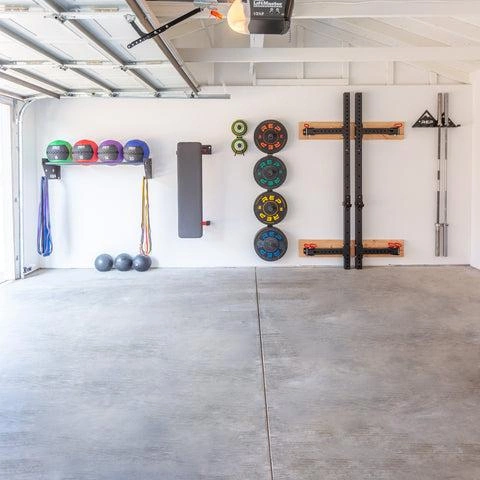
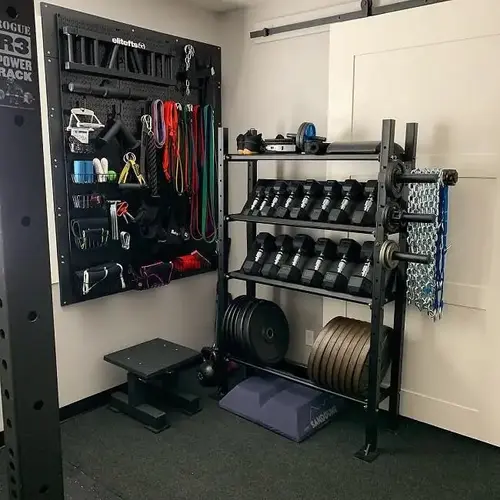
Storage can make or break a outdoor gym.
Mounting equipment on the wall frees valuable floor space and keeps the training area easier to clean.
Consider separate hooks or holders for:
- Resistance bands
- Jump ropes
- Yoga mats
- Battle ropes
- Lifting belts
- Resistance tubes
- Small kettlebells
- Cleaning equipment
A lockable outdoor cabinet can handle heavier items that you don’t want exposed overnight.
12. Build a Backyard Gym Under a Pergola
A pergola creates a middle ground between an open-air gym and a fully enclosed structure.
You can hang resistance bands, install a pull-up bar, position a bench underneath, and use outdoor-rated storage along one side.
If the pergola has a solid or retractable roof, it becomes much more practical in sunny or rainy conditions.
For a luxury backyard, combine the pergola with timber decking, architectural lighting, concealed storage, and landscaping around the gym.
13. Create a Family-Friendly Outdoor Fitness Zone
A family backyard gym can combine adult training equipment with simpler movement areas.
One side might contain a squat rack and weights, while another provides space for stretching, yoga, jump rope, or bodyweight exercises.
Keep heavy equipment secured and separate from children’s play areas.
A simple layout could look like this:
| Zone | Equipment |
|---|---|
| Strength | Rack, bench, barbell |
| Conditioning | Jump rope, sled, kettlebell |
| Mobility | Yoga mat, blocks, bands |
| Storage | Lockable cabinet |
| Open area | Bodyweight exercises |
This approach lets multiple people use the backyard without needing several complete equipment collections.
14. Add a Small Luxury Outdoor Gym
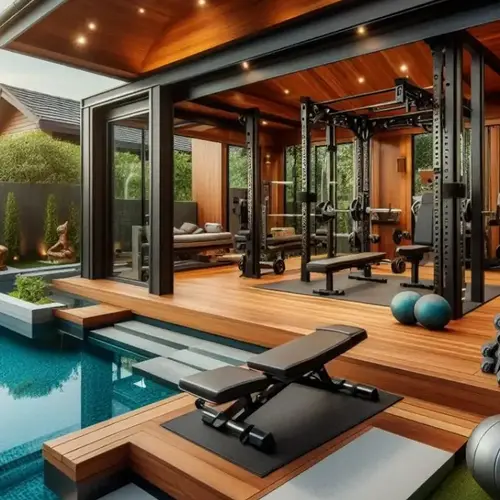
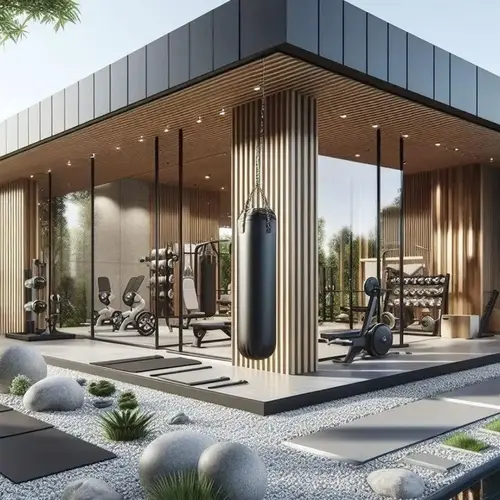
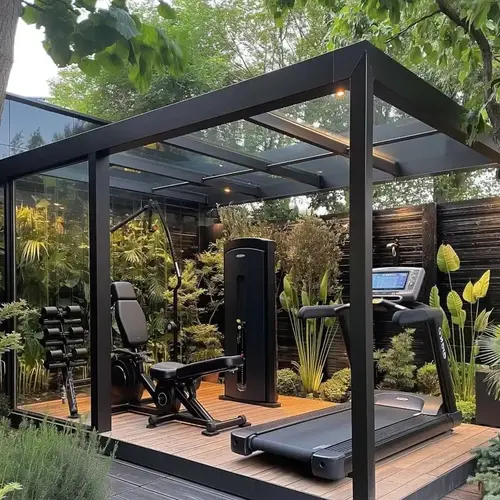
If aesthetics matter as much as training, treat the outdoor gym as part of the home’s architecture.
Use a restrained material palette: timber, stone, black metal, glass, and greenery can work particularly well together.
Instead of leaving equipment scattered around the garden, create dedicated storage and keep the workout zone visually clean.
A full-height mirror, concealed LED lighting, built-in cabinetry, and a covered training area can make a backyard gym feel closer to a boutique fitness studio.
15. Combine a Gym Shed With an Outdoor Training Yard
This may be the most versatile arrangement for a larger backyard.
Use the shed for equipment that needs protection. Use the outdoor section for exercises that require more room.
For example:
Inside the shed
- Power rack
- Bench
- Dumbbells
- Weight plates
- Cable machine
- Storage
Outside
- Turf lane
- Sled
- Battle ropes
- Kettlebells
- Medicine balls
- Jump rope
You get the advantages of an enclosed gym and an open training area without forcing every activity into the same space.
How Much Space Do You Need for a Backyard Gym?
The amount of space depends on the equipment rather than a single minimum measurement.
A compact bodyweight and dumbbell gym can fit into a relatively small backyard corner. A barbell setup requires more clearance because you need room to move safely around the rack and handle the bar.
As a rough planning guide:
| Gym Type | Approximate Space |
|---|---|
| Yoga & mobility area | 6 × 8 ft |
| Compact dumbbell gym | 8 × 8 ft |
| Calisthenics station | 8 × 10 ft |
| Small strength gym | 10 × 12 ft |
| Full backyard gym | 12 × 16 ft or larger |
| Gym shed + outdoor zone | 12 × 20 ft+ |
These are planning estimates rather than safety specifications. Always follow the clearance requirements supplied by your equipment manufacturer.
What Flooring Is Best for an Outdoor Gym?
Rubber flooring is a strong choice for covered strength areas because it provides cushioning and protects the underlying surface from dropped equipment.
For outdoor areas, the right material depends on the workout.
| Flooring | Best For |
|---|---|
| Rubber tiles | Weights and strength training |
| Artificial turf | Sleds, carries, conditioning |
| Concrete | Durable equipment bases |
| Composite decking | Yoga and lighter workouts |
| Outdoor rubber mats | Small equipment zones |
| Grass | Light bodyweight training |
Drainage matters just as much as the surface itself. Water should have somewhere to go instead of collecting underneath mats or equipment.
How Do You Protect an Outdoor Gym From Weather?
Weather protection starts with location.
Place equipment under a roof whenever possible. Keep electrical equipment away from rain and standing water, and use covers designed for the specific equipment.
For metal equipment, inspect bolts, joints, welds, and moving parts regularly. Wipe moisture away after wet weather and follow the manufacturer’s maintenance instructions.
A sealed shed with ventilation provides considerably more protection than an uncovered rack sitting in the garden.
Should You Use a Shed or an Open Outdoor Gym?
The right choice depends on your equipment and how often you train.
| Feature | Gym Shed | Open Gym |
|---|---|---|
| Weather protection | Excellent | Limited |
| Natural airflow | Moderate | Excellent |
| Equipment security | Excellent | Depends on storage |
| Construction cost | Higher | Lower |
| Maintenance | Moderate | Higher for exposed equipment |
| Space flexibility | Good | Excellent |
| Privacy | High | Lower |
A gym shed backyard setup makes sense when you own expensive equipment or want to train throughout the year.
An open setup works well when your priority is fresh air, simplicity, and easy access.
A hybrid setup can give you the best of both.
How to Light a Backyard Gym
Lighting becomes important if you train early in the morning or after work.
Use bright, evenly distributed lighting around the main training area. Avoid placing a single harsh light directly behind you because it can create shadows while you’re exercising.
For a shed, ceiling lighting combined with a wall light near the entrance works well.
For an outdoor gym, use appropriately rated outdoor fixtures and have electrical work completed according to local requirements.
Warm accent lighting can make a luxury backyard gym feel inviting, while brighter task lighting should handle the actual workout area.
What Equipment Should You Buy First?
Start with equipment that supports several exercises.
A practical starter collection could include:
- Adjustable dumbbells
- Adjustable bench
- Resistance bands
- Pull-up bar
- Kettlebell
- Exercise mat
- Storage rack
From there, add equipment based on your training goals.
For strength training, move toward a rack, barbell, plates, and possibly a cable system.
For conditioning, consider a sled, battle ropes, medicine ball, or cardio machine.
For mobility, add yoga blocks, straps, rollers, and a larger mat.
Buy for your actual workouts first. A backyard gym becomes expensive quickly when equipment gets purchased simply because it looks impressive.
Common Backyard Gym Mistakes
Leaving equipment completely exposed
Sun, rain, humidity, and temperature changes can be hard on outdoor gym equipment.
Forgetting drainage
Water trapped under rubber flooring can create unpleasant odors and damage the surface underneath.
Crowding the workout zone
Measure equipment with the user standing on it, moving around it, and loading it—not just the equipment’s footprint.
Ignoring storage
A gym without storage eventually becomes a pile of equipment.
Installing poor lighting
Shadows and glare can make evening workouts uncomfortable.
Buying too much equipment
A few versatile pieces can support hundreds of workouts. Build the outdoor gym gradually.
Backyard Gym Ideas: The Best Setup for Each Goal
| Your Goal | Recommended Setup |
|---|---|
| Strength | Gym shed + rack + bench |
| Weight loss | Cardio + functional training zone |
| Calisthenics | Pull-up and dip station |
| Yoga | Covered deck |
| Family fitness | Open multipurpose zone |
| Luxury design | Covered architectural gym |
| Small backyard | Compact dumbbells + wall storage |
| Year-round training | Insulated gym shed |
| Functional fitness | Turf + kettlebells + sled |
| Mixed workouts | Shed + outdoor training yard |
Key Takeaways
- Outdoor gym ideas for backyards range from simple yoga decks to full gym sheds.
- A gym shed backyard setup offers strong protection, privacy, and equipment security.
- Small spaces benefit from adjustable equipment and vertical storage.
- Covered gyms are easier to maintain than completely exposed setups.
- Rubber flooring suits weights, while turf works well for functional training.
- A hybrid shed-plus-yard design provides the most flexibility.
- Start with versatile equipment and expand according to your actual workouts.
- Plan drainage, lighting, ventilation, storage, and weather protection before buying equipment.
Frequently Asked Questions
Can you build a gym in your backyard?
Yes. A backyard can accommodate anything from a small bodyweight station to a dedicated gym shed. The right setup depends on available space, equipment, weather, flooring, storage, and local building requirements.
What is the best flooring for a backyard gym?
Rubber flooring works well for covered strength-training areas, while artificial turf suits sled work, carries, and conditioning. Outdoor-rated mats can work for smaller training zones.
Is a backyard gym shed worth it?
A gym shed can be worthwhile if you want year-round training, equipment security, and protection from weather. It also creates a dedicated space that can keep gym equipment separate from the main house.
Can gym equipment stay outside?
Some equipment can handle outdoor conditions better than others. Weather-resistant equipment should still be protected when possible, while electronics and many indoor machines require much more protection from moisture, dust, and heat.
How big should a backyard gym be?
A compact gym can work in roughly an 8 × 8-foot area, while a more complete strength gym may need 10 × 12 feet or more. Equipment clearance should always be checked before installation.
What equipment should a beginner buy for a backyard gym?
Adjustable dumbbells, a bench, resistance bands, a pull-up bar, a mat, and secure storage provide a versatile starting point. Add specialized equipment as your training routine develops.
How do you protect a backyard gym from rain?
A roofed structure, sealed storage, equipment covers, good drainage, and regular maintenance all help. For valuable equipment, an enclosed or insulated gym shed provides much stronger protection.
Can a pergola be used as an outdoor gym?
Yes. A pergola can provide shade and define a dedicated workout zone. A solid or retractable roof makes the space more practical in areas with frequent rain or intense sun.