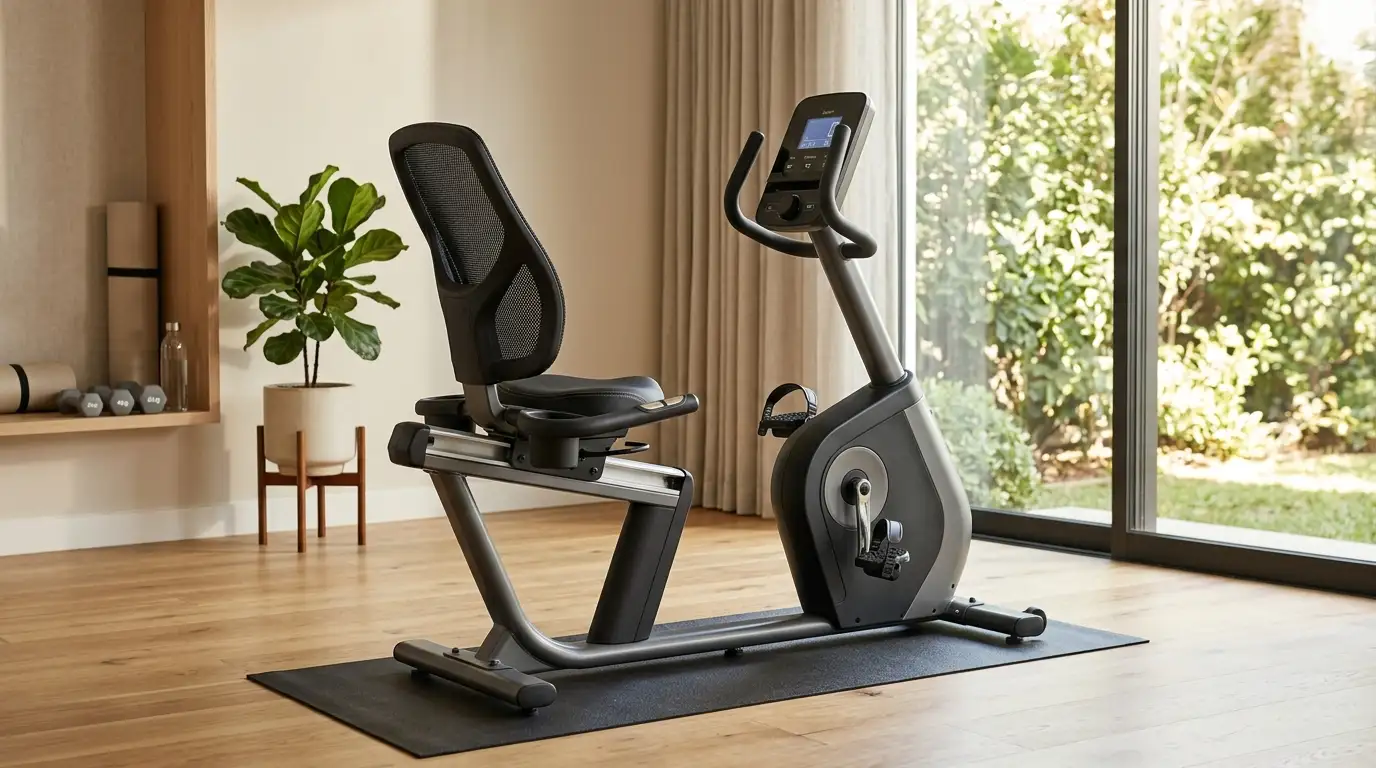

A recumbent exercise bike gives you a supported, low-impact way to build cardio fitness without sitting upright on a traditional stationary bike. The wide seat, backrest, and reclined position make it especially appealing for beginners, older adults, people returning to exercise, and anyone who wants a comfortable home cardio machine.
The best model depends on how you’ll use it. A compact bike can work beautifully for light daily sessions, while a heavier machine with stronger resistance and a longer seat rail makes more sense for frequent workouts.
Table of Contents
Best Recumbent Exercise Bikes at a Glance
| Recumbent Exercise Bike | Best For | Resistance | Main Advantage |
|---|---|---|---|
| Schwinn 230 | Best overall value | Magnetic | Strong mix of comfort, features, and price |
| Niceday Recumbent Bike | Budget shoppers | Magnetic | Simple home workouts |
| Sunny Health & Fitness Recumbent Bike | Beginners | Magnetic | Straightforward controls |
| Marcy Recumbent Exercise Bike | Small budgets | Magnetic | Basic low-impact cardio |
| Nautilus R618 | Serious home users | Magnetic | More resistance and workout features |
Quick pick: For most home users, a magnetic-resistance recumbent bike with an adjustable seat, comfortable backrest, stable frame, and clear display offers the best balance.
Amazon Associate Disclosure: As an Amazon Associate, I earn from qualifying purchases. This means I may earn a commission when you buy through eligible links at no additional cost to you.
What Is a Recumbent Exercise Bike?
A recumbent exercise bike places your body in a reclined position. Your legs extend forward toward the pedals while your back rests against a larger seatback.
This setup changes how your body interacts with the bike.
A traditional upright bike asks you to support more of your torso while sitting over the pedals. A recumbent bike gives you a seat with back support, which can make longer sessions feel more comfortable.
Most models use magnetic resistance. You adjust the resistance level electronically or with a manual control, depending on the machine.
The result is a low-impact cardio workout that can raise your heart rate while keeping the pedaling motion smooth.
Who Should Use a Recumbent Exercise Bike?
A recumbent bike can be a smart choice for several types of users.
Beginners
If you’ve never been comfortable on a stationary bike, the reclined position can make getting started easier.
You can sit down, adjust the seat, place your feet on the pedals, and begin at a manageable resistance level.
Older Adults
The supportive seat and stable frame can make a recumbent bike appealing for older adults who want indoor cardio.
The step-through design on some models also makes mounting and dismounting easier.
People Who Prefer Low-Impact Cardio
Cycling reduces the repetitive impact associated with activities such as running.
That makes a recumbent exercise bike useful for people who prefer gentler cardio sessions.
Desk Workers
You can use a recumbent bike for short movement breaks or longer workouts after work.
A 15- to 20-minute session can be much easier to fit into a busy day than a trip to the gym.
Home Cardio Users
A recumbent bike gives you an indoor option when weather, traffic, or gym schedules get in the way.
For many households, that convenience is the main reason the machine actually gets used.
How to Choose the Best Recumbent Exercise Bike
Several specifications matter more than flashy screens or huge workout libraries.
1. Check the Seat Adjustment Range
Seat adjustment is one of the first things to check.
Your knees should remain slightly bent when the pedals reach their farthest point. You shouldn’t have to lock your knees to reach the pedals, and you shouldn’t feel cramped at the closest point.
Look for a bike with a long adjustment rail if more than one person will use it.
2. Choose Magnetic Resistance
Magnetic resistance is usually the better choice for a home recumbent bike.
It produces a smooth pedaling feel and tends to operate quietly. That’s useful if you exercise early in the morning, late at night, or near other people.
More resistance levels can also give you greater control over workout intensity.
3. Pay Attention to the Weight Capacity
The listed maximum user weight gives you a useful indication of the frame’s intended load.
Choose a bike with a comfortable margin above your body weight rather than selecting a model that sits right at the limit.
A heavier frame can also feel more stable when you’re pedaling harder.
4. Look at the Pedal Design
Large pedals with adjustable straps can make a noticeable difference.
Your feet should stay secure without the straps feeling restrictive.
Some users also prefer pedals with textured surfaces because they provide extra grip during faster sessions.
5. Examine the Seat and Backrest
A good recumbent seat should support your lower back while leaving enough room for natural movement.
Pay attention to padding, ventilation, seat width, and backrest angle.
If possible, try sitting on the bike before buying it. Comfort can vary dramatically between models.
6. Consider the Display
A basic display may show:
- Time
- Speed
- Distance
- Calories
- Resistance level
- Heart rate
That may be all you need.
More advanced bikes can include preset programs, Bluetooth connectivity, app compatibility, speakers, and larger screens.
Decide which features you’ll actually use before paying extra for them.
Recumbent Exercise Bike vs. Upright Bike
Both machines provide cycling-based cardio, but the riding position creates a different experience.
| Feature | Recumbent Bike | Upright Bike |
| Riding position | Reclined | Upright |
| Back support | Yes | Usually no |
| Comfort for long sessions | Generally high | Varies |
| Foot position | Forward | Below/near hips |
| Space requirements | Often larger | Usually smaller |
| Low-impact cardio | Excellent | Excellent |
| Core demand | Lower | Higher |
| Beginner-friendly | Very | Very |
Choose a recumbent bike when comfort, back support, and relaxed positioning rank high on your list.
Choose an upright bike when you want a more traditional cycling posture or have limited floor space.
Recumbent Bike vs. Treadmill
A treadmill gives you walking or running. A recumbent bike gives you seated cycling.
The better choice depends on your preferred movement and fitness goals.
| Goal | Better Choice |
| Walking practice | Treadmill |
| Running | Treadmill |
| Seated cardio | Recumbent bike |
| Low-impact exercise | Recumbent bike |
| Weight-bearing exercise | Treadmill |
| Quiet indoor cardio | Recumbent bike |
| Easy multitasking | Recumbent bike |
A recumbent bike can also be easier to use while watching television, listening to podcasts, or following an audio workout.
How Much Resistance Do You Need?
You don’t need an enormous resistance range to get a good workout.
Beginners can start with light resistance and gradually increase the workload as pedaling becomes easier.
For regular users, a broader range gives you more room to progress.
A useful approach is to think about how the resistance feels rather than chasing a particular number.
You should be able to pedal smoothly at an easy setting. At higher settings, your legs should have to work substantially harder while you maintain controlled movement.
How Long Should You Ride a Recumbent Exercise Bike?
Your ideal workout length depends on your fitness level and goals.
For a beginner, 10–20 minutes can be a reasonable starting point. As your endurance improves, you can gradually extend sessions.
A simple progression might look like this:
- Start with 10–15 minutes at an easy pace.
- Add a few minutes when the session feels manageable.
- Introduce short periods of higher resistance.
- Build toward longer steady sessions.
- Add interval workouts once you’re comfortable with the bike.
Consistency matters more than forcing yourself through an exhausting workout.
A Simple Recumbent Bike Workout for Beginners
Try this basic 25-minute session:
| Time | Effort |
| 0–5 minutes | Easy warm-up |
| 5–10 minutes | Comfortable pace |
| 10–15 minutes | Moderate resistance |
| 15–20 minutes | Alternate easy and moderate effort |
| 20–25 minutes | Easy cooldown |
Keep the first few workouts comfortable.
Your goal is to learn how the bike feels, find your preferred seat position, and establish a routine you can repeat.
Can a Recumbent Exercise Bike Help With Weight Loss?
A recumbent bike can contribute to weight loss by increasing physical activity and energy expenditure.
Your results depend on the overall balance between food intake, activity, sleep, and other lifestyle factors.
The machine itself doesn’t determine the outcome.
A practical strategy is to create workouts you can repeat several times per week. A comfortable bike may have an advantage here because you’re more likely to use equipment that doesn’t leave you dreading the next session.
Common Recumbent Bike Buying Mistakes
Buying for Features You Won’t Use
A large touchscreen looks impressive.
If you only need basic cardio, though, it may add cost and complexity without changing your workouts.
Ignoring the Bike’s Dimensions
Recumbent bikes tend to have a longer footprint than upright bikes.
Measure your available space before ordering.
Leave enough room around the machine to mount and dismount safely.
Choosing the Cheapest Frame
Price matters, but frame stability matters too.
A lightweight bike can be fine for casual use. Frequent riders may appreciate the steadier feel of a heavier machine.
Forgetting About User Height
Seat adjustment range matters when several people share the bike.
Check the manufacturer’s recommended user-height range before buying.
Focusing Only on the Screen
A beautiful display won’t fix an uncomfortable seat or poorly positioned pedals.
Prioritize fit, resistance, stability, and comfort first.
Recumbent Exercise Bike Features Worth Paying For
Some upgrades can make everyday use noticeably better.
Adjustable Seat
This should be near the top of your list.
Magnetic Resistance
Quiet, smooth resistance works well for home environments.
Heart-Rate Monitoring
Useful if you like to track workout intensity.
Built-In Workout Programs
Preset programs can add variety without requiring you to plan every session.
Water Bottle Holder
A small feature, but convenient during longer workouts.
Device Holder
Useful if you prefer watching videos, following an online class, or listening to music.
Transport Wheels
A recumbent bike can be heavy and awkward to move. Wheels make repositioning easier.
Recommended Recumbent Exercise Bikes
Schwinn 230 Recumbent Bike
The Schwinn 230 is a strong all-around option for home users who want a recognizable brand and a broad set of workout features.
Best for: General home cardio and regular users.
Pros
- Comfortable recumbent design
- Magnetic resistance
- Multiple workout options
- Adjustable seat
Cons
- Larger footprint than an upright bike
- More features than casual users may need
Who it’s for: Users who want a versatile home cardio machine they’ll use regularly.
Who should skip it: Shoppers seeking the smallest possible bike or an ultra-basic machine.
[Check Current Price on Amazon]
Niceday Recumbent Exercise Bike
Niceday models are aimed at shoppers who want straightforward indoor cycling without paying for a large entertainment system.
Best for: Budget-conscious home users.
Pros
- Simple operation
- Recumbent seating
- Magnetic resistance on many models
- Suitable for basic cardio
Cons
- Feature sets vary by model
- Display systems are generally basic
Who it’s for: Beginners who want a simple machine for regular home workouts.
Who should skip it: Users who want advanced training software and premium entertainment features.
[Check Current Price on Amazon]
Sunny Health & Fitness Recumbent Bike
Sunny Health & Fitness offers several recumbent options with an emphasis on accessible home workouts.
Best for: Beginners and casual users.
Pros
- User-friendly design
- Multiple resistance settings
- Comfortable seating on many models
- Wide range of home fitness equipment from the brand
Cons
- Features differ between models
- Some versions are better suited to light-to-moderate use
Who it’s for: People building a simple home cardio setup.
Who should skip it: Heavy users looking specifically for commercial-gym construction.
[Check Current Price on Amazon]
Marcy Recumbent Exercise Bike
Marcy is another option for shoppers who want basic seated cycling without a complicated setup.
Best for: Occasional cardio.
Pros
- Simple controls
- Compact relative to some larger recumbent machines
- Beginner-friendly design
- Usually straightforward to assemble
Cons
- Limited advanced features
- Better suited to casual home workouts
Who it’s for: Beginners and occasional riders.
Who should skip it: Athletes looking for advanced training data and high-end resistance systems.
[Check Current Price on Amazon]
Nautilus R618 Recumbent Bike
The Nautilus R618 sits closer to the serious home-user category, with a heavier-duty design and a wider feature set.
Best for: Frequent home workouts.
Pros
- Strong feature set
- Comfortable recumbent position
- More suitable for frequent training
- Broad workout programming
Cons
- Larger and heavier
- Higher-end feature set may exceed a casual user’s needs
Who it’s for: Regular riders who want a more substantial home cardio machine.
Who should skip it: Shoppers working with very limited floor space.
[Check Current Price on Amazon]
How to Set Up Your Recumbent Bike Correctly
Correct setup can make the bike feel dramatically better.
Start by adjusting the seat so your legs reach the pedals without fully locking your knees.
Place both feet securely on the pedals.
Sit against the backrest and keep your shoulders relaxed.
Begin pedaling slowly.
If you feel cramped at the closest pedal position, move the seat backward. If your legs stretch too far at the bottom of the pedal stroke, move the seat forward.
Make small adjustments until the motion feels natural.
How to Maintain a Recumbent Exercise Bike
Basic maintenance takes only a few minutes.
Wipe sweat from the frame and seat after workouts.
Keep the pedals and adjustment rail clean.
Check bolts periodically for looseness.
Inspect pedal straps for wear.
Keep the machine on a stable, level surface.
Follow the manufacturer’s maintenance instructions for any specific lubrication or mechanical checks.
If you notice unusual clicking, grinding, or resistance changes, investigate the issue before continuing heavy use.
Are Recumbent Bikes Good for Seniors?
A recumbent exercise bike can be a comfortable cardio option for many older adults because the seated position provides substantial back support.
The stable frame and low-impact pedaling motion can also make it appealing for people who prefer supported exercise.
Individual mobility and medical considerations vary, so anyone with a health condition or major movement limitation should follow guidance from a qualified healthcare professional before beginning a new exercise program.
Are Recumbent Bikes Good for Beginners?
Yes.
The learning curve is short. You adjust the seat, place your feet on the pedals, select a low resistance level, and start pedaling.
There’s no complicated technique to master.
That simplicity can make a recumbent bike a practical first piece of home cardio equipment.
Key Takeaways
- A recumbent exercise bike provides supported, low-impact indoor cardio.
- Seat adjustment is one of the most important buying considerations.
- Magnetic resistance generally provides a smooth and quiet riding experience.
- Check the bike’s dimensions and user-height range before buying.
- Beginners can start with short, easy sessions and gradually build duration.
- More expensive features aren’t automatically better for every user.
- Comfort, stability, fit, and resistance should come before entertainment features.
- Choose a model that matches how often you realistically plan to exercise.
Frequently Asked Questions
Is a recumbent exercise bike worth it?
A recumbent exercise bike can be worth buying if you want comfortable, low-impact cardio at home. Its supported seating makes it particularly appealing for beginners and people who prefer a reclined riding position.
Can you lose belly fat with a recumbent bike?
A recumbent bike can support overall fat loss by increasing physical activity and energy expenditure. Fat loss occurs throughout the body rather than through targeted exercise on a specific area.
How often should you use a recumbent exercise bike?
Many people can build a routine around several cycling sessions per week. Start with a manageable schedule and increase duration or intensity gradually as your fitness improves.
Is a recumbent bike better than an upright bike?
Neither is universally better. A recumbent bike offers more back support and a reclined position, while an upright bike provides a more traditional cycling posture and usually takes up less floor space.
Does a recumbent bike work your legs?
Yes. Pedaling works the major muscles involved in cycling, particularly the quadriceps, hamstrings, glutes, and calves.
Are recumbent bikes good for cardio?
Yes. You can adjust resistance and pedaling speed to raise your heart rate and create anything from an easy aerobic session to a demanding workout.
How long should a beginner ride a recumbent bike?
Starting with 10–20 minutes can be reasonable for a beginner. Increase the duration gradually as your body adapts to regular cycling.
What resistance level should I use?
Use a level that makes you work while allowing controlled, smooth pedaling. Start easier and increase resistance as your fitness improves.