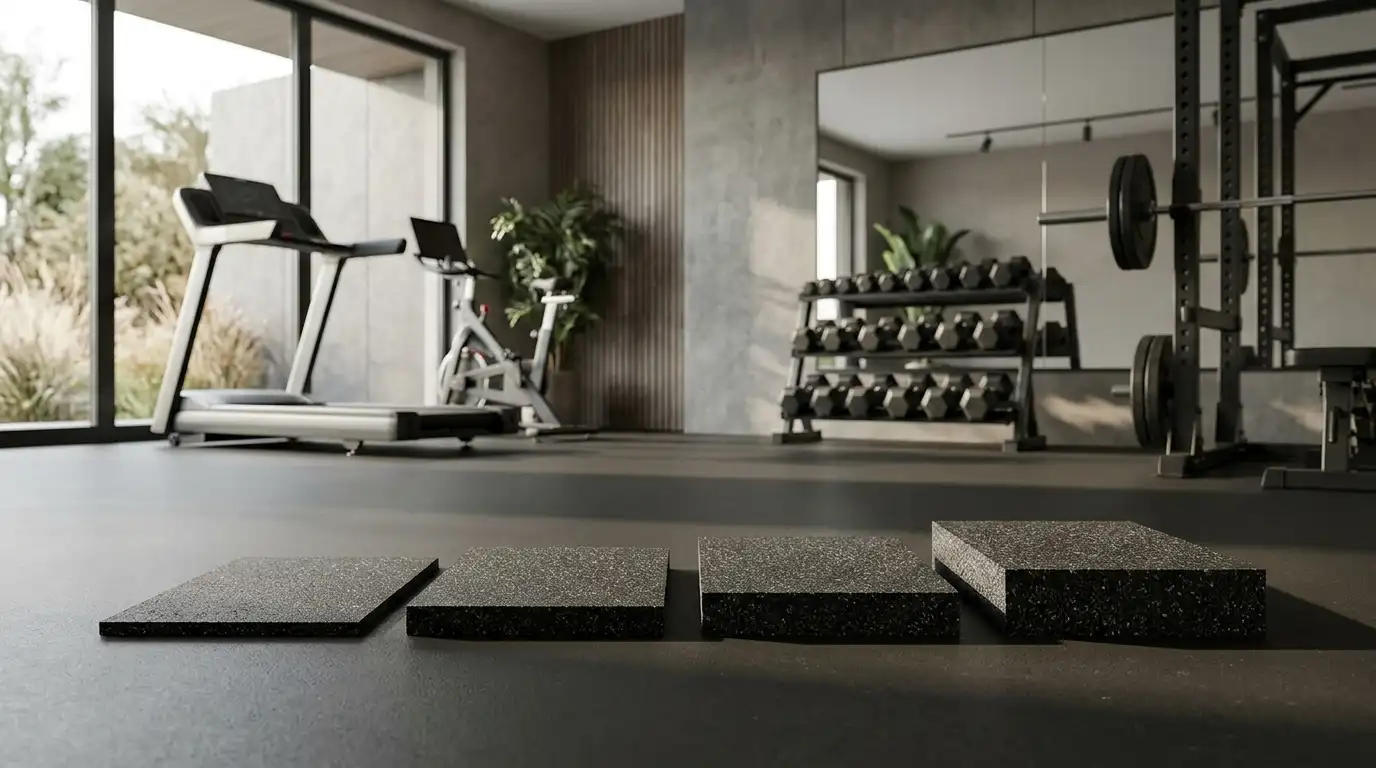

The best home gym flooring thickness depends on your workouts, subfloor, and how often you drop weights. For general fitness and cardio, 3/8-inch (9.5 mm) rubber is a practical starting point. For mixed strength training, consider 1/2-inch (12.7 mm) rubber. For repeated heavy barbell drops, 3/4-inch (19.1 mm) rubber or a purpose-built lifting platform may be appropriate. Always check the flooring manufacturer’s impact and installation recommendations.
Table of Contents
Home Gym Flooring Thickness at a Glance
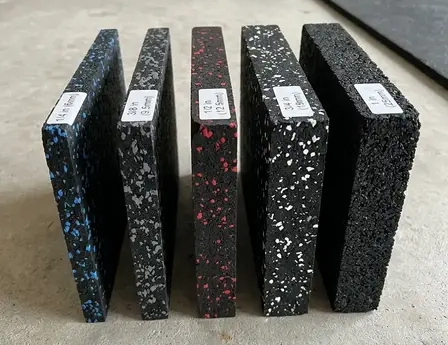
If you’re wondering what thickness should home gym flooring be, start with the heaviest activity you plan to perform. A treadmill and a set of light dumbbells place different demands on a floor than repeated deadlifts or Olympic lifts.
| Flooring thickness | Best suited for | Main consideration |
|---|---|---|
| 1/4 inch (6.35 mm) or less | Yoga, stretching, bodyweight exercise, and some light cardio setups | Limited protection against heavy impacts |
| 3/8 inch (9.5 mm) | General fitness, cardio machines, and controlled dumbbell training | Check the product’s impact rating before using it for heavier lifting |
| 1/2 inch (12.7 mm) | Multipurpose home gyms and moderate strength training | A useful middle ground for many setups |
| 3/4 inch (19.1 mm) | Dedicated lifting zones and demanding weight-training setups | Still needs suitable material, a stable base, and correct installation |
These are planning guidelines, not universal engineering specifications. Some flooring systems perform differently because of their composition, density, construction, and intended use. The Greatmats gym flooring thickness guide also recommends matching flooring to the equipment, dropped-weight loads, and intended activity.
What Thickness Should Home Gym Flooring Be for Each Workout?
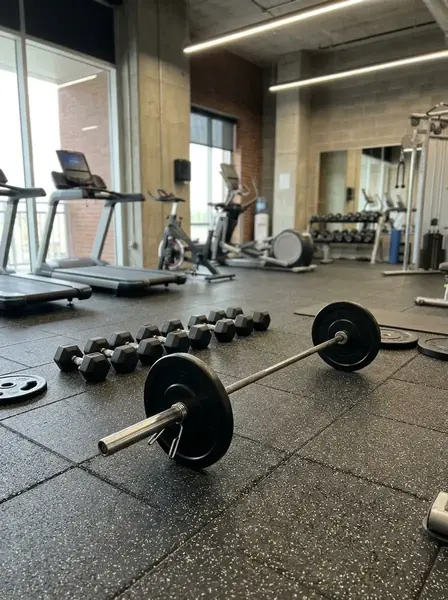
Choose flooring according to the most demanding activity in each training area. You can often use thinner flooring throughout the general workout space and install a more protective surface where weights land.
Cardio and Bodyweight Training
For yoga, stretching, mobility exercises, and many cardio setups, 1/4-inch to 3/8-inch flooring may be sufficient. The right choice depends on the machine’s feet, the subfloor, and the flooring material.
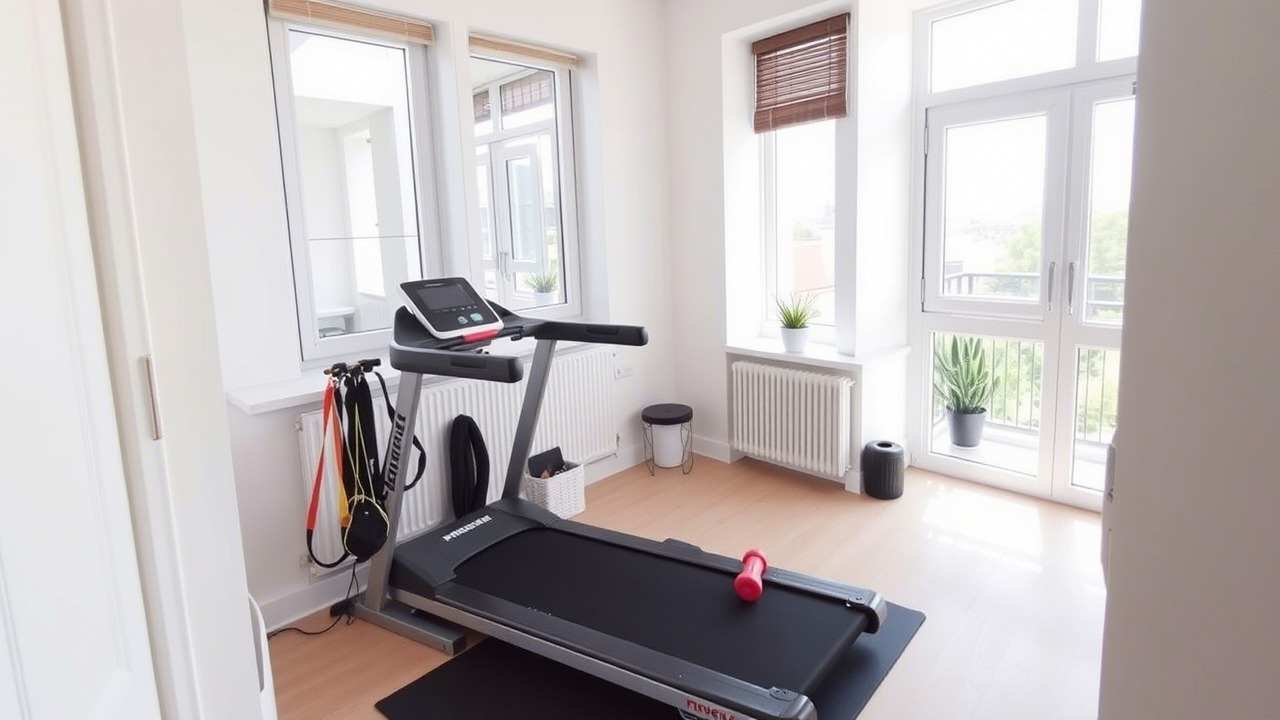
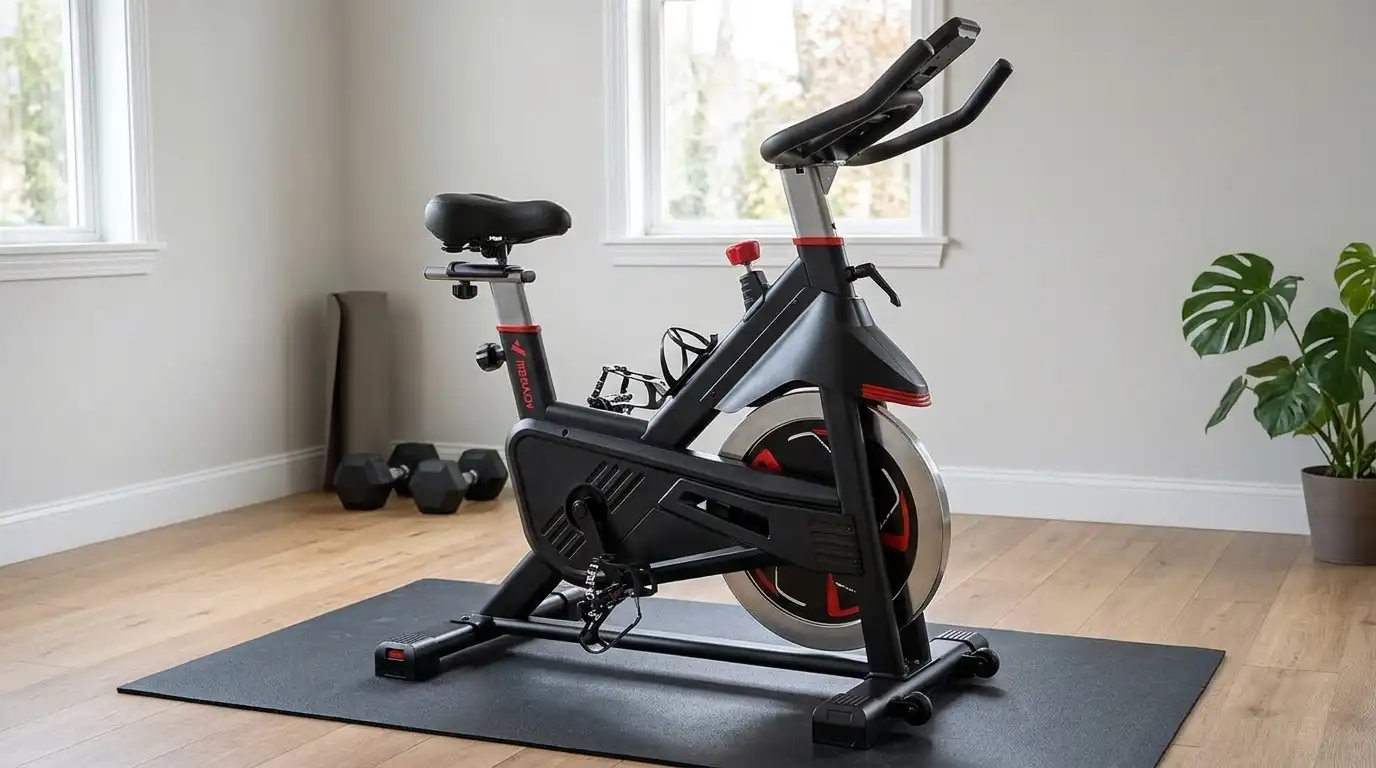
A stationary bike or elliptical generally needs a stable, level base. A treadmill also needs firm support beneath every contact point. Very soft or compressible mats can allow equipment to rock, shift, or sit unevenly.
Before buying a mat for a treadmill, check the manufacturer’s guidance on floor protection and acceptable surfaces. Measure the machine’s footprint and confirm that the mat will support all contact points.
Practical recommendation: Start with 3/8-inch rubber for a general-purpose cardio area if the product is suitable for your equipment. Thinner mats can work for light activities, but confirm that they provide the protection you need.
Strength Training and Dumbbells
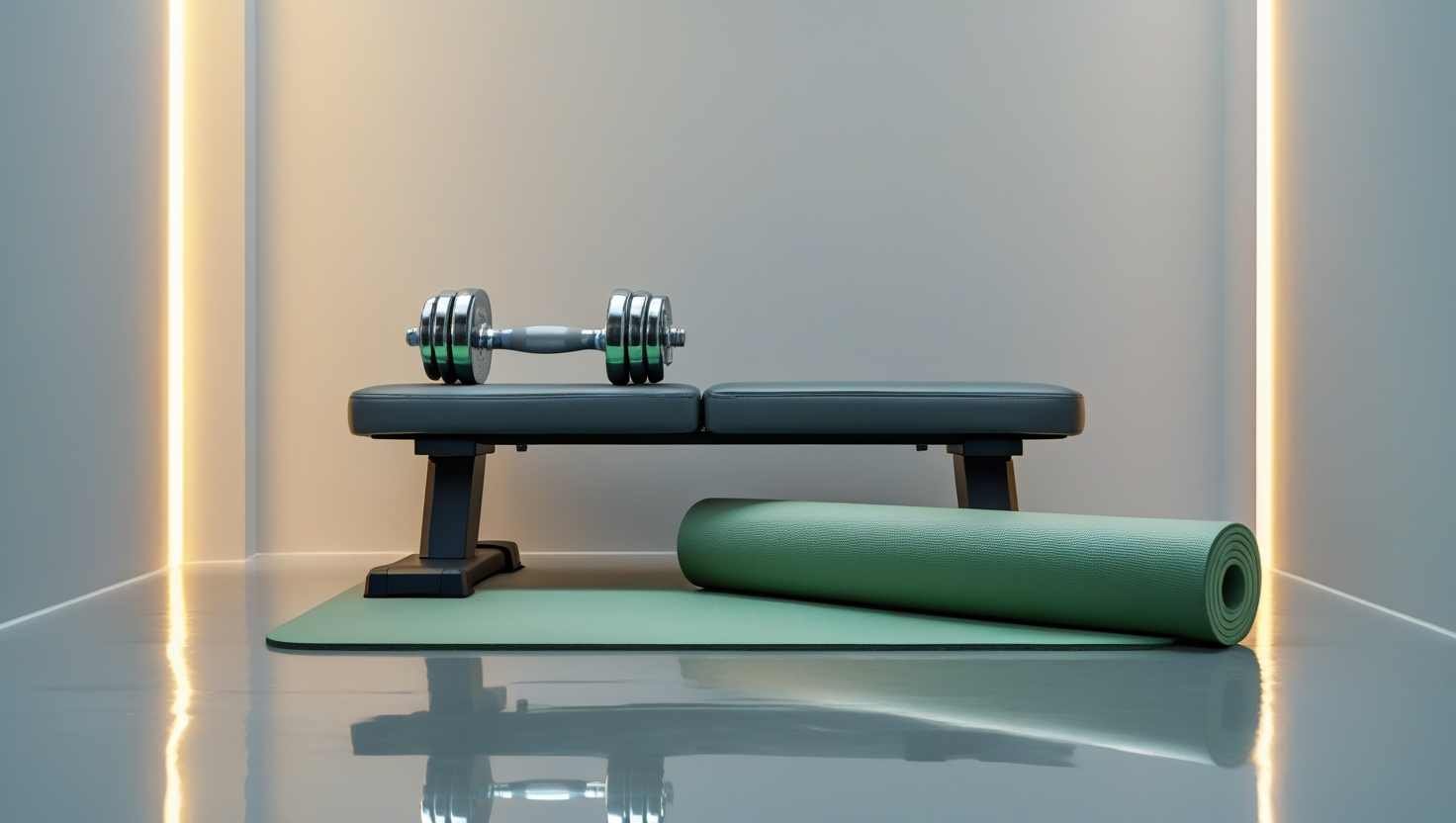
For a home gym with dumbbells, kettlebells, a bench, and a squat rack, 3/8-inch to 1/2-inch rubber is a reasonable starting range.
The key distinction is how the weights are handled. Carefully setting a dumbbell down creates a different impact from dropping it from shoulder height. A heavier dumbbell can also concentrate force on a small contact area.
Consider these factors before choosing a thickness:
- The heaviest dumbbell or kettlebell you use.
- Whether you occasionally drop weights or always set them down under control.
- Whether the floor is concrete, wood, or another surface.
- The rubber product’s compression, impact, and installation specifications.
A dense rubber mat may be more suitable than a soft foam tile for a free-weight area. Foam can work well for bodyweight exercises and stretching, but many foam products compress under concentrated loads.
Practical recommendation: Choose 3/8-inch rubber for controlled general strength training when the product is rated for that use. Consider 1/2-inch rubber if your routine involves heavier equipment or more demanding loading conditions.
Deadlifts, Olympic Lifting, and Heavy Weight Drops
Heavy lifting deserves a separate flooring plan because repeated impacts can damage the flooring and the surface underneath.
Three-quarter-inch rubber is a common starting point for a dedicated heavy-lifting zone. A purpose-built lifting platform can add a rigid standing surface and designated impact zones, depending on its construction.
The Rogue deadlift platform specifications illustrate one platform approach: a plywood base combined with rubber stall-mat sections, or a compatible rubber-tile setup.
A thicker mat alone does not guarantee protection from every drop. The load, drop height, plate type, rubber construction, platform design, and subfloor all affect the outcome.
Practical recommendation: For regular heavy deadlifts or Olympic lifts, evaluate a dedicated lifting platform or an appropriately specified rubber system. Check the manufacturer’s recommendations and consider the building structure before installing heavy equipment or repeatedly dropping loaded barbells.
How Your Subfloor Changes the Right Flooring Thickness
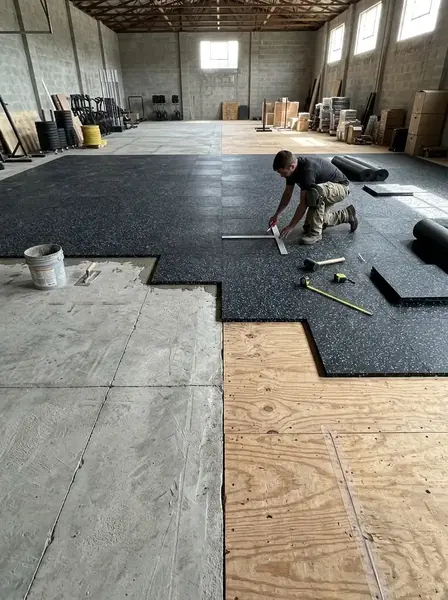
The same rubber mat can behave differently depending on what lies beneath it. Your subfloor should be part of the decision from the beginning.
Concrete Garage and Basement Floors
Concrete provides a firm base, which helps keep gym equipment stable. However, concrete can transmit impact and vibration through the building, and it can crack or suffer surface damage under unsuitable loading conditions.
For general training, 3/8-inch to 1/2-inch rubber is a practical range to investigate. For heavy lifting, a thicker, purpose-built system may be appropriate.
Inspect the concrete before installation. Repair suitable surface defects, address moisture concerns, and confirm that the floor is level enough for the equipment.
Wood and Elevated Floors
Wood floors may flex under concentrated loads. In an upstairs gym, vibration can travel through joists and adjoining structures even when the surface has a protective mat.
Rubber flooring can protect the surface from routine scuffs and some impacts, but it does not establish that a floor can safely support heavy equipment. Check the floor’s structural capacity before installing a rack, large weight collection, or lifting platform.
For elevated floors, consider the combined weight of the equipment, weights, platform, and people using the room. Ask a qualified building professional to assess the structure if its capacity is uncertain.
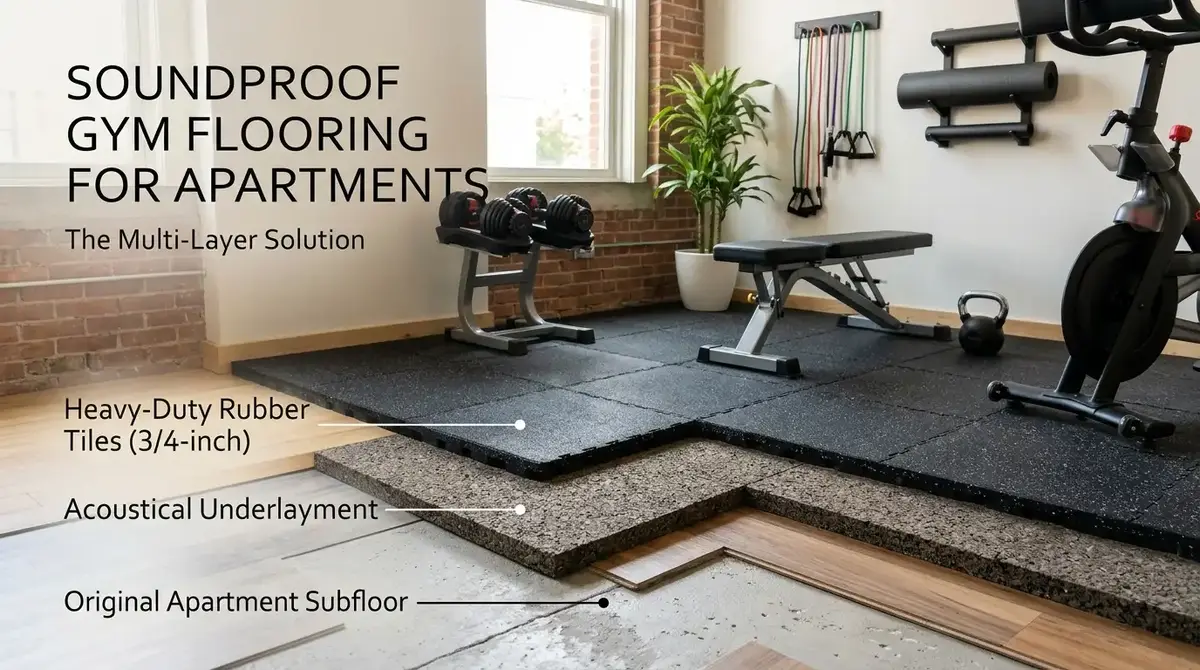
Apartment Floors and Impact Vibration
Apartment gyms require special attention to impact noise. Footsteps, machine vibration, and dropped weights can travel through the floor structure into neighboring rooms.
A thicker rubber mat may reduce some impact and surface noise, but it cannot guarantee soundproofing. The result depends on the complete floor assembly, the impact source, and how vibration travels through the building.
For more guidance, see Soundproof Gym Flooring for Apartments, and Best Home Gym Flooring Mats for Every Fitness Space (2026)
If you’re renting, check the flooring manufacturer’s installation instructions and your lease before using adhesives or making permanent changes.
Why Rubber Density Matters as Much as Thickness
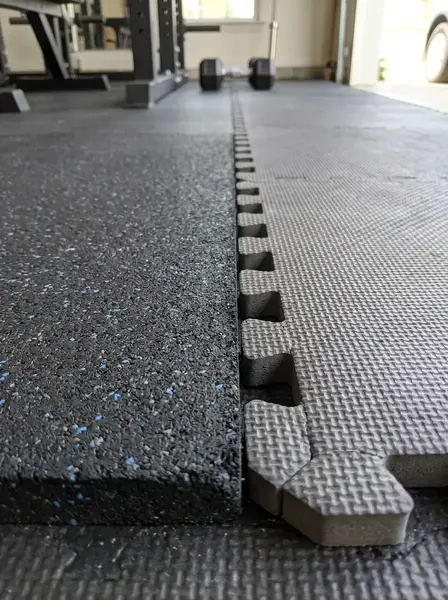
Flooring thickness describes the material’s depth. Density, composition, firmness, and construction help explain how that material responds under load.
Two mats with the same thickness can behave differently. A dense rubber mat may provide a firmer base for equipment, while a soft foam tile may compress more under the same concentrated load.
When comparing gym flooring, check:
- Material: Rubber, EVA foam, and other flooring materials have different properties.
- Density or mass per area: Useful when the manufacturer provides comparable specifications.
- Firmness or durometer: A material-hardness measure that should be interpreted alongside the product’s construction and intended use.
- Impact performance: Look for manufacturer test results relevant to your activity.
- Installation requirements: The base, seams, adhesives, and interlocking edges can affect stability and performance.
Do not assume that a higher durometer rating or greater density automatically makes a product better for every purpose. A suitable flooring system must balance firmness, impact absorption, stability, and the intended workout.
The REGUPOL Aktiv flooring specifications available through Rogue Fitness provide an example of a product listing that includes several thickness options and published performance information. Use the specifications for the exact product you plan to purchase rather than applying one product’s test results to every rubber mat.
Common Home Gym Flooring Thickness Mistakes
Choosing Thickness by Price Alone
The cheapest mat may be adequate for stretching but unsuitable for repeated heavy impacts. Start with the activity and subfloor, then compare products within the appropriate category.
Assuming Thicker Always Means Better
Very soft or compressible flooring can make some equipment feel unstable. A thicker product may also create awkward transitions between rooms or interfere with doors and equipment placement.
Choose sufficient protection while maintaining a firm, level surface.
Using Foam Tiles Under Heavy Weights
Foam tiles are useful for low-impact exercise, but many are unsuitable for heavy free weights or repeated drops. Check the product’s load and impact limitations before placing a rack or lifting area on it.
Expecting Rubber to Soundproof an Apartment
Rubber can help reduce some noise, but impact vibration may still travel through the building structure. If noise transfer is the main concern, consider the whole floor assembly and the type of impact you need to control.
Ignoring the Subfloor
Flooring protects the surface only within the limits of its design. It does not replace structural assessment, moisture control, or proper installation.
Should You Use Different Flooring Thicknesses in One Home Gym?
Yes. A zoned setup can give you suitable protection without covering every square foot with the heaviest flooring.
For example, a multipurpose home gym might use 3/8-inch rubber in the cardio and general training areas, with a thicker rubber system or lifting platform where heavier weights land. The exact combination should follow the product specifications and the demands of your workouts.
Once you’ve selected the thickness, compare Rubber Tiles vs. Rolls to choose the installation format that suits your room.
If you lift heavy barbells, explore DIY deadlift platform with rubber stall mats before settling on a standard mat alone.
Frequently Asked Questions
What is the best thickness for most home gyms?
For many multipurpose home gyms, 3/8-inch to 1/2-inch rubber is a useful starting range. The best choice depends on your equipment, subfloor, and whether you drop weights. Check the specifications for the exact flooring product before buying.
Is 3/8-inch rubber flooring enough for dumbbells?
It can be suitable for controlled dumbbell training when the flooring is rated for that use. Frequent drops, heavier loads, and vulnerable subfloors may call for a different flooring system or a dedicated impact zone.
Is 1/2-inch flooring enough for deadlifts?
It may suit some controlled deadlift setups, but thickness alone cannot establish whether a floor is suitable for repeated heavy drops. Consider the load, plates, mat construction, platform design, and subfloor. Follow the manufacturer’s recommendations.
Do I need 3/4-inch flooring for Olympic lifting?
Three-quarter-inch rubber is a common option for dedicated lifting areas, but the correct system depends on the lifting style, impact, equipment, and building. A purpose-built platform may be more suitable than a single mat.
What thickness is best for a concrete floor?
For general fitness, 3/8-inch to 1/2-inch rubber is a reasonable range to consider. Heavy lifting may require a thicker or specially designed system. Concrete condition and the expected impact matter as much as the nominal thickness.
Does thicker gym flooring reduce noise?
Thicker flooring may reduce some impact noise and vibration, but performance depends on the material and complete floor assembly. Rubber mats are not a guarantee of soundproofing, particularly in apartments or rooms above other occupied spaces.
Can thick gym flooring make a treadmill unstable?
Yes, if the mat is too soft, uneven, or unsuitable for the treadmill’s feet. Choose a firm, level product that meets the equipment manufacturer’s requirements and check that the treadmill remains stable during use.
Key Takeaways
- 3/8-inch rubber is a practical starting point for many general-purpose home gyms.
- 1/2-inch rubber is worth considering for mixed strength training and more demanding use.
- 3/4-inch rubber or a dedicated platform may suit heavy-lifting zones, depending on the system and subfloor.
- Flooring material, firmness, construction, and installation affect performance as much as nominal thickness.
- Concrete, wood, and elevated floors have different considerations for impact and vibration.
- Thicker rubber may reduce some noise, but it cannot guarantee soundproofing.
- Choose the flooring system for the heaviest regular activity in each zone, and verify manufacturer specifications before installation.