
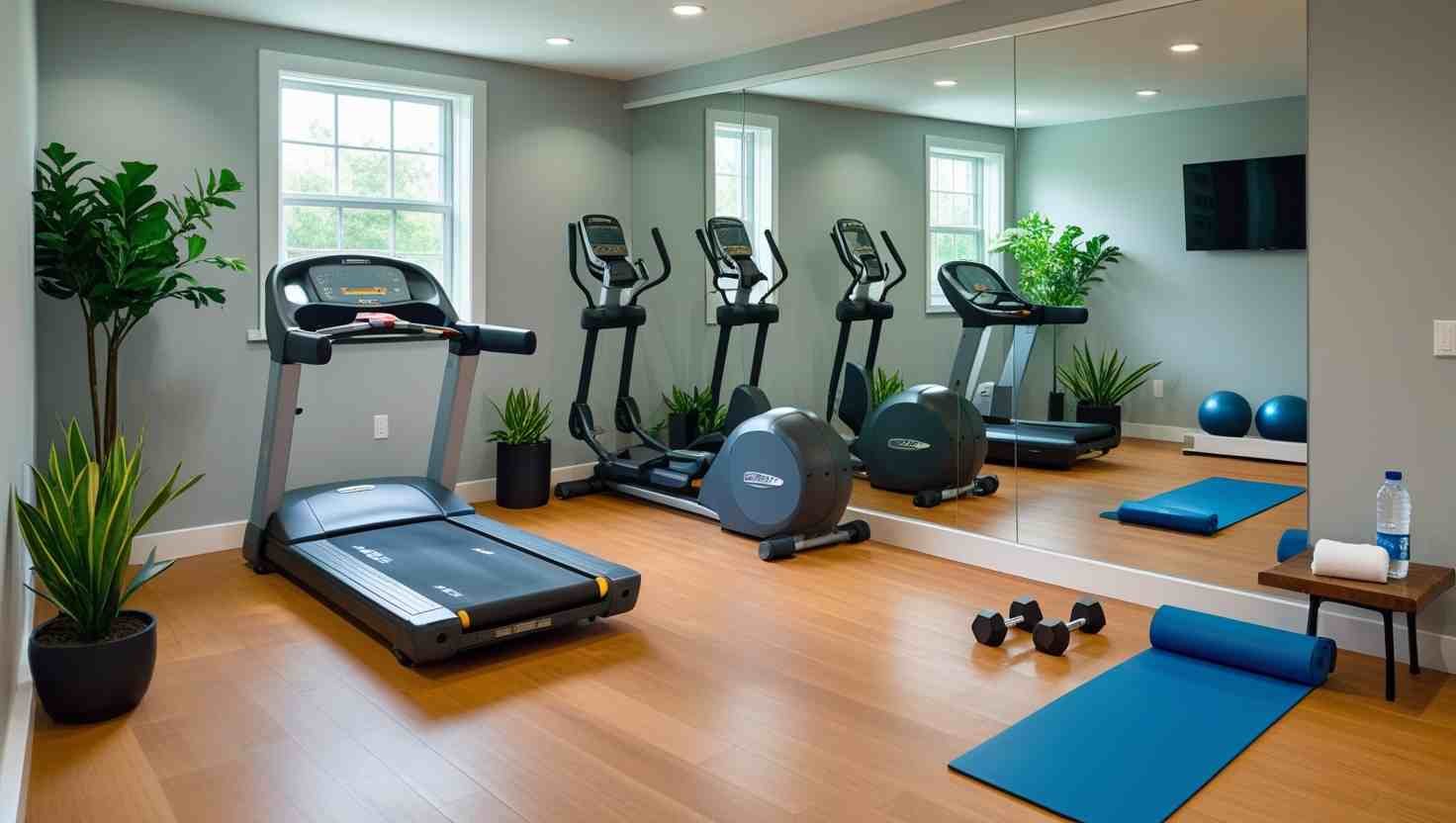

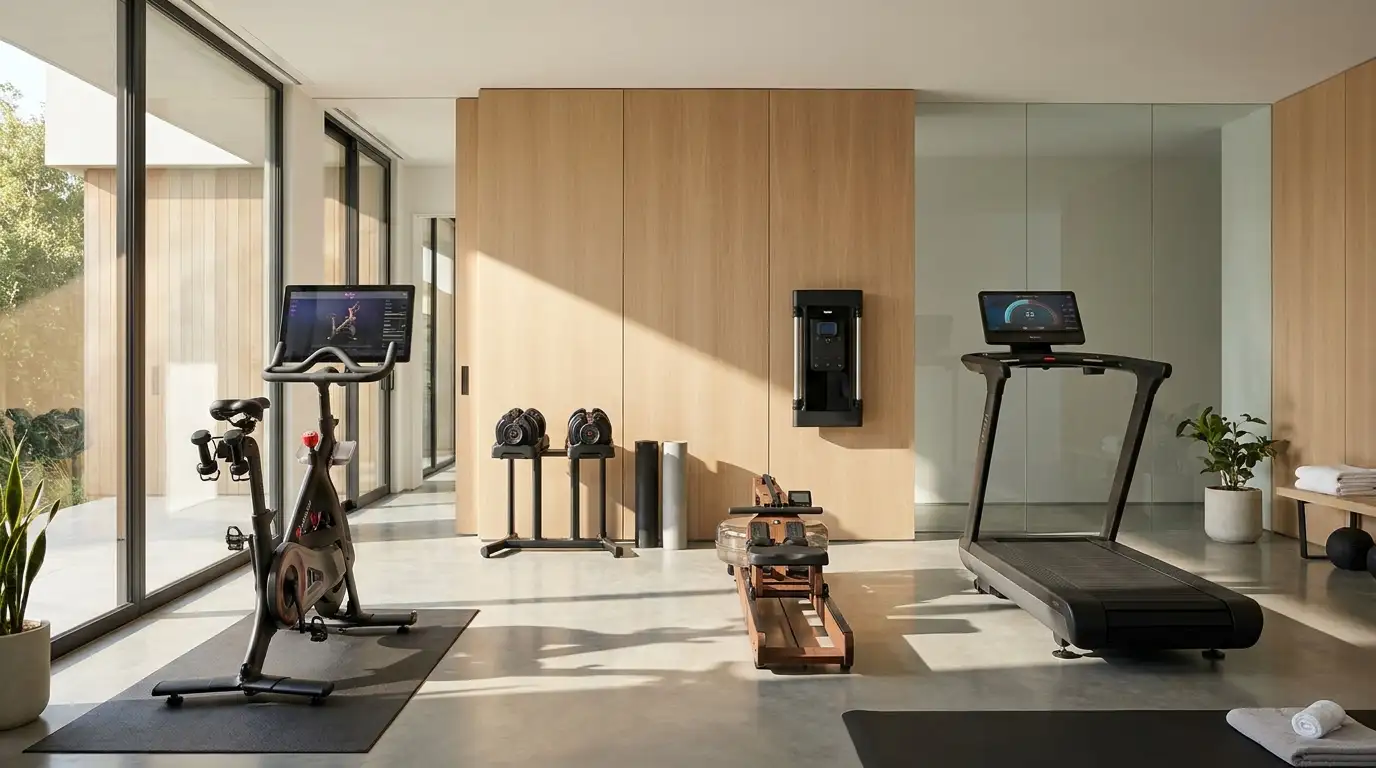
Designing a small home gym layout requires strategy, creativity, and efficiency. Whether you’re transforming a spare bedroom, garage corner, or even a compact apartment nook, it’s essential to maximize every inch without sacrificing functionality or comfort.
In this guide, we’ll walk you through small home gym layout, space-saving equipment suggestions, and design hacks that turn your limited area into a powerhouse fitness zone.
Table of Contents
Optimize the Small Home gym Layout for Flow and Purpose
The foundation of a good small home gym starts with thoughtful gym layout planning. Prioritize functional zones over sheer size. Divide your space based on movement type: strength, cardio, and recovery.
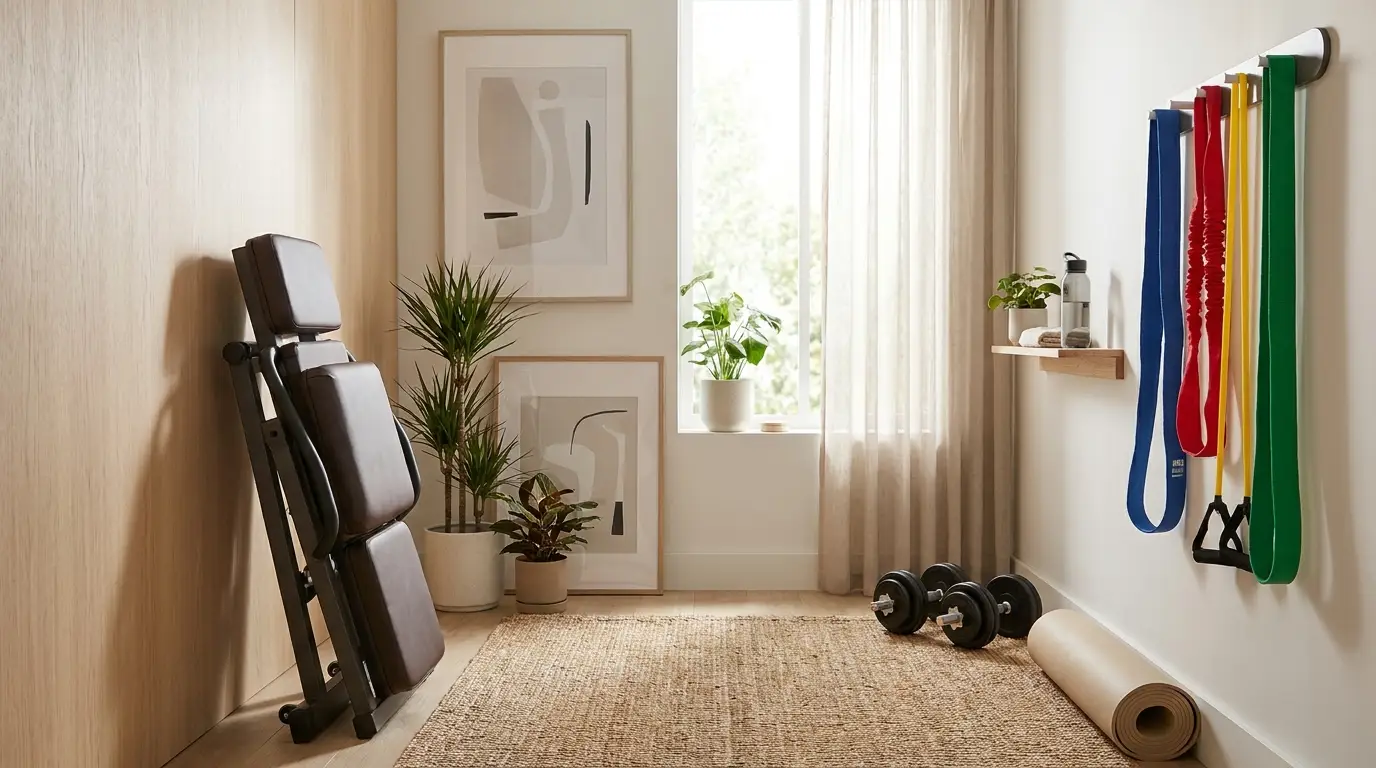
- Strength Area: Allocate space for an adjustable weight bench, dumbbells, resistance bands, or a foldable squat rack.
- Cardio Zone: Use minimal-space machines like foldable treadmills, under-desk ellipticals, or compact rowing machines.
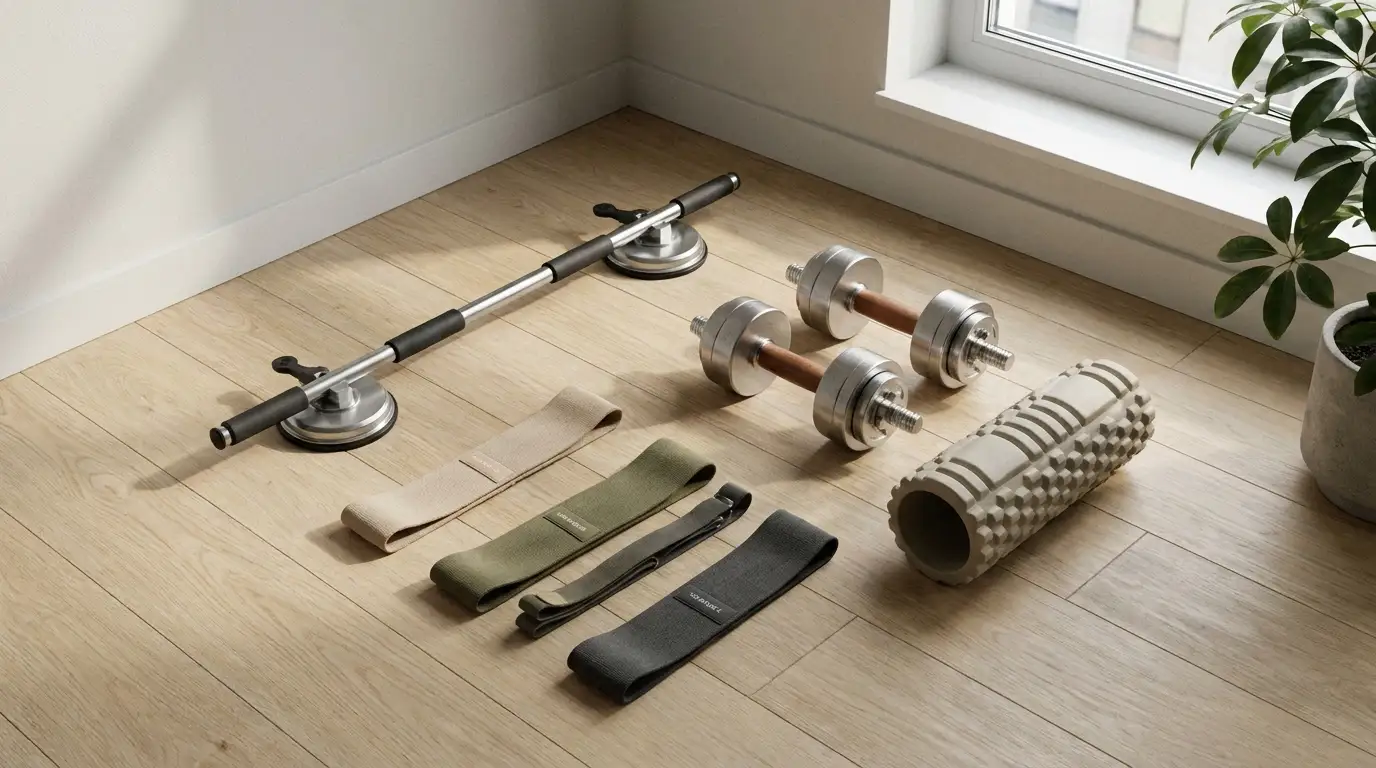
- Stretch & Recovery Zone: Reserve a corner with a yoga mat, foam roller, and stretching straps.
Keep a 3-foot clearance rule for movement-based workouts. Avoid cluttering the center of the room—place heavier equipment against walls to free up floor space.
Choose Space-Saving Fitness Equipment
Small gyms demand multi-functional and compact fitness gear that deliver maximum utility without overwhelming the space.
Top Equipment for Small Home Gyms:
- Adjustable Dumbbells: Replace an entire rack with one set that scales from 5 to 50+ lbs.
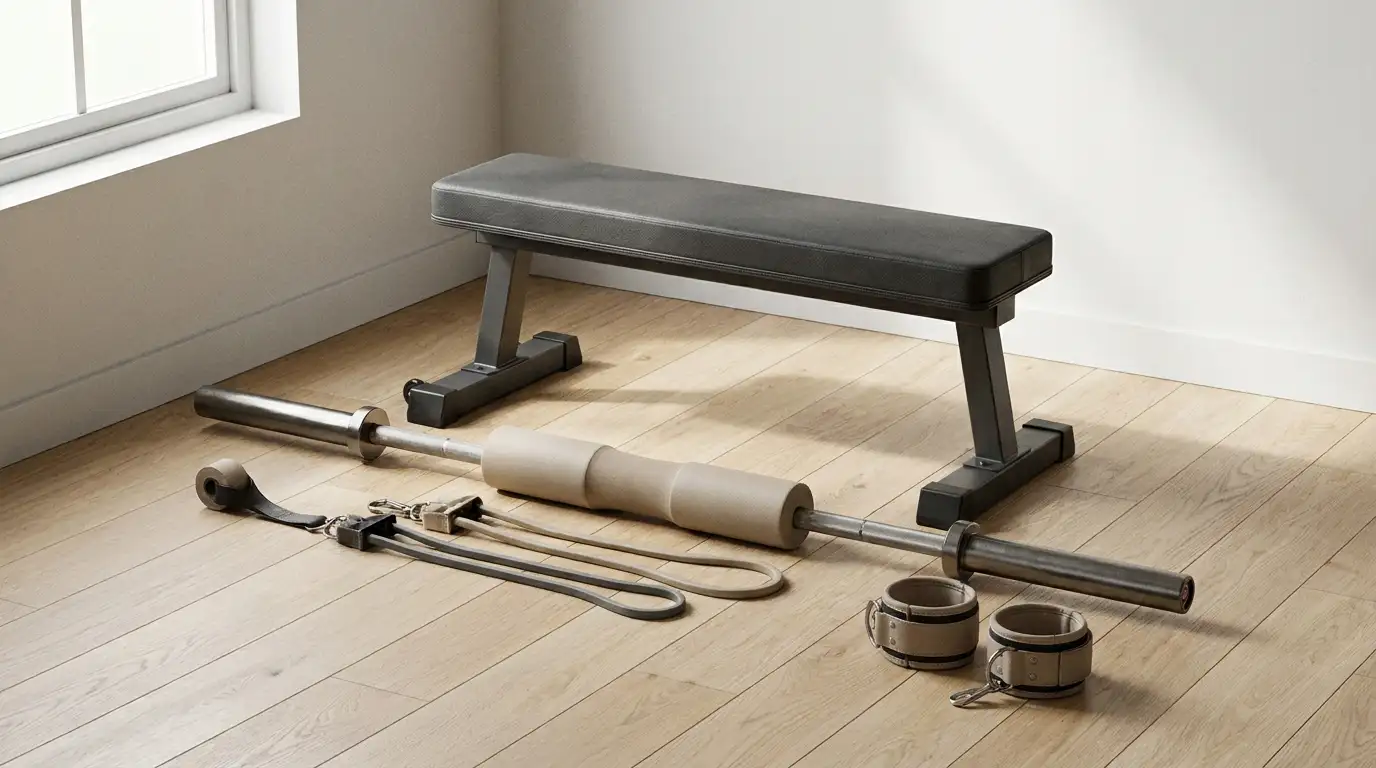
- Foldable Weight Bench: Easy to store upright or under a bed when not in use.
- Resistance Bands & Loops: Hang them on wall hooks or tuck them into a drawer.
- All-in-One Home Gyms: Compact systems like Bowflex or Tonal offer dozens of exercises in one station.
- Mini Cardio Machines: Think under-desk bikes, stair steppers, and compact rowing machines.
Invest in vertical storage (shelves, hooks, or pegboards) to keep equipment off the floor and visually organized.
Use Smart Storage Solutions
Storage is the backbone of a clean and inviting gym. In small spaces, vertical and hidden storage systems are essential.
Clever Storage Tips:
- Wall-Mounted Racks: Hold yoga mats, foam rollers, bands, and kettlebells.
- Storage Benches: Combine seating with hidden compartments for storing towels and gear.
- Overhead Shelves: Great for keeping infrequently used equipment out of the way.
- Pegboards: A customizable and affordable solution to keep gear accessible and tidy.
Ensure everything has its place. A clutter-free room boosts mental focus and workout motivation.
Incorporate Mirrored Walls and Lighting
Small spaces can feel bigger with clever visual enhancements. Mirrors and lighting play a pivotal role in both functionality and aesthetics.
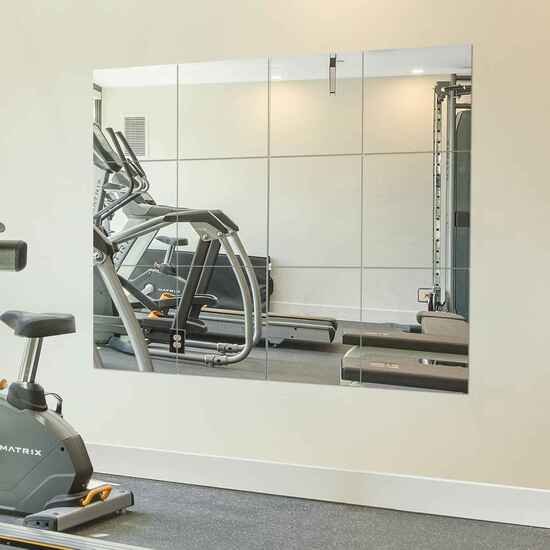
- Full-Length Mirrors: Install on one wall to give the illusion of depth and improve form tracking during workouts.
- Natural Light: Position your setup near windows if possible.
- LED Strip Lighting: Add modern flair and adjustable brightness for evening sessions.
- Overhead Fixtures: Choose bright, energy-efficient bulbs that replicate daylight.
A bright and reflective room feels more spacious, energizing, and professional.
Choose the Right Flooring
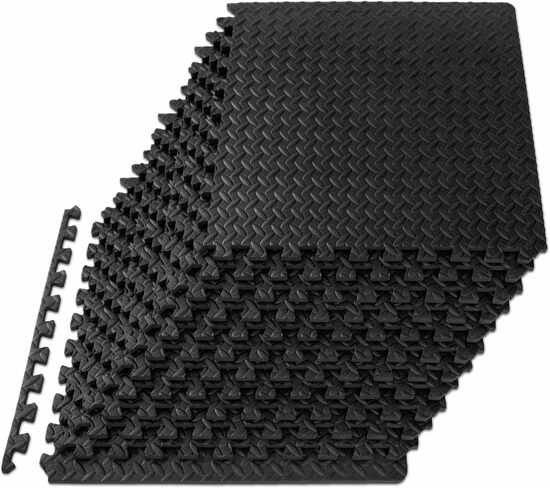
Flooring affects both safety and comfort. Choose durable, shock-absorbent, and easy-to-clean options.
Best Flooring Options for Small Home Gyms:
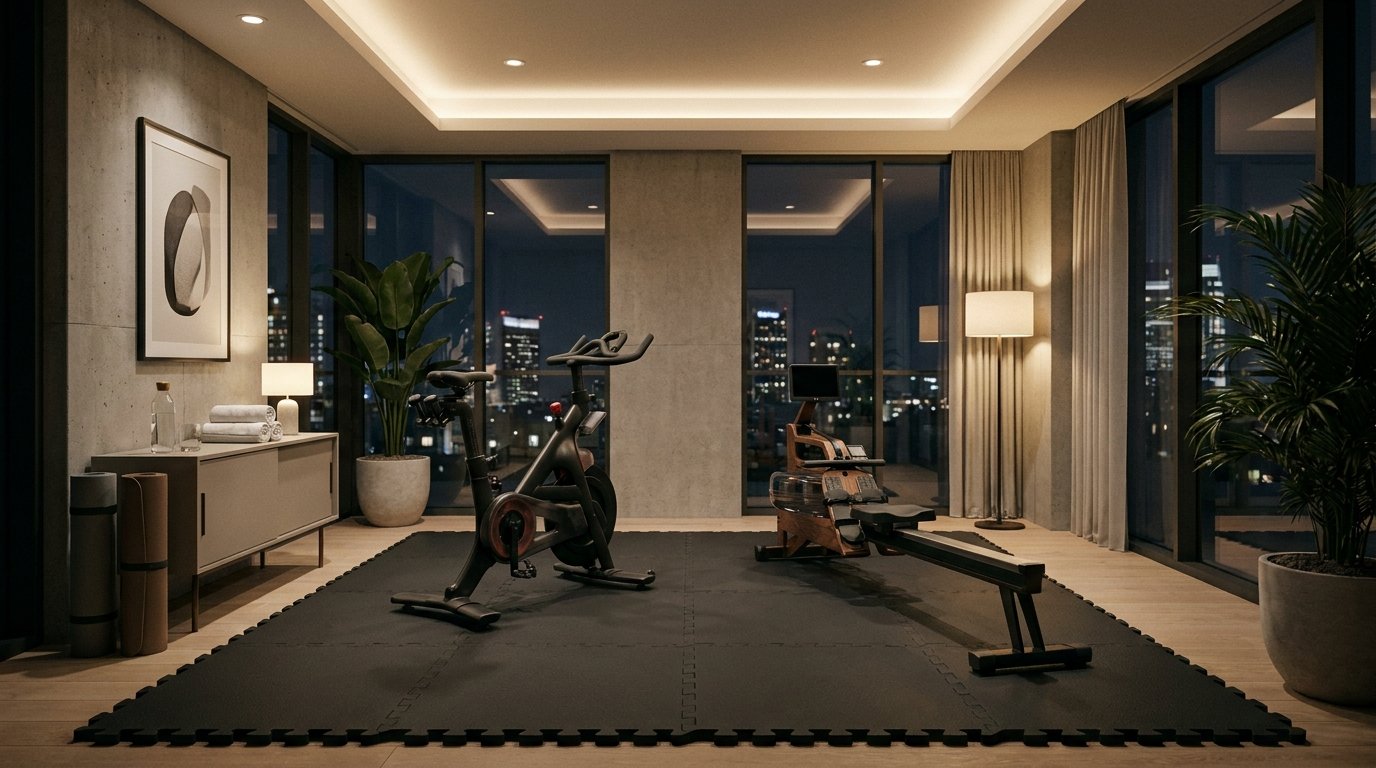
- Rubber Tiles or Rolls: Offer protection for joints and equipment while being easy to clean.
- Foam Mats: Ideal for bodyweight exercises, yoga, and light weight training.
- Interlocking EVA Foam Tiles: A budget-friendly choice that’s easy to install and replace.
If you live in an apartment, soundproofing is a key consideration. Use extra-thick mats or sound-dampening layers to reduce noise and vibrations.
Integrate Smart Tech and Entertainment
A modern gym experience includes digital tools and media integration. These not only keep workouts engaging but also eliminate the need for bulky manuals or posters.
- Wall-Mounted Tablet or Smart Display: Stream workouts, monitor stats, or follow routines hands-free.
- Bluetooth Speakers: Compact but powerful for pumping up your energy.
- Fitness Apps & Smart Mirrors: Upgrade your routine with AI-guided sessions or interactive progress tracking.
This digital layer keeps your workouts dynamic and adaptable without eating into your limited square footage.
Incorporate Multipurpose Furniture
When working with a dual-purpose room, such as a guest room or office, use convertible furniture to maintain flexibility.
- Murphy Bed with Desk: Fold away beds allow more space for workouts during the day.
- Wall-Mounted Foldable Desks: Double as workstations and platforms for placing fitness accessories.
- Ottoman Storage Units: Serve as both seating and discreet equipment storage.
This hybrid approach ensures that your home gym doesn’t overtake your living area, especially in small apartments or studio layouts.
Keep the Aesthetic Clean and Motivational
Visual appeal influences how motivated you feel. Stick with neutral palettes, add a few bold accents, and personalize the space with inspiring decor.
- Motivational Quotes: Vinyl decals or framed prints.
- Plants or Greenery: Boost oxygen levels and visual appeal.
- Color Scheme: Black, white, and gray offer a sleek, clean look—add a pop of color for energy.
A clean, stylish gym helps build consistent habits by making the space enjoyable and uplifting.
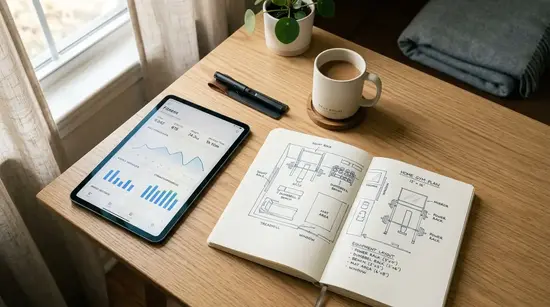
Sample Layout for a 6’ x 8’ Small Home Gym
Left Wall: Foldable weight bench, mirror, dumbbell rack
Right Wall: Pegboard with bands, foam roller, yoga mat hooks
Center Floor: Foam mat or rubber flooring
Front Wall: Wall-mounted tablet, motivational art, LED lighting
Back Corner: Compact treadmill or rowing machine
Overhead: Shelf storage for towels, water bottles, and infrequent gear
Final Thoughts: Build Big Results in Small Spaces
A well-planned small home gym layout is not about having the most space—it’s about using space with purpose. With thoughtful zoning, compact and versatile equipment, smart storage, and a motivating aesthetic, you can build a high-performance home gym in even the tightest spots.
FAQ: Small Home Gym Layout
How much space do I need for a small home gym?
A functional home gym can fit in as little as 6′ x 8′ of space. Smart equipment choices and efficient storage help maximize every square foot.
What equipment is best for a small home gym layout?
Adjustable dumbbells, resistance bands, foldable benches, compact cardio machines, and all-in-one trainers offer versatility without taking up much space.
How can I make a small home gym feel larger?
Use wall mirrors, bright lighting, light-colored walls, and vertical storage solutions to create the illusion of a bigger and more open space.
What is the best flooring for a small home gym?
Rubber flooring is ideal for durability and shock absorption, while foam mats work well for yoga, stretching, and bodyweight workouts.
Can I create a home gym in an apartment?
Yes. Choose compact equipment, sound-dampening mats, and multifunctional furniture to build an effective apartment-friendly workout space.
How do I organize equipment in a small gym?
Use wall-mounted racks, pegboards, overhead shelves, and storage benches to keep equipment off the floor and maintain a clutter-free environment.
What are the benefits of a small home gym layout?
A small home gym saves space, reduces costs, encourages consistent workouts, and provides a convenient fitness area tailored to your needs.


Leave a Reply