
Pull-up bar exercises for small spaces are the perfect solution for staying fit without sacrificing style or square footage. Living in a high-end urban apartment often means choosing an unbeatable location and skyline views over a large home gym. While your living space may be compact, your fitness goals don’t have to be.
A pull-up bar is the ultimate training tool for space-conscious professionals. Sleek, compact, and remarkably powerful, it delivers exceptional upper-body and functional strength without the need for bulky machines or dedicated workout rooms.
In this complete guide, we’ll break down the most effective pull-up bar exercises designed specifically for small spaces—showing you how to turn a simple doorway or corner into a refined, high-performance training zone.
Table of Contents
Why Pull-Up Bars are the King of Small Space Fitness
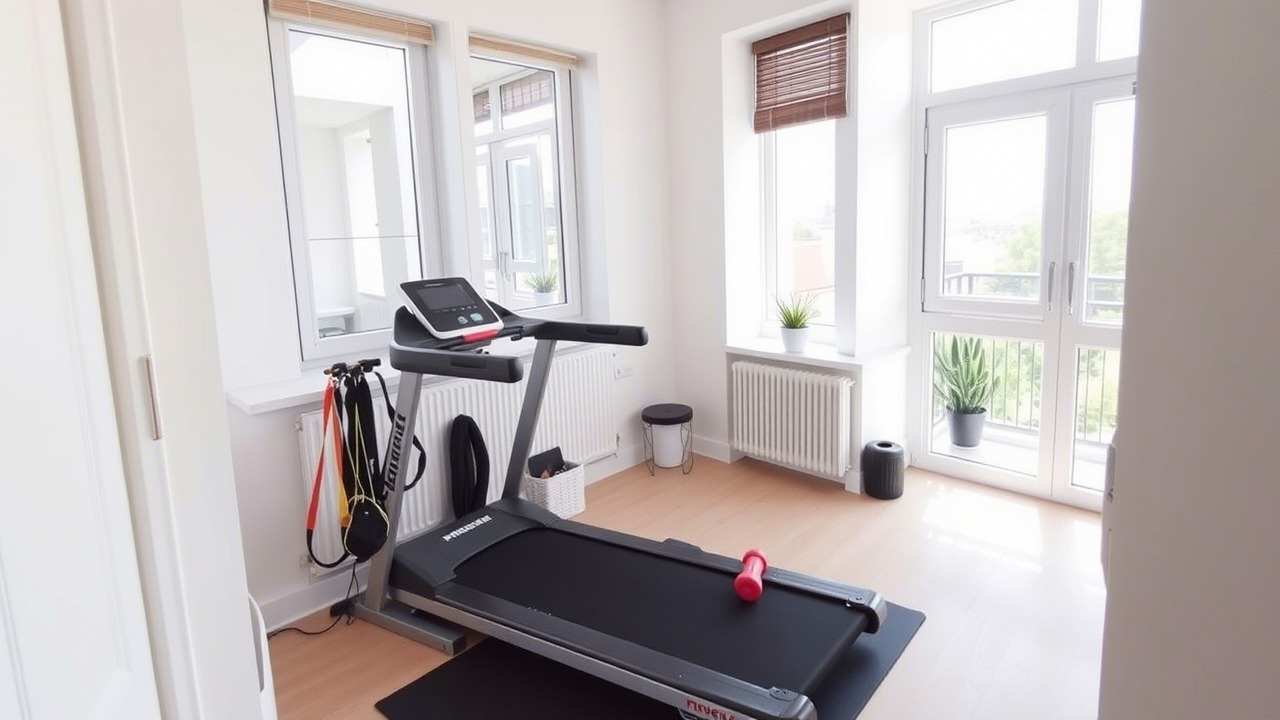
When space is at a premium, every piece of equipment must earn its keep. A pull-up bar is perhaps the most efficient investment you can make. Unlike a treadmill or a squat rack, it takes up almost zero “living space.”
The Efficiency of Vertical Training
Most home workouts focus on the floor (push-ups, planks, lunges). By utilizing a pull-up bar, you take your training vertical. This allows you to target the “pull” muscles—the latissimus dorsi, biceps, and posterior deltoids—which are often neglected in bodyweight floor routines.
Compound Benefits for Busy Professionals
For the affluent professional, time is the most valuable currency. Pull-up bar exercises are compound movements. This means they work multiple muscle groups simultaneously. A single set of pull-ups engages your back, arms, shoulders, and core, providing a high-intensity workout in a fraction of the time.
“The pull-up is the upper body’s equivalent of the squat. It is a foundational movement that defines true functional strength.” — Fitness Philosophy
Choosing the Right Bar for Your Space
Before diving into the exercises, you need the right hardware. Not all bars are created equal, especially when you are trying to preserve the aesthetics and integrity of a luxury home.
Types of Small-Space Pull-Up Bars
| Bar Type | Installation Method | Best For | Space Impact |
| Doorway (Tension) | Telescopic pressure between frames | Renters / Minimalists | Zero permanent impact |
| Doorway (Leverage) | Hooks over the door trim | Frequent use / Easy removal | Minimal (requires sturdy trim) |
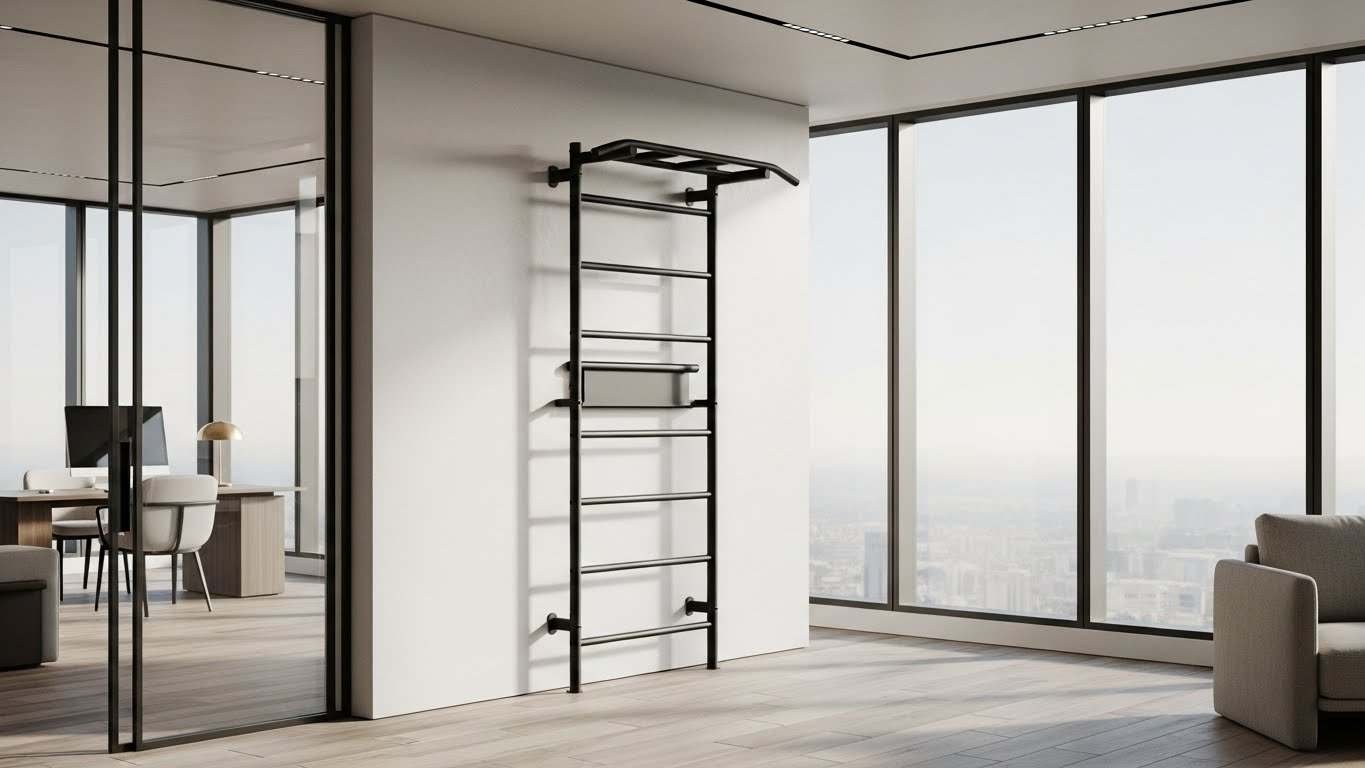
| Wall-Mounted | Bolted into studs | Dedicated fitness corners | Low (vertical space only) |
| Ceiling-Mounted | Bolted into joists | High ceilings / Open layouts | Very Low (keeps floor clear) |
Important Note for Readers
Always check the weight capacity of your door frame or wall before installation. For luxury apartments with non-standard door sizes, a wall-mounted bar in a laundry room or walk-in closet is often the most secure and discreet option.
Essential Pull-Up Bar Exercises for Beginners
If you are new to the bar, don’t feel intimidated. Strength is built in stages. These foundational exercises require very little room to maneuver, making them perfect for tight quarters.
1. The Dead Hang
The dead hang is the starting point for all pull-up bar exercises. It builds grip strength and decompresses the spine—a perfect antidote to a long day spent in board meetings or behind a desk.
- How to do it: Reach up and grab the bar with an overhand grip. Let your body hang freely. Keep your arms straight and your core engaged.
- Small Space Tip: If your bar is low, simply bend your knees behind you.
- Duration: Aim for 30 to 60 seconds.
2. Scapular Pull-Ups
This move teaches you how to engage your back muscles rather than just pulling with your arms. It is a “micro-movement” that fits perfectly in any small space.
- How to do it: From a dead hang, pull your shoulder blades down and back without bending your elbows. Imagine you are trying to put your shoulder blades into your back pockets.
- Benefit: This builds the “initial lift” strength required for a full pull-up.
3. Negative Pull-Ups
If you can’t perform a full pull-up yet, “negatives” are your best friend. They focus on the eccentric (lowering) phase of the movement.
- How to do it: Use a chair or a small step to jump to the top position of a pull-up (chin above the bar). Slowly—over 5 to 10 seconds—lower yourself until your arms are fully extended.
- Why it works: You are stronger on the way down than on the way up. This builds the necessary muscle fibers for the full movement.
Intermediate Pull-Up Bar Exercises: Building Real Power
Once you have mastered the basics, it is time to progress. These exercises focus on different muscle angles to ensure a well-rounded physique.
4. The Standard Pull-Up (Overhand Grip)
This is the gold standard of pull-up bar exercises. It targets the lats and creates that desirable “V-taper” look.
- Execution: Grip the bar slightly wider than shoulder-width. Pull yourself up until your chest nearly touches the bar. Keep your elbows pointing down, not out.
- Small Space Hack: Keep your legs zipped together and slightly in front of you (the “hollow body” position) to prevent swinging into walls.
5. Chin-Ups (Underhand Grip)
Chin-ups shift the focus toward your biceps and chest. They are generally slightly easier than pull-ups but equally effective for building arm aesthetics.
- Execution: Palms facing toward you, shoulder-width apart. Pull up until your chin clears the bar.
- Note: Focus on squeezing your biceps at the top of the movement for maximum benefit.
6. Neutral Grip Pull-Ups
Many high-end doorway bars feature parallel handles. This is the “neutral grip.” It is the most joint-friendly version of the exercise.
- Benefit: Great for those with previous shoulder or wrist sensitivity. It allows for a deep range of motion even in narrow hallways.
Core-Focused Pull-Up Bar Exercises
The pull-up bar isn’t just for your back; it is one of the most effective tools for abdominal carving. Because your legs are hanging freely, your core has to work double-time to stabilize your body.
7. Hanging Knee Raises
This is a staple for lower-abdominal development.
- How to do it: Hang from the bar. Without swinging, tuck your knees toward your chest. Lower them slowly.
- Small Space Benefit: This requires zero lateral space. You only need the width of the bar.
8. L-Sits
The L-sit is an isometric hold that requires immense core strength and hip flexor mobility.
- How to do it: Hang from the bar and lift your legs straight out in front of you until your body forms an “L” shape. Hold for as long as possible.
- Advanced Tip: If you can’t hold a full L-sit, keep one leg bent and the other straight, alternating between sets.
9. Windshield Wipers
This is an advanced move for the obliques.
- How to do it: Raise your legs straight up toward the bar. Slowly rotate them from left to right in an arc, like windshield wipers.
- Warning: Ensure you have enough side-to-side clearance in your doorway before attempting this.
Advanced Variations for Maximum Results
For the seasoned athlete living in a compact space, these variations will ensure you never hit a plateau.
10. Commando Pull-Ups
This exercise was popularized by old-school calisthenics. It targets the “thickness” of the back and the forearms.
- How to do it: Stand sideways under the bar. Grip it with one hand in front of the other (like holding a baseball bat). Pull yourself up so your head goes to one side of the bar, then the other on the next rep.
11. Typewriter Pull-Ups
A stunning display of control and strength.
- How to do it: Pull yourself up to the top position. Shift your weight toward your right hand while straightening your left arm. Then, slide across the bar to the left hand.
- Visual: It looks like the carriage of an old typewriter moving across the page.
Comparison of Pull-Up Bar Exercises
This table helps you choose the right move based on your specific fitness goals.
| Exercise | Primary Muscle | Difficulty | Core Engagement |
| Dead Hang | Forearms/Grip | Beginner | Low |
| Chin-Up | Biceps/Lats | Intermediate | Medium |
| Standard Pull-Up | Lats/Upper Back | Intermediate | Medium |
| L-Sit | Core/Hip Flexors | Advanced | Very High |
| Commando Pull-Up | Back/Obliques | Advanced | High |
Designing Your Small Space Workout Routine
You don’t need a 90-minute session to see results. A structured 20-minute routine 3 to 4 times a week is sufficient.
The “Urban Athlete” Circuit
Perform these exercises back-to-back with 60 seconds of rest between rounds. Complete 4 rounds.
- Standard Pull-ups: As many reps as possible (AMRAP) with good form.
- Hanging Knee Raises: 12–15 reps.
- Chin-ups: AMRAP.
- Dead Hang: Hold for 45 seconds.
Important Note for Readers
Consistency beats intensity. It is better to do five perfect pull-ups every morning than to do fifty messy ones once a week. Focus on the “quality of movement” to protect your joints and see the best aesthetic results.
Common Mistakes to Avoid in Tight Quarters
When working out in a small apartment, the risks are slightly different than in a gym.
- The “Kicking” Habit: In small spaces, you might be tempted to “kip” or kick your legs to get over the bar. This can lead to your feet hitting furniture or walls. Focus on “strict” pull-ups—move only your upper body.
- Ignoring the Door Frame: If using a doorway bar, check it weekly. Vibrations can loosen tension bars. Ensure it is seated firmly before every session.
- Neglecting the Descent: Dropping too quickly from the bar can be jarring for your floors (and noisy for your downstairs neighbors). Always lower yourself with control.
Maximizing Your Results: Recovery and Nutrition
For the affluent individual, health is a holistic endeavor. Pull-up bar exercises are physically demanding and require proper support.
Protein Intake
To repair the muscle fibers used during your back and arm workouts, ensure you are consuming high-quality protein. Aim for lean sources like wild-caught salmon, organic chicken, or plant-based proteins if that fits your lifestyle.
Mobility Work
Pull-ups can sometimes lead to tight chest muscles if not balanced. Spend five minutes after your workout stretching your pectorals and performing “wall slides” to maintain good posture.
“True wealth is the ability to move your own body weight with grace and power.” — Anonymous Fitness Expert
Frequently Asked Questions
Can I get a full back workout with just a pull-up bar?
Yes. By varying your grip (wide, narrow, underhand, overhand, neutral), you can target every major muscle group in your back and arms.
Will a pull-up bar damage my luxury apartment?
If you choose a high-quality “no-screw” leverage bar, the risk is minimal. For the best protection, look for bars with thick foam padding or silicone protectors that prevent marking the wood trim.
How do I start if I can’t do a single pull-up?
Start with Dead Hangs to build grip, then move to Scapular Pull-ups, and finally Negative Pull-ups. Within 4 to 6 weeks of consistent practice, most people can achieve their first full rep.
Conclusion: Elevate Your Home Fitness
You don’t need a gym membership or a massive basement to build an elite physique. The beauty of pull-up bar exercises lies in their simplicity and their demand for total body control.
By integrating these movements into your daily routine, you are choosing a path of functional strength that fits perfectly into a modern, sophisticated lifestyle. Whether you are performing a quick set of chin-ups between Zoom calls or a dedicated core session in the evening, the pull-up bar is your most valuable ally.
Transform your doorway into a gateway for a stronger, leaner, and more capable version of yourself. Your small space is no longer a limitation—it’s your private high-performance lab.
Summary Checklist for Small Space Pull-Ups:
- Select a bar that fits your door or wall type.
- Prioritize form and “strict” movements to avoid hitting walls.
- Master the Dead Hang and Negatives first.
- Balance your routine with core movements like L-sits.
- Check equipment stability once a week.