
If you’ve been telling yourself you’ll “get back in shape someday,” here’s a friendly nudge — you don’t need to run a marathon or crush yourself with HIIT sessions to actually get healthy. Moderate aerobic exercise is honestly one of the most underrated things you can do for your body, and the science backing it up is pretty wild.
Let’s talk about what it is, why it works, and — most importantly — how to fit it into your real life without wanting to throw your sneakers out the window.
Table of Contents
What Actually Counts as Moderate Aerobic Exercise?
Okay so here’s the simplest way to think about it: if you’re moving, your heart is working a little harder, you can still hold a conversation but you’d be slightly out of breath trying to belt out a full song — you’re probably in the moderate zone. Officially, that sits between 64% and 76% of your maximum heart rate.
For most adults, that translates to about 100–140 bpm. But honestly, forget the numbers for a second and just use the talk test. Can you speak in full sentences? Cool — you’re doing moderate aerobic exercise. Are you gasping between every word? You’ve crossed into high-intensity territory.
Common examples of moderate-intensity cardio workouts include:
- Brisk walking (the kind where you’re actually moving, not strolling)
- Casual cycling on flat terrain
- Swimming laps at a comfortable pace
- Light jogging or run-walk intervals
- Dance fitness classes like Zumba
Simple, right? It really is. And the cardio workout benefits you get from staying in this zone are genuinely impressive.
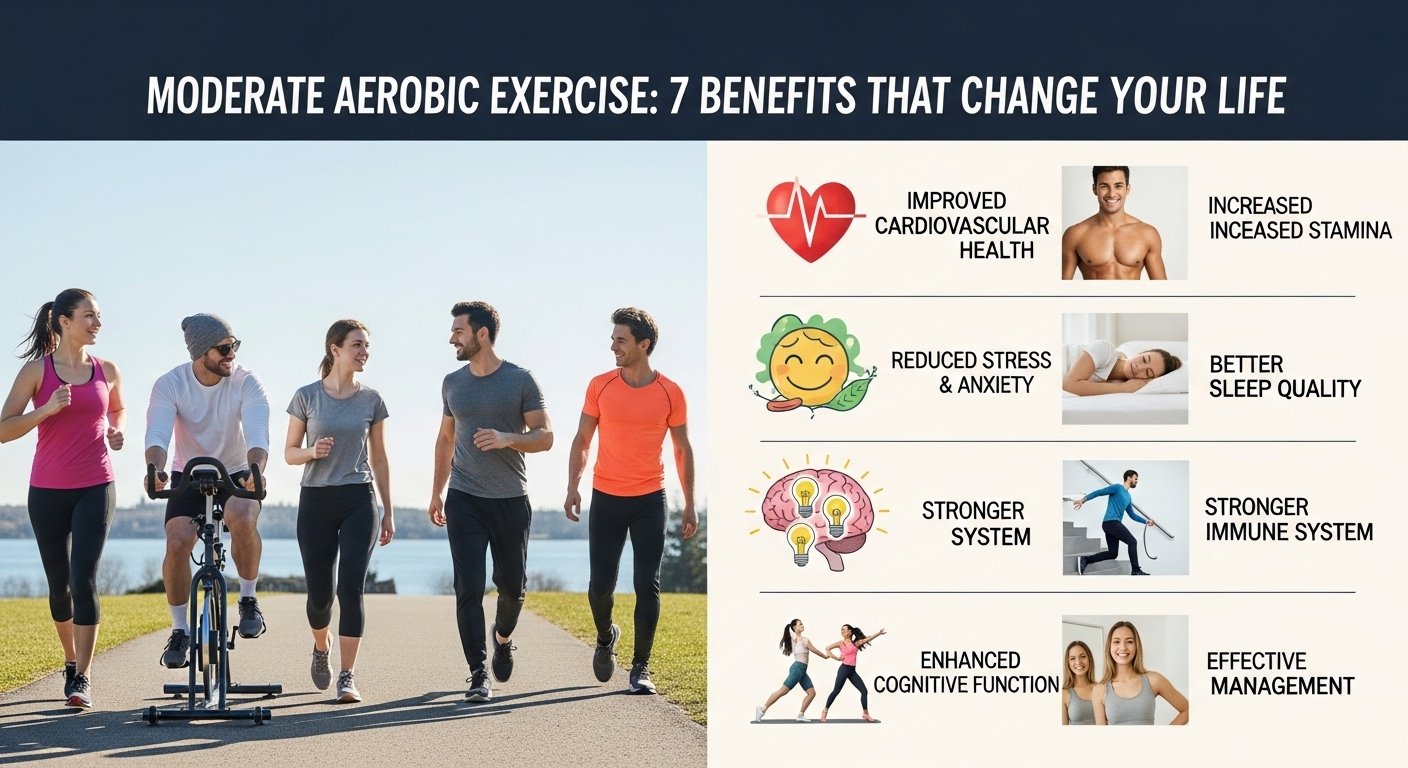
7 Benefits of Moderate Aerobic Exercise That’ll Make You Want to Lace Up
1. Your Heart Gets Stronger (Duh, But It’s Important)
The most obvious cardio workout benefit is also the most important. Regular moderate-intensity activity literally strengthens your heart muscle, lowers resting blood pressure, improves cholesterol profiles, and reduces your risk of cardiovascular disease. The American Heart Association recommends at least 150 minutes per week of moderate aerobic exercise — and that number exists for a reason.
2. Fat Burning Actually Happens Here
Here’s something that surprises people: your body burns a higher proportion of fat as fuel during moderate-intensity exercise compared to all-out sprints. When you’re working too hard, your body shifts toward carbohydrates for quick energy. Stay in the moderate zone and you’re literally tapping into fat stores. Your aerobic fitness routine doesn’t need to be brutal to be effective.
3. Your Brain Thanks You
This one is genuinely cool. Moderate aerobic exercise triggers the release of BDNF (Brain-Derived Neurotrophic Factor) — basically a growth hormone for your brain cells. Studies consistently show improvements in memory, focus, and learning after regular cardio. It also reduces anxiety and depression symptoms comparably to some medications, according to research published in JAMA Psychiatry.
4. You’ll Actually Sleep Better
Struggling with sleep? A consistent aerobic fitness routine helps regulate your circadian rhythm and increases time spent in deep, slow-wave sleep — the restorative stuff. Just don’t do it too close to bedtime, or the post-exercise buzz might keep you wired.
5. Stronger Bones, Longer Term
Weight-bearing moderate aerobic activities like walking and jogging put healthy stress on your skeletal system, stimulating bone density. This matters a lot as you age, when bone loss becomes a real concern. Low-impact options like swimming and cycling don’t offer as much bone benefit, so it’s worth mixing in some weight-bearing movement.
6. Blood Sugar Balance
Moderate cardio improves your cells’ sensitivity to insulin, which means your body handles blood sugar more efficiently. Regular moderate aerobic exercise can meaningfully reduce the risk of type 2 diabetes — and for those already managing it, it’s often a first-line recommendation from physicians.
7. You Live Longer (Seriously)
Multiple large-scale longitudinal studies — including the famous Copenhagen City Heart Study — found that regular moderate-intensity runners lived significantly longer than both sedentary individuals and hardcore exercisers. The sweet spot for longevity? You guessed it: moderate.
Building Your Aerobic Fitness Routine: A Practical Starter Guide
The biggest mistake people make is trying to do too much too fast. Here’s a chill, sustainable approach to getting your aerobic fitness routine off the ground:
Start with 20–30 minutes, 3 days a week. That’s it. No epic commitments, no dramatic lifestyle overhauls. Just three sessions. As it starts to feel easy — and it will — add a day or bump each session by 5–10 minutes.
Work toward the 150-minute weekly target. That’s the WHO and American Heart Association’s baseline recommendation for significant cardio workout benefits. Five 30-minute sessions will get you there, or even three longer 50-minute walks if that fits your week better.
Mix up your activities. One day walk, one day cycle, one day swim. Variety prevents boredom, works different muscle groups, and helps you find what you actually enjoy — which is the only thing that actually makes a fitness habit stick.
Use the talk test, not a gadget. Heart rate monitors are fun, but you honestly don’t need one. The talk test — slightly breathless but conversational — is a reliable, zero-cost way to confirm you’re in the moderate exercise zone.
The Best Moderate Aerobic Exercises (And Why They Work)
Not all cardio is created equal for everyone, so here’s a quick rundown of top picks:
Brisk walking is the most accessible moderate aerobic activity on earth. Zero equipment, zero gym membership, zero excuses. Aim for around 100 steps per minute to hit that moderate intensity. It’s low-impact, easy on joints, and genuinely enjoyable once it becomes a habit.
Cycling — whether outdoor or on a stationary bike — offers excellent cardio workout benefits with almost no impact stress. Great for anyone with knee issues or who’s returning from injury.
Swimming is the ultimate full-body moderate aerobic workout. The water resistance builds muscle while the buoyancy protects your joints. Even 20–25 minutes of lap swimming delivers significant aerobic benefits.
Dance cardio (Zumba, aerobics classes, even just dancing in your kitchen) is underrated because it’s actually fun. And fun = consistency. Consistency = results. It’s really that simple.
How to Know if Your Moderate Aerobic Routine Is Working
Give it at least four to six weeks of consistency before judging. Early wins you might notice: waking up with more energy, climbing stairs without getting winded, sleeping more soundly, and generally feeling less like a grumpy zombie.
After eight to twelve weeks of a solid aerobic fitness routine, measurable changes typically show up: resting heart rate drops, blood pressure improves, and workouts that used to feel hard start feeling easy.
That last one — the “it used to be hard and now it’s not” moment — is genuinely one of the best feelings in fitness. And it’s completely achievable with moderate, consistent effort.
The Bottom Line
Here’s the truth nobody says loudly enough: moderate aerobic exercise is probably the single highest-return health habit you can build. It’s not flashy, it doesn’t make for great Instagram content, and it won’t turn you into an elite athlete — but it will quietly make your heart stronger, your brain sharper, your sleep deeper, and your life longer.
You don’t need to suffer to get the cardio workout benefits that matter most. You just need to show up, break a light sweat, and do it again tomorrow.
Start with a 25-minute brisk walk today. Literally today. Your future self will thank you — and they’ll probably be breathing a lot easier when they do.