
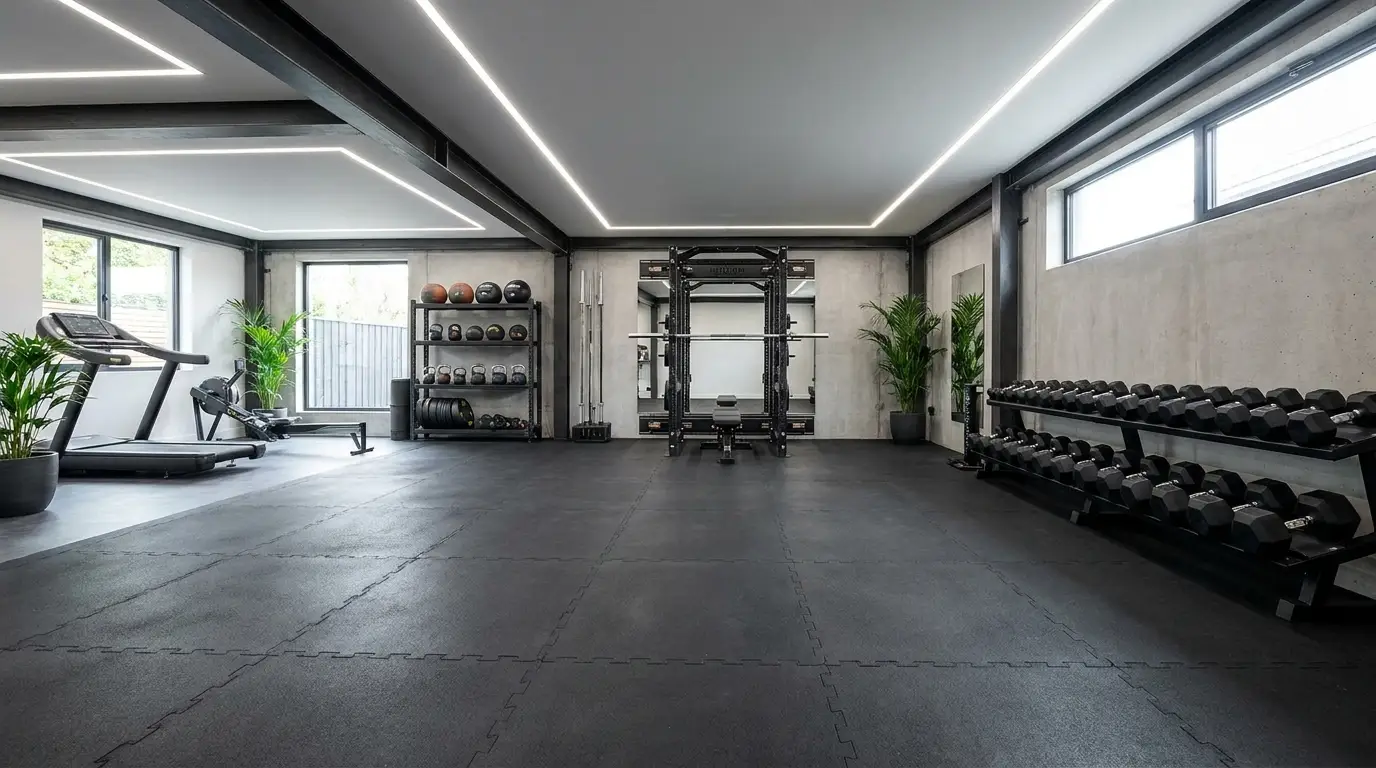

We approach a garage gym layout not as a simple arrangement of equipment, but as a fully optimized performance environment where space, movement, and functionality work together seamlessly. A well-designed setup transforms even a modest garage into a powerful training zone that supports strength, conditioning, mobility, and recovery without compromise.
We begin by understanding one core principle: every square foot must serve a purpose. Whether the garage is compact or oversized, the gym layout design determines how effectively we can train, recover, and progress over time. A poorly structured gym creates friction—crowded walkways, limited exercise flow, and safety risks. A well-planned garage gym layout removes friction entirely.
The foundation of success lies in dividing the space into functional training zones, optimizing equipment placement, and ensuring smooth transitions between exercises.
Table of Contents
Core Principles of an Efficient Garage Gym Layout
We design every effective garage gym layout around a set of non-negotiable principles:
1. Movement Flow Optimization
We ensure that transitions between exercises are seamless. The most frequently used equipment is placed in the most accessible areas, reducing unnecessary movement and maximizing training intensity.
2. Functional Zoning
We divide the garage into dedicated zones:
- Strength training zone
- Cardio conditioning zone
- Mobility and recovery zone
- Storage and accessory zone
This structure ensures clarity and prevents clutter from disrupting workouts.
3. Vertical Space Utilization
We maximize walls and overhead space using:
- Wall-mounted racks
- Pegboards
- Ceiling storage systems
This keeps the floor open for training and improves safety.
4. Scalability
We design layouts that evolve. A garage gym layout must accommodate future equipment upgrades without requiring a complete redesign.
Strategic Garage Gym Zoning for Maximum Performance
A high-performing gym layout depends on intelligent zoning.
Strength Training Zone
This is the anchor of the entire setup. We typically place:
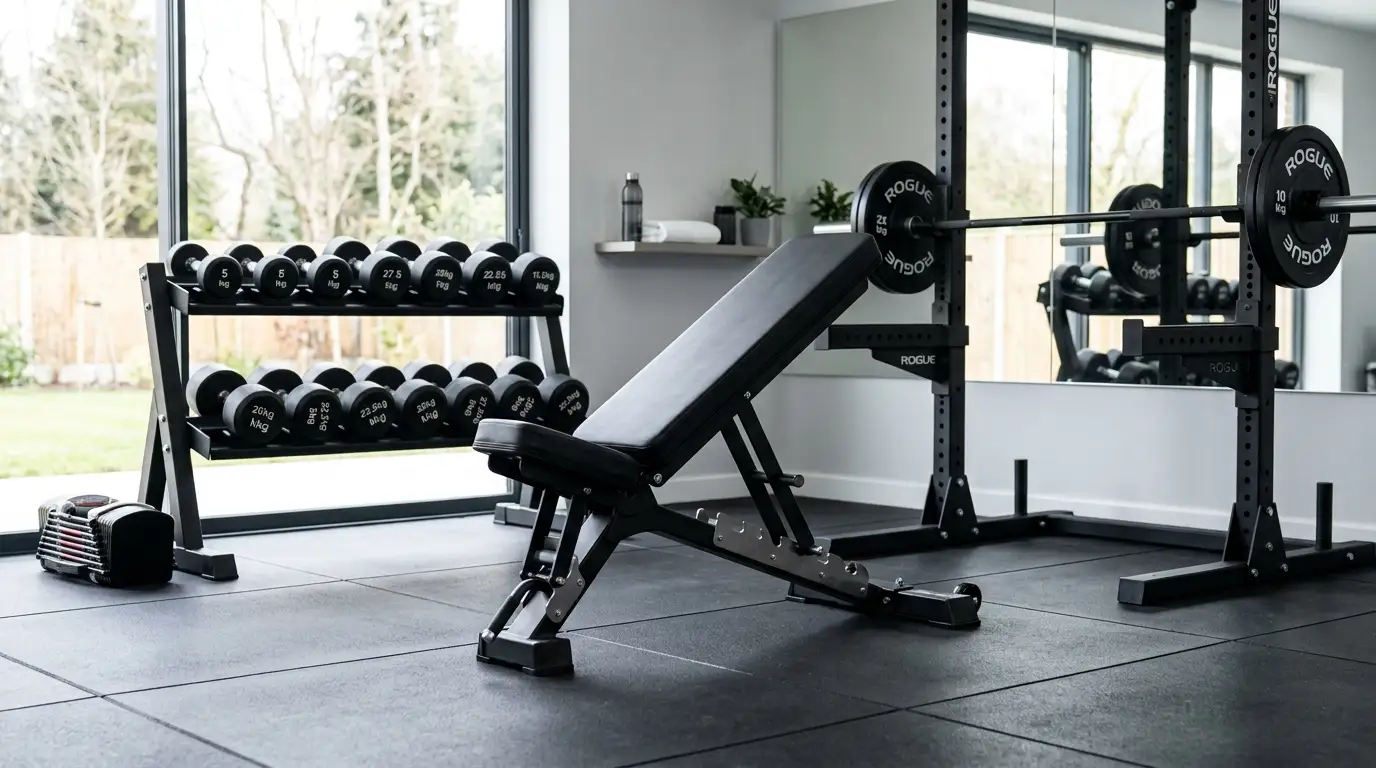
- Power rack or squat rack
- Adjustable bench
- Barbell storage
This zone is positioned along the strongest structural wall for safety and stability.
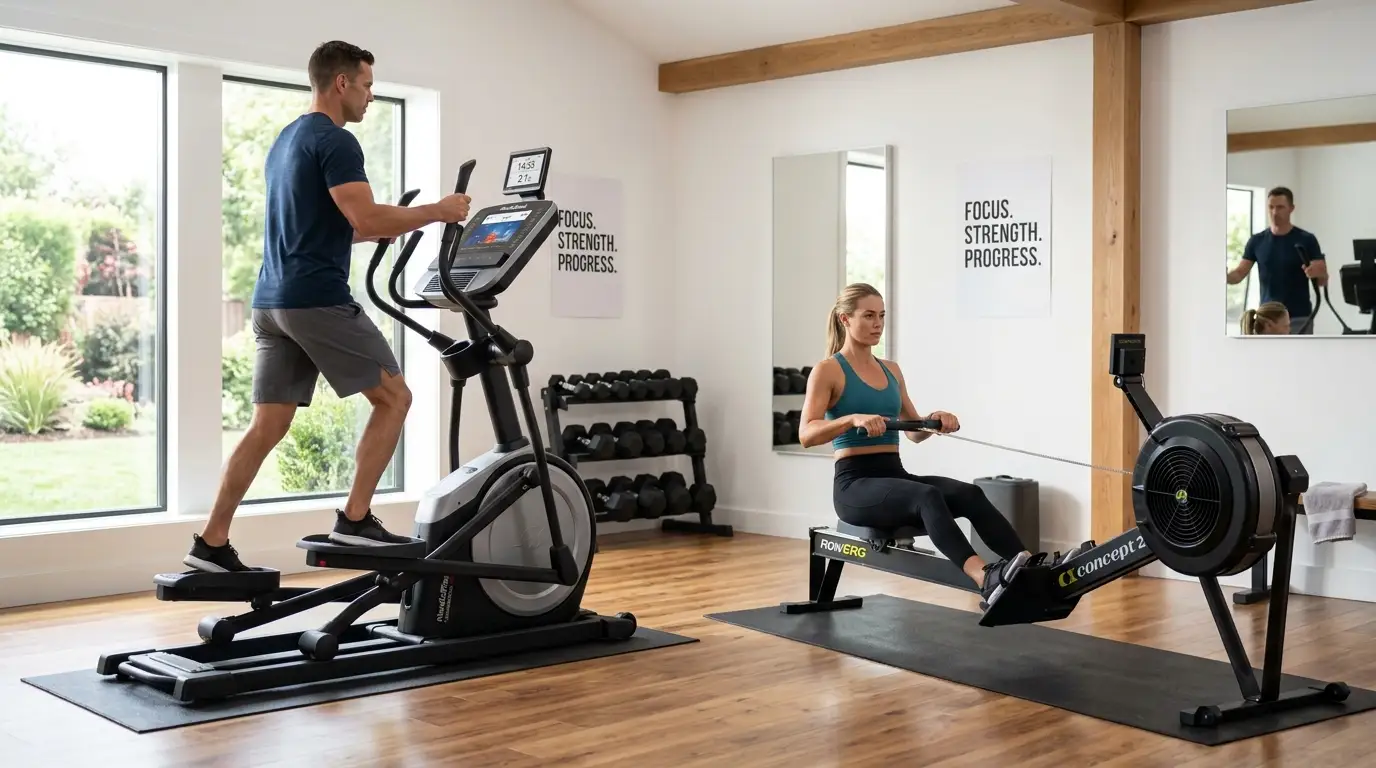
Cardio Zone
We allocate a separate space for:
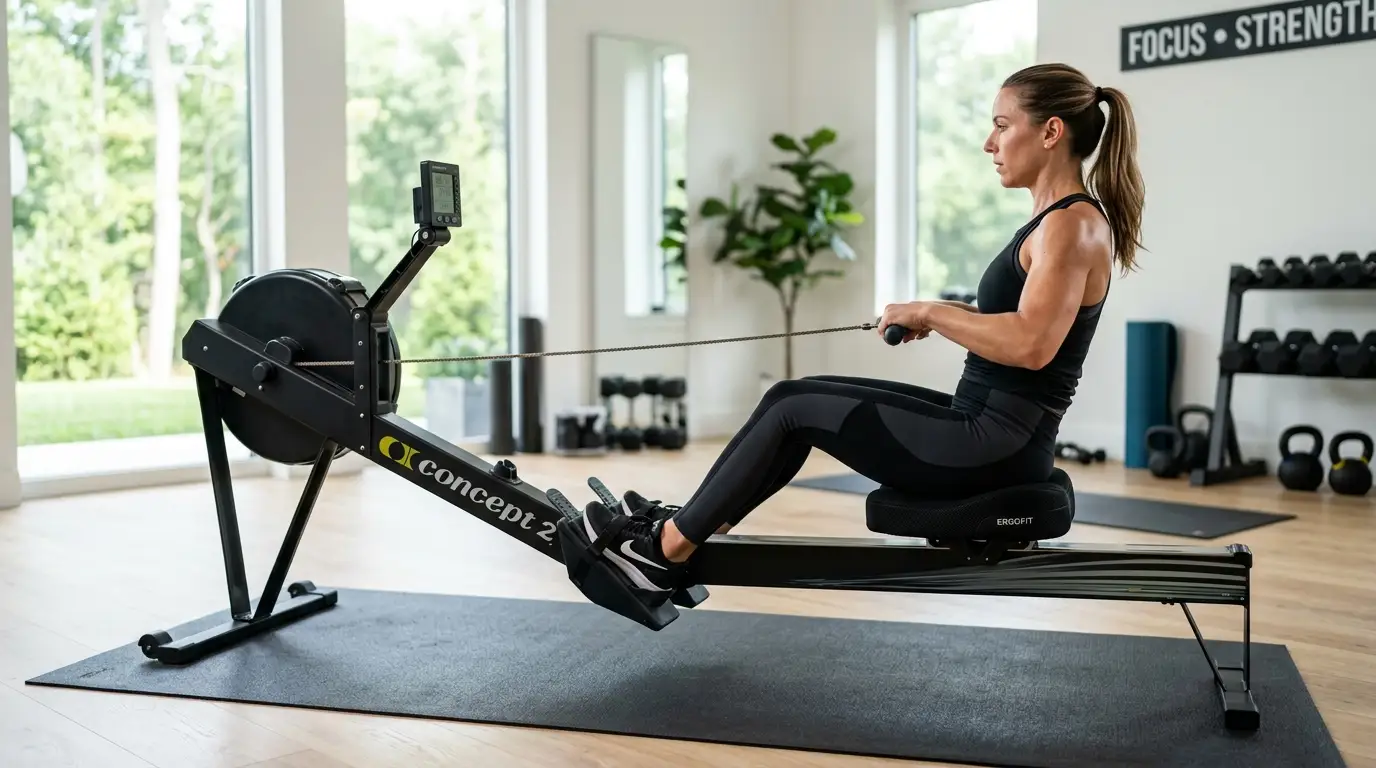
- Rowers
- Treadmills
- Air bikes
Placing cardio equipment near ventilation sources (garage doors or windows) improves airflow and comfort.
Mobility and Floor Work Zone
We dedicate open floor space for:
- Stretching
- Yoga
- Core training
- Bodyweight circuits
This zone must remain free of obstruction at all times.
Storage Zone
We consolidate:
- Dumbbells
- Kettlebells
- Resistance bands
- Plates
Efficient storage systems reduce clutter and increase usable training space.
Equipment Placement Strategy for an Optimized Garage Gym Layout
We approach equipment placement as a performance-driven decision rather than an aesthetic one.
Power Rack Positioning
The power rack is always placed against a wall with maximum clearance for:
- Barbell loading
- Pull-ups
- Safety movement
Ideally, we leave at least 1 meter of clearance on all sides.
Weight Storage Efficiency
We store weights close to the rack to reduce unnecessary movement during strength training sessions. Plate trees and wall-mounted holders are highly effective.
Dumbbell and Kettlebell Flow
We arrange dumbbells in ascending order in a central or side zone, ensuring quick access during supersets or circuits.
Cable Machines and Functional Trainers
If included, we position them in corners to maximize open floor space.
Flooring and Safety Considerations in Gym Layout Design
We never compromise on flooring in a garage gym layout. It directly affects safety, noise control, and equipment longevity.
Rubber Flooring
We recommend thick rubber mats (10–15mm minimum) for:
- Shock absorption
- Noise reduction
- Equipment protection
Platform Lifting Zones
For heavy lifting, we create dedicated platforms using:
- Plywood base
- Rubber top layer
This ensures stability during deadlifts and Olympic lifts.
Safety Clearance
We maintain clear walkways between zones to prevent accidents and ensure emergency accessibility.
Lighting and Ventilation Optimization for Garage Gyms
A high-performance garage gym layout must include environmental control.
Lighting Strategy
We use a combination of:
- Overhead LED panels
- Wall-mounted directional lighting
Bright, evenly distributed lighting improves focus and reduces injury risk.
Ventilation System
We ensure airflow through:
- Open garage doors during workouts
- Installed fans or exhaust systems
- Cross-ventilation windows
Proper airflow maintains training intensity and comfort.
Compact Garage Gym Layout Ideas for Small Spaces
Even limited garages can become elite training environments with smart design.
Wall-Mounted Systems
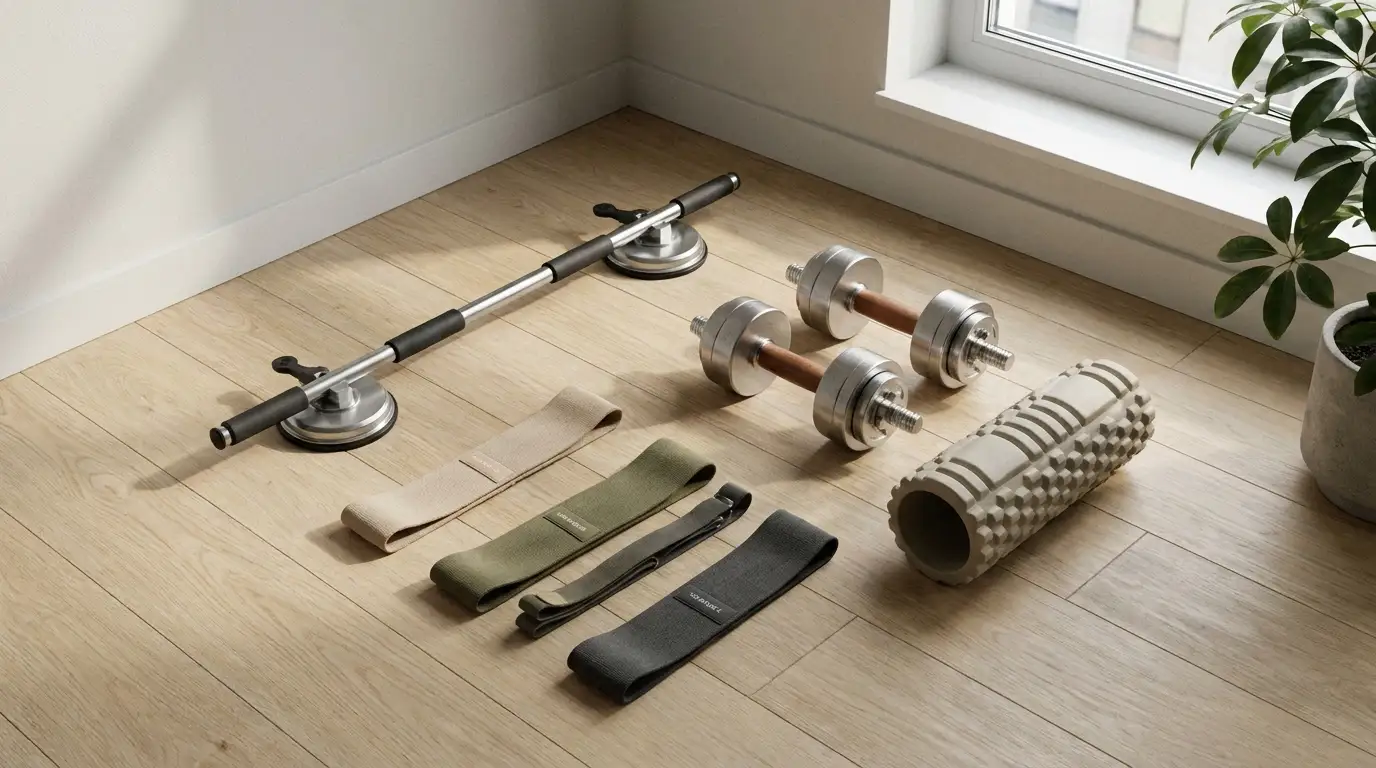
We use foldable racks and wall-mounted benches to free floor space when not in use.
Multi-Functional Equipment
We prioritize:
- Adjustable dumbbells
- Resistance bands
- Foldable benches
These reduce clutter while maintaining versatility.
Corner Utilization
We turn corners into storage hubs or cardio stations to preserve central space for movement.
Advanced Garage Gym Layout Configurations for Serious Training
For advanced users, we integrate professional-grade features:
Dual Training Zones
We split the garage into two mirrored training sections:
- Heavy strength zone
- Conditioning zone
This allows multiple users or supersets without interference.
Integrated Functional Training Rig
We install full wall rigs combining:
- Pull-up bars
- Dip stations
- Cable attachments
This creates a complete training ecosystem.
Performance Tracking Area
We dedicate a small space for:
- Mirrors
- Timer displays
- Workout tracking boards
This improves consistency and training discipline.
Common Garage Gym Layout Mistakes to Avoid
We consistently see avoidable errors that reduce performance:
1. Overcrowding the Space
Too much equipment reduces movement efficiency and increases injury risk.
2. Ignoring Workflow
Random placement leads to inefficient transitions between exercises.
3. Poor Ventilation Planning
Without airflow, workouts become uncomfortable and unsustainable.
4. Neglecting Storage Systems
Loose equipment on the floor creates hazards and reduces usable space.
Sample High-Performance Garage Gym Layout Blueprint
We recommend a structured layout approach:
- Front wall: Power rack + barbell storage
- Left side: Dumbbell and kettlebell zone
- Right side: Cardio machines
- Back wall: Storage racks and accessories
- Center: Open mobility and conditioning space
This configuration ensures maximum efficiency, safety, and adaptability.
Final Optimization Tips for a Perfect Garage Gym Layout
We refine every garage gym layout with continuous improvement:
- Reassess spacing monthly
- Upgrade storage as equipment increases
- Maintain a clutter-free training floor
- Adjust lighting based on workout intensity
A garage gym is not static—it evolves with training goals, strength progression, and lifestyle changes.
FAQ – Garage Gym Layout
What is the best garage gym layout for beginners?
The best garage gym layout for beginners focuses on simplicity and functionality. A basic setup includes a power rack, adjustable bench, dumbbells, and a small cardio machine, arranged to keep an open center space for movement and bodyweight exercises.
How much space do I need for a garage gym layout?
A functional garage gym layout can start in as little as a single-car garage (around 150–250 sq ft). However, a two-car garage provides ideal space for separating strength, cardio, and mobility zones comfortably.
How do I maximize space in a small garage gym layout?
To maximize space, use wall-mounted racks, foldable equipment, and vertical storage systems. Keep the center area open and prioritize multi-functional equipment like adjustable dumbbells and resistance bands.
What flooring is best for a garage gym layout?
Rubber flooring is the best option for a garage gym layout. It provides shock absorption, protects equipment, reduces noise, and improves safety during heavy lifting or high-impact workouts.
How do I organize equipment in a garage gym layout?
Organize equipment by training zones. Keep heavy lifting gear near the power rack, cardio machines in a separate corner, and smaller accessories like bands and dumbbells in labeled storage racks for easy access.
Can I build a professional-level gym in my garage?
Yes, a garage gym layout can easily be upgraded to a professional level with proper planning. Adding a full power rack system, cable machines, flooring upgrades, and optimized lighting can create a gym comparable to commercial facilities.




Leave a Reply