

Maintaining strong bones becomes increasingly important as we age. While many people associate bone health with calcium and supplements, regular exercise is also an important part of maintaining bone strength and supporting overall mobility.
The good news is that you don’t need a gym membership to include bone-supporting exercises in your routine. A home workout space can provide plenty of opportunities for weight-bearing exercise and strength training, two types of movement commonly recommended for supporting bone health.
For adults concerned about osteoporosis prevention, the goal isn’t simply to exercise harder. It’s to choose appropriate movements, progress gradually, and build strength safely and consistently.
In this guide, we’ll look at 10 effective home exercises for bone density, explain how they can support stronger bones, and show you which home-gym equipment can make your workouts more effective.
Important: If you have osteoporosis, a previous fracture, significant bone loss, or another condition affecting your bones or balance, speak with your healthcare professional or physical therapist before starting a new exercise program.
Table of Contents
Why Exercise Matters for Bone Density
Bones are living tissue that responds to physical stress. Weight-bearing and resistance exercises place controlled demands on the muscles and skeletal system, helping support bone strength and physical function.
Exercise can also provide benefits that indirectly support bone health, including:
- Better muscle strength
- Improved balance
- Greater mobility
- Better coordination
- Increased physical independence
- Reduced risk of falls
For this reason, a well-designed home workout routine can be useful for people looking to support healthy bones as they get older.
However, more impact isn’t necessarily better. The right exercise depends on your age, fitness level, bone health, previous injuries, and medical history.
10 Home Exercises for Bone Density
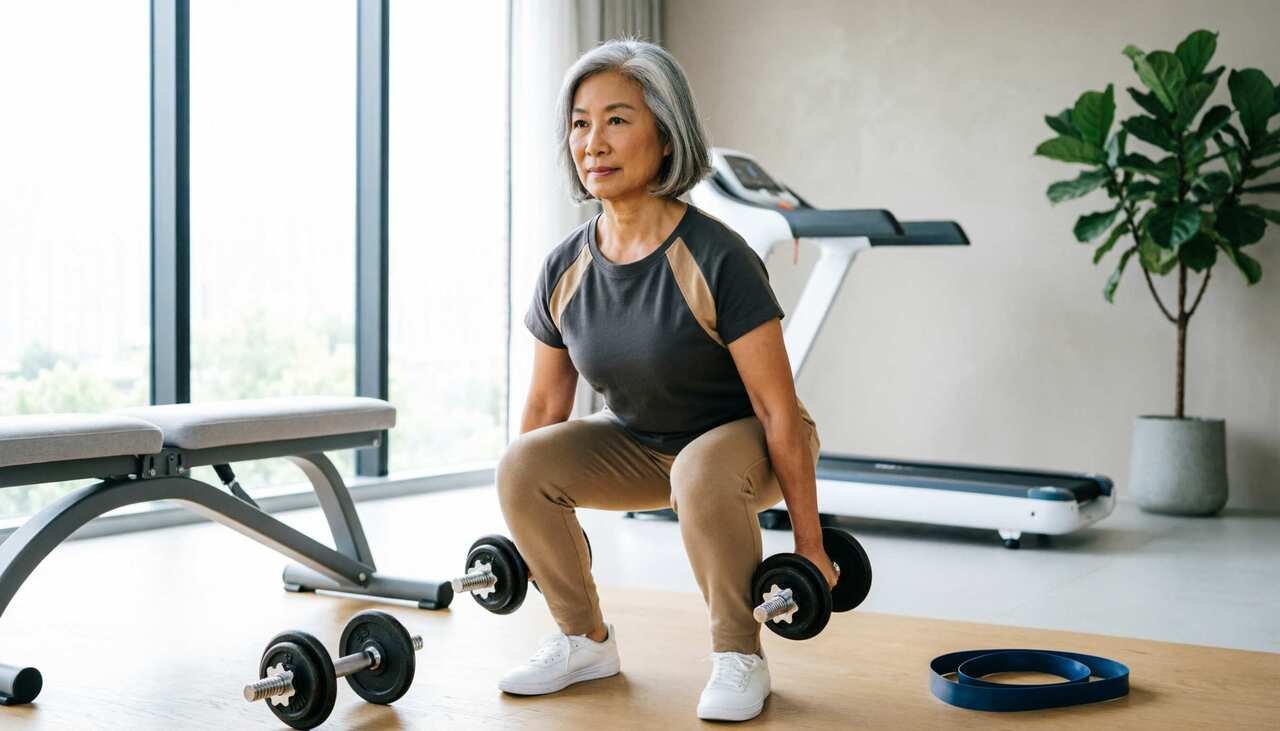
1. Squats
Squats are one of the most practical strength exercises you can perform at home.
They primarily work the legs and hips while requiring your body to support and move its own weight. Stronger lower-body muscles can also help improve everyday movement, stability, and balance.
How to perform a basic bodyweight squat
- Stand with your feet approximately shoulder-width apart.
- Keep your chest comfortably upright.
- Bend your knees and push your hips backward.
- Lower yourself only as far as comfortable.
- Press through your feet to return to standing.
- Repeat for controlled repetitions.
Once bodyweight squats become comfortable, you can gradually increase resistance with dumbbells or another appropriate training tool.
2. Sit-to-Stand
If traditional squats feel challenging, the sit-to-stand exercise is a simple alternative.
This movement closely resembles everyday activities such as getting out of a chair, making it particularly practical for older adults.
How to perform it
- Sit toward the front of a sturdy chair.
- Place your feet firmly on the floor.
- Lean slightly forward.
- Push through your feet and stand.
- Slowly lower yourself back into the chair.
- Repeat.
Focus on controlled movement rather than speed.
As your strength improves, you can make the exercise more challenging by using a lower chair or adding light resistance when appropriate.
3. Step-Ups
Step-ups are a useful weight-bearing exercise that also trains the legs and challenges balance.
You can perform them using a sturdy exercise step or a stable platform designed for exercise.
How to perform step-ups
- Stand facing a secure step.
- Place one foot firmly on the platform.
- Push through that foot to step up.
- Bring the other foot up.
- Step down carefully.
- Alternate sides.
Start with a low platform and hold onto a stable support if necessary.
Safety tip: Never use an unstable household object as an exercise step.
4. Resistance-Band Rows
Resistance training doesn’t have to involve heavy weights. Resistance bands provide a convenient way to strengthen the upper back, shoulders, and arms at home.
Strong muscles can contribute to better posture, movement, and functional strength.
How to perform a resistance-band row
- Secure the band appropriately.
- Hold the handles or ends of the band.
- Stand or sit with your back straight.
- Pull your hands toward your body.
- Squeeze your shoulder blades gently.
- Slowly return to the starting position.
Use a resistance level that allows you to maintain good technique throughout the movement.
5. Wall Push-Ups
Wall push-ups are a beginner-friendly strength exercise that requires very little equipment.
They work the chest, shoulders, arms, and core while allowing you to control the difficulty by changing your distance from the wall.
How to perform wall push-ups
- Stand facing a sturdy wall.
- Place your hands against the wall around chest height.
- Walk your feet slightly backward.
- Bend your elbows and bring your chest toward the wall.
- Push through your hands to return to the starting position.
As your strength improves, you can progress toward incline or modified push-ups.
6. Dumbbell Deadlifts
Dumbbell deadlifts train several major muscle groups, particularly the muscles around the hips and legs.
They can be an effective addition to a home strength-training routine when performed with proper technique.
Basic technique
- Stand with a dumbbell in each hand.
- Keep your feet comfortably positioned.
- Brace your midsection.
- Push your hips backward while maintaining a neutral spine.
- Lower the weights along your legs.
- Drive through your feet and hips to stand.
Start with light weights and learn the movement pattern before increasing resistance.
Important: People with osteoporosis or vertebral fractures may need to modify or avoid certain spinal-loading or bending movements. Get individualized guidance before performing loaded deadlifts if you have diagnosed bone loss.
7. Calf Raises
Calf raises are simple but useful for strengthening the lower legs and improving functional strength.
They can be performed almost anywhere in your home.
How to perform calf raises
- Stand upright near a stable support.
- Place your feet approximately hip-width apart.
- Slowly raise your heels.
- Pause briefly at the top.
- Lower your heels with control.
- Repeat.
Holding onto a countertop or sturdy support can provide additional balance.
As you become stronger, you can perform the movement while holding light dumbbells.
8. Resistance-Band Leg Press
A resistance band can provide an effective lower-body workout without requiring a large piece of gym equipment.
One option is a seated or lying band press, depending on the equipment and setup you have available.
The movement can train the legs while allowing you to adjust resistance to your fitness level.
Always check the band for signs of damage and secure it according to the manufacturer’s instructions.
9. Walking on a Treadmill
Walking is one of the easiest ways to incorporate weight-bearing activity into a home workout routine.
A treadmill can be particularly convenient when outdoor conditions aren’t ideal.
You can begin with comfortable walking sessions and gradually increase duration or pace as your fitness improves.
Simple progression
- Start with 10–15 minutes.
- Maintain a comfortable pace.
- Gradually increase your walking time.
- Add gentle inclines only when appropriate.
- Hold the handrails only when necessary for safety.
For people with balance concerns, a treadmill with appropriate safety features may provide additional reassurance.
10. Balance Exercises
Balance training doesn’t directly replace strength or weight-bearing exercise, but it can be an important part of an overall bone-health-focused fitness routine.
Better balance may help reduce the likelihood of falls, which is particularly important for people who have fragile bones.
Simple options include:
- Standing on one foot while holding a stable surface
- Heel-to-toe walking
- Controlled side steps
- Supported balance holds
Start with support nearby and avoid challenging balance exercises when you are alone if you have a significant fall risk.
Best Home Gym Equipment for Bone Health
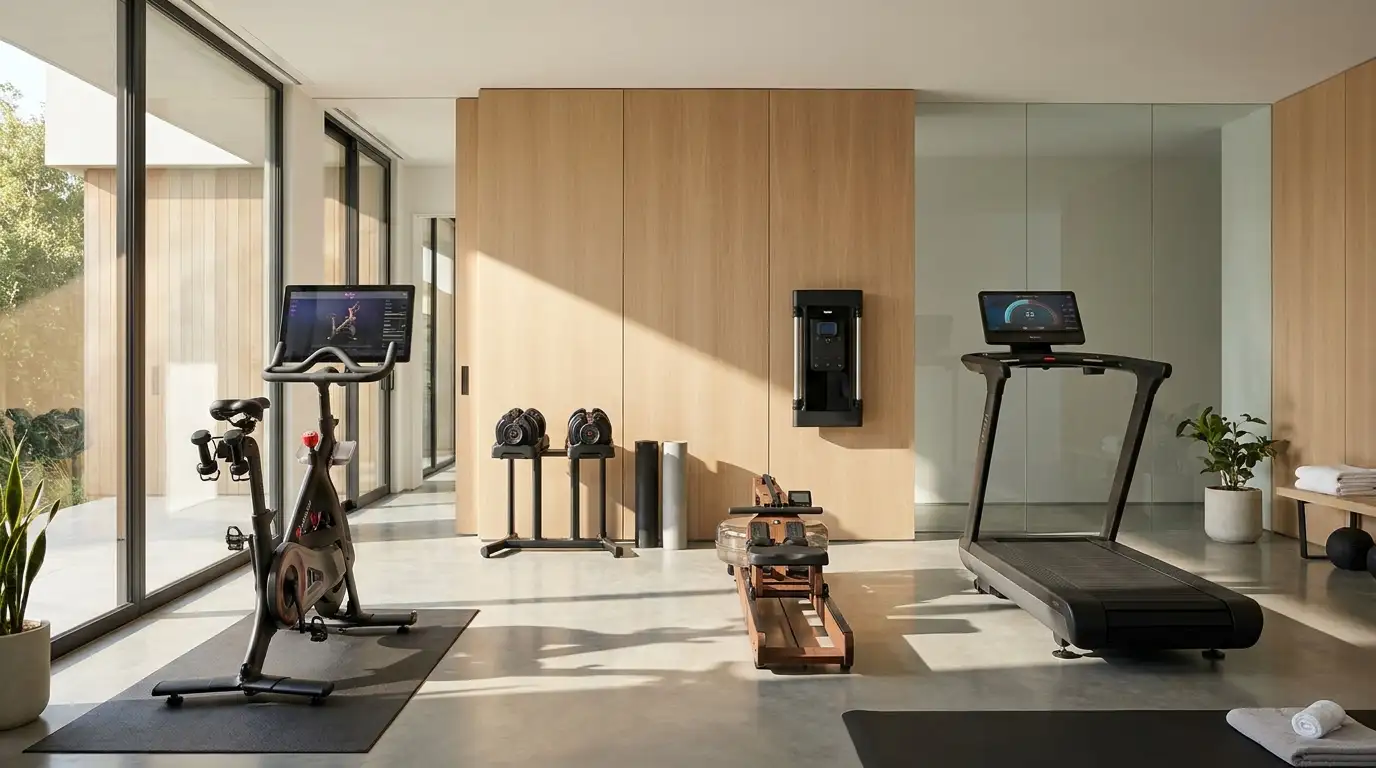
You don’t need a large home gym to support a bone-strengthening exercise routine.
A few versatile pieces of equipment can provide plenty of options.
Adjustable Dumbbells
Adjustable dumbbells are one of the most useful additions to a home gym.
They allow you to gradually increase resistance as your strength improves without requiring a large collection of individual weights.
They’re particularly useful for exercises such as:
- Squats
- Deadlifts
- Rows
- Step-ups
- Calf raises
- Overhead exercises when appropriate
Resistance Bands
Resistance bands are inexpensive, portable, and easy to store.
They can be particularly useful for beginners, older adults, and people who want a lightweight home workout setup.
Different resistance levels allow you to progress gradually.
Exercise Bench
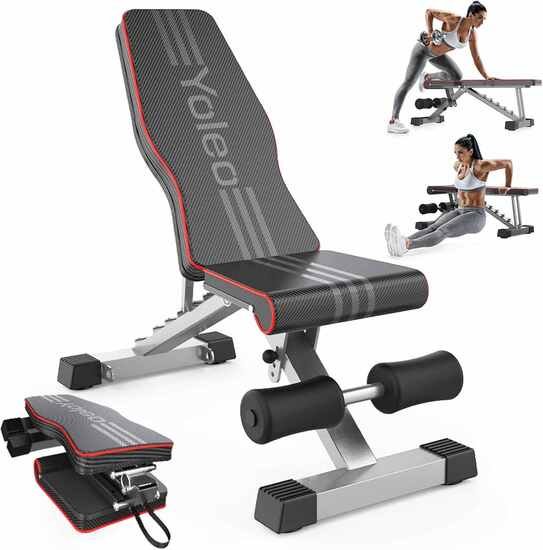
A sturdy exercise bench can expand the number of strength exercises you can perform at home.
Look for a stable bench with a weight capacity appropriate for your body weight and intended exercises.
Step Platform
A secure step platform can be useful for step-ups and other lower-body exercises.
Choose a platform specifically designed for exercise rather than improvising with furniture.
Treadmill
A treadmill provides a convenient way to incorporate walking into a home fitness routine.
For older adults, useful features may include:
- Easy-to-use controls
- Stable handrails
- Emergency safety stop
- Low step-up height
- Appropriate speed range
How Often Should You Exercise for Bone Health?
There isn’t one perfect workout schedule for everyone.
A balanced routine can combine:
- Strength training: Several sessions throughout the week, depending on your fitness level and recovery.
- Weight-bearing activity: Regular walking or other appropriate weight-bearing activities.
- Balance training: Regular practice, particularly for older adults or anyone concerned about falls.
- Mobility work: Gentle mobility exercises can complement strength and cardiovascular training.
The most important factor is consistency.
Rather than trying to perform an extremely demanding workout once a week, aim to build a sustainable routine that you can maintain over time.
How to Make Home Strength Training Safer
When your goal is supporting bone health, exercise quality matters.
Start gradually
Don’t immediately begin with heavy weights or difficult exercises. Give your muscles, joints, and movement patterns time to adapt.
Prioritize technique
Controlled repetitions are generally more useful than rushing through a workout.
Progress slowly
Increase resistance, repetitions, or workout duration gradually rather than making large jumps.
Use stable equipment
Make sure benches, steps, racks, and other equipment are designed for exercise and placed on a stable surface.
Keep your workout area clear
Remove loose rugs, clutter, cords, and other trip hazards around your home gym.
Listen to your body
Pain, dizziness, unusual weakness, or other concerning symptoms are reasons to stop exercising and seek appropriate professional guidance.
Exercises to Be Careful With If You Have Osteoporosis
If you’ve been diagnosed with osteoporosis, exercise selection should be individualized.
Certain movements may place excessive stress on vulnerable areas, particularly the spine. Depending on your condition, a healthcare professional may recommend modifying or avoiding exercises involving forceful spinal flexion, twisting, or high-impact movements.
That doesn’t mean people with osteoporosis should avoid exercise.
In many cases, appropriately selected strength, balance, and weight-bearing activities can be an important part of maintaining physical function.
The key is choosing exercises that match your health status and experience.
Can Home Exercise Help in Osteoporosis Prevention?
Exercise can be an important component of an overall osteoporosis prevention strategy, particularly when combined with adequate nutrition, healthy lifestyle habits, and appropriate medical care.
However, exercise is only one part of bone health.
Other factors can include:
- Adequate calcium intake
- Adequate vitamin D
- Sufficient protein
- Maintaining a healthy body weight
- Avoiding smoking
- Limiting excessive alcohol consumption
- Regular medical assessment when appropriate
- Preventing falls
If you have risk factors for osteoporosis, talk with a qualified healthcare professional about whether you need bone-density testing or an individualized exercise plan.
A Simple Beginner Home Workout for Osteoporosis Prevention
If you’re new to strength training, you don’t need to perform all 10 exercises in one session.
A simple starting routine could include:
Warm-up: 5–10 minutes of easy movement
Workout:
- Sit-to-stands — 8–12 repetitions
- Wall push-ups — 8–12 repetitions
- Resistance-band rows — 8–12 repetitions
- Calf raises — 10–15 repetitions
- Step-ups — 6–10 repetitions per side
- Supported balance exercise — 20–30 seconds per side
Rest as needed and focus on controlled technique.
As your fitness improves, you can gradually introduce additional resistance and more challenging exercises.
Osteoporosis Prevention Final Thoughts
Building stronger bones doesn’t require an expensive gym membership. With a few versatile pieces of home gym equipment, you can create a practical routine that combines strength, weight-bearing activity, balance, and functional movement.
Exercises such as squats, step-ups, resistance-band rows, walking, and appropriately selected strength exercises can help you build a more complete home fitness routine.
For people interested in osteoporosis prevention, consistency and appropriate exercise selection are more important than simply lifting the heaviest weights possible.

Leave a Reply