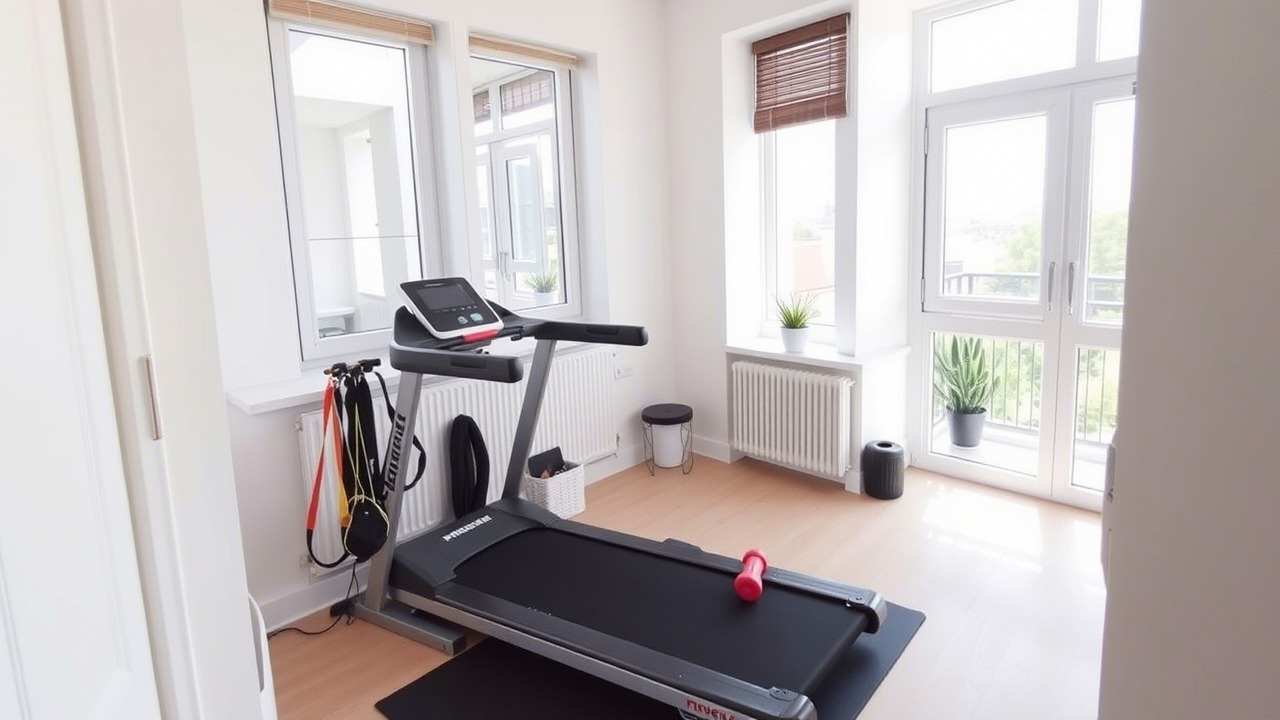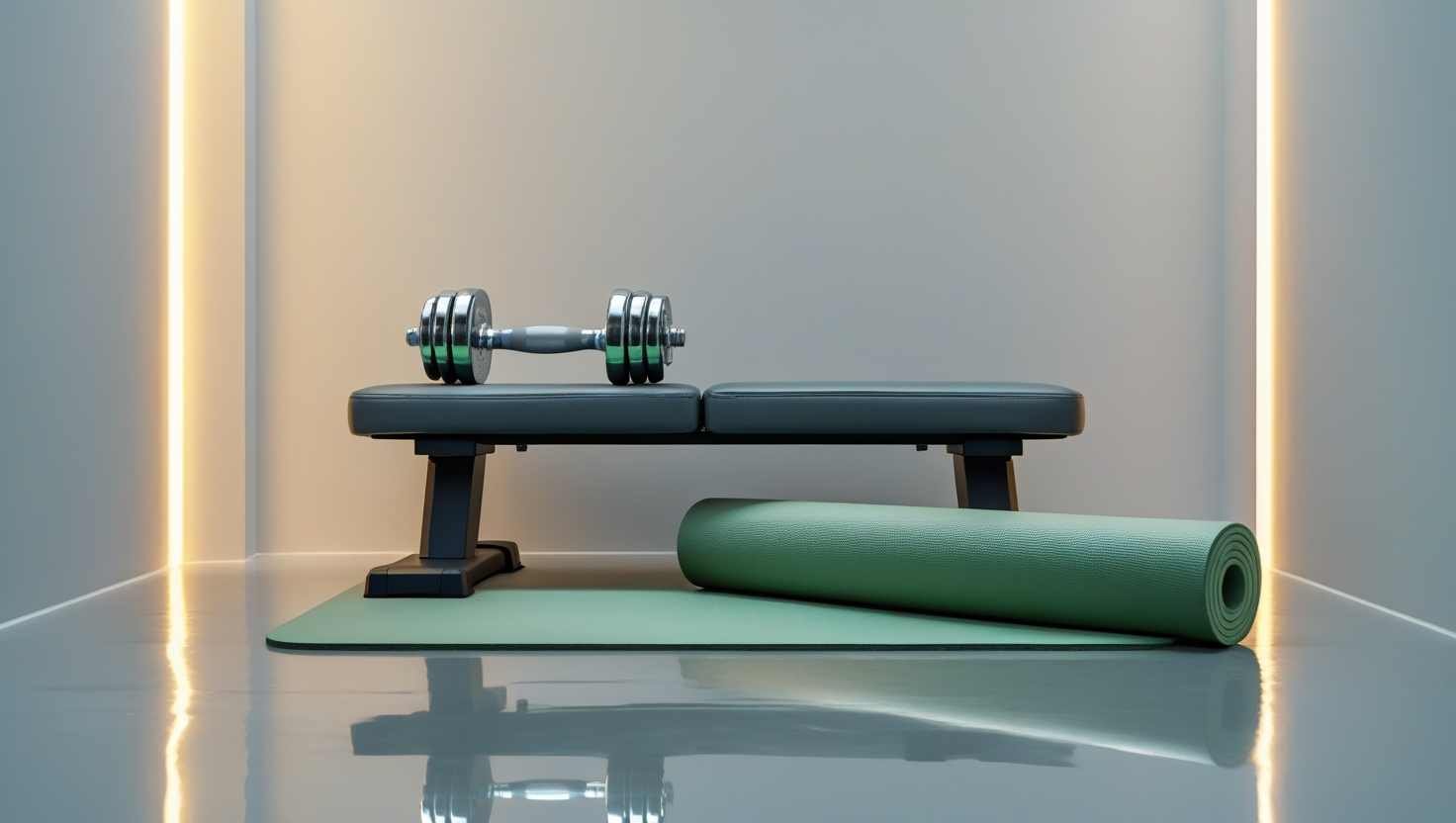
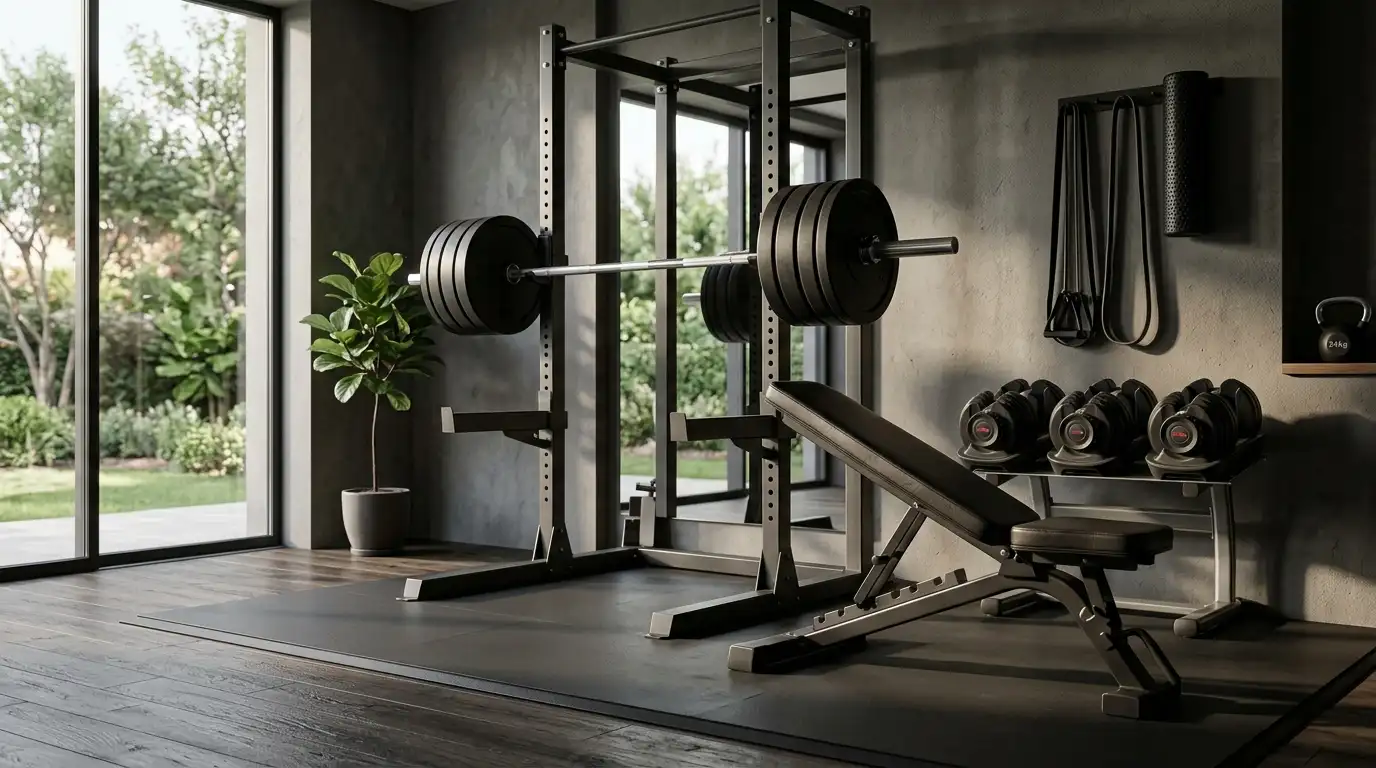

Free weight workout routines to Build Muscle does not require a complicated gym setup or an endless list of exercises. With a well-structured routine, a pair of dumbbells, a barbell, adjustable weights, and a bench can provide enough resistance to train every major muscle group effectively.
The key is to combine compound exercises, progressive overload, appropriate training volume, controlled technique, and consistent recovery. When these elements work together, free weight training can support steady increases in strength and muscle size.
Whether we are training at home or in a fully equipped gym, free weights give us the flexibility to create effective workouts around our schedule, available equipment, and training experience.
Table of Contents
Why Free Weights Are Effective for Building Muscle
Free weights allow us to move through a natural range of motion rather than following a fixed machine path. Dumbbells and barbells also require us to control the weight throughout each repetition, which can make the exercises demanding even when using relatively simple equipment.
For muscle growth, the most important consideration is that the muscles receive enough resistance and training stimulus over time. We can achieve this by gradually increasing the weight, repetitions, training volume, or exercise difficulty.
Free weights also make it possible to perform many compound movements that train several muscle groups simultaneously. Squats, deadlifts, presses, rows, and lunges can form the foundation of an efficient muscle-building program.
The Basic Principles of Muscle-Building Workouts
Before choosing a routine, we should understand the principles that make resistance training productive.
Progressive Overload
Progressive overload means gradually increasing the challenge placed on the muscles. We might add weight, perform additional repetitions, increase the number of working sets, or improve our technique with the same load.
For example, if we can comfortably complete three sets of 10 dumbbell presses with a particular weight, we might eventually increase the weight and work back toward the same repetition range.
Progress does not need to happen every workout. The goal is consistent improvement over weeks and months.
Training Volume
Training volume refers broadly to the amount of work performed during resistance training. A workout consisting of several well-chosen exercises and multiple challenging sets can provide substantially more stimulus than performing a single set of each movement.
However, more is not automatically better. Excessive volume can make recovery difficult and may reduce performance in subsequent sessions.
Proper Technique
Good technique allows us to target the intended muscles while maintaining control of the resistance.
We should avoid turning every repetition into a test of momentum. A controlled lowering phase, stable body position, and consistent range of motion can make free weight exercises more productive.
Recovery
Muscle growth does not occur simply because we lift weights. Training provides the stimulus, while recovery, adequate nutrition, and sleep support adaptation.
A well-designed routine should therefore leave enough recovery between demanding sessions.
4-Day Free Weight Workout Routine to Build Muscle
A four-day split gives us enough training frequency to work each major muscle group while still providing recovery days.
A practical weekly structure is:
- Monday: Chest, shoulders, and triceps
- Tuesday: Back and biceps
- Wednesday: Rest
- Thursday: Legs
- Friday: Upper body
- Saturday: Rest
- Sunday: Rest
We can adjust the days according to our schedule. The important point is to distribute demanding workouts rather than trying to train everything heavily on consecutive days.
Day 1: Chest, Shoulders, and Triceps
Barbell Bench Press
The barbell bench press is one of the most useful free weight exercises for developing the chest, while also training the shoulders and triceps.
Perform 3–4 sets of 6–10 repetitions.
We should keep the upper back stable, maintain control of the bar, and avoid using excessive weight at the expense of technique.
Incline Dumbbell Press
Incline dumbbell pressing shifts emphasis toward the upper portion of the chest while allowing each arm to work independently.
Perform 3 sets of 8–12 repetitions.
Dumbbells also allow us to identify strength differences between the left and right sides.
Dumbbell Shoulder Press
A seated or standing dumbbell shoulder press trains the shoulders while also involving the triceps.
Perform 3 sets of 8–12 repetitions.
We should keep the torso controlled instead of leaning backward to move heavier weights.
Dumbbell Lateral Raise
Lateral raises target the side deltoids and can add valuable shoulder-focused volume without requiring extremely heavy weights.
Perform 3 sets of 10–15 repetitions.
Controlled movement is more important than chasing a heavy dumbbell.
Dumbbell or Barbell Triceps Extension
Finish with a direct triceps exercise for 2–3 sets of 10–15 repetitions.
The weight should remain manageable enough to maintain control throughout the movement.
Day 2: Back and Biceps
Barbell Deadlift
Deadlifts train the posterior chain and involve the back, glutes, hamstrings, and other supporting muscles.
Perform 3 sets of 5–8 repetitions.
Because deadlifts can be technically demanding, we should prioritize a stable setup and controlled execution rather than treating them as a maximum-weight competition.
Barbell Row
Barbell rows are a foundational free weight exercise for building back strength and size.
Perform 3–4 sets of 6–10 repetitions.
We should maintain a stable torso and avoid excessive swinging.
One-Arm Dumbbell Row
The one-arm dumbbell row allows us to work each side independently.
Perform 3 sets of 8–12 repetitions per side.
This exercise pairs particularly well with barbell rows because it gives us another way to train the upper and middle back.
Dumbbell Rear-Delt Fly
Perform 2–3 sets of 10–15 repetitions.
Using moderate resistance and controlled movement helps keep the exercise focused on the rear shoulders and upper back.
Dumbbell Curl
Finish the workout with 3 sets of 8–12 repetitions.
We should keep the elbows relatively stable rather than using the hips and shoulders to swing the dumbbells upward.
Hammer Curl
Perform 2–3 sets of 10–15 repetitions.
The neutral grip makes hammer curls a useful complement to conventional curls.
Day 3: Rest and Recovery
A recovery day does not necessarily mean complete inactivity.
Light walking, mobility work, stretching, or normal daily activity can be appropriate as long as it does not interfere with recovery.
We should pay attention to persistent soreness, declining performance, unusual fatigue, and other signs that training demands may need adjustment.
Day 4: Leg Workout
A strong muscle-building program should give the lower body as much attention as the upper body.
Barbell Squat
The barbell squat is a major free weight movement for the legs and hips.
Perform 3–4 sets of 6–10 repetitions.
We should choose a stance that allows us to maintain balance and control while moving through a comfortable range of motion.
Romanian Deadlift
Romanian deadlifts emphasize the hamstrings and glutes while also challenging the posterior chain.
Perform 3 sets of 8–12 repetitions.
The movement should come primarily from controlled hip hinging rather than rounding the lower back.
Dumbbell Walking Lunge
Walking lunges train the legs individually while challenging balance and coordination.
Perform 3 sets of 8–12 repetitions per leg.
They can be performed with dumbbells held at the sides.
Dumbbell Bulgarian Split Squat
Bulgarian split squats are particularly demanding despite requiring relatively little equipment.
Perform 2–3 sets of 8–12 repetitions per leg.
Because the exercise places considerable demands on each leg independently, moderate weights can be more than sufficient.
Standing Calf Raise
Finish with 3–4 sets of 10–15 repetitions.
We should use a controlled range of motion rather than bouncing through each repetition.
Day 5: Upper-Body Free Weight Workout
The fifth training session brings the upper body together and gives us another opportunity to practice the major movement patterns.
Dumbbell Bench Press
Perform 3 sets of 8–12 repetitions.
Pull-Up or Weighted Pull-Up
Perform 3 sets of controlled repetitions.
If weighted pull-ups are too difficult, bodyweight repetitions or another vertical pulling variation can be used.
Incline Dumbbell Row
Perform 3 sets of 8–12 repetitions.
The supported position can help us concentrate on moving the weight with the back rather than generating momentum from the lower body.
Dumbbell Shoulder Press
Perform 3 sets of 8–12 repetitions.
Dumbbell Lateral Raise
Perform 2–3 sets of 12–15 repetitions.
Dumbbell Curl
Perform 2–3 sets of 10–12 repetitions.
Triceps Extension
Perform 2–3 sets of 10–15 repetitions.
This session should be challenging but should not leave us so fatigued that recovery becomes difficult.
3-Day Full-Body Free Weight Routine
We do not need four or five training days to build muscle.
A three-day full-body workout can be an excellent option for beginners, people with busy schedules, or anyone who prefers shorter weekly training commitments.
A simple Monday-Wednesday-Friday structure could look like this:
| Exercise | Sets | Repetitions |
|---|---|---|
| Squat | 3 | 6–10 |
| Bench Press | 3 | 6–10 |
| Barbell Row | 3 | 8–12 |
| Romanian Deadlift | 2–3 | 8–12 |
| Dumbbell Shoulder Press | 2–3 | 8–12 |
| Dumbbell Curl | 2 | 10–15 |
| Triceps Extension | 2 | 10–15 |
We can alternate exercises or make small adjustments between sessions to prevent every workout from feeling identical.
For beginners, this approach has another advantage: the major movement patterns are practiced several times throughout the week.
Dumbbell-Only Workout for Building Muscle
We can also build an effective routine without a barbell.
A dumbbell-only session could include:
- Goblet squat
- Dumbbell Romanian deadlift
- Dumbbell bench press
- One-arm dumbbell row
- Dumbbell shoulder press
- Bulgarian split squat
- Dumbbell lateral raise
- Dumbbell curl
- Dumbbell triceps extension
Adjustable dumbbells are especially useful because they allow us to increase resistance without filling an entire room with equipment.
For a simple full-body workout, we can perform 3 sets of 8–12 repetitions for the primary movements and fewer sets for smaller isolation exercises.
How Heavy Should We Lift?
The correct weight depends on the exercise, training experience, and target repetitions.
Instead of selecting a weight simply because it feels heavy, we should choose a resistance that allows us to perform the planned repetitions with good technique and controlled movement.
As the same weight becomes easier, we can gradually increase the resistance.
For example:
Week 1: 10, 9, 8 repetitions
Week 2: 10, 10, 9 repetitions
Week 3: 11, 10, 10 repetitions
Week 4: Increase the weight and repeat the progression
This is only one example of progression. We can use several different methods as long as the overall training demand gradually increases.
How Many Repetitions Should We Perform?
There is no single repetition number that builds muscle.
A practical approach is to use different ranges depending on the exercise:
- Heavy compound movements: approximately 5–10 repetitions
- Moderate compound movements: approximately 8–12 repetitions
- Isolation exercises: approximately 10–15 or more repetitions
The important factor is that the working sets provide a meaningful challenge while allowing us to maintain appropriate technique.
Rest Between Sets
Rest periods should be long enough for us to perform the next set effectively.
For demanding compound movements, two or more minutes of rest may be appropriate. Smaller isolation movements may require less recovery.
If reducing the rest period causes our repetitions or technique to deteriorate significantly, we should give ourselves more time.
Muscle-building workouts do not need to feel like cardiovascular circuits.
Nutrition for Free Weight Muscle Growth
Training provides the stimulus, but nutrition supplies the resources needed to support recovery and adaptation.
A muscle-building diet should provide adequate protein, carbohydrates, fats, vitamins, minerals, and total energy.
Protein-rich foods can include:
- Eggs
- Chicken
- Fish
- Greek yogurt
- Milk
- Beans
- Lentils
- Tofu
- Lean meats
- Cottage cheese
Carbohydrates such as rice, potatoes, oats, fruit, whole grains, and other carbohydrate-rich foods can provide useful training fuel.
Healthy fats from foods such as nuts, seeds, olive oil, avocado, and fatty fish can also form part of a balanced diet.
If muscle gain is the primary goal, consistently eating enough food is important. However, dramatically increasing calories is not necessary simply because we have started lifting weights.
Common Mistakes That Limit Muscle Growth
Changing the Routine Too Often
We cannot accurately evaluate progress if we constantly replace exercises.
Keeping major movements in our program for several weeks gives us an opportunity to measure improvements in strength and technique.
Lifting With Poor Technique
Adding weight while losing control can turn a productive exercise into a poorly executed movement.
Quality repetitions should come before heavier repetitions.
Ignoring the Legs
An upper-body-only routine creates an incomplete training program.
Squats, lunges, split squats, and hip-hinge movements give the lower body the attention it deserves.
Doing Too Much
More exercises and more sets are not automatically better.
If our performance is declining from session to session and recovery is becoming difficult, reducing unnecessary volume may be more useful than adding another workout.
Neglecting Sleep
Consistent sleep supports recovery and training performance.
A muscle-building program should therefore include a realistic sleep schedule rather than focusing exclusively on exercises and weights.
How to Track Progress
Keeping a training log makes progression easier to see.
For every major exercise, record:
- Weight used
- Number of repetitions
- Number of sets
- Exercise variation
- Technique notes
- How difficult the set felt
We can then compare our current performance with previous workouts.
Body measurements and progress photographs can also provide useful information because the scale alone cannot tell us whether changes are coming from muscle, fat, water, or other factors.
Final Thoughts
The most effective free weight workout routines to build muscle are not necessarily the most complicated.
A strong program can be built around fundamental movements such as squats, presses, rows, deadlifts, lunges, curls, and extensions. From there, we can gradually increase resistance, repetitions, or training volume while maintaining good technique.
The most important part is consistency.
When we train regularly, eat appropriately, recover sufficiently, and track our progression, a relatively simple collection of free weights can provide an effective foundation for building strength and muscle over time.