
Wearable technology has become a practical part of modern fitness. Smartwatches and fitness trackers can monitor steps, heart rate, workouts, sleep patterns, recovery, and other daily metrics without requiring a phone to be in hand. For health-conscious users, however, choosing a wearable is no longer simply about having the most features.
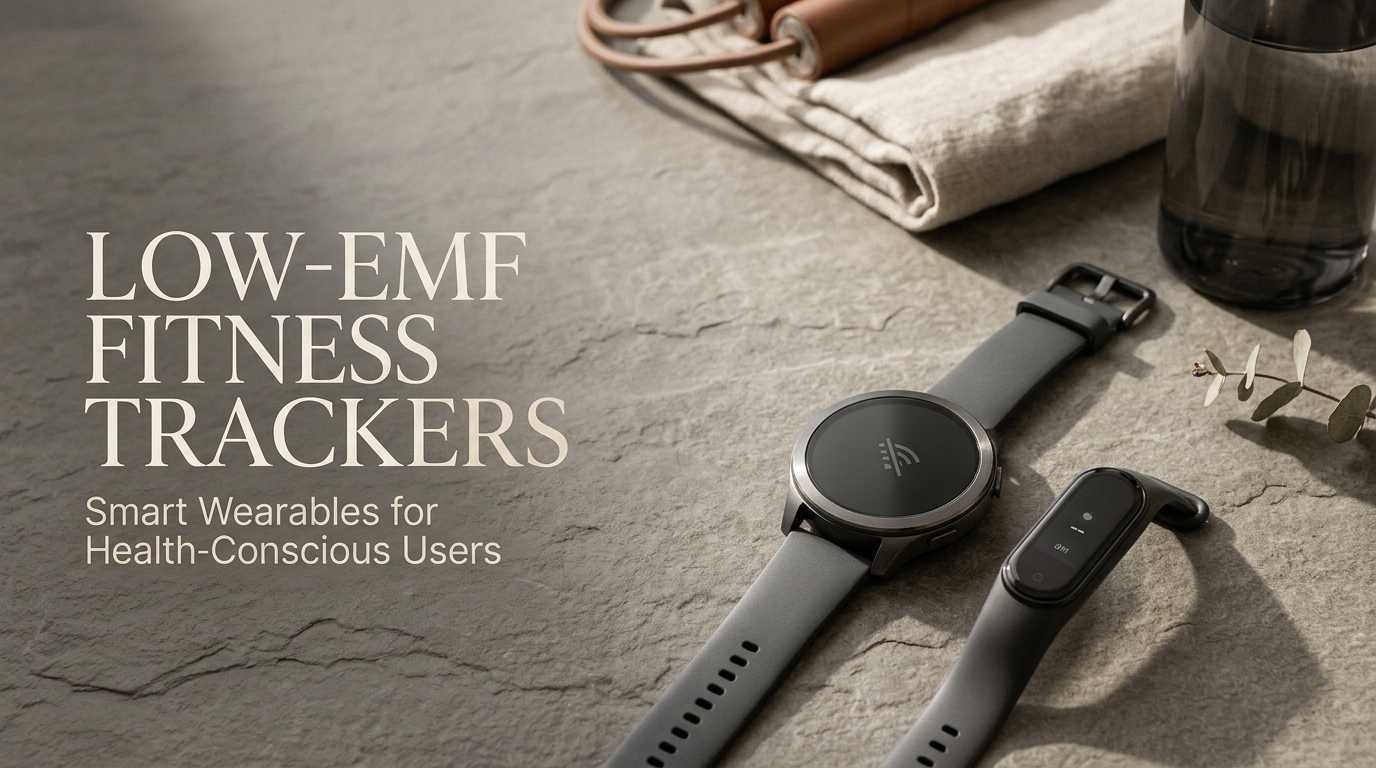
Low-EMF fitness trackers and smartwatches have become increasingly interesting to people who want useful health and fitness data while being more deliberate about their exposure to wireless signals. The goal is not to eliminate technology, but to choose a device and usage pattern that better matches personal preferences.
In 2026, there are more ways to approach this. Some wearables can operate with limited wireless connectivity, while others allow Bluetooth, Wi-Fi, cellular, or other radio functions to be disabled when they are not needed. There are also simpler fitness trackers designed around essential measurements rather than constant connectivity.
Table of Contents
What Are Low-EMF Fitness Trackers?
The term low-EMF fitness tracker generally refers to a wearable designed or configured to minimize exposure to electromagnetic fields associated with wireless communication.
Fitness trackers and smartwatches may communicate using technologies such as:
- Bluetooth
- Wi-Fi
- Cellular connectivity
- GPS and other positioning systems
- Near-field communication
- Proprietary wireless protocols
These technologies do not all operate in the same way or at the same power level. A wearable’s actual exposure depends on factors such as transmission power, connection type, distance from the body, duration of transmission, and whether a wireless function is actively being used.
For users concerned about EMF exposure, the most practical approach is therefore not simply looking for a product labeled “low EMF.” It is also worth examining how the device can be configured and used.
A tracker that can remain offline for most of the day may be more appealing than a feature-rich smartwatch that maintains several wireless connections continuously.
Why Health-Conscious Users Are Looking for Lower-Connectivity Wearables
Modern wearables can collect an impressive amount of information. Step counts, exercise duration, heart-rate trends, sleep estimates, calories, and recovery measurements can all help users understand their habits.
However, not everyone wants constant connectivity.
Some people prefer a minimalist technology routine, where data is collected locally and synchronized only occasionally. Others may want a wearable that works without a cellular connection, smartphone, or cloud account.
There is also a broader movement toward reducing unnecessary digital stimulation. A fitness tracker can remain useful without becoming another source of notifications, calls, social media alerts, and constant interaction.
This makes low-connectivity wearables particularly attractive to people interested in intentional technology use.
Low-EMF vs. Offline Fitness Trackers
The terms “low-EMF” and “offline” are sometimes used interchangeably, but they describe different ideas.
An offline fitness tracker is primarily concerned with functionality without an active internet or smartphone connection. Depending on the model, it may store activity data internally and synchronize later.
A low-EMF wearable, meanwhile, focuses on reducing wireless transmission or exposure.
These concepts can overlap, but they are not identical.
A device might work offline while still using Bluetooth periodically. Conversely, a smartwatch might provide extensive wireless functionality but allow users to disable cellular or Wi-Fi connectivity.
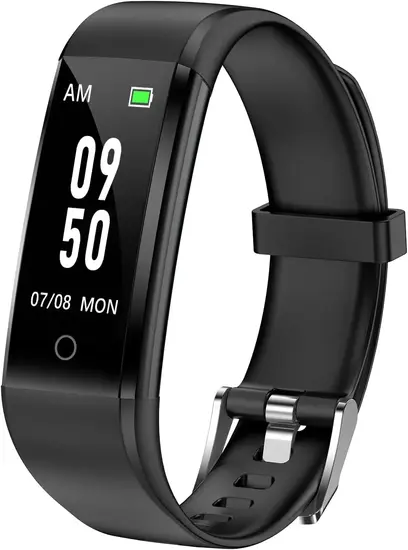
For users prioritizing reduced wireless exposure, the most useful features to investigate include:
- Airplane mode
- Bluetooth controls
- Wi-Fi controls
- Cellular controls
- Local data storage
- Manual synchronization
- Phone-free fitness tracking
- Long battery life
The more control a wearable provides over connectivity, the easier it becomes to tailor the device to a preferred routine.
Important Features to Look for in a Low-EMF Fitness Tracker
1. Airplane Mode
Airplane mode can be one of the most useful features for users who want to reduce wireless activity.
A good implementation should allow the wearable to continue recording offline information such as steps or workouts while disabling selected wireless communications.
This creates a simple routine: track first, synchronize later.
2. Local Data Storage
Local storage is particularly valuable for people who do not want their fitness tracker connected to a smartphone all day.
The wearable can collect activity information internally, allowing users to synchronize it at a convenient time.
This approach can also reduce dependence on constant connectivity.
3. Long Battery Life
Battery life matters more than it might initially appear.
A wearable requiring daily charging can encourage frequent interaction with its charging system and smartphone app. A tracker lasting several days—or considerably longer—can support a more hands-off approach.
Long battery life is especially useful for people who want to wear their tracker continuously for sleep and recovery monitoring.
4. GPS Control
GPS can be useful for runners, cyclists, hikers, and outdoor athletes, but it is not necessary for every workout.
A wearable with configurable location services gives users greater control. GPS can be enabled for a run or hike and disabled when it is unnecessary.
This is preferable to choosing between an all-connected experience and losing important fitness functionality altogether.
5. Notification Management
Notifications are not an EMF measurement, but they matter to the overall experience.
A health-focused wearable should not necessarily behave like a miniature smartphone.
Users who want a calmer technology environment may prefer to disable incoming notifications while keeping activity tracking enabled.
This creates a more focused device: fitness information without digital noise.
Can a Fitness Tracker Work Without a Smartphone?
Yes, depending on the device.
Some fitness trackers can record steps, workouts, heart rate, and other measurements independently before synchronizing information later. Others require a smartphone for setup, data synchronization, or access to advanced features.
This distinction is important when choosing a wearable for a low-connectivity lifestyle.
A truly practical offline-oriented tracker should provide useful functionality while disconnected, rather than simply surviving temporarily without a phone.
For runners and outdoor athletes, built-in GPS can also make a major difference. A device with onboard GPS may allow users to record routes without carrying a smartphone during every workout.
Are Smartwatches Safe to Wear All Day?
Smartwatches are designed for wearable use, and their wireless systems operate under applicable regulatory requirements in the markets where they are sold.
However, people who remain concerned about electromagnetic exposure may still prefer to limit unnecessary wireless transmission.
The practical distinction is between regulatory compliance and personal preference.
A device meeting established exposure requirements does not mean every user must be comfortable with wearing it continuously. Some people simply prefer to minimize unnecessary wireless communication.
For those users, configurable connectivity provides a useful middle ground.
Instead of abandoning wearable technology entirely, they can use the functions they value while limiting connections they do not need.
How to Reduce Wireless Exposure While Using a Fitness Tracker
There are several straightforward ways to create a lower-connectivity wearable routine.
Keep Bluetooth Off When It Is Not Needed
If the tracker stores information locally, Bluetooth can potentially remain disabled until synchronization is necessary.
Disable Wi-Fi
Many fitness trackers do not need Wi-Fi for basic activity tracking. If the feature is unnecessary, turning it off provides greater control over connectivity.
Avoid Cellular Connectivity Unless Necessary
Cellular smartwatches provide impressive independence from smartphones, but they also introduce another wireless communication system.
Users who do not need calls or cellular data directly from the wrist can consider a non-cellular model.
Synchronize Manually
Rather than keeping a tracker permanently connected to a phone, synchronization can be performed at selected times.
For example, a user might sync the device once each evening, review the day’s statistics, and then return the wearable to offline operation.
Use Airplane Mode During Sleep
For users who prefer minimal wireless connectivity overnight, airplane mode can be particularly convenient—provided the device continues recording the desired sleep or activity information while offline.
Always check the manufacturer’s documentation because functionality in airplane mode varies between models.
Low-EMF Fitness Trackers for Sleep Tracking
Sleep tracking presents a unique consideration because the wearable remains close to the body for several hours.
People interested in minimizing connectivity may therefore prioritize devices that can record sleep locally without maintaining a continuous wireless connection.
Useful sleep features can include:
- Sleep duration
- Sleep timing
- Sleep-stage estimates
- Heart-rate trends
- Overnight movement
- Breathing-related metrics
- Recovery indicators
However, sleep tracking should be viewed as an estimation tool rather than a medical diagnosis. Wearables can help identify patterns, but unusual or concerning symptoms should be discussed with an appropriate healthcare professional.
Low-EMF Wearables for Running and Exercise
Runners and other athletes often need fewer smartwatch features than they think.
A dedicated fitness tracker can provide distance, pace, heart rate, workout duration, and route information without requiring constant smartphone interaction.
For outdoor exercise, built-in GPS combined with offline storage can be particularly useful.
A runner can start a workout, leave the phone behind, complete the session, and synchronize the information later.
This setup provides many of the benefits of modern wearable technology while maintaining a more minimalist experience.
Low-EMF vs. Traditional Smartwatches
Traditional smartwatches prioritize connectivity. They may combine health tracking with messaging, calls, apps, payments, navigation, music streaming, cellular service, and notifications.
That versatility is useful, but it is not necessarily what every fitness user needs.
A lower-connectivity fitness tracker takes a different approach.
| Feature | Low-Connectivity Tracker | Fully Connected Smartwatch |
|---|---|---|
| Step tracking | Usually | Yes |
| Workout tracking | Usually | Yes |
| Sleep tracking | Often | Often |
| Smartphone connection | Optional or periodic | Frequently active |
| Cellular service | Usually unavailable | Available on selected models |
| Notifications | Limited or optional | Extensive |
| Offline operation | Strong focus | Model dependent |
| Battery life | Often longer | Often shorter |
| Digital distractions | Lower | Higher |
The better choice depends on priorities.
Someone who wants calls, navigation, apps, and mobile payments from the wrist may prefer a connected smartwatch. Someone primarily interested in fitness tracking with fewer wireless functions may prefer a simpler device.
What About Fitness Trackers Without Subscriptions?
Subscription-free fitness trackers are another important consideration.
Some wearable ecosystems place advanced analytics, historical reports, or additional wellness features behind recurring memberships. Others provide core tracking functionality without requiring a monthly subscription.
For users who want a simpler technology setup, avoiding subscriptions can be attractive for both financial and practical reasons.
A good starting point is to compare:
- Core tracking features
- Data storage
- Historical access
- Smartphone requirements
- Premium analytics
- Export options
- Subscription requirements
- Offline functionality
For a broader look at trackers that can be used without recurring fees, see our guide to fitness trackers without subscriptions.
Best Offline Wearable Fitness Trackers: What to Prioritize
Choosing an offline-friendly wearable becomes easier when the selection process begins with functionality rather than brand names.
Look for a device that can:
Track without a phone → store information locally → operate with wireless functions disabled → synchronize later.
That workflow is particularly appealing to people who want the benefits of quantified fitness without being permanently connected.
For a more focused comparison of offline-oriented wearable technology, explore our guide to the best offline wearable fitness trackers.
A Practical Low-EMF Wearable Routine
The simplest strategy is often the most sustainable.
During exercise, enable only the functions needed for the workout. If GPS is required, use GPS. If heart-rate tracking is important, keep the relevant sensors active. If wireless synchronization is unnecessary, leave connectivity disabled.
After the workout, allow the tracker to store the information locally.
Later, synchronize the device when convenient.
At night, users who prefer reduced connectivity can enable airplane mode or disable available wireless features while retaining offline sleep tracking where supported.
This creates a purpose-driven wearable routine rather than an always-connected one.
What We Should Check Before Buying
Before purchasing any wearable marketed as low-EMF, we should examine the manufacturer’s technical documentation rather than relying exclusively on marketing language.
Important questions include:
- Can Bluetooth be disabled?
- Can Wi-Fi be disabled?
- Is cellular connectivity optional?
- Does airplane mode preserve activity tracking?
- Does the device store data locally?
- Can workouts be recorded without a phone?
- Can GPS operate independently?
- How often does the device automatically synchronize?
- Is a subscription required for important features?
- How long does the battery last?
- What happens to sleep tracking when wireless connections are disabled?
These questions reveal much more about the actual user experience than the phrase “low EMF” alone.
The Bottom Line for Health-Conscious Wearable Users in 2026
The best low-EMF fitness tracker is not necessarily the device with the fewest features. It is the device that gives users meaningful control over connectivity while preserving the fitness functions they actually use.
For some people, that means a basic activity tracker. For others, it means a sophisticated smartwatch operated primarily in offline or airplane mode.
The ideal setup can be remarkably simple: track activity, store information locally, minimize unnecessary wireless connections, synchronize when convenient, and keep notifications under control.
That approach allows us to benefit from modern fitness technology without making constant connectivity the center of the experience.
As wearable technology continues to evolve in 2026, the most compelling devices for health-conscious users may not simply be those with the longest list of features. They may be the ones that provide better control, fewer distractions, longer battery life, useful offline functionality, and a more intentional relationship with technology.