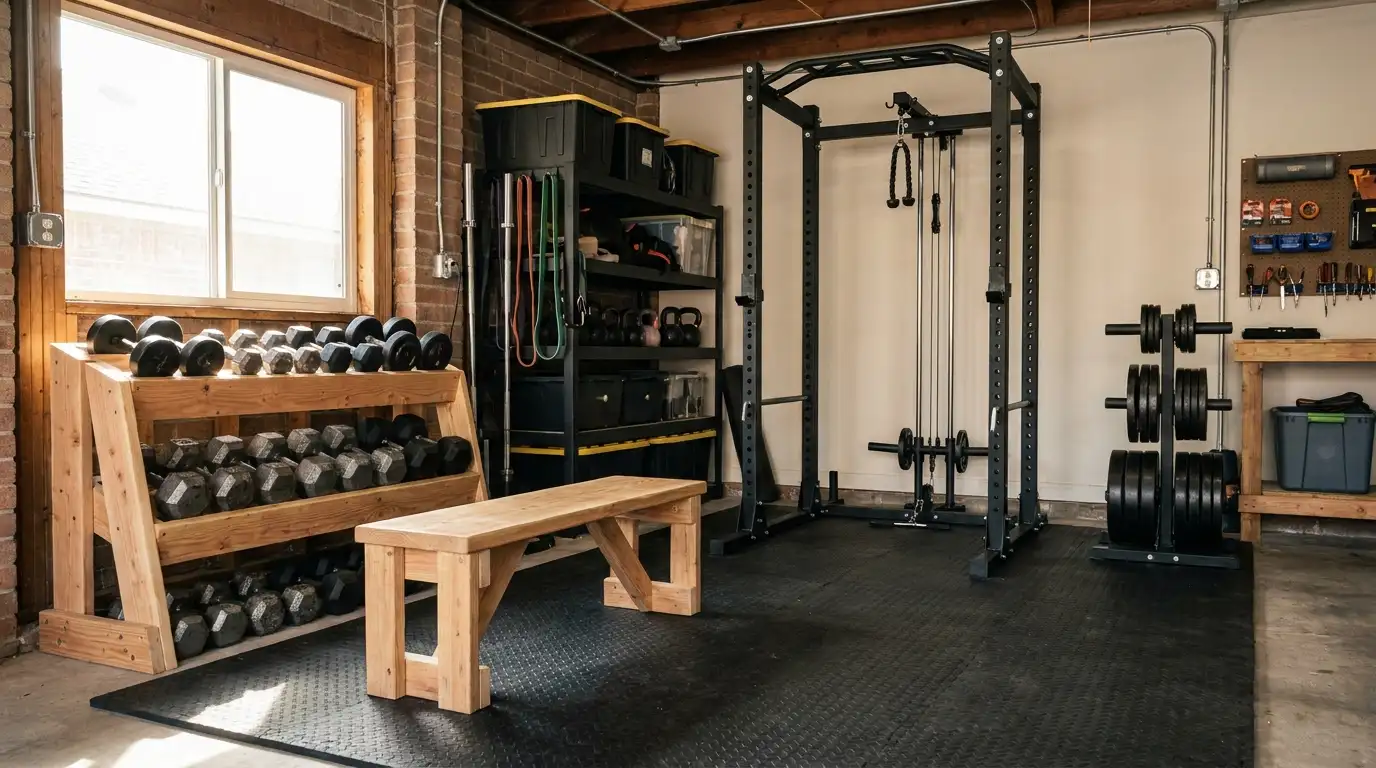
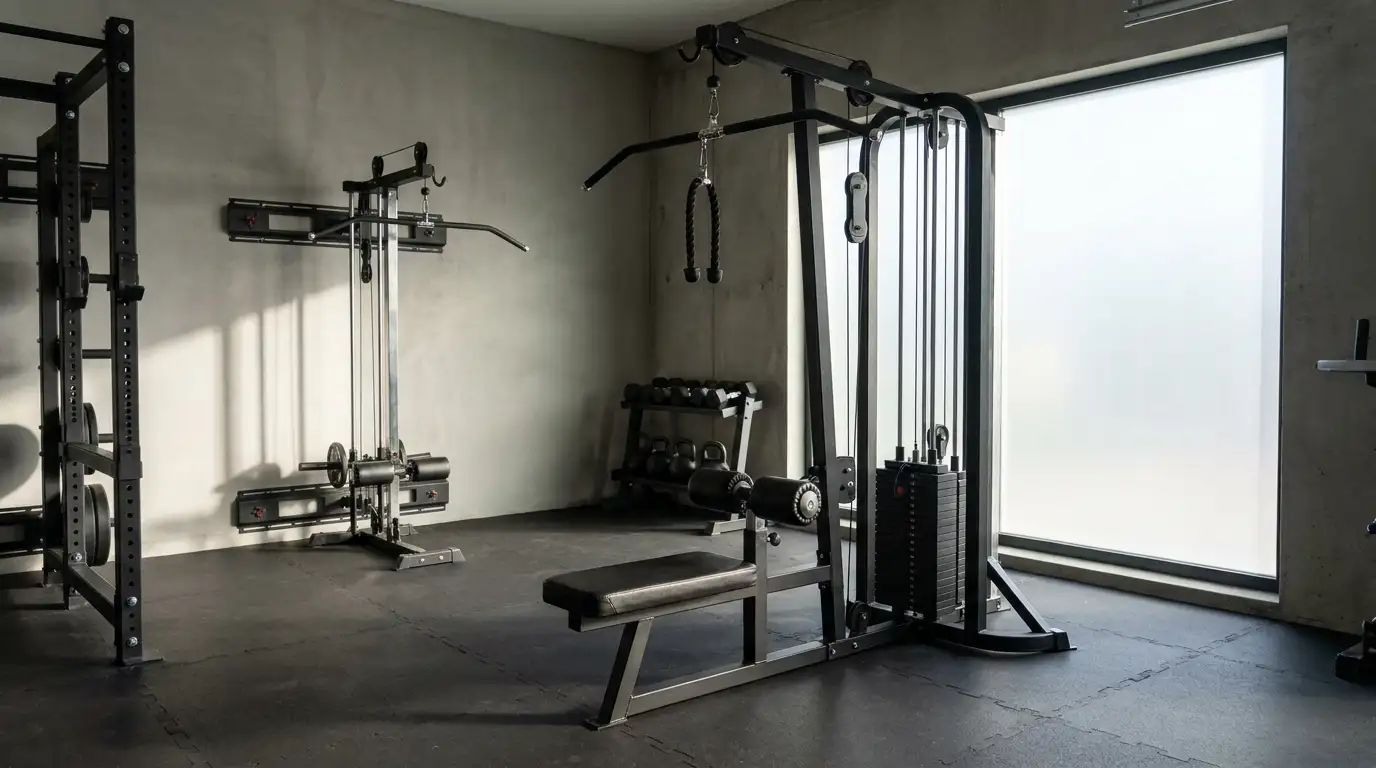

Building a home gym means choosing equipment that delivers meaningful training results without wasting valuable space. A lat pulldown machine is one of the most useful additions for developing a stronger back, improving upper-body strength, and training the latissimus dorsi muscles without needing a commercial gym membership. However, not every lat pulldown machine fits every home gym setup.
Some models feature compact cable attachments that integrate with existing power racks, while others are standalone machines with dedicated weight stacks, adjustable seats, thigh pads, and longer cable travel. The difference between these options can significantly affect workout performance, installation requirements, comfort, and available space.
When comparing the best lat pulldown machines for home gyms, we need to consider more than resistance and price. Footprint, ceiling clearance, loading systems, cable smoothness, stability, and versatility all influence which equipment makes the most sense for a particular training environment.
Table of Contents
Why a Lat Pulldown Machine Is Worth Adding to a Home Gym
A lat pulldown machine provides a controlled way to train the back, particularly the latissimus dorsi, which contributes to shoulder extension, adduction, and pulling strength. It also engages the biceps, forearms, rear shoulders, and several muscles that help stabilize the torso.
Unlike pull-ups, lat pulldowns allow us to adjust resistance independently of body weight. This makes them useful for beginners who cannot perform multiple pull-ups, experienced lifters looking to add volume, and anyone wanting more consistent resistance throughout a workout.
A dedicated pulldown station also offers practical advantages:
- Adjustable resistance: We can progressively increase the training load.
- Controlled movement: The cable provides a predictable pulling path.
- Training accessibility: Beginners can develop pulling strength before progressing to pull-ups.
- Exercise variety: Different attachments allow wide-grip, close-grip, neutral-grip, and unilateral movements.
- Space efficiency: Certain models combine pulldowns, low rows, and other cable exercises in one station.
For home gym owners, the right machine can become a central component of an upper-body training routine without requiring several separate pieces of equipment.
Compact vs. Full-Size Lat Pulldown Machines
The most important distinction when shopping for a home lat pulldown machine is whether we need a compact attachment or a dedicated full-size station.
Compact Lat Pulldown Machines and Rack Attachments
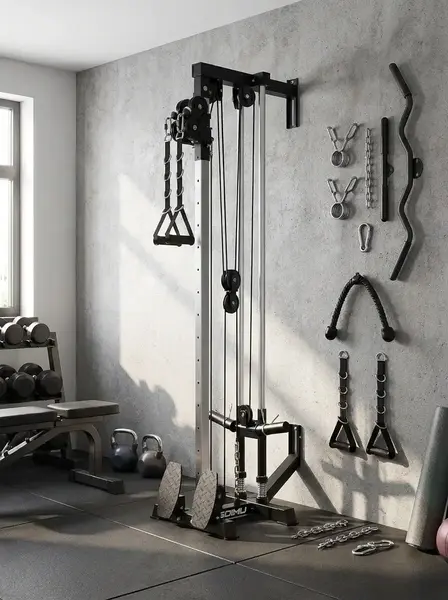
Compact pulldown systems are designed for home gyms where floor space is limited. Many attach to power racks, squat racks, functional trainers, or existing cable systems.
Instead of purchasing an entirely separate machine, we can add a pulley attachment to equipment we already own. Depending on the design, these systems may include a top pulley, a low pulley, a cable, loading pins, weight horns, or plate-loaded carriages.
The main advantage is their smaller footprint. A rack-mounted pulldown attachment typically occupies the space already used by the rack, making it particularly useful in garages, spare bedrooms, basements, and smaller workout rooms.
Compact systems are also attractive because they can be relatively affordable. We may be able to use our existing Olympic plates rather than paying for an integrated weight stack.
However, compact designs often require more setup and adjustment. We may need to position a bench beneath the pulley, secure the rack, attach a thigh restraint if available, and ensure the cable travels smoothly without rubbing against the rack.
Some rack-mounted systems also provide less comfortable positioning than dedicated machines, especially when the seat and thigh pads are not integrated.
Compact systems are best suited for:
- Home gyms with limited floor space.
- Lifters who already own a power rack.
- Budget-conscious equipment upgrades.
- Users who prefer plate-loaded resistance.
- Multi-purpose training setups.
For home gym owners who want more exercise variety than a basic pulldown attachment can provide, a cable-based setup may be a better long-term investment. Our guide to the Best Functional Trainers for Home Gyms explores versatile cable systems that support pulldowns, rows, chest exercises, and other full-body movements without requiring multiple machines.
Full-Size Lat Pulldown Machines
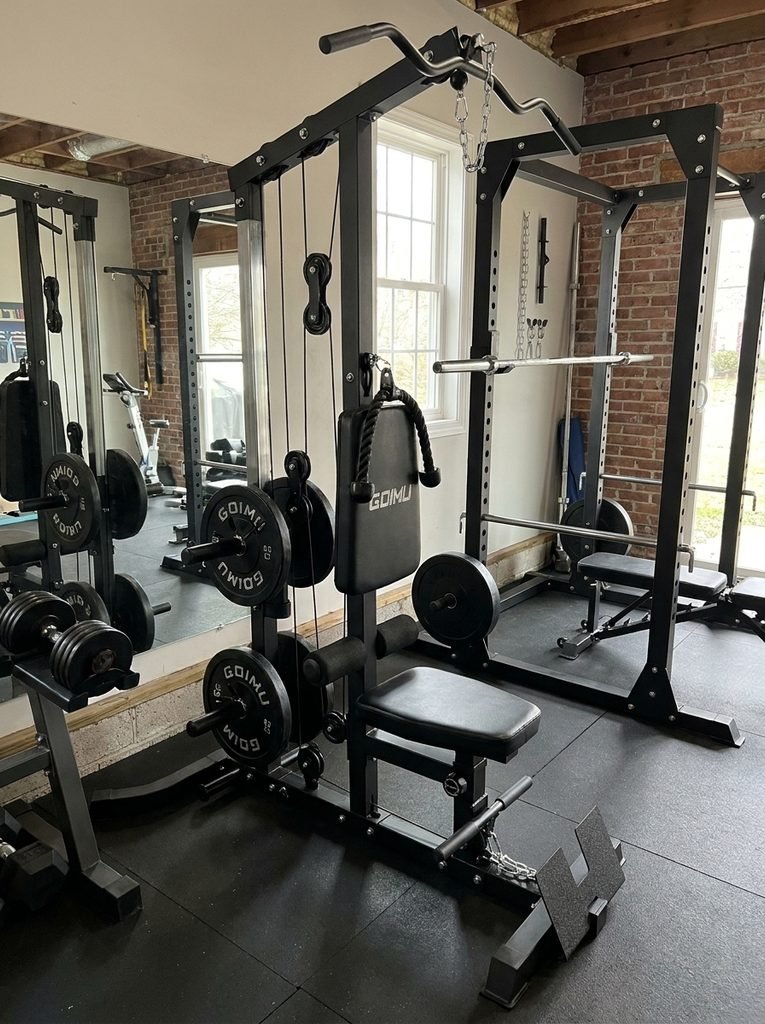
Full-size lat pulldown machines are built specifically for vertical pulling exercises. They generally feature an integrated seat, adjustable thigh pads, a pulley assembly, a dedicated frame, and either a weight stack or plate-loaded resistance system.
The dedicated structure creates a more straightforward workout experience. We can sit down, adjust the thigh restraints, select the resistance, attach a handle, and begin training without rearranging equipment.
A well-designed standalone machine can provide better positioning and stability than basic pulley attachments. The seat and thigh pads help prevent the body from lifting during heavier pulls, while the machine frame supports a consistent cable path.
Full-size machines may also offer longer cable travel, making it easier to perform a complete range of motion without the weight stack reaching its limit prematurely.
The primary disadvantage is space. A dedicated machine needs its own floor area and sufficient room around it for getting on and off, changing attachments, and performing movements comfortably.
Full-size machines are best suited for:
- Dedicated home gyms with available floor space.
- Frequent back training.
- Users prioritizing comfort and stability.
- Lifters who prefer quick resistance adjustments.
- Home gyms where cable training is a major part of the program.
Footprint: How Much Space Does a Lat Pulldown Machine Require?
Footprint is one of the most overlooked factors when purchasing home gym equipment. A machine may look reasonably compact in product photos but become difficult to use once we account for the bench, cable movement, loading plates, and access to the seat.
Compact rack-mounted pulldowns are usually more space-efficient because they integrate into existing equipment. However, we still need to consider the depth of the rack, the location of the pulley, and whether a bench can be positioned directly beneath it.
Full-size machines require a dedicated footprint. We should measure the actual floor dimensions and leave additional room for movement rather than positioning the equipment tightly against walls.
Before purchasing, we should check:
- Machine length and width.
- Seat positioning and adjustment range.
- Space needed for plate loading.
- Cable and handle clearance.
- Access to the machine from the front and sides.
- Whether other gym equipment interferes with the pulling movement.
The goal is to create a setup where we can train without constantly moving benches, dumbbells, or other equipment.
Ceiling Clearance: An Important Factor for Home Gym Installation
Ceiling height can determine whether a lat pulldown machine is practical in a basement, garage, or converted room. A machine may fit vertically while still being uncomfortable to use because the overhead bar, cable, or user’s arms come too close to the ceiling.
Full-size machines often have tall pulley towers that require careful measurement. Compact rack-mounted systems may offer more flexibility, but the height of the rack and upper pulley still matters.
We should consider the height of the machine itself, the overhead cable assembly, the handle’s starting position, and the amount of clearance needed when extending our arms.
A low ceiling can limit overhead range of motion, particularly for taller lifters. It may also interfere with wide pulldown bars or other long attachments.
Measuring the room before purchasing helps prevent installation problems and allows us to select a machine that supports a comfortable range of motion.
Weight Stacks vs. Plate-Loaded Lat Pulldown Machines
The resistance system determines how quickly we can adjust the load, how much equipment we need to store, and how the machine fits into our training routine.
Weight Stack Lat Pulldown Machines
Weight-stack machines use a series of plates connected to a selector pin. We choose the resistance by moving the pin to the desired weight, making load changes quick and convenient.
The main advantage is simplicity. We don’t need to remove or add plates between sets, which is particularly useful during supersets, drop sets, or workouts involving multiple users.
Weight stacks also keep resistance plates contained within the machine, reducing the need for separate plate storage.
However, weight stacks can increase the machine’s overall dimensions, cost, and maintenance requirements. The stack may also limit the maximum resistance available, depending on the model.
Plate-Loaded Lat Pulldown Machines
Plate-loaded machines use Olympic or standard weight plates to provide resistance. This design is often appealing to home gym owners because plates can be shared with barbells, leg machines, and other equipment.
Plate-loaded systems can offer greater flexibility in resistance progression, particularly when we already own a substantial collection of plates.
They may also have a simpler mechanical design, although cable quality, pulley alignment, bearings, and frame construction still influence performance.
The downside is that loading and unloading plates takes longer. We also need to consider plate storage and whether the loading horns are easy to reach.
For many home gym setups, plate-loaded machines offer a practical balance between cost, versatility, and available resistance.
Cable Systems and Pulley Quality
The quality of a lat pulldown machine’s cable system can have a major effect on how it feels during training. Smooth pulley rotation, proper cable tension, durable bearings, and a well-aligned pulling path contribute to consistent movement.
Poorly designed pulley systems may feel rough, produce excessive noise, or create uneven resistance. Cable friction can also become noticeable during slow repetitions and controlled eccentric movements.
When evaluating a machine, we should examine the cable material, pulley construction, attachment points, and the manufacturer’s maintenance recommendations.
A smooth cable system is particularly important for users who perform higher-repetition sets, controlled tempo training, or frequent unilateral exercises.
We should also inspect the cable’s full travel range. A system that provides sufficient movement without the stack bottoming out or the cable becoming slack is generally easier to use for different body sizes and exercise variations.
Lat Pulldown Attachments and Exercise Versatility
The attachment included with a machine can influence how comfortable and versatile it is. A straight bar is useful for traditional pulldowns, but it may not suit every wrist, shoulder, or grip position.
Common attachments include:
- Wide lat pulldown bars: Provide a wider grip option for conventional pulldowns.
- Straight bars: Support varied hand positions and controlled pulling movements.
- Neutral-grip handles: Allow the palms to face each other, which some users find more comfortable.
- Close-grip V-bars: Provide a compact grip for close-grip pulldowns and seated cable movements.
- Single handles: Allow unilateral training and independent movement of each arm.
A machine with a standard carabiner connection can accommodate many interchangeable attachments. This increases exercise variety without requiring additional equipment.
Depending on the cable arrangement, we may also be able to perform seated rows, straight-arm pulldowns, face pulls, cable curls, and other accessory exercises.
Rack-Mounted Attachments vs. Dedicated Machines: Which Is Better?
The right choice depends on the equipment we already own, the available floor space, and how often we use cable exercises.
| Feature | Compact Rack Attachment | Full-Size Machine |
|---|---|---|
| Footprint | Minimal additional space | Dedicated floor space |
| Installation | Requires compatible rack | Usually standalone |
| Resistance | Often plate-loaded | Stack or plate-loaded |
| Setup | May require bench positioning | Ready-to-use seat |
| Stability | Depends on rack and attachment | Dedicated machine frame |
| Cost | Often lower | Usually higher |
| Versatility | Can integrate with rack systems | Depends on machine design |
| Convenience | Requires some setup | Faster exercise transitions |
| Best for | Space-efficient gyms | Dedicated training areas |
Compact attachments are ideal when we want to maximize the usefulness of an existing rack. Full-size machines are more attractive when convenience, comfort, and dedicated back training are higher priorities.
Neither option is automatically superior. A well-built rack attachment with smooth cables may be more practical than a low-quality standalone machine, while a stable full-size unit can provide a better experience than a basic pulley attachment.
What to Look for When Buying the Best Lat Pulldown Machine for a Home Gym
Before choosing a model, we should evaluate several essential specifications.
1. Maximum Resistance Capacity
The available resistance should match our current strength level and allow future progression. We should distinguish between the machine’s maximum loading capacity and the actual resistance delivered through the cable system, particularly when pulleys use different ratios.
2. Frame Stability
The frame should remain stable during heavy pulling. Standalone machines should have a sturdy base, while rack-mounted systems require secure attachment points and a compatible rack structure.
3. Seat and Thigh Pad Adjustability
Proper positioning helps us maintain control without sliding or lifting excessively during repetitions. Adjustable thigh restraints are particularly valuable for users of different heights.
4. Cable Travel
The cable should provide enough range for full arm extension and comfortable pulling without premature mechanical limitations.
5. Attachment Compatibility
A standard attachment point makes it easier to switch between bars, handles, and specialized grips.
6. Maintenance Requirements
We should consider cable inspection, pulley lubrication where applicable, hardware tightening, and manufacturer-recommended maintenance intervals.
7. Assembly and Installation
Some compact systems require rack modifications or careful installation, while full-size machines may involve assembling large frame sections and weight-stack components.
How to Choose a Lat Pulldown Machine for Different Home Gym Setups
Small Apartment or Bedroom Gym
A rack-mounted pulldown attachment is often the most practical option. It uses existing equipment and minimizes the need for additional floor space.
If we do not own a power rack, a compact cable station may be more useful than purchasing a large standalone machine, particularly if the gym must share space with furniture.
Garage Gym with a Power Rack
A rack-integrated pulldown system can expand exercise options without creating a separate training station. We can combine squats, bench presses, pull-ups, and cable exercises within the same equipment footprint.
This arrangement is particularly useful for lifters who already own barbells, plates, and adjustable benches.
A power rack can serve as the foundation of a space-efficient strength-training setup, especially when we combine it with pulley attachments, barbells, and adjustable benches. Explore our Power Rack Home Gym guide to see how a rack-based setup can maximize training versatility while keeping equipment organized and floor space under control.
Dedicated Home Gym
A full-size lat pulldown machine makes sense when the room has enough space for dedicated equipment. It offers a convenient setup for frequent back workouts and may provide better seat positioning and resistance adjustments.
For a dedicated gym, a machine with a low pulley may be especially useful because it can support both vertical pulling and seated cable rowing.
Lat Pulldown Machine Exercises for a Complete Back Workout
A lat pulldown station can support more than one exercise. With the appropriate attachments, we can build a varied routine targeting different pulling patterns.
- Traditional lat pulldowns: Emphasize vertical pulling with a controlled descent toward the upper chest.
- Neutral-grip pulldowns: Offer an alternative hand position that may feel more comfortable.
- Close-grip pulldowns: Allow a narrower pulling position and different shoulder movement.
- Straight-arm pulldowns: Target the lats while reducing elbow flexion.
- Seated cable rows: Train the back through a horizontal pulling movement if a low pulley is available.
- Single-arm pulldowns: Allow independent control of each side and unilateral training.
We should prioritize controlled repetitions, comfortable shoulder movement, and consistent positioning rather than relying on momentum or excessively heavy loads.
Common Mistakes When Buying a Lat Pulldown Machine
Choosing home gym equipment based only on price or advertised weight capacity can lead to an inconvenient setup.
One common mistake is ignoring ceiling height. A machine that fits in the room may still restrict overhead movement or handle clearance.
Another mistake is overlooking the cable’s range of travel. Some compact systems may not provide enough movement for taller users or full arm extension.
We should also avoid assuming every rack-mounted attachment fits every power rack. Upright dimensions, mounting hardware, rack depth, and attachment compatibility need to be verified.
Finally, buying a machine without considering plate storage can create unnecessary clutter. Plate-loaded systems are often economical, but we need enough space to store and access the weights comfortably.
Final Verdict: Compact or Full-Size Lat Pulldown Machine?
The best lat pulldown machine for a home gym is the one that fits our space, training style, and existing equipment without compromising comfort or usability.
Compact rack-mounted attachments are excellent for smaller gyms, existing power-rack owners, and lifters who want to maximize equipment versatility while keeping costs and footprint under control.
Full-size lat pulldown machines are better suited to dedicated training spaces where convenience, stability, comfortable positioning, and quick resistance adjustments justify the additional room.
For most space-conscious home gym owners, a well-designed rack-mounted cable system is an efficient starting point. For those building a dedicated strength-training room, a standalone lat pulldown machine with a smooth cable system, adjustable thigh pads, and sufficient resistance capacity can become a valuable long-term investment.
Ultimately, we should prioritize smooth cable movement, proper range of motion, secure construction, comfortable positioning, and practical dimensions over unnecessary features. A machine that fits naturally into our training routine is more likely to support consistent workouts and long-term progress