
Choosing between a magnetic vs friction resistance spin bike can make a significant difference in your indoor cycling experience. Whether you’re building a home gym, training for endurance, improving cardiovascular fitness, or simply looking for a convenient way to stay active, the resistance system affects how your bike feels, performs, sounds, and holds up over time.
Both magnetic and friction resistance spin bikes offer adjustable intensity, but they work differently. One relies on magnets to create resistance without direct contact, while the other uses physical friction against the flywheel to increase or decrease pedaling difficulty.
Understanding these differences helps us choose a bike that fits our workout goals, budget, available space, and expectations for long-term maintenance.
In this guide, we’ll compare magnetic vs friction resistance spin bikes, covering how they work, their advantages and disadvantages, noise levels, maintenance, durability, workout performance, and which system makes the most sense for a home gym.
Table of Contents
What Is a Magnetic Resistance Spin Bike?
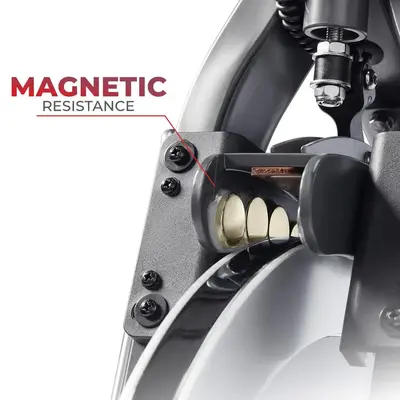
A magnetic resistance spin bike uses magnets positioned near the flywheel to control the amount of resistance experienced while pedaling. When we turn the resistance knob or adjust the electronic controls, the magnets move closer to or farther away from the flywheel, changing the strength of the magnetic field.
As the flywheel rotates through this magnetic field, the interaction creates resistance that makes pedaling more challenging. The magnets don’t need to touch the flywheel to produce resistance, which is one of the main reasons magnetic indoor bikes tend to operate smoothly and quietly.
Many modern magnetic spin bikes use manual adjustment knobs, while higher-end models feature electronic resistance controls, preset workout programs, and connectivity with fitness apps.
How Magnetic Resistance Works
Magnetic resistance operates through electromagnetic interaction. As the flywheel moves past the magnets, the magnetic field generates resistance, commonly through eddy currents in conductive components.
Increasing resistance makes pedaling feel heavier, helping us simulate climbs, intervals, and high-intensity cycling sessions. Decreasing resistance allows the flywheel to spin more freely, making it easier to maintain a faster cadence or recover between intervals.
Because the magnets and flywheel operate without direct contact, the system doesn’t rely on friction pads pressing against the wheel.
Advantages of Magnetic Resistance Spin Bikes
- Quiet operation: Minimal contact between moving components helps reduce mechanical noise.
- Low maintenance: No friction pads to wear out through routine use.
- Smooth pedaling: Resistance can feel consistent and controlled throughout a workout.
- Durability: Fewer contact-based wear components can contribute to long-term reliability.
- Home-friendly design: A quieter ride is particularly useful in apartments, shared homes, or workout spaces near bedrooms.
- Resistance precision: Some electronic models allow more precise adjustments and programmed resistance changes.
Magnetic resistance is particularly appealing for cyclists who exercise early in the morning, train while watching TV, or prefer a quieter indoor workout environment.
Disadvantages of Magnetic Resistance Spin Bikes
Although magnetic systems offer many benefits, they can have drawbacks depending on the model.
- Higher purchase price: Quality magnetic spin bikes can cost more than basic friction models.
- Electronic component complexity: Bikes with motorized resistance may require troubleshooting if control boards, sensors, or motors malfunction.
- Resistance feel varies: Some bikes may feel less natural to experienced cyclists who prefer the sensation of traditional brake-pad resistance.
- Limited adjustment on basic models: Entry-level bikes may not offer the fine resistance increments found on more advanced machines.
The quality of the bike matters just as much as the resistance type. A well-built friction bike can offer a better riding experience than a poorly designed magnetic model.
What Is a Friction Resistance Spin Bike?
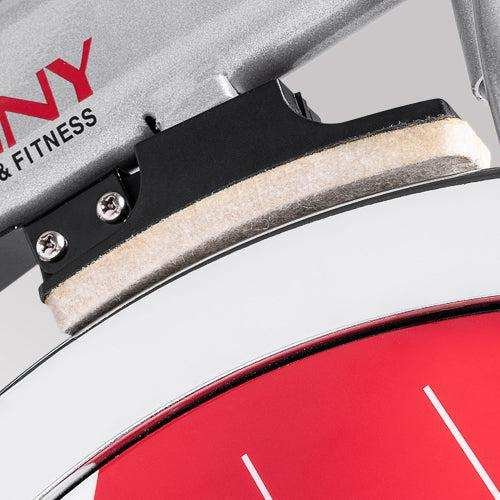
A friction resistance spin bike uses a brake pad or resistance material that physically presses against the flywheel. When we turn the resistance knob, the pad moves toward the flywheel, increasing pressure and making it harder to pedal.
This system is similar to the braking mechanism found in many traditional bicycles. The more pressure applied to the flywheel, the greater the resistance. Reducing the pressure allows the wheel to rotate more freely.
Friction resistance has been used in indoor cycling bikes for years and remains popular because of its straightforward design, familiar riding feel, and relatively affordable construction.
How Friction Resistance Works
Friction-based indoor bikes typically use a felt, leather, synthetic, or composite brake pad positioned above or against the flywheel.
When the resistance knob is turned, the brake pad presses against the rotating flywheel. This contact creates friction, which slows the flywheel and increases the effort required to maintain pedaling speed.
We can adjust the resistance continuously, making it possible to move from light recovery cycling to challenging climbs and demanding intervals.
The system is mechanical, simple to understand, and often easy to adjust without complicated electronics.
Advantages of Friction Resistance Spin Bikes
- Affordable pricing: Many budget-friendly spin bikes use friction resistance.
- Simple mechanics: The resistance system is relatively straightforward.
- Familiar cycling feel: Physical contact against the flywheel can provide a traditional braking sensation.
- Easy adjustment: A manual knob usually controls resistance directly.
- Wide availability: Friction bikes are common across entry-level and traditional indoor cycling models.
- Strong workout capability: They can support steady-state cycling, interval training, hill simulations, and high-intensity sessions.
For users who want a basic indoor cycling bike without paying for advanced electronics, friction resistance can be a practical choice.
Disadvantages of Friction Resistance Spin Bikes
Friction resistance also comes with a few compromises.
- More noise: Contact between the brake pad and flywheel can produce rubbing, squeaking, or other mechanical sounds.
- Wear and tear: Brake pads gradually wear down and may need replacement.
- More maintenance: The resistance mechanism may require inspection, adjustment, or cleaning.
- Heat generation: Friction creates heat during prolonged or intense sessions.
- Less consistent feel over time: Pad wear or changes in contact pressure can affect the resistance sensation.
These limitations aren’t necessarily deal-breakers, especially when the bike is affordable and the resistance system is easy to maintain.
Magnetic vs Friction Resistance Spin Bike: Key Differences
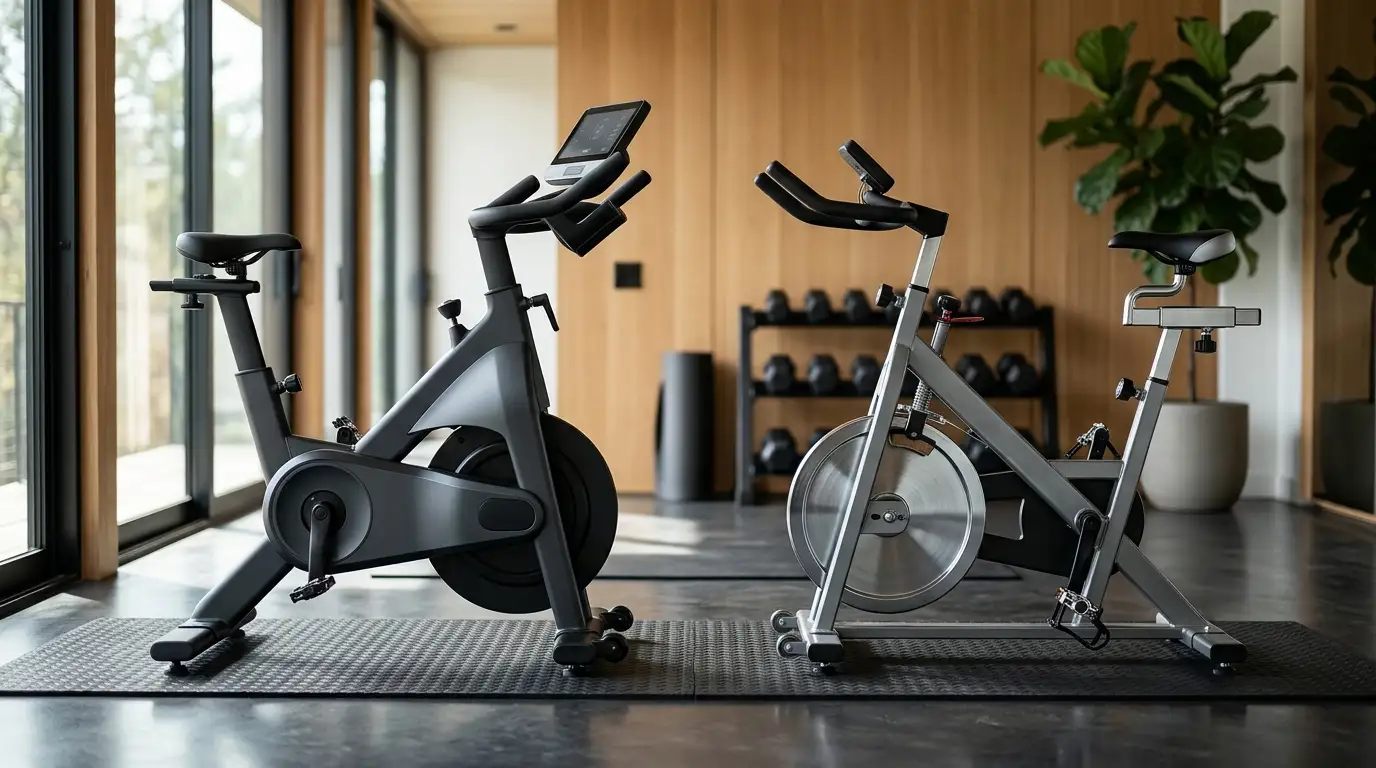
The main difference between magnetic and friction resistance comes down to how each system creates resistance. Magnetic bikes use magnetic force without direct contact, while friction bikes rely on a brake pad physically pressing against the flywheel.
Here’s how the two systems compare across the features that matter most when buying an indoor cycling bike.
| Feature | Magnetic Resistance | Friction Resistance |
|---|---|---|
| Resistance mechanism | Magnetic field | Physical brake-pad contact |
| Noise level | Generally quieter | Usually louder |
| Maintenance | Low | Moderate |
| Brake pad wear | No friction brake pad | Pad wears over time |
| Price | Often higher | Often more affordable |
| Pedaling feel | Smooth and controlled | Traditional, direct braking feel |
| Heat | Minimal contact-related heat | Heat from friction |
| Resistance adjustment | Manual or electronic | Usually manual |
| Best for | Quiet home workouts | Budget-conscious cyclists |
| Long-term upkeep | Generally minimal | Occasional pad replacement |
Both systems can deliver challenging workouts. The better choice depends on how often we ride, how much noise we can tolerate, and whether we prioritize low maintenance or affordability.
Noise Levels: Which Spin Bike Is Quieter?
Noise is one of the most important considerations when choosing a spin bike for home gym, particularly if we live in an apartment, share our living space, or exercise while other people are sleeping.
Magnetic resistance spin bikes are generally quieter because the magnets create resistance without rubbing directly against the flywheel. The sound produced during a workout is often limited to the drivetrain, flywheel movement, and other mechanical components.
Friction resistance bikes tend to generate additional sound from the brake pad contacting the flywheel. Depending on the material, adjustment, and condition of the pad, we may hear rubbing, squeaking, or a noticeable braking sound when increasing resistance.
However, resistance isn’t the only factor influencing noise. Loose pedals, worn bearings, poor assembly, belt alignment, and frame vibrations can make either type of spin bike noisy.
If quiet operation is a priority, magnetic resistance is usually the better starting point. We should also look for a belt-driven bike, a stable frame, and quality bearings to minimize additional mechanical noise.
Maintenance and Long-Term Durability
The resistance system can affect how much routine maintenance a spin bike requires.
Magnetic Resistance Maintenance
Magnetic spin bikes generally require less resistance-related maintenance because the magnets don’t physically rub against the flywheel. There is no conventional friction brake pad to replace as it gradually wears down.
Routine maintenance still matters. We should periodically check the pedals, crank arms, seat adjustment, handlebars, bolts, belt tension, and bearings. Sweat should also be wiped away after workouts to help protect the bike’s frame and components.
On electronically controlled bikes, the resistance motor, control panel, wiring, and sensors may eventually require attention. Although the magnetic braking mechanism is low-maintenance, the bike’s electronic components can add repair complexity.
Friction Resistance Maintenance
Friction spin bikes require more attention to the brake pad because it comes into direct contact with the flywheel.
Over time, the pad can wear down, become uneven, or produce more noise. Depending on the bike’s design, we may need to adjust the brake mechanism or replace the pad to maintain consistent resistance.
Regular cleaning and inspection help prevent unnecessary wear. We should also follow the manufacturer’s recommendations for brake-pad care and avoid applying unapproved lubricants to the resistance surface.
For someone who rides occasionally, this maintenance may be relatively minor. However, frequent riders may prefer the convenience of a magnetic system.
Which Spin Bike Provides a Better Workout?
When it comes to workout effectiveness, magnetic and friction resistance spin bikes can both deliver excellent results. Neither system automatically makes us fitter, stronger, or better at cycling.
The quality of our workout depends on resistance settings, cadence, duration, consistency, and how effectively we structure our training.
Cardio and Endurance Training
Both resistance systems are suitable for steady-state cardio. We can maintain a moderate pace for 30 to 60 minutes, gradually increasing workout duration or resistance as our cardiovascular fitness improves.
Magnetic resistance may be more comfortable for longer sessions because its smooth operation and lower noise levels make it easier to focus on our workout.
Friction resistance works just as well for endurance training, provided the bike is properly adjusted and the resistance remains comfortable to control.
High-Intensity Interval Training (HIIT)
For interval training, we alternate short periods of hard effort with recovery intervals.
A magnetic bike with responsive resistance adjustments can be convenient when we need to increase or decrease intensity quickly. Some electronically controlled models even allow resistance changes through preset programs or connected training applications.
Friction bikes can also perform well during HIIT. Turning a manual resistance knob allows us to increase the difficulty for sprint intervals or simulated climbs.
The key is choosing a bike that allows us to adjust resistance safely without interrupting our pedaling rhythm.
Hill Climbing and Strength-Focused Cycling
Increasing resistance makes pedaling more challenging and can help us simulate climbing conditions. Both systems can provide the heavy resistance needed for standing climbs, slow-cadence intervals, and strength-focused cycling sessions.
Friction bikes often deliver a direct, traditional braking sensation that some riders prefer during heavy resistance efforts. Magnetic bikes can provide a smooth, controlled feel, especially when the resistance mechanism is well designed.
For serious training, we should consider the bike’s maximum resistance, flywheel characteristics, frame stability, and ability to handle standing workouts rather than relying exclusively on its resistance type.
Magnetic vs Friction Resistance Spin Bike: Which Is Better for Beginners?
For beginners, the best spin bike is the one that feels comfortable, is easy to adjust, and encourages consistent exercise.
A magnetic resistance bike is often the better beginner-friendly option for home use because it tends to be quieter, requires less brake-pad maintenance, and provides a smooth riding experience.
Beginners who exercise in small apartments or prefer a low-distraction workout may find magnetic resistance particularly appealing.
A friction bike can be an excellent alternative when the budget is limited. Its straightforward controls make resistance easy to understand, and we don’t necessarily need advanced features to start building cardiovascular fitness.
Before purchasing either type, we should pay attention to:
- Adjustable seat height and fore-aft positioning
- Handlebar height and reach
- Stable frame construction
- Comfortable pedals and secure foot straps
- Smooth resistance adjustment
- Appropriate maximum user weight
- Warranty coverage and replacement parts availability
Comfort and proper bike fit often matter more than choosing the most expensive resistance technology.
Which Resistance System Is Better for Apartment Living?
For apartment workouts, magnetic resistance is usually the preferred choice.
The absence of direct brake-pad contact helps reduce resistance-related noise, which can make indoor cycling more considerate of neighbors and household members. This is particularly valuable when training early in the morning, late at night, or in a room adjacent to shared walls.
Friction resistance isn’t necessarily too noisy for apartment use. A well-maintained bike with a quality brake pad, smooth drivetrain, and stable frame may operate acceptably. Nevertheless, it generally has a greater potential for resistance-related rubbing sounds.
We should also consider vibration. Placing a spin bike on a dense exercise mat can help protect flooring and reduce some vibrations transmitted through the floor. Choosing a stable bike with a belt drive may further improve the indoor cycling experience.
For anyone building a compact home gym, quiet magnetic resistance combined with a sturdy belt-driven frame is a sensible combination.
Price Differences: Is Magnetic Resistance Worth the Extra Cost?
Friction resistance bikes are often attractive to buyers because they can be less expensive. Their mechanical design is relatively simple, and entry-level models can provide the essential features needed for indoor cycling.
Magnetic resistance bikes may cost more, particularly when they include electronic resistance adjustment, digital displays, Bluetooth connectivity, workout programs, or compatibility with interactive training platforms.
However, the initial price isn’t the only cost we should consider. A friction bike may eventually require replacement brake pads, while a magnetic bike may have fewer resistance-related wear components.
We should compare the complete package, including:
- Frame quality and stability
- Flywheel weight and smoothness
- Resistance range
- Belt or chain drive
- Display functionality
- Warranty
- Replacement parts
- Maintenance requirements
An affordable friction bike can represent excellent value if it meets our workout needs. A magnetic bike may justify its higher cost when quiet operation, low maintenance, and long-term convenience are priorities.
Magnetic vs Friction Resistance Spin Bike: Pros and Cons
Magnetic Resistance
Pros
- Quieter operation
- Smooth resistance changes
- Minimal friction-pad wear
- Lower routine maintenance
- Ideal for shared living spaces
Cons
- Often costs more
- Electronic models may have more complex components
- Some entry-level versions offer limited resistance settings
Friction Resistance
Pros
- Often more affordable
- Simple mechanical construction
- Direct resistance adjustment
- Traditional indoor cycling feel
- Suitable for challenging workouts
Cons
- More resistance-related noise
- Brake pads wear over time
- Requires occasional adjustment and replacement
- Friction can generate heat during intense workouts
Neither system is universally superior. We should match the resistance type to our preferences, workout habits, and budget.
Final Verdict: Magnetic vs Friction Resistance Spin Bike
When comparing a magnetic vs friction resistance spin bike, magnetic resistance generally wins for home use because it offers quieter operation, smooth resistance, and less resistance-related maintenance. It’s an excellent option for apartment workouts, frequent indoor cycling, and anyone looking for a convenient bike they can use consistently without worrying about brake-pad wear.
Friction resistance remains a worthwhile choice for riders who want an affordable, straightforward indoor cycling bike. It can deliver challenging cardio sessions, high-intensity intervals, hill simulations, and endurance workouts without requiring advanced technology or expensive features.
Ultimately, the best spin bike is the one that fits our space, budget, comfort preferences, and training goals. If we’re investing in a bike for regular home use and want a quieter, low-maintenance experience, magnetic resistance is worth considering. If we simply need a dependable bike for getting active and keeping costs down, friction resistance can still deliver an effective workout.
Either way, consistent cycling, proper bike fit, progressive training, and a comfortable setup will matter far more to our long-term fitness than the resistance mechanism alone.