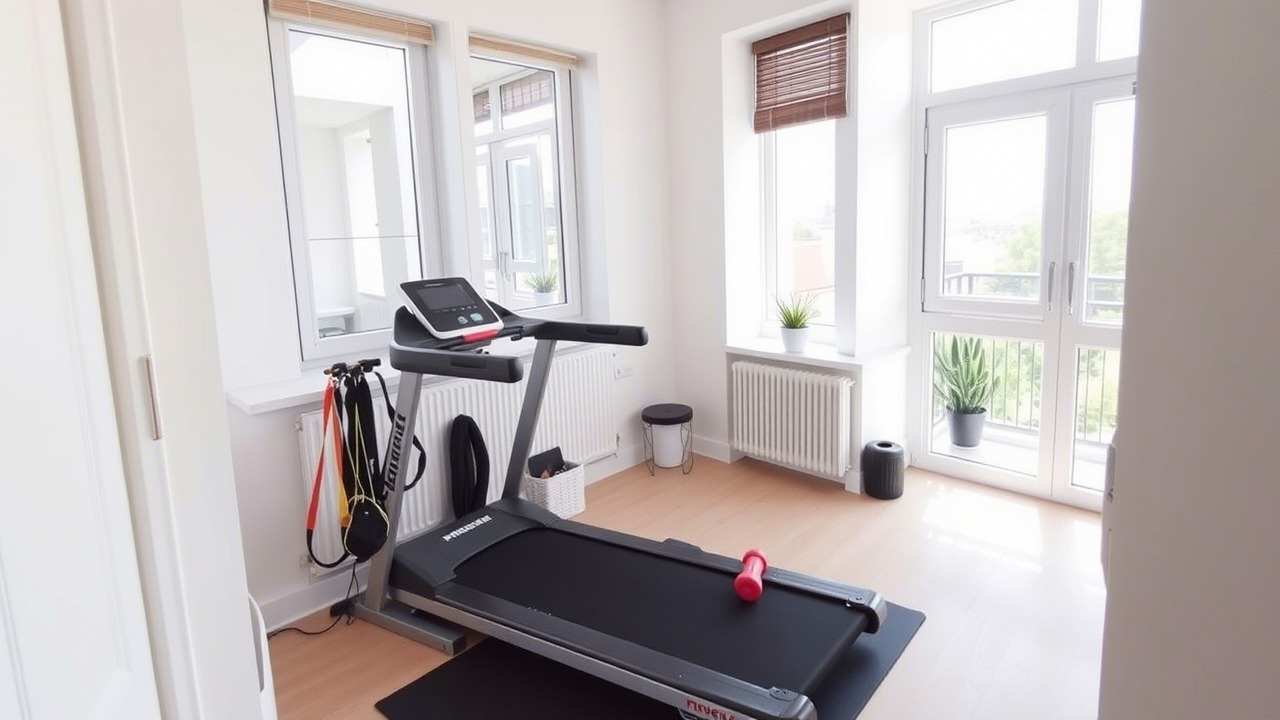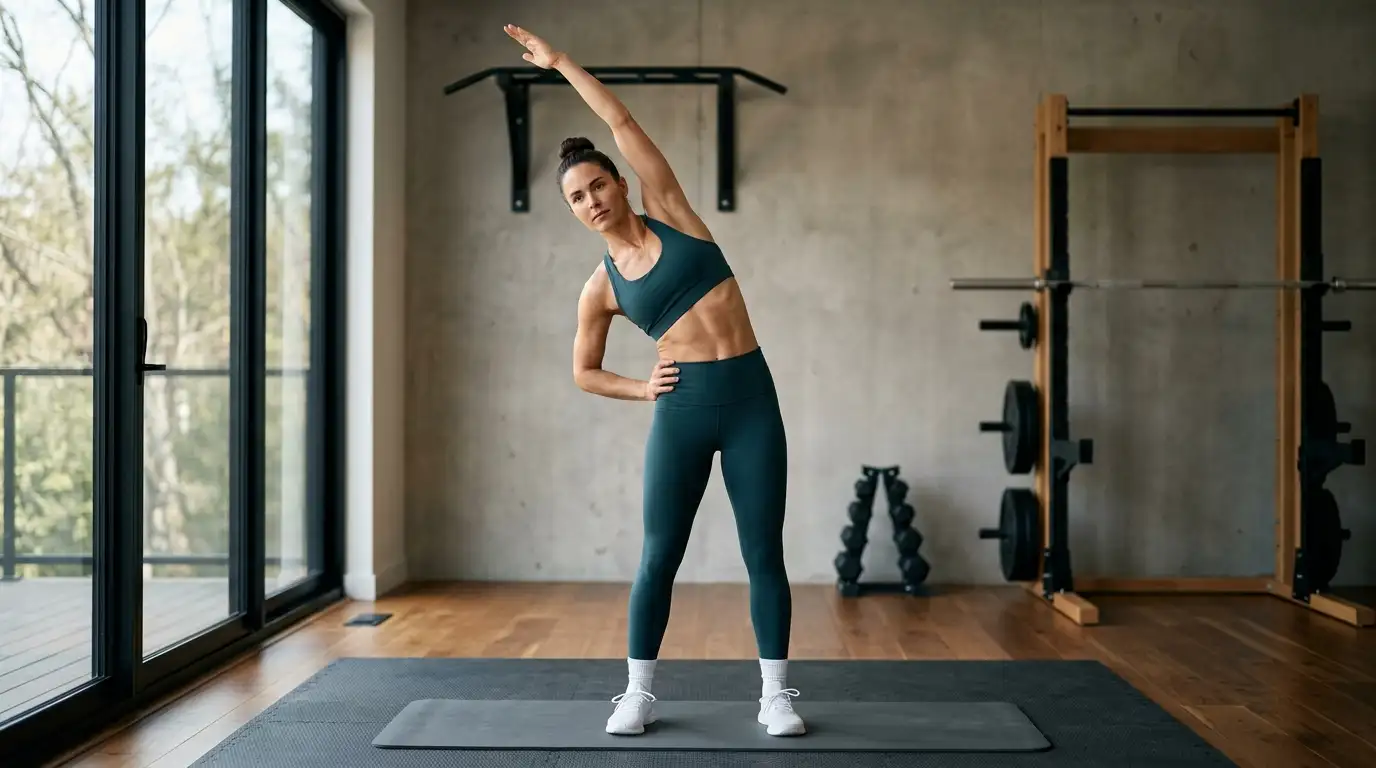

Losing belly fat does not require a gym membership, expensive machines, or a complicated workout routine. With the right cardio exercises at home for belly fat no equipment, we can create an effective workout using nothing more than our body weight and enough space to move safely.
The key is consistency. Cardio exercises can increase energy expenditure, improve cardiovascular fitness, and help support overall fat loss when combined with sensible nutrition and regular activity. While we cannot choose exactly where the body loses fat first, reducing overall body fat can gradually make the waistline leaner.
The following no-equipment cardio exercises are practical for living rooms, bedrooms, garages, hotel rooms, and other small spaces. We can also modify many of them to match our current fitness level.
Table of Contents
Why Choose Cardio Exercises at Home?
Home cardio exercises are convenient because they remove many of the obstacles that can make exercise difficult to maintain.
We do not need to drive to a gym, wait for equipment, or follow a complicated schedule. A short workout can fit into a morning routine, lunch break, or evening at home.
Bodyweight cardio can also be adjusted easily. We can increase the pace for a harder workout or slow down the movements when we are just getting started.
For people working toward fat loss, the biggest advantage is consistency. A workout that we can realistically perform several times each week is more useful than an intense routine that we quickly abandon.
1. Jumping Jacks
Jumping jacks are one of the simplest ways to raise our heart rate without equipment.
Start standing with the feet together and arms alongside the body. Jump the feet outward while bringing the arms overhead. Jump back to the starting position and repeat.
We can begin with 30 seconds of jumping jacks, followed by 30 seconds of rest. As fitness improves, we can increase the work period.
Low-Impact Modification
If jumping is uncomfortable, perform step jacks instead. Step one foot out at a time while moving the arms overhead.
This variation reduces impact while keeping the body moving continuously.
2. High Knees
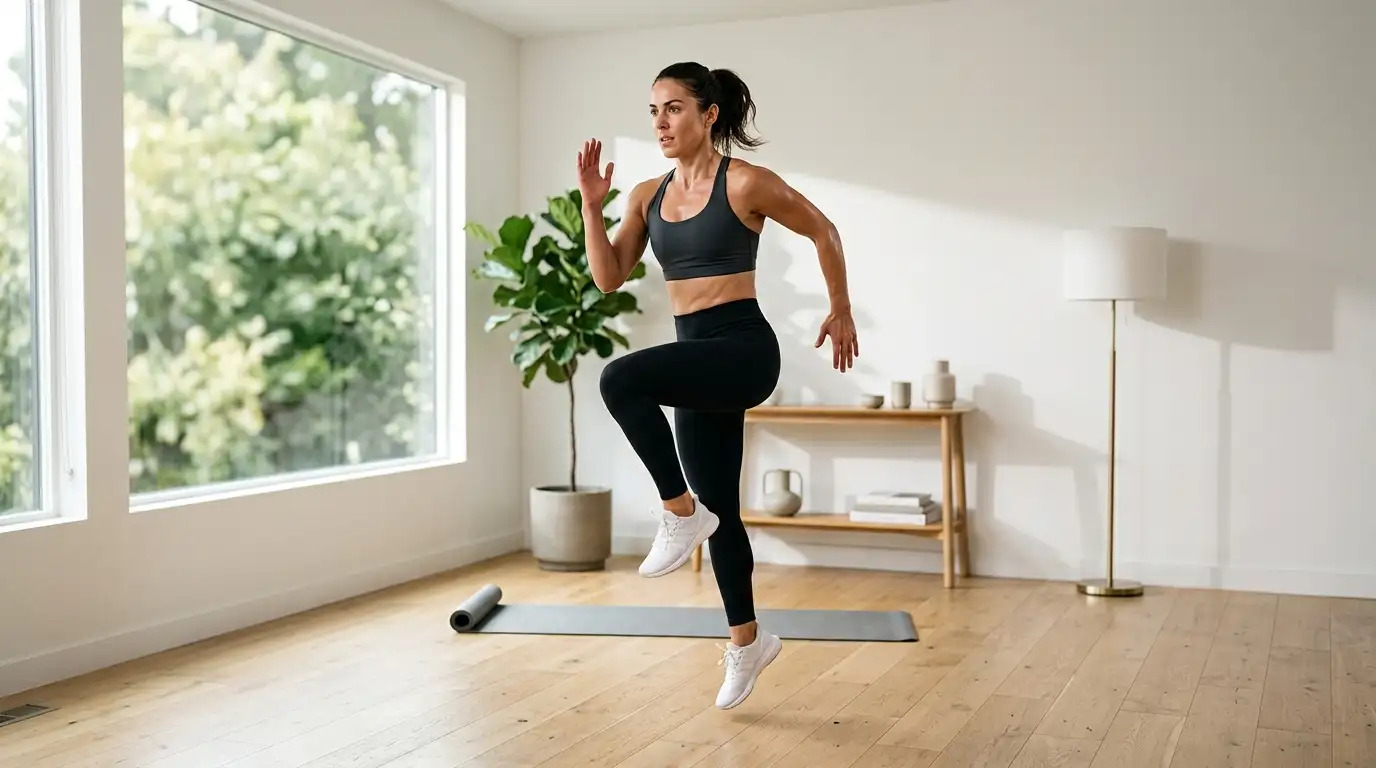
High knees turn a simple running motion into an effective indoor cardio exercise.
Stand tall and alternate lifting each knee toward the waist while moving the arms naturally. We can perform the movement slowly at first and gradually increase the pace.
For a beginner-friendly interval, try 20–30 seconds of high knees, followed by a short recovery.
To increase the challenge, drive the knees higher and move the arms faster while maintaining good posture.
3. Mountain Climbers
Mountain climbers combine cardio with movement through the shoulders, arms, core, and legs.
Start in a high plank position with the hands beneath the shoulders. Bring one knee toward the chest, return it, and then switch sides. Continue alternating.
The goal is not simply to move as fast as possible. Good form should come before speed.
If standard mountain climbers are too difficult, place the hands on a sturdy elevated surface or slow the movement down.
4. Burpees
Burpees are a demanding full-body cardio exercise that can quickly raise the intensity of a home workout.
From standing, lower into a squat, place the hands on the floor, step or jump the feet backward into a plank, return the feet toward the hands, and stand.
A traditional burpee can include a jump at the top, but this is optional.
Because burpees are intense, beginners can start with 5–8 controlled repetitions rather than trying to perform as many as possible.
5. Butt Kicks
Butt kicks are an easy way to add continuous movement to a home cardio session.
Stand upright and alternate bringing the heels toward the glutes. Swing the arms naturally as we increase the pace.
This exercise requires little space and can work particularly well between more demanding movements.
For a simple interval, perform butt kicks for 30–45 seconds before taking a short rest.
6. Skater Steps
Skater movements involve stepping or jumping from side to side.
Begin standing with the feet about hip-width apart. Step or jump toward one side while bringing the opposite leg behind the body. Repeat on the other side.
The movement creates lateral activity that differs from traditional forward-and-back cardio exercises.
Beginners should use controlled side steps. More advanced exercisers can turn the movement into larger, faster skater jumps.
7. Squat to Reach
Stand with the feet slightly wider than the hips. Lower into a comfortable squat, then stand while reaching both arms overhead.
A squat to reach combines a lower-body movement with an overhead reach.
Repeat continuously at a controlled pace.
This is particularly useful when we want a lower-impact cardio exercise that still involves several large muscle groups.
8. Fast Feet
Fast feet is a simple exercise that requires almost no space.
Stand with the knees slightly bent and quickly alternate the feet against the floor. Keep the torso controlled and use short, rapid steps.
We can perform fast feet for 15–30 seconds before switching to another exercise.
To make the exercise easier, slow the pace. To increase intensity, shorten the ground-contact time and move the feet faster.
9. Plank Jacks
Plank jacks combine a plank position with an outward-and-inward leg movement.
Start in a high plank. Keeping the upper body stable, move both feet outward and then back together.
The movement can be performed slowly or quickly depending on fitness level.
For beginners, stepping one foot outward at a time is a useful modification.
10. Stair or Step Marching
If we have a safe staircase or sturdy step available, stepping can provide a convenient form of indoor cardio.
Step up and down at a controlled pace while maintaining balance. Use the handrail when appropriate.
We should never use an unstable chair, box, or piece of furniture as an exercise platform.
For a simple workout, alternate one minute of stepping with 30 seconds of recovery.
11. Shadow Boxing
Shadow boxing is another effective no-equipment cardio option.
Stand with the feet comfortably apart and alternate controlled punches into the air. Add light footwork, such as small forward, backward, or side-to-side movements.
Keep the shoulders relaxed and avoid locking the elbows.
We can use combinations such as:
- Jab, cross
- Jab, cross, hook
- Alternating straight punches
- Punches combined with light squats
- Punches combined with side steps
A few rounds of shadow boxing can add variety to a home workout without requiring any equipment.
12. Marching in Place
Marching in place is one of the most accessible cardio exercises.
Stand tall and alternate lifting the knees while swinging the arms. Increase the pace gradually as the body warms up.
This movement is particularly useful for beginners, older adults, or anyone returning to exercise after a period of inactivity.
For additional intensity, lift the knees higher or transition from marching into a gentle jog.
A 20-Minute No-Equipment Cardio Workout
We can combine these exercises into a simple cardio workout routine.
Warm-Up — 3 Minutes
Start with:
- Marching in place
- Arm circles
- Gentle side steps
- Easy knee lifts
The purpose is to gradually prepare the body for more vigorous movement.
Main Workout — 14 Minutes
Perform each exercise for 40 seconds, followed by 20 seconds of recovery:
- Jumping jacks
- High knees
- Mountain climbers
- Butt kicks
- Skater steps
- Fast feet
- Shadow boxing
Repeat the seven-exercise circuit twice.
Cool-Down — 3 Minutes
Finish with slow marching and gentle movements that allow breathing and heart rate to gradually settle.
There is no need to make every session extremely intense. The goal is to build a routine that can be repeated consistently.
Beginner Version
If we are new to exercise, a lower-impact workout may be more appropriate.
Try:
- Marching in place — 60 seconds
- Step jacks — 30 seconds
- Knee lifts — 30 seconds
- Side steps — 60 seconds
- Shadow boxing — 30 seconds
- Rest — 60 seconds
Repeat the circuit two or three times depending on fitness level.
As the exercises become easier, we can gradually increase the duration or pace.
How Often Should We Do Cardio at Home?
Consistency matters more than trying to complete an exhausting workout every day.
A practical approach is to perform cardio workouts several times per week while incorporating other forms of physical activity. We can also increase daily movement through walking, taking the stairs, household activities, and active hobbies.
Recovery is important too. Muscles and connective tissues need time to adapt, particularly when we introduce jumping, running, or high-impact movements.
A balanced routine can include cardio, strength training, mobility work, and everyday movement.
Can Cardio Exercises Burn Belly Fat?
Cardio can contribute to fat loss by increasing energy expenditure, but we cannot specifically instruct the body to burn fat from the abdomen.
This is an important distinction when creating a belly-fat workout.
Exercises such as mountain climbers and planks can strengthen the muscles around the core, while cardio contributes to overall physical activity. Changes in abdominal appearance generally occur as overall body composition changes.
Nutrition, sleep, daily activity, exercise consistency, and individual factors can all influence the results.
Rather than searching for one exercise that supposedly melts belly fat, we can build a repeatable fitness routine that supports long-term progress.
How to Make a No-Equipment Workout More Challenging
Once a workout becomes easy, we can increase the challenge without buying equipment.
Increase the Work Period
Instead of exercising for 30 seconds, try 40 or 45 seconds.
Reduce Rest Periods
A shorter recovery period can make a circuit more demanding, although beginners should allow enough recovery to maintain good form.
Increase Movement Speed
Exercises such as marching, high knees, fast feet, and shadow boxing can become more challenging when performed faster.
Use More Difficult Variations
Step jacks can become jumping jacks. Side steps can become skater jumps. Marching can progress to jogging in place.
Add More Rounds
Rather than making every exercise extremely intense, we can add another round to the workout.
Tips for Better Results
The most effective home cardio routine is one that we can perform safely and consistently.
Start at an appropriate level. We should not begin with advanced burpees or high-impact jumping if our body is not accustomed to them.
Focus on technique. Moving correctly is more valuable than rushing through repetitions.
Create a schedule. Treat home workouts like any other appointment.
Increase difficulty gradually. Small increases in duration, intensity, or frequency are easier to sustain.
Combine cardio with strength training. A well-rounded fitness routine should not rely exclusively on cardio.
Stay active outside workouts. Walking and other forms of everyday movement can add substantially to overall activity.
Pay attention to recovery. Persistent pain is different from normal exercise fatigue and should not be ignored.
Safety Tips for Home Cardio
We should choose a clear exercise area free of furniture, slippery surfaces, loose rugs, and other obstacles.
Wear footwear appropriate for the movement and surface, particularly when performing jumping exercises.
If an exercise causes sharp pain, dizziness, unusual shortness of breath, or another concerning symptom, stop the activity and seek appropriate medical advice.
People with existing medical conditions, significant injuries, or concerns about starting vigorous exercise should discuss an appropriate activity level with a qualified healthcare professional.
Final Thoughts
The best cardio exercises at home for belly fat with no equipment are the ones we can perform safely, consistently, and progressively.
Jumping jacks, high knees, mountain climbers, skater steps, fast feet, shadow boxing, marching, and other bodyweight movements can turn a small amount of floor space into a practical home workout area.
The bigger goal is not to find a magical belly-fat exercise. It is to create a sustainable routine that combines regular movement with balanced nutrition, adequate recovery, and gradual improvements in fitness.
When we stay consistent, even simple exercises can become part of a powerful long-term approach to improving cardiovascular fitness, increasing daily activity, and supporting healthier body composition.
Suggested Reads: Fitness Tracker for Cardio: Best Picks & Buying Guide
Frequently Asked Questions
What is the best cardio exercise for belly fat at home?
There is no single exercise that specifically removes belly fat. Effective choices include high knees, jumping jacks, mountain climbers, brisk marching, skater steps, shadow boxing, and burpees, depending on fitness level.
Can we lose belly fat without equipment?
Yes, bodyweight cardio can be part of a fat-loss routine without requiring gym equipment. Overall fat loss depends on total energy balance and multiple lifestyle factors rather than one particular exercise.
How long should a home cardio workout last?
The appropriate duration depends on fitness level and workout intensity. Beginners can start with short sessions and gradually build toward longer workouts as their fitness improves.
Are no-equipment workouts effective?
Yes. Bodyweight exercises can provide meaningful cardiovascular and muscular challenges when performed with appropriate intensity and progression.
Can beginners do these exercises?
Many of these exercises can be modified for beginners. Low-impact versions such as marching, step jacks, side steps, and controlled knee lifts are useful starting points.
Should we exercise every day to lose belly fat?
Daily movement can be beneficial, but intense cardio does not necessarily need to be performed every day. A balanced routine should include recovery and different forms of physical activity.