

In an era where fitness apps, smartwatches, and connected devices collect vast amounts of personal information, many fitness enthusiasts are returning to a simpler, more private way of tracking their progress. Gadget-free tracking offers complete control over your fitness data while eliminating distractions, subscriptions, and concerns about digital surveillance.
Whether you prioritize digital privacy, minimalism, or intentional living, maintaining a manual workout log can be every bit as effective as relying on wearable technology. In fact, countless elite athletes have successfully documented their training using notebooks, printed journals, and simple spreadsheets long before smart fitness devices became commonplace.
This guide explores everything needed to build an efficient, accurate, and sustainable workout logging system—without surrendering personal data.
Table of Contents
Why Privacy-Conscious Athletes Are Ditching Fitness Gadgets
Modern fitness devices record significantly more than workouts. Depending on the device, they may collect:
- GPS location history
- Heart rate trends
- Sleep patterns
- Daily routines
- Exercise habits
- Health metrics
- Personal demographics
- Cloud backups of sensitive information
While these features offer convenience, they also create permanent digital records that often reside on third-party servers.
Choosing offline workout tracking ensures:
- Complete ownership of fitness records
- Zero cloud synchronization
- No targeted advertising
- No data sharing with third parties
- Reduced cybersecurity risks
- Freedom from subscriptions
- Longer-lasting records that never disappear due to app shutdowns
Benefits of Gadget-Free Tracking
Greater Mental Focus During Exercise
Without notifications, incoming messages, or vibrating wearables, workouts become more immersive.
This uninterrupted concentration often improves:
- Exercise technique
- Mind-muscle connection
- Workout consistency
- Overall enjoyment
Training becomes about physical performance rather than constantly checking statistics.
Improved Self-Awareness
Manual tracking encourages athletes to notice:
- Energy levels
- Mood
- Recovery quality
- Motivation
- Exercise difficulty
These qualitative observations frequently provide deeper insights than raw numerical data alone.
Long-Term Reliability
Fitness apps may become obsolete.
Companies discontinue products.
Subscriptions expire.
Cloud accounts disappear.
A handwritten notebook stored safely can remain accessible for decades.
Choosing the Right Workout Log Format
There is no universal solution. The best workout log is the one you consistently maintain.
Traditional Notebook
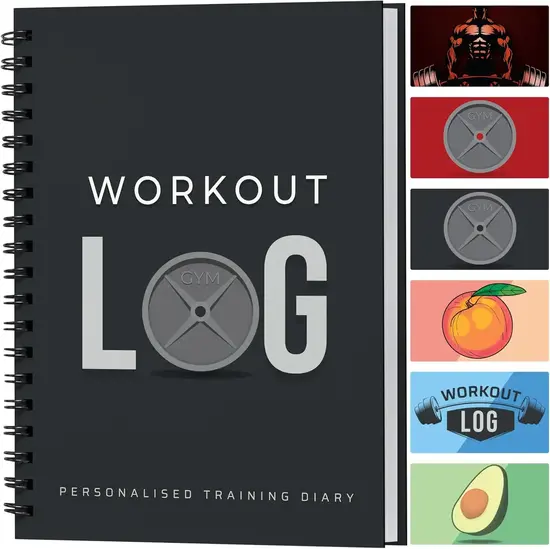
A durable notebook remains the most popular choice.
Advantages include:
- Portable
- No batteries
- No software updates
- Unlimited customization
- Affordable
- Extremely durable
Many privacy advocates prefer hardcover journals because they withstand years of regular use.
Printed Workout Templates
Printable sheets provide structured organization.
Common sections include:
- Date
- Workout type
- Exercises
- Sets
- Repetitions
- Weight used
- Rest intervals
- Personal notes
Once completed, pages can be organized in binders for easy reference.
Offline Spreadsheet
Some users appreciate spreadsheets while avoiding cloud storage.
Applications like offline spreadsheet software allow:
- Automatic calculations
- Progress charts
- Training summaries
- Personal backups
The files remain entirely under your control when stored locally.
Essential Information to Record
Keeping records simple increases consistency.
For every workout, include:
Date
Document every training session chronologically.
Example:
July 5, 2026
Workout Goal
Identify the session objective.
Examples include:
- Strength
- Hypertrophy
- Endurance
- Mobility
- Recovery
- Conditioning
Exercises Performed
Write every movement completed.
Example:
- Squats
- Bench Press
- Pull-Ups
- Romanian Deadlifts
Sets and Repetitions
Record each working set.
Example:
| Exercise | Sets | Reps |
|---|---|---|
| Squat | 4 | 8 |
| Bench Press | 4 | 6 |
| Pull-Up | 3 | 10 |
Weight Used
Tracking resistance allows progressive overload.
Example:
- Squat – 225 lbs
- Bench – 165 lbs
- Deadlift – 315 lbs
Perceived Effort
Instead of heart-rate zones, many experienced lifters use Rate of Perceived Exertion (RPE).
Examples:
- RPE 6 – Easy
- RPE 7 – Moderate
- RPE 8 – Challenging
- RPE 9 – Very hard
- RPE 10 – Maximum effort
This simple system requires no wearable technology.
Workout Duration
Record:
- Start time
- End time
- Total duration
Example:
6:30 AM – 7:35 AM (65 minutes)
Recovery Notes
Brief observations help identify patterns.
Examples:
- Slept 8 hours
- Tight hamstrings
- Excellent energy
- Mild shoulder soreness
- Felt dehydrated
These details often explain fluctuations in performance.
How to Measure Progress Without Smart Devices
Many assume technology is required to monitor improvement.
It is not.
Instead, monitor:
Increasing Strength
Compare:
- Weight lifted
- Repetitions completed
- Additional sets
Small improvements accumulate into substantial long-term gains.
Exercise Technique
Write observations such as:
- Better squat depth
- Improved pull-up form
- Faster sprint starts
- More stable overhead press
Quality matters as much as quantity.
Workout Consistency
One overlooked metric is attendance.
Simply tracking completed sessions reveals remarkable progress over months and years.
Example:
- January: 16 workouts
- February: 18 workouts
- March: 20 workouts
Consistency predicts success better than isolated performance metrics.
Building a Sustainable Manual Logging Habit
The best workout journal is the one you actually use.
Keep logging simple.
Spend no more than five minutes after each workout documenting:
- Exercises
- Sets
- Reps
- Weight
- Personal notes
Avoid perfectionism.
A consistently maintained simple journal outperforms an abandoned complex system.
Sample Gadget-Free Workout Log
Date: July 5
Workout: Upper Body Strength
Warm-Up: 10 minutes mobility
Bench Press
- 135 × 10
- 155 × 8
- 175 × 6
- 175 × 6
Pull-Ups
- 10
- 9
- 8
Dumbbell Shoulder Press
- 45 × 10
- 45 × 10
- 50 × 8
Barbell Row
- 185 × 8
- 185 × 8
- 185 × 8
Duration: 68 minutes
RPE: 8
Recovery Notes:
- Excellent sleep
- Strong energy
- Slight forearm fatigue
- Increase bench weight next session
Minimalist Fitness Tracking Tips
Privacy-focused athletes often embrace a minimalist philosophy.
Useful habits include:
- Keep one dedicated workout journal
- Store journals in a safe location
- Review progress weekly
- Record honest observations
- Avoid unnecessary metrics
- Focus on consistent improvement
- Celebrate small victories
Simplicity encourages long-term commitment.
Maintaining Complete Control of Your Fitness Data
When workouts remain offline:
- Nobody analyzes your exercise habits.
- No company profits from your health information.
- No advertising profile develops around your fitness routine.
- No account can become inaccessible due to forgotten passwords.
- No unexpected software update changes your records.
You remain the sole owner of every training session you complete.
Common Mistakes to Avoid
Recording Too Much Information
Excessive detail makes journaling tedious.
Track only metrics that genuinely support progress.
Skipping Recovery Notes
Performance depends on recovery.
Brief comments about sleep, nutrition, stress, and soreness provide valuable context.
Being Inconsistent
Logging every workout—even imperfectly—is more valuable than keeping flawless records sporadically.
Ignoring Past Entries
Review previous workouts regularly.
Historical records reveal:
- Strength improvements
- Training plateaus
- Successful programming
- Recovery trends
Creating Your Own Personalized Gadget-Free Tracking Journal
There is no perfect template.
Customize sections according to personal goals.
Possible categories include:
- Warm-up
- Main lifts
- Accessory work
- Cardio
- Stretching
- Recovery
- Nutrition notes
- Mood
- Energy
- Weekly goals
- Monthly achievements
A personalized journal evolves alongside your fitness journey.
Gadget-Free Tracking Final Thoughts
Gadget-Free Tracking demonstrates that meaningful fitness progress does not require smartwatches, cloud accounts, or data-sharing platforms. By maintaining a simple, consistent, and private workout journal, we gain a clearer understanding of our training while preserving complete ownership of our personal information.
Whether using a classic notebook, printable log sheets, or an offline spreadsheet, manual tracking promotes mindfulness, consistency, and long-term success. For privacy purists and minimalists alike, the most effective fitness tracker is often the one that never connects to the internet.