
Some links in this article may be affiliate links. If you purchase through qualifying links, FlexGearInsights may earn a commission at no additional cost to you. Affiliate relationships do not replace the need to evaluate products based on their features, suitability, and cost.
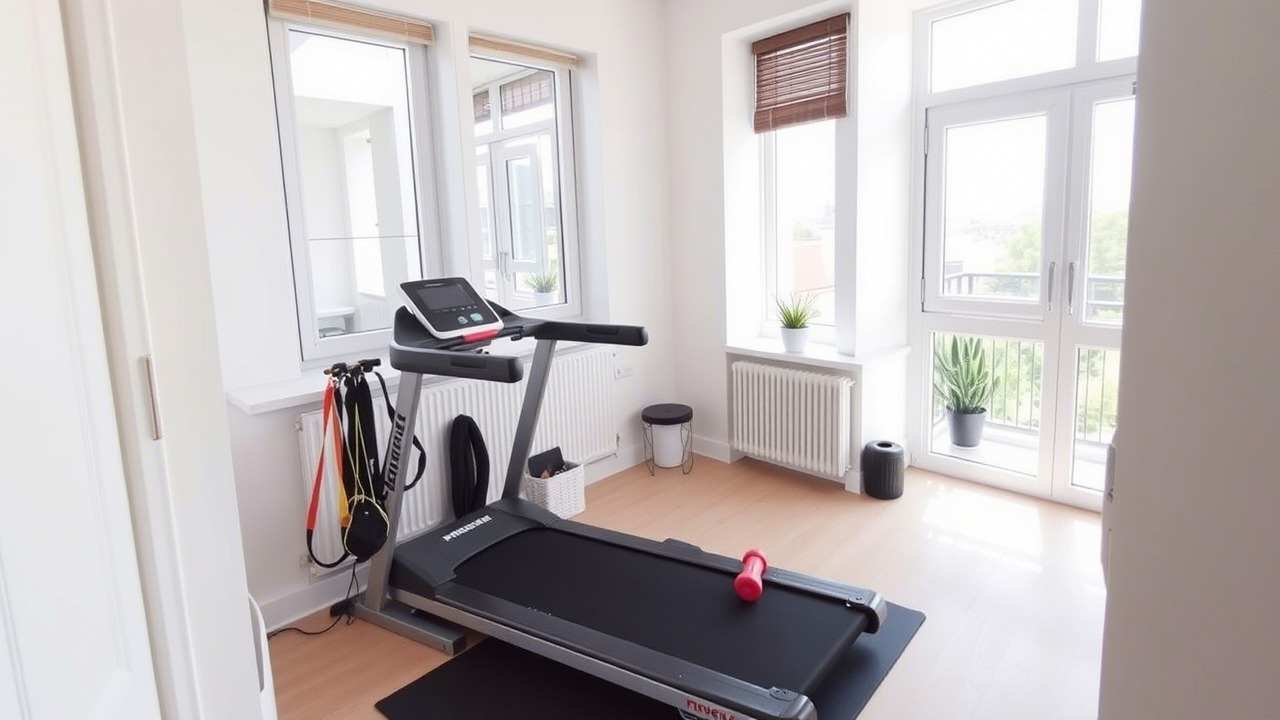
Creating a home gym doesn’t require a spare room, an expensive membership, or a collection of bulky machines. With the right home gym equipment for small spaces, you can build a practical workout area in an apartment, studio, spare bedroom, or corner of your living room.
The secret is choosing versatile equipment that fits your training goals and can be stored easily when your workout ends. Adjustable dumbbells, resistance bands, foldable benches, and compact cardio machines can help you create a flexible home fitness setup without sacrificing valuable living space.
Whether you want to build strength, improve cardiovascular fitness, support weight management, or establish a more consistent exercise routine, your equipment should work with your home rather than overwhelm it.
This guide explains how to plan a small home gym, compare space-saving fitness equipment, organize your workout area, and choose equipment that fits your needs and budget.
Table of Contents
Why Home Gym Equipment for Small Spaces Makes Sense
A small home gym offers convenience and flexibility. You can exercise without traveling to a fitness facility, waiting for equipment, or coordinating your workout around gym opening hours.
However, convenience alone doesn’t guarantee that you’ll use your equipment regularly. Your setup should make it easy to start exercising, complete your routine, and return everything to storage afterward.
The Benefits of a Compact Home Gym
Better use of available space: Compact equipment can support a variety of exercises without filling an entire room with machines and weights.
Flexible workout schedules: A home setup allows you to exercise when it fits your daily routine, whether that means a short morning session or a workout after work.
Equipment suited to your goals: You can select tools for strength training, cardio, mobility, or general fitness instead of paying for features you rarely use.
Greater control over your environment: You can choose your flooring, lighting, music, storage arrangements, and workout atmosphere.
A customizable investment: You can begin with a few essential pieces and add equipment as your needs change.
A compact gym does have limitations. Large strength machines, heavy free-weight collections, and certain cardio systems require more floor space, storage, and clearance. The goal isn’t to recreate every feature of a commercial gym. It’s to build a setup that supports the exercises you actually plan to perform.
The Five-Step Framework for Building a Small Home Gym
Before buying equipment, establish a clear plan. These five steps will help you avoid purchasing items that don’t fit your space or training routine.
Step 1: Measure Your Available Space
Start by measuring the floor area available for exercise. Record the length, width, ceiling height, and location of nearby furniture, doors, windows, and electrical outlets.
Next, consider the space required during movement. A compact exercise bench might fit against a wall, for example, but dumbbell presses or step-ups require additional clearance.
A 6-by-6-foot area can accommodate many bodyweight and dumbbell exercises, depending on the equipment and movements involved. It isn’t a universal minimum, so check the dimensions and clearance requirements of the activities you intend to perform.
Look for potential storage areas, including:
- Under-bed spaces for yoga mats and lightweight accessories.
- Closets for resistance bands and smaller equipment.
- Wall-mounted storage for suitable lightweight items.
- Corners that can accommodate folded equipment.
- Space behind furniture for items that can be stored safely.
Keep doorways, emergency exits, and normal walking paths clear.
Step 2: Identify Your Primary Fitness Goals
Your goals should determine what you buy.
For strength training: Consider adjustable dumbbells, resistance bands, and a stable exercise bench if your space permits.
For cardiovascular exercise: Explore walking pads, compact exercise bikes, jump ropes, or foldable rowing machines, depending on your preferred activities and available clearance.
For general fitness: Combine resistance equipment with bodyweight exercises and a suitable exercise mat.
For mobility and flexibility: Yoga mats, yoga blocks, and resistance bands can support stretching, balance work, and mobility routines.
For a mixed workout routine: Prioritize equipment that supports multiple movement patterns rather than purchasing a separate machine for every exercise.
Step 3: Set a Realistic Budget
A small home gym can be assembled gradually. You don’t need to purchase every item at once.
Begin with the equipment needed for your planned routine. Compare the total cost, including accessories, storage, delivery, maintenance, and any ongoing subscriptions.
A practical purchasing order might be:
- Essential equipment for your main training goal.
- Additional resistance or exercise variations.
- Storage and protective flooring.
- Cardio equipment, if needed.
- Connected fitness devices or premium accessories.
Buying fewer, more versatile pieces can help prevent unnecessary spending.
Step 4: Plan Your Workout Routine
Choose equipment based on the exercises you intend to perform each week.
A balanced strength routine can include pushing, pulling, squatting, hinging, and core exercises. Cardio activities can be added according to your preferences and fitness level.
Write down the movements you want to perform, then check whether your planned equipment supports them. This simple step can reveal when a less expensive, more compact tool would meet your needs just as well as a larger machine.
Step 5: Make Storage Part of the Design
In a small home, equipment storage is part of the gym itself.
Choose items that fold, stack, or fit into designated storage areas. Keep frequently used accessories easy to reach, and make sure heavier equipment can be moved and stored safely.
If setting up your gym takes too much time or requires moving several pieces of furniture, simplify the arrangement where possible.
Strength Training Equipment for Small Spaces
Strength training doesn’t necessarily require a rack of dumbbells, a barbell platform, or a large cable machine. Several compact options can support a wide range of exercises.
1. Adjustable Dumbbells
Adjustable dumbbells are a practical choice when you want multiple resistance levels without storing numerous individual pairs.

What you can do with them
Depending on the available weight range, adjustable dumbbells can support:
- Goblet squats and lunges.
- Dumbbell rows.
- Floor presses.
- Shoulder presses.
- Romanian deadlifts.
- Biceps curls and triceps extensions.
What to consider before buying
Check the minimum and maximum weight, adjustment mechanism, handle design, dimensions, and warranty. Some models use a dial, while others use a selector pin or removable weight plates.
Also consider how quickly you need to change resistance during a workout. A convenient adjustment system can make circuits and supersets easier to organize.
Potential limitations: Adjustable dumbbells can be expensive compared with basic resistance bands. Some models also have bulky shapes that may feel different from traditional dumbbells during certain exercises.
Best for: People who want progressive strength training in a limited area.
2. Resistance Bands
Resistance bands are among the most portable pieces of home gym equipment. They take up little storage space and come in different designs and resistance levels.

Common types include:
- Loop bands: Useful for glute exercises, lateral walks, and selected mobility movements.
- Long resistance bands: Suitable for rows, presses, curls, and other resistance exercises.
- Tube bands with handles: Offer a grip similar to some cable attachments.
- Fabric bands: Often used for lower-body accessory exercises.
Some band sets include a door anchor, allowing you to perform selected pulling and pressing movements. Follow the manufacturer’s installation instructions and inspect the anchor, band, and door before use.
Advantages: Bands are lightweight, portable, and easy to store in a drawer or gym bag.
Limitations: Resistance can be harder to quantify than the weight on a dumbbell. Bands may also be unsuitable for certain exercises if the required resistance, attachment point, or range of motion isn’t available.
Best for: Beginners, travelers, apartment dwellers, and people building a low-cost workout setup.
3. Foldable Weight Benches
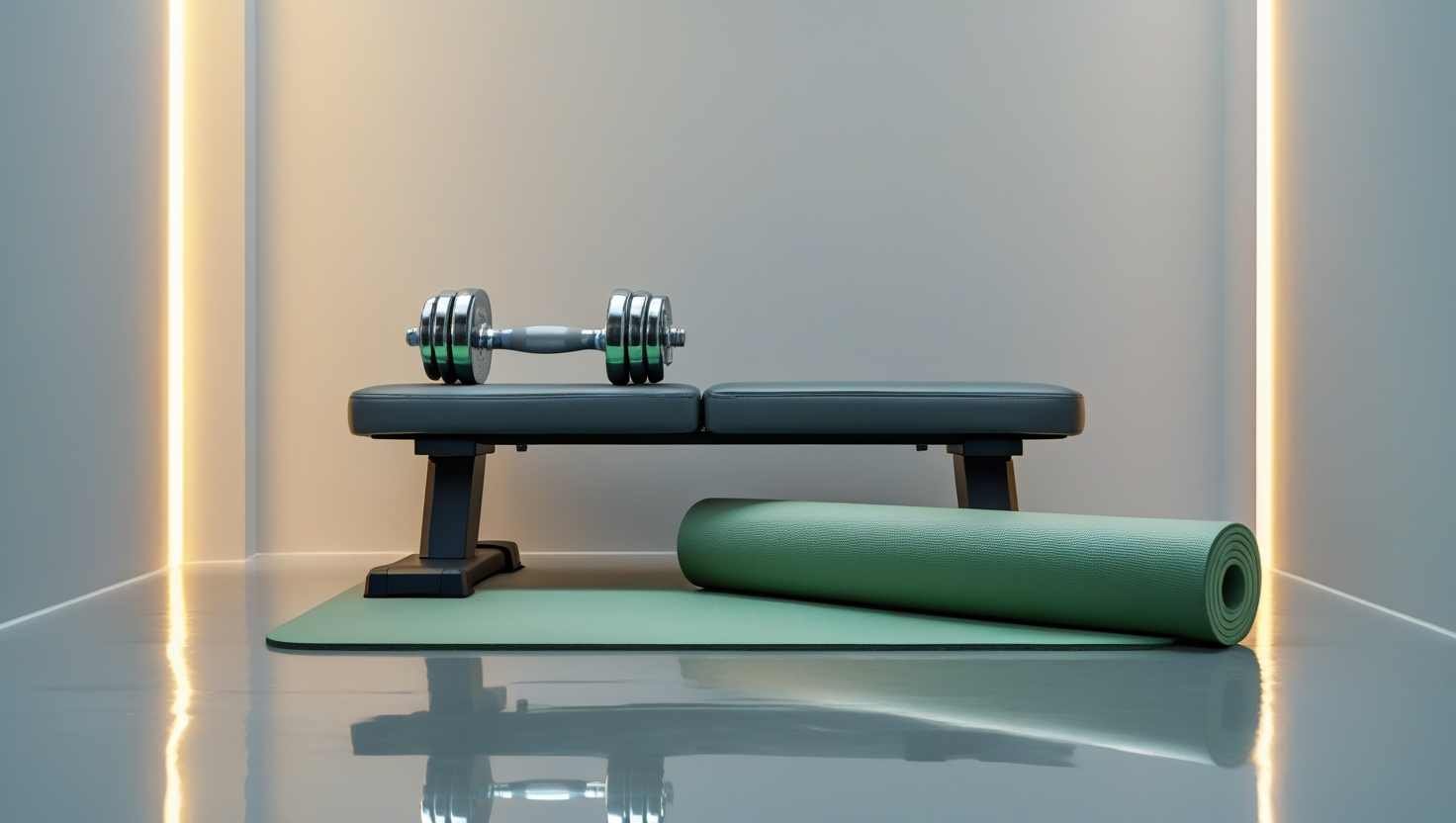
An exercise bench expands the range of dumbbell exercises you can perform. A foldable model may be useful when you need to reclaim floor space after training.

Look for a bench with:
- A clearly stated maximum load capacity.
- A stable frame and secure locking mechanism.
- Suitable seat and backrest dimensions.
- A folding design that fits your storage area.
- A warranty and accessible manufacturer support.
Pay attention to the total supported load, including your body weight and the weights you are lifting, where the manufacturer defines capacity that way.
Don’t assume that a folding bench is safe simply because it has a high advertised weight rating. Check its construction, stability, locking mechanism, and instructions.
Potential limitations: Even a folded bench occupies storage space and may be awkward to move in a very small apartment.
Best for: People who regularly perform bench-supported strength exercises and have a suitable storage location.
4. Kettlebells
A kettlebell offers another compact option for resistance training. Depending on your technique and experience, it can support goblet squats, deadlifts, carries, rows, and other exercises.
A single kettlebell requires relatively little storage space, although you may eventually want additional weights as your training changes.
Before purchasing, choose a weight that matches your ability and intended exercises. Learn proper technique before attempting dynamic movements such as kettlebell swings.
Best for: People who want a compact tool for strength training and selected conditioning exercises.
5. Suspension Trainers
Suspension trainers use adjustable straps and body position to modify exercise difficulty. Many systems support rows, squats, presses, and core exercises.
Before purchasing, check the attachment options and whether your home has a suitable, structurally secure anchor point. A door attachment must be installed exactly as directed by the manufacturer.
Never attach suspension equipment to an unsuitable door, weak fixture, or unverified mounting point.
Potential limitations: Suspension training depends on secure installation and sufficient clearance. It may also require additional learning if you’re unfamiliar with the exercises.
Best for: People who want a versatile training tool that can be stored in a small bag.
Compact Cardio Equipment for Small Spaces
If you prefer indoor cardio, choose equipment based on your available space, preferred movement, noise considerations, and storage needs.
6. Walking Pads and Under-Desk Treadmills
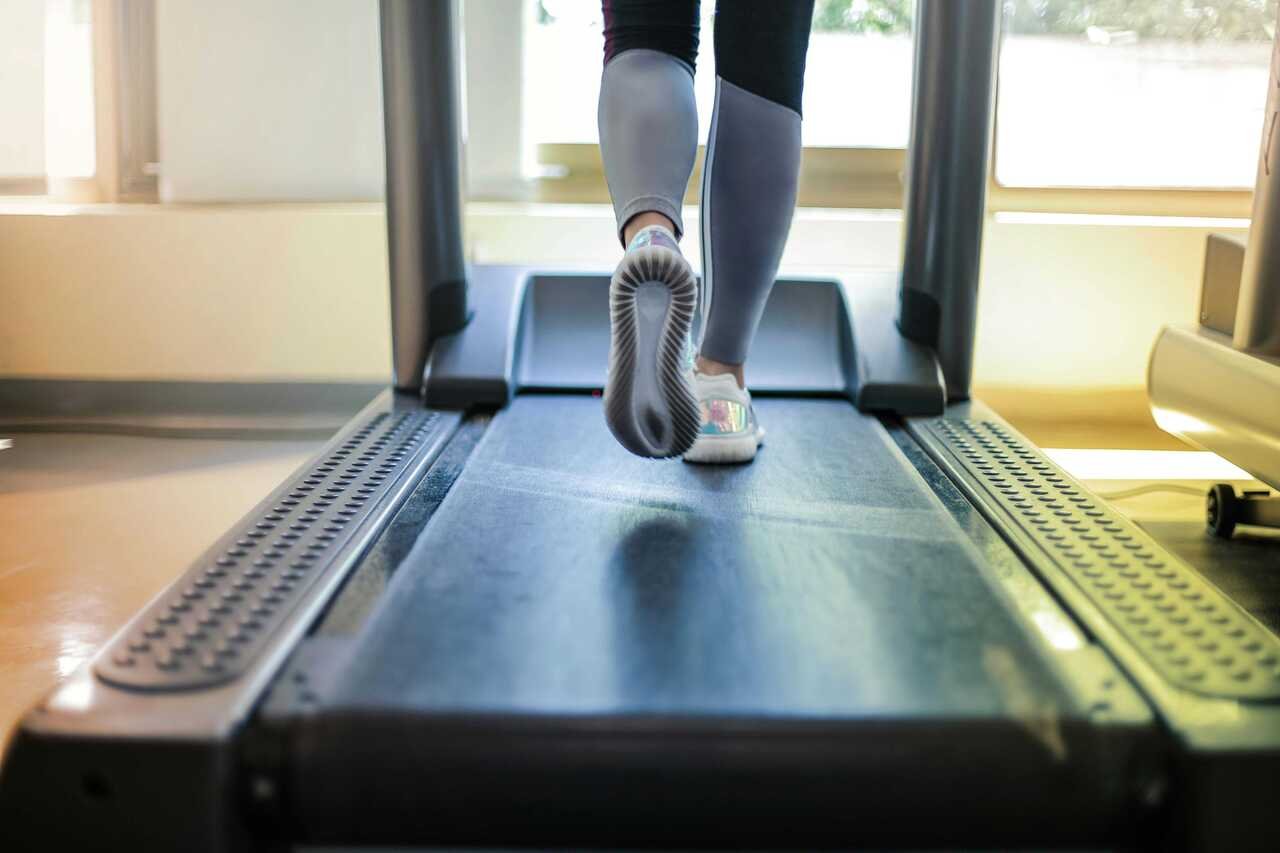
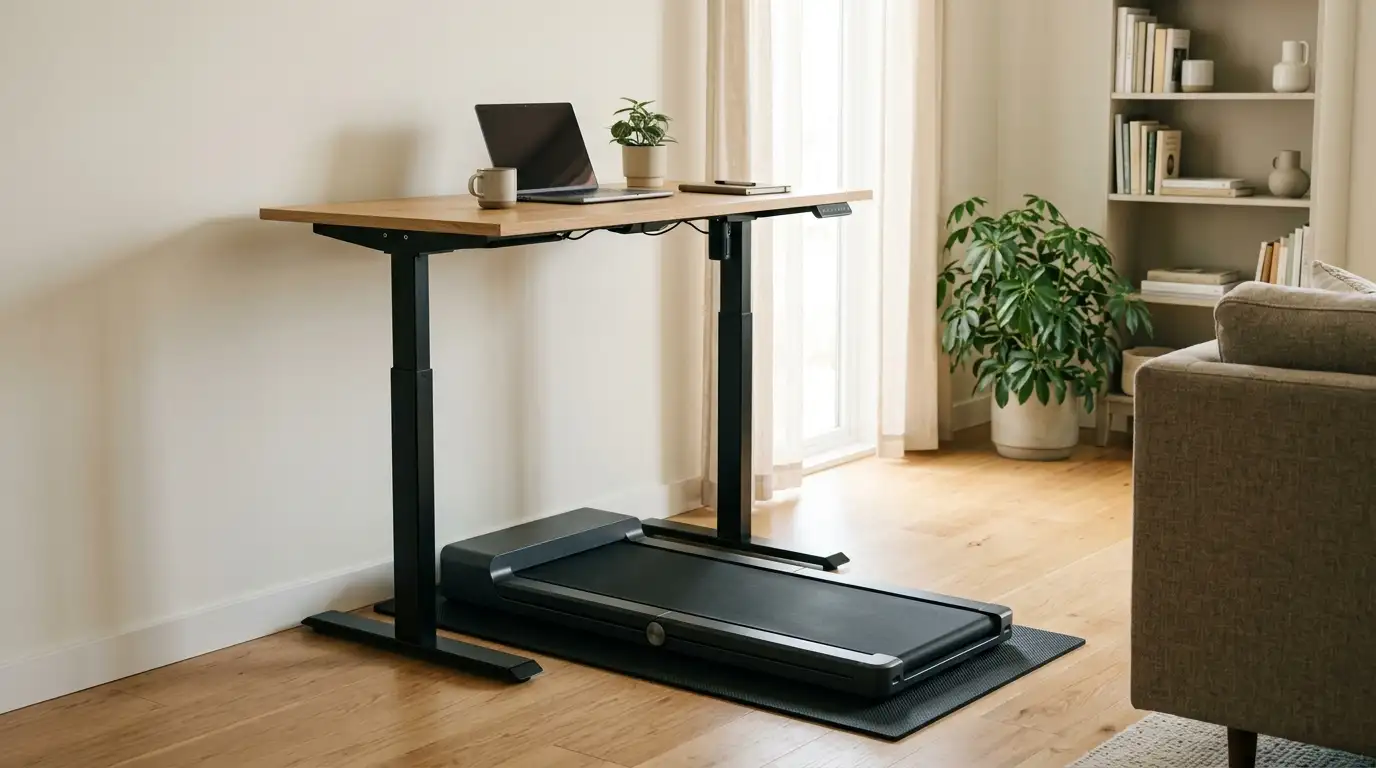
Walking pads provide a way to walk indoors without installing a full-size treadmill. Some models are designed to slide under furniture when not in use.
Features worth comparing:
- Overall dimensions and walking surface.
- Maximum supported user weight.
- Speed range.
- Noise levels under normal operating conditions.
- Remote control and display functions.
- Folding mechanism and storage dimensions.
- Manufacturer maintenance requirements.
If you plan to store a walking pad under a bed or sofa, measure the clearance first. Account for the power cable and any required ventilation.
Under-desk walking also requires a suitable desk height and enough clearance for your legs. Start slowly and avoid tasks that require a level of concentration or coordination that makes walking unsafe.
Potential limitations: Walking pads can still produce noise and vibration. They also require enough clear space for safe mounting, walking, and dismounting.
Best for: People who prefer walking and have a suitable location for the equipment.
7. Foldable Rowing Machines
Rowing machines provide a seated cardiovascular workout that involves coordinated movement of the legs, trunk, and arms. Depending on the model and your technique, rowing can also contribute to a broader fitness routine.
Before buying, compare:
- Rail length and fit for your body size.
- Resistance type and adjustment range.
- Footrest and handle design.
- Noise during use.
- Monitor functions.
- Folded or upright storage dimensions.
- The manufacturer’s recommended clearance.
Some rowing machines separate into sections or store upright; others have different folding mechanisms. Don’t assume that every compact rower folds in half.
Potential limitations: Rowing requires room for the full stroke, and upright storage may not be suitable for every model or home.
Best for: People who enjoy rowing and can accommodate the machine during workouts and storage.
8. Compact Exercise Bikes
Exercise bikes provide a seated cardio option that can be easier to accommodate than some larger cardio machines.
Options include upright bikes, folding bikes, recumbent bikes, and under-desk pedal exercisers.
Compare the footprint, seat adjustment, resistance system, supported user weight, stability, and storage dimensions. If you’re considering a connected bike, also check subscription requirements and whether the core functions remain available without a paid membership.
Potential limitations: Folding bikes may differ in stability and adjustment range. Under-desk pedal exercisers generally serve a different purpose from full-size exercise bikes and should not be treated as equivalent.
Best for: People who prefer cycling or want a dedicated indoor cardio option.
9. Mini Steppers and Under-Desk Ellipticals
Mini steppers and under-desk ellipticals are designed to provide movement in a relatively compact format.
They may suit people who want an alternative to walking or cycling, but their movement patterns and training capabilities differ from those of full-size cardio machines.
Before buying, check pedal clearance, resistance adjustment, stability, noise, supported user weight, and the intended use described by the manufacturer.
Potential limitations: Smaller machines may offer fewer training adjustments than full-size equipment. Under-desk models also require suitable clearance and may not provide the same workout experience as a dedicated cardio machine.
Best for: People who prefer low-profile equipment for selected cardio activities.
Essential Accessories for a Small Home Gym
You don’t need a large collection of accessories, but a few well-chosen items can make your workout area more functional.
10. Exercise Mats
An exercise mat can provide a more comfortable surface for floor exercises, stretching, and bodyweight movements.
Choose a mat with dimensions and thickness suitable for your intended activities. A yoga mat may work well for mobility exercises, while certain strength or conditioning movements may require a thicker, firmer surface.
For heavy weights or equipment, use flooring designed for the load rather than assuming a thin exercise mat will protect your floor.
11. Jump Ropes
A jump rope takes up very little storage space and can be used for cardiovascular exercise if your fitness level, coordination, and surroundings are suitable.
Check that you have enough overhead clearance and room to swing the rope without hitting furniture, lights, or other people. Consider the floor surface and potential impact noise, especially in an apartment.
12. Yoga Blocks and Mobility Tools
Yoga blocks, massage balls, and selected mobility tools can support stretching, positioning, and recovery routines.
Choose accessories based on your needs rather than buying an entire collection. Store smaller items together so that they don’t spread across your living area.
How to Organize a Small Home Gym
A well-organized workout area should be easy to use and straightforward to reset after exercise.
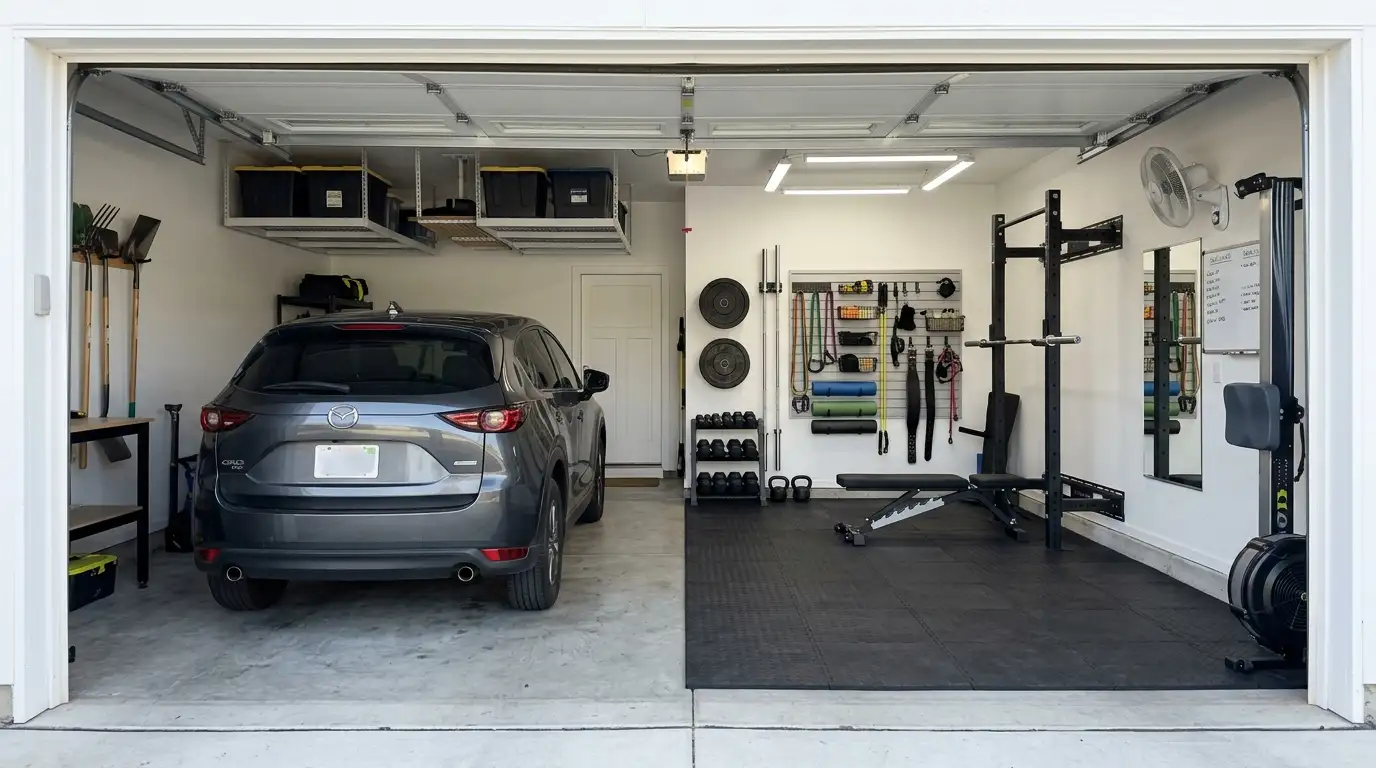
Use Vertical Storage Carefully
Wall-mounted racks and hooks can help keep suitable accessories off the floor. Before installing anything, check the wall construction, load rating, and mounting requirements.
Use appropriate fixings for the wall type. Do not rely on adhesive hooks or lightweight storage fixtures for heavy weights.
Choose Foldable and Stackable Equipment
Look for equipment that can be folded or stored in a designated location. A compact bench, a mat, and resistance bands may fit in a closet, while heavier equipment may require a dedicated floor-level storage area.
Check the manufacturer’s storage instructions, particularly for heavy or mechanically complex equipment.
Create a Portable Gym Kit
If your workout area doubles as a living room or office, store small accessories in a sturdy bin or dedicated gym bag.
A basic kit might include resistance bands, a mat, a towel, and a water bottle. Keep the container in a location where it can be retrieved without moving large furniture.
Keep the Floor Clear
After each workout, return equipment to its designated storage area. Keep walkways and exits unobstructed, and avoid leaving bands stretched across the floor or weights where someone could trip over them.
A clear floor also makes it easier to set up your next workout.
Home Gym Flooring and Noise Management
Flooring can help protect surfaces and improve comfort, but the appropriate solution depends on the equipment and exercises involved.
Choose Flooring for Your Equipment
Exercise mats: Suitable for many floor exercises and mobility routines.
Rubber gym flooring: May help protect floors and reduce some impact noise, depending on its thickness, density, and installation.
Interlocking foam tiles: Can provide a cushioned surface for selected low-impact activities, but may not be appropriate for heavy weights or equipment with concentrated loads.
Check the flooring manufacturer’s recommendations and your home’s floor restrictions before installation.
Reduce Disturbance in Apartments
Noise and vibration can travel through floors and walls, particularly in multi-unit buildings.
To reduce disturbance:
- Choose equipment with a noise profile suited to your home.
- Use appropriate mats or isolation pads where recommended.
- Avoid dropping weights.
- Keep impact-heavy exercises away from quiet hours.
- Check building rules and any restrictions on exercise equipment.
- Consider low-impact activities if vibration is a concern.
A mat may reduce some noise, but it won’t eliminate every vibration transmitted through a building.
Smart Fitness Equipment for Small Spaces
Connected fitness products can add workout tracking, guided classes, and performance feedback to a compact home gym. However, these features aren’t essential for every person.
Fitness Mirrors and Connected Training Systems
Connected mirrors and wall-mounted training systems can combine exercise instruction with a relatively streamlined appearance.
Before buying, compare the equipment footprint, installation requirements, resistance system, supported exercises, subscription fees, warranty, and long-term availability of the service.
Some systems require permanent installation or additional clearance. Others depend on a subscription for access to particular classes or features.
Best for: People who value guided workouts and are comfortable with the initial cost and potential ongoing fees.
Fitness Trackers and Smartwatches
A fitness tracker or smartwatch can help record activity, workout duration, heart rate, and other available metrics.
You don’t need a wearable device to exercise effectively. A simple workout log can track exercise selection, repetitions, resistance, and consistency.
If you choose a wearable, compare battery life, compatibility, subscription requirements, and the measurements you actually intend to use.
Basic Technology That May Be Enough
A smartphone, timer, and workout log may provide all the technology you need.
Use a timer for intervals, record your training sessions, and follow a suitable exercise plan. This approach avoids adding another device or subscription to your budget.
Creating a Comfortable Workout Environment
Your workout area should support movement without making the rest of your home less functional.
Lighting and Mirrors
Good lighting helps you see your equipment and surroundings. Position lights so they don’t create glare or interfere with exercise.
A mirror can help you observe your position during selected movements, but it isn’t a substitute for learning proper technique. Make sure any wall-mounted mirror is securely installed and positioned away from equipment that could strike it.
Ventilation and Temperature
Choose a workout area with adequate ventilation and a comfortable temperature. Avoid placing equipment where it blocks ventilation openings or creates an obstruction.
If your space is small, allow sufficient room to move without repeatedly colliding with furniture or other objects.
Keep the Design Simple
Neutral colors, organized storage, and a clear floor can help a small workout corner blend into your home.
You don’t need expensive décor or specialist furniture. Focus on a layout that supports exercise and can be restored quickly after each session.
Recommended Home Gym Equipment Setups by Budget
The following setups are examples of how you might prioritize purchases. They are not fixed shopping lists, and actual costs depend on the brands, models, and accessories you choose.
Budget Setup: Resistance-Based Training
Consider:
- A suitable set of resistance bands.
- An exercise mat.
- A jump rope, if appropriate for your space.
- A storage bag or bin.
This setup is compact and relatively simple to store. It can support a variety of bodyweight and resistance exercises, although the available resistance and exercise options depend on the products you choose.
Mid-Range Setup: Strength Training
Consider:
- Adjustable dumbbells.
- Resistance bands.
- A foldable exercise bench, if space allows.
- Suitable protective flooring.
This combination can support a broader range of resistance exercises without requiring a full dumbbell rack.
Before purchasing the bench and dumbbells, check the space required for the exercises you intend to perform together.
Cardio-Focused Setup
Consider:
- A walking pad, compact bike, or foldable rowing machine.
- A suitable exercise mat.
- A timer or activity tracker, if useful.
Choose one primary cardio machine based on the movement you enjoy and the space available. Buying several machines before establishing your preferences can create unnecessary expense and storage problems.
More Complete Small Home Gym
Consider:
- Adjustable dumbbells.
- Resistance bands.
- A foldable bench.
- One suitable cardio machine.
- Storage and protective flooring.
This setup provides several training options while remaining more flexible than a collection of full-size machines.
You can expand it later if your workout routine and available space justify additional purchases.
How to Compare Home Gym Equipment Before Buying
Product descriptions often emphasize features, but the most useful choice depends on whether the equipment fits your needs.
Use this checklist before making a purchase.
| Buying factor | What to check |
|---|---|
| Dimensions | Will it fit in your workout area and storage location? |
| Exercise compatibility | Does it support the movements you plan to perform? |
| Resistance or intensity | Does the available range suit your current needs and progression? |
| Stability | Is it designed for your intended exercises and user weight? |
| Noise | Is the operating noise suitable for your household or apartment? |
| Storage | Can you move and store it safely? |
| Maintenance | Are cleaning and maintenance requirements manageable? |
| Warranty | What coverage and exclusions apply? |
| Subscription costs | Are ongoing payments required for important features? |
| Return policy | Can you return the item if it doesn’t fit or meet expectations? |
Read the manufacturer’s specifications and instructions before purchasing. Where possible, compare multiple models using the same criteria instead of relying only on promotional descriptions.
Common Mistakes to Avoid When Building a Small Home Gym
Buying Equipment Before Measuring
An item can look compact online but occupy more room than expected. Measure the complete equipment footprint and the area required during exercise.
Purchasing Too Many Single-Purpose Tools
Several specialized products may perform overlapping functions. Start with equipment that supports the exercises you intend to do most often.
Ignoring Storage Dimensions
Foldable equipment still requires a storage location. Check the folded dimensions and consider how heavy or awkward the equipment will be to move.
Choosing Equipment Based Only on Price
An inexpensive product may not meet your requirements for stability, resistance, adjustability, or durability. Compare specifications and warranty terms alongside price.
Overlooking Safety
Check weight limits, installation requirements, moving parts, and manufacturer instructions. Inspect equipment regularly and stop using products that show damage or instability.
Expecting Equipment to Replace a Training Plan
Buying equipment doesn’t automatically create a consistent routine. Select a manageable schedule, learn the exercises, and track your progress.
Final Thoughts: Build a Home Gym That Fits Your Life
Creating a functional home gym is about making thoughtful equipment choices, not filling every available corner with fitness products.
Start by measuring your space and identifying your training goals. Choose versatile equipment, establish a manageable routine, and plan storage before adding larger items.
For many small homes, adjustable dumbbells and resistance bands provide a practical starting point. If cardio is your priority, consider one compact machine that fits your preferences and available space.
You can always expand your setup later. Begin with what you need, compare products carefully, and build a workout area that supports your routine without compromising the comfort of your home.
The best home gym setup is one that fits your space, supports your goals, and is practical for you to use consistently.
Suggested reads: Mini Gym at Home: Build a Small Workout Space
Frequently Asked Questions About Home Gym Equipment for Small Spaces
What is the best single piece of equipment for a small home gym?
The right choice depends on your primary goal. Adjustable dumbbells are a versatile option for strength training, while resistance bands are portable and usually require less storage. A walking pad may suit someone whose main goal is indoor walking.
Choose based on the exercises you intend to perform rather than a universal ranking.
Can I build muscle with compact home gym equipment?
Yes. Compact equipment can support strength training when the exercises provide an appropriate challenge and you progress over time.
Adjustable dumbbells, resistance bands, and bodyweight exercises can all contribute to a strength-training routine. The results depend on factors including training consistency, exercise selection, nutrition, recovery, and your individual circumstances.
How much space do I need for a small home gym?
The space you need depends on the equipment and movements you choose. A small area may accommodate a mat and resistance bands, while dumbbell exercises, benches, and cardio machines require additional clearance.
Measure the workout area and check equipment dimensions before buying.
How much does a small home gym cost?
The cost varies with equipment type, brand, quality, and the number of items you purchase.
A basic setup can begin with resistance bands and a mat. Adjustable dumbbells, benches, and cardio machines increase the overall cost. Compare current prices and include any accessories, delivery charges, and subscriptions in your budget.
Are adjustable dumbbells worth buying for an apartment?
They can be useful if you want multiple resistance levels without storing separate pairs of dumbbells. Before buying, compare the weight range, adjustment mechanism, dimensions, and price.
If your routine requires only light resistance, bands may be sufficient for your current needs.
Is a walking pad worth buying for a small apartment?
A walking pad may suit people who prefer walking indoors and have enough space to use and store it safely.
Consider its walking surface, speed range, noise, user weight capacity, and storage dimensions. Check apartment rules and think about the potential for vibration before purchasing.
What is the quietest home gym equipment for an apartment?
Resistance bands and bodyweight exercises generally avoid the motor noise associated with cardio machines. However, the noise produced by any setup depends on the movements, equipment, flooring, and building.
For motorized equipment, check product specifications and independent reviews that discuss operating noise. Avoid assuming that a product advertised as quiet will be inaudible to neighbors.
Do I need a foldable bench?
Not necessarily. A bench is useful for certain dumbbell exercises, but many movements can be performed standing, seated on a suitable stable surface, or on the floor.
If you choose a bench, ensure that it is designed for your intended exercises and can be stored safely.
How can I keep my home gym organized?
Assign a storage location to each piece of equipment. Store small accessories in a bag or bin, use appropriate racks for heavier items, and return everything to its place after each session.
Keep walkways clear and make sure stored equipment cannot tip or fall.
Is smart home gym equipment necessary?
No. Connected equipment can provide guided workouts and tracking features, but a basic setup can support an effective exercise routine without a subscription.
Consider smart features only if they suit your preferences and justify their cost.
Editorial Note
Product availability, prices, specifications, and warranty terms may change. Verify current details with the manufacturer or retailer before purchasing. This article provides general equipment-selection information and is not a substitute for individualized medical or fitness advice.