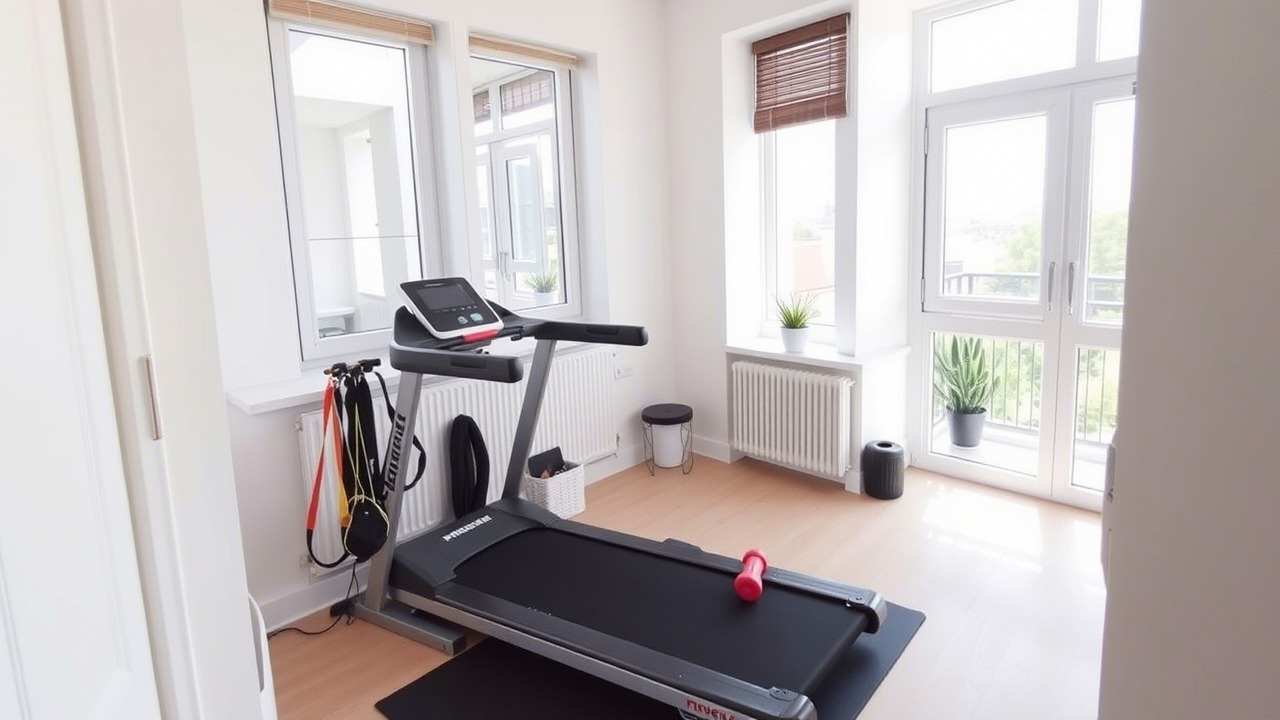
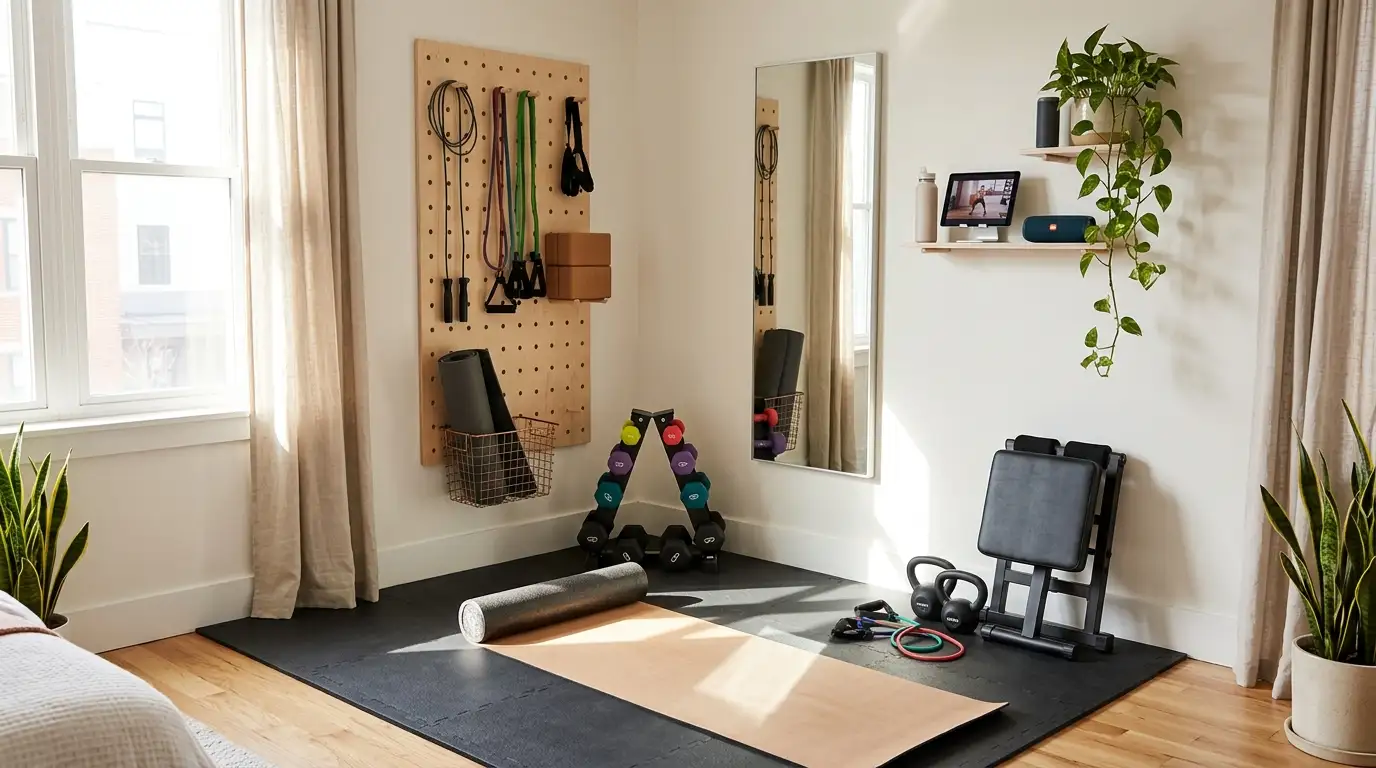

You don’t need a spare room, a garage full of equipment, or an expensive gym membership to build a useful home workout space. With a little planning, even a corner of your bedroom or living room can become a mini gym at home.
The key is to choose equipment that matches your fitness goals, fits your available space, and is easy to put away when you finish exercising. A well-planned mini gym can support strength training, cardio, mobility work, and beginner-friendly workouts without taking over your home.
This guide explains how to create a compact home gym, what equipment to buy first, how to organize a small workout area, and how to build a routine you can maintain.
Table of Contents
Quick Answer: How Do You Create a Mini Gym at Home?
To create a mini gym at home, choose a clear workout area, measure the available floor space, and start with a few versatile pieces of equipment. A workout mat, resistance bands, and adjustable dumbbells can cover many basic exercises without requiring a dedicated room.
If you have more space or a larger budget, consider adding a folding bench, a kettlebell, or a compact cardio machine. Keep the setup simple at first, then expand it as your training routine develops.
1. Choose the Right Space
Before buying equipment, decide where you’ll exercise. Your mini gym should be easy to access, comfortable to use, and large enough for the movements you plan to perform.
You don’t necessarily need a separate room. A small, well-organized area can work as long as you have enough clearance to move safely.
Measure your available floor space
Start by measuring the width and length of the area you want to use. Then consider the space needed to extend your arms, step backward, bend down, and move around any equipment.
A yoga or exercise mat can help you visualize your workout zone. However, don’t assume that the mat’s dimensions represent all the space you need. Exercises such as lunges, jumping jacks, and resistance-band movements may require additional room.
Check these details before setting up:
- Clearance: Can you move your arms and legs without hitting furniture?
- Ceiling height: Is there enough room for overhead presses or standing movements?
- Floor condition: Is the surface stable, level, and suitable for exercise?
- Ventilation: Can you open a window or maintain comfortable airflow?
- Privacy: Can you exercise without constantly moving around other household activities?
- Storage: Is there somewhere to put equipment when you finish?
Keep walkways, doorways, and emergency exits clear. If you plan to use a bench or compact cardio machine, measure its operating footprint rather than just its stored dimensions.
Choose a location you’ll actually use
Convenience matters. If setting up your workout requires moving several pieces of furniture every day, you may be less likely to stick with it.
A visible workout corner can serve as a reminder to exercise. If you share your home with family or roommates, a foldable setup may be easier to manage.
Best approach: Choose the smallest area that comfortably accommodates the exercises you intend to perform. You can always expand it later.
2. Decide What You Want to Train
Your fitness goals should determine what belongs in your mini gym. Buying equipment before deciding how you’ll use it often leads to clutter and unnecessary spending.
For general fitness
If you want to build a consistent exercise habit, start with equipment that supports several types of movement.
A mat, resistance bands, and a pair of suitable dumbbells can help you perform squats, rows, presses, glute bridges, and floor-based core exercises. Walking outdoors or following a low-impact cardio routine can complement your strength sessions.
For strength training
If building strength or muscle is your main goal, prioritize resistance that can be adjusted as you progress.
Adjustable dumbbells save space compared with owning many fixed-weight pairs. Resistance bands can provide additional exercise options, while a stable bench can expand the movements you can perform.
You don’t need to buy everything at once. Start with resistance that lets you maintain good technique, then increase the challenge gradually.
For cardio and weight management
If you prefer cardio, choose an activity you enjoy enough to repeat. Depending on your space and budget, this could mean brisk walking, marching in place, step-based routines, dance workouts, or using a compact exercise bike or walking pad.
A large treadmill or elliptical machine may be useful for some people, but it isn’t essential for creating an effective home workout space.
For mobility and flexibility
If your priority is stretching, balance, or gentle movement, you may need very little equipment.
A mat, a light resistance band, and enough clear floor space can support a simple mobility routine. You may also use a foam roller if it suits your needs and budget.
3. Essential Equipment for a Mini Gym
The best mini gym equipment is not necessarily the most expensive or advanced. Look for items that are versatile, easy to store, and appropriate for your current fitness level.
Resistance bands
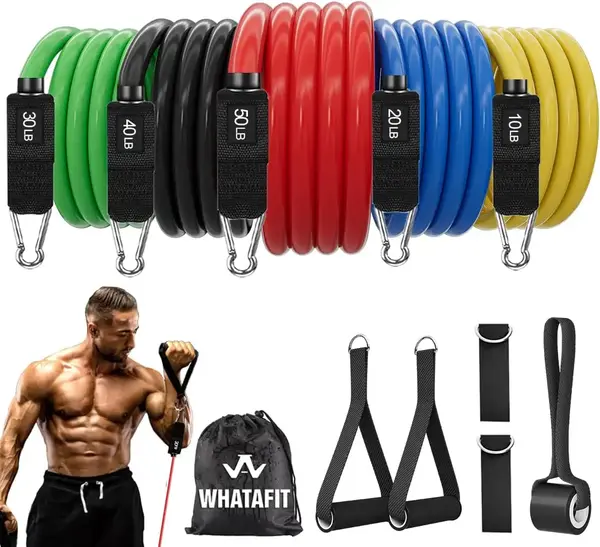
Resistance bands are a practical starting point for a small workout space. They’re lightweight, easy to store, and available in different resistance levels.
Depending on the type you choose, bands can support rows, presses, lateral walks, glute exercises, and other resistance movements. They can also be useful when you want to add resistance without storing bulky weights.
Before each workout, inspect bands for cracks, tears, or other signs of damage. If you anchor a band to a door or another fixture, follow the manufacturer’s instructions and check that the anchor is secure.
Best for: Beginners, small apartments, budget-conscious setups, and people who want portable equipment.
Adjustable dumbbells
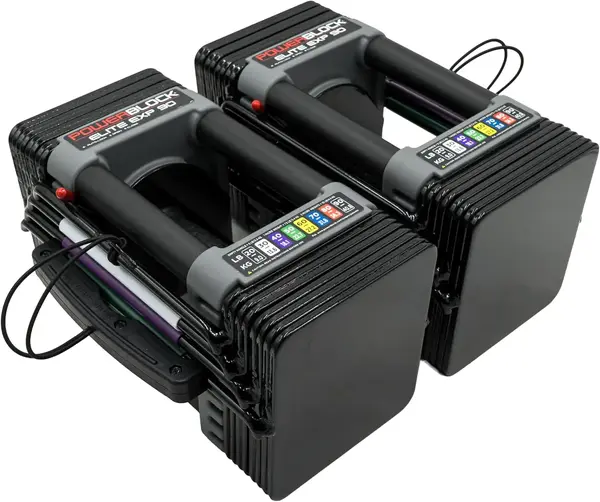
Adjustable dumbbells allow you to change the resistance without keeping several pairs of weights on the floor.
They can support exercises such as goblet squats, rows, floor presses, Romanian deadlifts, and shoulder presses. Their main advantage is versatility: one compact set can cover many common strength movements.
Compare the adjustment mechanism, weight range, grip comfort, storage requirements, and safety instructions before purchasing. Check the dimensions too, because some adjustable dumbbells take up more room than expected.
Best for: Strength training, progressive resistance, and compact home gyms with a moderate budget.
Exercise or yoga mat
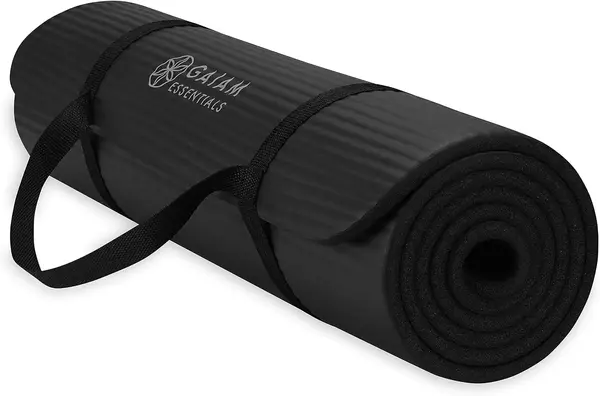
A mat creates a more comfortable surface for floor exercises, stretching, mobility work, and core training.
Choose one that provides enough cushioning for your needs without becoming unstable during standing movements. A thicker mat may feel more comfortable on a hard floor, but it isn’t automatically better for every exercise.
Clean and dry the mat according to the manufacturer’s instructions, particularly if you exercise frequently.
Best for: Almost every mini gym, especially spaces with hard flooring.
Kettlebell
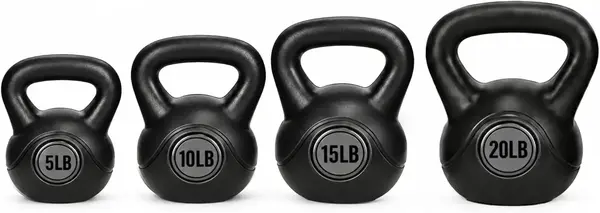
A kettlebell can support movements such as goblet squats, deadlift variations, carries, and other strength exercises.
It can be a useful addition if you prefer a simple piece of equipment with a compact footprint. However, exercises that involve swinging a kettlebell require adequate clearance, control, and suitable technique.
Choose a manageable weight and learn the movement before attempting faster or more complex exercises.
Best for: People who enjoy strength circuits and want to train with a single compact weight.
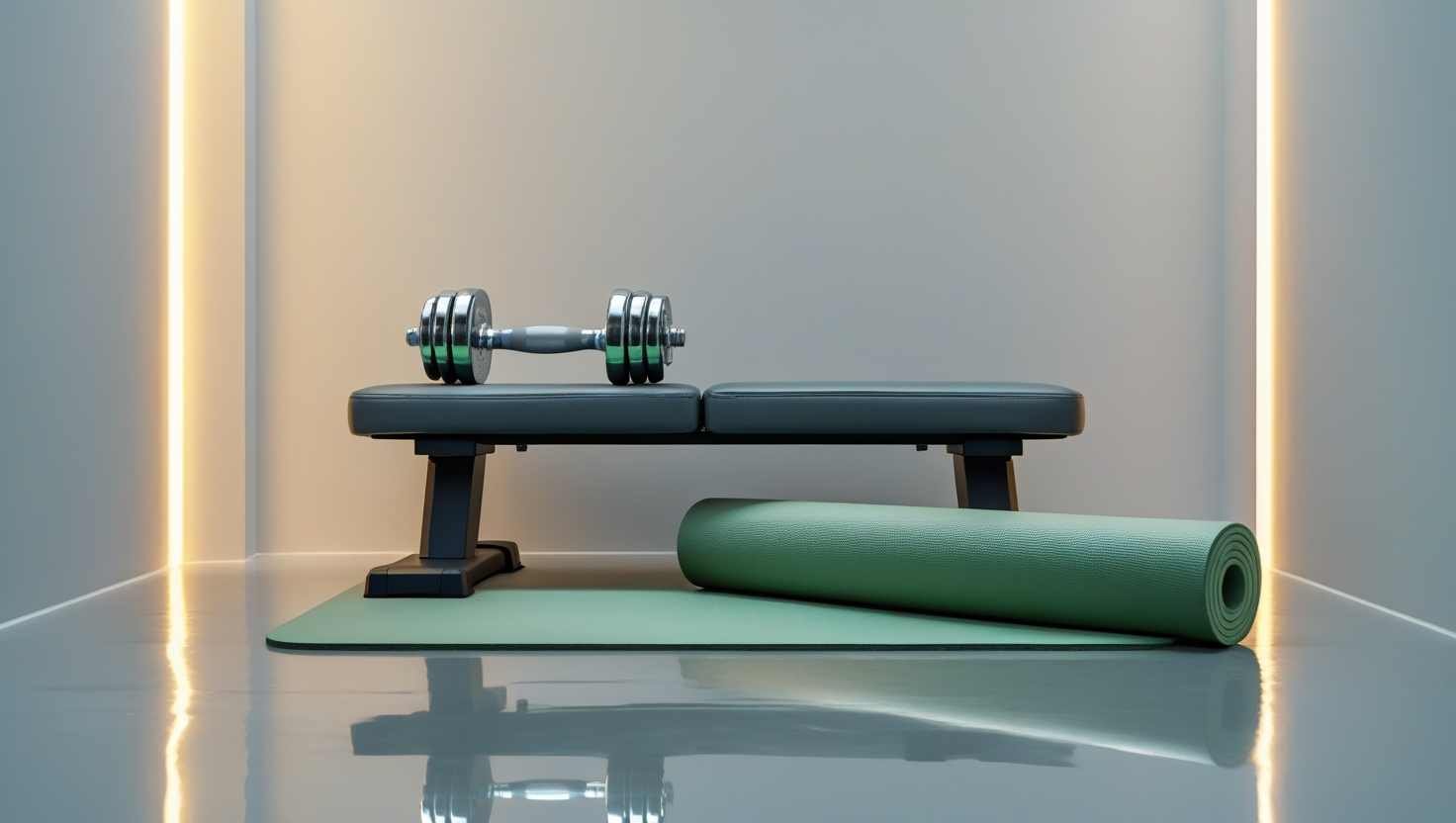
Folding workout bench
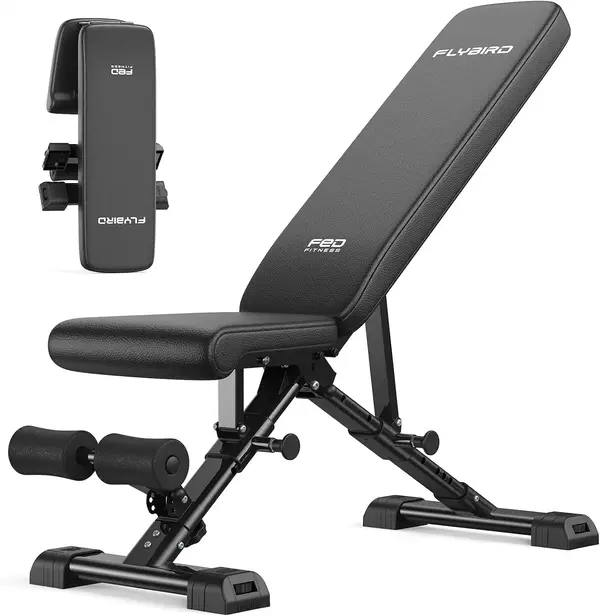
A folding bench expands your exercise options without permanently occupying as much floor space as a fixed bench.
It may be useful for supported rows, certain dumbbell presses, seated exercises, and other movements. Before buying one, check its weight capacity, stability, dimensions, locking mechanism, and storage footprint.
Only use a bench on a stable surface and follow the manufacturer’s setup instructions.
Best for: People who want more strength-training variety and have enough space to use the bench safely.
Compact cardio equipment
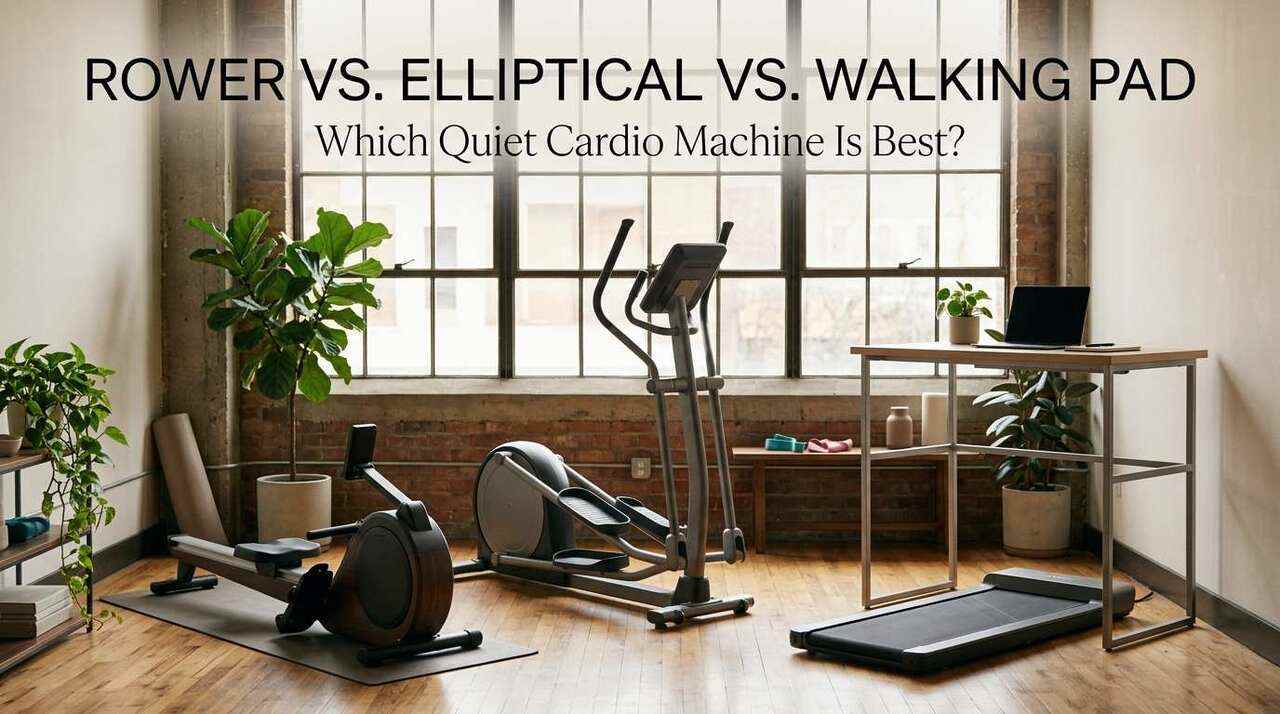
If you prefer indoor cardio, you might consider a walking pad, folding exercise bike, or another compact machine.
Compare the equipment’s actual footprint, noise level, weight capacity, storage requirements, and maintenance needs. Check whether the machine can be stored safely when folded and whether you can move it without straining yourself.
A compact machine is only a good purchase if you have room to use it properly. You should not have to squeeze between furniture or block a doorway to exercise.
Best for: People who enjoy indoor cardio and have the space and budget for a machine.
Mini gym equipment comparison
| Equipment | Main use | Space requirement | Good starting priority |
|---|---|---|---|
| Exercise mat | Floor work, mobility, core | Low | High |
| Resistance bands | Full-body resistance training | Very low | High |
| Adjustable dumbbells | Strength training | Low to moderate | High for strength goals |
| Kettlebell | Strength and conditioning | Low | Optional |
| Folding bench | Supported strength exercises | Moderate when in use | Optional |
| Compact cardio machine | Indoor cardio | Moderate, even if foldable | Goal-dependent |
| Foam roller | Mobility and recovery routines | Low | Optional |
You don’t need every item in this table. Start with two or three pieces that support the exercises you intend to do most often.
4. Mini Gym Setups for Different Budgets
There is no single correct way to build a mini gym. Your ideal setup depends on how much you can spend, how much space you have, and what kind of training you enjoy.
Setup 1: A simple starter gym
A basic setup could include:
- One exercise mat
- A set of resistance bands
- A small storage basket or bag
This is a sensible option if you’re new to exercise, have very limited space, or want to establish a routine before investing in more equipment.
You can use this setup for many bodyweight exercises and band-based movements. It won’t replace every type of gym equipment, but it can be enough to begin building consistency.
Setup 2: A compact strength gym
If your priority is resistance training, consider adding:
- Adjustable dumbbells
- An exercise mat
- Resistance bands
- A stable storage rack or designated storage area
This setup provides more options for gradually increasing resistance. You can train several major muscle groups without filling your room with separate weights.
A folding bench is a possible next purchase if you have sufficient room and want to expand your exercise selection.
Setup 3: A strength-and-cardio gym
For a broader routine, combine:
- Adjustable dumbbells or resistance bands
- An exercise mat
- A compact cardio option, if appropriate
- A storage solution for smaller items
You can alternate strength sessions with walking, cycling, or other cardio activities. If a machine makes the room crowded, consider outdoor walking or bodyweight cardio instead.
Setup 4: A renter-friendly mini gym
Renters may prefer equipment that doesn’t require drilling, permanent installation, or major changes to the property.
A mat, resistance bands, and adjustable dumbbells can form a flexible starting point. Choose equipment that can be stored in a cupboard or under suitable furniture, and avoid attaching anything to doors or walls unless the installation is permitted and safe.
Read our guide to renter-friendly home gym essentials for more ideas on choosing equipment that works in a rented home.
How to prioritize your spending
Use this order as a starting point:
- Buy the equipment needed for your main type of exercise.
- Choose storage that keeps the space tidy and safe.
- Add equipment only when your routine reveals a real need.
- Upgrade items when your current equipment no longer suits your training.
Avoid spending your entire budget on a single machine before you know whether you enjoy using it regularly.
5. Small Home Gym Ideas for Different Rooms
You can adapt a mini gym to different living arrangements. The goal is to create a setup that fits your home rather than forcing your home to accommodate too much equipment.
Bedroom mini gym
bedroom can work well if you have a clear corner or an area beside a wall that doesn’t interfere with walking paths.
Store resistance bands in a basket, keep dumbbells in a stable designated spot, and roll up your mat after your session if you need the floor space back.
Avoid placing weights where you could trip over them at night. If you share the room, agree on a storage arrangement that keeps the space usable for everyone.
Living room workout corner
A living room can serve as a flexible workout space if you can move a small table or other light furniture out of the way.
Choose equipment that blends into your storage system. A lidded basket can hold bands and small accessories, while adjustable dumbbells can be stored in a secure, low-traffic area.
Make sure furniture remains stable and that you have enough room to step in every direction required by your workout.
Garage mini gym
A garage may provide more room for dumbbells, a bench, or larger equipment. However, consider temperature, ventilation, dust, moisture, and the condition of the floor.
Keep equipment away from vehicles, chemicals, tools, and other hazards. If you use a garage for multiple purposes, mark out a workout zone and put equipment away when it is not in use.
Small apartment gym
In a small apartment, portability and noise control matter. Prioritize items that store easily and allow you to exercise without disturbing neighbors.
Resistance bands, a mat, and adjustable dumbbells may be more practical than a large machine. If you prefer cardio, walking outdoors or using a quiet, compact option may be easier than trying to fit a treadmill into a narrow room.
Avoid jumping exercises if the impact could disturb neighbors or if the floor is unsuitable. Low-impact movements can still make your workout challenging.
Outdoor mini gym
If you have access to a private patio, balcony, or backyard, you may be able to exercise outdoors when the weather and surface are suitable.
Use equipment according to its instructions and protect it from moisture or direct weather exposure when required. Make sure the surface is stable, and never place heavy equipment where it could fall from a balcony or elevated area.
Internal link opportunity: Add a link here when your article about outdoor gym ideas is published, using a natural anchor such as “outdoor gym ideas for backyards.”
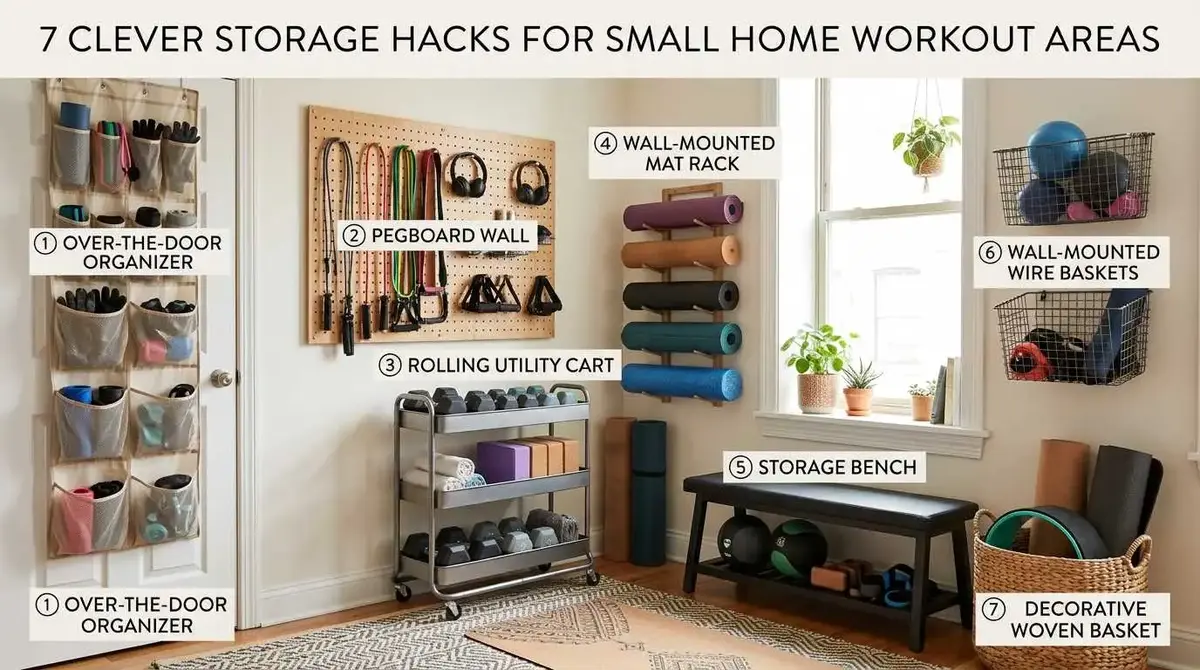
6. Organize and Store Your Equipment
A small gym feels more useful when everything has a designated place. Good storage also helps prevent trip hazards and makes it easier to transition between workouts and everyday life.
Use vertical storage carefully
Wall-mounted hooks or shelves can help free up floor space, but they must be suitable for the wall, the equipment, and the load. If you rent, check the rules before drilling.
If wall installation isn’t practical, use a stable freestanding rack or storage unit. Keep heavier items low, and avoid stacking equipment in a way that could topple.
Store small accessories together
Resistance bands, skipping ropes, straps, and other small items can be kept in a basket or bag.
Choose a storage container that is easy to access and large enough to avoid cramming equipment together. Inspect stored bands and other elastic accessories periodically for damage.
Make the workout easy to start
Put frequently used items where you can reach them without moving several other objects. Store equipment immediately after your session, especially if children or pets share the home.
A simple rule helps: if an item is difficult to set up or put away, you may be less likely to use it consistently.
7. Choose the Right Flooring
The floor under your mini gym affects comfort, stability, noise, and how well the surface handles exercise.
For stretching and floor-based exercises, an exercise mat may be enough. If you use dumbbells or other heavy equipment, consider a suitable protective surface designed for the load and the type of floor beneath it.
Rubber flooring can be useful in some home gym setups, but the right product depends on the activity, the surface, and the manufacturer’s recommendations.
Before buying flooring, consider:
- Grip: Does the surface remain stable during exercise?
- Cushioning: Is it comfortable for floor movements?
- Protection: Is it appropriate for the weight and equipment you plan to use?
- Cleaning: Can you keep it hygienic with normal maintenance?
- Fit: Can you install it without creating raised edges or trip hazards?
Do not assume that any foam mat can safely support heavy weights. Some materials compress or shift under loads and may not be designed for strength equipment.
For a more detailed comparison of options, read Best Home Gym Flooring Mats.
8. Reduce Noise and Protect Your Home
Noise can become an issue when exercising in an apartment, upstairs room, or shared household.
Start by choosing movements that match your environment. You can build a challenging workout around controlled squats, rows, presses, glute bridges, and other low-impact exercises without jumping or dropping weights.
A few practical steps can help:
- Place suitable protective flooring under your workout area.
- Lower dumbbells carefully instead of dropping them.
- Avoid high-impact movements if they disturb people below you.
- Choose equipment with a noise level appropriate for your home.
- Keep weights away from fragile furniture, glass, and walkways.
- Follow the manufacturer’s instructions for using and storing equipment.
If you plan to use a cardio machine, check its operating noise and vibration requirements. A machine advertised as compact isn’t necessarily quiet in a real home.
Also check your floor’s suitability before using heavy equipment. If you’re unsure whether a floor can support a substantial load, consult a qualified professional rather than guessing.
9. Create a Beginner Workout Routine
A mini gym becomes useful when it supports a routine you can repeat. You don’t need an elaborate training split to get started.
If you’re new to exercise, begin at a manageable level and increase the difficulty gradually. Choose movements you can perform with control, and stop if you experience sharp pain, dizziness, or unusual symptoms.
The following is a general example, not an individualized training or medical plan.
Example weekly schedule
| Day | Activity | Suggested focus |
|---|---|---|
| Monday | Full-body strength | Squat, row, press, glute bridge |
| Tuesday | Cardio | Walking, cycling, or low-impact movement |
| Wednesday | Recovery or mobility | Gentle stretching and comfortable movement |
| Thursday | Full-body strength | Repeat core movements with controlled technique |
| Friday | Cardio | Choose an activity you enjoy |
| Saturday | Optional activity | Walking, recreational movement, or a light session |
| Sunday | Rest | Recovery and preparation for the next week |
Adjust the schedule to your fitness level, availability, and recovery needs. If three sessions a week are more realistic than six, start with three.
A simple full-body workout
After an appropriate warm-up, you could build a beginner session around these movements:
- Bodyweight squat or goblet squat: Train the lower body.
- Resistance-band row: Work the back and upper body.
- Wall push-up or suitable push-up variation: Train the chest, shoulders, and arms.
- Glute bridge: Strengthen the glutes and work the hips.
- Dead bug or another controlled core exercise: Practice trunk stability.
Start with a comfortable number of repetitions and sets that allow you to maintain good technique. Rest between exercises as needed. If you use weights or bands, choose resistance that lets you control the movement throughout the set.
You can progress by adding repetitions, adding a set, improving control, or increasing resistance when the current level becomes manageable. Change one variable at a time rather than making every part of the workout harder at once.
How much exercise should you aim for?
For general adult health, U.S. physical activity guidance recommends at least 150 minutes of moderate-intensity aerobic activity each week, or an equivalent amount of vigorous activity, alongside muscle-strengthening activities on at least two days a week. These are general guidelines, not a requirement to start at that level immediately.
You can build toward them gradually, taking your current activity level and personal circumstances into account. If you have a chronic condition, an injury, or concerns about starting exercise, ask an appropriate healthcare professional for advice tailored to you.
Reference: Physical Activity Guidelines: Questions and Answers.
10. Common Mini Gym Mistakes to Avoid
Buying too much equipment too soon
It’s easy to get carried away when shopping for home gym equipment. But several machines and accessories won’t help if you rarely use them.
Start with a small selection, build a routine, and identify what you’re missing before spending more.
Ignoring the room’s actual dimensions
Equipment can look smaller online than it feels in a room. Measure both its stored size and its operating footprint.
Remember to leave enough room to use it safely, including space for your arms, legs, and any moving parts.
Choosing equipment that doesn’t match your goals
A cardio machine may not be the best first purchase if your main priority is strength training. Likewise, buying several heavy weights may be unnecessary if you mainly want to stretch and improve mobility.
Let your intended routine guide your choices.
Forgetting storage and safety
Weights left in walkways, loose bands, and unstable stacks can create hazards. Plan where each item will live before bringing it home.
Keep children and pets away from equipment that could fall, pinch, or otherwise cause injury.
Expecting immediate results
A home gym makes exercise more convenient, but progress still depends on consistency, suitable training, recovery, and other individual factors.
Set a realistic first goal, such as completing two or three planned workouts each week. Once that feels manageable, build from there.
Key Takeaways
Building a mini gym at home is about making exercise practical, not filling a room with equipment.
- Choose a space that allows safe movement.
- Match your equipment to your goals.
- Start with a few versatile items rather than buying everything at once.
- Plan flooring, storage, and noise control before expanding.
- Follow a realistic workout schedule and progress gradually.
- Keep the space tidy so it remains easy to use.
Start small, use your equipment consistently, and let your needs guide future purchases. A thoughtfully arranged corner can become a useful part of your fitness routine without taking over your home.
Frequently Asked Questions
How much space do I need for a mini gym at home?
The space you need depends on your equipment and exercises. A mat and resistance bands can work in a relatively small area, while a bench or cardio machine requires more room. Measure the workout area and leave enough clearance for safe movement before buying anything.
What is the best equipment for a small home gym?
For a versatile starting point, consider an exercise mat, resistance bands, and adjustable dumbbells if strength training is one of your goals. The best combination depends on your fitness level, budget, storage space, and preferred activities.
Can I build a mini gym at home on a budget?
Yes. Start with bodyweight exercises and a small number of affordable, versatile items, such as resistance bands and a mat. Add more equipment only when you have a clear reason to use it.
Is a mini gym at home effective for beginners?
A compact home gym can support a beginner routine that includes strength training, cardio, and mobility work. Results depend on the exercises you perform, how consistently you train, and whether the routine suits your ability and goals.
What equipment is best for a small apartment?
Resistance bands, a mat, and compact weights are often practical choices because they can be stored when not in use. Before choosing a larger item, consider its noise level, operating footprint, and storage requirements.
How can I make a mini gym quieter?
Choose low-impact exercises, lower weights carefully, and use flooring designed for your equipment and floor type. If you use a cardio machine, check its noise and vibration characteristics before purchasing it.
Do I need a treadmill in my mini gym?
No. Walking outdoors, marching in place, dance workouts, and other forms of cardio can be alternatives to a treadmill. Buy a machine only if you enjoy using it and have enough room to operate and store it safely.
How often should I use my mini gym?
Your schedule should reflect your current fitness level and goals. Beginners can start with a few manageable sessions each week and increase gradually. Allow for recovery, and adapt your plan if you experience persistent pain or excessive fatigue.