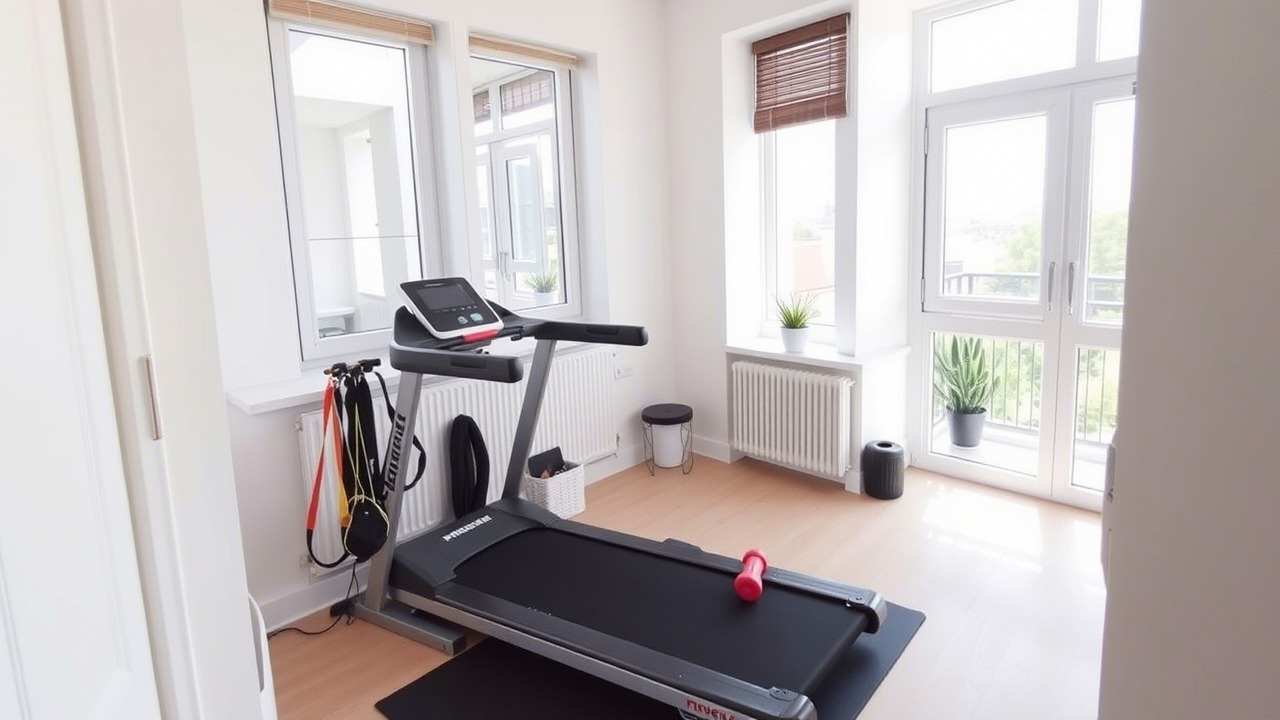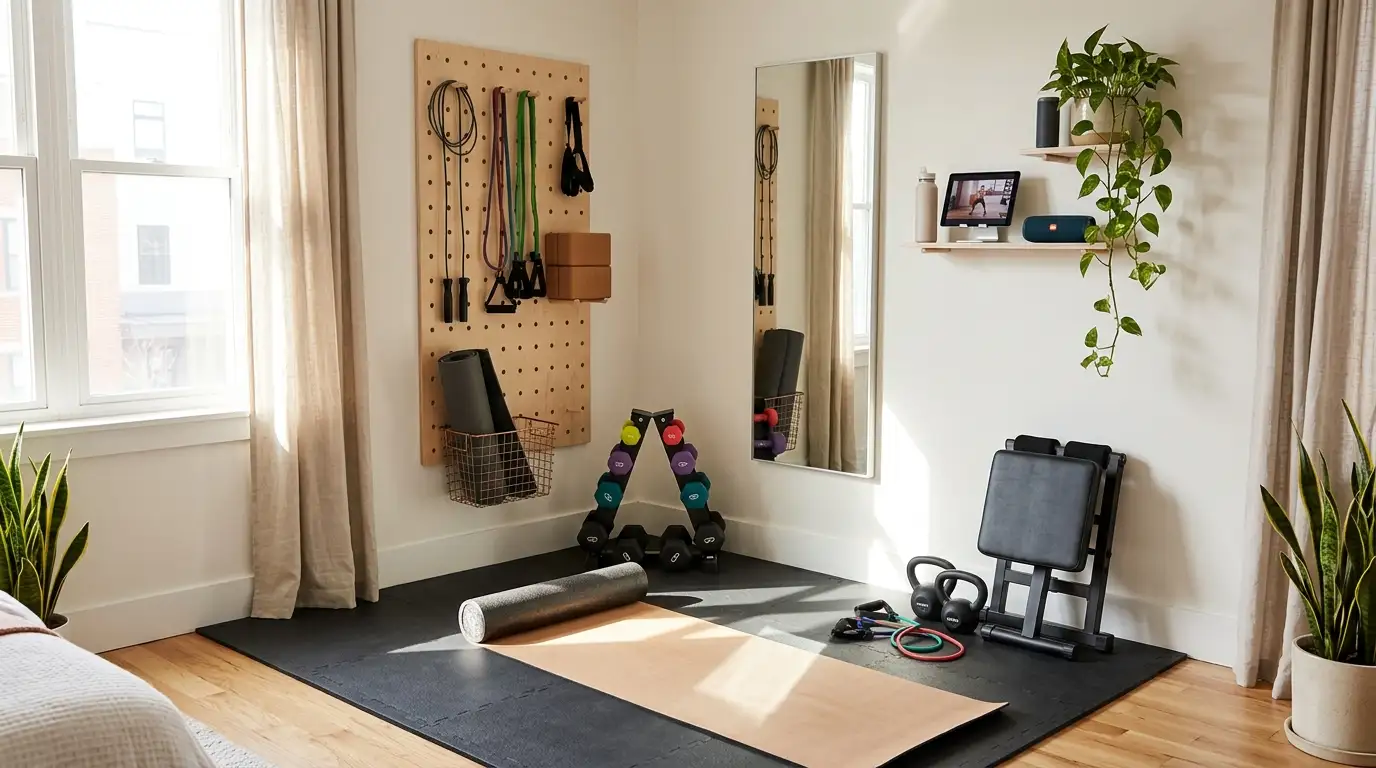
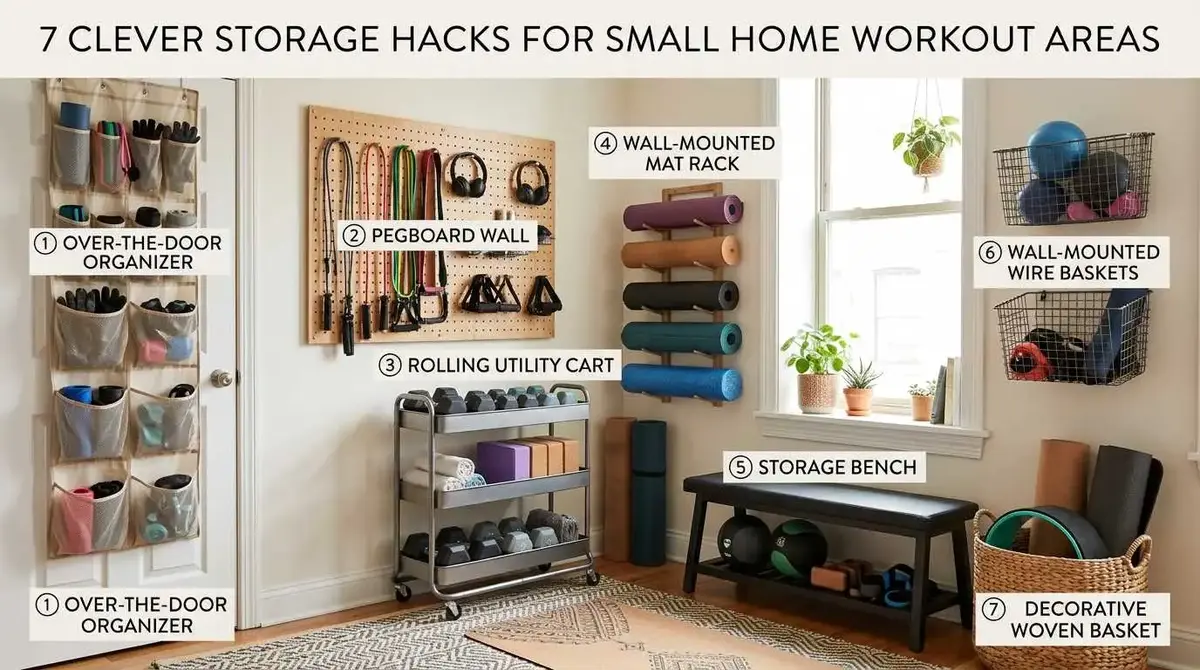

A small home gym can become cluttered quickly when dumbbells sit beside the sofa, resistance bands disappear into drawers, and your yoga mat occupies half the bedroom floor. The right storage system keeps your equipment organized, protects your living space, and makes it easier to start your next workout.
These 7 clever storage hacks for small home workout areas help you organize fitness equipment in apartments, bedrooms, spare rooms, and compact garages. You’ll discover practical ways to use vertical space, store equipment beneath furniture, organize accessories, and create a workout station that fits your daily routine.
The best part? You can start with a few inexpensive organizers and build your storage system as your home gym grows.
Table of Contents
1. Use Vertical Wall Storage for Lightweight Equipment
Wall storage is one of the most effective ways to free up floor space in a small home gym. Instead of leaving resistance bands, jump ropes, and workout straps scattered around the room, you can organize them vertically and keep frequently used accessories within reach.
A wall-mounted pegboard, purpose-built accessory rack, or sturdy hook system can turn an unused wall section into a practical storage area.
How to organize your equipment vertically
Start by measuring the available wall space near your workout area. Choose a storage system that suits the wall material and the weight of the equipment you plan to hang.
Arrange your accessories by type. Keep resistance bands together, place jump ropes on separate hooks, and group yoga straps or exercise handles in one section.
This arrangement makes it easier to find what you need without searching through drawers or storage boxes.
Useful items for wall storage include:
- Resistance bands and resistance tubes
- Jump ropes and skipping ropes
- Yoga straps and stretching accessories
- Lightweight workout handles
- Small exercise towels or straps
A freestanding organizer can be a better option for renters who cannot drill into their walls. Over-door organizers may also work for lightweight accessories if the door and organizer are compatible.
What about dumbbells and kettlebells?
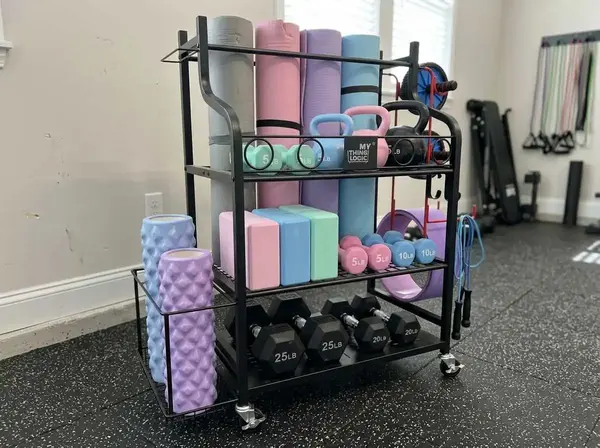
Heavy weights require more substantial storage. Ordinary decorative hooks and lightweight pegboards shouldn’t be assumed to support dumbbells or kettlebells.
Use a rack specifically designed for the weight you own, follow the manufacturer’s mounting instructions, and confirm that the wall and fasteners can support the intended load.
Best for: Home gym owners who use resistance bands, stretching accessories, and other lightweight equipment.
Space-saving tip: Put frequently used accessories at a comfortable height and keep the area directly beneath the organizer clear.
2. Create an Under-Bed Equipment Zone
The space beneath your bed can serve as a convenient storage area for flat or lightweight workout equipment. This is particularly useful when your bedroom doubles as your home gym.
Instead of dedicating a corner to equipment you use only occasionally, store suitable items beneath the bed in shallow containers.
Low-profile storage bins, fabric organizers, and rolling containers can hold folded exercise mats, yoga blocks, resistance bands, and other accessories.
How to set up under-bed gym storage
Measure the clearance beneath your bed before purchasing a container. Remember to account for the bed frame, central supports, and any drawers that need to open.
Choose containers that slide out easily. Handles or small wheels can make daily access more convenient.
Keep the equipment you use most frequently near the front of the container. Store occasional-use items farther back.
For example, you might keep resistance bands and yoga blocks in one bin while using another for stretching straps and lightweight mobility accessories.
Keep equipment clean and dry
Allow exercise mats, towels, and other items to dry before putting them away. Storing damp equipment in a closed container can encourage unpleasant odors and moisture problems.
Avoid placing heavy weights in containers that are difficult to pull out or lift safely. A low, stable rack is usually more practical for frequently used dumbbells.
Best for: Small bedrooms, studio apartments, and multipurpose living spaces.
Space-saving tip: Use one shallow container for your essential equipment rather than several oversized bins that make the area difficult to access.
3. Organize Accessories With a Rolling Cart
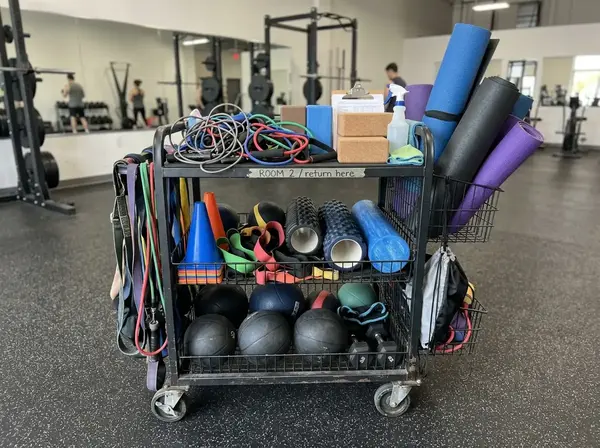
A rolling cart creates a portable storage station for small fitness accessories. You can move it beside your workout mat when exercising, then return it to a closet or room corner afterward.
This arrangement is especially useful when you exercise in different parts of your home.
For example, you might stretch in the bedroom, perform resistance-band exercises in the living room, and use a nearby open area for mobility work. A mobile cart keeps your accessories together throughout the routine.
How to organize a home gym cart
Choose a narrow cart with stable wheels and shelves that can support your equipment. Check its load limits before adding fitness accessories.
Assign each shelf a purpose:
- Top shelf: Workout towel, water bottle, timer, and small accessories.
- Middle shelf: Resistance bands, yoga blocks, straps, and exercise handles.
- Bottom shelf: Lightweight equipment that fits securely and won’t make the cart unstable.
Keep heavier items low to improve stability. If the cart has wheel brakes, engage them before using equipment stored on it.
A slim cart can fit beside a desk, in a closet, or along a wall when you’re finished exercising.
Is a rolling cart worth buying?
A rolling cart makes the most sense when you own several small accessories and regularly move your workout setup. If you only use a yoga mat and one resistance band, a simple basket may be enough.
Avoid overloading the cart or leaving it in the path of your exercises. Loose wheels and crowded walkways can create unnecessary hazards.
Best for: Renters, small apartments, and people who train in multipurpose rooms.
Space-saving tip: Measure the cart’s width and turning clearance, not just the space where you intend to park it.
4. Choose Foldable Fitness Equipment
Foldable fitness equipment helps you reclaim floor space after a workout. A folding bench, collapsible aerobic step, or foldable exercise mat can make a multipurpose room easier to manage.
This is particularly helpful when you don’t have a dedicated gym room.
Once your session ends, you can fold suitable equipment and store it beside a wall, beneath furniture, or inside a closet.
Which foldable equipment should you consider?
| Equipment | Storage advantage | What to check |
|---|---|---|
| Folding workout bench | Can be stored away after strength sessions | Folded dimensions, locking mechanism, weight rating |
| Foldable exercise mat | Easy to store beneath furniture or in a closet | Thickness, drying requirements |
| Collapsible aerobic step | Reduces storage bulk when folded | Stability and approved use |
| Compact resistance trainer | Can support several exercise variations | Attachment requirements and compatibility |
The right choice depends on your training routine. Someone who primarily performs bodyweight exercises may need little more than a mat and resistance bands.
A person who regularly performs bench exercises may benefit from a folding bench, provided there’s enough room to use and store it safely.
Measure equipment before purchasing
Product photographs can make compact equipment look smaller than it really is. Check the manufacturer’s listed dimensions in both the open and folded positions.
Consider how you’ll move the equipment, where it will sit during exercise, and whether you’ll need help lifting it.
Make sure folding mechanisms lock correctly before use. Store equipment in a stable position where it cannot fall into a walkway.
Best for: Bedrooms, small apartments, and living rooms that serve multiple purposes.
Space-saving tip: Choose equipment based on the exercises you actually perform rather than buying several folding products that still require substantial storage space.
5. Give Resistance Bands and Small Gear a Home
Small accessories are easy to misplace because they rarely have a designated storage spot. Resistance bands end up in drawers, jump ropes get tangled, and exercise handles disappear beneath furniture.
A dedicated basket, drawer organizer, or compact storage box solves much of this problem.
The goal is simple: every accessory should have a predictable place.
Group equipment by activity
Organize accessories according to how you use them.
For example, keep resistance bands and handles together for strength workouts. Store yoga blocks, stretching straps, and mobility accessories in another container.
Clear containers let you see their contents immediately. Fabric baskets or opaque boxes provide a tidier appearance when your workout area shares space with your living room.
Labels can make the system even easier to maintain.
You might use simple labels such as:
- Strength training
- Stretching and mobility
- Cardio accessories
- Workout essentials
Choose containers that fit your equipment without forcing you to compress or bend items unnecessarily.
Make cleanup part of your routine
After each workout, return accessories to their designated containers. Check elastic bands for visible wear and follow the manufacturer’s cleaning and storage instructions.
Keep damp towels and sweaty clothing separate from clean equipment.
This small habit prevents clutter from building up and helps you identify damaged or missing accessories before your next session.
Best for: Resistance-band training, yoga, mobility workouts, and small home gyms with many accessories.
Space-saving tip: Use one or two appropriately sized containers instead of spreading small accessories across multiple drawers and shelves.
6. Use Furniture With Hidden Storage
A home gym doesn’t always need to look like a traditional fitness room. If your workout space shares a bedroom or living room, storage furniture can keep accessories out of sight when they’re not in use.
A storage ottoman, lidded bench, or cabinet with suitable internal compartments can hold towels, yoga blocks, straps, and lightweight workout equipment.
This approach combines everyday furniture with practical storage.
Choose furniture that suits your equipment
Before repurposing furniture, check its construction and intended load capacity. Decorative ottomans and ordinary storage benches aren’t automatically suitable for heavy fitness equipment.
Use them for lighter accessories unless the manufacturer confirms that they can support the intended weight.
A practical arrangement might include:
- A storage ottoman for clean towels and stretching accessories
- A drawer for workout clothing
- A small basket for resistance bands
- A purpose-built rack for dumbbells and kettlebells
Keep heavier objects low and avoid placing weights inside furniture that may become unstable when opened or moved.
If you have children or pets, consider the stability of cabinets and other furniture. The U.S. Consumer Product Safety Commission provides furniture anchoring and tip-over prevention guidance.
Make the workout area blend into your home
Choose storage furniture that complements the room’s existing colors and materials. Neutral finishes, simple shapes, and matching containers can help the workout area feel more integrated into your interior.
Keep the most frequently used equipment easy to retrieve. A beautiful storage solution becomes inconvenient if you need to move several objects before every workout.
Best for: People who exercise in bedrooms, living rooms, and shared family spaces.
Space-saving tip: Give hidden storage a specific purpose so equipment doesn’t become mixed with unrelated household items.
7. Build a Compact Workout Station
A compact workout station brings your essential equipment together in one defined area. Instead of spreading equipment across the room, you create a small, organized zone that supports your regular routine.
You don’t need an entire room to make this work. A suitable corner with an exercise mat, a small accessory basket, and a low equipment rack may be enough for a basic strength and mobility setup.
Divide the area into three zones
1. Exercise zone
Keep the main floor area clear for your workout mat and the movements you intend to perform. The required clearance depends on your exercises and equipment.
2. Equipment zone
Place frequently used accessories beside the exercise area without blocking movement. A small basket or narrow cart can hold resistance bands, straps, and other essentials.
3. Overflow zone
Store occasional-use equipment in a closet, beneath a bed, or on a separate shelf. This prevents the main workout area from becoming crowded.
Match the layout to your routine
A yoga-focused space may need only a mat, blocks, and straps. A strength-training setup may require a dumbbell rack, adjustable bench, and additional clearance.
Think about your movements before deciding where everything belongs. Exercises involving swinging weights or moving around a bench need more room than stationary stretching.
Keep loose accessories, cords, and rolling carts outside the active exercise area. Store heavy equipment securely and inspect racks and fasteners regularly.
Example: Organizing a 5-by-6-foot workout corner
A corner measuring 5 by 6 feet provides 30 square feet of floor area. You could use it as a starting point for a compact workout station, depending on the equipment and movements involved.
| Area | Suggested purpose |
|---|---|
| Main floor | Exercise mat and suitable bodyweight movements |
| One side | Small accessory basket or narrow cart |
| Nearby furniture | Under-bed storage for flat equipment |
| Wall area | Lightweight accessories on a suitable organizer |
This is an illustrative layout rather than a guarantee that every exercise or piece of equipment will fit safely.
Measure the room and account for doors, furniture, equipment setup, and the full range of motion required by your workout.
Best for: Anyone who wants a consistent workout area without dedicating an entire room to fitness.
Space-saving tip: Keep only your essential equipment in the station and move occasional-use items elsewhere.
How to Choose the Right Storage Solution for Your Home Gym
The best storage solution depends on your available space, equipment collection, budget, and whether you can make permanent changes to the room.
A small apartment with resistance bands requires a different setup from a garage gym with a full dumbbell collection.
Use this comparison to identify a practical starting point.
| Storage solution | Relative cost | Installation | Best for |
|---|---|---|---|
| Wall organizer or pegboard | Low to moderate | May require mounting | Lightweight accessories |
| Under-bed storage bins | Low | None | Flat equipment |
| Rolling cart | Low to moderate | Usually none | Portable accessories |
| Foldable equipment | Moderate to high | Varies | Multipurpose rooms |
| Baskets and organizers | Low | None | Small fitness gear |
| Storage ottoman or bench | Moderate | Usually minimal | Shared living spaces |
| Compact workout station | Varies | Depends on setup | Regular home workouts |
These cost levels are general comparisons, not verified market prices. Actual costs depend on materials, dimensions, load capacity, and local availability.
Storage ideas for different room types
For a bedroom or studio apartment
Start with under-bed containers, a compact basket, and foldable equipment. These options reduce permanent floor use and can be moved when you need more space.
Prioritize rolling carts, portable organizers, storage furniture, and suitable freestanding racks. Check your lease before drilling into walls, and never assume adhesive hooks can support exercise equipment.
Consider a purpose-built weight rack, dedicated accessory storage, and a clearly defined exercise zone. Check the floor condition, moisture exposure, and equipment installation requirements.
For a shared living room
Use concealed storage for lightweight accessories and keep the visible equipment collection small. A storage ottoman, attractive basket, or narrow cart can help the area remain functional between workouts.
Set a realistic storage budget
You don’t need to purchase every organizer at once.
Start by identifying the items that create the most clutter. If resistance bands and straps cover your floor, a basket may solve the immediate problem. If dumbbells occupy a walkway, appropriate weight storage should take priority.
Measure the space, check the equipment you already own, and buy only what solves a specific storage problem.
This approach reduces unnecessary spending and helps you build a storage system that fits your routine.
Common Home Gym Storage Mistakes
Even a well-organized room can become inconvenient if the storage system introduces new problems.
Avoid these common mistakes when arranging your workout area.
Buying organizers before measuring
Measure the storage space and the equipment you intend to store. Check the width, depth, height, and usable clearance, including the space needed for doors and drawers.
For foldable equipment, measure the folded dimensions as well as the space required during exercise.
Putting heavy weights on unsuitable shelves
Dumbbells and kettlebells require stable storage designed to support their weight.
Keep heavy items low, follow the manufacturer’s load limits, and use appropriate mounting hardware where necessary. Don’t assume decorative shelves or ordinary furniture can safely support a heavy collection.
Mounting equipment without checking the wall
Wall materials and mounting systems vary. Before installing a rack, determine the wall construction and follow the manufacturer’s instructions.
If you’re uncertain whether the wall and fasteners can support the intended load, seek qualified assistance.
Leaving equipment in the exercise path
A basket or cart can save storage space while creating a tripping hazard if it sits where you step, stretch, or move weights.
Clear the active exercise area before each session. Store equipment where it remains accessible without obstructing your movements.
Storing damp equipment
Sweaty towels, wet mats, and damp clothing can develop unpleasant odors when stored without adequate drying.
Allow equipment to dry and clean it according to the manufacturer’s care instructions before putting it away.
Keeping equipment you rarely use
Equipment that no longer supports your routine can occupy valuable storage space.
Review your collection periodically. Sell, donate, or relocate usable items that no longer fit your training needs, following applicable product-safety and donation guidelines.
Frequently Asked Questions
1. How do you store workout equipment in a small apartment?
Use under-bed bins for flat equipment, baskets for resistance bands, and a rolling cart for accessories. Foldable equipment can free up floor space after workouts. Choose portable storage when drilling into walls isn’t permitted.
2. What is the cheapest way to organize a small home gym?
Start with containers you already own, repurpose a suitable basket, and group accessories by activity. Measure your space before purchasing organizers. A low-cost setup can work well when every item has a designated place.
3. How can I store dumbbells in a small space?
Use a stable dumbbell rack or another storage system specifically rated for your weights. Keep heavy equipment low, follow the manufacturer’s load limits, and avoid placing weights on decorative shelves or furniture that isn’t designed to support them.
4. Is wall-mounted gym storage safe?
Wall-mounted storage can work well when the rack, wall, fasteners, and installation method are suitable for the load. Follow the manufacturer’s instructions and inspect mounting points regularly. Lightweight accessory hooks should not be treated as heavy-weight storage.
5. How can renters organize a home gym without drilling holes?
Renters can use rolling carts, storage baskets, under-bed containers, foldable equipment, and suitable freestanding racks. Over-door organizers may also work for lightweight accessories. Check the organizer’s capacity and ensure doors can close and operate normally.
6. How do I make my home gym look less cluttered?
Group similar accessories in matching baskets, keep frequently used equipment together, and store occasional-use items out of sight. A consistent color palette can help the gym blend into the room, while clear floor space makes the area easier to use.
7. What equipment is easiest to store in a small home gym?
Resistance bands, yoga straps, sliders, and foldable mats are generally easier to store than large fixed machines. Choose equipment based on your training needs, and compare its dimensions in both use and storage positions before purchasing.
8. How much space do I need for a home workout area?
The required space depends on the exercises and equipment. A yoga mat may need far less room than a workout bench or movements involving swinging weights. Measure the area and test the full movement path before settling on a layout.
Final Takeaways
Organizing a small home gym becomes easier when you choose storage around your actual workout routine.
- Use vertical space to organize lightweight accessories and keep them within reach.
- Store flat equipment beneath furniture to reduce clutter in bedrooms and apartments.
- Choose a rolling cart when you need to move accessories between rooms.
- Consider space-saving gear when your workout area serves several purposes.
- Use baskets and organizers to keep resistance bands, straps, and small accessories together.
- Choose storage furniture carefully and use it only within its intended capacity.
- Create a compact workout station that keeps essential equipment accessible and the exercise area clear.
- Store heavy equipment safely using stable, appropriately rated racks and suitable installation methods.
You can start with one or two changes and expand your system as your needs evolve. The goal is a workout area that stays organized, supports your routine, and fits comfortably into your home.