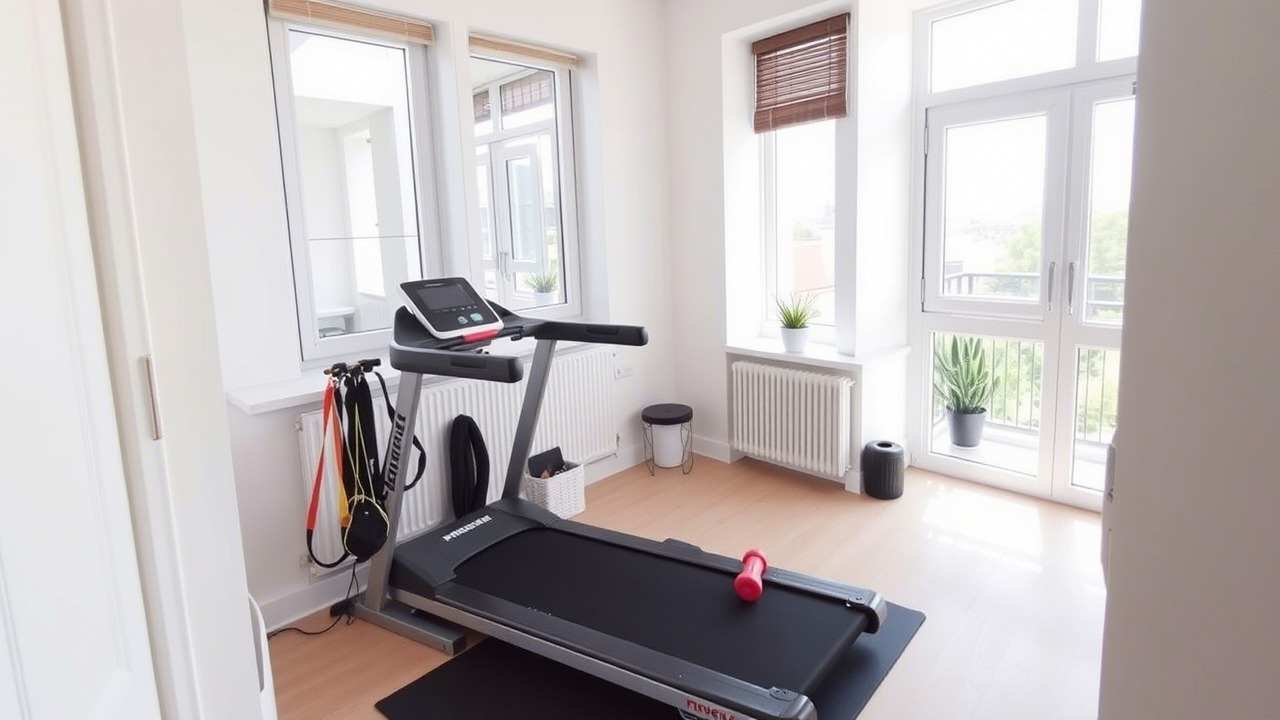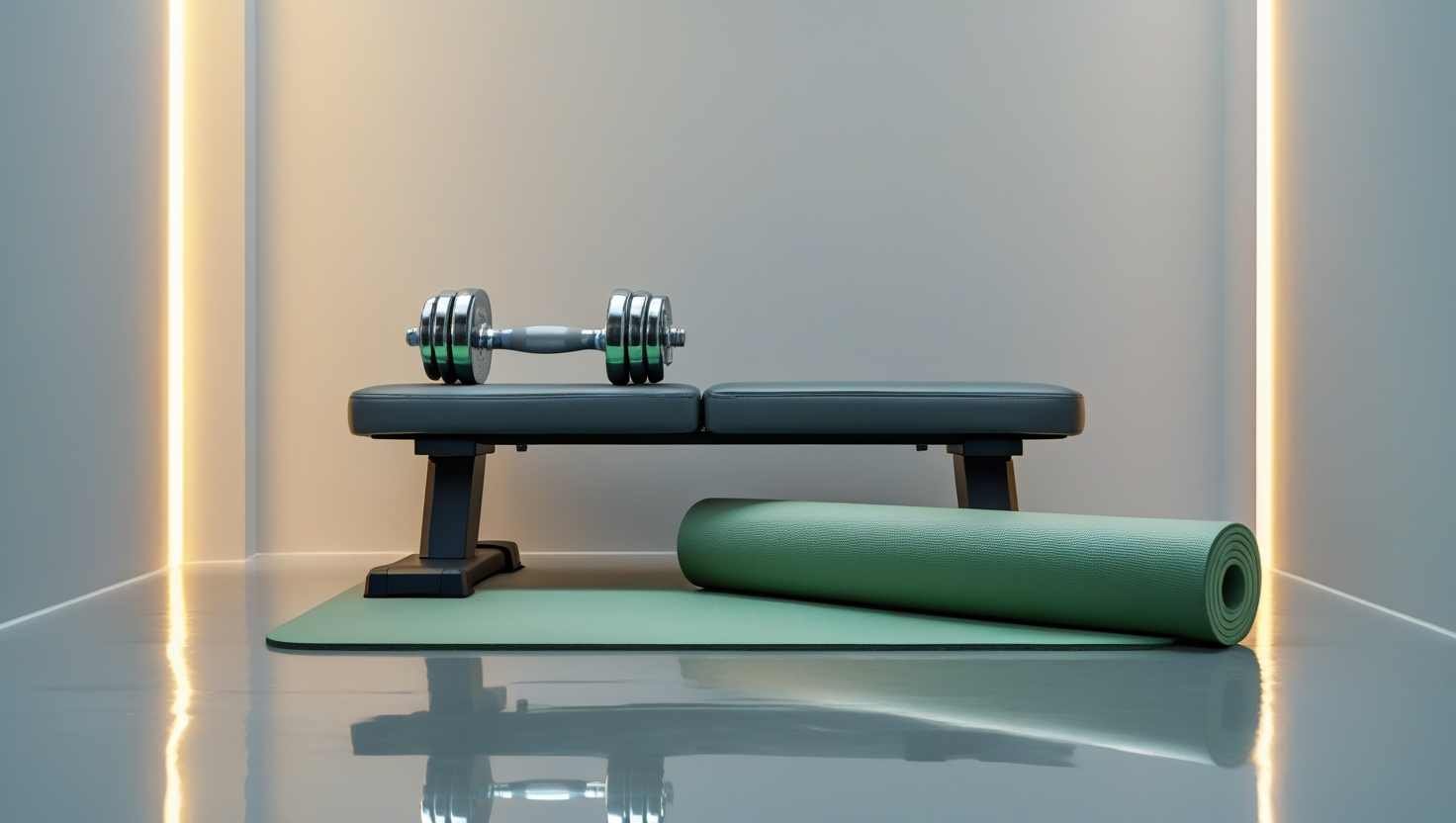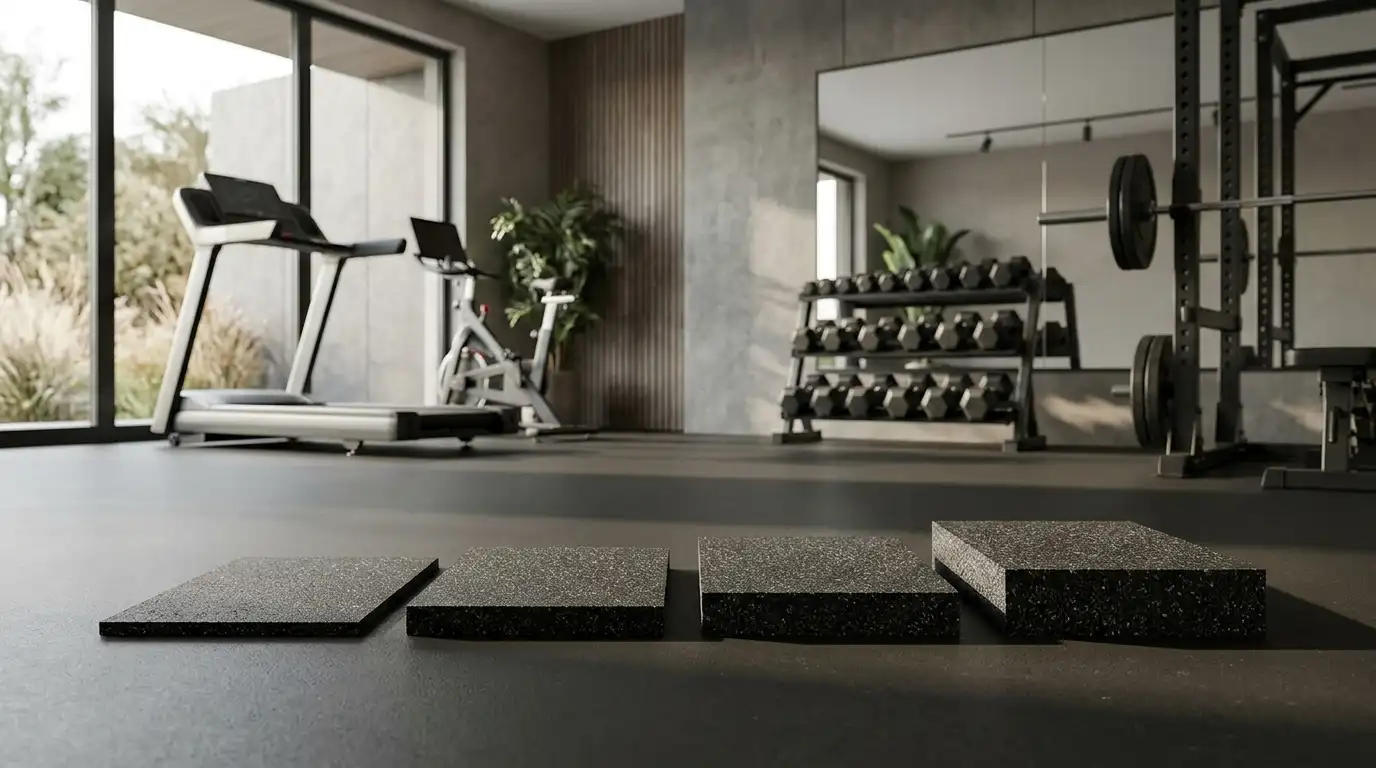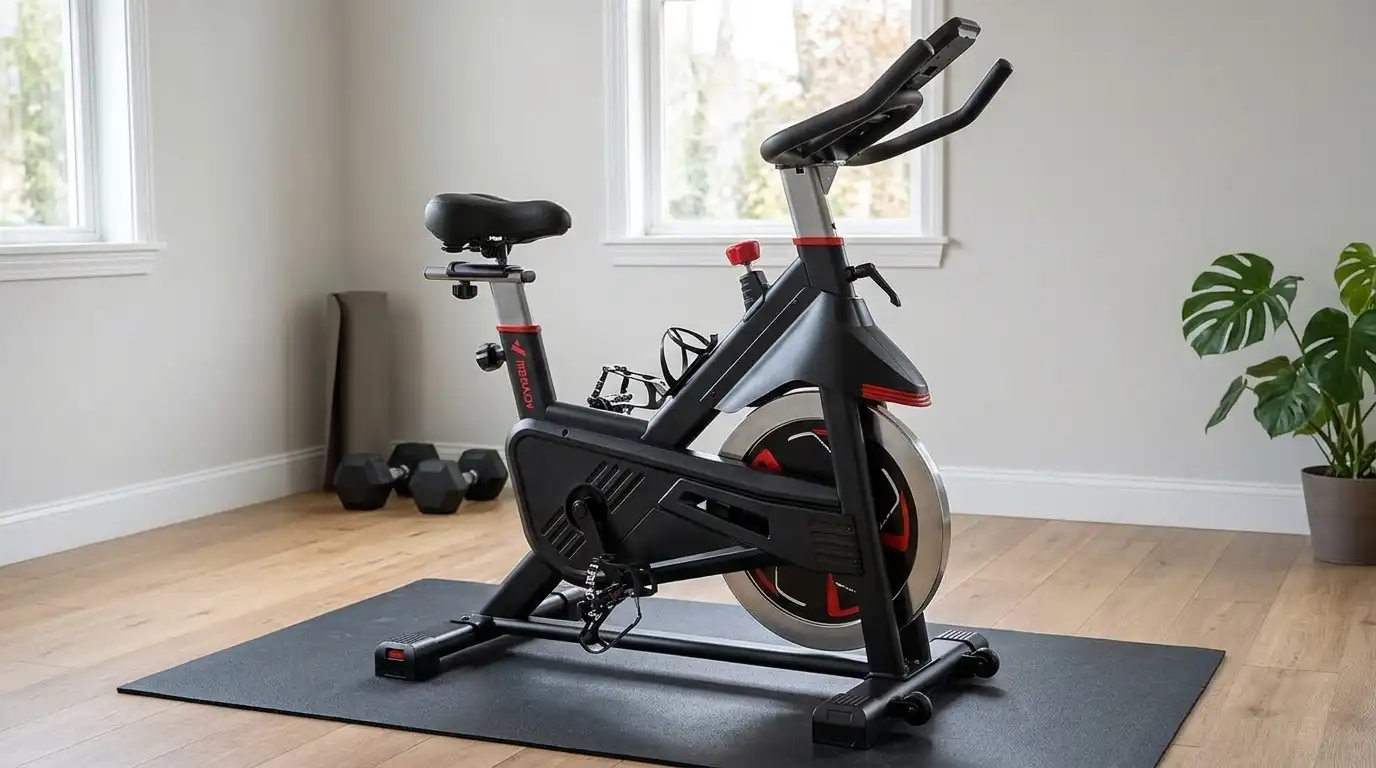
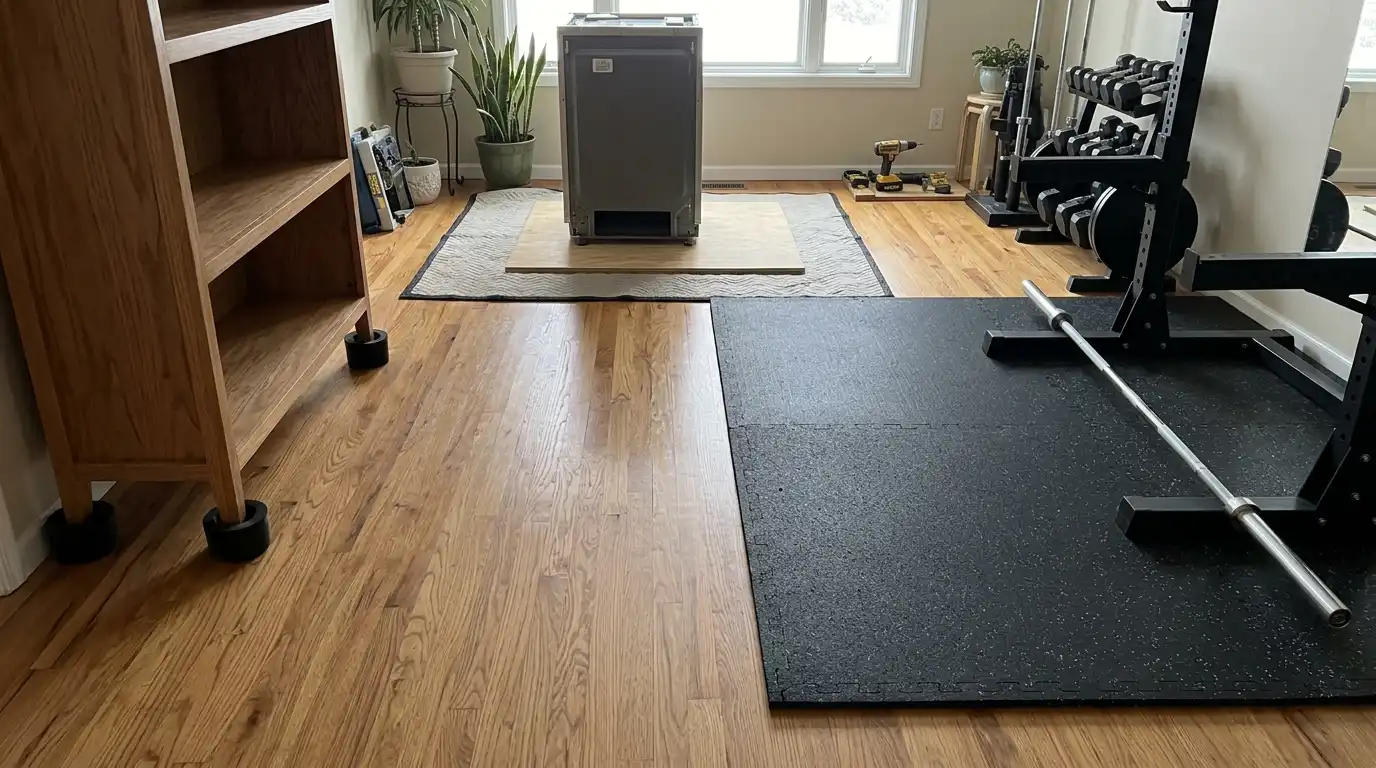

Protect hardwood floors from heavy weights by placing a floor-compatible protective barrier beneath a rigid load-distribution platform, then positioning gym equipment on a suitable impact-resistant surface. Use properly sized platforms under squat racks and dumbbell storage, avoid dragging equipment, and check rubber products for floor compatibility. Renters should choose removable protection that won’t trap moisture or damage the existing finish.
Table of Contents
Why Heavy Gym Equipment Damages Hardwood Floors
Heavy gym equipment can damage hardwood through concentrated pressure, repeated impact, friction, and contact with incompatible protective materials. The type of damage depends on the equipment, floor construction, wood species, finish, and how you use the gym.
1. Concentrated pressure creates dents
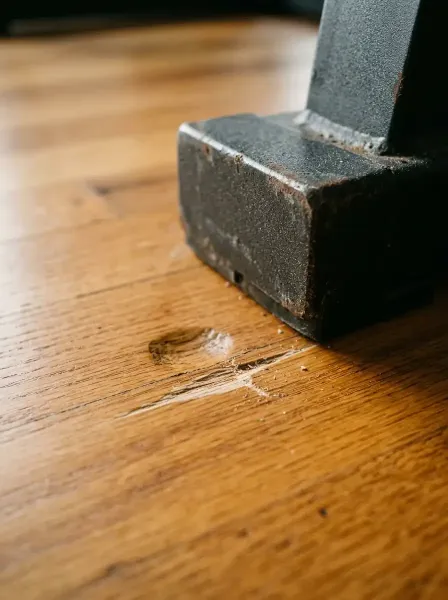
A heavy power rack may have four relatively small feet supporting its entire weight. Each foot transfers force into a limited section of the floor.
This creates a concentrated load, sometimes called a point load. The pressure can compress wood fibers and leave visible indentations, particularly on softer wood species and floors with thin or worn finishes.
A wide protective platform distributes equipment weight across a larger footprint. The result depends on the platform’s stiffness, dimensions, and the support beneath it.
2. Dropped weights damage the surface
Dumbbells, kettlebells, and weight plates can strike hardwood with considerable force. Even a relatively small weight can chip a finish, dent a board, or damage a joint when dropped repeatedly.
Deadlifts and heavy dumbbell workouts deserve particular attention because the impact occurs in the same area throughout a training session.
3. Dirt and friction cause scratches
Metal equipment feet can scratch hardwood when you reposition a bench or rack. Small particles trapped underneath protective pads can also act as abrasives.
Moving equipment across the floor increases the risk of scratches and finish damage. Lift equipment when practical, and clean the floor and protective materials before repositioning anything.
4. Rubber products can discolor flooring
Some rubber products contain additives that react with certain flooring materials.
Armstrong Flooring explains that antioxidants used in rubber can react with plasticizers in flexible vinyl, producing yellowish discoloration known as antioxidant staining.
Hardwood has different finish and moisture-related concerns. The World Floor Covering Association warns that rubber-backed and non-ventilated mats can damage hardwood flooring.
Always check the flooring manufacturer’s compatibility instructions before installing rubber-backed mats or protective sheets.
The Best Way to Protect Hardwood Floors From Heavy Weights
A properly designed removable platform provides a practical starting point for protecting hardwood floors beneath heavy gym equipment. The assembly should separate the existing finish from potentially damaging materials, spread equipment loads, and provide an appropriate upper contact surface.
The plywood sandwich method
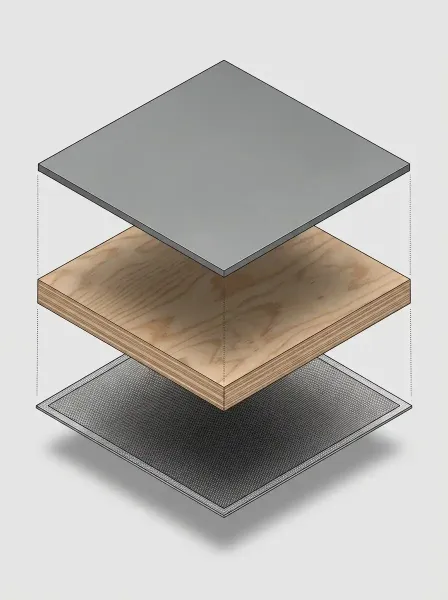
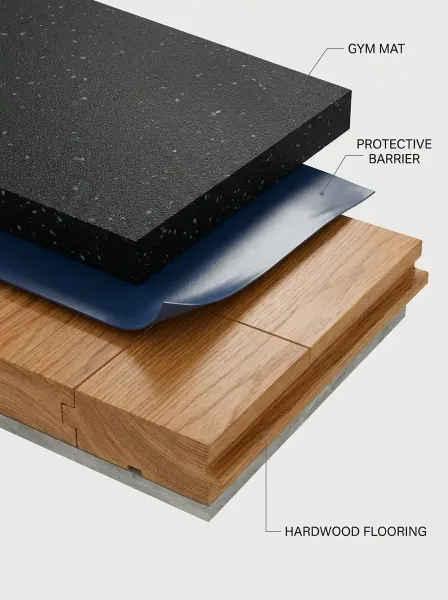
The plywood sandwich method uses multiple layers to create a protective platform between gym equipment and the existing floor.
A typical concept has three functional layers:
- Bottom protective layer: A floor-compatible barrier that separates the plywood from the hardwood finish.
- Middle load-distribution layer: A suitably selected plywood panel or engineered platform.
- Upper protective layer: A compatible surface that helps manage equipment contact, friction, and training impacts.
The exact materials depend on the floor finish, equipment weight, and intended workout.
How the layers work
- The bottom barrier reduces direct contact between the platform and the finished floor.
- The plywood distributes loads across a wider footprint when adequately stiff and supported.
- The upper surface provides a suitable contact area for gym equipment and training activities.
The APA – The Engineered Wood Association explains that plywood strength and stiffness depend on panel thickness, grade, span, loading conditions, and support arrangement. Its load-span guidance is intended for engineering and construction applications, so a generic plywood thickness recommendation should not be treated as a universal gym-platform specification.
Important: A plywood platform does not automatically make a floor safe for every squat rack or weightlifting setup. Excessive loads can still damage the flooring or underlying structure.
How to assemble a removable protective platform
Step 1: Measure the equipment footprint
Measure the rack, bench, or weight-storage unit. Include enough surrounding area for the equipment to sit completely on the platform.
For a training platform, account for the movement of the lifter and the expected landing area of weights.
Step 2: Inspect and clean the existing floor
Remove dust, grit, and debris. Inspect the boards for scratches, moisture damage, loose sections, and existing dents.
Resolve any flooring problems before covering the area.
Step 3: Select a compatible bottom barrier
Choose a protective layer approved for your flooring finish. Check whether the material is suitable for prolonged contact and whether it allows appropriate moisture management.
Avoid assuming that plastic, rubber, foam, or felt is automatically safe for every hardwood floor.
Step 4: Install the plywood distribution layer
Choose a suitable panel based on the equipment load, platform dimensions, and support conditions.
Keep the panel flat and stable. Smooth or protect exposed edges to reduce the chance of splintering or scratching nearby surfaces.
Step 5: Add the upper protective surface
Choose a surface suitable for the equipment and activity. A compatible impact-resistant layer can help protect the platform from repeated contact with plates and dumbbells.
Confirm that the upper material does not slide, curl, or create an unstable equipment base.
Step 6: Position the equipment and inspect
Place the equipment fully on the platform. Check for rocking, uneven contact, loose layers, and movement during use.
Reinspect the floor after the initial installation period and periodically thereafter.
A simple platform layout
| Layer | Function | Selection consideration |
|---|---|---|
| Bottom barrier | Protects the existing finish | Floor-finish compatibility |
| Plywood platform | Distributes equipment loads | Panel grade, stiffness, dimensions |
| Upper protection | Manages contact and impacts | Grip, stability, material compatibility |
| Gym equipment | Supports training | Footprint and total loading |
The platform should remain stable under normal use. A soft foam layer beneath a heavy rack can compress unevenly and create rocking, so avoid placing compressible materials where they compromise equipment stability.
How to Distribute Heavy Gym Equipment Loads
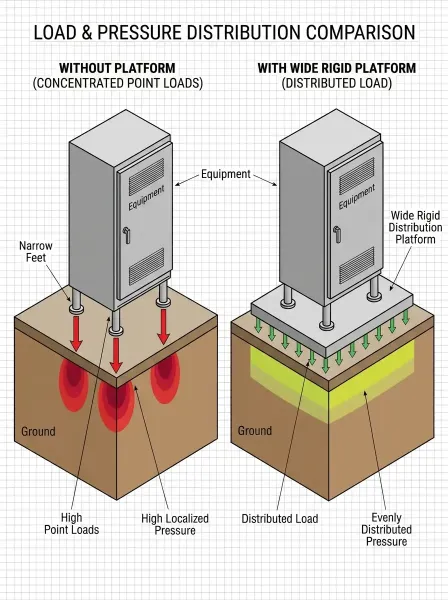
Load distribution reduces concentrated pressure by spreading equipment weight across a larger supporting area. The platform must have enough stiffness to transfer that load effectively.
Squat racks and power racks
Power racks place substantial weight on a limited number of feet. Their stability also depends on the rack design and any additional loads from weight plates, pull-ups, and lifting movements.
Recommended precautions:
- Use a rigid, appropriately sized platform.
- Keep every rack foot supported.
- Check the floor beneath the rack for unevenness.
- Follow the rack manufacturer’s installation and anchoring instructions.
- Avoid drilling into hardwood without understanding the floor construction and obtaining the necessary permission.
If the rack requires anchoring, a removable platform alone may not provide the required stability. Seek an appropriate installation solution.
Dumbbell racks and weight benches
Dumbbell storage racks can place a significant static load on a small floor area. Their loaded weight includes the rack itself and every stored dumbbell.
Use a rigid distribution surface with enough area to support the rack’s complete footprint.
For weight benches, check the contact points beneath the legs. Protective pads should remain securely positioned and should not compress enough to destabilize the bench.
Deadlift and weight-dropping areas
Deadlift zones need additional impact protection because repeated plate contact can damage the floor.
Use an appropriate lifting platform with an impact-resistant upper surface. Match the surface to the plates, training style, and expected impact.
Bumper plates can help manage impact during suitable lifting activities, but they do not eliminate the need for floor protection.
Best Floor Protection Materials for Hardwood and Vinyl
The best floor protection material depends on the flooring type, finish, equipment load, and intended activity. Material compatibility should take priority over appearance or advertised thickness.
| Material | Main benefit | Main limitation | Best for |
|---|---|---|---|
| Plywood | Rigid load distribution | Requires a suitable protective interface | Squat racks and heavy storage |
| Floor-compatible protective sheets | Separates materials from flooring | Compatibility varies | Removable installations |
| Non-staining rubber | Impact and contact protection | Must be verified for the floor | Suitable lifting platforms |
| Compatible felt pads | Reduces friction | Limited load and impact protection | Light equipment contact |
| Manufacturer-approved floor mats | Surface protection | Some mats can trap moisture | General equipment zones |
Plywood
Plywood offers a rigid surface for distributing equipment loads. Its structural properties depend on the panel grade, thickness, orientation, and support conditions.
For a home gym, select a panel suitable for the actual application rather than choosing thickness based on a generic online recommendation.
The APA plywood technical guidance explains panel performance categories, span ratings, and load considerations.
Non-staining rubber
Rubber can provide useful impact protection in suitable installations.
However, the label “rubber gym mat” does not establish compatibility with hardwood or vinyl flooring.
For vinyl, Armstrong Flooring specifically recommends non-staining rubber where rubber products contact its flooring. Floor & Decor also warns that natural rubber, synthetic rubber, and latex-backed rugs can discolor vinyl floors.
For hardwood, follow the floor manufacturer’s approved mat and underlay recommendations.
Felt and furniture pads
Felt pads can help reduce scratching from light equipment contact and occasional movement.
They are useful beneath suitable furniture-style feet, but they should not be treated as a substitute for a rigid load-distribution platform under a heavy power rack.
Inspect pads frequently. Dirt can become embedded in the material, and compressed pads may lose their protective function.
Protective sheets and underlayments
Protective sheets can separate the platform from the existing flooring.
Choose products with documented compatibility for your specific floor finish. Some materials can trap moisture, retain heat, or react with surface coatings during prolonged contact.
A product described as waterproof or heavy-duty is not necessarily suitable for direct contact with hardwood.
For more ideas read: Best Home Gym Flooring Mats for Every Fitness Space (2026)
How Renters Can Protect Hardwood Floors Without Permanent Installation
Renters can create a removable home gym protection system using a floor-compatible barrier, a stable distribution platform, and suitable equipment protection.
Start with these precautions:
- Photograph the floor before installing equipment.
- Review your lease and ask the landlord about heavy equipment if necessary.
- Check the flooring manufacturer’s guidance.
- Use a removable protective assembly without permanent adhesives or screws.
- Keep the platform clear of moisture and trapped debris.
- Inspect the floor regularly, especially around platform edges.
For apartment gyms, consider equipment with a manageable footprint and storage that keeps heavy weights off exposed flooring.
A removable installation is particularly useful when you need to restore the room to its original condition after moving.
For more setup ideas, see our guide to renter-friendly home gym essentials.
Common Floor Protection Mistakes
Avoid these mistakes when setting up a home gym on finished flooring.
1. Placing rubber mats directly on every floor type
Rubber products vary in composition. Some can stain vinyl or damage hardwood finishes. Verify compatibility before installation.
2. Using thin foam beneath a heavy rack
Soft foam can compress under concentrated loads and make equipment unstable. Use a suitable rigid support where the equipment requires it.
3. Choosing plywood thickness by guesswork
Plywood performance depends on several engineering factors. A thicker panel is not automatically sufficient for every equipment load or floor construction.
4. Allowing dirt underneath the platform
Grit trapped between a protective layer and the floor can cause scratches as the platform shifts.
5. Ignoring moisture
Moisture trapped beneath a mat or protective barrier can damage wood flooring. Inspect covered areas regularly.
6. Dragging equipment across the floor
Lift or carefully reposition equipment using a suitable method. Never drag metal feet or loaded storage racks across finished hardwood.
7. Assuming a platform solves structural problems
A protective platform can spread surface loads, but it cannot correct weak joists, unsuitable subfloors, or excessive structural loading.
Hardwood Floor Protection Inspection Checklist
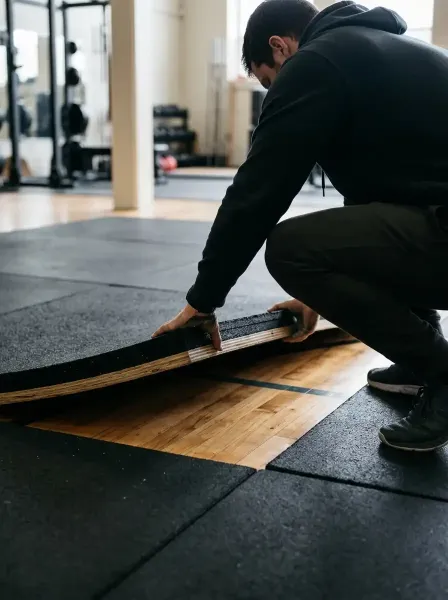
Inspect your home gym floor periodically, particularly after changing equipment or rearranging the platform.
- Check for new dents around equipment feet.
- Look for scratches and finish discoloration.
- Inspect the bottom protective layer.
- Remove trapped dust and debris.
- Check for moisture beneath the platform.
- Confirm that the platform remains flat and stable.
- Check that rubber and other materials remain compatible.
- Verify that the equipment has not shifted.
- Review the manufacturer’s flooring-care recommendations.
If you notice discoloration, swelling, or persistent moisture, remove the equipment and protective layers carefully and seek advice from a qualified flooring professional.
Frequently Asked Questions
How do you protect hardwood floors from a squat rack?
Place the squat rack on a stable, rigid load-distribution platform with a floor-compatible protective barrier underneath. Ensure every rack foot is supported and follow the manufacturer’s anchoring and stability requirements.
Can heavy dumbbells dent hardwood floors?
Yes. Heavy dumbbells can dent hardwood when their weight is concentrated on small contact areas or when they are dropped. A suitable protective platform and controlled placement help reduce the risk.
Is plywood good for protecting hardwood floors?
Plywood can distribute equipment loads across a wider area when appropriately selected and supported. It still needs a compatible protective interface to prevent direct contact with the hardwood finish.
Can rubber gym mats damage hardwood floors?
Yes. Certain rubber-backed and non-ventilated mats can damage hardwood flooring. The World Floor Covering Association recommends using mats specifically designed for hardwood floors and maintaining them properly.
Can rubber mats stain vinyl flooring?
Yes. Certain rubber additives can react with vinyl flooring components and create permanent yellowish discoloration. Armstrong Flooring identifies this issue as antioxidant staining and recommends non-staining rubber products.
What should I put under a heavy weight bench?
Use a suitable floor-compatible protective surface beneath the bench legs. For heavier benches or concentrated contact points, consider a stable distribution platform that supports the complete footprint.
How can renters build a home gym without damaging hardwood floors?
Renters can use removable floor-compatible barriers and rigid protective platforms, avoid permanent installation, clean beneath the protection regularly, and document the existing floor condition before setting up equipment.
Key Takeaways
- Heavy gym equipment can dent hardwood through concentrated pressure and repeated impacts.
- A rigid plywood platform can distribute loads when properly selected and supported.
- Rubber products require compatibility checks before contacting hardwood or vinyl flooring.
- Some rubber additives can cause permanent antioxidant staining on vinyl.
- Protective barriers should not trap moisture against hardwood.
- Dumbbell racks and power racks need protection beneath their entire footprints.
- Renters should favor removable installations and inspect covered flooring regularly.
- Floor protection does not replace structural assessment when equipment loads are excessive.
Related Home Gym Flooring Guides
Creating a home gym in an apartment requires careful attention to noise control, floor protection, and material thickness. Our guide to Soundproof Gym Flooring for Apartments explains how to reduce impact noise and vibration transfer to neighboring rooms, while What Thickness Should Home Gym Flooring Be? helps you choose the right flooring thickness for your equipment, workout intensity, and subfloor. Together, these guides help you build a quieter, safer, and more practical home gym.
Editorial note: This guide provides general floor-protection information. Confirm material compatibility with your flooring manufacturer and obtain a structural assessment where heavy equipment loads may exceed the capacity of the existing floor.