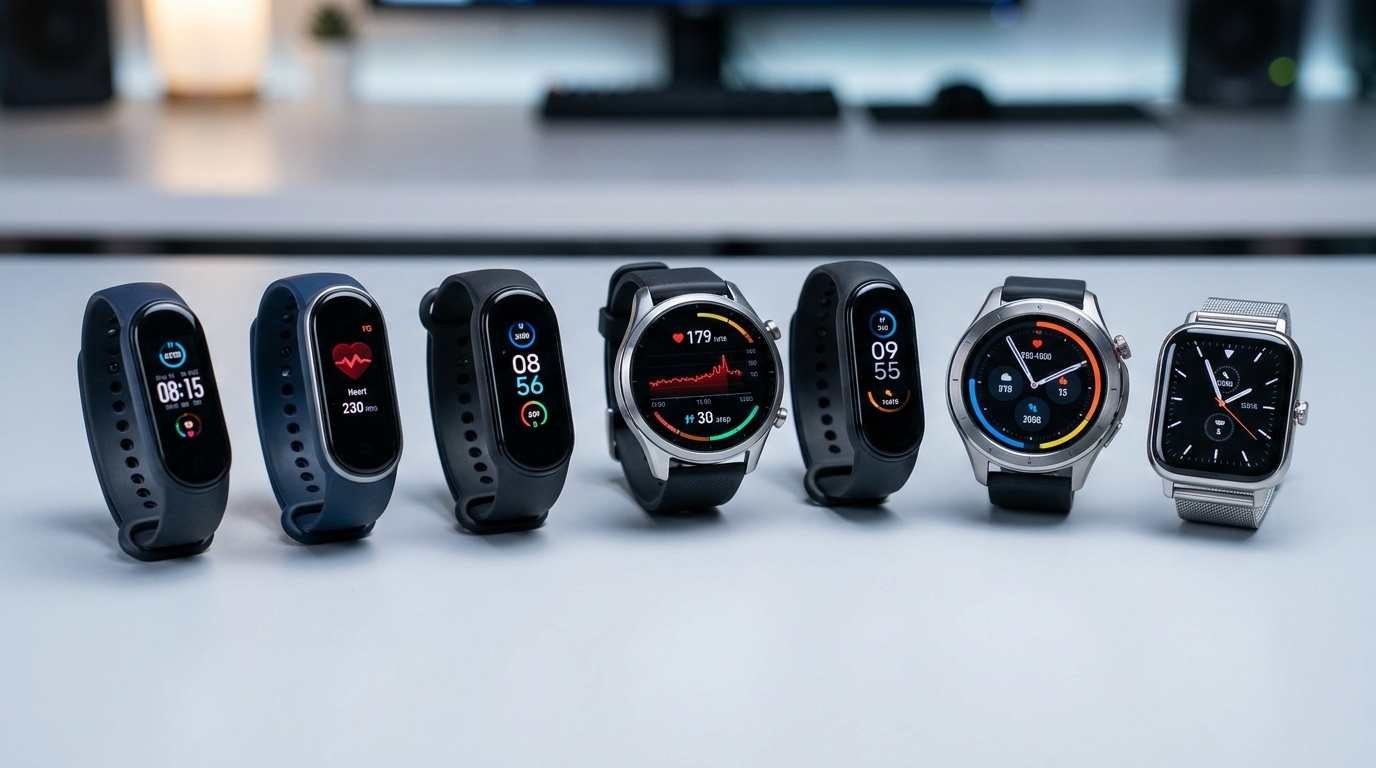

A smartwatch fitness tracker combines everyday smartwatch features with tools designed to monitor movement, exercise, sleep, and other aspects of daily activity. Instead of wearing one device for notifications and another for fitness tracking, we can use a modern smartwatch fitness tracker to bring these functions together on the wrist.
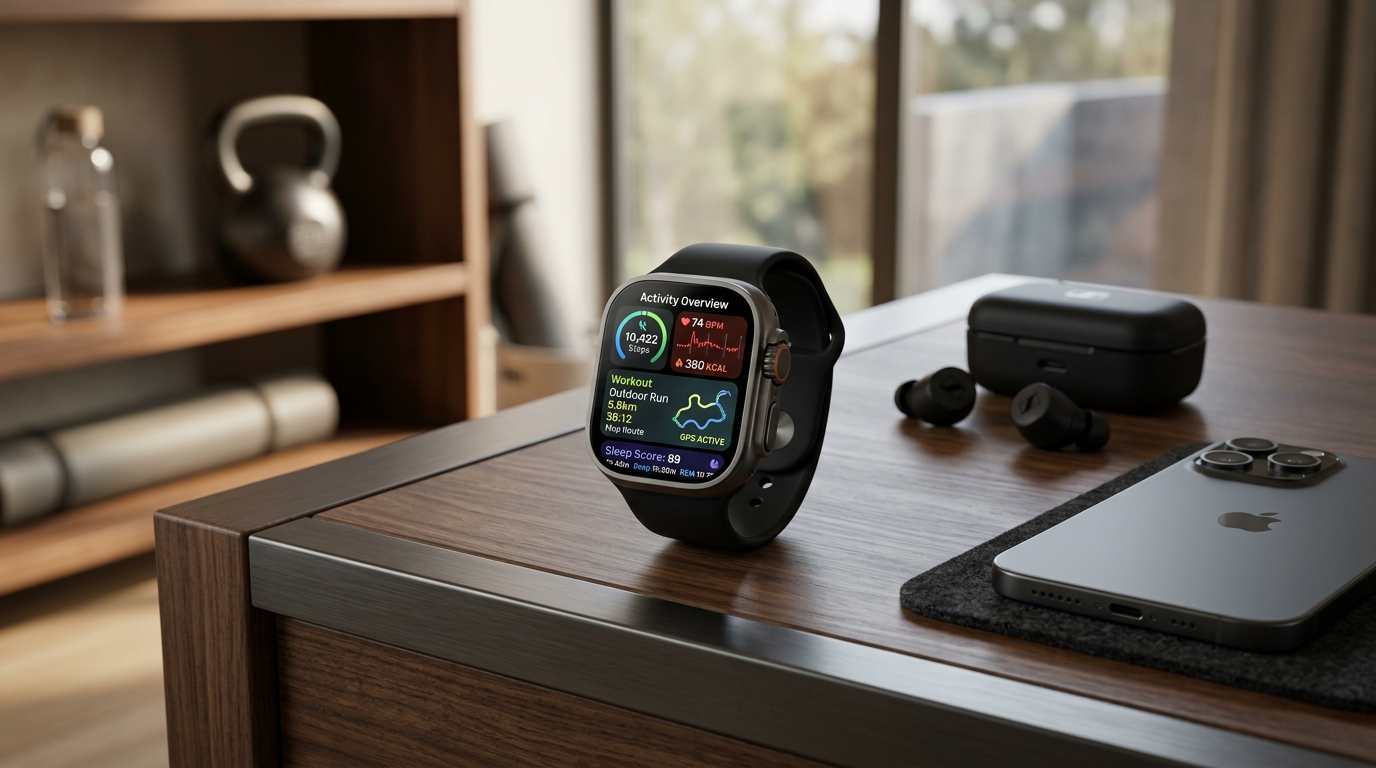
Today’s models can do considerably more than count steps. Depending on the device, we may find heart-rate monitoring, workout tracking, sleep analysis, GPS, blood oxygen measurements, stress tracking, calorie estimates, activity reminders, and recovery features. Some also support phone calls, messages, music, contactless payments, navigation, and third-party apps.
The right choice depends on how we intend to use the watch. Someone who mainly wants daily activity tracking may need a very different device from a runner, cyclist, swimmer, or outdoor enthusiast.
Table of Contents
What Is a Smartwatch Fitness Tracker?
A smartwatch fitness tracker is a wearable device that combines smartwatch functionality with health and fitness monitoring.
Traditional fitness trackers tend to focus primarily on steps, calories, heart rate, and workouts. Smartwatches usually offer a broader range of connected features, including notifications, apps, communication, music controls, and navigation.
A smartwatch fitness tracker brings these categories together.
We can wear it throughout the day to record movement and activity while also using it as an extension of a smartphone. When we start a workout, the watch can collect exercise-related information. During the night, compatible models can monitor sleep-related metrics. Throughout the day, it can display notifications and provide quick access to useful applications.
This makes the category particularly practical for people who want one wearable device for fitness, everyday convenience, and basic health-related insights.
Key Features to Look for in a Smartwatch Fitness Tracker
Not every smartwatch fitness tracker offers the same capabilities. Before choosing a model, it helps to examine the features that matter most for our routine.
Heart-Rate Monitoring
Heart-rate monitoring is one of the most common fitness features available on modern smartwatches.
An optical sensor on the underside of the watch can measure heart rate periodically throughout the day and during compatible workouts. This information can help us observe changes in exercise intensity and understand how our heart rate responds to different activities.
For exercise enthusiasts, continuous or frequent heart-rate measurements can be useful for monitoring training intensity and heart-rate zones.
We should remember that wrist-based sensors are not equivalent to clinical equipment, and readings can be affected by movement, fit, skin contact, and other factors.
Step and Activity Tracking
A good smartwatch fitness tracker should make it easy to understand how active we have been during the day.
Most devices use motion sensors to estimate steps, distance, and general activity. Many also provide reminders when we have been inactive for an extended period.
Rather than focusing exclusively on a daily step target, we can use these measurements to identify patterns. For example, we may discover that a short walk after lunch consistently increases our daily activity.
GPS Tracking
Built-in GPS can be particularly important for runners, cyclists, hikers, and outdoor walkers.
With GPS, a compatible smartwatch fitness tracker can record information such as route, distance, pace, and movement during outdoor workouts without necessarily requiring a smartphone to provide the location data.
If outdoor training is a major priority, GPS should be one of the first specifications we compare.
Sleep Tracking
Sleep tracking has become a major feature of wearable technology.
Compatible watches can estimate sleep duration and may provide information about different sleep stages, nighttime movement, heart rate, or other measurements. These features can help us recognize patterns in our sleeping habits.
The most useful approach is to treat sleep-tracking information as a source of general trends rather than a medical diagnosis. If we consistently notice concerning symptoms or significant changes in sleep, professional medical advice is more appropriate than relying solely on a wearable.
Workout Modes
A smartwatch fitness tracker can support a surprisingly broad selection of workouts.
Depending on the model, we may find dedicated modes for:
- Walking
- Running
- Cycling
- Swimming
- Strength training
- Hiking
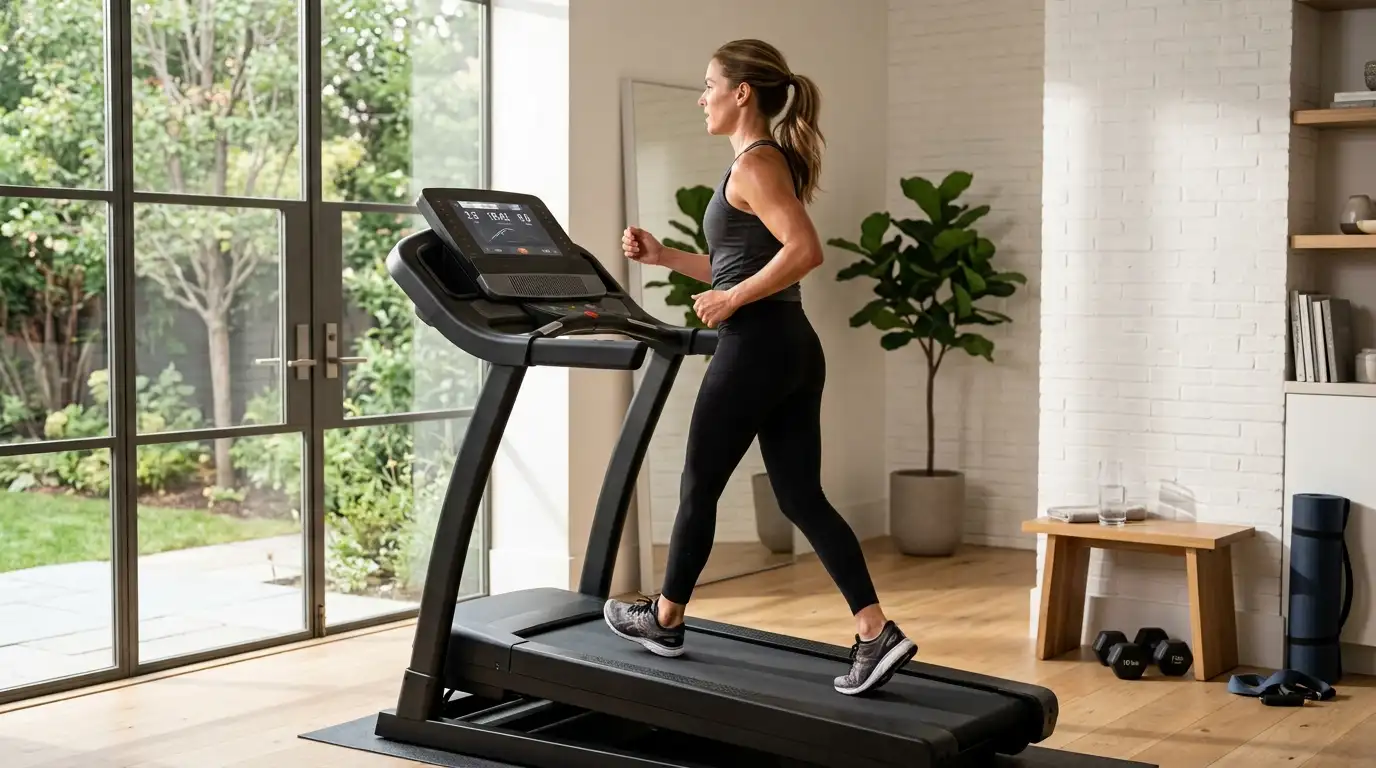
- Indoor cardio
- Yoga
- Rowing
- Interval training
- Elliptical workouts
The value of having multiple workout modes is that the watch can organize activity data according to the type of exercise being performed.
For people who regularly switch between different forms of training, a broader selection of workout profiles can make the device more useful.
Smartwatch Features That Go Beyond Fitness
The major difference between a basic activity tracker and a smartwatch fitness tracker is the range of everyday functions.
A modern smartwatch may display incoming calls, text messages, calendar reminders, weather information, music controls, alarms, and application notifications.
Some models can also make or receive calls when paired with a compatible smartphone, while cellular-enabled versions may provide additional connectivity without keeping the phone nearby.
Contactless payment support can also be convenient. Instead of taking a wallet or smartphone out for every small purchase, compatible watches can allow us to pay directly from the wrist.
These features turn the watch into an everyday accessory rather than something we only wear during workouts.
Battery Life Matters
Battery life is one of the most important considerations when choosing a smartwatch fitness tracker.
A device with sophisticated sensors and a bright display may require more frequent charging than a simple fitness band. GPS use, continuous monitoring, cellular connectivity, and always-on displays can also affect battery performance.
We should consider our personal charging habits.
If we do not want to charge a watch every night, a model designed for longer battery life may be more convenient. On the other hand, someone who is comfortable charging regularly may prefer a device with a larger display and more advanced smartwatch functions.
For sleep tracking, battery life becomes even more important because we may want to wear the watch overnight.
Comfort and Watch Design
A smartwatch fitness tracker can have impressive specifications, but it will not be useful if we dislike wearing it.
The weight, case size, strap material, display, and overall shape can make a noticeable difference during long periods of use.
A large watch may provide an easier-to-read display, while a smaller model can feel less intrusive during sleep or exercise. The strap should also remain secure without becoming uncomfortable.
Water resistance is another feature worth checking, particularly for swimmers or people who exercise outdoors in changing weather.
Smartwatch Fitness Tracker for Running
Runners should pay particular attention to GPS accuracy, pace information, heart-rate tracking, workout customization, and battery life.
A suitable running-focused smartwatch can provide useful information during a workout without requiring us to constantly check our phone.
For serious training, features such as interval workouts, training zones, route tracking, recovery information, and structured workouts may become more valuable than simple step counting.
However, casual runners may not need every advanced feature. A straightforward watch that accurately records distance, pace, and heart rate may be sufficient.
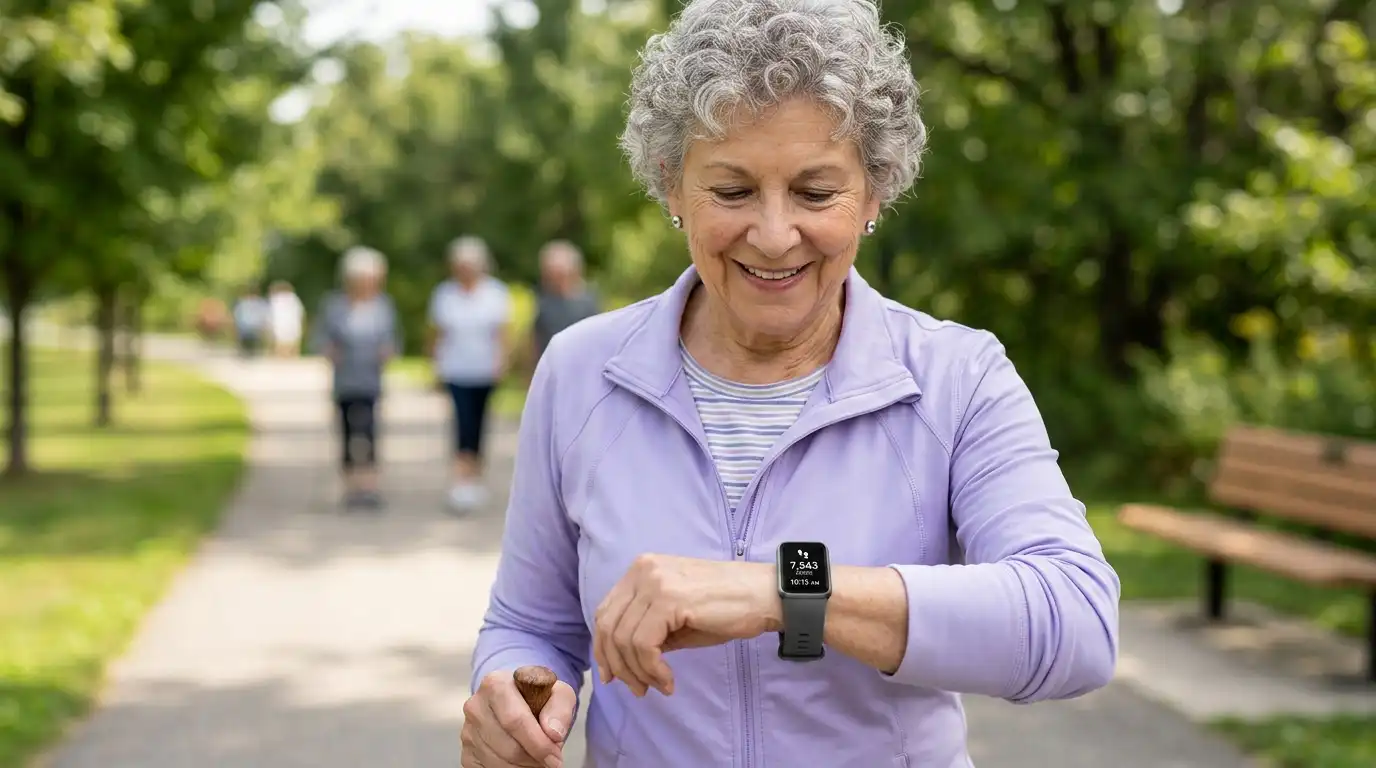
Smartwatch Fitness Tracker for Walking and Everyday Activity
For everyday users, simplicity can be more important than an enormous feature list.
A practical device can track steps, distance, active time, heart rate, and sleep while providing notifications throughout the day.
We can use these measurements to create realistic activity habits. For example, taking additional walking breaks, choosing stairs when practical, or adding a short evening walk can gradually increase daily movement.
The best smartwatch fitness tracker for everyday use is therefore not necessarily the one with the most functions. It is the one that provides useful information without creating unnecessary complexity.
Smartwatch Fitness Tracker for Strength Training
Strength-training users should look beyond step counts.
A compatible smartwatch may offer workout profiles that allow us to record resistance sessions, track workout duration, monitor heart rate, and organize training sessions.
Some advanced devices can provide automatic or assisted exercise recognition, although the accuracy and capabilities vary considerably between models.
For strength training, the watch should complement our workout rather than distract us from technique, programming, and progressive training.
How Accurate Are Smartwatch Fitness Trackers?
Fitness-tracking accuracy varies between devices and between measurements.
Step counting, heart-rate monitoring, GPS, calorie estimates, and sleep measurements are all influenced by hardware, software algorithms, how the watch is worn, and the activity being performed.
A watch can be extremely useful for identifying personal trends over time even when individual measurements are not perfectly precise.
For example, comparing our activity level from one week to another may be more useful than becoming overly concerned about whether a particular workout burned an exact number of calories.
Medical decisions should not be based solely on consumer wearable measurements unless a qualified healthcare professional specifically recommends the device and its data for that purpose.
How to Choose the Right Smartwatch Fitness Tracker
We can narrow the selection considerably by starting with our actual priorities.
Ask these questions before buying:
- Do we need built-in GPS?
- How often are we willing to charge the watch?
- Which workouts do we track most often?
- Do we want sleep tracking?
- Is heart-rate monitoring important?
- Do we need smartphone notifications?
- Do we want calls or messaging from the watch?
- Is water resistance important?
- Do we prefer a compact or large display?
- Does the watch work with our smartphone?
Compatibility deserves particular attention. Some smartwatch ecosystems work best with specific phone platforms, and certain features may not be available across all devices.
Privacy and Fitness Data
Fitness trackers can collect substantial amounts of personal information, including activity records, location data, sleep information, and other measurements.
Before purchasing a smartwatch fitness tracker, we should review the manufacturer’s privacy practices, data-sharing options, account requirements, and available security controls.
It is also worth checking which information is stored on the watch, which data is synchronized with an online account, and whether we can control or delete stored information.
Understanding these settings gives us greater control over the data generated by our daily activities.
Final Thoughts
A smartwatch fitness tracker can be a versatile tool for combining fitness monitoring with everyday smartwatch functionality. From tracking steps and workouts to monitoring heart rate, recording outdoor routes, analyzing sleep patterns, and displaying smartphone notifications, today’s wearables can serve many different purposes.
The most appropriate device depends on our priorities. Runners may prioritize GPS and training features, strength-training users may focus on workout tracking, while everyday users may value comfort, battery life, activity tracking, and simple notifications.
Rather than choosing based solely on the number of advertised features, we should consider how the device will fit into our daily routine. A comfortable watch with the right combination of tracking capabilities, battery life, smartphone compatibility, and useful smart features is more likely to become something we consistently wear and use.
Ultimately, the value of a smartwatch fitness tracker comes from turning wearable data into practical awareness of our everyday activity and exercise habits.