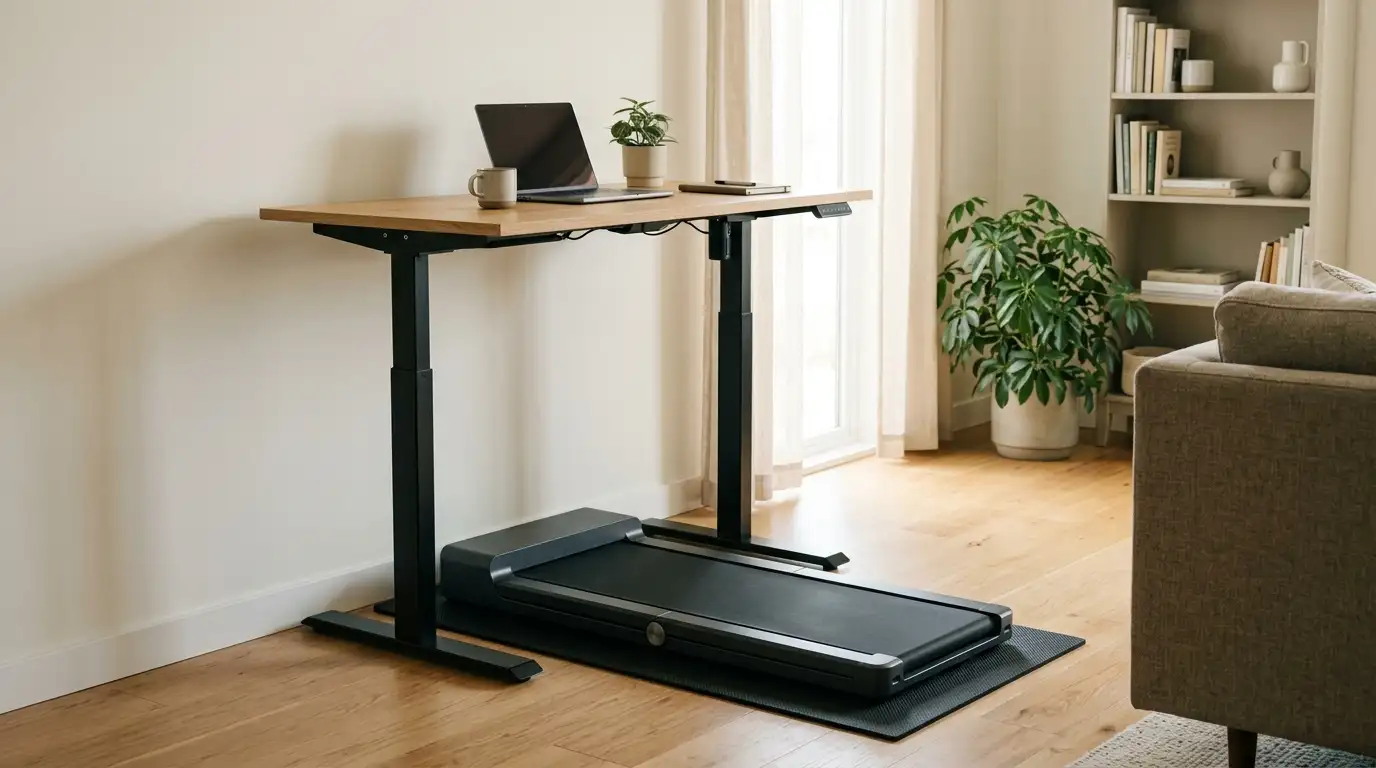

Living in an apartment shouldn’t mean giving up on daily movement. A walking pad lets you walk while working, watching television, or taking a break from sitting, without needing a dedicated home gym.
But apartment living comes with a challenge: noise travels. A machine that sounds quiet in a product demonstration can still transmit footstep vibrations through hardwood floors, laminate, or a shared ceiling. Storage is another concern, especially if you live in a studio or have limited closet space.
The best quiet walking pads for apartments combine a reasonably quiet motor, a stable walking surface, manageable dimensions, and features that make everyday use practical. The right choice also depends on your body weight, walking speed, desk setup, and the type of flooring in your home.
In this guide, we’ll compare popular WalkingPad models, explain how to reduce noise and vibration, and help you choose a compact treadmill that suits your apartment and budget.
Quick answer: Start by comparing the WalkingPad C2, A1 Pro, and Z1. These models offer different combinations of foldability, weight, walking-belt dimensions, and speed. However, no walking pad should be considered completely silent, and published motor specifications alone cannot tell you how much noise your downstairs neighbors will hear.
Table of Contents
Best Quiet Walking Pads for Apartments at a Glance
Specifications below are manufacturer-listed where available. Confirm the exact model, regional version, and current listing before purchasing.
| Walking pad | Best for | Key consideration |
|---|---|---|
| WalkingPad C2 | Small apartments and compact storage | Lightweight design with a folding frame |
| WalkingPad A1 Pro | Buyers wanting a wider walking surface | Heavier than the C2 and Z1 |
| WalkingPad Z1 | People prioritizing a relatively light machine | Check the available walking area and speed range |
| WalkingPad Z3 | Buyers comparing newer model options | Verify current specifications and warranty |
| WalkingPad R3 | Buyers comparing alternative WalkingPad designs | Confirm dimensions, folding method, and intended use |
| UREVO SpaceWalk Lite | Shoppers comparing compact alternatives | Check the precise model variant and storage requirements |
The three models with the clearest manufacturer-published specifications in this comparison are the C2, A1 Pro, and Z1.
One important distinction: a lighter walking pad is not automatically quieter. Its noise level depends on motor operation, belt alignment, footstrike, the supporting floor, and how effectively vibration is isolated from the building.
How We Evaluate Quiet Walking Pads
A walking pad needs to do more than fit beneath a desk. For apartment use, the machine should work comfortably in a small room without creating unnecessary disruption.
These are the main factors to compare.
Motor and operating noise
A motor’s horsepower rating is not a reliable noise rating. Two machines with similar motor specifications may sound different because of their construction, belt design, and operating speed.
Look for independent noise measurements when available. Ideally, testing should explain the measurement distance, walking speed, room conditions, and whether the result includes footstep noise.
Floor vibration
A treadmill can sound relatively quiet to the person walking on it but create noticeable vibration downstairs.
This is especially important in apartments with hard flooring or lightweight floor construction. A stable machine, suitable mat, and controlled walking pace can help reduce transmitted vibration, although they cannot eliminate it completely.
Walking surface
The usable belt dimensions influence how naturally you can walk. A narrow or short belt may feel restrictive if you have a longer stride or are accustomed to conventional treadmills.
Storage and portability
A walking pad may need to slide beneath a sofa, bed, or desk when not in use. Check the machine’s folded dimensions and weight, not just its appearance in promotional photos.
Also consider the distance between your storage location and walking area. A compact machine is less convenient if moving it requires lifting it over obstacles.
Weight capacity and stability
Choose a machine with a manufacturer-rated weight capacity that comfortably accommodates the intended user. Never exceed that limit.
Stability matters, too. A machine that shifts or rattles during normal walking may be distracting even if its motor is relatively quiet.
Warranty, maintenance, and safety
Check the manufacturer’s warranty, return policy, replacement-part availability, and maintenance instructions. A walking pad that is difficult to service can become an expensive inconvenience.
We also recommend checking relevant product recalls before buying, particularly when considering unfamiliar brands or discounted listings.
WalkingPad C2 Review: Best for Compact Apartment Living
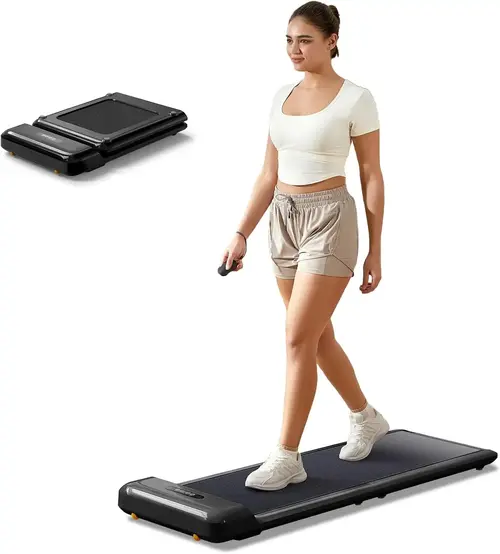
The WalkingPad C2 is worth considering if your main priorities are a compact footprint, manageable weight, and the ability to put your walking pad away after use.
It is designed for walking rather than running, making it a potential fit for people who want to add low-intensity movement to a home office or small living space.
Key specifications
- Manufacturer-listed weight capacity: 220 lb
- Machine weight: Approximately 55 lb
- Unfolded dimensions: Approximately 57 × 20 × 5 inches
- Folded dimensions: Approximately 32.5 × 20.4 × 5.4 inches
- Walking area: Approximately 47 × 15.7 inches
- Speed range: Approximately 1–4 mph
- Motor: Manufacturer-listed 3 HP brushless motor
Specifications can vary by market or product revision, so confirm them against the exact listing you intend to purchase.
What makes it suitable for apartments?
The C2’s folding frame makes it easier to store than a conventional treadmill. Its relatively low profile can also be useful when you want to slide the machine into a suitable storage space.
For someone working at a desk, a walking-only model may provide all the functionality needed without the extra structure of a larger treadmill.
However, its walking area is not particularly wide. If you prefer a broad belt or tend to walk with a wide stance, compare its dimensions with those of the A1 Pro before making a decision.
Pros
- Folding design helps with storage.
- Relatively manageable weight for a treadmill.
- Suitable for ordinary walking routines.
- Useful for home-office movement and compact living spaces.
Cons
- The walking surface may feel narrow to some users.
- It is not intended to replace a running treadmill.
- It still requires sufficient clearance for safe mounting and walking.
- No universal noise figure should be assumed without a comparable test.
Best for: Apartment residents who want a folding walking pad for regular, moderate-speed walking.
Consider another model if: You need a wider belt, a higher weight capacity, or a machine specifically designed for running.
WalkingPad A1 Pro Review: Best for a Wider Walking Surface
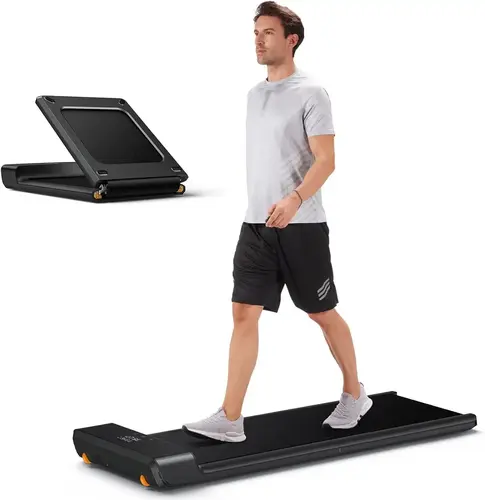
The WalkingPad A1 Pro is another option for people who want a compact walking machine but prefer a slightly wider walking surface than the C2 offers.
It has a folding design and a brushless motor. Some manufacturer listings offer different weight-capacity versions, so be careful not to assume that every A1 Pro listing has identical specifications.
Key specifications
- Walking area: Approximately 47 × 16.5 inches
- Machine weight: Approximately 63 lb
- Folded dimensions: Approximately 32.5 × 21.5 × 5 inches
- Unfolded dimensions: Approximately 56.5 × 21.5 × 5 inches
- Speed range: Approximately 0.5–3.75 mph, depending on version
- Motor: Manufacturer-listed 3.75 HP brushless motor
- Weight capacity: Some versions are listed up to 300 lb; verify the specific model
Why consider the A1 Pro?
The walking area is wider than the C2’s listed walking area, which may make a difference if you find narrower belts uncomfortable.
The A1 Pro may also be worth comparing if its particular weight-capacity version better suits your needs.
That said, its additional weight can make regular lifting less convenient. If you plan to move the machine into a closet every evening, consider whether you can handle it safely and comfortably.
Pros
- Wider walking area than the C2, according to listed dimensions.
- Folding design.
- Brushless motor specification.
- Higher-capacity versions are available in some listings.
Cons
- Heavier than the C2 and Z1.
- Exact weight capacity depends on the version.
- A brushless motor does not guarantee silent operation.
- The walking speed range may not suit people looking for running speeds.
Best for: Buyers who value a somewhat wider walking belt and want to compare higher-capacity versions.
Consider another model if: You need the lightest machine possible or have very limited space for moving and storing it.
WalkingPad Z1 Review: Best for Buyers Prioritizing Portability
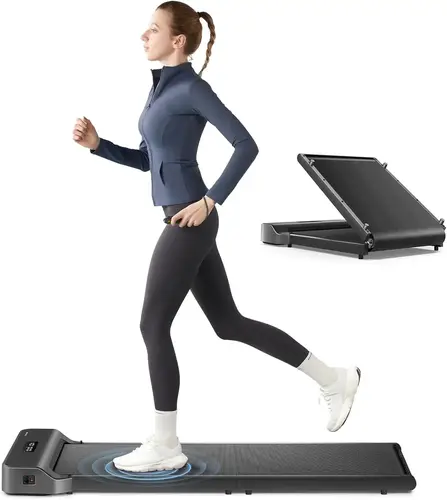
The WalkingPad Z1 is worth examining if portability and storage are major priorities.
Its listed machine weight is lower than those of the C2 and A1 Pro, although you should still assess whether lifting a 51 lb machine is practical for you.
Key specifications
- Machine weight: Approximately 51 lb
- Weight capacity: Approximately 242 lb
- Folded dimensions: Approximately 35.6 × 25 × 7.8 inches
- Unfolded dimensions: Approximately 56.1 × 22 × 4.1 inches
- Walking area: Approximately 47.6 × 15.8 inches
- Speed range: Approximately 1–4 mph
- Motor: Manufacturer-listed 2.25 HP brushless motor
Check the current regional listing before buying, as specifications and availability can change.
Is the Z1 a good choice for a small apartment?
Its relatively low machine weight may make it easier to reposition than some alternatives. However, the folded dimensions are different from those of the C2 and A1 Pro, so the Z1 will not necessarily fit every under-bed or under-sofa storage space.
Measure the actual clearance where you plan to store it. Include room for your hands when moving the machine and make sure you can retrieve it without straining your back.
Pros
- Relatively light among the models compared here.
- Folding design.
- Walking-focused speed range.
- Compact profile when unfolded.
Cons
- Still weighs enough to require careful handling.
- Folded dimensions may not fit low-clearance furniture.
- Its walking area may not suit every stride.
- Motor horsepower alone does not establish real-world noise levels.
Best for: Apartment residents who want a folding walking pad and place a high value on manageable weight.
Consider another model if: Your storage space has very little vertical clearance or you need a particularly wide belt.
WalkingPad Z3 and R3: What to Check Before Buying
The WalkingPad Z3 and R3 may appear in comparisons alongside the C2, A1 Pro, and Z1. Before choosing either, confirm the exact model and current specifications on the manufacturer’s website or an authorized retailer’s listing.
Product names alone are not enough to establish whether a model has the right folding mechanism, maximum speed, dimensions, or weight capacity for your apartment.
WalkingPad Z3
Consider the Z3 if you find a current listing that offers the walking speed, belt dimensions, and storage arrangement you need.
Before purchasing, verify:
- The machine’s folded and unfolded dimensions.
- Its maximum supported user weight.
- The speed range.
- Whether the model is walking-only.
- The warranty and return terms.
- Whether independent reviewers have measured its noise under realistic conditions.
WalkingPad R3
For the R3, focus on the precise configuration rather than assuming that specifications from another WalkingPad model apply.
Check how the machine folds, how much space it needs during use, and whether it can be moved safely into your intended storage location.
Our advice: Do not pay extra for a newer model simply because its name sounds more advanced. Compare verified specifications and real-world usability before deciding whether the upgrade is worthwhile.
UREVO SpaceWalk Lite: A Compact Alternative to Compare
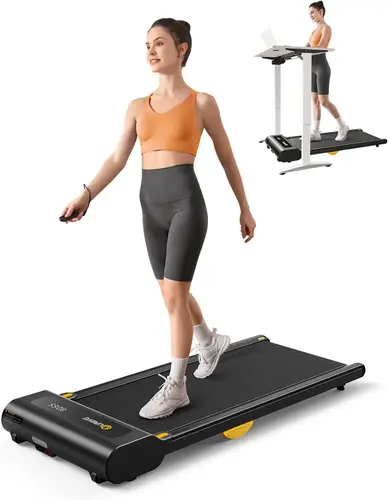
The UREVO SpaceWalk Lite is another model worth comparing if you are shopping beyond the WalkingPad range.
As with the other products in this guide, verify the exact version before purchasing. Similar product names can refer to different configurations, and retailers may list different dimensions, speeds, or weight capacities.
What to compare
- Storage: Does it fit under your furniture?
- Walking surface: Is the belt long and wide enough for your stride?
- Weight: Can you move it safely?
- Noise: Are independent measurements available?
- Safety: Does the model have clear operating instructions and appropriate safety features?
- Support: Is the seller reputable, and can you return the machine if it does not suit your apartment?
A low purchase price is not enough to make a walking pad good value. Consider the quality of support, return shipping, warranty coverage, and the cost of any necessary floor protection.
Best for: Buyers who want to compare compact alternatives before settling on a model.
Important: Confirm the exact product specifications rather than relying on a retailer’s abbreviated title or an image that may show a different version.
What Makes a Walking Pad Quiet?
The noise you hear from a walking pad comes from several sources. Understanding them makes it easier to choose the right machine and improve your setup.
Motor noise
The motor produces mechanical and electrical noise while driving the belt. Some models use brushless motors, but that feature alone does not tell you how loud the finished machine will be.
Motor noise may become more noticeable as operating conditions change, including when you increase the speed or the machine requires maintenance.
Footstep noise
Your footsteps can create more noticeable sound than the motor, especially if you walk heavily or increase your pace.
The sound depends on your footwear, walking technique, body weight, belt construction, and the way the machine is supported.
Walking smoothly at a comfortable pace may reduce impact noise. It should never come at the expense of a natural stride or safe balance.
Belt and roller noise
The belt and rollers can produce rubbing, clicking, or squeaking sounds if the equipment is dirty, misaligned, damaged, or insufficiently maintained.
Follow the manufacturer’s instructions for belt inspection, cleaning, lubrication, and adjustment. Do not apply lubricant unless the manufacturer specifies that it is appropriate for your model.
Structural vibration
Vibration can travel from the treadmill into the floor and surrounding building structure. This is why a walking pad that sounds acceptable in your room may still be noticeable in the apartment below.
A dense treadmill mat may help reduce some vibration, but results depend on the floor, the mat’s material and thickness, the machine’s feet, and the way the building transmits sound.
Why decibel numbers need context
A decibel figure is useful only when you understand how it was measured.
For example, a test conducted one meter from a walking pad in a quiet room cannot be directly compared with a measurement taken beside the machine in a room with background noise.
When reviewing noise claims, look for:
- The measurement distance.
- The treadmill’s speed.
- Whether someone was walking on it.
- The room’s background noise.
- The flooring type.
- Whether the test includes vibration or only airborne sound.
Be skeptical of claims such as “completely silent” unless the evidence clearly explains what was measured. No powered treadmill with human footsteps should be assumed to make zero noise.
9. How to Reduce Walking Pad Noise in an Apartment
Even a well-chosen walking pad can become annoying if it is placed directly on a resonant floor or used at an unsuitable time.
These practical adjustments can help.
1. Use a suitable treadmill mat
A mat designed for treadmill use may help isolate some vibration and protect the floor from scratches and dirt.
Choose a mat compatible with the machine’s dimensions and weight. It should lie flat, remain stable, and not interfere with ventilation or moving parts.
Avoid stacking soft materials in a way that makes the treadmill wobble. Stability is more important than making the setup as cushioned as possible.
2. Place the walking pad on a stable surface
A level, solid surface helps the machine operate as intended. Uneven flooring can cause movement, rattling, and unnecessary stress on the equipment.
Check the manufacturer’s requirements for floor type and clearance. Avoid placing the walking pad where it can slide into furniture or block an exit.
3. Start at a lower speed
Higher walking speeds can increase both motor noise and footstep impact. If noise is a concern, start at a comfortable lower speed and increase it gradually.
For under-desk use, prioritize balance and control. You should be able to walk naturally without leaning heavily on your desk or constantly looking down at your feet.
Suggested reads: Best Under-Desk Treadmills: 4 Top Walking Pads for WFH
4. Inspect the belt and rollers
If you hear new squeaking, clicking, or grinding, stop using the machine until you identify the cause.
Follow the manufacturer’s maintenance instructions. Never reach under a moving belt or attempt adjustments while the machine is powered on.
5. Choose appropriate footwear
Shoes with a secure fit and suitable cushioning may help make walking more comfortable. Avoid footwear that slips or catches on the belt.
Do not assume that very soft shoes will always make a treadmill quieter; the result depends on the shoe, the user, and the machine.
6. Choose considerate walking times
If your building has thin floors or strict quiet hours, schedule longer sessions during reasonable daytime periods.
A short conversation with a downstairs neighbor may also help you understand whether vibration is traveling through the floor.
7. Do not ignore unusual sounds
A sudden increase in noise can indicate belt misalignment, worn parts, or another mechanical issue.
Stop the machine if it behaves abnormally, moves unexpectedly, overheats, or emits a burning smell. Follow the manufacturer’s safety instructions and contact support when necessary.
8. Consider your building’s construction
Concrete floors, timber joists, floating floors, and different underlayments transmit sound differently. There is no single mat that guarantees a quiet experience in every apartment.
If vibration is especially important, consider the building and floor type before spending more on a treadmill marketed as quiet.
10. How to Choose the Right Quiet Walking Pad
The right model depends on your priorities. Use this sequence to narrow the options.
Step 1: Measure your storage space
Measure the space where the walking pad will live when not in use.
Check all three dimensions:
- Available width.
- Available length.
- Vertical clearance.
Then compare those measurements with the manufacturer’s folded dimensions. Remember to leave enough room to slide the machine in and out.
If you need to move it through a doorway, hallway, elevator, or staircase, check those dimensions as well.
Step 2: Check the walking area
The belt should let you walk naturally without feeling squeezed.
Compare belt length and width rather than relying on the machine’s overall dimensions. If possible, try a similar model in person or buy from a seller with a suitable return policy.
Step 3: Match the weight capacity
Confirm the manufacturer’s maximum user weight for the exact version you intend to buy.
Do not confuse the machine’s own weight with its user-weight capacity. They measure different things.
Step 4: Decide whether you need a folding model
A folding machine can save space, but its folded dimensions and weight determine whether it is genuinely practical for your home.
If you intend to leave the walking pad permanently under a desk, folding may matter less than belt dimensions and ease of use.
Step 5: Verify the speed range
Think about how you will use the machine.
For gentle movement while working, a walking-only model may be enough. If you want to jog or run, confirm that the treadmill is specifically designed and rated for that use. Do not assume that every walking pad supports running.
Step 6: Compare real-world noise evidence
Search for independent reviews that test the same model at a realistic walking speed.
Prefer reviews that explain their testing setup. A brief product demonstration or a manufacturer’s “quiet motor” description does not provide enough information to establish how much sound will reach neighboring apartments.
Step 7: Check the return policy and warranty
Before buying, confirm:
- The return period.
- Whether return shipping is paid by you.
- Warranty duration and exclusions.
- Availability of customer support.
- Access to replacement parts.
- Whether the seller is authorized.
These details matter particularly when buying a heavy product that may be expensive to ship back.
Step 8: Check current product safety notices
Search official recall notices before buying and again if you already own a walking pad that starts behaving abnormally.
In April 2026, the U.S. Consumer Product Safety Commission warned consumers to stop using specified Sperax walking pad and treadmill models because of serious fall, burn, and fire hazards. The notice named the Pro, Q1, RM-01, and RM-02 models. This warning concerns those identified models; it does not mean every walking pad from every manufacturer is affected.
Read the official notice before purchasing or continuing to use any potentially affected unit:
- CPSC warning about specified Sperax walking pads and treadmills
- U.S. Consumer Product Safety Commission recalls
Walking Pad vs. Compact Elliptical for Apartment Cardio
A walking pad is not the only way to move more at home. A compact elliptical may be a better choice for some people, depending on their space, movement preferences, and tolerance for noise.
| Feature | Walking pad | Compact elliptical |
|---|---|---|
| Movement | Walking on a moving belt | Elliptical stepping motion |
| Storage | Some models fold flat | Depends on design; many need a taller footprint |
| Desk compatibility | Some models fit under standing desks | Some compact models may fit, depending on height and layout |
| Main noise sources | Motor, belt, footfalls, floor vibration | Pedals, joints, flywheel, frame vibration |
| Impact | Walking impact is present | Typically lower-impact movement |
| Running | Only if the treadmill is rated for it | Not a running machine |
| Apartment suitability | Depends on floor vibration and storage | Depends on footprint, movement clearance, and mechanical noise |
When a walking pad makes more sense
Choose a walking pad if you want to walk while working at a standing desk, increase your daily steps, or move gently while watching television.
It can be especially useful if you already have a suitable standing desk and enough room to use the treadmill safely.
When an elliptical may be better
Consider a compact elliptical if you prefer an elliptical motion, want an alternative to walking, or find the impact of walking uncomfortable.
However, do not assume that an elliptical is silent. Pedal movement, joints, flywheel noise, and floor vibration can still disturb neighbors.
Our recommendation: Choose based on the type of movement you will use consistently, the space available, and the sound your building transmits. For either machine, check independent noise tests and the return policy before committing.
Common Walking Pad Buying Mistakes
Avoid these mistakes when shopping for an apartment-friendly treadmill.
Buying based on motor horsepower alone
A higher horsepower number does not prove that a machine is quieter, more durable, or better suited to your apartment.
Compare measured noise, belt dimensions, weight capacity, warranty, and real-world usability.
Assuming every foldable model fits under a bed
Folded height, width, and length vary. A treadmill that looks flat in a product image may not fit beneath your furniture.
Measure the actual space first.
Ignoring the weight of the machine
A walking pad can be compact but still difficult to lift. Think about how often you will move it and whether you can handle it safely.
Overlooking downstairs neighbors
The sound of footsteps and vibration may matter more than the motor itself. Plan for floor protection and reasonable operating times.
Buying a machine with insufficient belt width
A narrow walking surface can feel restrictive and may make walking less comfortable. Compare the usable belt dimensions with your stride and walking habits.
Ignoring maintenance
A belt that is dirty, misaligned, or incorrectly maintained may become noisy or unsafe. Read the manual before the first use and follow the recommended maintenance schedule.
Trusting every product listing
Retailer titles, photos, and specifications may not always match the exact product version. Check the model number and verify the information against the manufacturer’s current documentation.
Forgetting the return shipping cost
The best walking pad for your apartment is the one that fits your available space, supports your intended use, and produces an acceptable level of noise and vibration in your building.
If a walking pad proves too loud for your apartment or does not fit your storage space, returning it may be expensive. Understand the return terms before ordering.
Here’s how we would narrow the options:
Final Recommendations: Which Quiet Walking Pad Should You Choose?
- Choose the WalkingPad C2 if compact folding and manageable machine weight are your priorities.
- Consider the WalkingPad A1 Pro if you want a wider walking area and find a version with suitable weight capacity.
- Consider the WalkingPad Z1 if you prioritize a relatively light machine and its folded dimensions suit your storage space.
- Compare the Z3, R3, and UREVO SpaceWalk Lite only after verifying the exact model specifications, warranty, and return terms.
Before buying, measure your storage area, check the manufacturer’s specifications, and search for independent noise tests. If you’re concerned about downstairs neighbors, prioritize floor vibration and impact noise rather than relying on a “quiet motor” label.
A well-chosen walking pad can make daily movement easier without turning your apartment into a full home gym. The key is to choose for your real living conditions—not just the product photos.
Suggested Reads
Want to explore more apartment-friendly cardio options? Discover quiet ellipticals for apartments for low-impact workouts, learn how to create a zero-noise cardio setup for quieter late-night exercise, and compare space-saving equipment in the studio apartment cardio strategy, which explores folding versus compact fitness gear.
Frequently Asked Questions
What is the quietest walking pad for an apartment?
There is no universal winner without comparable independent testing. The WalkingPad C2, A1 Pro, and Z1 are useful models to compare because they have documented compact designs and walking-focused speed ranges.
To identify the quietest option for your apartment, look for noise measurements taken at the same speed and distance, and consider footstep vibration as well as motor noise.
Are walking pads quiet enough for downstairs neighbors?
Some setups may be acceptable, but no walking pad can guarantee that downstairs neighbors will hear nothing.
Footsteps and structural vibration can travel through the floor even when the motor sounds quiet in your room. A suitable mat, stable placement, moderate speed, and considerate operating hours may help reduce disturbance.
Can I use a walking pad in a studio apartment?
Yes, provided you have enough space to operate it safely and store it when not in use.
Measure the folded dimensions, unfolded footprint, and surrounding clearance. Make sure the machine does not obstruct a doorway or create a trip hazard.
Are folding walking pads better for small apartments?
They can be. A folding design may make storage easier, but compare the actual folded dimensions and machine weight.
A model that folds flat but is too heavy to move comfortably may not be the most practical choice.
Can I use a walking pad under a desk?
Some walking pads are designed for under-desk walking. Check the treadmill’s height, your desk clearance, and whether your desk is stable at the height you need.
Begin at a low speed. Keep your hands and clothing away from moving parts, and avoid typing or other tasks that compromise your balance.
How fast should I walk on a walking pad while working?
Start at a slow, comfortable pace that allows you to maintain balance and concentrate on your work. The appropriate speed depends on your coordination, task, and equipment.
Do not increase the speed simply to reach a target number of steps. Stop if you feel unsteady or distracted.
Do I need a treadmill mat?
A suitable treadmill mat can help protect the floor and may reduce some vibration. Its effectiveness depends on the machine, floor construction, and mat material.
Choose a stable mat that is compatible with your equipment. A mat cannot guarantee that vibration will not reach neighboring units.
Are brushless motors quieter?
Brushless motors can offer certain operational advantages, but the term does not establish the total noise of a walking pad.
Footsteps, belt movement, rollers, and floor vibration all contribute to the overall sound. Look for independent tests of the complete machine.
Can a walking pad replace a regular treadmill?
It depends on your goals. A walking pad may be sufficient for walking and light daily movement, but many models are not designed for running or incline training.
If you need running speeds, substantial incline options, or a larger walking surface, compare conventional treadmills designed for those activities.
How do I know whether a walking pad is safe?
Check the manufacturer’s instructions, weight capacity, safety features, warranty, and recall information. Buy from a reputable seller and verify that the model number matches the documentation.
Stop using the machine if it behaves unexpectedly, accelerates or stops abruptly, overheats, or produces a burning smell. Follow the manufacturer’s safety guidance and seek appropriate support.