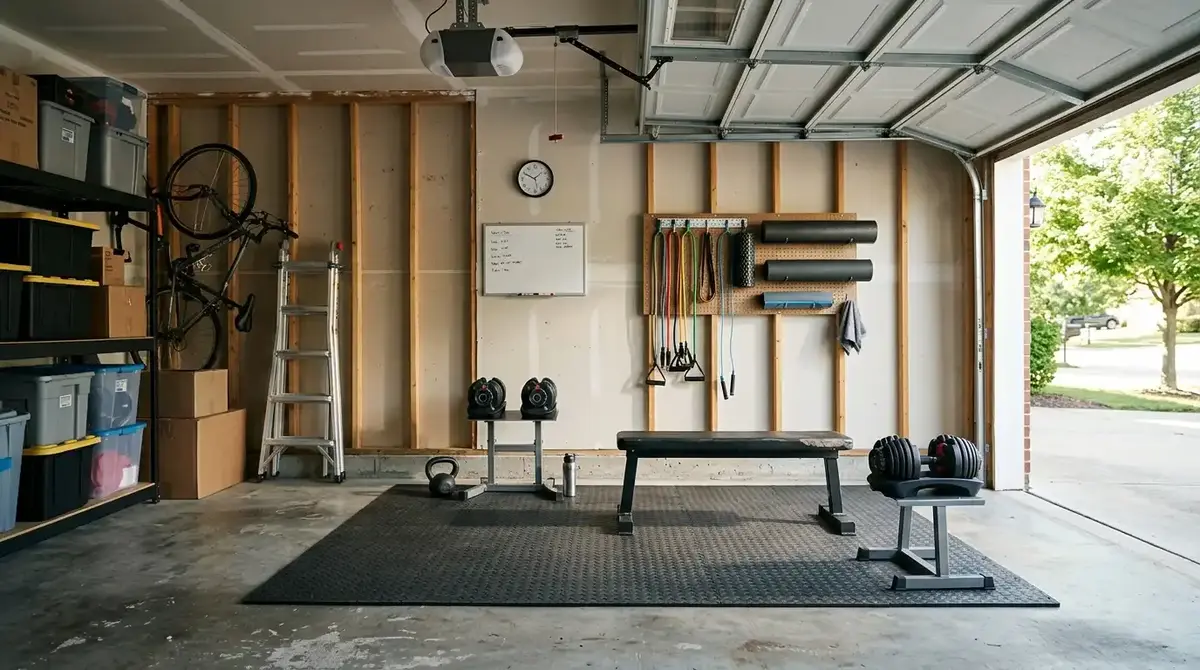

A garage gym can give you the freedom to train on your schedule without paying monthly membership fees or driving to a fitness center. The challenge is creating a useful workout space without spending thousands of dollars on equipment, flooring, storage, and renovations.
The best garage gym ideas on a budget start with a simple plan: choose the workouts you want to do, protect the floor where necessary, buy versatile equipment, and improve the space gradually. You can begin with a mat, resistance bands, and adjustable dumbbells, then add a bench, rack, or cardio machine when your training needs justify the expense.
A practical garage gym doesn’t need designer finishes or a wall of machines. It needs safe equipment, enough room to move, good lighting, suitable ventilation, and a layout that makes workouts easy to start.
Quick answer: How do you build a garage gym on a budget?
Start by measuring your available space and setting a spending limit. Clear the floor, check for moisture, choose appropriate protective flooring, and purchase a small selection of versatile equipment. Prioritize adjustable dumbbells, resistance bands, a workout mat, and a stable bench if they suit your routine. Add larger equipment only after you’ve established a consistent training habit.
Table of Contents
Plan Your Garage Gym Before Buying Equipment
The easiest way to waste money on a garage gym is to purchase equipment before deciding how you’ll use the space. A treadmill might look appealing, for example, but it could take up the floor area you need for dumbbell exercises or mobility work.
Start with three questions:
- What type of training will you do? Strength training, cardio, bodyweight workouts, or a mix?
- How much space can you use? Consider parked cars, doors, storage shelves, and the path into the house.
- What’s your total budget? Include flooring, small accessories, storage, and any essential repairs.
Measure the space you can actually use
Measure the usable floor area rather than relying on the garage’s total dimensions. Mark the space needed to open doors, walk around equipment, and move through exercises without hitting walls or stored items.
A compact training area can be effective if the equipment suits the workouts. A corner with room for a mat, dumbbells, and resistance bands may be enough for a beginner. A power rack, barbell, and bench require more careful planning, especially where overhead clearance and safe lifting space are limited.
Choose a realistic starting budget
The following figures are illustrative planning ranges in US dollars, not live product quotes. Local prices, shipping, equipment quality, and whether you buy new or used can change the total considerably.
| Budget level | Illustrative spending range | What it can cover |
|---|---|---|
| Starter setup | $100–$250 | Mat, resistance bands, jump rope, and a few basic accessories |
| Compact strength setup | $250–$600 | Starter gear plus dumbbells or adjustable weights and basic storage |
| More complete home gym | $600–$1,200 | Additional weights, a bench, improved flooring, and selected upgrades |
| Rack-based setup | $1,200+ | Potential rack, barbell, plates, bench, and more substantial floor protection |
You don’t need to spend the full amount immediately. Buy equipment in stages, leaving room in the budget for items you discover you genuinely need.
Start With Affordable, Versatile Gym Equipment
The most cost-effective equipment is often the gear that supports several exercises and stays useful as your strength improves.
Instead of buying a separate machine for every muscle group, choose equipment that fits your training goals and available space.
Resistance bands
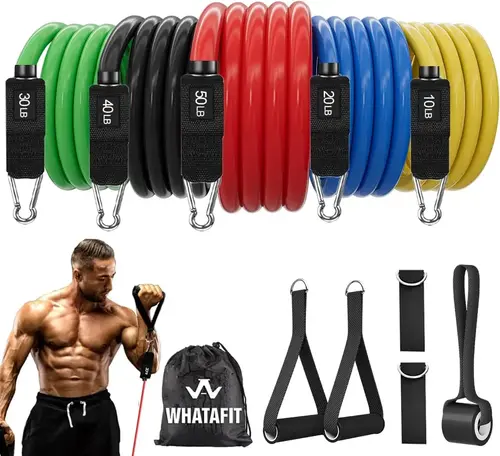
Bands are lightweight, easy to store, and useful for rows, presses, assisted movements, warm-ups, and mobility exercises. They’re a strong starting point for a small garage gym, although resistance and exercise options differ by band type.
Adjustable dumbbells
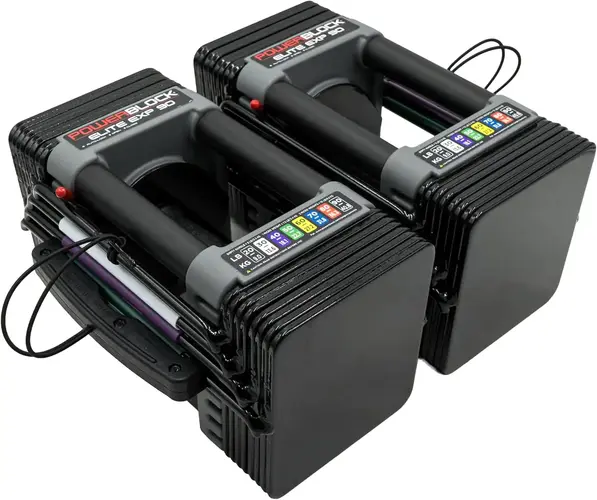
Adjustable dumbbells can replace several pairs of fixed weights, saving storage space. Compare the adjustment mechanism, weight increments, maximum load, warranty, and how quickly you can change resistance between exercises.
A stable workout bench
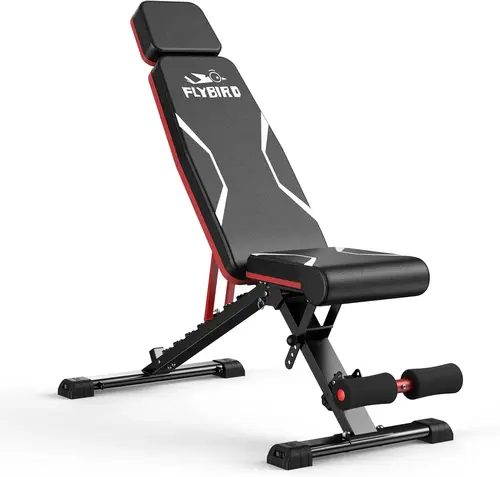
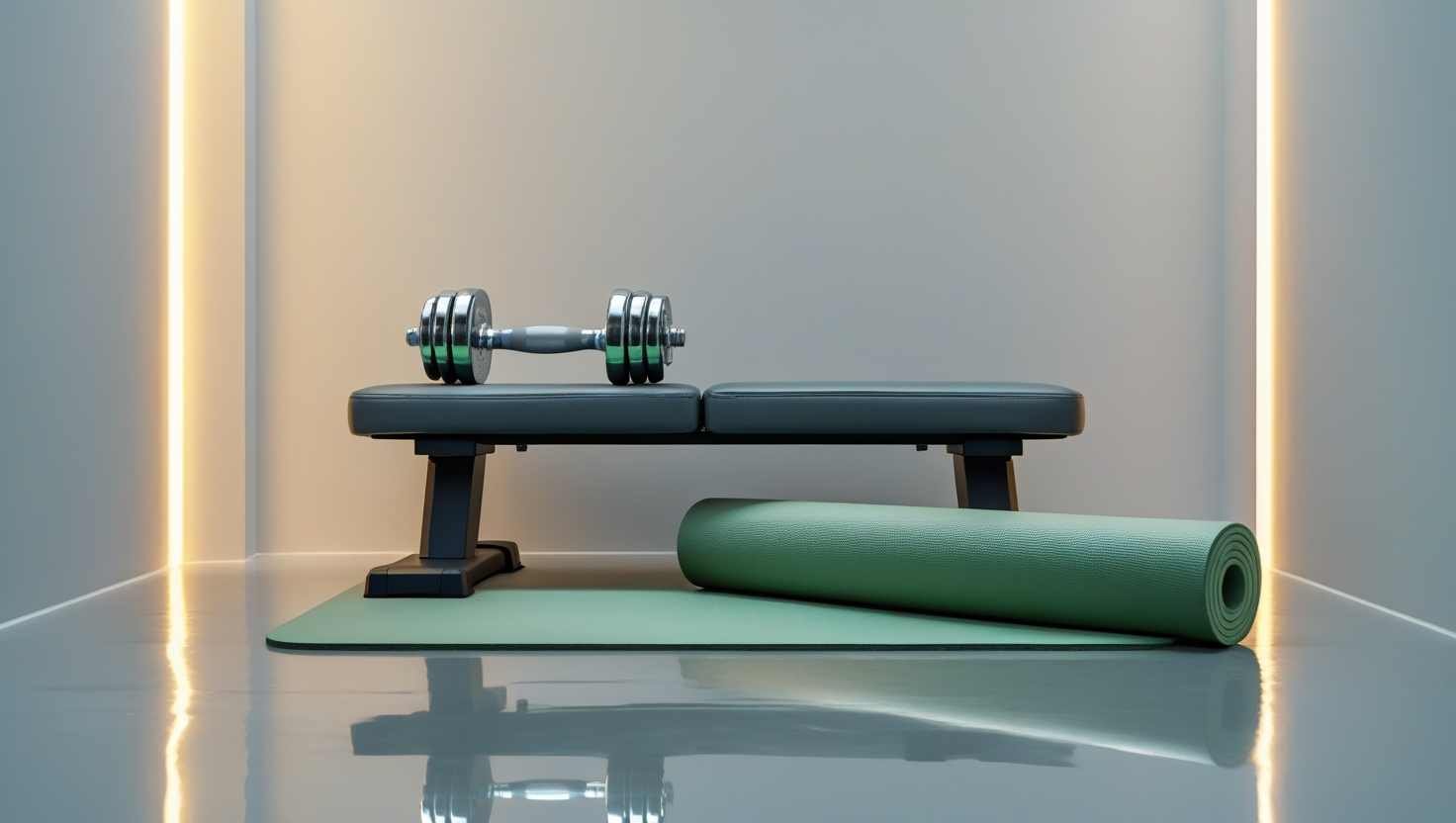
A bench adds options for dumbbell presses, supported rows, step-ups when appropriate, and seated exercises. Check its weight rating, stability, dimensions, and whether it can be stored vertically without creating a safety issue.
A mat and jump rope
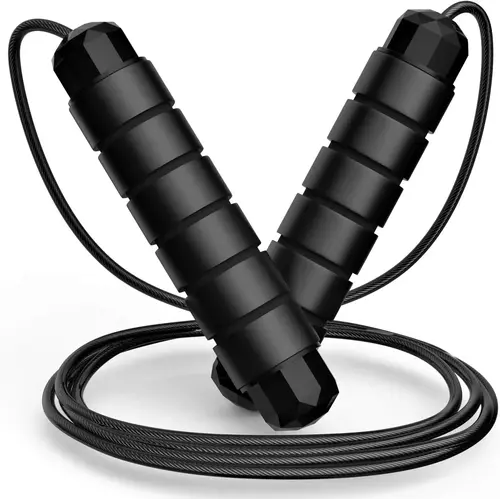
A workout mat gives you a defined area for floor exercises. A jump rope offers inexpensive cardio, provided the ceiling height, floor surface, and available clearance make it practical.
What should you buy first?
Use your training routine to guide the purchase order.
| Training goal | Useful starting equipment | Consider later |
|---|---|---|
| Full-body beginner workouts | Mat, bands, suitable dumbbells | Bench, heavier weights |
| Strength training | Dumbbells, bands, secure storage | Bench, rack, barbell and plates |
| Cardio | Jump rope or walking equipment suited to the space | Larger cardio machine |
| Mobility and core work | Mat, light bands | Additional accessories for specific needs |
| Mixed training | Adjustable dumbbells, mat, bands | Equipment that fills a clear gap |
Budget tip: Write down the exercises you plan to perform each week. Buy equipment that supports those movements first. If an item doesn’t solve a specific training or storage problem, it can probably wait.
Ten Garage Gym Ideas on a Budget
These ideas help you create a practical workout environment without turning the project into an expensive renovation.
Idea 1: Create a workout zone instead of renovating the entire garage
You may not need to convert every square foot into a gym. Designate one clear area for training and leave the remaining space for vehicles, tools, bicycles, or household storage.
Use painter’s tape to outline the proposed workout zone before buying equipment. Test whether you can perform your planned movements within those boundaries.
This approach limits unnecessary spending on flooring, paint, and storage. It also makes it easier to expand your setup later.
Idea 2: Buy used weights and benches
Secondhand equipment can offer significant value because many basic gym items remain useful for years when they’re in good condition.
Look for used dumbbells, weight plates, kettlebells, benches, and simple storage racks. Inspect the equipment before paying, and ask about its age, condition, missing parts, and any previous repairs.
For used equipment, check:
- Welds, frames, and adjustment mechanisms for visible damage.
- Benches and racks for wobbling, bending, or loose connections.
- Weight plates for cracks, severe corrosion, or damaged openings.
- Dumbbell handles and collars for secure fastening.
- Brand and model details so you can check for product recalls.
Don’t buy damaged safety-critical equipment simply because it’s cheap. A bargain rack with compromised welds or a bench with an unstable frame can cost more in the long run.
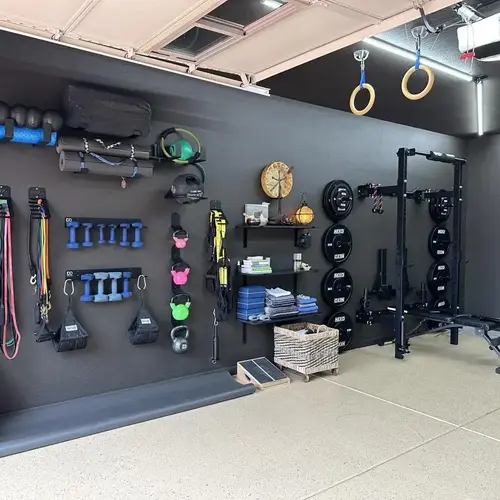
Idea 3: Make smart use of vertical storage
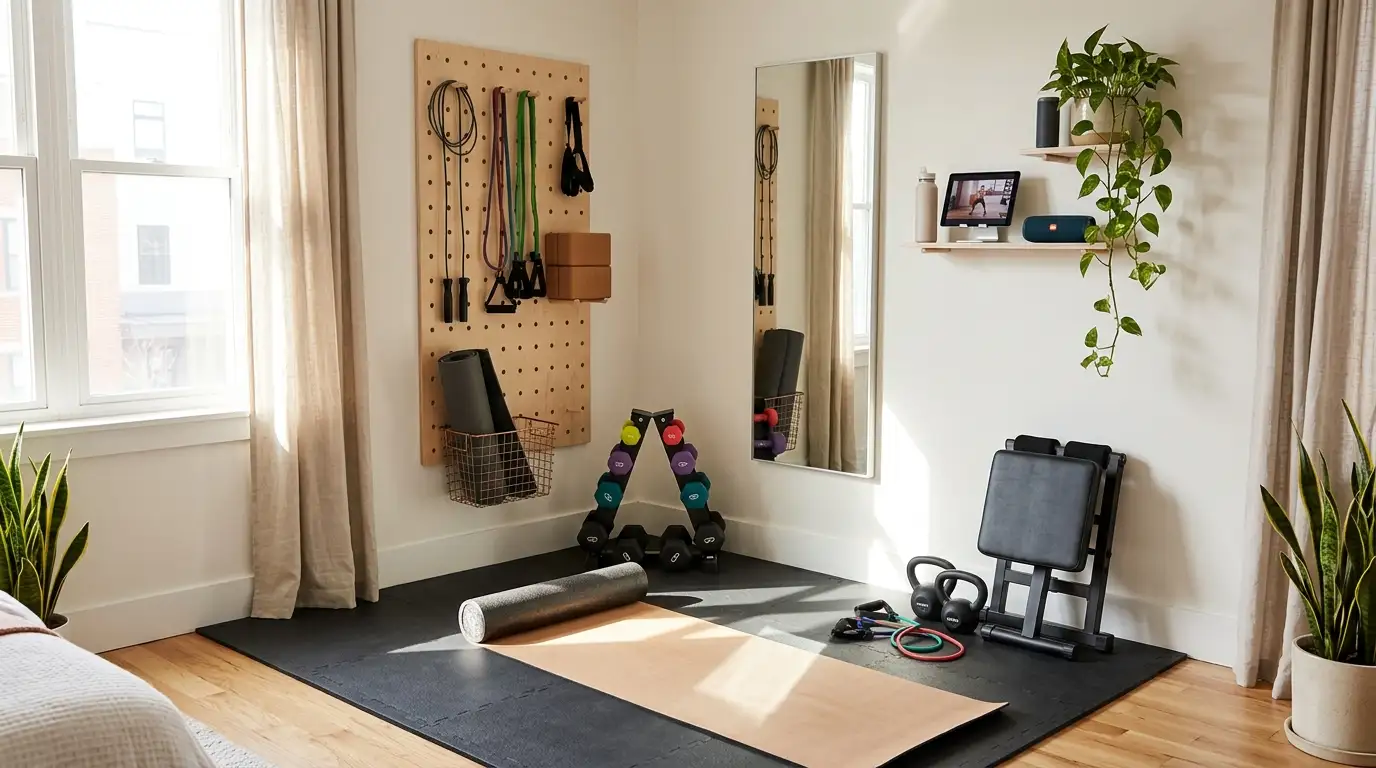
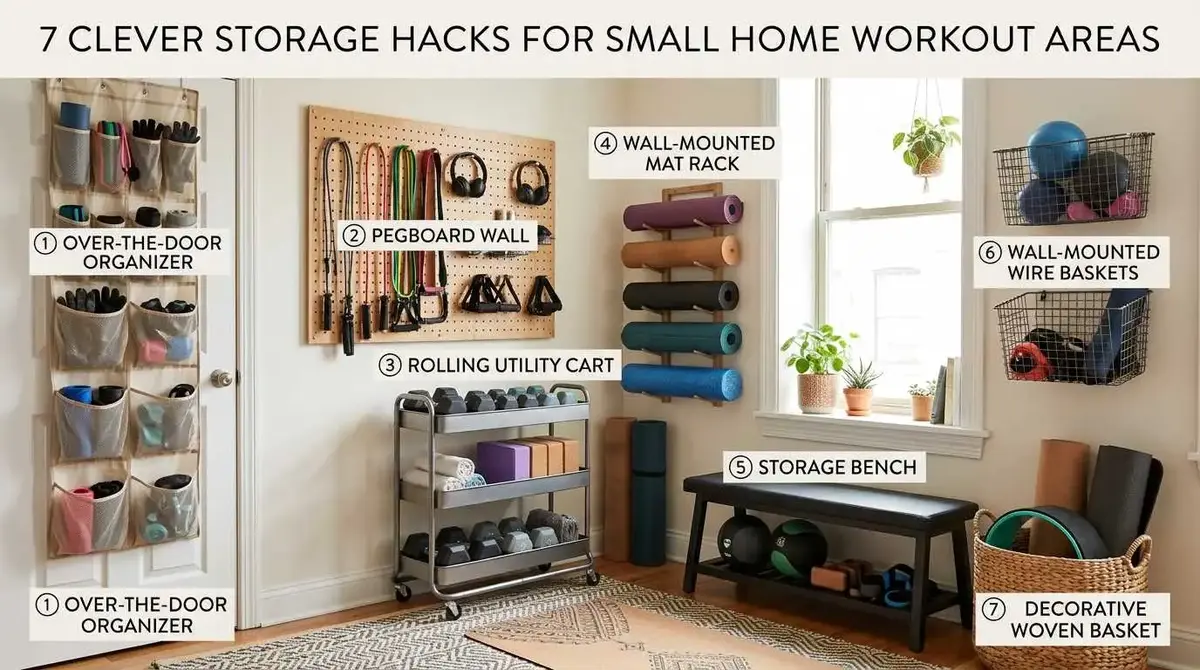
A messy garage can make even a small amount of equipment feel overwhelming. Wall-mounted storage, sturdy shelves, and compact racks can keep weights and accessories organized while preserving floor space.
Store lighter accessories in labeled bins. Keep heavier items low and secure, and use wall-mounted systems only when the wall structure, anchors, and equipment load are suitable.
Before drilling, check for wiring, pipes, and other hidden services. If you’re renting, freestanding storage may be a better option than permanent fixtures.
Idea 4: Use affordable flooring where you need it
GYM Flooring is one of the most important decisions in a budget garage gym, but you don’t always need to cover the entire floor.
A targeted setup may include a mat for floor exercises and suitable rubber flooring beneath the strength-training area. The right solution depends on your floor condition, equipment, noise concerns, and training style.
Avoid assuming that thin yoga mats or soft interlocking foam tiles can safely handle heavy weights. Materials designed for stretching may compress, tear, or provide insufficient protection under heavy equipment.
Idea 5: Improve lighting with simple upgrades
Poor lighting makes a garage gym feel uninviting and can make it harder to see equipment, read weight markings, or notice obstacles.
Start by cleaning existing fixtures and replacing unsuitable bulbs with properly rated, energy-efficient lighting. Aim for even illumination across the workout zone rather than a single bright spot that leaves corners dark.
If you need new wiring, outlets, or fixed fixtures, use a qualified professional where required. Don’t improvise electrical installations to save money.
Idea 6: Keep the walls simple and functional
You don’t need expensive wall panels or elaborate finishes. A clean wall, a mirror, a small whiteboard, or a simple equipment organizer can make the area feel more intentional.
A mirror can help you observe movement, although it shouldn’t replace instruction or professional feedback when you’re learning unfamiliar lifts. Secure it properly and position it where equipment won’t strike it.
A whiteboard can track exercises, sets, repetitions, and progression. This gives your gym a practical purpose without adding recurring costs.
Idea 7: Choose compact cardio equipment
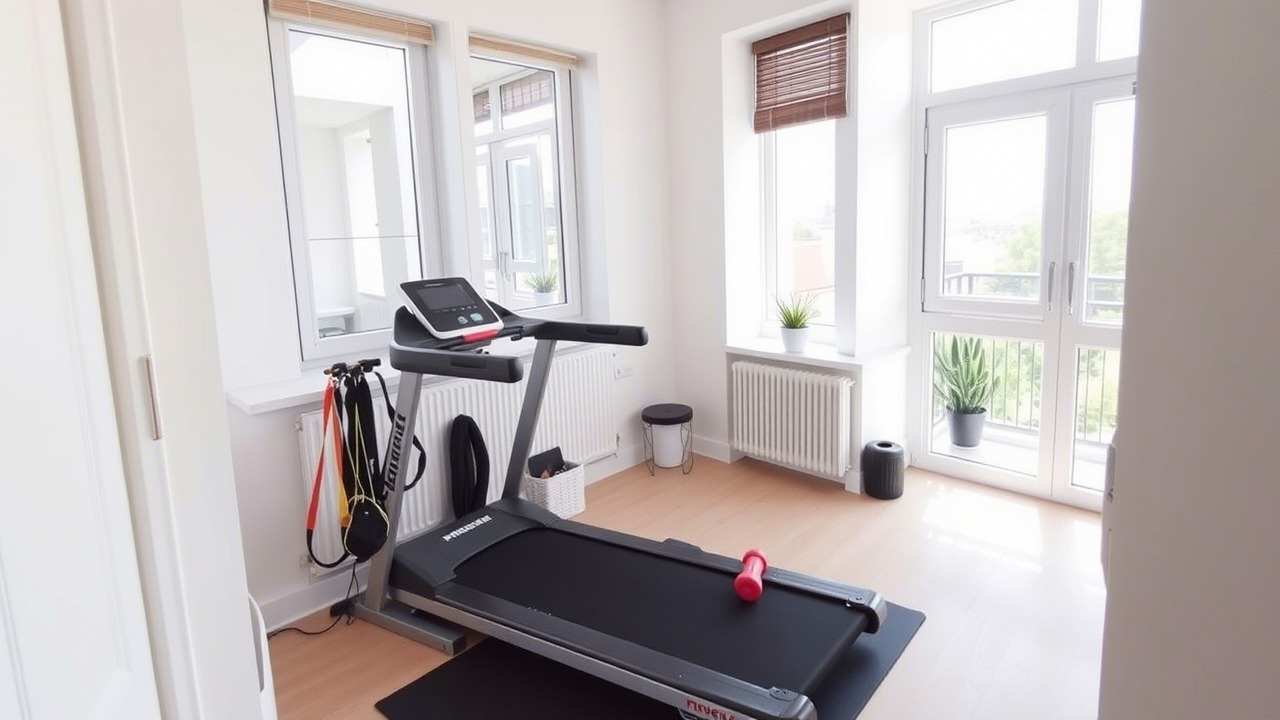
Cardio equipment can consume a large portion of a small gym’s budget. Before buying a treadmill, exercise bike, or rowing machine, consider whether walking outdoors, bodyweight circuits, or a jump rope already meets your needs.
If you want a machine, compare its footprint, storage requirements, noise, maintenance, warranty, and resistance or speed options. Folding equipment can help, but only if it’s easy to move and store safely.
A machine that fits your training habits is better value than a more expensive model that becomes a clothes rack.
Idea 8: Use a folding or movable workout station
A folding bench, portable mat, or compact dumbbell stand can make a garage gym easier to share with other household activities.
Choose movable equipment that locks securely into its working position. Store it so that it cannot fall, block an exit, or interfere with parked vehicles.
If you use the garage for both exercise and parking, decide where the equipment will go before you begin a workout. A predictable setup makes it easier to train consistently.
Idea 9: Improve comfort before buying decorative extras
Garages can become hot, cold, damp, or stuffy. Address basic comfort and environmental issues before spending money on decorative signs or premium accessories.
Start by checking for water intrusion, damp walls, musty smells, and condensation. Keep the space clean and dry, and provide suitable ventilation. If you use fuel-burning equipment or store chemicals in the garage, follow the relevant safety guidance and keep exercise areas separated from hazards.
A fan may improve comfort in warm weather, but it doesn’t solve every ventilation problem. If the garage has persistent moisture, mold, or major temperature issues, identify the underlying cause before investing in cosmetic upgrades.
Idea 10: Build the gym in phases
A staged setup prevents impulse purchases and lets your equipment choices respond to your actual workout habits.
Phase 1: The essentials
Clear the floor, resolve basic safety issues, and start with a mat, resistance bands, and appropriate weights.
Phase 2: Improve versatility
Add a bench, storage, or additional resistance when your current equipment limits the exercises you want to perform.
Phase 3: Expand for specific goals
Consider a rack, barbell, heavier weights, or cardio machine when your routine, space, and budget support the upgrade.
Choose the Right Garage Gym Flooring for Your Budget
Garage floors often consist of concrete, which is durable but hard underfoot. The best flooring depends on the exercises you perform and whether you need protection against dropped weights, abrasion, or noise.
| Flooring option | Relative cost | Best suited for | Limitations |
|---|---|---|---|
| Exercise mat | Low | Stretching, mobility, and floor exercises | Limited coverage and impact protection |
| Interlocking foam tiles | Low | Light exercise and general comfort | May compress under heavy equipment |
| Rubber gym tiles | Moderate | Defined strength-training areas | Quality, thickness, and installation vary |
| Rubber rolls | Moderate | Covering a larger workout zone | May require careful cutting and fitting |
| Heavy-duty lifting platform | Moderate to high | A dedicated lifting area | Takes space and needs suitable construction |
Prices vary widely by material, thickness, dimensions, shipping, and supplier, so compare the cost per square foot rather than the price of one package.
What should you look for?
For bodyweight training: A suitable exercise mat may be enough. Choose one that stays in place and provides appropriate grip and cushioning.
For dumbbells and moderate strength work: Rubber gym flooring can help protect the underlying surface from routine wear. Select a product designed for the loads and exercises you expect.
For heavy barbell lifting: You may need a more substantial platform or flooring system designed for lifting. Confirm that the floor, platform, and equipment are appropriate for the intended loads.
Never assume that a rubber mat makes dropping heavy weights safe. Flooring can’t eliminate the risks of damaged equipment, cracked concrete, structural overload, or injury.
Before installing any flooring, inspect the concrete for cracks, moisture, and uneven areas. Follow the flooring manufacturer’s installation instructions, including any restrictions on damp slabs or enclosed spaces.
Small Garage Gym Layout Ideas
A good layout helps you train without moving half the garage before every session. Organize equipment around the exercises you perform most often.
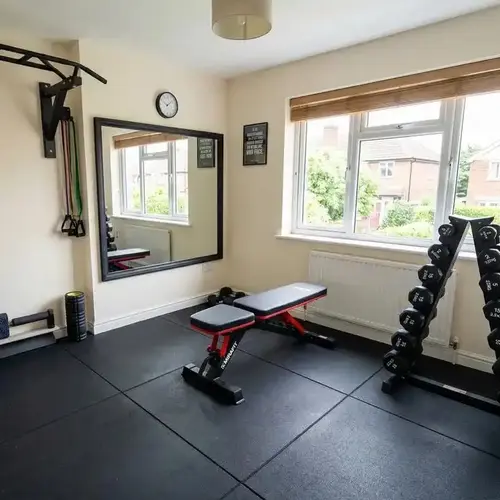
Layout A: The compact corner gym
Best for: Beginners, renters, and people who need to preserve most of the garage.
Include a mat, resistance bands, adjustable dumbbells, and a small storage rack. Keep the center of the workout area open for lunges, floor exercises, and bodyweight movements.
This layout offers flexibility without requiring permanent installations.
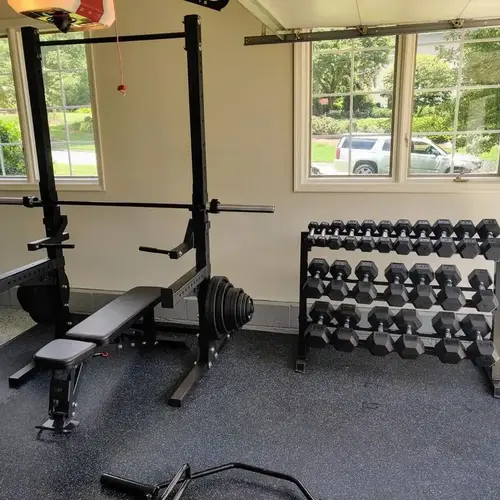
Layout B: The strength-training wall
Best for: People who primarily lift weights.
Arrange dumbbells or weight plates along a suitable wall, with a stable bench and clear space for exercises. If you add a rack, check ceiling clearance, floor suitability, and the room needed to load a bar safely.
Keep frequently used weights easy to reach without placing them in the main walking path.
Layout C: The garage gym and parking combination
Best for: Households that still need to park a vehicle inside.
Choose compact equipment that can be stored securely when it’s not in use. A folding bench or portable training mat may help reclaim floor space, but heavy equipment should never be moved in a way that risks dropping it or injuring your back.
Keep the vehicle path, garage door mechanism, exits, and access to essential household equipment clear.
Layout D: The cardio and mobility zone
Best for: People focused on general fitness, low-impact exercise, or flexibility.
Use a mat, light resistance bands, and a compact cardio option if needed. Prioritize ventilation and sufficient room for the movements you plan to perform.
A small zone can still support a varied routine when the equipment is selected carefully.
Make Your Budget Garage Gym Comfortable and Safe
A functional gym should be easy to use and free from preventable hazards. Comfort upgrades are most valuable when they solve an actual problem.
Check ventilation and temperature
Garages aren’t always designed for extended exercise sessions. Consider airflow, heat, cold, dust, and moisture before planning long workouts.
Keep chemicals, fuel, paints, and vehicle-related materials away from the workout area. Never run a vehicle or fuel-burning generator in an enclosed garage to warm the space. Carbon monoxide is dangerous and can build up without obvious warning.
If you use heaters or fans, follow the equipment’s instructions and ensure that the device is appropriate for the environment. Avoid placing electrical equipment where water or vehicle fluids may reach it.
Secure equipment and preserve clearance
Use stable racks and benches on suitable surfaces. Inspect equipment regularly, tighten fasteners according to manufacturer instructions, and stop using items with cracks, bent components, or unreliable adjustment mechanisms.
Keep enough clearance for each exercise. Overhead presses, loaded carries, jumping movements, and barbell lifts need different amounts of space. If a movement forces you to avoid a wall, low ceiling, parked car, or stored object, change the layout or choose a more suitable exercise.
Use mirrors and accessories selectively
A mirror, timer, fan, or small speaker may improve your experience, but none should come before sound equipment and a safe floor.
Create a short list of upgrades based on recurring frustrations. If you regularly lose time looking for bands, add storage. If the floor is uncomfortable for core work, get a suitable mat. If visibility is poor, improve lighting.
This problem-first approach helps keep the budget under control.
Mistakes That Make a Cheap Garage Gym More Expensive
Several common choices can turn a low-cost project into an ongoing expense.
- Buying equipment before measuring. Check dimensions, movement clearance, and storage space before ordering.
- Choosing the lowest price regardless of quality. Inspect used gear and check weight ratings, condition, warranty, and return policies.
- Covering the entire floor unnecessarily. Start with the areas that need protection, then expand if your training requires it.
- Ignoring moisture. Flooring and equipment can be damaged if the underlying garage remains damp.
- Purchasing too many single-purpose items. Versatile equipment often offers better value in compact spaces.
- Skipping storage. Equipment left in walkways creates clutter and can increase the risk of trips or falls.
- Forgetting ongoing costs. Delivery, replacement parts, maintenance, and installation can change the real price of a purchase.
- Buying advanced equipment too early. Start with your current needs and upgrade when your training provides a clear reason.
A useful rule is to wait before purchasing nonessential gear. Add an item to a list, use your current setup for a few weeks, and then decide whether the purchase solves a persistent limitation.
A Step-by-Step Plan for Building a Budget Garage Gym
Use this checklist to turn your idea into a realistic project.
Garage gym setup checklist
- Measure the usable workout area
- Account for doors, vehicles, walkways, and exercise clearance.
- Set a total spending limit
- Reserve part of the budget for flooring, delivery, and essential repairs.
- Inspect the garage
- Check for moisture, uneven floors, poor lighting, and environmental hazards.
- Choose your core workout routine
- List the movements and training types you want to support.
- Buy versatile starter equipment
- Choose suitable weights, bands, and a mat before considering large machines.
- Protect the relevant floor area
- Select flooring according to equipment load and workout type.
- Create secure storage
- Keep weights stable and walking paths clear.
- Test the setup before expanding
- Train consistently and upgrade only where a genuine need appears.
- Reset checklistCopy checklist
10. Key Takeaways
- Measure your usable space before buying gym equipment.
- Set a spending limit that includes flooring, storage, and delivery.
- Start with versatile equipment that suits your actual workout routine.
- Consider used weights and benches, but inspect them carefully.
- Choose flooring based on your exercises and equipment loads.
- Use vertical storage or freestanding organizers to reduce clutter.
- Improve lighting, ventilation, and moisture control before adding decorative extras.
- Keep vehicle access, exits, and exercise clearance unobstructed.
- Build your gym in stages and delay purchases that don’t solve a real problem.
- Choose safe, functional equipment over a large collection of unnecessary machines.
Conclusion: Build a Garage Gym That Fits Your Budget
The best garage gym ideas on a budget combine thoughtful planning, versatile equipment, and gradual improvements. A useful home gym doesn’t have to be large or expensive. It needs enough room to train safely, equipment that supports your goals, and a layout that makes exercise convenient.
Begin with the essentials, protect the areas that need it, and organize the equipment you have. Once you’ve established a consistent routine, you can invest in upgrades that make a real difference to your training.
The result is a garage gym that works for your space, your budget, and your long-term fitness plans.
Frequently Asked Questions
How much does it cost to build a garage gym on a budget?
A basic setup may cost around $100–$250 using illustrative US-dollar planning figures, while a more versatile setup may cost several hundred dollars or more. Your total depends on equipment quality, flooring, shipping, and whether you buy used items. Start with essential gear and expand gradually.
What is the cheapest way to start a garage gym?
Begin with a suitable workout mat, resistance bands, and a small selection of exercises that match your goals. Add weights or a bench when your routine requires them. Use equipment you already own when it is suitable and safe, and avoid purchasing accessories simply because they appear in popular gym setups.
What equipment do I need for a small garage gym?
A mat, resistance bands, and adjustable dumbbells can support many workouts in a compact space. A stable bench can expand your exercise options. The best equipment list depends on your training goals, physical abilities, storage needs, and the amount of clearance available.
Is rubber flooring necessary for a garage gym?
Not for every workout. A mat may be sufficient for stretching and bodyweight exercise, while strength-training areas may benefit from suitable rubber flooring. Heavy lifting can require more substantial protection. Match the flooring to the equipment and loads, and check the condition of the concrete before installation.
Can I build a garage gym without drilling into the walls?
Yes. Freestanding racks, portable mats, floor-standing storage, and movable equipment can reduce the need for permanent installation. However, any equipment that requires anchoring for safe use must be installed according to its manufacturer’s instructions. Don’t remove required anchors just to make a setup easier to move.
How do I make a garage gym work when I still park my car inside?
Create a clearly defined training zone and select equipment that can be stored securely when not in use. Measure the vehicle’s footprint and door clearance before buying anything. Keep walkways, exits, and garage-door mechanisms unobstructed, and never leave loose weights where a vehicle could strike them.
Is buying used home gym equipment worth it?
Used equipment can offer good value when it’s in safe, serviceable condition. Check frames, welds, fasteners, moving parts, adjustment mechanisms, and product recall information. Compare the full cost—including transport and replacement parts—with the price of a new item that offers a warranty and return policy.
How can I keep my garage gym cool and comfortable?
Start by addressing ventilation, heat sources, dust, and moisture. Use appropriate fans or other equipment according to manufacturer instructions, and keep fuel-burning equipment out of enclosed workout areas. If the garage has persistent dampness or extreme temperatures, investigate the underlying problem before spending money on cosmetic improvements.