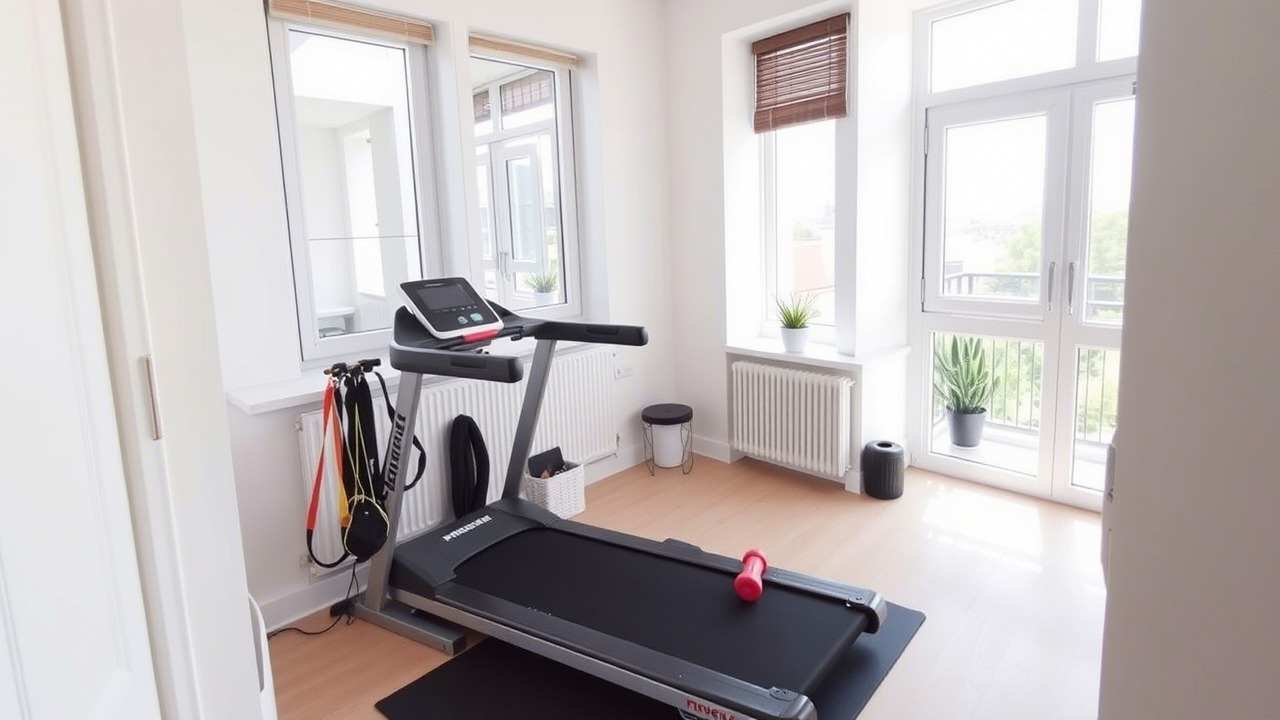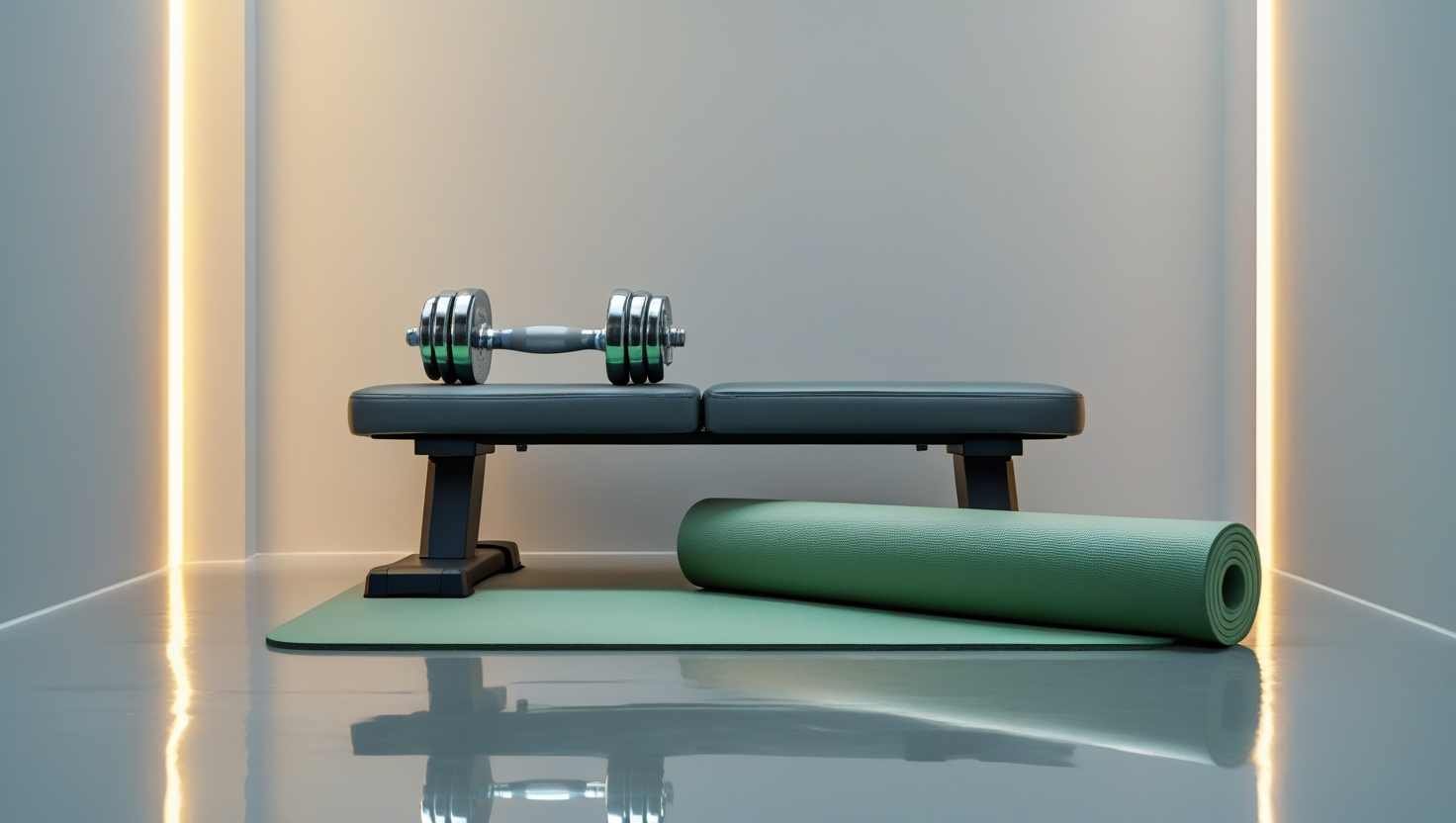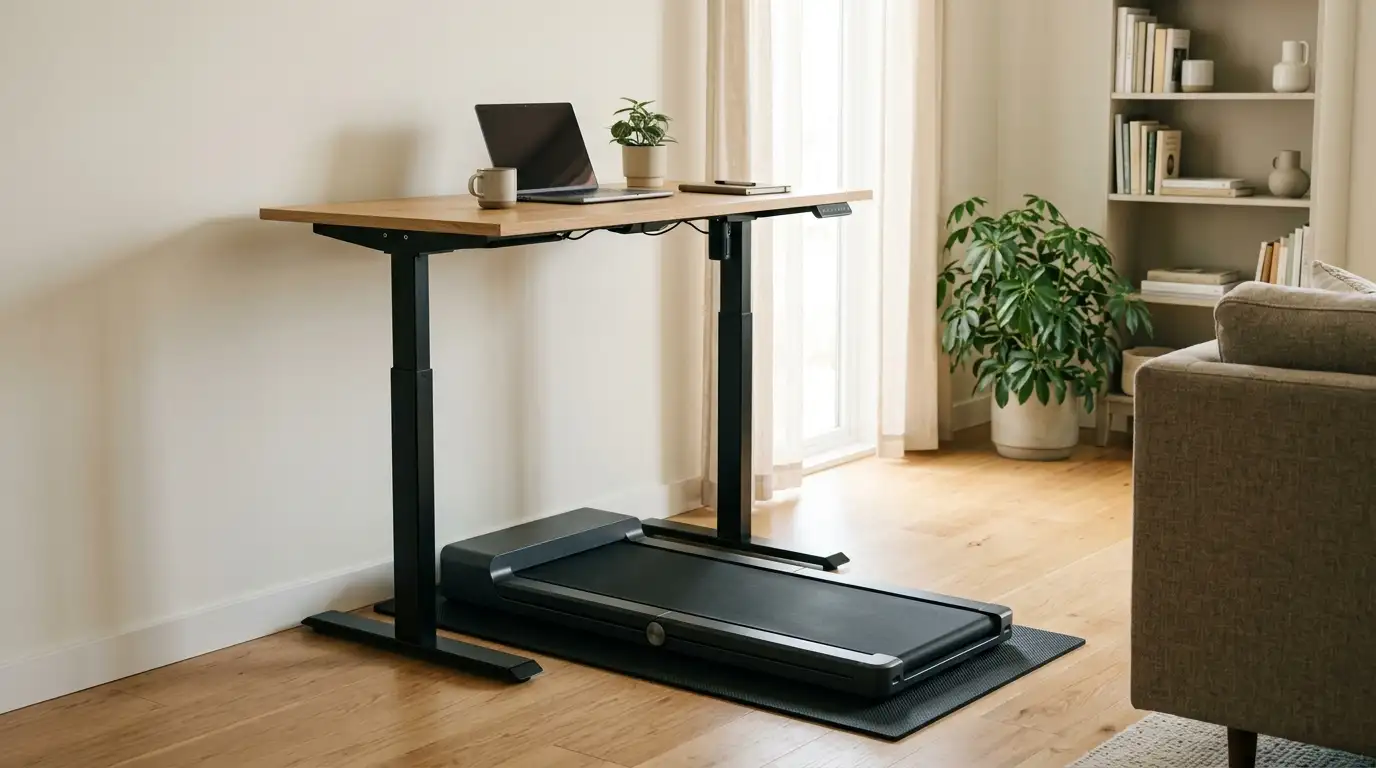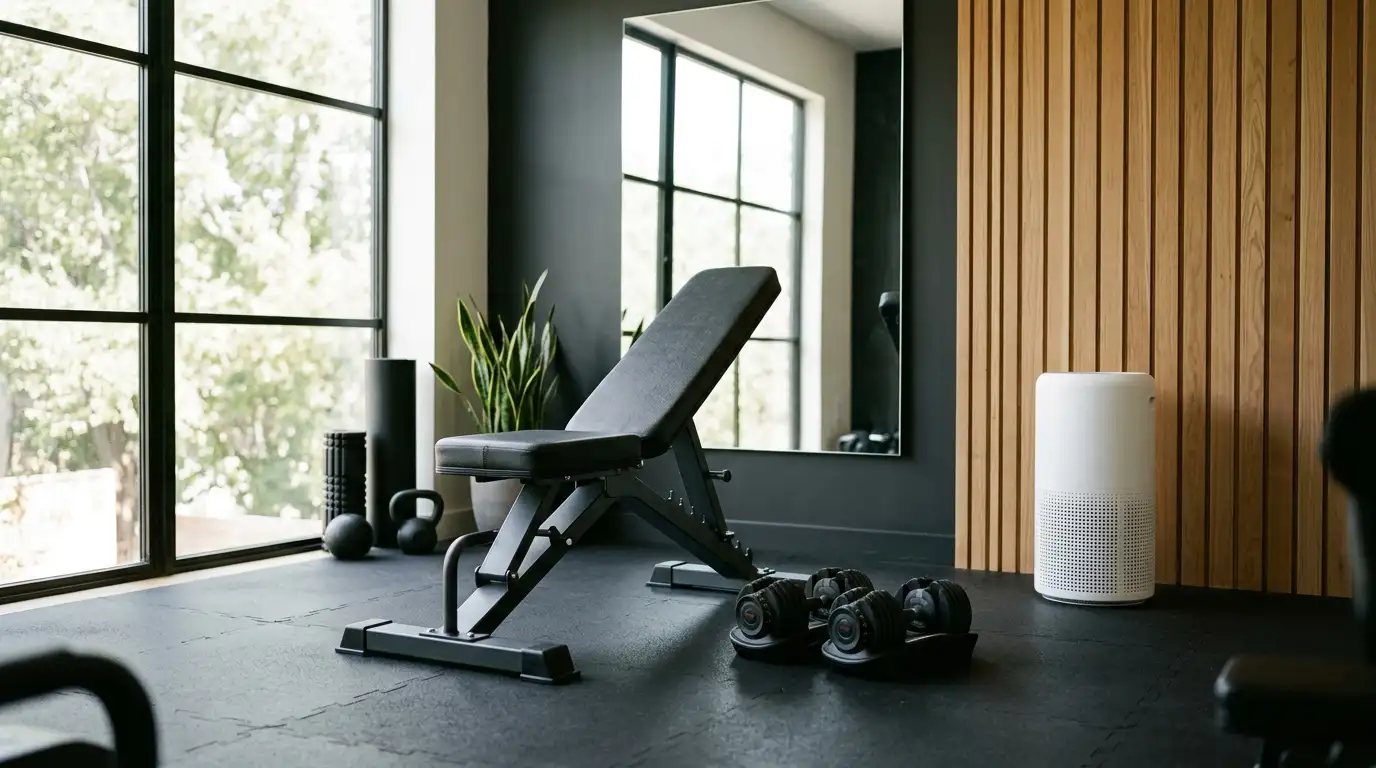
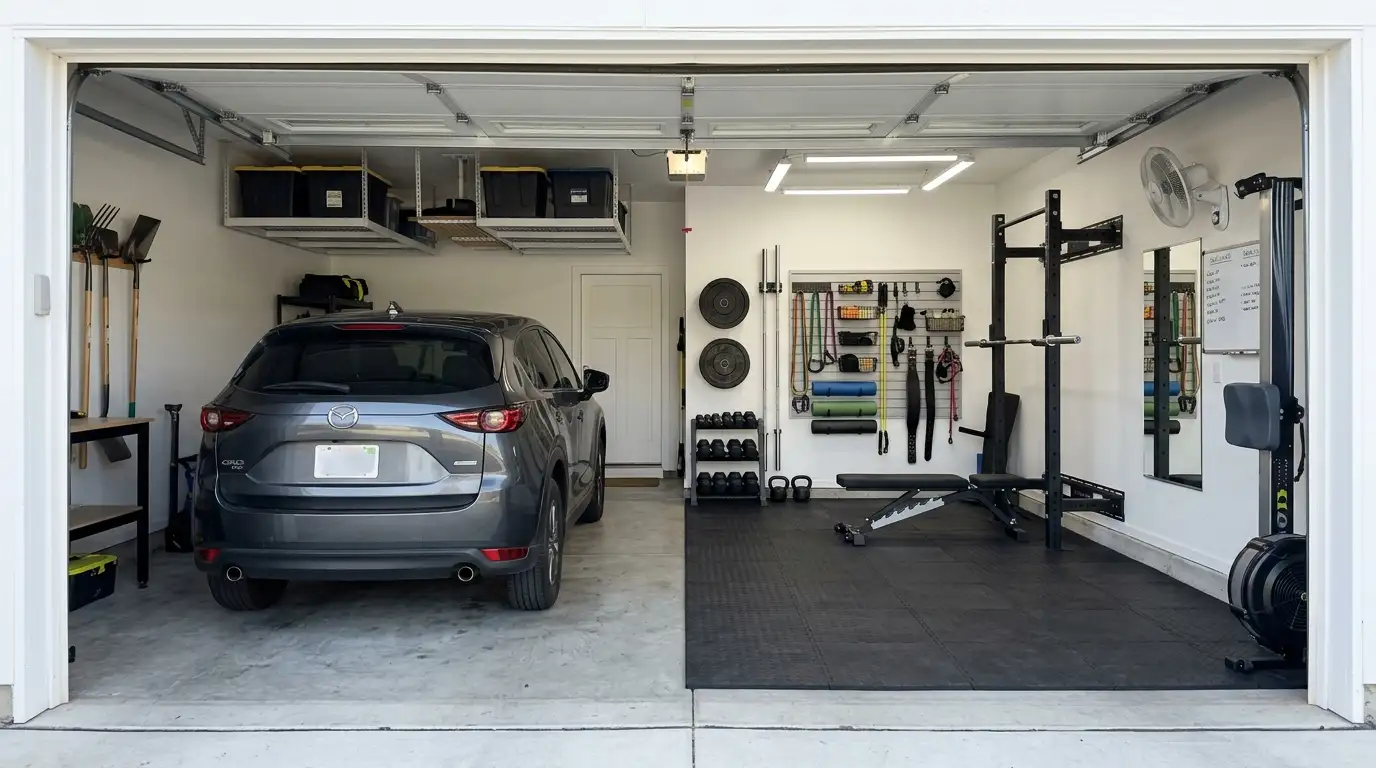

The best half garage gym ideas combine a clearly marked workout zone, compact equipment, and vertical storage so you can train at home while keeping space for your car. Start by measuring the garage with the vehicle parked, then choose equipment that fits your workouts and can be stored safely when you’re finished.
A half garage gym works best when the parking area, workout zone, and storage area have defined boundaries. Use a folding wall-mounted rack for barbell training, adjustable dumbbells for flexible strength workouts, and rubber flooring beneath lifting equipment. Store accessories on the wall, keep overhead storage clear of moving garage-door hardware, and plan lighting and ventilation before installing heavy equipment.
Table of Contents
1. Plan a 50/50 Garage Gym Layout
The most effective half garage gym layout starts with measurements rather than equipment purchases. Reserve enough room for the parked vehicle, open doors, safe walking routes, and the movements you intend to perform.
A two-car garage may allow one bay for training and the other for parking, but actual usable space varies with the building, vehicle size, door tracks, and existing storage.
Measure before dividing the space
Park your car in its normal position and measure the remaining usable area. Record the following:
- The vehicle’s width, including mirrors, and the space needed to open its doors.
- The distance between the car and the proposed gym equipment.
- The available floor area for lifting, stretching, and moving a bench.
- Ceiling height and the position of garage-door tracks and the opener.
- Access to the house door, electrical panels, and other essential routes.
Use painter’s tape to mark the proposed gym boundary. Walk through your normal workout movements inside that outline before buying equipment. Include room for loading weight plates, positioning a bench, and returning equipment to storage.
Suggested image: An annotated overhead floor plan showing a parked car, separate workout zone, equipment footprint, and clear walking route.
Choose a layout that suits your garage
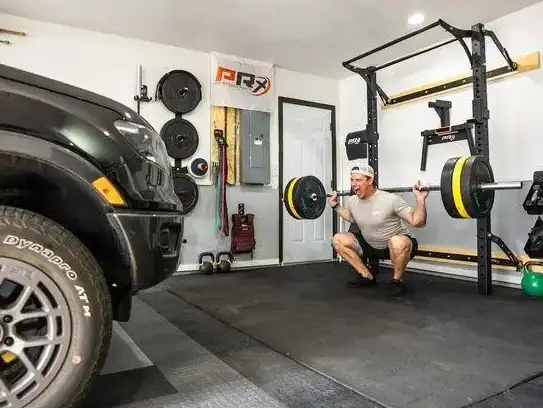
Layout A: One bay for the gym
Best for a two-car garage
Place a rack against the side or back wall of one bay. Keep the other bay available for parking and household use. Store plates and accessories within the workout zone.
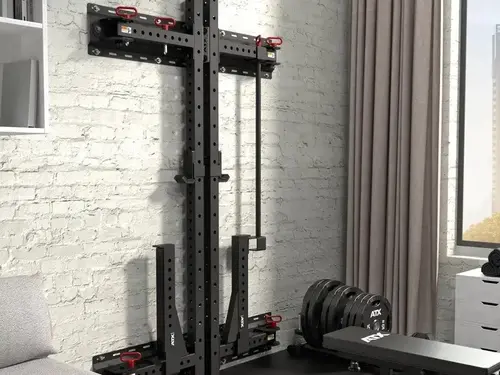
Layout B: A compact wall-mounted gym
Best for narrow spaces
Install a suitable folding rack on a structurally sound wall. Pair it with adjustable dumbbells and a folding bench to reduce the space occupied between workouts.
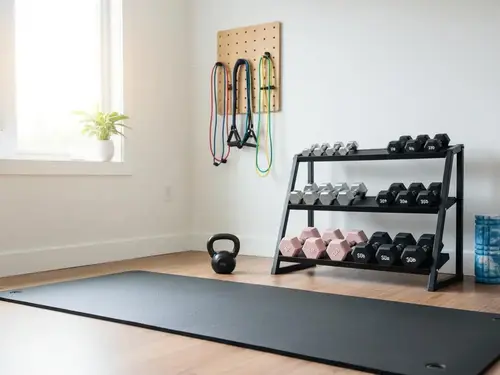
Layout C: A strength and mobility corner
Best for simple training routines
Use a mat, adjustable dumbbells, kettlebells, and resistance bands. This arrangement works well for strength circuits, mobility work, and bodyweight exercises without a permanent rack.
Use flooring to define the workout area
Rubber flooring creates a clear visual boundary between the gym and the parking area. It can also help protect the concrete and reduce impact from ordinary equipment use, depending on the material and thickness.
| Flooring option | Best use | Main consideration |
|---|---|---|
| Interlocking rubber tiles | Modular workout zones | Check tile stability, thickness, and compatibility with the floor |
| Heavy-duty rubber mats | Dumbbell and strength-training areas | Heavy mats can be difficult to move; check odor and material suitability |
| Epoxy-coated concrete | Easy-to-clean garage surfaces | Provides a finished surface but little cushioning on its own |
| Plywood and rubber lifting platform | A dedicated lifting station | Requires careful sizing and stable construction |
Keep the flooring edge out of the vehicle’s tire path if the material could shift or create a trip hazard. For heavy barbell lifting, choose a floor system designed for the intended load and impact.
2. Choose Compact Equipment for a Half Garage Gym
A compact garage gym can support effective strength training with a small selection of versatile equipment. Prioritize items that cover several exercises and have a defined storage location.
Wall-mounted folding power racks
A folding rack is useful when you want barbell exercises but need to reclaim floor space after training. The rack attaches to a suitable wall structure and folds toward the wall when not in use.
For a real example, Rogue Fitness lists its R-3W Fold Back Wall Mount Rack in 20.5-inch and 40.5-inch inside-depth configurations. These are product-specific dimensions, not a universal standard for folding racks. Check the exact model’s open and folded dimensions before purchasing. (Manufacturer specifications)
Before installing a rack, verify the wall construction, fasteners, manufacturer instructions, ceiling clearance, and the space required for a barbell and weight plates. Have a qualified installer assess the mounting if you are uncertain about the wall’s capacity.
Adjustable dumbbells and kettlebells
Adjustable dumbbells let you change resistance without filling the garage with multiple pairs of fixed-weight dumbbells. A small selection of kettlebells can complement them for swings, carries, squats, and conditioning exercises.
Choose a weight range that suits your current training and likely progression. Check the storage stand’s footprint, total loaded weight, and whether the dumbbells can be placed on and removed without hitting a wall or vehicle.
Folding benches and compact accessories
A folding or vertically storable bench helps free the training floor between sessions. Resistance bands, jump ropes, collars, and mobility tools can hang on a wall-mounted organizer.
A practical starter setup might include:
- Adjustable dumbbells.
- A stable adjustable or flat bench.
- Resistance bands and an exercise mat.
- A kettlebell suited to your training.
- A compact rack if barbell exercises are a priority.
You can add a rowing machine, exercise bike, or cable trainer later if the measured layout accommodates it. Measure each machine in its operating and storage positions, including any space needed to mount, dismount, or move it.
Compare equipment by space and purpose
| Equipment | Space-saving benefit | Best for |
|---|---|---|
| Folding wall rack | Folds toward the wall | Barbell strength training |
| Adjustable dumbbells | Multiple weights in one set | General strength training |
| Kettlebells | Simple storage on a shelf or floor stand | Carries, swings, and circuits |
| Folding bench | Can be stored upright if designed for it | Presses and supported exercises |
| Resistance bands | Hang on hooks or a compact organizer | Warm-ups, mobility, and accessory work |
| Compact cardio machine | Some models store upright or roll | Indoor cardio when floor space allows |
The right equipment depends on the exercises you actually perform. A power rack is valuable for barbell training, while dumbbells and bands may be a more practical choice for a mixed routine in a narrow garage.
3. Use Vertical Storage to Free Up Floor Space
Vertical storage keeps weights, accessories, and household items off the workout floor. In a half garage gym, the best storage system places frequently used gym equipment near the training station while keeping bulky seasonal items away from the lifting area.
Install overhead ceiling racks for seasonal storage
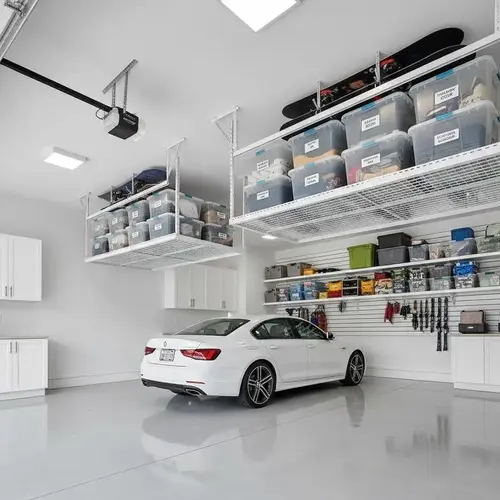
Overhead racks can hold suitable seasonal household items, such as lightweight decorations and storage bins, leaving the floor available for exercise. They are most useful when installed outside the barbell’s overhead movement area and away from garage-door tracks and the opener.
Before installation, check the rack’s rated capacity, the weight of the stored items, ceiling framing, fasteners, and the manufacturer’s mounting requirements. Never assume drywall or an arbitrary ceiling point can support a loaded rack.
The US Consumer Product Safety Commission has published recall notices for overhead garage storage racks that presented falling-object hazards. Review the CPSC’s overhead storage rack recall information and check the exact model you own before loading it.
Use slatwalls and pegboards for smaller equipment
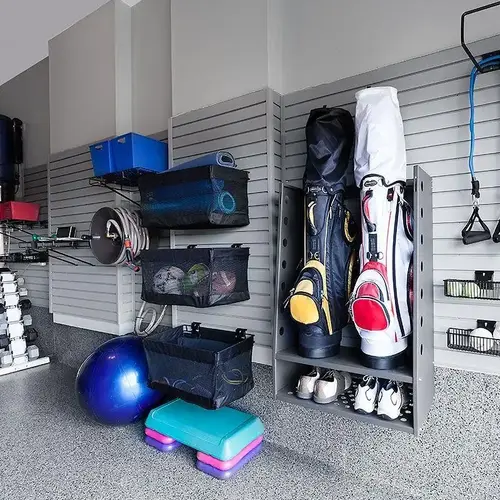
Slatwalls and heavy-duty pegboards make small accessories easier to find and return. Use suitable hooks for resistance bands, jump ropes, belts, collars, and other lightweight items.
Keep heavier equipment on purpose-built racks or shelves rated for its load. A general-purpose pegboard should not be treated as a weight-plate or barbell holder unless the complete system is specifically designed for that use.
Store weight plates and barbells securely
Place plate storage close enough to the rack to make loading convenient, while leaving room for your stance and movement. Vertical barbell holders can reduce floor clutter, provided they are designed for the bar and installed correctly.
Keep loose plates off the floor, where they can become trip hazards or roll into the parking lane. Return equipment to its assigned storage location after each session.
A useful rule: Every piece of equipment should have a designated storage location that remains clear of the car, walking route, and garage-door mechanism.
4. Improve Garage Gym Lighting and Ventilation
Good lighting and suitable airflow make a garage gym more comfortable to use. Plan both before finalizing equipment placement, particularly if the garage has limited windows or doubles as a vehicle and household storage area.
Choose bright, even lighting
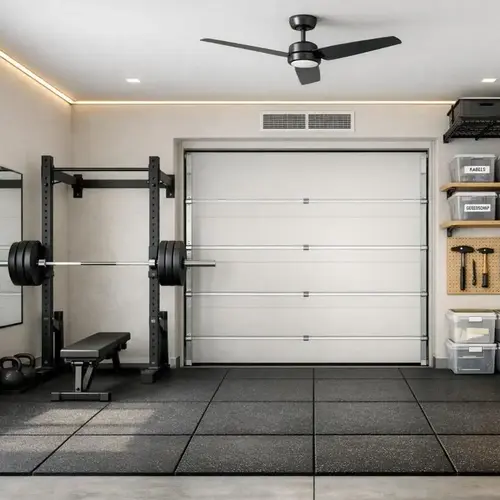
Use evenly distributed lighting so you can see the floor, weights, rack attachments, and equipment controls clearly. Position fixtures to reduce glare in mirrors and avoid shadows across the main lifting area.
Check fixture clearance against the garage door’s full travel and any overhead rack. If adding outlets, hardwired lights, or new circuits, use properly rated equipment and a qualified electrician where needed.
Plan airflow and temperature control
A fan can improve air movement during workouts, and opening a suitable exterior door or window may help when outdoor conditions allow. However, ordinary fans do not remove every pollutant or replace an appropriate ventilation system.
An attached garage needs particular care because pollutants can move between the garage and living areas. The US Environmental Protection Agency discusses garage ventilation and indoor air quality in its Indoor airPLUS guidance.
Never run a car or truck inside an attached garage, even with the garage door open. The CDC warns that vehicle exhaust can cause carbon monoxide poisoning. See the CDC’s carbon monoxide safety guidance.
For temperature control, consider insulation, suitable weather sealing, and equipment designed for garage conditions. Follow the heater manufacturer’s instructions, keep heat sources away from combustible storage, and never use outdoor combustion appliances indoors.
Common Half Garage Gym Planning Mistakes
Avoid these mistakes when setting up a shared garage:
- Buying equipment before measuring: Confirm the footprint, operating clearance, and storage position first.
- Blocking the vehicle’s door swing: Test the car’s actual parking position and door clearance.
- Ignoring barbell loading space: Allow room to load plates and move safely around the rack.
- Mounting equipment to unsuitable framing: Follow the rack manufacturer’s mounting specifications and verify the supporting structure.
- Overloading ceiling storage: Check load ratings, installation requirements, and applicable recalls.
- Treating a fan as complete ventilation: Address garage pollutants and carbon monoxide risks, especially in attached garages.
- Allowing storage to spread: Keep gym equipment and household items within their designated zones.
Key Takeaways
- A half garage gym works best when parking, training, storage, and walking zones are planned before equipment is purchased.
- Folding racks and adjustable dumbbells help reduce the number of separate items occupying the floor.
- Rubber flooring can cushion the workout area, while epoxy is primarily a concrete floor coating.
- Wall-mounted organizers keep lightweight accessories accessible and reduce floor clutter.
- Overhead storage requires appropriate structural support, secure installation, and attention to product recalls.
- Garage ventilation deserves special attention in attached homes because vehicle exhaust can enter living spaces.
- Every piece of gym equipment needs enough operating clearance and a safe storage position.
Explore: Garage Gym Ideas on a Budget: Save on Setup For more garage gym inspiration
Frequently Asked Questions
How much space do you need for a half garage gym?
The available space depends on your garage and vehicle. One bay of a two-car garage may accommodate a rack, bench, and dumbbells, while a narrow garage may suit a wall-mounted rack or a small dumbbell setup. Measure the usable area with the car parked before selecting equipment.
Can you have a gym and park a car in the same garage?
Yes, if the layout allows adequate clearance for the vehicle, equipment, and exercise movements. Mark a boundary between the parking and workout zones, keep equipment out of the car-door swing, and make sure the garage door can operate without obstruction.
What is the best equipment for a small garage gym?
Adjustable dumbbells, resistance bands, a compact bench, and a mat are useful for general training. A folding wall rack is worth considering if barbell exercises are a priority and the wall can safely support the installation.
Is rubber flooring better than epoxy for a garage gym?
Rubber flooring generally provides more cushioning beneath weights and exercise equipment, while epoxy creates a finished, easy-to-clean concrete surface. The best choice depends on your training, floor condition, and impact requirements. Epoxy alone does not provide the cushioning of rubber.
How do you ventilate a garage gym?
Airflow can be improved through suitable exterior openings or a properly designed ventilation system. Attached garages require particular care because vehicle exhaust and other pollutants can enter living areas. Never idle a vehicle in an attached garage, even with the main door open.
Are overhead storage racks safe for a garage gym?
They can be suitable when correctly selected, installed, and loaded within their rated limits. Verify the ceiling structure, fasteners, load rating, garage-door clearance, and any applicable product recalls. Keep heavy or frequently used gym equipment in storage designed specifically for that purpose.
Sources
- Rogue Fitness: R-3W Fold Back Wall Mount Rack — rack dimensions and configuration.
- U.S. Consumer Product Safety Commission: SafeRacks and Monsterrax recall — overhead rack safety.
- U.S. Environmental Protection Agency: Garage ventilation guidance — attached-garage ventilation.
- Centers for Disease Control and Prevention: Carbon monoxide safety — vehicle exhaust hazards.