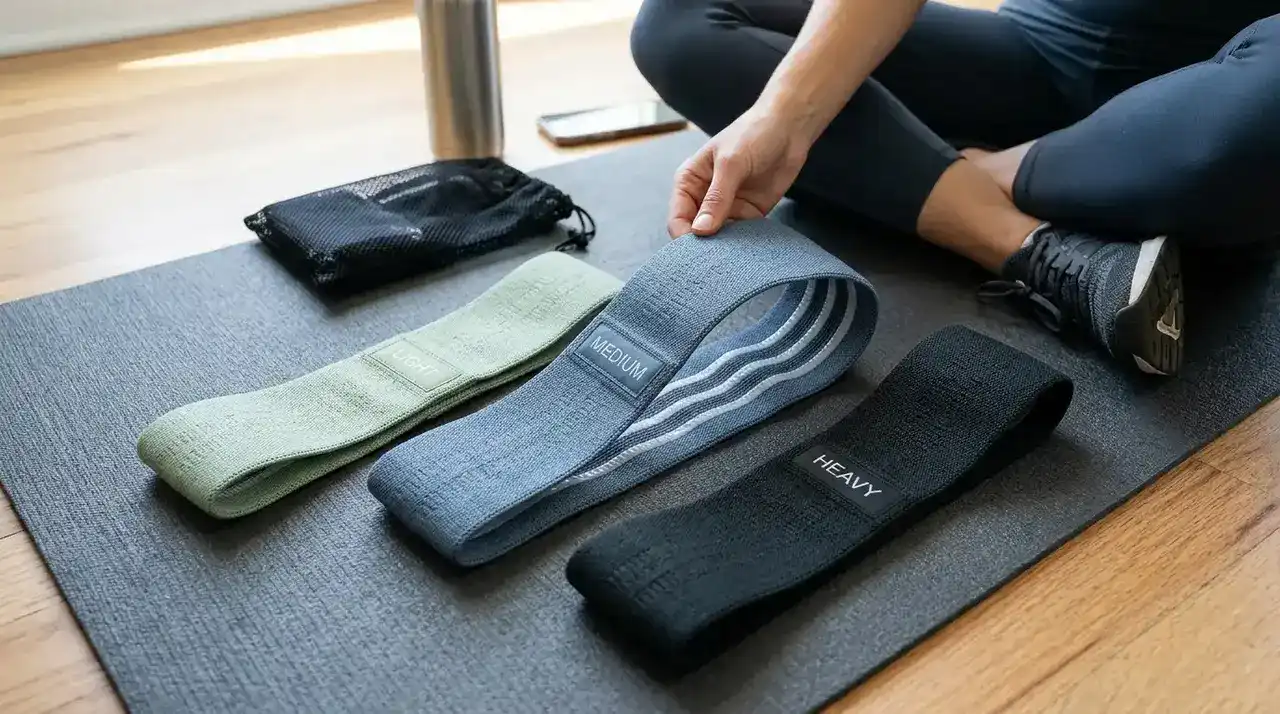

Quick Answer: Which Fabric Glute Bands Should You Choose?
The best fabric glute resistance bands for your workouts should offer a comfortable fit, suitable resistance, secure stitching and enough grip to stay in position during controlled movements. Arena Strength offers a documented three-band set with light, medium and heavy resistance. TeRich and Walito are additional candidates to compare, but their exact specifications need verification before a product recommendation can be confirmed.
Table of Contents
Best Fabric Glute Resistance Bands Compared
Fabric glute bands are short, wide elastic loops worn around the thighs or legs to add resistance to lower-body exercises. They are useful for glute bridges, squats, lateral walks, clamshells and hip-abduction movements.
The three products below are candidates for different buying priorities. The available evidence is stronger for Arena Strength than for the other two products, so the comparison distinguishes confirmed listing information from details that still need checking.
| Product | Potential advantage | Resistance options | Best for |
|---|---|---|---|
| Arena Strength Fabric Booty Bands | Three clearly differentiated resistance levels and included workout resources | Light, medium, heavy | Buyers wanting a documented set |
| TeRich Resistance Bands for Legs and Butt | Candidate for shoppers seeking fabric loops with anti-roll construction | [VERIFY exact options] | Buyers comparing fit and grip |
| Walito Fabric Resistance Loop Bands | Candidate for glute activation and lower-body warm-ups | [VERIFY exact options] | Buyers comparing cloth loop sets |
Important: Product availability, specifications and current Amazon listings can change. Confirm the exact model, included items, materials and resistance labels before buying.
1. Arena Strength Fabric Booty Bands: Best Starting Point for a Three-Level Set
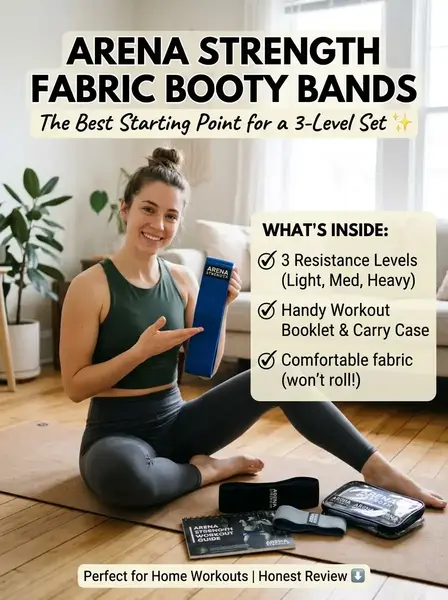
Arena Strength’s official product page lists three fabric booty bands in light, medium and heavy resistance. The set includes a workout booklet and carry case, and the manufacturer lists a one-year warranty. Its published product information also describes a cotton outer fabric and an elastic latex component, so the bands are not suitable for anyone who needs to avoid latex contact without further confirmation of an alternative product.
Key specifications
- Set: Three fabric loop bands
- Resistance: Light, medium and heavy
- Included extras: Workout booklet and carry case
- Construction: Fabric exterior with elastic latex component, according to the manufacturer
- Warranty: One year, according to the official listing
- Care: Hand wash and air-dry away from direct sunlight, following manufacturer guidance
Pros
- Three resistance levels allow you to adjust the challenge between exercises.
- The set includes workout resources for exercise selection.
- The carry case makes storage and transport easier.
- The manufacturer provides published care and warranty information.
Cons
- Latex is part of the listed construction, which matters for people with latex allergies.
- Three resistance levels do not guarantee the right fit for every leg circumference.
- Claims about never rolling or breaking are manufacturer marketing claims, not a guarantee of performance for every user.
Best for: Home exercisers who want multiple resistance levels in one purchase.
Skip it if: You need a verified latex-free band or cannot find a comfortable fit with the available sizing.
2. TeRich Resistance Bands for Legs and Butt: Check the Anti-Roll Design
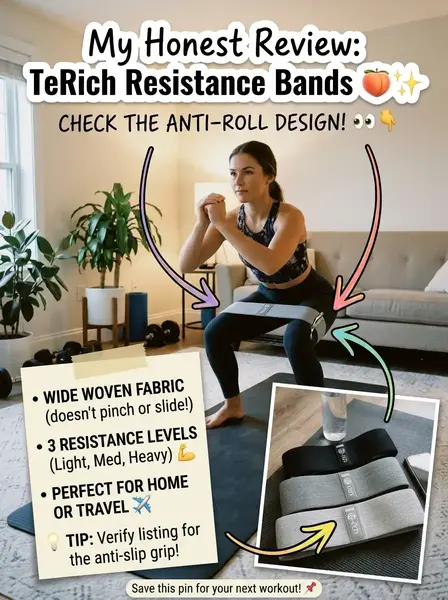
TeRich Resistance Bands for Legs and Butt are a candidate for shoppers comparing fabric loop bands for glute and thigh exercises. Before recommending this set, verify the exact listing and whether the product uses a wide woven loop, an internal grip surface, reinforced seams or other features intended to help keep the band in place.
Specifications to verify
- Number of bands included
- Resistance levels and how they are labeled
- Fabric composition and elastic core
- Band width and loop circumference
- Care instructions and warranty
- Whether the listing provides a carry bag or workout guide
Potential advantages
- A fabric loop format may appeal to shoppers who find narrow rubber loops uncomfortable.
- A multi-band set may provide options for different exercises, if multiple resistance levels are confirmed.
- A well-fitting loop can be convenient for home training and travel.
Potential limitations
- The exact TeRich listing and its specifications have not been independently confirmed in the research for this article.
- Anti-roll performance should not be assumed from the product name alone.
- Resistance labels are not standardized across manufacturers, so comparisons with other brands require care.
Best for: Shoppers who can verify the product’s construction, fit and resistance options before purchase.
Skip it if: The listing does not clearly identify resistance levels, materials or dimensions.
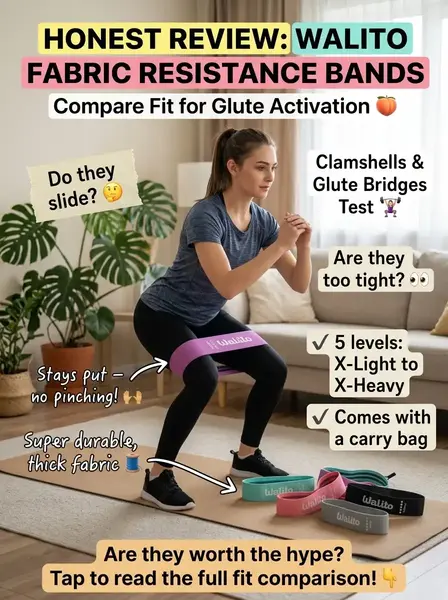
3. Walito Fabric Resistance Loop Bands: Compare Fit for Glute Activation
Walito Fabric Resistance Loop Bands are another candidate for lower-body training. For glute bridges, clamshells and lateral walks, the most useful buying details are the band’s circumference, width, resistance, stitching and ability to remain comfortable throughout the movement.
Specifications to verify
- Exact product name and number of loops
- Fabric and elastic materials
- Resistance labels and intended uses
- Dimensions and sizing information
- Washing instructions
- Warranty and included accessories
Potential advantages
- The loop format is convenient for exercises that require resistance around both legs.
- A set with clearly differentiated levels can accommodate different movements, provided the options are confirmed.
- Fabric construction may suit shoppers who prefer a wider band against the skin.
Potential limitations
- Exact Walito specifications have not been verified against a confirmed manufacturer listing.
- Comfort and grip depend on fit and construction, not fabric alone.
- A band that is too tight may restrict movement, while a loose band may slide or provide insufficient resistance.
Best for: Buyers comparing fabric loops for warm-ups and accessory exercises who can verify the precise listing.
Skip it if: The seller does not provide enough information to evaluate sizing, resistance or materials.
What Is a Glute Band?
A glute band is an elastic resistance loop used to make selected lower-body movements more demanding. A fabric glute band usually combines woven fabric with elastic fibers and is designed to sit around the thighs or legs.
The band resists as you move your legs apart or maintain tension during a squat, bridge or lateral walk. These movements can challenge the gluteal muscles and other muscles involved in hip movement.
Fabric glute bands are commonly used for:
- Glute bridges and hip thrust variations
- Bodyweight squats and split squats
- Lateral walks and monster walks
- Clamshells and standing hip abductions
- Warm-ups before lower-body strength sessions
A resistance band is an accessory rather than a complete strength-training program. You can use it to add challenge to bodyweight exercises, but your training should progress as your strength and control improve.
Fabric vs. Latex Glute Bands: Which Should You Choose?
Fabric and latex bands can both provide resistance for lower-body exercises. The better option depends on the movement, the band’s fit, your comfort preferences and any material sensitivities.
| Feature | Fabric loop bands | Thin latex or rubber loops |
|---|---|---|
| Feel against skin | Often wider and more textile-like | Usually narrower and more rubber-like |
| Stretch | Depends on the fabric and elastic construction | Depends on rubber formulation and thickness |
| Rolling | Fit, width and grip design affect performance | Thin loops may roll or fold during some movements |
| Resistance | Varies by model and construction | Varies by model and construction |
| Cleaning | Follow the specific manufacturer’s instructions | Follow the specific manufacturer’s instructions |
| Material sensitivity | Some fabric bands contain latex internally | Latex bands may pose a concern for people with latex allergies |
| Common use | Lower-body accessory work | Lower-body exercises and other movements, depending on band type |
Are fabric bands better at staying in place?
A wide band with suitable dimensions and a well-designed inner grip may stay in position better for some users than a narrow loop. The result still depends on thigh circumference, placement, exercise technique, clothing and the band’s construction.
Fabric does not automatically mean non-slip. Check the product’s dimensions and grip design, and look for clear return policies if you are unsure about sizing.
Which material is better for beginners?
Beginners can use either material if the resistance and fit are appropriate. Choose a band that lets you complete controlled repetitions without pain, excessive slipping or difficulty maintaining your position.
If you have a latex allergy, check the complete material specification. A fabric exterior does not necessarily mean the elastic core or grip strips are latex-free.
How to Choose the Right Fabric Glute Resistance Band
A suitable band should fit securely, allow the intended range of motion and provide enough resistance to challenge your muscles without disrupting your technique.
1. Check the band’s dimensions
Look for the width and loop circumference rather than relying on labels such as small, medium or large. A wider loop may feel more comfortable against the thighs, while the circumference determines how tightly it sits around your legs.
If the manufacturer does not publish measurements, contact the seller before buying.
2. Choose resistance according to the exercise
A lighter band may work well for warm-ups and movements with a wide stance. A stronger band may suit controlled exercises where you can maintain proper form.
Resistance labels are brand-specific. A heavy band from one company may feel different from a heavy band from another.
3. Inspect stitching and construction
Look for securely finished seams, consistent stitching and clear information about the elastic material. Check the return policy and warranty rather than assuming every fabric band will last indefinitely.
4. Consider comfort and grip
The band should stay in its intended position without pinching, digging into your skin or restricting movement. If you repeatedly need to reposition it, try adjusting the placement or choosing a different circumference.
5. Check care requirements
Some fabric bands can be hand-washed, while other products may have different instructions. Follow the manufacturer’s directions, allow the band to dry fully and inspect it for loose stitching, fraying or changes in elasticity.
Booty Workout With Fabric Bands: A Beginner Routine
A fabric-band workout can target the glutes and supporting hip muscles using a short sequence of controlled movements. Start with a light or moderate resistance that lets you complete each repetition comfortably.
Perform the following routine two or three times through, adjusting the volume to your fitness level.
Exercise 1: Banded Glute Bridges
Suggested starting point: 10–15 repetitions.
- Lie on your back with your knees bent and feet flat on the floor.
- Position the band above your knees.
- Keep your feet stable and gently maintain outward pressure against the band.
- Raise your hips while keeping your ribs controlled and avoiding excessive lower-back arching.
- Lower your hips slowly and repeat.
Keep the movement controlled rather than pushing your knees as far apart as possible.
Exercise 2: Banded Squats
Suggested starting point: 8–12 repetitions.
- Place the band above your knees.
- Stand with your feet at a comfortable width.
- Bend your hips and knees to lower into a squat.
- Maintain a stable foot position and keep your knees tracking in the same general direction as your toes.
- Stand up smoothly.
Reduce the resistance if the band makes it difficult to maintain comfortable knee and hip alignment.
Exercise 3: Lateral Band Walks
Suggested starting point: 8–10 controlled steps in each direction.
- Place the band above your knees or at another position specified by the manufacturer.
- Bend your hips and knees slightly.
- Take a short step sideways while maintaining gentle tension.
- Bring the trailing foot across without letting the band go slack.
- Repeat in the opposite direction.
Use short, controlled steps. Large steps can encourage the band to shift or make it harder to maintain your posture.
Exercise 4: Clamshells
Suggested starting point: 10–15 repetitions per side.
- Lie on your side with your knees bent and your feet together.
- Position the band above your knees.
- Keep your pelvis steady as you lift the top knee.
- Pause briefly, then lower with control.
- Complete the repetitions and switch sides.
Avoid rotating your torso backward to increase the apparent range of motion.
Exercise 5: Standing Hip Abductions
Suggested starting point: 8–12 repetitions per side.
- Place the band above your knees.
- Stand tall and use a wall or sturdy support for balance if needed.
- Move one leg out to the side without leaning your torso.
- Return slowly while maintaining control of the band.
- Switch sides.
Stop if the band causes pain, numbness or discomfort. Increase repetitions or resistance gradually as your control improves.
How to Stop Fabric Glute Bands From Rolling Down
Fabric glute bands can roll, twist or slide if their fit and placement are unsuitable. A few simple checks may help reduce the problem.
- Check the circumference: A loop that is too large may slide, while one that is too small may feel excessively tight.
- Position the band evenly: Flatten twists before starting and make sure the loop sits at the intended height.
- Use controlled movements: Start with smaller steps and a comfortable range of motion.
- Check clothing and grip: Smooth fabric and the band’s inner surface can affect how well the loop stays in place.
- Reduce resistance if needed: A band that makes you compensate or move abruptly may be harder to control.
- Replace damaged bands: Frayed seams, loose elastic and distorted loops are reasons to stop using a band.
If the band repeatedly rolls despite correct placement, consider another size or model with dimensions and grip features better suited to your legs. No construction can guarantee a perfect fit for everyone.
How to Care for Fabric Resistance Bands
Proper care can help maintain a band’s condition. Always follow the product’s own instructions because materials and construction vary.
- Remove dust and sweat after use.
- Hand-wash only when the manufacturer permits it.
- Let the band dry completely before storing it.
- Keep it away from prolonged direct sunlight and excessive heat when recommended.
- Inspect the stitching and elastic before workouts.
- Stop using a band if it develops damaged seams, fraying or unusual loss of resistance.
Avoid stretching the band beyond its intended range or using it in ways the manufacturer does not recommend.
Final Verdict: Which Fabric Glute Resistance Bands Are Worth Comparing?
Arena Strength Fabric Booty Bands are the clearest starting point among these three candidates because the manufacturer publishes information about the three resistance levels, included workout resources, materials and warranty. Its latex component is an important consideration for buyers with latex allergies.
TeRich and Walito remain candidates for comparison, but their exact listings and specifications need verification before they can be recommended on equal footing. For any fabric glute band, prioritize a comfortable circumference, suitable resistance, secure stitching and clear care instructions.
The best choice is the band that fits your legs, stays in place during controlled exercise and provides an appropriate challenge for your training.
Best Resistance Bands and Glute Training Equipment for Every Workout
Resistance bands are a versatile, space-saving addition to any home gym, whether you want full-body strength training, pull-up assistance, or targeted glute workouts. Use these guides to find the right equipment for your training goals.
- Best Resistance Bands: Explore resistance band options for full-body workouts, strength training, and convenient home exercise. Learn how to compare band types, resistance levels, and features before choosing a set.
- Stretch Bands for Pull-Ups: Discover how pull-up assistance bands can help beginners practice proper technique, build pulling strength, and gradually progress toward unassisted pull-ups.
- Glute Drive Bands: Learn how to use glute bands for hip thrusts, squats, glute bridges, lateral walks, and other lower-body exercises, with tips for choosing suitable resistance.
- Fabric Booty Bands: Compare fabric glute bands for lower-body training, focusing on comfort, fit, grip, resistance levels, and exercises that target the glutes and hips.
- Compact Hip Thrust Benches: Find space-conscious equipment options for hip thrusts and glute-focused strength workouts, especially if you’re building a home gym with limited room.
- TheraBands: 7 Must-Know Products: Explore TheraBand products and learn how resistance bands can support mobility work, light resistance exercises, and a variety of fitness routines.
Choose the Right Equipment for Your Goals
For an all-around home workout, start with a versatile resistance band set. If your priority is pull-up progression, choose bands designed for assistance. For targeted glute training, compare fabric booty bands and glute drive bands; if you want a dedicated setup for hip thrusts, explore compact hip thrust benches. Matching your equipment to your goals, available space, and current fitness level can help you build a practical, consistent training routine.
Key Takeaways
- Fabric glute bands add resistance to lower-body accessory exercises.
- Band width, circumference and grip design all affect fit and rolling.
- Arena Strength lists three resistance levels and includes a workout booklet and carry case.
- TeRich and Walito product specifications should be checked against their exact current listings.
- Resistance labels vary between manufacturers.
- Beginners should prioritize comfortable fit and controlled technique.
- Inspect fabric bands regularly and follow the manufacturer’s care instructions.
Frequently Asked Questions
What is a glute band?
A glute band is an elastic loop used to add resistance to lower-body exercises. Fabric glute bands are generally wider than thin rubber loops and are often worn around the thighs for squats, glute bridges, lateral walks and hip-abduction exercises.
Are fabric glute bands better than latex bands?
Fabric bands may feel more comfortable for people who prefer a wider textile surface, and some designs include grip features intended to reduce rolling. Latex or rubber bands may suit other movements and preferences. Fit, construction, resistance and material sensitivity matter more than the label alone.
What exercises can you do with fabric glute bands?
Common options include glute bridges, squats, clamshells, lateral walks, monster walks and standing hip abductions. Choose a resistance level that allows controlled movement and proper technique throughout each repetition.
Which resistance level should beginners use?
Beginners should start with a band that allows comfortable, controlled repetitions. A light or moderate option may be suitable for warm-ups and learning a movement, but the appropriate level depends on the exercise and the band’s actual resistance. Brand labels are not standardized.
Can fabric booty bands help build stronger glutes?
Fabric bands can add resistance to exercises that challenge the glutes and supporting hip muscles. Strength development depends on consistent training, appropriate progression, recovery and nutrition. Bands can contribute to a training program, but they do not guarantee a particular body shape or result.
How do you keep a booty band from rolling down?
Check the loop circumference, flatten any twists, position the band evenly and use controlled movements. If it continues to roll, the size or construction may not suit your body or exercise. Try another model rather than repeatedly pulling a poorly fitting band back into place.
How should you wash fabric glute bands?
Follow the manufacturer’s care instructions. Some fabric bands are hand-washable and should be air-dried away from direct sunlight. Check the seams and elastic regularly, and stop using the band if it becomes damaged.
Editorial note: The product details in this article are based on retrieved manufacturer information where available. No first-hand testing of the three products has been claimed. Confirm product listings, pricing, availability and specifications before publication.