
Indoor cycling has become one of the most convenient ways to improve cardiovascular fitness, build lower-body strength, and maintain an active lifestyle without leaving home. With the best home spin bikes, we can enjoy challenging cycling workouts, follow structured training programs, and exercise whenever our schedules allow.
However, choosing an indoor cycling bike isn’t as simple as selecting the cheapest model or the one with the most features. Resistance systems, flywheel design, frame stability, adjustability, connectivity, and overall riding comfort all influence the experience.
Whether we’re building a dedicated home gym or looking for a compact exercise machine for an apartment, the right spin bike should match our fitness goals, available space, and budget.
In this guide, we’ll explore the most important features to consider, compare different types of indoor cycling bikes, and explain how to choose equipment that delivers a comfortable and effective workout.
Table of Contents
What Makes the Best Home Spin Bikes Worth Buying?
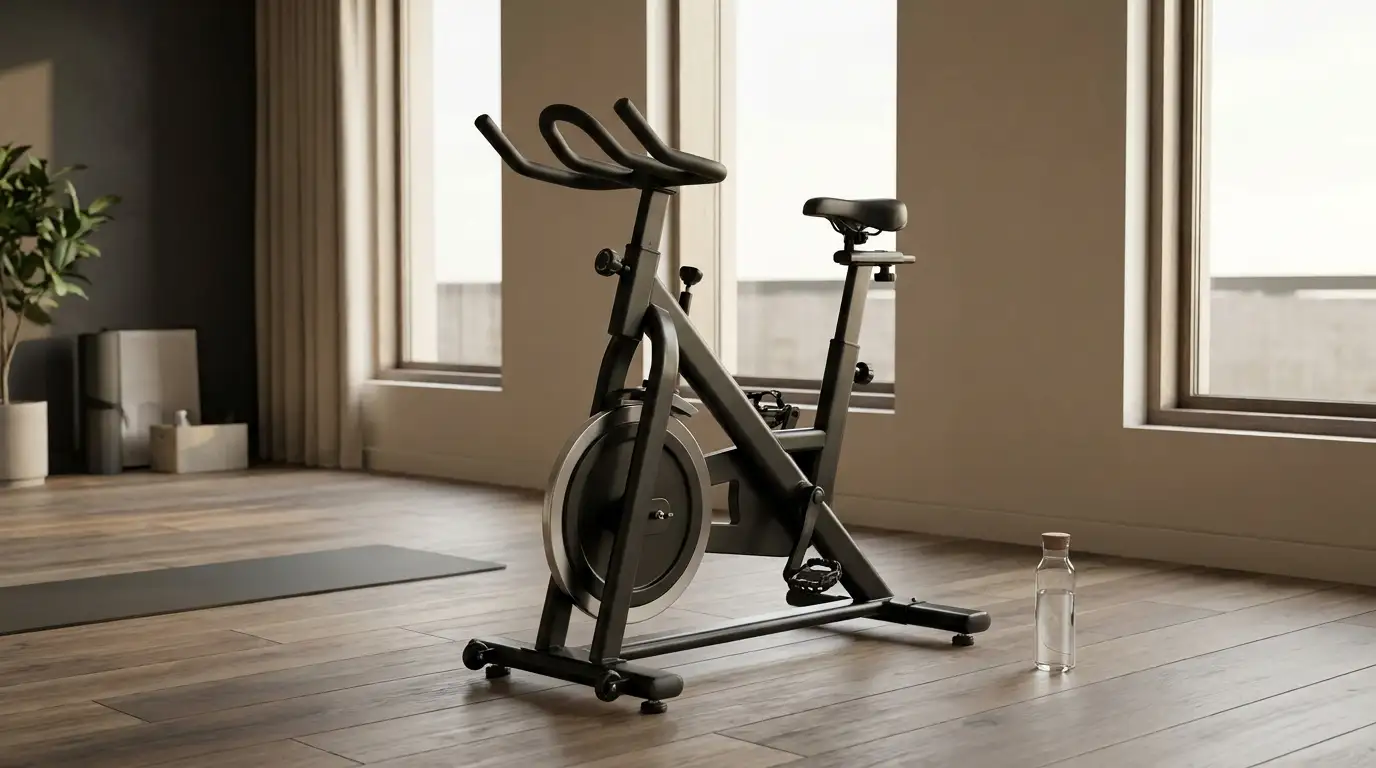
A quality home spin bike should provide a smooth, stable, and adjustable cycling experience. Unlike basic upright exercise bikes, indoor cycling bikes are generally designed to reproduce the riding position and workout intensity of a road bicycle.
They typically feature a heavier flywheel, adjustable resistance, a forward-leaning riding position, and handlebars that support different cycling postures.
Several characteristics separate a good home spin bike from an unreliable model.
1. Smooth and Adjustable Resistance
Resistance determines how challenging each workout feels. The best home spin bikes allow us to increase or decrease resistance gradually, making it easier to move between warm-ups, endurance sessions, hill climbs, and high-intensity intervals.
There are two common resistance systems:
- Magnetic resistance: Uses magnets to control resistance without direct contact with the flywheel. It generally operates quietly and requires relatively little maintenance.
- Friction resistance: Uses a brake pad that presses against the flywheel. It can provide substantial resistance but may produce more noise and require occasional replacement of the friction material.
For most home gyms, magnetic resistance is an excellent choice because of its quiet operation and low-maintenance design.
2. Flywheel Weight and Riding Feel
The flywheel plays an important role in maintaining momentum during cycling.
A heavier flywheel can contribute to a consistent pedaling sensation, although weight alone doesn’t determine overall bike quality. The resistance mechanism, drivetrain, bearings, and frame construction also influence smoothness.
When comparing models, we should consider the complete mechanical design rather than choosing a bike simply because its manufacturer advertises a particularly heavy flywheel.
3. Stable Frame Construction
Frame stability becomes especially important during standing climbs and high-resistance workouts.
A poorly constructed bike may wobble when we increase our pedaling intensity, making workouts uncomfortable and potentially reducing confidence.
Look for:
- A sturdy steel frame.
- A wide and stable base.
- Secure handlebar and seat adjustment mechanisms.
- Reliable pedals and crank arms.
- Appropriate maximum user-weight capacity.
- Adjustable leveling feet for uneven floors.
A well-built frame should remain stable during both seated endurance sessions and demanding standing intervals.
Best Home Spin Bike Features to Compare Before Buying
Not every cyclist needs an expensive connected bike with a large touchscreen. Some people prefer simple mechanical equipment, while others enjoy interactive training programs and performance tracking.
Understanding the differences helps us avoid paying for features we won’t use.
Adjustable Seat and Handlebars
Comfort should be a priority when choosing a home spin bike.
The seat should offer vertical and horizontal adjustments so we can establish an appropriate riding position. Handlebars should also adjust to accommodate different heights and preferred riding postures.
A properly adjusted bike helps us maintain a natural position and avoid unnecessary strain during longer sessions.
Before purchasing, check whether the bike supports:
- Vertical seat adjustment.
- Horizontal seat adjustment.
- Vertical handlebar adjustment.
- Horizontal handlebar adjustment, when available.
- Multiple handlebar grip positions.
These adjustments are particularly important when several household members share the same equipment.
Pedals and Foot Security
Pedals influence both comfort and control.
Many affordable spin bikes include standard toe-cage pedals, while more advanced models may offer dual-sided pedals compatible with cycling shoes.
For regular indoor cycling, secure foot placement is essential.
We should check the pedal design, strap quality, compatibility with cycling shoes, and whether replacement pedals are readily available.
Noise Levels
Noise is an important consideration for people exercising in apartments or shared living spaces.
A magnetic resistance system combined with a belt drive generally offers a quieter experience than a traditional friction-based bike with a chain drive.
However, noise can also come from loose components, poor assembly, worn bearings, and unstable flooring.
If quiet operation is a priority, look for a model with magnetic resistance, a belt-driven transmission, and a solid frame.
Smart Spin Bikes vs. Traditional Indoor Cycling Bikes
One of the biggest decisions is whether to purchase a traditional spin bike or a smart exercise bikes.
Both can deliver effective cardiovascular workouts, but their features and costs differ.
| Feature | Traditional Spin Bike | Smart Spin Bike |
|---|---|---|
| Resistance | Manual or electronic | Manual or electronically controlled |
| Workout tracking | Basic or optional | Usually more advanced |
| Interactive classes | Requires an external device | Often integrated |
| Display | Basic console or none | Larger screen or device compatibility |
| Connectivity | Limited or optional | Bluetooth or Wi-Fi, depending on model |
| Price | Generally lower | Generally higher |
| Maintenance | Usually straightforward | May involve additional electronic components |
Traditional Spin Bikes
Traditional models are suitable for people who prefer straightforward workouts without subscriptions or complicated technology.
They allow us to control resistance manually and follow independent training routines.
Their main advantages include:
- Lower initial purchase costs.
- Simple operation.
- Fewer electronic components.
- No requirement for a paid training subscription.
- Greater flexibility in workout selection.
For beginners and experienced cyclists alike, a traditional exercise bikes can provide an excellent home workout.
Smart Indoor Cycling Bikes
Smart bikes add technology to the indoor cycling experience.
Depending on the model, they may offer Bluetooth connectivity, cadence monitoring, power measurement, interactive classes, and compatibility with third-party fitness applications.
Some connected systems also provide performance data that helps us evaluate progress over time.
However, we should check subscription requirements before purchasing. A bike advertised with interactive classes may require an additional monthly payment to access its full training library.
Popular Home Spin Bike Brands Worth Comparing
Several manufacturers have developed recognizable products in the indoor cycling market. Comparing their equipment can help narrow down the most suitable options.
1. Peloton
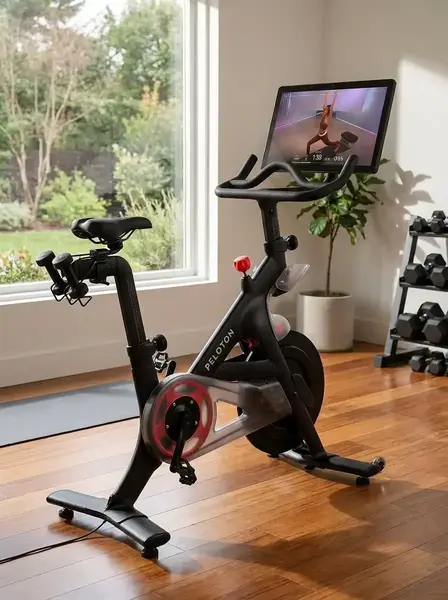
Peloton is well known for its connected indoor cycling experience.
Its bikes combine adjustable resistance, performance tracking, and access to instructor-led workouts through its digital platform.
Best suited for: People who enjoy structured classes, instructor guidance, and a connected fitness community.
The main consideration is the overall cost, including the bike and any subscription required for preferred features.
2. Schwinn
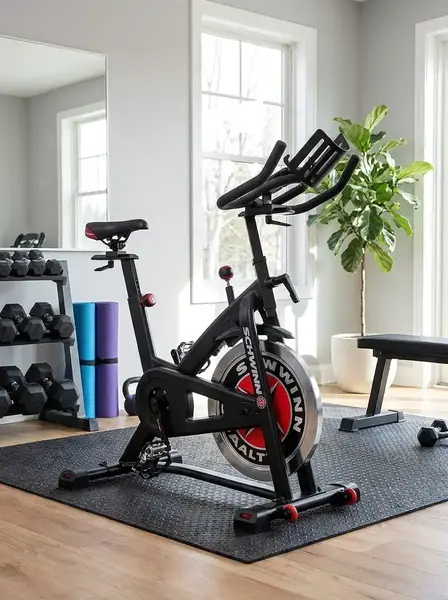
Schwinn offers indoor cycling bikes designed for home fitness.
Depending on the model, buyers can find adjustable resistance, multiple riding positions, and compatibility with fitness applications.
Best suited for: Home gym owners looking for established indoor cycling equipment across different price categories.
3. NordicTrack
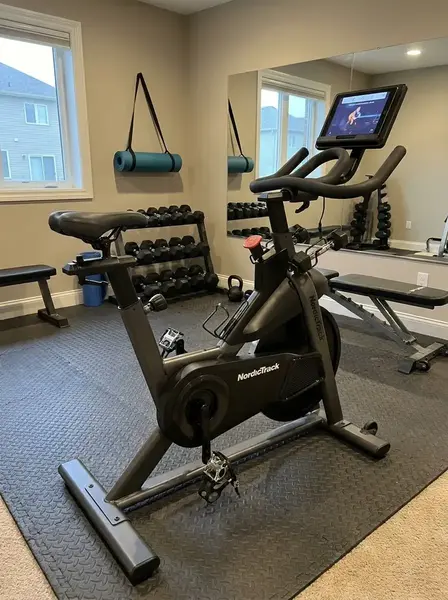
NordicTrack is another recognizable name in connected home fitness.
Its cycling equipment may include touchscreen displays, interactive training features, and electronically controlled resistance, depending on the model.
Best suited for: People who enjoy guided training and technology-supported workouts.
4. Keiser
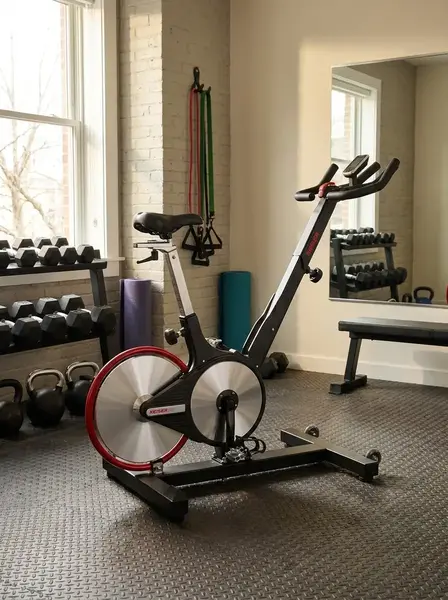
Keiser is known for indoor cycling equipment featuring magnetic resistance and performance-focused design.
Its M3i bike is particularly recognizable among indoor cycling enthusiasts.
Best suited for: Riders who prioritize performance monitoring, smooth resistance adjustment, and durable equipment.
5. YOSUDA
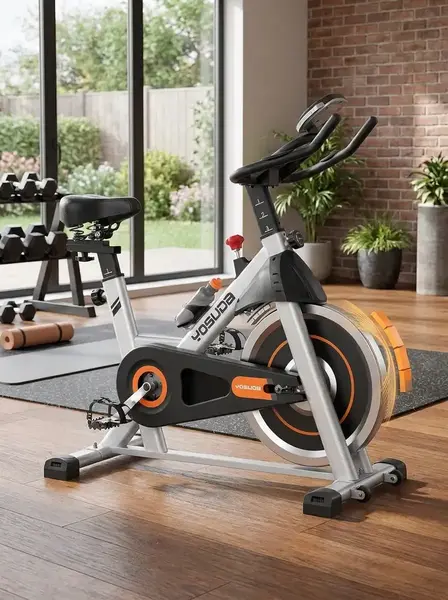
YOSUDA offers budget-oriented indoor cycling equipment.
Some models include adjustable seats, manual resistance, belt-driven systems, and basic digital monitoring.
Best suited for: Beginners and home gym owners who want an affordable entry into indoor cycling.
When comparing these brands, we should always evaluate individual models rather than assuming every bike from a particular manufacturer offers identical features.
How to Choose the Best Home Spin Bike for Your Fitness Goals
The best equipment depends on how we intend to use it.
A beginner looking for occasional cardio exercise has different requirements from an experienced cyclist following demanding interval sessions.
Best Home Spin Bike for Beginners
Beginners should prioritize comfort, stability, and straightforward resistance adjustment.
A complicated touchscreen or extensive collection of advanced metrics isn’t necessary to start building a consistent cycling routine.
Look for:
- A comfortable, adjustable seat.
- Stable frame construction.
- Smooth resistance changes.
- Easy-to-use controls.
- A clear basic display.
- A reasonable warranty.
A simple magnetic-resistance bike can provide everything needed for regular cardiovascular exercise.
Best Home Spin Bike for Weight Management
Indoor cycling can contribute to weight-management goals by increasing physical activity and energy expenditure.
However, results depend on several factors, including workout intensity, duration, consistency, nutrition, and individual energy requirements.
For this purpose, a bike with adjustable resistance and basic workout tracking can be useful.
We should look for equipment that makes it easy to perform different sessions, including:
- Moderate-intensity cycling.
- Longer endurance workouts.
- Short interval sessions.
- Progressive resistance training.
Consistency matters more than purchasing the most expensive machine.
Best Home Spin Bike for Experienced Cyclists
Experienced cyclists may benefit from more advanced performance measurements.
Depending on their training requirements, useful features include:
- Power measurement in watts.
- Cadence monitoring.
- Heart-rate compatibility.
- Bluetooth connectivity.
- Structured interval training.
- Detailed performance history.
These features can help cyclists monitor training intensity and evaluate improvements.
Best Home Spin Bike for Small Apartments
Space can be a major limitation when creating a home gym.
Before purchasing, measure the available floor area and compare it with the bike’s actual dimensions.
Also consider ceiling height, transportation wheels, and the amount of clearance needed for comfortable mounting and dismounting.
A compact model with transportation wheels can make repositioning easier.
We should also consider a protective exercise mat to reduce vibration and protect the floor.
Magnetic vs. Friction Resistance: Which Is Better?
Resistance technology directly affects how a spin bike feels and how much maintenance it requires.
| Category | Magnetic Resistance | Friction Resistance |
|---|---|---|
| Noise | Generally quieter | May produce more noise |
| Maintenance | Relatively low | Brake pads may need replacement |
| Contact | Non-contact resistance | Direct contact with flywheel |
| Adjustment | Manual or electronic | Usually manual |
| Home use | Excellent | Suitable for many budgets |
For most residential environments, magnetic resistance is a practical choice.
Friction resistance remains a viable option for buyers seeking an affordable traditional cycling bike.
The best choice depends on budget, maintenance preferences, and the expected frequency of use.
How Much Should We Spend on a Home Spin Bike?
Home spin bikes are available across several price categories.
Rather than focusing exclusively on price, we should evaluate the features and construction quality offered at each level.
| Price Category | Typical Features | Suitable For |
|---|---|---|
| Budget | Basic display, manual resistance, adjustable seat | Beginners |
| Mid-range | Better stability, magnetic resistance, improved adjustability | Regular home workouts |
| Premium | Advanced monitoring, connectivity, enhanced construction | Frequent cyclists |
| Connected premium | Interactive screens, smart features, training platforms | Technology-focused users |
Prices and specifications vary by country, retailer, and model.
Buyers outside major retail markets should also account for shipping costs, import duties, spare-part availability, and local warranty support.
A moderately priced bike with a reliable frame and comfortable adjustments can be a better investment than an expensive model with features we rarely use.
Essential Accessories for a Better Indoor Cycling Experience
A spin bike is the foundation of an indoor cycling setup, but a few accessories can improve comfort and convenience.
1. Exercise Mat
An exercise mat protects flooring from scratches, sweat, and minor vibrations.
Choose a mat that provides sufficient coverage beneath the bike and doesn’t slide during intense workouts.
2. Padded Cycling Shorts
Cycling shorts with integrated padding can make longer sessions more comfortable.
They are particularly useful for people who are new to indoor cycling and still adjusting to the saddle.
3. Heart Rate Monitor
A compatible heart-rate monitor provides additional information about exercise intensity.
Some spin bikes support Bluetooth or ANT+ connections, while others require an external fitness device or application.
4. Water Bottle and Holder
Keeping water within reach makes hydration more convenient during workouts.
A secure bottle holder is a small feature that can make regular training easier.
5. Fitness Tracker
A compatible fitness tracker can help monitor heart rate, workout duration, and other training information.
However, not every tracker measures cycling performance in the same way, so compatibility should be checked before purchasing.
How to Set Up a Spin Bike Correctly
Correct positioning is essential for comfortable indoor cycling.
An improperly adjusted bike can create unnecessary discomfort and interfere with pedaling mechanics.
Adjust the Seat Height
Stand next to the bike and position the saddle approximately level with your hip bone as an initial reference.
When seated, place your feet on the pedals and check your leg extension at the bottom of the pedal stroke.
Your knee should retain a slight bend rather than locking completely straight.
Adjust the Seat Position
The saddle should be positioned so that you can pedal comfortably without reaching excessively toward the handlebars.
Move it forward or backward in small increments until the position feels natural.
Adjust the Handlebars
The handlebar height should support a comfortable upper-body position.
Beginners often benefit from positioning the handlebars slightly higher to reduce the need to lean forward.
Experienced cyclists may prefer a more aggressive riding position, provided it remains comfortable and controlled.
Check the Pedals
Make sure both pedals are securely installed and the straps or shoe attachments hold your feet comfortably.
Before starting a demanding session, check that all adjustment knobs and locking mechanisms are secure.
Best Home Spin Bike Workouts for Different Fitness Levels
One of the biggest advantages of owning an indoor cycling bike is the flexibility to create different training sessions.
We can alternate between endurance, resistance, and interval workouts depending on our fitness level.
Beginner: 20-Minute Indoor Cycling Workout
| Workout Stage | Duration | Intensity |
|---|---|---|
| Warm-up | 5 minutes | Easy |
| Steady cycling | 8 minutes | Moderate |
| Light recovery | 2 minutes | Easy |
| Steady cycling | 3 minutes | Moderate |
| Cool-down | 2 minutes | Easy |
This session provides a manageable introduction to indoor cycling.
Beginners can reduce the duration or resistance if necessary.
Intermediate: 30-Minute Cycling Workout
| Workout Stage | Duration | Intensity |
|---|---|---|
| Warm-up | 5 minutes | Easy |
| Moderate cycling | 5 minutes | Moderate |
| Faster cycling | 2 minutes | Challenging |
| Recovery | 2 minutes | Easy |
| Repeat interval | 10 minutes | Alternating |
| Cool-down | 6 minutes | Easy |
This workout introduces controlled changes in intensity.
Advanced: 40-Minute Endurance and Interval Session
Experienced riders can combine longer steady-state cycling with shorter high-intensity intervals.
A practical structure includes:
- 8 minutes of gradual warm-up.
- 15 minutes of moderate endurance cycling.
- 8 minutes of alternating higher and lower intensity.
- 5 minutes of controlled resistance cycling.
- 4 minutes of cool-down.
High-intensity intervals should be introduced progressively, with sufficient recovery between demanding sessions.
How to Maintain a Home Spin Bike
Regular maintenance helps preserve performance and reduce the likelihood of unexpected mechanical problems.
Even bikes advertised as low-maintenance require occasional inspection.
After each workout:
- Wipe sweat from the handlebars, seat, and frame.
- Clean the console and touchpoints using manufacturer-approved products.
- Check for visible signs of loose components.
Every few weeks:
- Inspect pedals and adjustment knobs.
- Check the bike’s stability.
- Examine the belt or drivetrain for unusual sounds.
- Inspect the seat and handlebar locking mechanisms.
According to the manufacturer’s maintenance schedule:
- Tighten specified fasteners.
- Lubricate components when required.
- Replace worn parts.
- Check bearings and drivetrain components.
Avoid applying lubricants to magnetic resistance components or other areas where the manufacturer prohibits them.
Common Mistakes to Avoid When Buying a Spin Bike
Even an attractive deal can become a disappointing purchase if important details are overlooked.
Here are some common mistakes worth avoiding.
- Choosing based on flywheel weight alone: A heavy flywheel doesn’t automatically guarantee a better riding experience. The complete mechanical design matters.
- Ignoring maximum user weight: Always check the manufacturer’s stated capacity and choose a suitable model.
- Overlooking adjustability: A bike that doesn’t fit your body dimensions can become uncomfortable during regular use.
- Paying for unnecessary subscriptions: Connected training platforms can add ongoing expenses. Check which features remain available without a subscription.
- Ignoring replacement parts: Pedals, seats, belts, and other components may eventually require replacement. Check availability before purchasing.
- Failing to measure available space: A bike should fit comfortably within the workout area, with enough clearance around it.
Frequently Asked Questions About the Best Home Spin Bikes
Are spin bikes good for home workouts?
Yes. Spin bikes provide convenient cardiovascular exercise and allow users to adjust workout intensity according to their fitness levels.
They can support endurance training, interval sessions, and general physical activity without requiring outdoor cycling.
Is a magnetic spin bike better than a friction spin bike?
Magnetic resistance is generally preferable for people who want quieter operation and less routine maintenance.
Friction resistance can still be a practical and affordable option for traditional indoor cycling.
How long should we ride a spin bike?
Workout duration depends on fitness level and training goals.
Beginners can start with 15–20 minutes of comfortable cycling and gradually increase the duration as their endurance improves.
More experienced riders may prefer sessions lasting 30–60 minutes.
Can a home spin bike help with weight loss?
Indoor cycling can support weight management by increasing daily energy expenditure.
However, sustainable results depend on consistent physical activity, appropriate nutrition, recovery, and individual circumstances.
Do we need a smart spin bike?
No. A traditional indoor cycling bike can provide effective workouts without an internet connection or paid subscription.
Smart features are useful for people who enjoy interactive classes, structured training programs, and detailed performance tracking.
What is the best resistance system for apartment use?
Magnetic resistance is generally a good choice because it operates quietly.
A belt-driven bike with a stable frame can further improve the experience in shared living spaces.
Are expensive spin bikes worth the money?
Premium bikes may offer better connectivity, advanced performance measurements, improved construction, and additional comfort features.
However, a moderately priced bike can provide excellent value if it meets our training needs.
Final Thoughts: Choosing the Best Home Spin Bike
Finding the best home spin bikes means looking beyond brand recognition and marketing claims.
The right model should combine a stable frame, smooth resistance, comfortable adjustability, dependable pedals, and features that support our preferred workout style.
For beginners, a straightforward magnetic-resistance bike may provide everything needed to establish a regular cycling routine. More experienced riders may benefit from advanced performance monitoring, connectivity, and structured training features.
Before making a purchase, compare the actual specifications, available warranties, replacement parts, and total ownership costs.
Most importantly, choose a bike that makes exercising convenient and enjoyable. A well-selected indoor cycling bike can become a valuable part of a home gym, helping us maintain consistent training habits and work toward long-term fitness goals.