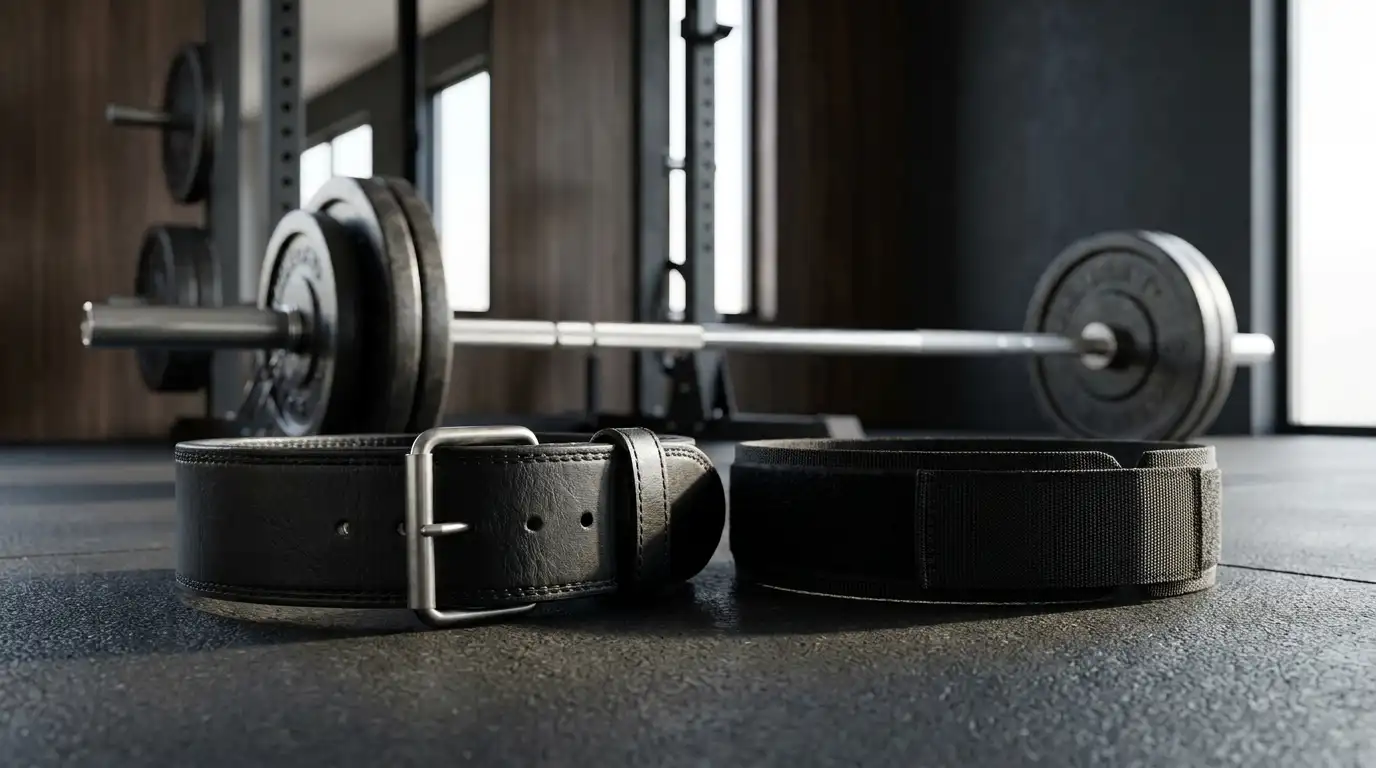

Most home gym inspiration looks the same: a rack, a rusty barbell, rubber flooring, and a lot of black iron. That “dungeon” aesthetic rarely fits a modern home, and it was never designed around how many women actually train.
A truly effective women’s home gym comes down to three things. First, ergonomic proportions: a 25mm barbell shaft, smaller weight jumps, and benches sized for shorter levers. Second, multi-purpose footprints that earn their space. Third, an environment you actually want to walk into at 6 a.m.
This guide organizes setups by training style, not room size, so you can match your gear to your goals. If you need floor-plan fundamentals first, start with our home gym layout design guide, then come back here.
Table of Contents
Quick Comparison: Which Setup Matches Your Goals?
| Setup Style | Best For | Essential Gear | Approx. Budget | Space Needed |
|---|---|---|---|---|
| Glute & Lower-Body Sculpting | Glute growth, shape, lower-body strength | Compact hip thrust bench, fabric bands, cable or glute machine | $250–$1,500 | 6 x 6 ft |
| Pilates, Barre & Mobility | Posture, flexibility, core control | Wall bars, mat, full-length mirror | $150–$700 | 6 x 8 ft |
| Serious Strength & Overload | Muscle, strength, bone density | Adjustable dumbbells, folding rack, 15kg bar | $600–$2,500 | 7 x 7 ft (fold-away) |
| Low-Impact Cardio & Toning | Joint-friendly conditioning, daily movement | Walking pad, rebounder, resistance bike | $150–$900 | 3 x 6 ft |
| Aesthetic & Integrated | Shared living spaces, consistency | Concealed storage, wearable, compact kit | $100–$500 (add-ons) | Shared footprint |
Glute & Lower-Body Sculpting Setups
Idea 1: The Dedicated Glute-Building Station
If glute growth is your priority, build around three movements: hip thrusts, Romanian deadlifts (RDLs), and cable or machine kickbacks. Everything else is optional.
Start with a compact hip thrust bench. A lower, narrower pad lets you drive through your heels without your hips fighting the bench height. Add a barbell or loadable pad, and you have the foundation.
For isolation work, a glute-focused workout machine gives you a stable path for kickbacks and abductions without cable-tower footprints. Need a progression roadmap? Our guide on how to grow glutes at home fast covers sets, reps, and weekly frequency.
Aesthetic tip: Mount a mirror at hip height beside the bench so you can check pelvic tilt at the top of every rep.
Best Equipment Picks
- Compact hip thrust bench (14–16″ height)
- Women’s 15kg barbell with a hip thrust pad
- Glute kickback machine or ankle-strap cable setup
- 1.25lb micro-plates for steady progression
Idea 2: The Band & Bodyweight Toning Corner
No space and no budget? This setup fits in a drawer. Pair a few resistance levels with ankle straps and a mat, and you can run full glute, hip, and hamstring sessions.
Choose non-slip fabric booty bands over latex. Fabric bands stay put on the thighs, don’t pinch or roll, and hold up better to daily use.
Use them for banded squats, clamshells, fire hydrants, lateral walks, and glute bridges. Layer in a single-leg progression once bodyweight feels easy.
Aesthetic tip: Hang the bands on a wall hook or in a small basket by the mat. Visible gear is gear you actually use.
Best Equipment Picks
- Set of 3 fabric bands (light, medium, heavy)
- Padded ankle strap for cable or door-anchor work
- Non-slip exercise mat
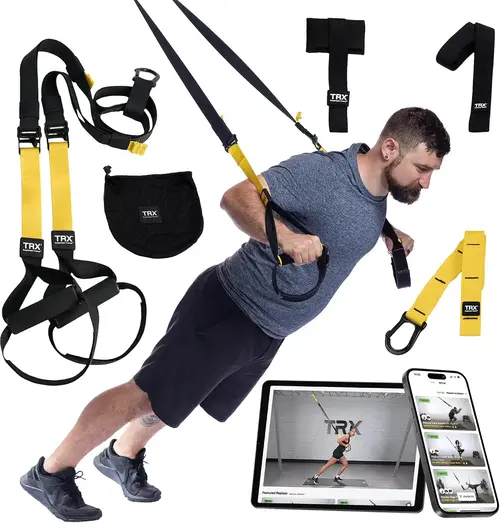
Idea 3: The Glute-Focused Cardio & Incline Nook
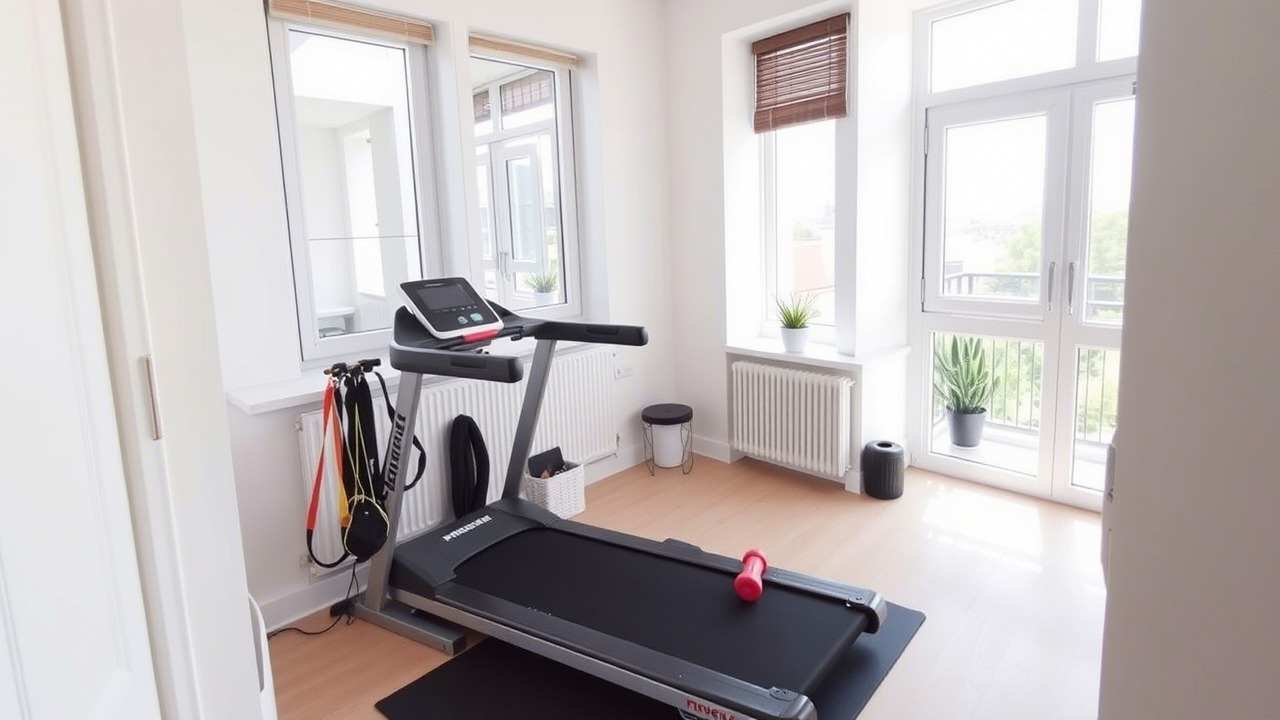
Cardio doesn’t have to undo your glute work. Incline walking, stair climbing, and resistance cycling all load the posterior chain.
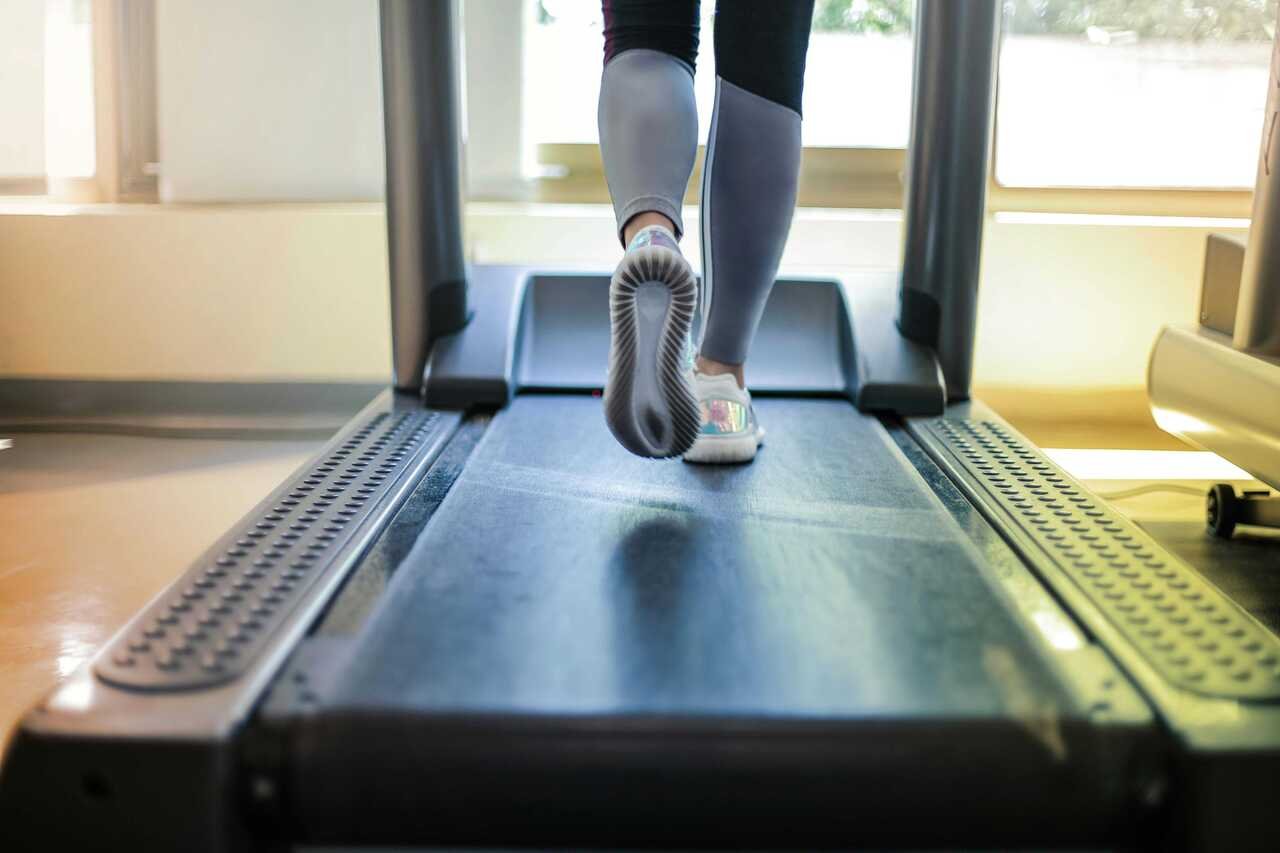
Our breakdown of the best cardio machines for glutes compares stepmills, incline treadmills, and bikes by muscle recruitment. If you live in an apartment, a quiet walking pad with an incline option is the easiest entry point. It slides under a bed or sofa when not in use.
Aim for 12–15% incline at a steady pace for 20–30 minutes. Keep your torso upright and avoid gripping the handles.
Best Equipment Picks
- Quiet walking pad with manual or auto incline
- Compact stepmill (for higher-intensity sessions)
- Magnetic resistance bike with adjustable seat
Pilates, Barre & Mobility Sanctuaries
Idea 4: The Wall-Mounted Barre & Stretching Studio
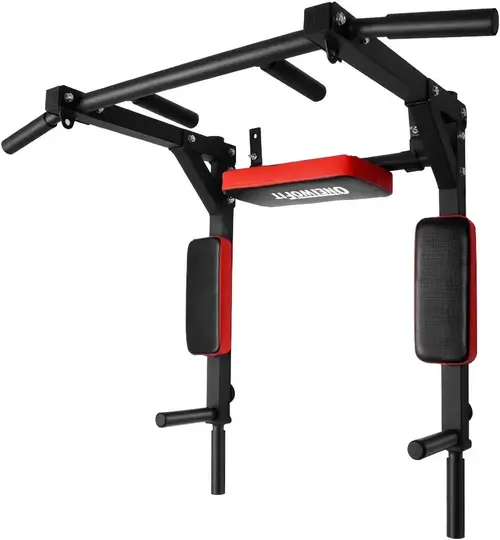
Posture, spinal decompression, and core control all benefit from a sturdy vertical anchor. Wall-mounted wooden stall bars give you a barre, a hanging station, and a stretching frame in a footprint of roughly two feet.
Use them for:
- Hanging knee raises and passive hangs for spinal decompression
- Deep hamstring and calf stretches
- Assisted pull-up and leg-raise progressions
- Pilates-style core work with feet anchored
Check your wall type before mounting. Studs or solid masonry are essential.
Best Equipment Picks
- Wall-mounted wooden stall bars
- Adjustable resistance band for assisted work
- Non-slip yoga mat
Idea 5: The Warm Minimalist Mat & Mirror Zone
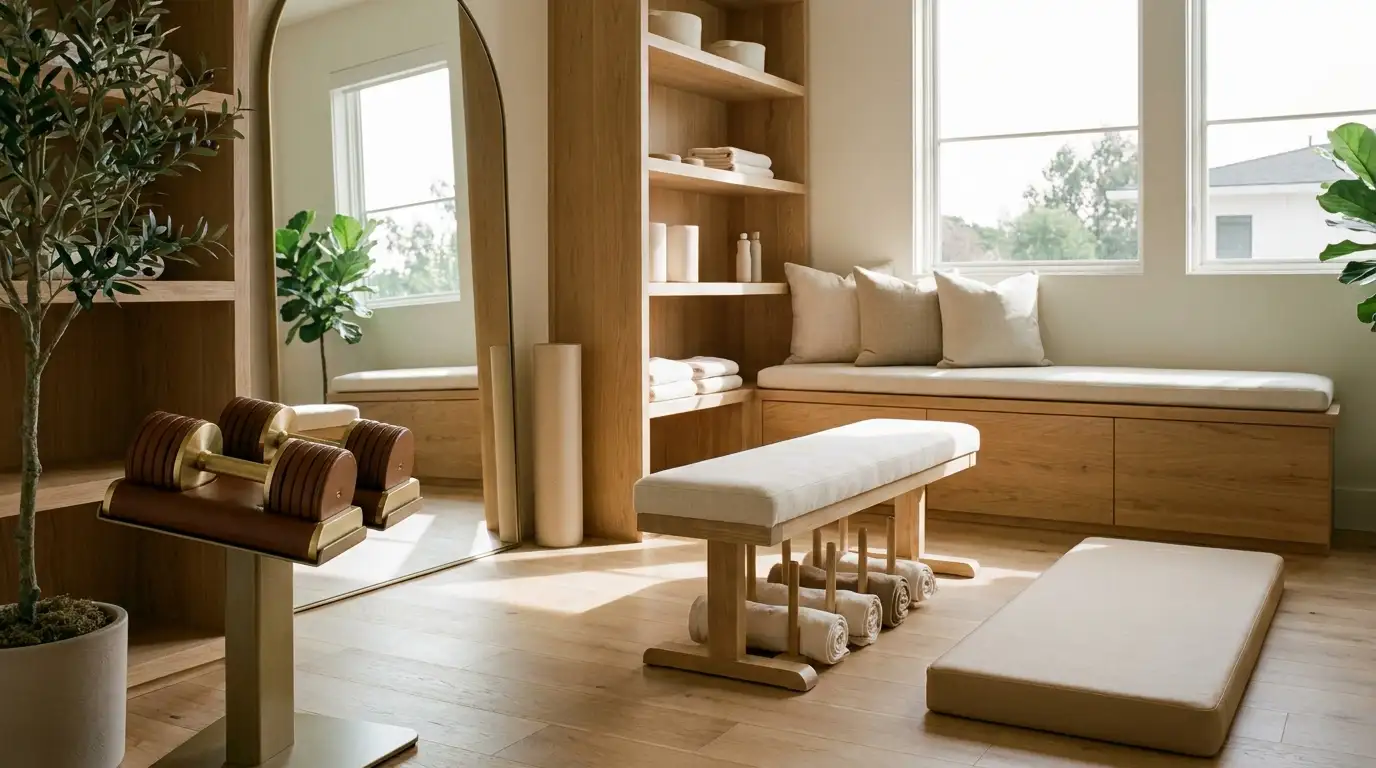
This is the most visually calm setup on the list, and it’s still highly functional. Natural wood tones, soft warm LED lighting, and a full-length mirror create a studio feel.
The mirror isn’t decoration. It lets you check alignment, hip level, and spinal position in real time. Pick a shatterproof option from our roundup of the best home gym mirrors and mount it securely, ideally on a wall bracket rather than leaning.
Underfoot, skip thin yoga mats on hard floors. Use a dense rubber or hybrid surface from our guide to the best home gym flooring mats for joint support and noise control.
Best Equipment Picks
- Full-length shatterproof wall mirror
- Dense, low-VOC rubber or hybrid mat
- Warm-tone dimmable LED strip or lamp
- Pilates ring and light ankle weights
Idea 6: The Low-Impact Rebounder & Core Corner
A mini trampoline gives you joint-friendly cardio, balance training, and a surprisingly effective core workout. Bouncing also adds gentle, rhythmic loading that many people find easy on knees and hips.
Browse our mini exercise trampoline guide for stable, quiet models with foldable legs. Pair it with a short routine: 3 minutes of easy bouncing, 3 minutes of balance holds, then core finishers on a mat.
Choose a model with a bungee or spring system rated for your body weight, and with a stabilizing bar if balance is a concern.
Best Equipment Picks
- Folding rebounder with stability bar
- Bungee-cord (not metal spring) model for quieter bouncing
- Mat and small stability ball for core finishers
The Sleek Adjustable Dumbbell & Bench Hub
Serious Strength & Progressive Overload Setups
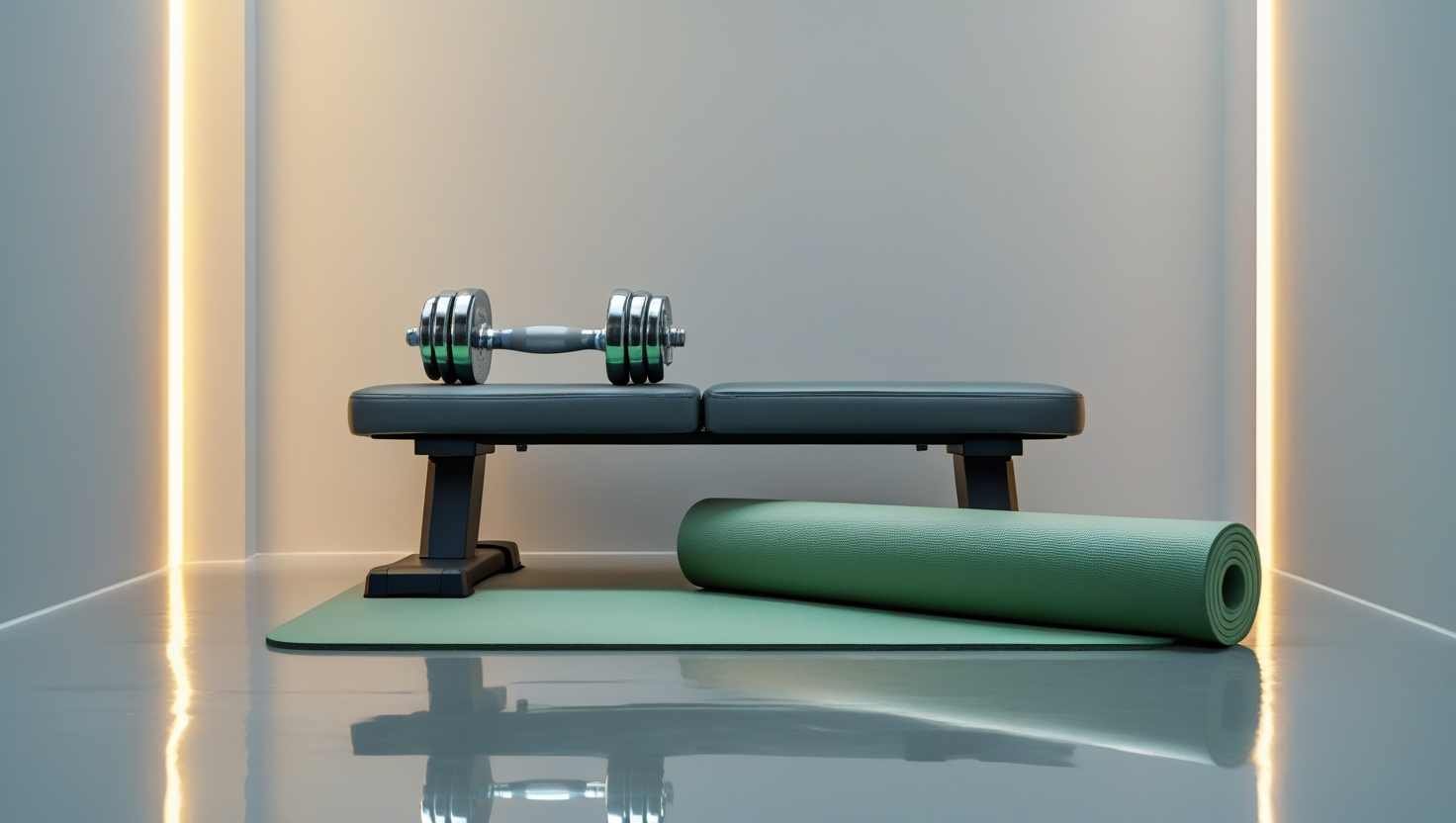
Progressive overload doesn’t require a wall of dumbbells. A pair of adjustable dumbbells for apartments replaces 10+ fixed pairs and tucks into a corner.
Pair them with an adjustable bench and you can run presses, rows, split squats, hip thrusts, and curls. Look for models with 2.5lb increments so upper-body lifts keep progressing without huge jumps.
Aesthetic tip: Keep the dumbbells on a low stand in a neutral finish so they read as furniture, not equipment.
Best Equipment Picks
- Adjustable dumbbells (5–50lb range, 2.5lb jumps)
- Adjustable bench with a narrow pad
- Compact dumbbell stand
Idea 8: The Retractable Garage/Wall Lifting Rig
Ready for heavier squats, presses, and deadlifts? A folding squat rack mounts to the wall and collapses flat to a few inches, perfect for a garage or shared space.
The bar matters as much as the rack. Choose a 15kg (35lb) women’s Olympic barbell with a 25mm grip diameter. It fits smaller hands, reduces wrist strain, and has a bit more whip for comfortable pulls and presses.
Add J-hooks, safety arms, and a pair of bumper plates. Start with 2.5lb and 5lb plates to keep your progressions small and steady.
Best Equipment Picks
- Wall-mounted folding squat rack with safeties
- 15kg women’s Olympic barbell, 25mm shaft
- Bumper plates plus 1.25lb micro-plates
- Lifting platform or high-density mat
Idea 9: The Longevity & Bone-Density Strength Setup (40+ Focus)
Resistance training is one of the most effective tools for maintaining muscle, bone density, and balance as hormones shift. If you’re 40 or older, a good setup emphasizes heavy-enough loading, balance work, and joint-friendly tools.
Our guide to strength training for women over 40 lays out weekly structure, exercise selection, and recovery. In terms of gear, prioritize adjustable dumbbells or a rack with safeties, a stable bench, bands for warm-ups, and a balance pad for single-leg work.
Lift with good control, progress gradually, and talk to your doctor before starting if you have osteoporosis, joint issues, or other medical concerns.
Best Equipment Picks
- Adjustable dumbbells or kettlebells
- Squat rack with safety arms
- Balance pad and resistance bands
- Supportive, non-slip flooring
Aesthetic & Clutter-Free Women’s Home Gym Integration Ideas
Idea 10: The “Hidden-in-Plain-Sight” Living Room Gym
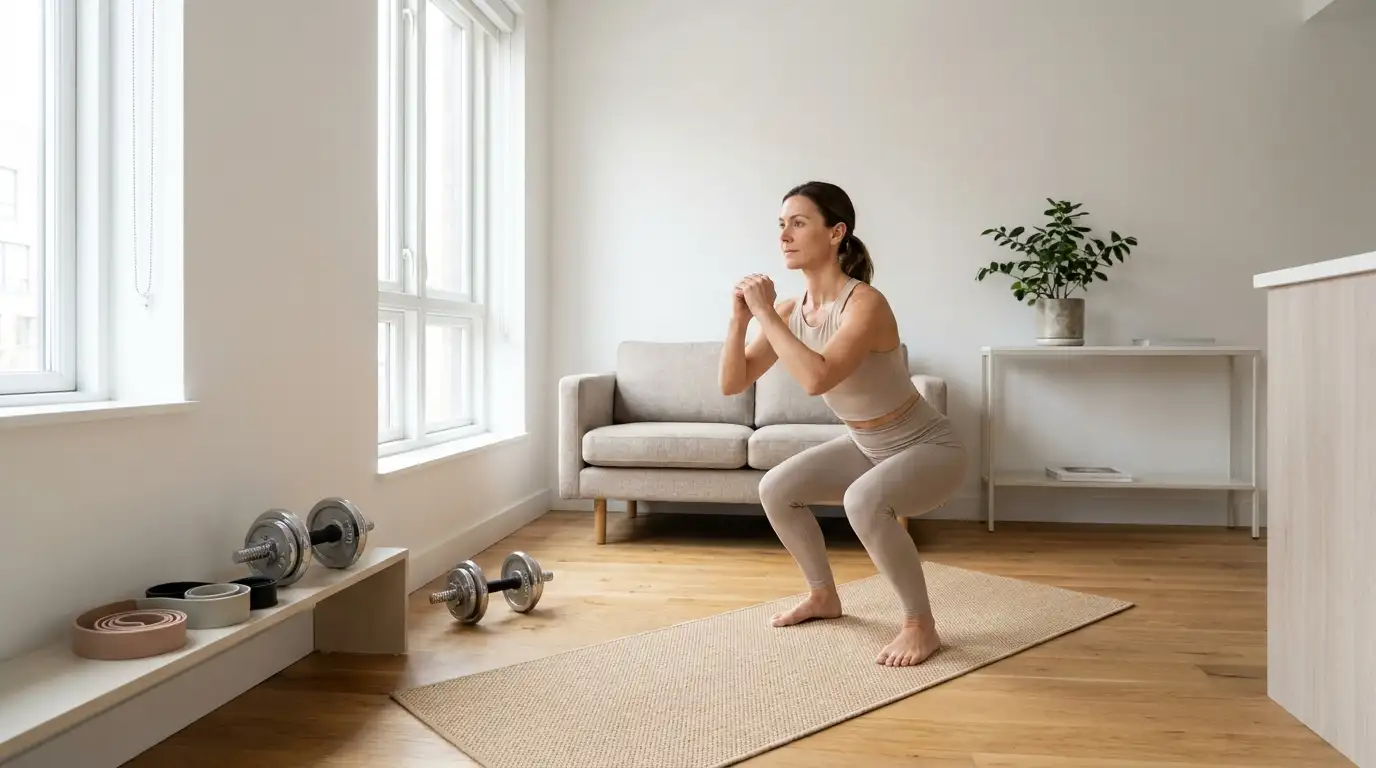
If your gym shares space with a sofa, the goal is simple: gear that disappears in seconds. Decorative lidded baskets hold bands and straps. A credenza stores mats, blocks, and light weights. Vertical wall racks keep dumbbells and bars off the floor.
Our storage hacks for small home workout areas walks through layouts that keep everything one reach away.
Rule of thumb: If setup takes longer than two minutes, you’ll skip workouts. Store gear where you use it.
Best Equipment Picks
- Lidded storage baskets or ottoman with storage
- Vertical wall rack or pegboard
- Foldable bench and slim mat roll
Idea 11: The Bio-Feedback & Smart Tracking Corner
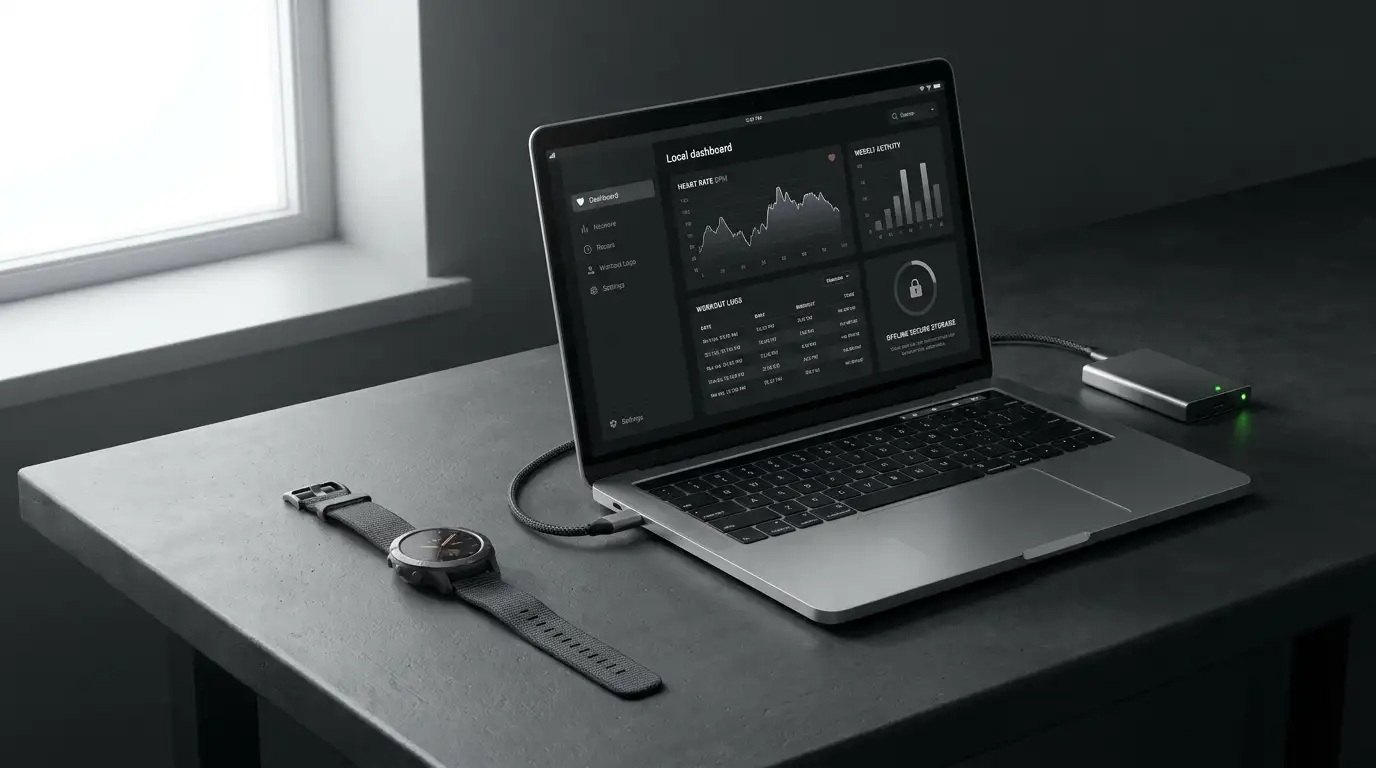
Data can keep training honest. A good wearable tracks heart rate, sleep, recovery, and, on many models, menstrual cycle trends, so you can adjust intensity across the month.
See our review of the best Garmin watches for women for options that balance size, battery life, and training metrics. Place a charging dock and a small tablet stand in your gym corner so numbers are visible at a glance.
Use the data as a guide, not a rulebook. How you feel matters too.
Best Equipment Picks
- Women’s-fit GPS fitness watch with cycle tracking
- Chest strap for accurate heart rate on high-intensity days
- Tablet or phone stand for workouts
The Bright, Biophilic Sanctuary
Light and greenery can shift a gym from chore to retreat. Position your workout area near a window, add a few low-maintenance plants, and use daylight-balanced bulbs (around 4000–5000K) to keep the space energizing rather than harsh.
Underfoot, choose neutral rubber or cork-topped flooring. They look natural, absorb impact, and feel good under bare feet. Many people find that a calm, bright space makes them more likely to show up consistently, and that consistency is what drives results.
4 Ergonomic Buying Rules for Women’s Home Gym Equipment
- 1. Barbell shaft diameter and weight. Standard men’s bars run 28–29mm. A 25mm shaft with a 15kg (35lb) weight is easier to grip, reduces wrist and forearm fatigue, and feels more natural for smaller hands. It’s a meaningful upgrade for pulls and presses.
- 2. Smaller weight increments. Upper-body lifts rarely progress in 5lb jumps for long. Buy micro-plates (1.25lb–2.5lb) and dumbbells with 2.5lb–5lb increments so you can keep adding load week after week.
- 3. Bench height and pad width. Standard benches sit 17–18″ high, which can make foot drive awkward for shorter lifters during hip thrusts and bench presses. A 14–16″ compact bench with a slightly narrower pad improves stability and positioning.
- 4. Flooring density and odor. Cheap foam puzzle tiles compress, shift, and can smell. Choose low-VOC, high-density rubber or an EVA/rubber hybrid. It protects joints, absorbs noise, and lasts years longer.
Frequently Asked Questions
What is the best home gym equipment for women beginners?
Start with adjustable dumbbells, an adjustable bench, fabric resistance bands, and a quality mat. This kit covers strength, glute work, and mobility in a small footprint. Add a walking pad or rebounder for cardio once your routine feels consistent.
How much space do I need for a functional women’s home gym?
A functional setup can fit in roughly 6 x 6 feet for bands, dumbbells, and a mat. Add about 2 feet on each side for a bench or folding rack. Aim for clear floor space equal to your arm span in every direction.
Are women’s barbells actually different from standard barbells?
Yes. Women’s Olympic bars typically weigh 15kg (35lb) and have a 25mm shaft versus 28–29mm on standard men’s bars. The thinner grip suits smaller hands and reduces wrist strain, while the bar accepts the same Olympic plates.
How do I make a women’s home gym look aesthetic without sacrificing functionality?
Choose gear in a consistent palette, then hide what you can: baskets for bands, a credenza for mats, wall racks for weights. Add warm lighting, a full-length mirror, and plants. Keep equipment accessible so the space stays both attractive and usable.
Ready to build? Explore our home gym layout design guide for floor-plan principles, then pick the setup that matches your training style.