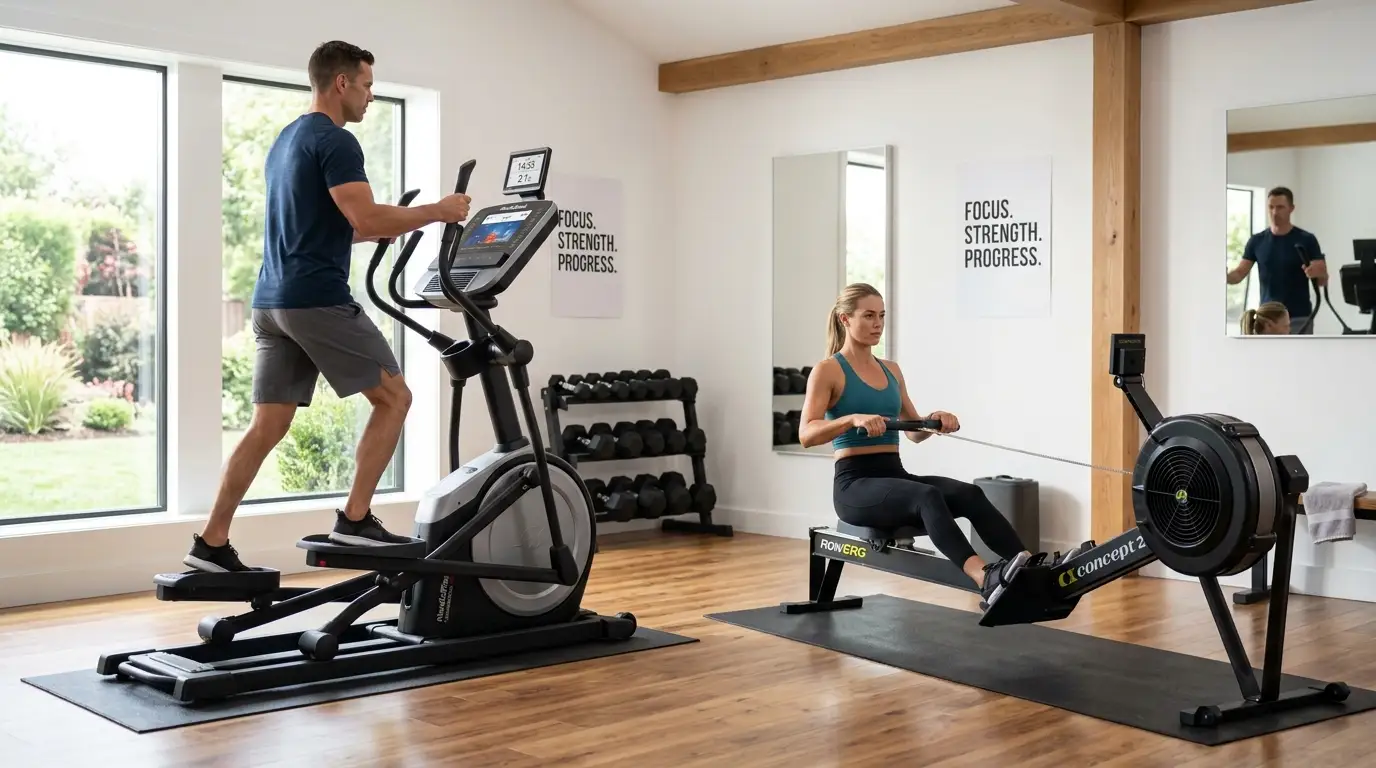

Choosing between an elliptical or rower is one of the biggest decisions when building an effective home gym. Both machines deliver exceptional cardiovascular workouts, burn calories efficiently, and improve endurance, yet they target the body differently and serve different fitness goals.
If you’re wondering whether an elliptical trainer or rowing machine is the smarter investment, this comprehensive guide compares every important factor—from calorie burn and muscle engagement to joint impact, weight loss, space requirements, and long-term value.
Elliptical vs Rower: Quick Comparison
| Feature | Elliptical | Rower |
|---|---|---|
| Full Body Workout | Moderate | Excellent |
| Lower Body Focus | Excellent | Good |
| Upper Body Engagement | Moderate | Excellent |
| Calorie Burn | High | Very High |
| Low Impact | Excellent | Excellent |
| Strength Building | Moderate | High |
| Coordination Required | Low | Moderate |
| Learning Curve | Easy | Moderate |
| Joint Friendly | Excellent | Excellent |
| Space Required | Medium | Medium to Large |
Winner Overall: The rower provides the most complete full-body workout, while the elliptical offers unmatched comfort for beginners and users recovering from injuries.
What Is an Elliptical Machine?
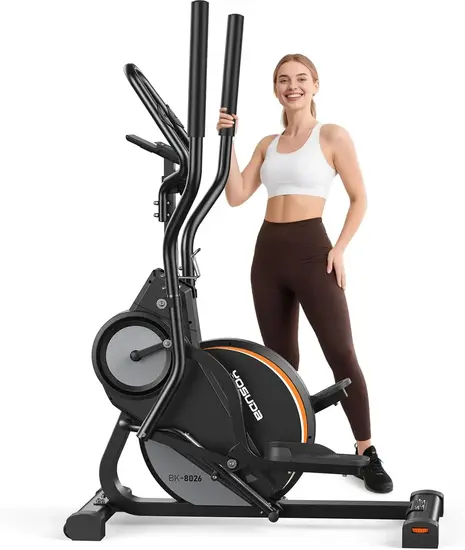
An elliptical trainer is a low-impact cardio machine that simulates walking, jogging, climbing stairs, and running without the harsh impact on your knees and ankles.
The pedals move in an oval-shaped path, allowing users to perform smooth, fluid movements that reduce stress on joints while maintaining an elevated heart rate.
Most modern ellipticals include moving handlebars that engage both the upper and lower body simultaneously.
Primary Muscles Worked
- Quadriceps
- Hamstrings
- Glutes
- Calves
- Chest
- Shoulders
- Triceps
- Core
What Is a Rowing Machine?
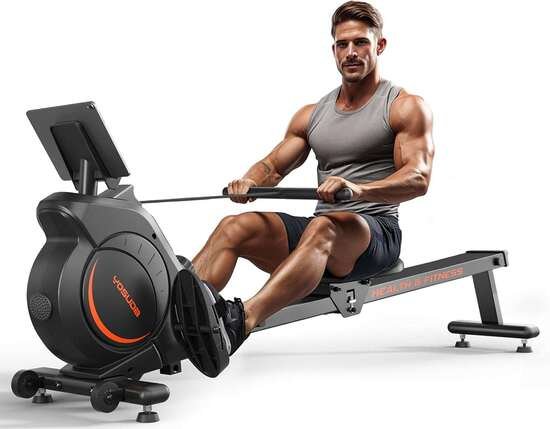
A rowing machine recreates the motion of rowing a boat. Every stroke combines a powerful leg drive with upper-body pulling and core stabilization.
Contrary to popular belief, rowing is not primarily an arm workout. Nearly 60% of the power comes from the legs, followed by the hips, core, and upper back.
This coordinated movement makes rowing one of the most effective total-body exercises available.
Primary Muscles Worked
- Quadriceps
- Glutes
- Hamstrings
- Calves
- Lats
- Rhomboids
- Traps
- Shoulders
- Biceps
- Forearms
- Abdominals
- Lower Back
Which Burns More Calories?
If your primary goal is fat loss, calorie burn matters.
Average Calories Burned in 30 Minutes
| Body Weight | Elliptical | Rower |
|---|---|---|
| 125 lbs | 270 | 255–310 |
| 155 lbs | 335 | 320–390 |
| 185 lbs | 400 | 390–470 |
A rowing machine generally burns slightly more calories because it recruits nearly 85% of the body’s muscles during each stroke.
Higher muscle activation equals higher energy expenditure.
Winner: Rower
Which Builds More Muscle?
While neither machine replaces traditional strength training, rowing develops significantly more muscular endurance.
The rowing stroke includes:
- Leg press movement
- Hip extension
- Core stabilization
- Upper back pulling
- Arm finishing movement
Every repetition resembles a compound exercise.
Ellipticals mainly strengthen the lower body while offering lighter upper-body activation.
Winner: Rower
Which Is Better for Weight Loss?
Weight loss depends on maintaining a calorie deficit, but exercise plays a major role.
Elliptical Benefits
- Comfortable for longer workouts
- Easier to sustain steady-state cardio
- Ideal for beginners
- Lower perceived exertion
Rower Benefits
- Higher calorie burn
- Greater muscle recruitment
- Effective HIIT sessions
- Increased afterburn effect (EPOC)
If you enjoy intense workouts, rowing often accelerates fat loss.
If consistency is your biggest challenge, the elliptical may keep you exercising more regularly.
Which Is Easier on the Joints?
Both machines are excellent low-impact options.
Elliptical
The feet never leave the pedals.
This eliminates impact while reducing pressure on:
- Knees
- Ankles
- Hips
Many physical therapists recommend ellipticals during rehabilitation.
Rower
Rowing also minimizes impact because you’re seated.
However, improper rowing technique can place unnecessary stress on the lower back.
When performed correctly, rowing remains one of the safest cardiovascular exercises.
Winner: Tie
Which Provides the Better Full-Body Workout?
The rowing machine clearly wins in total muscle involvement.
A proper rowing stroke consists of four phases:
1. Catch
- Knees bent
- Core braced
- Arms extended
2. Drive
- Legs push
- Hips extend
- Body opens
3. Finish
- Handle pulled to chest
- Back engaged
- Elbows behind body
4. Recovery
- Arms extend
- Body hinges forward
- Knees bend
This sequence recruits nearly every major muscle group.
The elliptical also engages the upper body, but not nearly as intensely.
Winner: Rower
Elliptical or rower Which Is Better for Beginners?
If you’re new to fitness, the elliptical has a clear advantage.
Benefits include:
- Natural walking motion
- Minimal technique required
- Comfortable workouts
- Low injury risk
- Simple resistance adjustments
Rowing requires proper technique.
Poor rowing form can reduce efficiency and increase injury risk.
Winner: Elliptical
Elliptical or rower Which Is Better for Athletes?
Athletes often benefit more from rowing because it develops:
- Explosive leg power
- Cardiovascular endurance
- Core strength
- Grip endurance
- Posterior chain development
Many elite athletes incorporate rowing into conditioning programs.
Sports including football, basketball, swimming, wrestling, and CrossFit frequently utilize rowing machines.
Which Machine Is Better for Seniors?
Both machines are excellent choices.
Elliptical Advantages
- Stable movement
- Upright posture
- Comfortable pace
- Easy resistance changes
Rowing Advantages
- Builds posture
- Strengthens back
- Improves mobility
- Encourages full-body movement
For seniors with limited mobility or balance concerns, the elliptical is usually the easier starting point.
Elliptical or rower Which Is Better for HIIT?
High-Intensity Interval Training works exceptionally well on both machines.
Elliptical HIIT Example
- 30 seconds sprint
- 90 seconds recovery
- Repeat 10 times
Rowing HIIT Example
- 250-meter sprint
- 60-second recovery
- Repeat 8 rounds
Because rowing recruits more muscle groups, it generally creates greater cardiovascular demand.
Winner: Rower
Which Machine Takes Up Less Space?
Modern folding rowers have improved storage considerably.
Typical Dimensions
Elliptical
- Length: 70–80 inches
- Width: 25–30 inches
- Height: 60–70 inches
Rower
- Length: 85–95 inches
- Width: 20–25 inches
Many rowers store vertically, reducing floor space dramatically.
Maintenance Comparison
Elliptical
- Lubricate moving joints
- Tighten bolts
- Clean rails
- Check pedals
Rower
- Clean rail
- Wipe seat rollers
- Inspect chain or strap
- Maintain flywheel
Both machines require relatively little maintenance.
Noise Levels
Quietest
- Magnetic rowers
- Magnetic ellipticals
Loudest
- Air rowers
- Older belt-driven ellipticals
Apartment users often prefer magnetic resistance systems.
Who Should Buy an Elliptical?
An elliptical is ideal if you:
- Are new to exercise
- Have knee pain
- Recover from injury
- Prefer longer cardio sessions
- Want easy workouts
- Need low-impact movement
Who Should Buy a Rower?
A rowing machine is ideal if you:
- Want maximum calorie burn
- Need a full-body workout
- Enjoy HIIT
- Want better posture
- Train for sports
- Prefer strength and cardio together
Pros and Cons
Elliptical Pros
- Beginner friendly
- Extremely low impact
- Comfortable workouts
- Quiet operation
- Excellent for endurance
Cons
- Less upper-body engagement
- Lower calorie burn
- Limited strength development
Rower Pros
- True full-body exercise
- Excellent calorie burn
- Builds muscular endurance
- Great for HIIT
- Improves posture
Cons
- Requires proper technique
- Longer machine footprint
- Can fatigue beginners quickly
Final Verdict: Elliptical or Rower?
Choosing between an elliptical or rower ultimately depends on your fitness priorities.
If your goal is comfortable, joint-friendly cardio, the elliptical is an outstanding option. It is beginner-friendly, easy to use, and ideal for long, steady workouts that improve cardiovascular health without placing excessive stress on the body.
If your goal is maximum calorie burn, full-body conditioning, and greater muscle engagement, the rower is the superior choice. Its ability to combine strength, endurance, and cardiovascular training in a single workout makes it one of the most efficient pieces of fitness equipment available.
For many home gym owners, having access to both machines offers the best of both worlds—using the elliptical for recovery days and the rower for high-intensity training sessions. However, if you can only choose one, base your decision on the type of workouts you enjoy most, because consistency is the key to long-term fitness success.
Conclusion
Whether you choose an elliptical or rower, both machines provide excellent low-impact cardiovascular exercise and can help you achieve your health and fitness goals. The best machine is the one that matches your workout style, keeps you motivated, and encourages regular use. Invest in the equipment that fits your needs, stay consistent with your training, and you’ll enjoy lasting improvements in endurance, strength, and overall well-being.
Elliptical or rower Frequently Asked Questions
Is rowing harder than using an elliptical?
Yes. A rowing machine generally feels more demanding because it engages more muscle groups and requires proper technique.
Can I lose belly fat with either machine?
Yes. Both machines support fat loss when combined with a calorie-controlled diet. Spot reduction is not possible, but regular cardio helps reduce overall body fat.
Which machine is better for bad knees?
Both are low impact. The elliptical is often the more comfortable choice for users with chronic knee discomfort.
Which burns more calories in 30 minutes?
A rowing machine typically burns slightly more calories due to greater full-body muscle activation.
Can rowing replace weight training?
Rowing improves muscular endurance and strength but should not fully replace resistance training if muscle growth is the goal.