

If your goal is to lose body fat, you’ve probably encountered a confusing mix of advice: train in a “fat-burning zone,” avoid carbohydrates, take a fat burner, exercise before breakfast, or buy a wearable that promises to tell you when your body is burning fat.
The reality is more straightforward—but also more nuanced.
Fat-burning is a normal metabolic process, not a special workout trick. Your body constantly uses a mixture of stored fat, carbohydrates, and other energy sources. The bigger question for lasting fat loss is whether your overall habits create the conditions for your body to draw down its stored energy over time.
That means the most effective approach is usually not the strategy that produces the highest fat oxidation during one workout. It’s the combination of an appropriate eating pattern, regular physical activity, resistance training, adequate sleep, and habits you can maintain for months rather than days. The CDC similarly recommends combining healthy eating, physical activity, sufficient sleep, and stress management when working toward a healthy weight.
Table of Contents
What Does Fat-Burning Actually Mean?
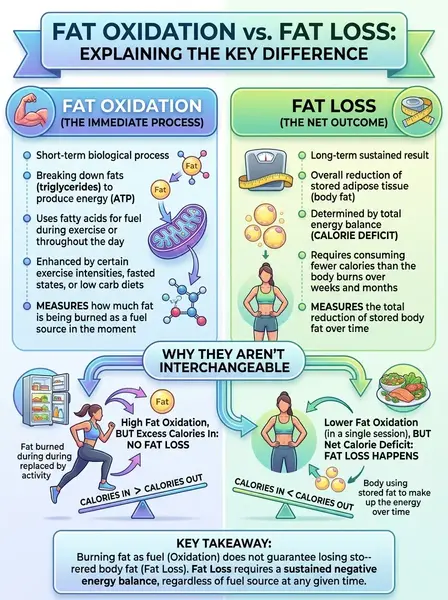
Fat-burning refers to the process of breaking down and using stored fat to provide energy. Your body can increase its use of fat for fuel during certain activities and under certain conditions, but burning more fat during a particular moment does not automatically mean losing more body fat over time.
This distinction is one of the most important things to understand.
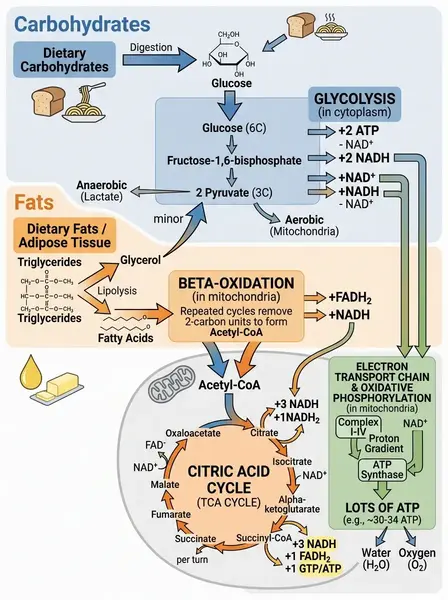
Your body stores energy primarily as triglycerides in adipose tissue. When energy is needed, stored triglycerides can be broken down into fatty acids and glycerol. Fatty acids can then be transported and oxidized by cells to help produce energy.
At the same time, your body is also using carbohydrates and other fuel sources.
So you aren’t simply switching between an “on” fat-burning mode and an “off” mode. Fuel use changes continuously according to factors such as exercise intensity, food intake, activity level, fitness, and energy availability.
Fat oxidation vs. fat loss
These terms are often treated as synonyms, but they aren’t.
| Term | What it means |
|---|---|
| Fat oxidation | Your body is using fatty acids as an energy source |
| Fat burning | Common-language term for fat oxidation and related fat-use processes |
| Fat loss | A sustained reduction in stored body fat |
| Weight loss | A reduction in total body weight, which can include fat, water, glycogen, and lean tissue |
You can increase fat oxidation during a workout without necessarily creating meaningful long-term fat loss.
For example, a lower-intensity workout may rely heavily on fat as a fuel source. But if your total energy intake remains high enough to replace the energy used, your stored body fat may not decline.
The goal isn’t to maximize fat oxidation every minute. The goal is to create sustainable conditions in which your body uses more stored energy than it stores over time.
How the Body Uses Stored Fat
Your metabolism is constantly responding to your body’s energy requirements.
When energy demand rises, such as during exercise, your body increases energy production. The proportion of fuel coming from fat versus carbohydrates depends partly on exercise intensity.
At lower and moderate intensities, fat can contribute substantially to energy production. As intensity rises, carbohydrate becomes increasingly important because it can provide energy rapidly.
This is why the idea of a “fat-burning zone” can be misleading.
A lower-intensity workout may produce a higher percentage of energy from fat, while a harder workout may burn more total energy and rely more heavily on carbohydrates.
Neither fact alone determines how much body fat you’ll eventually lose.
The bigger picture matters
Think of your metabolism as a bank account.
A single transaction tells you what happened at one moment. It doesn’t tell you whether the account balance will rise or fall over weeks.
Fat loss works similarly.
Your body may use stored fat during one period and store energy later. What matters for changes in body-fat stores is the longer-term balance between energy intake and expenditure.
The CDC notes that combining physical activity with reducing calorie intake can help with weight loss, while NIDDK explains that using more calories through activity and taking in fewer calories can contribute to weight loss.
What Actually Helps You Lose Body Fat?
There isn’t one magic fat-burning exercise, food, or supplement.
The most reliable strategy is to build several habits that work together.
1. Create a sustainable energy deficit
A sustained energy deficit is the fundamental condition for reducing stored body fat.
That doesn’t mean you need to obsessively count every calorie. Different people use different approaches successfully, including portion awareness, structured meals, higher-fiber foods, reducing calorie-dense foods, or tracking intake.
The key is finding a method that helps you consistently consume an appropriate amount of energy for your goal.
NIDDK recommends weight-loss programs that include a healthy reduced-calorie eating plan, physical activity, behavioral support, and a strategy for maintaining weight loss.
Practical takeaway: Don’t ask, “What food burns fat?” Ask, “What eating pattern helps me control energy intake while providing enough nutrition to stay satisfied?”
2. Prioritize Protein-Rich Foods
Protein isn’t a magic fat burner, but it can be useful during fat loss.
Research suggests that higher protein intake can increase feelings of fullness in some circumstances, which may make an energy-controlled eating pattern easier to maintain. A systematic review in adults with overweight or obesity found evidence that higher protein intake may improve satiety, although the researchers noted limitations in the available evidence.
Protein also has an important role in maintaining lean tissue while losing weight.
Good protein sources can include:
- Eggs
- Fish
- Chicken and turkey
- Greek yogurt
- Cottage cheese
- Beans and lentils
- Tofu and other soy foods
- Lean meats
- Milk and other dairy foods
Rather than building your entire diet around protein, think of it as one component of balanced meals.
Expert tip: A meal containing protein, vegetables or fruit, and a satisfying source of carbohydrates or healthy fats is often easier to sustain than a highly restrictive “fat-burning” diet.
3. Use Strength Training to Protect Muscle
If you’re trying to lose fat, the number on the scale isn’t the only metric that matters.
You also want to preserve as much useful lean tissue as practical.
Resistance training can help maintain muscle and strength during weight loss. Evidence reviewed in PubMed indicates that resistance-type exercise can help preserve muscle mass during weight loss, while also improving muscular strength.
A recent practical review similarly emphasizes resistance training as a central part of weight-loss programs when preserving muscle and bone mass is a priority.
A basic strength-training routine might include:
- Squats or sit-to-stand movements
- Lunges or step-ups
- Rows
- Push-ups or chest presses
- Hip hinges
- Overhead presses
- Core exercises
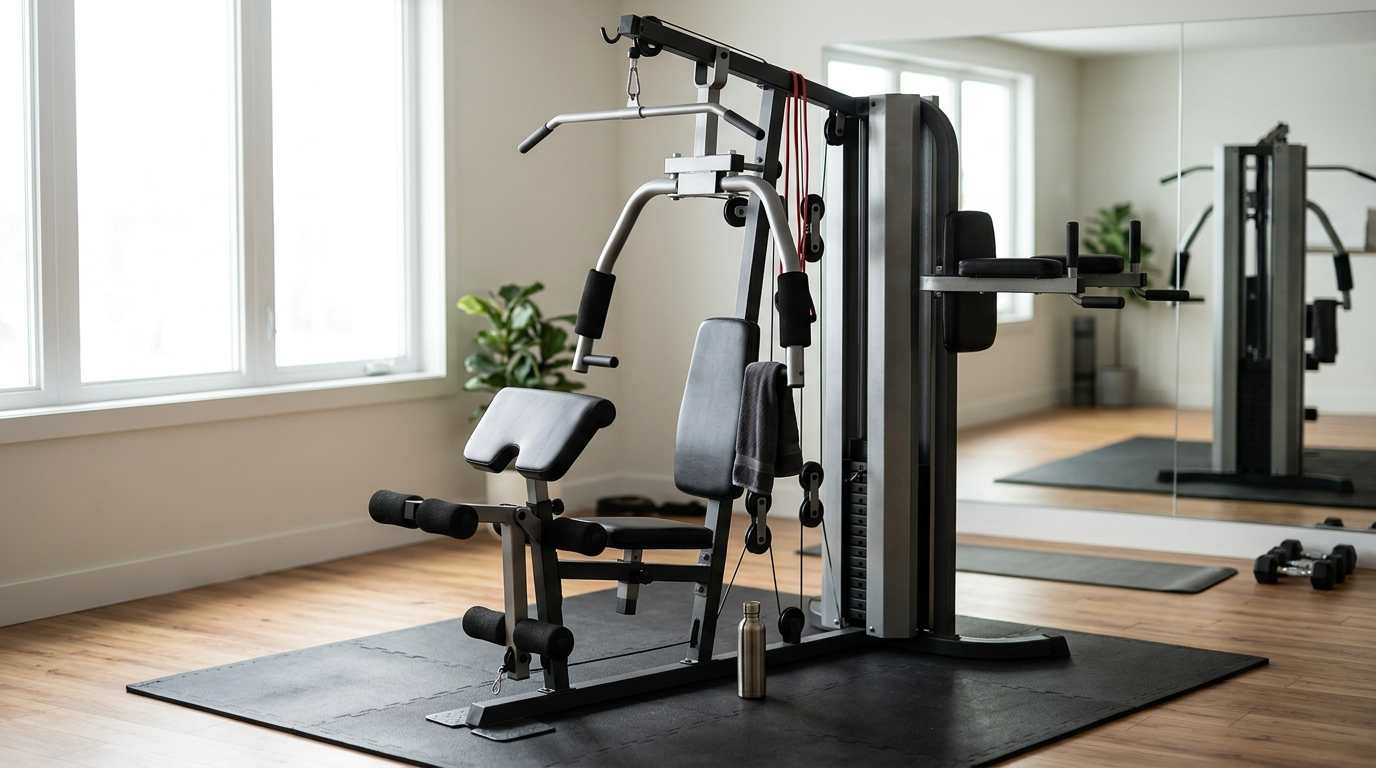
You don’t need an elaborate gym setup to begin.
The objective is progressive training that challenges your muscles appropriately while allowing sufficient recovery.
4. Do Cardio You Can Consistently Perform
Walking, cycling, swimming, jogging, dancing, rowing, and other aerobic activities can increase energy expenditure and improve cardiovascular fitness.
For general health, NIDDK recommends that healthy adults aim for at least 150 minutes of moderate physical activity each week, along with muscle-strengthening activities. Depending on the individual and the goal, more activity may be useful.
For fat loss, don’t assume that the hardest workout is automatically the best.
A workout that leaves you exhausted for three days may be less useful than a moderate session you can comfortably repeat four or five times a week.
A practical hierarchy
| Activity | Main advantage |
| Walking | Easy to repeat and accessible |
| Cycling | Cardiovascular work with adjustable intensity |
| Swimming | Low-impact full-body activity |
| Jogging | Efficient aerobic exercise |
| Intervals | Time-efficient higher-intensity training |
| Strength training | Supports muscle and strength |
| Daily movement | Helps increase overall activity |
Consistency beats novelty.
5. Increase Everyday Movement
Fat loss isn’t only about formal workouts.
Walking while taking phone calls, using stairs, doing household chores, shopping on foot, gardening, and taking short movement breaks can all contribute to your overall activity.
This matters because a one-hour workout doesn’t cancel out an entire day of inactivity.
NIDDK specifically recommends moving more and sitting less and notes that even modest amounts of activity can provide health benefits.
A simple strategy is to build movement into existing routines:
- Walk for 10 minutes after a meal.
- Take stairs when practical.
- Stand and move periodically during long sitting periods.
- Walk during short phone calls.
- Add an extra short walk on days without a workout.
You don’t need to transform your lifestyle overnight.
6. Get Enough Sleep
Sleep is often overlooked in conversations about fat loss.
That’s a mistake.
The CDC notes that getting enough sleep can support a healthy weight and improve areas including stress, mood, heart health, and metabolism.
Poor sleep can also make a structured eating and exercise routine harder to maintain.
Instead of searching for a supplement that supposedly “boosts metabolism while you sleep,” start with basic sleep habits:
- Keep a consistent sleep and wake schedule.
- Make your bedroom comfortable and quiet.
- Limit electronic-device use before bed.
- Avoid large meals close to bedtime.
- Exercise regularly.
- Pay attention to caffeine timing.
Sleep won’t magically melt body fat, but good sleep supports the broader behavior pattern that makes sustainable fat loss more achievable.
Does Exercise Need to Be in the “Fat-Burning Zone”?
Not necessarily.
The phrase “fat-burning zone” usually refers to exercise intensity at which a relatively large proportion of energy comes from fat.
That sounds attractive, but it can lead people to make the wrong conclusion.
Suppose one workout uses a higher percentage of fat for fuel while another uses a greater total amount of energy but a larger proportion of carbohydrate.
You can’t determine which produces greater long-term fat loss simply by looking at the fuel mix during the workout.
Exercise intensity should instead be chosen according to your goals, fitness, preferences, recovery, and ability to stay consistent.
For many people, a combination of moderate aerobic activity and resistance training is a practical foundation. NIDDK recommends at least 150 minutes of moderate aerobic activity weekly for healthy adults and advises including strengthening activities.
The best “fat-burning zone” is often the intensity you can perform regularly without compromising recovery or making the rest of your week inactive.
Can You Target Belly Fat?
This is where many fat-loss claims become exaggerated.
You cannot reliably choose where your body loses fat simply by exercising a particular muscle.
Doing hundreds of crunches can strengthen your abdominal muscles, but that doesn’t mean your body will selectively remove abdominal fat.
However, regular exercise can contribute to reductions in overall and abdominal fat. Recent research has found that exercise programs can reduce abdominal visceral and subcutaneous fat in adults with overweight or obesity.
So the better strategy is:
Train the muscles you want to develop while using an overall fat-loss strategy to reduce excess body fat.
That approach is more realistic than relying on “belly-fat-burning” exercises.
Do Fat-Burning Foods Actually Work?
Certain foods can support a fat-loss diet, but calling them “fat burners” is usually an oversimplification.
Foods that are rich in protein or fiber can be filling. Fruits and vegetables can provide substantial food volume with relatively low energy density. Whole or minimally processed foods can make it easier for some people to build satisfying meals.
But no ordinary food reliably overrides overall energy balance and causes substantial body-fat loss by itself.
A useful meal-building framework is:
Protein + produce + high-quality carbohydrate or healthy fat + appropriate portion
For example:
- Greek yogurt + berries + nuts
- Eggs + vegetables + whole-grain toast
- Chicken + roasted vegetables + potatoes
- Lentils + vegetables + rice
- Fish + salad + whole grains
The goal is not to find one miraculous ingredient.
It’s to create meals you enjoy enough to repeat.
What About Fat-Burning Supplements?
This is an area where skepticism is useful.
Products marketed as “fat burners” may contain stimulants, herbs, extracts, or combinations of ingredients that claim to increase metabolism or fat oxidation.
Even when an ingredient has a measurable effect on energy expenditure, that doesn’t automatically translate into meaningful, sustained fat loss.
More importantly, supplements can have side effects, interactions, or varying levels of evidence.
A safer principle is:
Don’t confuse a physiological effect with a meaningful real-world outcome.
If a product claims that you can lose substantial fat without changing your eating habits or activity, treat the claim cautiously.
People who take medications, have medical conditions, are pregnant or breastfeeding, or are considering concentrated supplements should discuss them with an appropriate healthcare professional.
Can Fitness Trackers Help With Fat-Burning?
Fitness trackers cannot directly make your body burn fat.
What they can do is help you monitor behaviors associated with an effective routine.
Depending on the device, a tracker may record:
- Steps
- Active minutes
- Heart rate
- Exercise duration
- Sleep
- Distance
- Workout intensity
NIDDK notes that fitness trackers can help users monitor steps, calories, active minutes, sleep, heart rate, and other activity measures.
That makes them potentially useful as behavior-feedback tools, rather than magical fat-loss devices.
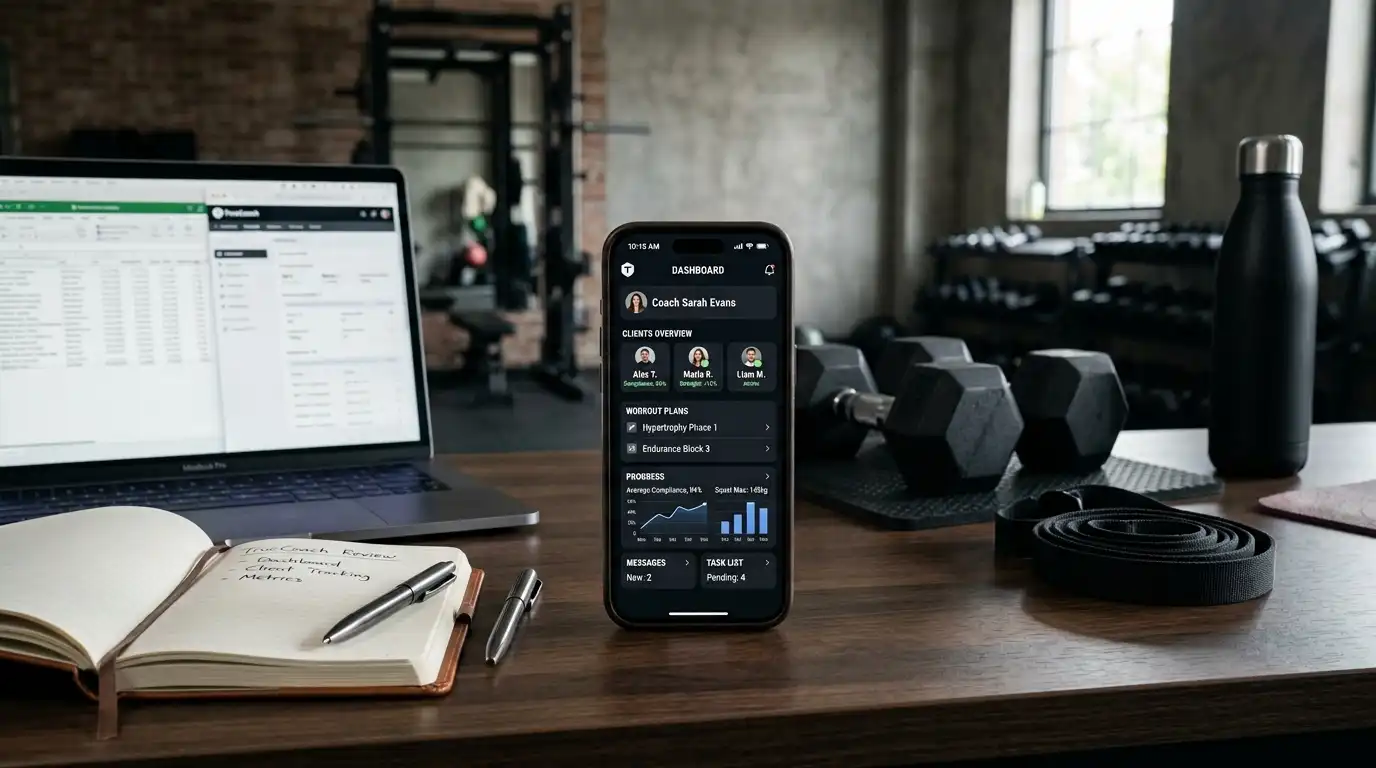
Fitness technology can also support healthier habits by tracking activity, heart rate, sleep, and workout intensity. Discover whether Fat-Burning Wearables actually work and how they may help support long-term weight-loss goals.
The important limitation
Treat calorie-burn estimates as estimates, not laboratory measurements.
A tracker is most useful when it answers practical questions such as:
- Am I moving more this month?
- Am I consistently completing my workouts?
- Am I sleeping enough?
- Is my activity level dropping?
- Which routines help me stay consistent?
That’s more actionable than obsessing over whether a watch says you burned 427 or 512 calories.
A Simple Fat-Loss Framework That Actually Makes Sense
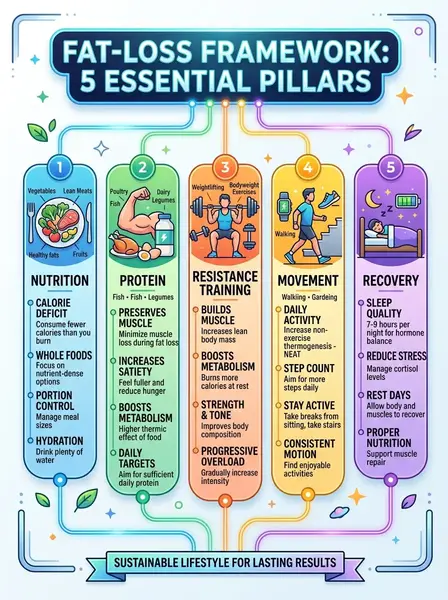
Instead of chasing individual fat-burning tricks, build your routine around five pillars.
The 5-part framework
1. Eating pattern
Create an appropriate energy intake without relying on extreme restriction.
2. Protein and nutritious foods
Prioritize satisfying, nutrient-dense meals that you can maintain.
3. Resistance training
Train your major muscle groups regularly.
4. Aerobic activity and daily movement
Walk, cycle, swim, jog, or choose activities you enjoy.
5. Recovery
Protect sleep and allow your body enough recovery to continue training.
This framework aligns with the broader guidance from CDC and NIH resources, which emphasize nutrition, physical activity, sleep, behavior change, and long-term sustainability rather than a single fat-burning trick.
Common Fat-Burning Mistakes
Mistake 1: Chasing the highest calorie burn
More isn’t always better.
If an aggressive workout leaves you too tired to exercise for the next several days, its practical value may be lower than a manageable routine you can repeat.
Mistake 2: Treating the scale as the only measurement
Body weight can fluctuate because of water, glycogen, food volume, and other factors.
Consider tracking trends rather than reacting to every daily change.
Mistake 3: Eliminating entire food groups without a reason
Extreme restrictions aren’t automatically more effective.
The best eating pattern is one that provides adequate nutrition and fits your preferences and lifestyle.
Mistake 4: Ignoring strength training
If you’re losing weight, protecting lean tissue matters.
Resistance training is particularly useful for maintaining strength and muscle during weight loss.
Mistake 5: Expecting technology to do the work
A wearable can measure behavior. It can’t replace behavior.
Use technology as feedback—not as a substitute for nutrition, movement, recovery, and consistency.
How to Tell Whether Your Fat-Loss Strategy Is Working
Look at trends over several weeks rather than judging yourself by one workout or one morning’s weigh-in.
Useful indicators can include:
- Body-weight trend
- Waist measurement
- Clothing fit
- Strength levels
- Workout consistency
- Daily activity
- Sleep quality
- Energy and recovery
- How sustainable your eating pattern feels
The CDC recommends tracking nutrition, physical activity, and sleep as part of understanding your starting point and progress.
If progress has stalled, don’t automatically assume you need a “stronger fat burner.”
Instead, review the basics:
Is your current food intake still appropriate? Are you moving consistently? Are workouts progressing? Are you sleeping adequately? Can you maintain the routine?
Those questions usually produce more useful answers.
When Professional Guidance Makes Sense
Fat loss isn’t purely a matter of willpower.
Medications, medical conditions, genetics, stress, age, environment, and other factors can influence weight management. The CDC specifically recognizes these factors when discussing healthy weight and weight loss.
If you have obesity, a chronic condition, take medications that affect weight, or have struggled repeatedly with weight management, professional support may be worthwhile.
NIDDK notes that treatment for overweight and obesity can include lifestyle changes and, when appropriate, medications or weight-loss surgery under healthcare supervision.
The right plan should be personalized to your health, goals, preferences, and circumstances.
Fat-Burning: The Bottom Line
Fat-burning is real, but the marketing around it is often much more complicated than the biology.
Your body uses fat for energy throughout the day. Exercise can increase energy expenditure and influence which fuel sources your body uses. But long-term reduction in body fat depends on the overall pattern of energy intake, activity, body composition, and sustainable behavior.
The strategies with the strongest practical foundation are remarkably unglamorous:
- Eat in a sustainable way that supports an appropriate energy intake.
- Choose filling, nutritious foods.
- Get adequate protein.
- Perform resistance training.
- Do regular aerobic activity.
- Move more throughout the day.
- Prioritize sleep.
- Track useful behaviors rather than chasing perfect numbers.
- Be skeptical of products promising effortless fat loss.
You don’t need to constantly force your body into a special “fat-burning mode.”
You need a routine that consistently supports fat loss while preserving health, muscle, performance, and quality of life.
Key Takeaways
- Fat-burning means using stored or circulating fat as fuel; it isn’t the same as long-term fat loss.
- A higher percentage of fat used during a workout doesn’t automatically mean greater body-fat loss.
- Sustainable fat loss generally requires an appropriate long-term energy deficit.
- Protein-rich foods can support fullness and help make an energy-controlled diet easier to maintain.
- Resistance training is valuable for preserving muscle and strength during weight loss.
- Regular aerobic activity and everyday movement increase energy expenditure and support health.
- Sleep is an important part of a sustainable weight-management strategy.
- “Fat-burning zones,” foods, supplements, and wearable devices shouldn’t be treated as magic solutions.
- Fitness trackers are most useful for monitoring behaviors such as activity, sleep, and workout consistency.
- Sustainable habits matter more than short-term fat-burning tricks.
Visual Content Suggestions
- Metabolism diagram: Show how carbohydrates and fat can both contribute to energy production.
- Fat oxidation vs. fat loss graphic: Explain why the two terms aren’t interchangeable.
- Fat-loss framework infographic: Display the five pillars—nutrition, protein, resistance training, movement, and recovery.
- Comparison graphic: “Fat-Burning Myths vs. What Actually Helps.”
- Wearable illustration: Show how a fitness tracker measures activity and sleep without implying that it directly burns fat.
Frequently Asked Questions
What is fat-burning?
Fat-burning is the common term for using fat as an energy source. Your body continuously adjusts its use of fat and carbohydrates depending on factors such as activity intensity, food intake, and energy needs.
What is the fastest way to burn body fat?
There isn’t one universally short term fat burning method. Sustainable fat loss generally comes from an appropriate energy deficit supported by nutritious eating, regular physical activity, resistance training, and habits you can maintain.
Does walking burn fat?
Yes. Walking requires energy, and your body can use fat as part of that energy supply. Regular walking can also increase total daily activity and contribute to weight management.
Is the fat-burning zone necessary for weight loss?
No. You don’t need to exercise at a particular heart-rate zone to lose body fat. Exercise intensity should be selected according to your goals, fitness, preferences, and ability to train consistently.
Can you specifically burn belly fat?
You can’t reliably control exactly where your body loses fat. However, regular physical activity and overall fat loss can reduce abdominal fat, including visceral and subcutaneous fat.
Does strength training burn fat?
Strength training uses energy and can contribute to overall energy expenditure, but one of its major advantages during weight loss is helping preserve muscle and strength.
Do fat-burning supplements work?
Some ingredients may affect metabolism or appetite, but that doesn’t mean a supplement will produce substantial or sustainable fat loss. Products marketed as effortless fat-loss solutions deserve careful scrutiny.
Can a fitness tracker help with fat loss?
A fitness tracker can support fat-loss efforts by helping you monitor activity, workouts, heart rate, sleep, and other behaviors. It doesn’t directly cause fat loss, and its calorie estimates should be treated as estimates rather than precise measurements.