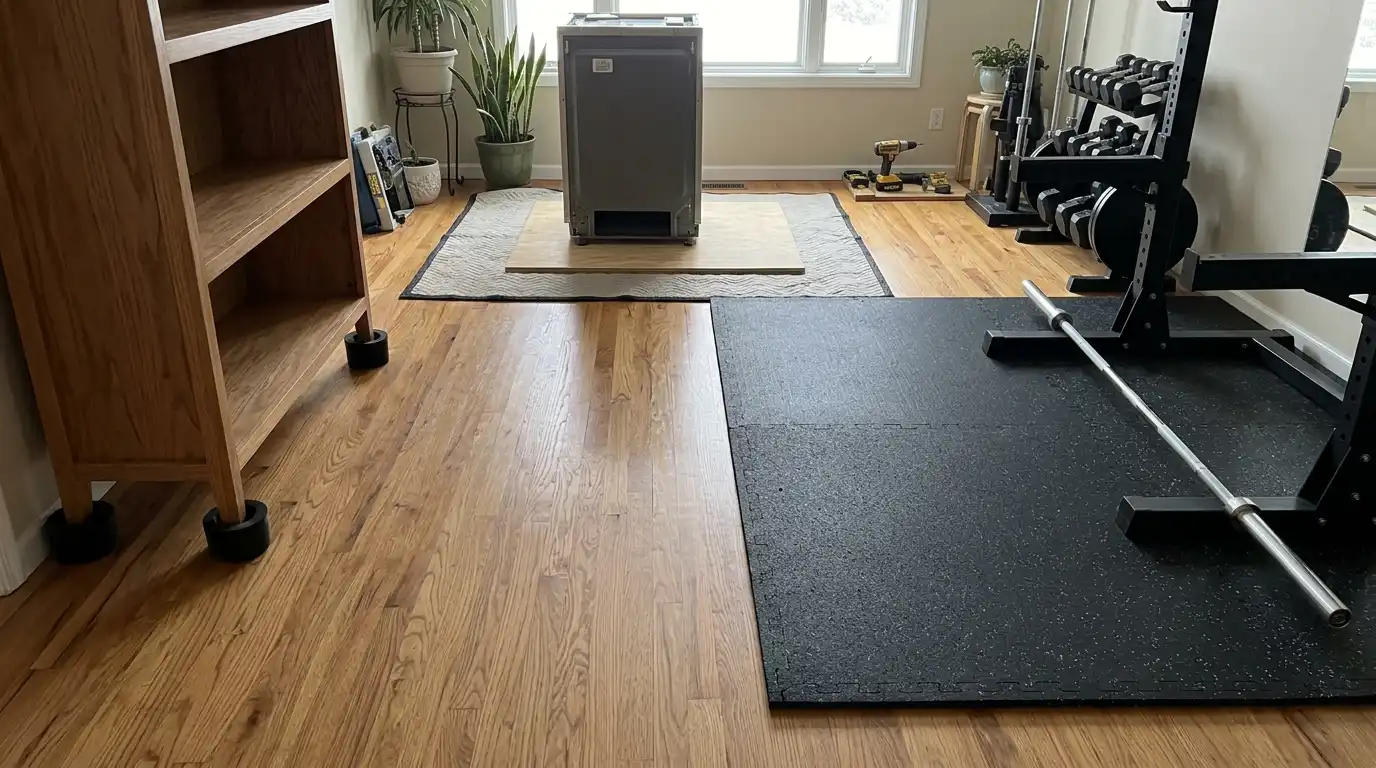
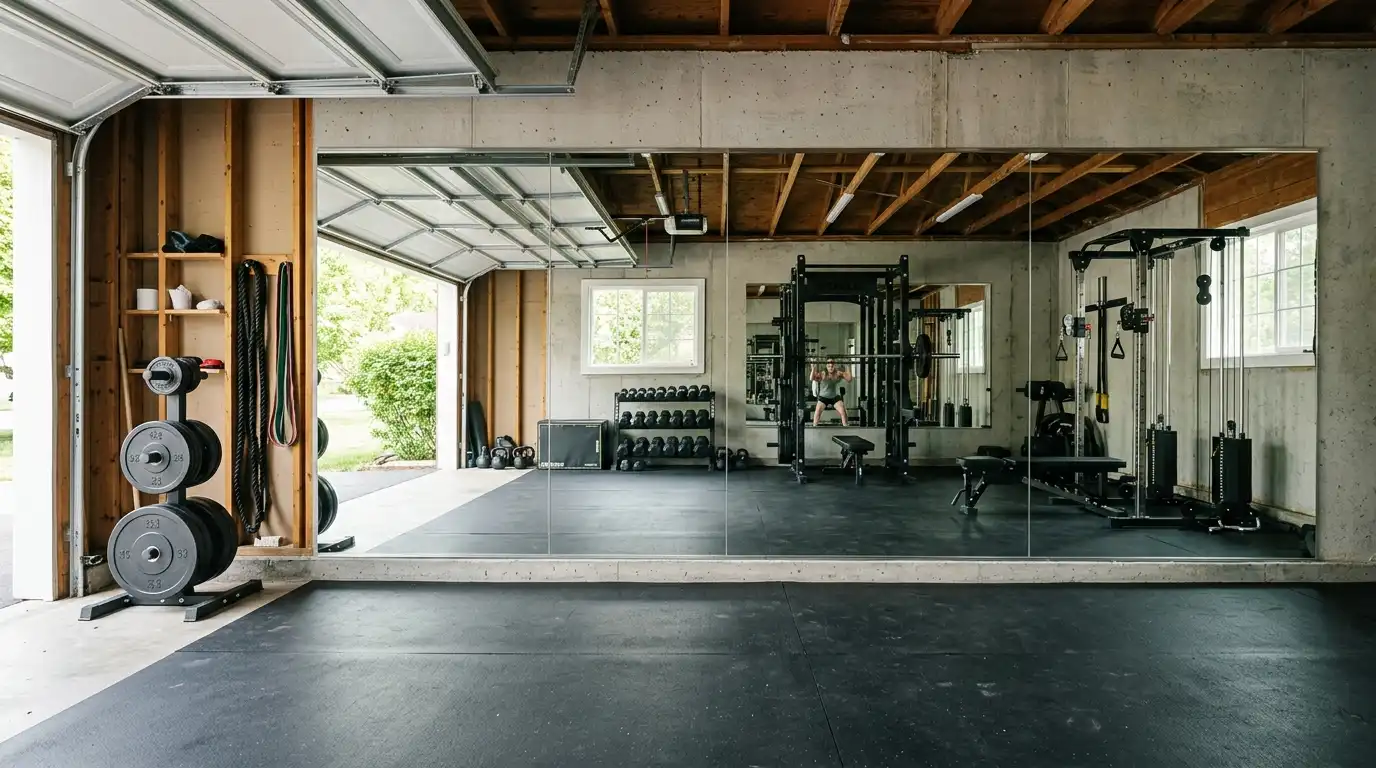

You need to see your form. Not because you want to admire your biceps (though that’s a nice side effect). Because bad form leads to injury, and injury leads to months on the couch.
I’ve shattered a cheap mirror with a bouncing plate. I’ve installed acrylic tiles that warped after one humid summer. And I’ve helped friends build full home gym mirrors that look like Equinox. Here’s what works, what doesn’t, and what you should buy for your budget.
This review is part of our complete home gym equipment guide.
Table of Contents
At a Glance: Home Gym Mirrors Top Picks
Best Mirrors for Different Types of Fitness Enthusiasts
| Fitness Enthusiast | Recommended Mirror | Main Buying Consideration |
|---|---|---|
| Weightlifters | Large acrylic or glass wall mirror | Full-body visibility and impact safety |
| Yoga practitioners | Full-length wall mirror | Accurate posture and alignment |
| Home gym owners | Large wall-mounted mirror | Coverage across multiple exercise stations |
| Garage gym users | Shatter-resistant acrylic mirror | Durability and secure mounting |
| Personal trainers | Wide mirror panels | Visibility for demonstrating exercises |
| Fitness class enthusiasts | Smart fitness mirror | Guided workouts and interactive features |
| Budget-conscious beginners | DIY mirror tiles | Affordable coverage and modular installation |
Choosing the right mirror depends on how you train. Weightlifters generally benefit from large viewing areas, while yoga practitioners may prioritize full-body visibility and accurate reflection. Those following digital workout classes may prefer smart fitness mirrors with integrated displays.
Best Mirror for Fitness Enthusiasts: What Should You Look For?
The best mirror for fitness enthusiasts is one that provides a clear, full-body reflection, withstands the demands of regular workouts, and fits the available training space. Whether you’re building a home gym, practicing yoga, lifting weights, or following guided fitness classes, the right mirror makes it easier to monitor your posture, movement, and exercise technique.
Unlike ordinary decorative mirrors, fitness mirrors should be selected with visibility, durability, safety, and installation in mind.
Here are the most important features to consider:
- Full-body visibility: Choose a mirror tall and wide enough to see your entire body during squats, lunges, stretches, and standing exercises.
- Distortion-free reflection: High-quality glass provides a more accurate reflection, helping you monitor alignment and positioning.
- Impact resistance: Acrylic mirrors are lightweight and shatter-resistant, making them worth considering in active workout environments.
- Wide viewing area: Larger panels allow you to monitor your movements without constantly repositioning yourself.
- Secure installation: Wall-mounted mirrors should use suitable mounting hardware and support appropriate for their weight and wall construction.
- Easy maintenance: Look for surfaces that are easy to clean after sweaty workouts and resist everyday scratching.
For most home fitness enthusiasts, a large wall-mounted mirror offers a practical balance of visibility and convenience. However, acrylic panels may be more suitable for garages and workout areas where accidental equipment contact is a concern.
The right choice ultimately depends on your exercise routine, available wall space, safety requirements, and budget.
Best Home Gym Mirrors for Fitness Enthusiasts: Detailed Reviews
#1 Best Budget: 36″×72″ Acrylic Gym Mirror
Acrylic mirrors are plastic. They don’t shatter, they’re lightweight, and they’re cheap. A 3×6 foot panel costs under $200 and covers your main lifting area.
The good: Shatterproof. Lightweight enough to hang with adhesive or screws. And if you drop a plate or bump it with a barbell, it flexes instead of breaking.
The not-so-good: The reflection is slightly distorted compared to glass. Not enough to matter for form checking, but enough that you notice if you’re used to real mirrors. Acrylic also scratches more easily than glass.
Who it’s best for: Garage gyms, basement gyms, and anyone who wants a large mirror without the risk of shattered glass.
Who should skip it: People who want a perfect, distortion-free reflection or a high-end aesthetic.
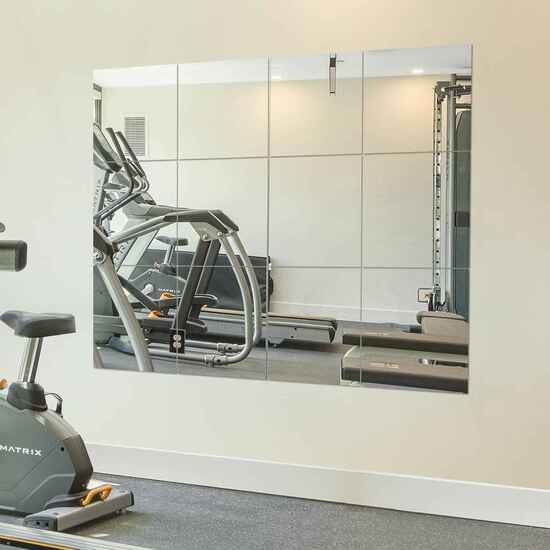
#2 Best DIY Option: Wall-Mounted Mirror Tiles
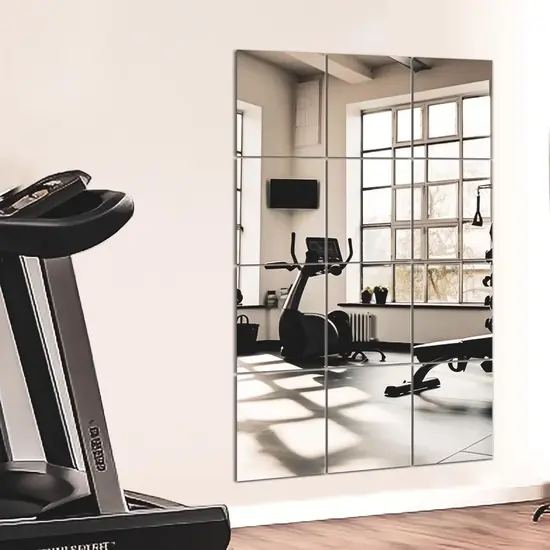
Mirror tiles are 12×12 or 12×24 inch panels you mount in a grid. A 6-pack covers roughly 6×4 feet for under $150.
The good: Modular. You can cover any wall size by adding more tiles. Easy to install with adhesive or mounting clips. And if one tile breaks, you replace one tile, not the whole wall.
The not-so-good: The seams between tiles are visible. Not ideal if you want a seamless look. And cheap tiles use thin glass that breaks easily.
Who it’s best for: DIYers who want a custom mirror wall on a budget.
Who should skip it: People who want a professional, seamless look without visible grout lines or gaps.
[Check Current Price on Amazon]
#3 Best Aesthetic: Full-Length Gym Mirror with Frame
A framed full-length mirror looks intentional. It says “this is a gym” rather than “I nailed a piece of glass to the wall.”
The good: Clean edges, professional look, and usually better glass quality than tiles. Most are 3–4 feet wide and 6+ feet tall.
The not-so-good: More expensive than tiles or acrylic. And the frame can chip if you bump it with equipment.
Who it’s best for: Spare bedroom gyms and basement setups where aesthetics matter.
Who should skip it: Garage gyms where equipment gets banged around and frames get damaged.
[Check Current Price on Amazon]
#4 Best Tech: Smart Fitness Mirror
Smart mirrors display workout classes, form feedback, and training metrics on the glass. It’s a mirror and a personal trainer in one.
The good: The wow factor is real. Guided classes remove guesswork. And the form feedback (on premium models) actually helps.
The not-so-good: $1,000+. Requires a subscription for most features. And if the tech fails, you have an expensive regular mirror.
Who it’s best for: Tech lovers with budget who want guided workouts.
Who should skip it: Budget buyers and anyone who already knows how to train without a screen.
#5 Best for Garages: Garage Gym Mirror Kit
These kits include multiple acrylic or tempered glass panels sized for garage walls, plus mounting hardware designed for concrete or drywall over studs.
The good: Everything in one box. No guessing about compatibility. And garage-specific kits usually use thicker, more durable materials.
The not-so-good: More expensive than buying individual panels. And you’re locked into the kit’s dimensions.
Who it’s best for: Garage gym builders who want a one-click solution.
Who should skip it: People with non-standard wall sizes or who prefer to customize.
How to Choose the Best Mirror for Fitness Enthusiasts
Acrylic vs. Glass Gym Mirrors: Which Is Better for Workouts?
Glass: Perfect reflection, premium look, but breaks into dangerous shards. Best for controlled environments (spare bedrooms, basements).
Acrylic: Shatterproof, lightweight, slightly distorted reflection. Best for garages and high-traffic areas where impact is likely.
How Large Should a Fitness Mirror Be?
One full-length mirror (3×6 feet minimum) covers your main lifting area. If you have multiple stations facing different directions, add mirrors accordingly. A full mirror wall looks incredible but costs $500+.
Home Gym and Fitness Mirror Installation Tips
- Glass on drywall: Use mirror adhesive and J-channels at the bottom. Never rely on adhesive alone for heavy glass.
- Acrylic on concrete: Construction adhesive or concrete screws with washers.
- Height: The bottom of the mirror should be 12–18 inches from the floor. Any lower and you can’t see your feet during squats and deadlifts.
Conclusion
Start with a 36″×72″ acrylic mirror for safety and value. Upgrade to glass or a smart mirror if budget and aesthetics matter. And always, always mount securely—an unmounted mirror is a hazard, not a tool.
FAQ
What is the best mirror for fitness enthusiasts?
The best mirror for fitness enthusiasts is generally a large, securely mounted wall mirror that provides a clear, full-body reflection. Glass offers excellent optical clarity, while shatter-resistant acrylic is worth considering for garages and workout areas where equipment could accidentally hit the mirror.
Are full-length mirrors good for working out?
Yes. Full-length mirrors help you monitor posture, alignment, and movement during exercises such as squats, lunges, yoga poses, and standing strength movements. A wider mirror provides additional visibility when training with equipment or performing lateral movements.
What size mirror is best for a home gym?
A mirror measuring approximately 36 × 72 inches provides useful full-body coverage for many home gym setups. Larger spaces may benefit from multiple panels or a continuous mirror wall. Choose dimensions based on your height, exercise movements, and available wall space.
Should fitness enthusiasts choose glass or acrylic mirrors?
Glass generally provides a clearer, more accurate reflection, while acrylic is lighter and shatter-resistant. Glass needs careful placement and secure installation around heavy equipment. Acrylic is a practical alternative for garages and active workout spaces, although its reflection can be more susceptible to distortion.
Suggested Reads
Best All-in-One Home Gym Machines: Multi-Station Reviews
Best Smith Machines for Home Gyms: Reviews, Setup & Buying Guide
Best Functional Trainers for Home Gyms (2026): Top Picks for Every Budget