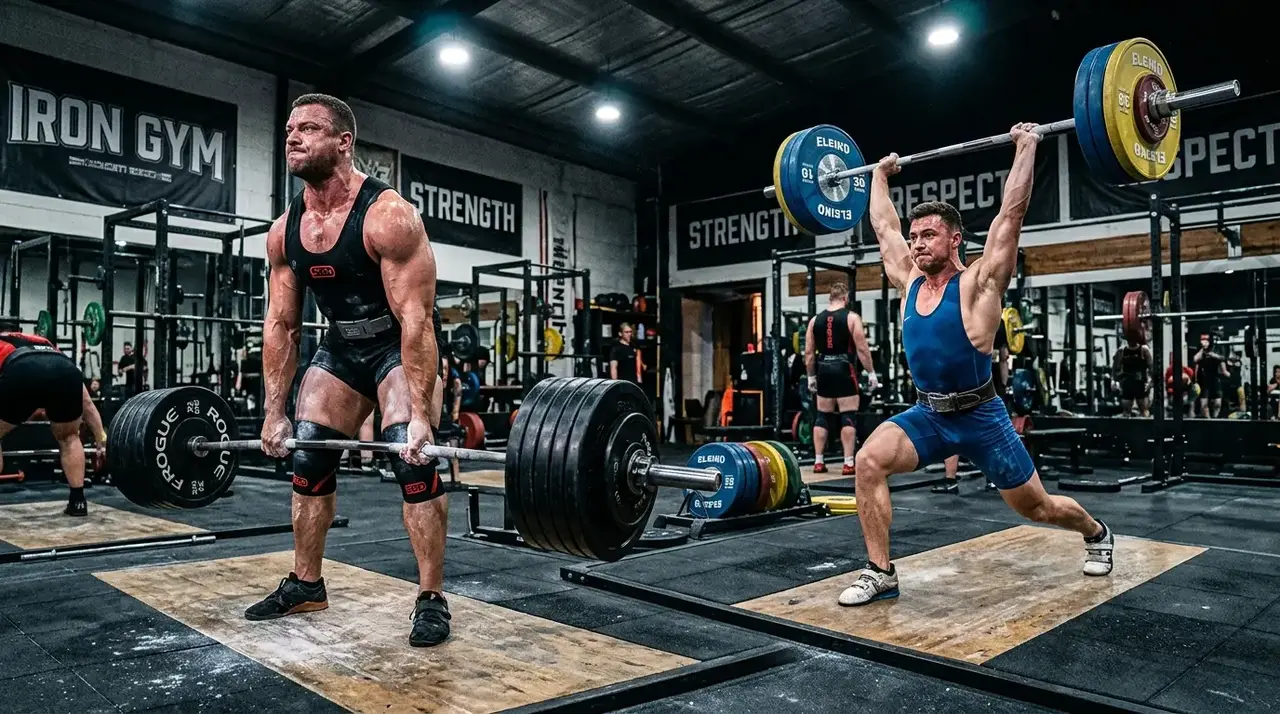

When comparing powerlifting vs Olympic weightlifting, many people assume they are simply two different ways of lifting heavy weights. In reality, these strength sports have distinct goals, training methods, movement patterns, competition formats, and athletic demands. Understanding the differences can help athletes choose the discipline that aligns with their goals, whether those goals involve maximum strength, explosive power, athletic performance, muscle development, or competitive success.
Both sports require dedication, discipline, and years of practice, yet they challenge the body in remarkably different ways. Powerlifting focuses on moving the greatest possible weight through three foundational lifts, while Olympic weightlifting emphasizes speed, precision, mobility, and explosive force through highly technical movements.
Table of Contents
What Is Powerlifting?
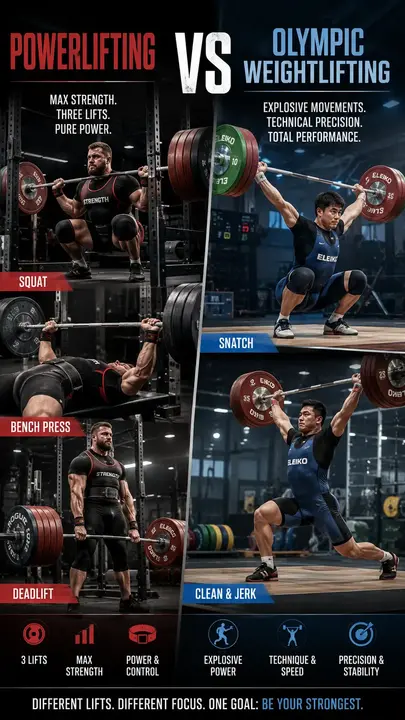
Powerlifting is a strength sport centered around three primary lifts:
- Squat
- Bench Press
- Deadlift
The objective is simple: lift the maximum amount of weight possible for one repetition in each movement. During competition, athletes typically receive three attempts for each lift. The heaviest successful attempt from each lift is added together to create a total score.
Powerlifting rewards absolute strength and efficient movement mechanics. Athletes spend years refining their technique to move the greatest amount of weight while maintaining proper form according to competition standards.
The Three Powerlifting Movements
Squat
The squat develops lower-body strength through the quadriceps, glutes, hamstrings, and core. Competitors must lower until the hip crease drops below the top of the knee before standing back up with control.
Bench Press
The bench press measures upper-body pressing strength. The lift primarily targets the chest, shoulders, and triceps while requiring significant stability throughout the body.
Deadlift
The deadlift is often considered the ultimate test of total-body strength. Athletes pull a loaded barbell from the floor to a standing position using the posterior chain, including the glutes, hamstrings, lower back, and upper back.
What Is Olympic Weightlifting?
Olympic weightlifting, often called weightlifting, consists of two competitive lifts:
- Snatch
- Clean and Jerk
Unlike powerlifting, Olympic weightlifting emphasizes explosive power, speed, coordination, flexibility, and technical mastery.
Athletes must accelerate the barbell rapidly while moving their bodies underneath the weight. The sport requires exceptional athleticism and precision because even minor technical errors can result in missed lifts.
The Two Olympic Weightlifting Movements
Snatch
The snatch involves lifting a barbell from the floor to overhead in one continuous movement. It is widely considered one of the most technically demanding exercises in sports.
Successful snatches require:
- Explosive hip extension
- Exceptional shoulder mobility
- Strong overhead stability
- Precise timing
- Advanced coordination
Clean and Jerk
The clean and jerk is performed in two phases.
First, the athlete lifts the barbell from the floor to the shoulders (the clean). Then, the athlete drives the bar overhead (the jerk).
The clean and jerk allows heavier loads than the snatch and demonstrates a combination of strength, speed, and technical proficiency.
Powerlifting vs Olympic Weightlifting: Key Differences
Primary Goal
Powerlifting
The primary objective is maximizing strength in the squat, bench press, and deadlift.
Olympic Weightlifting
The primary objective is lifting the greatest possible weight overhead using explosive, highly technical movements.
Movement Speed
Powerlifting lifts are generally slower and emphasize force production against maximal loads.
Olympic lifts are explosive and require rapid acceleration. Athletes must generate significant power in fractions of a second.
Technical Complexity
While powerlifting technique is important, Olympic weightlifting involves significantly more complex movement patterns.
Olympic lifters must coordinate:
- Triple extension
- Rapid turnover
- Precise footwork
- Catch positions
- Overhead stabilization
This technical demand often requires years of dedicated practice.
Mobility Requirements
Powerlifting demands moderate mobility for optimal performance.
Olympic weightlifting requires exceptional mobility in:
- Ankles
- Hips
- Thoracic spine
- Shoulders
- Wrists
Limited mobility can significantly restrict Olympic lifting performance.
Strength vs Power
Powerlifting primarily measures maximal strength.
Olympic weightlifting measures a combination of:
- Strength
- Power
- Speed
- Coordination
- Athleticism
This distinction explains why many sports performance programs incorporate Olympic lifting variations.
Muscle Development Differences
Powerlifting Physique
Powerlifters often develop:
- Thick backs
- Powerful legs
- Strong glutes
- Dense chest and shoulders
Training revolves around progressive overload, which contributes significantly to muscle growth.
Olympic Weightlifting Physique
Olympic weightlifters commonly exhibit:
- Highly developed quadriceps
- Strong shoulders
- Athletic physiques
- Low body fat percentages
- Exceptional lower-body power
The sport promotes balanced muscular development while maintaining mobility and speed.
Powerlifting vs Olympic Weightlifting Training Structure Comparison
Powerlifting Training
A typical powerlifting program focuses on:
- Squats
- Bench presses
- Deadlifts
- Accessory strength work
- Progressive overload
Training volume and intensity are carefully managed to maximize strength gains.
Common accessory exercises include:
- Romanian deadlifts
- Rows
- Pull-ups
- Lunges
- Triceps work
Olympic Weightlifting Training
Olympic weightlifting programs often include:
- Snatches
- Clean and jerks
- Front squats
- Back squats
- Pulls
- Technique drills
Athletes dedicate significant time to refining movement mechanics and improving mobility.
Sessions frequently combine strength development with technical practice.
Athletic Performance Benefits
Benefits of Powerlifting
Powerlifting develops:
- Maximal strength
- Bone density
- Muscular size
- Joint resilience
- Mental toughness
Many athletes use powerlifting methods to build foundational strength for other sports.
Benefits of Olympic Weightlifting
Olympic weightlifting enhances:
- Explosive power
- Vertical jump performance
- Sprinting ability
- Coordination
- Balance
- Athleticism
The rapid force production required in Olympic lifts often transfers effectively to sports performance.
Powerlifting vs Olympic Weightlifting Training Competition Format Differences
Powerlifting Competition
Athletes perform:
- Squat
- Bench Press
- Deadlift
Each competitor receives three attempts per lift.
The highest successful lift in each category contributes to the total score.
The athlete with the highest total in their weight class wins.
Olympic Weightlifting Competition
Athletes compete in:
- Snatch
- Clean and Jerk
Each athlete receives three attempts in both lifts.
The best successful snatch and clean and jerk are combined for the final total.
The highest total determines the winner.
Injury Risk and Considerations
Both sports can be practiced safely when proper technique and programming are followed.
Common Powerlifting Stress Areas
- Lower back
- Shoulders
- Hips
- Elbows
Common Olympic Weightlifting Stress Areas
- Wrists
- Shoulders
- Knees
- Lower back
Proper coaching, mobility work, and recovery protocols are essential for long-term success in either discipline.
Powerlifting vs Olympic Weightlifting Training Which Sport Is Better for Beginners?
The answer depends on individual goals.
Choose Powerlifting If You Want:
- Maximum strength
- Simpler movement patterns
- Easier entry into competition
- Muscle growth
- Progressive strength development
Choose Olympic Weightlifting If You Want:
- Explosive athletic performance
- Advanced technical skills
- Increased mobility
- Speed and power development
- Dynamic training sessions
Many beginners find powerlifting easier to learn initially because the lifts are less technically demanding.
Can You Train Both Powerlifting and Olympic Weightlifting?
Yes. Many athletes successfully combine elements of both disciplines.
A hybrid approach may include:
- Squats
- Deadlifts
- Bench presses
- Power cleans
- Snatches
- Front squats
This combination develops strength, power, athleticism, and muscle simultaneously.
However, athletes pursuing elite competition generally specialize in one sport due to the specific demands of each discipline.
Powerlifting vs Olympic Weightlifting: Which Should You Choose?
The decision ultimately comes down to personal goals.
If your objective is building maximum strength and lifting the heaviest possible weights in foundational movements, powerlifting offers a direct and effective path.
If you prefer explosive movements, technical mastery, athletic development, and dynamic training sessions, Olympic weightlifting provides unique benefits that few other sports can match.
Both disciplines represent the highest levels of barbell training and can transform strength, confidence, physical performance, and overall fitness. Whether you choose powerlifting, Olympic weightlifting, or a combination of both, consistent training and proper technique will produce exceptional results over time.
Conclusion
The debate surrounding powerlifting vs Olympic weightlifting is not about determining which sport is superior. Instead, it is about understanding their distinct purposes and advantages. Powerlifting showcases raw strength through the squat, bench press, and deadlift, while Olympic weightlifting demonstrates explosive power and technical excellence through the snatch and clean and jerk.
Both sports demand commitment, discipline, and relentless practice. By selecting the approach that aligns with your goals, training preferences, and athletic aspirations, you can maximize your progress and enjoy a rewarding journey in strength training.
FPowerlifting vs Olympic Weightlifting Training requently Asked Questions
Is powerlifting harder than Olympic weightlifting?
Powerlifting requires greater maximal strength, while Olympic weightlifting demands higher technical skill, mobility, and coordination. Each sport presents unique challenges.
Which burns more calories: powerlifting or Olympic weightlifting?
Olympic weightlifting often burns more calories during training due to its explosive nature and higher movement frequency.
Can Olympic weightlifting build muscle?
Yes. Olympic weightlifting develops significant muscle mass, particularly in the legs, shoulders, back, and core.
Is powerlifting safer for beginners?
Many beginners find powerlifting easier to learn because the movement patterns are less technically complex.
Can athletes benefit from both styles of training?
Absolutely. Combining strength-focused powerlifting movements with explosive Olympic lifting variations can create a balanced and highly effective training program.